

Key Takeaways
Treat physician burnout as a system failure, not a character flaw
A profession under strain. Jauhar frames medicine’s disillusionment through three roles: knights, who serve from virtue; knaves, who put self-interest first; and pawns, whose behavior is shaped by external rules. The model helps explain why doctors can enter medicine wanting to help and find their ideals eroded by financial and bureaucratic pressures.
The profession’s status shifted alongside its incentives. Mid-century doctors enjoyed unusual autonomy and public esteem. Rising costs and reports of unnecessary treatment helped recast them as profit-seekers, followed by managed care and more oversight. In a 2008 survey of 12,000 physicians, only 6 percent described their morale as positive, and 84 percent said their incomes were flat or falling. Jauhar’s argument is not that doctors lack responsibility, but that the system shapes what becomes normal.
What's striking is the refusal to choose between blaming individuals and blaming institutions. Organizational psychology distinguishes personal motivation from the conditions that make a behavior easy, rewarded, or routine. That distinction matters in medicine, where conscientious clinicians still work inside systems that ration time and reward measurable activity. The framework is useful, but its three categories are simplifications: doctors can act virtuously in one decision and self-interestedly in another. That mixed picture makes the memoir more persuasive, because it treats ethical drift as a risk of ordinary working life, not a flaw exclusive to villains.
When medicine pays by the procedure, volume starts masquerading as care
Payment steers practice. Fee-for-service pays clinicians for each visit or procedure, so more services can mean more income. Jauhar sees the pressure firsthand while moonlighting in a practice where stress tests bring far more revenue than office visits. Tests were ordered for many patients, including people at low risk or those who had recently been tested. A stress test could bring in about $800, while a typical office visit paid much less.
The related term moral hazard describes how insurance can weaken the connection between a service’s price and the choices made by patients or providers. In the RAND Health Insurance Experiment, medical spending was highest among participants whose insurance covered all costs. On the provider side, the book reports that doctors who owned nuclear scanners were seven times as likely to order scans as other doctors. Reimbursement can turn an available test into a tempting one.
The central insight is a classic problem of incentive design: people respond to the rules around them, even when their stated values point elsewhere. A procedure-based system makes activity visible and billable, while careful listening and restraint are harder to count. Still, cost-sharing is not a clean cure. Higher out-of-pocket costs can deter waste, but they can also keep people from seeking necessary care. The harder task is designing payment that rewards sound decisions and outcomes without making clinicians fear that restraint will threaten their livelihood.
Examine the patient before ordering another machine to explain them
Observation still matters. Jauhar’s father was admitted for suspected strokes and underwent extensive testing. A nurse noticed that turning his head reproduced the numbness in his arm. The cause was a pinched nerve in his neck, and the workup had cost about $20,000. Jauhar argues that clinicians increasingly reach for tests when careful examination could narrow the possibilities.
But bedside judgment is not automatically reliable. Jauhar himself mistook a young South Asian intern’s heart attack for a less serious inflammation, partly because the patient was young and lacked familiar risk factors. A catheterization revealed a complete blockage in a major coronary artery. The paired stories make the point more sharply than either alone: technology can be overused, while clinical confidence can also miss danger. Sound care requires both examination and an honest account of uncertainty.
This is not an argument for replacing scans with intuition. It is an argument for treating observation as evidence rather than as a quaint ritual. Diagnostic reasoning depends on prior probability: a test result is less trustworthy when the condition being tested for is rare in the group examined. Yet high-stakes cases can invert the usual odds, as Jauhar’s missed heart attack shows. Technology is most useful when a clinician first asks a focused question, then chooses a test capable of answering it.
Respect a patient's right to choose, even when doctors disagree
Expertise has limits. Jauhar’s own family faced a dispute when doctors refused to perform the pregnancy procedure he and Sonia preferred. They eventually found a surgeon at the Cleveland Clinic who agreed to it. Later, as a physician, Jauhar cared for Eric, who wanted heart surgery but refused an additional angiogram. His doctors would not operate without it, despite his willingness to accept the risk.
The hardest lesson came with James Irey, who did not want a transplant. Jauhar and a colleague urged him to repeat a catheterization to assess transplant eligibility. The procedure caused a fatal complication. Jauhar does not conclude that patients should always dictate treatment. He argues that when competent patients and doctors reasonably disagree, clinicians should be cautious about refusing a choice simply because they think another option is wiser.
Autonomy is more than a signature on a consent form. It depends on whether a person understands the options, has room to express a preference, and can refuse without being abandoned. Clinical expertise remains essential, especially when a requested intervention is unsafe or outside professional standards. But expertise does not erase the patient’s ownership of the risks. This tension is familiar in law and public policy: protecting people from harm can become paternalism when the protected person is capable of making an informed, consequential choice.
Measure outcomes carefully, because targets can reward avoidance and excess
Good measures can misfire. Pay for performance, or P4P, rewards clinicians or hospitals for meeting specified quality targets. One measure urged hospitals to give antibiotics to possible pneumonia patients within six hours of arrival. Jauhar describes a patient who received antibiotics before the diagnosis was clear, then developed a serious antibiotic-associated infection. A rule meant to improve care had encouraged treatment before clinicians had enough information.
Surgical report cards produced another unintended effect. New York’s coronary bypass mortality rate fell 41 percent after public reporting began. But a later analysis found that surgeons were turning away some of the sickest patients, so improved figures reflected selection as well as care. The incentive was to protect the score, not necessarily to help every patient who needed an operation. Measures can reveal problems, but their consequences must be checked against the care they are supposed to improve.
This resembles Goodhart’s law: when a measure becomes a target, people may optimize the number rather than the underlying goal. The answer is not to abandon measurement. Without measurement, poor performance can remain invisible and uncorrected. The answer is to pair indicators with safeguards, examine who is excluded, and monitor harms that the metric does not capture. In medicine, a target should inform judgment, not substitute for it, particularly when a patient’s circumstances do not resemble the average case used to design the rule.
Give continuity and conversation time, or fragmented care becomes dangerous
More doctors can mean less ownership. Jauhar describes a hospitalized woman with an abdominal mass whose records were incomplete and whose clinicians could not establish what the mass was, even as surgery approached. The patient’s fear came partly from the fact that nobody seemed to know what was happening. In the system he depicts, specialists often focus on separate organs, while the patient experiences one complicated illness.
The scale of fragmentation is striking. Medicare patients in the book’s account saw an average of two primary care doctors and five specialists in four practices in a year. One in five Medicare patients was readmitted within a month of leaving the hospital. Poor handoffs, thin discharge instructions, and missed follow-up all contribute. Jauhar’s remedy begins with time: explain the illness, coordinate responsibility, and make sure patients know what to do after leaving the hospital.
Continuity is a safety mechanism, not merely a pleasant feature of care. In complex organizations, handoffs create opportunities for information to disappear and responsibility to diffuse. A familiar clinician can also detect changes that a snapshot or isolated consultation misses. Yet continuity should not be romanticized as a return to one doctor doing everything. Modern medicine needs teams and specialists. The challenge is to give one person clear responsibility for integrating their work and communicating a coherent plan to the patient.
Small ethical compromises grow when financial pressure feels unavoidable
Good motives can rationalize harm. Early in his career, Jauhar accepted paid talks promoting Natrecor, a heart failure drug he prescribed and believed could help selected patients. He earned about $1,000 or more per talk, but the company required him to use its slides. When a study raised concerns about the drug, he presented material that he recognized was tilted in the company’s favor. He eventually left the speakers’ bureau; a later controlled trial found the drug safe but no more effective than cheaper treatments.
Financial pressure also led him to moonlight in a practice where unnecessary testing was common. He told himself the tests were someone else’s decision and that another doctor would take the work if he quit. Those explanations did not erase the downstream risks or his participation. The memoir’s uncomfortable point is that compromise often arrives as a series of defensible exceptions, not one dramatic decision to abandon principle.
This resembles ethical fading, a process in which a moral choice is reframed as a financial, technical, or administrative problem until its ethical stakes recede from view. The pressures Jauhar describes are real, and blame alone would miss how institutions normalize conflicted work. Still, structural pressure does not remove personal agency. Naming both levels matters: individual disclosure and refusal can help, but durable change also requires rules that do not punish clinicians for choosing evidence over revenue.
At life's end, ask what the technology is preserving
Treatment needs an aim. The principle of double effect holds that an action intended to relieve suffering can be ethically acceptable even when death is a foreseeable but unintended consequence. Jauhar considers this when Rose Crespo, with end-stage heart disease, asks for help dying. Morphine to control breathlessness may hasten death, but its purpose is symptom relief, not causing death.
Joseph Cimino’s final illness sharpened the question. He had advanced heart failure, rejected a transplant and a mechanical pump, and eventually chose home hospice. His defibrillator was turned off because a sudden shock could prolong a painful dying process rather than restore a life he wanted. The book notes that hospice patients live about a month longer on average than similar patients without hospice. The point is not that every patient should choose less treatment, but that technology cannot decide what outcome is worth pursuing.
The double-effect principle offers a practical way to distinguish comfort care from intentional killing, but intention can be difficult to verify from the outside. That is why transparent conversations matter: patients and families need to know the likely benefits, burdens, and goals of treatment. End-of-life care also exposes a common confusion between doing everything possible and doing everything helpful. A machine can sustain a biological function without restoring a life the patient recognizes as their own.
Recover purpose in human moments, not professional prestige alone
Meaning lives in care. After leaving the moonlighting arrangement and moving his family from Manhattan to Long Island, Jauhar returned his attention to heart failure care. He began improving hospital practices, including discharge planning, case management, and access to hospice. One memorable counterpoint to the years of billing disputes was a house call to Hyman Gesselman, a dying patient receiving medication at home. The visit was valuable not because it generated revenue, but because the patient felt less afraid in his doctor’s presence.
The ending is not a simple victory over the system. Jauhar still works within its pressures and recognizes that clinicians need a professional compass. For him, the compass points toward patient relationships and the work of easing suffering. The career’s meaning cannot rest on status or income alone, but neither can personal commitment repair incentives that routinely push care in the wrong direction.
The house call makes professional meaning concrete: care is not only a diagnosis or intervention, but also attention, presence, and trust. Research on burnout often distinguishes workload from the loss of control and purpose; reducing paperwork without restoring meaningful work may leave the deeper problem untouched. Still, purpose should not become a demand that clinicians absorb every institutional failure through sacrifice. The more sustainable lesson is to protect human care both personally and structurally, by making time for it and rewarding it as real work.
Analysis
Doctored is most persuasive when it treats a physician’s disillusionment as both an intimate crisis and a record of institutional incentives. Jauhar’s ambition begins with a clear professional ideal: to care for people over time, especially patients with heart failure. His training has prepared him to diagnose disease, but not to navigate payment formulas, referral politics, industry influence, family finances, and the emotional consequences of terminal illness. The resulting gap is not abstract. It shows up in missed diagnoses, unwanted procedures, rushed conversations, and a doctor who recognizes his own rationalizations.
The memoir’s strongest analytical move is its refusal to make any actor purely virtuous or corrupt. Patients can be misinformed or deceptive; doctors can be altruistic and self-serving; administrators can pursue efficiency while overlooking clinical realities. Incentives explain patterns without absolving participants. That distinction gives the book a more useful account of professional ethics than either heroic nostalgia or blanket condemnation.
Its evidence has limits. A physician’s memoir offers vivid cases, but those cases cannot establish how common each failure is or isolate the cause of every outcome. Some cited studies are historical, and a reader should not treat the book’s policy snapshot as a current description of American health care. Even so, the narrative reveals mechanisms that remain analytically important: payment shapes activity, targets invite gaming, fragmented responsibility weakens communication, and time pressure magnifies uncertainty.
The book’s implicit reform principle is alignment. If clinicians are expected to reduce waste, preserve autonomy, coordinate care, and improve outcomes, systems must reward those behaviors rather than merely demand them. Yet reforms need safeguards. Paying for outcomes can encourage avoidance of complex patients; paying for volume can encourage unnecessary services. Better policy therefore requires measurement, but also case-mix awareness, patient participation, and scrutiny of unintended effects. The personal counterpart is humility: examine carefully, explain uncertainty, disclose conflicts, and ask what the patient values before mistaking technical possibility for benefit. Jauhar’s adaptation is ultimately neither a defense of doctors nor an indictment of them. It is a warning that professional ideals need institutions capable of sustaining them.
Review Summary
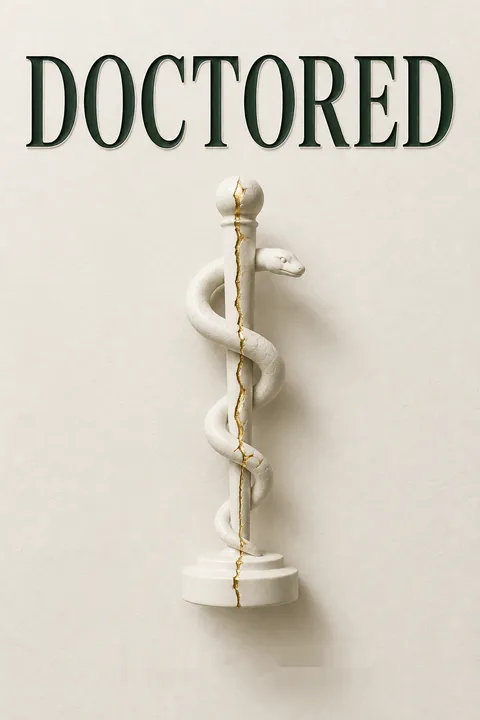
Doctored receives mixed reviews, with some praising its honesty and insights into the healthcare system, while others criticize the author's perceived complaining and entitlement. Readers appreciate Jauhar's candid discussion of issues like overtesting, financial pressures, and ethical dilemmas in medicine. However, many find his personal financial struggles unsympathetic given his privileged position. The book sparks debate about physician compensation, healthcare costs, and the challenges of practicing medicine in America today. Despite its flaws, some readers find it thought-provoking and illuminating.
People Also Read






Glossary
Knights, knaves, and pawns
Three models of motivationA framework used to describe how people behave in public systems. Knights act from virtue and a desire to help; knaves prioritize their own gain; pawns respond mainly to external rules and incentives. Jauhar applies the distinctions to physicians, while showing that real doctors may display all three patterns.
Moral hazard
Insurance changes risk-takingThe possibility that protection from the full cost of an action changes how people behave. In health care, patients may use more services when insurance makes care feel inexpensive, while providers may order more tests when a third party pays. Jauhar stresses that the effect can occur on both sides of the clinical relationship.
RAND Health Insurance Experiment
Study of insurance and spendingA large study that randomly assigned participants to different health insurance arrangements, ranging from full coverage to plans requiring patients to pay a greater share of costs. As described in the book, spending was highest among people whose insurance paid all costs, providing evidence that coverage affects health care use.
Relative value units
Payment weights for servicesA system for assigning relative payment values to medical services. Insurers use the values, together with a conversion factor and adjustments, to calculate physician reimbursement. Because procedures and office visits receive different weights, the system can influence which forms of work are financially attractive.
Pay for performance
Rewards tied to quality measuresA payment approach that gives physicians or hospitals financial rewards for meeting specified measures of care, such as prescribing recommended medicines or delivering treatment within a set time. Jauhar describes how such targets can encourage improvement, but may also prompt premature treatment or avoidance of high-risk patients.
Supply-sensitive care
Care shaped by local supplyA term associated in the book with Dartmouth researcher John Wennberg. It describes variation in the amount of health care delivered that tracks the local availability of doctors and services. Regions with more providers tend to have more consultations, tests, and hospital care, without necessarily achieving better outcomes.
Double effect
Foreseen harm, unintended outcomeAn ethical principle allowing an action intended to achieve a good result even when a harmful result is foreseeable, provided that harm is not intended and is not the means of achieving the good. In end-of-life care, it can justify medication intended to relieve suffering even when it may also hasten death.
About the Author
Other books by Sandeep Jauhar
Download PDF
Download EPUB
.epub digital book format is ideal for reading ebooks on phones, tablets, and e-readers.








