

Key Takeaways
Treat dopamine as a seeking signal, not a simple pleasure meter
Dopamine drives pursuit. The book describes dopamine as involved not only in pleasure, but also in anticipation, motivation, and the search for novelty. A new restaurant can feel thrilling at first, then become familiar even if the food stays excellent. Apps exploit a similar pull: unpredictable notifications and a changing feed make the next reward feel just around the corner. The book cites a 2021 estimate of about 145 minutes of social media use per person per day worldwide.
Notice the hook. The practical question is not whether an activity is enjoyable, but whether its unpredictable rewards keep drawing attention away from chosen priorities. The book compares this design to gambling, while also noting that social connection and approval make social media especially compelling.
What's useful here is the shift from asking, “Why do I enjoy this?” to asking, “What keeps me checking again?” Reward prediction and the appeal of uncertain outcomes help explain why a variable stream of notifications can outcompete a more dependable but slower payoff. The analogy has limits, however. Dopamine is not a single pleasure chemical that rises uniformly whenever someone uses a phone, and different activities affect people differently. The strongest practical claim is about attention design: when rewards are unpredictable and cues are constant, deliberate limits become more valuable.
Use a detox to interrupt habits, not to purge a brain chemical
Change the pattern. In this book, a dopamine detox means taking a planned break from activities that offer rapid, easy stimulation. It does not remove dopamine from the brain. A one-day break is presented as a starting point; a three-day break gives more time to notice what is missed, and a weekly reset can make the practice more sustainable. During a break, the book suggests lower-stimulation activities such as walking, reading, journaling, meditation, and face-to-face conversation.
Expect discomfort. Boredom, irritation, and urges to check a phone are treated as experiences to observe rather than commands to obey. A narrower practice, called dopamine fasting in the book, targets one troublesome behavior and sets clear limits instead of banning every enjoyable activity. Neither approach is a treatment for substance addiction or gambling problems; those call for professional support.
The detox is most convincing when understood as an experiment in behavior, not as a literal biochemical cleanse. Removing a familiar cue can reveal how automatic a routine has become and create room to choose a replacement. That logic fits research on habit cues and stimulus control, even without claiming that a short break resets brain chemistry. The targeted version is also more compatible with ordinary life: a phone may be necessary for caregiving or work, while a particular app habit may still be worth limiting. Severe compulsive behavior deserves clinical care, not a productivity challenge.
Make distraction inconvenient before asking willpower to win
Design the surroundings. The book's advice starts with physical and digital cues. Put the phone away from the work area, move tempting snacks out of sight, and leave a book or other intended activity within reach. Website blockers, disabled notifications, and logging out of distracting apps add small barriers between an urge and an action.
Borrow support. Trusted people can help make a goal visible and easier to keep. An accountability partner can check in, while practical help might include asking someone to hold a phone during a planned break. The book also recommends choosing a goal small enough to attempt successfully, and treating a lapse as information: identify what triggered it, adjust the plan, and resume rather than abandoning the effort.
This is a strong application of behavioral design: reduce the number of moments in which a tired person must make the same difficult choice. Friction can work in either direction, so the helpful move is to add it to the unwanted routine and remove it from the desired one. The book also invokes a limited supply of willpower, a claim that has been debated in psychology. Its practical recommendation survives that debate: attention is vulnerable to stress, fatigue, and cues, so plans that depend on perfect self-control are brittle. Social accountability can help, provided it feels supportive rather than punitive.
Practice staying with boredom, and reward the work itself
Let attention settle. The book treats boredom as a chance to stop consuming stimulation long enough for thoughts to wander. A quiet walk without music or scrolling can expose the urge to reach for a device and give imagination room to work. It suggests trying a few minutes without a screen while waiting, then noticing how the next task feels.
Value the process. Long projects such as exercise, writing, or learning a skill often deliver their clearest rewards slowly. Focusing only on the final result can make the work feel unrewarding in the meantime. A Pomodoro session uses timed work periods and short breaks; time blocking assigns one type of task to a scheduled stretch. Both methods aim to protect attention. Adding a manageable challenge can make routine work more engaging.
The point is not that boredom is automatically creative, but that uninterrupted mental space can support reflection and reduce reflexive switching. Research on mind wandering suggests it can help with some forms of creative problem solving, though the effect depends on the task and the person. Process focus offers a related advantage: it puts attention on actions that can be repeated today, rather than an outcome that may be distant or uncertain. Timers are scaffolds, not laws. A demanding task may need longer stretches, and some people find rigid intervals disruptive.
Build meals around minimally processed plants, not diet dogma
Start with patterns. The book favors a flexible diet built around ordinary foods, moderate portions, and plenty of plants. It highlights Mediterranean and Okinawan eating patterns, which include vegetables, legumes, and other plant foods, with seafood or lean protein and healthier fats. It regards highly restrictive plans such as keto and paleo as harder to sustain and less consistently supported in the material it reviews. The aim is a workable pattern, not a perfect menu.
Treat extras as extras. The book discusses protein foods that supply tyrosine, fermented foods, fiber, and gut microbes, while cautioning that supplements cannot replace a varied diet. It recommends checking for actual nutritional needs and consulting a clinician, especially when taking medication or managing a health condition. Probiotic foods and prebiotic fiber are presented as ways to support the gut ecosystem, not as miracle cures.
The most durable nutrition message is about overall dietary patterns rather than a magic ingredient. That framing aligns with nutrition research, where whole patterns are often more informative than claims about single foods. The book is appropriately wary of restrictive diets and supplement marketing, but its discussion of food and dopamine can sound more direct than the evidence warrants. Eating tyrosine-rich foods does not mean that a person can precisely tune dopamine or attention through menu choices. Gut-microbe research is promising, yet links between microbiome composition and mood or disease do not by themselves establish that a particular probiotic will improve those outcomes.
Make healthy choices the default with tiny, targeted changes
Arrange the choice. A nudge is a small feature of an environment that makes one option easier to choose without removing alternatives. The book calls the design of such options choice architecture. Put fruit where it is easy to see, keep less helpful snacks out of immediate reach, or leave exercise clothes ready. These changes reduce the number of decisions required at the moment of temptation.
Make the change specific. A micro-resolution is a small, measurable behavior change designed to be achievable in a defined situation. Instead of promising to overhaul an entire diet, someone might make one modest adjustment to a recurring snack. The book argues that a small change is more likely to stick than a sweeping vow, especially when it addresses a behavior that happens frequently. A simple record or check-in can show whether the adjustment is working.
Choice architecture explains why the same person can make different decisions in different settings. Defaults and visibility shape behavior without requiring a personality transplant. Micro-resolutions add a useful scale rule: target a repeated behavior where a modest adjustment can accumulate. Still, nudges are not neutral by definition. The same design tools can serve commercial goals, as checkout displays show, so personal use benefits from a clear account of whose interests the environment supports. Tracking can also become its own burden; a useful measure should clarify progress without turning ordinary eating or movement into constant surveillance.
Anchor sleep to consistent timing and morning daylight
Work with the clock. A circadian rhythm is the body's roughly 24-hour cycle of changes in sleepiness, alertness, hormone release, appetite, and other functions. Light helps set this timing. The book explains that bright light at night can delay the body's sleep signals, while daylight in the morning and during the day supports a clearer day-night pattern.
Keep a steady schedule. The book recommends a regular bedtime and wake time, with roughly seven to nine hours of sleep for most adults. It suggests gradually shifting a difficult schedule in small increments rather than forcing a sudden change. Simple notes about sleepiness, waking, and daytime energy can reveal patterns; apps and wearables may provide extra data, but they are imperfect. A steady routine matters more than chasing a perfect sleep score.
Sleep timing is a useful example of biology meeting environment. Daylight provides a strong time cue, while late bright light can push against the intended bedtime. Regularity also makes a sleep routine easier to anticipate and protect. The book's advice to monitor patterns is most useful when observations guide a practical adjustment, not when a device's estimate is treated as a diagnosis. Chronotype, work schedules, caregiving, and health conditions shape what consistency can look like. The goal is alignment that is workable, not a rigid ideal that ignores real constraints.
Protect seven to nine hours; no weekend catch-up hack replaces routine
Make the bedroom support sleep. The book recommends a dark, cool, quiet room and keeping work and entertainment away from the bed when possible. Dim lights before bedtime, move devices beyond easy reach, and build a calming wind-down routine such as reading or journaling. Morning light and a pleasant wake-up routine can help reinforce the sleep schedule. It also advises avoiding caffeine close to bedtime, limiting alcohol as a sleep aid, and exercising earlier if late workouts disrupt rest.
Skip miracle claims. The book rejects the idea that most people can train themselves to thrive on four hours of sleep. Naps may help some people feel more alert, but they do not replace regular nighttime sleep. Sleeping late on weekends is not presented as a reliable fix for chronic short sleep. If sleep problems persist, medical guidance is more appropriate than escalating a collection of untested hacks.
The book's strongest sleep advice is deliberately unglamorous: protect enough time, reduce interference, and repeat a routine. That emphasis corrects a culture that treats rest as optional while expecting reliable attention and emotional control. Evidence for particular sleep-environment details can vary, and caffeine sensitivity differs across people, so the suggestions are best treated as adjustable experiments. Persistent insomnia, loud snoring, or severe daytime sleepiness can signal a health issue rather than a failure of discipline. A routine is valuable, but it should not delay appropriate care.
Analysis
The book's organizing idea is that attention and self-regulation are not merely matters of character. They are shaped by cues, reward patterns, daily routines, food, light, and sleep. This makes its most persuasive material practical: reduce digital temptation by changing access, use small commitments instead of sweeping vows, and treat sleep as a prerequisite for good decisions rather than a reward for finishing work.
Its central metaphor needs careful handling. “Dopamine detox” suggests that dopamine accumulates like a toxin, then drains during abstinence. The book explicitly says this is not the goal, yet it often describes behavior change as reducing excessive dopamine levels or resetting the brain. Dopamine is involved in motivation and reward learning, but ordinary phone use cannot be reduced to a measurable surplus that a weekend fast clears. The metaphor is useful if translated into a behavioral experiment: pause a highly cued activity, observe urges, and decide what role it deserves in daily life.
The book also places several kinds of evidence side by side. The case for adequate sleep and broadly nutritious dietary patterns is stronger than many claims about individual supplements, particular light therapies, or temperature-based performance hacks. Readers benefit from keeping that evidence hierarchy visible. A food, app, or wearable should not be mistaken for a guaranteed intervention just because it is discussed in biological terms. The most coherent principle across the book is to make better behavior easier to repeat. That principle respects biology without pretending the body is a programmable machine. It also leaves room for structural realities: shift work, caregiving, disability, and limited access to food or safe outdoor space can make ideal routines difficult. Good biohacking, in this account, is not maximal control. It is thoughtful adjustment of the conditions a person can actually influence, paired with professional help when the problem exceeds self-management.
Review Summary
Dopamine Detox receives mixed reviews, with an average rating of 3.24/5. Some readers find it insightful and practical, offering useful strategies for managing dopamine levels and improving focus. Others criticize it for being repetitive and containing obvious information. The book is praised for its accessible approach to neuroscience and practical tips for lifestyle changes. However, some reviewers feel it could have been condensed into a blog post and that it deviates from its main topic in later chapters. Overall, readers appreciate the core concept but have varying opinions on its execution and depth.
Glossary
Dopamine detox
Planned break from stimulationA short-term practice of abstaining from selected activities that provide rapid, easy stimulation, such as social media or gaming. In the book, the term is metaphorical: the aim is not to remove dopamine, but to interrupt routines, experience cravings without immediately acting on them, and reconsider which activities merit attention.
Dopamine fasting
Ongoing limits on habitsA longer-term, usually less severe approach that limits specific behaviors considered distracting or harmful while making room for activities aligned with personal goals. Unlike the book's broad detox, fasting can set boundaries around one behavior rather than eliminating many sources of stimulation. The book uses the term for sustainable habit change, not literal abstinence from dopamine.
Choice architecture
Design shaping available choicesThe arrangement and presentation of options in an environment, which can influence what people choose without formally removing alternatives. A person can use choice architecture to make a desired action easier, such as keeping ready-to-eat fruit visible or placing distracting devices farther away. The book connects this idea to nudges and behavioral economics.
Micro-resolution
Small, measurable behavior changeA limited and specific adjustment to a recurring behavior, chosen because it is manageable and its effects can be observed. Rather than attempting a dramatic lifestyle overhaul, a person targets one situation and makes a modest change there. The book presents micro-resolutions as a way to build consistency and avoid the discouragement associated with unrealistic promises.
Circadian rhythms
Roughly 24-hour body cyclesRecurring changes in bodily and mental functions that follow an approximately 24-hour cycle. These rhythms influence sleep and wakefulness, alertness, appetite, temperature, and hormone release. The book emphasizes that environmental light helps synchronize the body's timing, which is why daylight exposure and regular sleep schedules can support a more stable day-night pattern.
Pomodoro technique
Timed work and break intervalsA method for organizing focused work into short, timed periods separated by breaks. The book describes the traditional format as 25 minutes of work followed by a five-minute break, while noting that people can adjust the interval. Its purpose is to set aside a defined stretch for one task and reduce interruptions, not to guarantee focus for every person or kind of work.
Flow state
Deep absorption in an activityA mode of engagement marked by sustained attention to an activity, smooth performance, reduced awareness of distracting thoughts, and a diminished sense of time passing. The book links flow to focusing on the task rather than fixating on its final result. It suggests that protected time and an appropriately engaging challenge can make this kind of absorption more likely.
Nudge
Small prompt shaping behaviorA small change in the surrounding environment that makes a particular choice more likely while leaving other options available. Examples in the book include placing healthy food in sight, making distracting apps harder to access, or preparing exercise gear in advance. A nudge changes the conditions around a decision, rather than relying only on a person's intention at the moment of choice.
FAQ
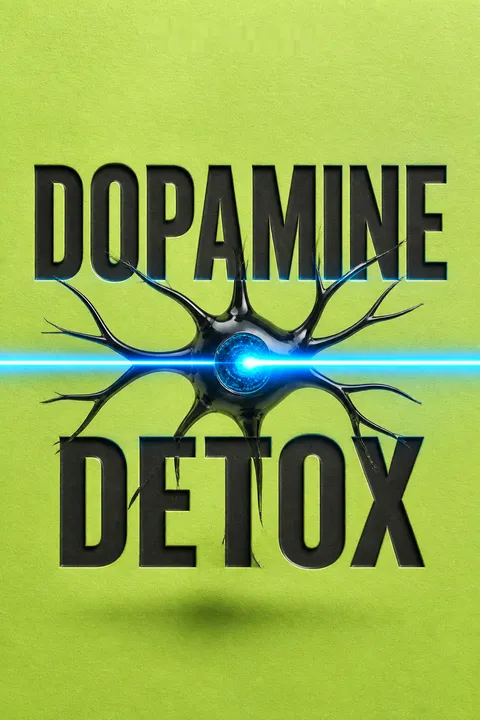
What's "Dopamine Detox: Biohacking Your Way To Better Focus, Greater Happiness, and Peak Performance" about?
- Overview: The book by Nick Trenton explores the concept of "dopamine detox" as a method to improve focus, happiness, and performance by managing dopamine levels in the brain.
- Biohacking Focus: It introduces biohacking techniques to enhance mental and physical well-being without extreme measures.
- Key Areas: The book covers three main areas: dopamine management, nutrition, and sleep, providing practical strategies for each.
- Goal: The ultimate aim is to help readers take control of their neurochemistry to lead a more balanced and fulfilling life.
Why should I read "Dopamine Detox"?
- Improved Focus: The book offers strategies to reclaim focus by managing dopamine levels, which can be beneficial for productivity.
- Happiness and Performance: It provides insights into achieving greater happiness and peak performance through lifestyle changes.
- Practical Techniques: Readers can learn practical, everyday biohacking techniques that don't require extreme measures.
- Holistic Approach: The book addresses multiple aspects of well-being, including mental, physical, and emotional health.
What are the key takeaways of "Dopamine Detox"?
- Dopamine Management: Understanding and managing dopamine levels can significantly impact motivation, focus, and pleasure.
- Biohacking Techniques: Simple lifestyle changes, such as adjusting diet and sleep, can enhance overall well-being.
- Environmental Influence: Creating a supportive environment can help maintain focus and reduce distractions.
- Sustainable Habits: The book emphasizes the importance of small, sustainable changes over drastic measures.
How does Nick Trenton define "biohacking" in the book?
- Broad Definition: Biohacking is any attempt to improve or enhance the biological realities of human life.
- DIY Experiments: Initially associated with DIY experiments, it now includes everyday strategies for better health.
- Practical Application: The book focuses on practical biohacking techniques that can be easily integrated into daily life.
- Goal: The aim is to use science to improve longevity, mood, mental faculties, and overall vitality.
What is a "dopamine detox" according to Nick Trenton?
- Concept: A dopamine detox involves reducing activities that provide quick dopamine hits to reset the brain's reward system.
- Purpose: The goal is to recalibrate dopamine levels to improve focus, motivation, and enjoyment of everyday activities.
- Activities to Avoid: It includes avoiding social media, sugary foods, and other instant gratification sources.
- Duration: The book suggests different detox durations, such as 1-day, 3-day, or 7-day plans, depending on individual needs.
How does "Dopamine Detox" suggest managing nutrition for better focus and happiness?
- Dietary Guidelines: The book recommends following a diet that includes real food, not too much, and mostly plants.
- Popular Diets: It discusses the Mediterranean, Okinawan, keto, and paleo diets, highlighting their benefits and drawbacks.
- Superfoods and Supplements: The book suggests incorporating superfoods and being cautious with supplements.
- Gut Health: Emphasizes the importance of probiotics and prebiotics for maintaining a healthy gut biome.
What role does sleep play in "Dopamine Detox"?
- Essential for Health: Sleep is highlighted as a crucial factor for physical and emotional well-being.
- Circadian Rhythms: The book explains the importance of aligning sleep patterns with natural circadian rhythms.
- Sleep Environment: It suggests creating a conducive sleep environment by managing light, temperature, and distractions.
- Routine: Establishing a regular sleep schedule is emphasized as a key strategy for improving sleep quality.
What are some practical biohacking techniques mentioned in "Dopamine Detox"?
- Environmental Nudges: Small changes in the environment can promote healthier choices and behaviors.
- Micro-Resolutions: Making tiny, specific changes can lead to significant long-term impacts.
- Light and Temperature: Managing exposure to natural light and adjusting room temperature can enhance sleep and focus.
- Mindfulness and Relaxation: Incorporating mindfulness practices can help manage stress and improve overall well-being.
How does "Dopamine Detox" address the issue of modern distractions?
- Dopamine Hijacking: The book explains how modern distractions like social media exploit the brain's dopamine system.
- Reducing Distractions: It suggests strategies to minimize distractions, such as using apps to block social media.
- Accountability: Encourages seeking social support and accountability to stay focused on goals.
- Compassionate Approach: Emphasizes being compassionate with oneself when lapses occur and learning from mistakes.
What are the benefits of a dopamine detox as per Nick Trenton?
- Recalibration: Helps reset the brain's reward system to enjoy more meaningful and productive activities.
- Improved Focus: Reduces reliance on instant gratification, leading to better focus and attention.
- Emotional Balance: Can lead to improved mood and emotional regulation by managing dopamine levels.
- Long-Term Habits: Encourages the development of sustainable habits that align with personal values and goals.
What are some common myths about sleep debunked in "Dopamine Detox"?
- Four-Hour Sleep Myth: The book clarifies that most adults need 7-8 hours of sleep and cannot train themselves to need less.
- Sleep Debt: Napping or sleeping in on weekends cannot fully compensate for chronic sleep deprivation.
- Alcohol and Sleep: Alcohol may induce sleepiness but disrupts the quality of sleep.
- Sleeping Pills: Cautions against relying on sleeping pills due to potential negative effects and dependency.
What are the best quotes from "Dopamine Detox" and what do they mean?
- "Biohacking is about making the unconscious conscious." This quote emphasizes the importance of awareness in making deliberate changes to improve well-being.
- "Dopamine is the chemical of striving for more." Highlights dopamine's role in motivation and the pursuit of goals.
- "Sleep is the most important requirement for your health." Underlines the critical role of sleep in maintaining overall health and functioning.
- "Eat food, not too much, mostly plants." A simple guideline for a balanced and healthy diet that supports well-being.
About the Author
Other books by Nick Trenton


Download PDF
Download EPUB
.epub digital book format is ideal for reading ebooks on phones, tablets, and e-readers.








