

Key Takeaways
Trade complaint loops for one action within your actual control.
Agency is not omnipotence. A proactive mindset means taking responsibility for your choices, not pretending to control other people or every outcome. When frustration turns into blame or complaint, pause and ask what action is available. The answer might be to change a situation, ask someone for help, or leave. If no practical action is possible, choosing how to respond is still different from surrendering to automatic resentment.
Turn wishes into steps. The book treats repeated thoughts about someday, or how life would improve if circumstances changed, as possible disguises for delay. A complaint journal makes the pattern visible, but each entry must lead to one concrete step. Want to learn a skill? Find out what the first requirement is. Want a difficult interaction to change? Decide what to say or do. Small actions restore a sense of agency without promising control over results.
The useful distinction here is between control over outcomes and influence over the next move. That resembles a core idea in behavioral activation: action can precede motivation, rather than waiting for a better mood to arrive first. The advice is strongest when it converts vague frustration into a specific choice. It needs one safeguard, though. Not every hardship is self-created or readily changeable. Responsibility should mean identifying available agency, not blaming people for constraints, illness, discrimination, or other conditions they did not choose.
Create distance from emotion before choosing what it means or what to do.
Space restores perspective. Psychological distance is a pause between an intense experience and an automatic reaction. It is not suppression or cold detachment. The book describes several ways to create it: move to a different place, step away from a person, consider how the situation may look tomorrow, or imagine an alternative response. After an argument, a walk and the reminder that clearer thinking may come after sleep can make options easier to see.
Borrow another viewpoint. Write the problem as if a friend were telling it, then consider what advice they might need. Or picture a future version of yourself looking back at the present choice. These exercises loosen the grip of an immediate interpretation. The problem may remain, and the feeling may remain too, but a wider view can make deliberate action more accessible than an urgent reaction.
Distance is a practical way to change the scale of a problem without denying its importance. Research on psychological distancing broadly supports the idea that viewing an event from a more detached vantage can help people regulate emotion and think less narrowly. But distance is a tool, not a destination. Repeatedly stepping away can become avoidance, especially when a conversation or decision needs attention. The strongest use is temporary: create enough room to respond, then return to the situation with clearer priorities.
Accept inner experience, then act toward values instead of waiting to feel calm.
Awareness should lead somewhere. The book calls its approach Action Commitment Therapy, or ACT. It presents mindfulness not as escape from difficult feelings, but as a way to notice them and act according to personal values. Its six processes are present-moment awareness, seeing thoughts as thoughts, acceptance, the observing self, clarifying values, and committed action. In practical terms: acknowledge what is happening inside, choose a direction that matters, and take a step toward it.
Feelings need not decide. A person facing rejection might notice hurt without treating it as proof of worthlessness, remember that kindness matters to them, and call another friend rather than replaying the rejection all evening. Values are enduring directions, such as courage or compassion; goals are particular outcomes. The point is not to guarantee calm, but to make room for meaningful action even when calm has not arrived.
This framework’s strength is that it connects attention to behavior. Mindfulness can become another form of inward monitoring if it never changes how someone lives; values give awareness a practical destination. The distinction between a feeling and a command is especially useful under stress. Still, values are not always obvious, and competing values can pull in opposite directions. A person may need time, conversation, or professional support to clarify them. The approach is better understood as a flexible compass than a formula for instant certainty.
Test thoughts by their usefulness, not by how loudly they demand attention.
Rumination imitates problem-solving. Ordinary thought can clarify a choice or reveal a lesson. Rumination circles the same worries, predicts disasters, rehearses imaginary conversations, and produces little new understanding. It may briefly feel like preparation, but that sense of control fades. Instead of arguing with every thought or trying to force it away, ask whether following it helps with a real next step or a valued direction.
Change the channel deliberately. The book’s 3M Strategy is to move, make, or meet: use physical activity, create or repair something, or connect with another person. A walk, preparing food, or a conversation can interrupt a closed mental loop. Forgiveness is another option when replaying an old injury keeps attention fixed on it. It does not excuse the harm; it means choosing not to keep feeding the replay.
The distinction between reflection and rumination is valuable because it uses a functional test: does thinking produce insight or action, or merely renew distress? That question is less likely to turn mental life into a courtroom where each thought must be proven true or false. The risk is treating all repetitive thought as useless. Some problems require sustained planning, and a thought can feel uncomfortable while still being informative. A practical stopping rule is to pause when no new information or decision is emerging, then return with a specific question.
Run stress through avoid, alter, accept, and adapt before defaulting to worry.
Choose the kind of response. The Four A’s of Stress Management offer a sequence for handling a stressor. Avoid what is unnecessary, alter what can be changed, accept what cannot be changed now, and adapt your expectations or habits when the stress is likely to remain. A person overwhelmed by crowded shops might shop at a quieter time. If a colleague repeatedly interrupts, they might speak directly, set a boundary, or change how they participate in meetings.
Acceptance is not the first resort. The sequence encourages people to check whether a stressor can be removed or improved before trying to live with it. If it cannot be changed, accepting the feeling and the circumstance may free attention for what remains possible. Adaptation might mean developing assertiveness, or revising perfectionistic standards that keep generating avoidable pressure. The framework asks a concrete question: what kind of response fits this stressor?
The four-part sequence is memorable because it separates problems that often get lumped together as one overwhelming feeling. It also highlights environmental design: sometimes the kindest response to stress is to change the conditions, not simply train oneself to tolerate them. The caution is that avoidance can help with needless friction but can also reinforce fear if it becomes the default. The relevant test is whether stepping away protects time and values, or steadily shrinks the person’s life.
Expose automatic beliefs, then rehearse alternatives grounded in evidence and action.
Notice the hidden script. Automatic negative thoughts are quick interpretations that can shape self-image without being examined. A first date, for example, may trigger the prediction that the other person will reject you. Cognitive restructuring means noticing that thought, considering its effects and alternatives, then trying a more useful perspective. The goal is not to paste a cheerful slogan over fear, but to loosen a familiar belief and see what changes in behavior.
Make alternatives concrete. A two-column page can place the automatic thought beside a more balanced response. Other tools include asking what evidence supports an assumption, writing down situations and reactions, or imagining a difficult event handled differently. If the mind predicts that a request will be refused, an alternative can acknowledge uncertainty and turn worry into the action of asking. The book also recommends examining absolute language, mind-reading, and worst-case predictions rather than treating them as facts.
This approach bridges the book’s earlier emphasis on accepting thoughts with a later invitation to examine them. The productive distinction is between battling a thought and investigating it with curiosity. Writing can make an invisible assumption inspectable, while a small behavior change tests whether an alternative is useful in real life. Cognitive restructuring is most credible when it stays evidence-aware. A balanced interpretation should not become forced optimism, particularly when the evidence points to genuine risk or a relationship that needs to change.
Return from imagined Elsewhere to the body and the moment actually here.
The senses interrupt mental travel. The book contrasts the present moment with Elsewhere, its name for getting absorbed in memories, predictions, and imagined scenarios. Attention to the body can bring awareness back to what is happening now. A simple grounding practice notices five things in view, four sounds, three points of touch, two smells, and one taste. A sensory meditation might instead involve carefully noticing the texture and flavor of a piece of fruit.
Separate discomfort from added struggle. The book calls physical or emotional hurt pain, and the resistance, blame, or repeated stories layered onto it suffering. A flu hurts; condemning oneself for being sick adds another burden. Acceptance does not mean refusing treatment or change. It means acknowledging the present experience without insisting that it should already be different, then responding to what can actually be done.
The body offers a useful counterweight to abstract worry because sensation is immediate and specific. Grounding exercises can help attention disengage from spiraling thought, while movement may offer a practical way to shift state. The pain and suffering distinction is evocative, but it needs care: suffering is not always a chosen add-on, and trauma, chronic illness, and grief cannot be reduced to poor acceptance. The idea is most humane when it offers an extra source of agency without implying that distress is someone’s fault.
Describe what happened before turning one behavior into someone's whole identity.
Separate observation from verdict. A person drops litter. That is an observable event; calling them selfish, then concluding that society is collapsing, adds interpretations and a much larger story. The book argues that judgment often turns a moment or behavior into a fixed identity. To interrupt that leap, stick briefly to what can be seen or heard, and notice when assumptions, predictions, or mind-reading enter the picture.
Curiosity keeps people complex. Someone who failed yesterday is not thereby destined to fail today. Someone’s rude act can be addressed without declaring that the act reveals their entire character. This does not require approving of harmful behavior or abandoning boundaries. It means distinguishing the specific behavior that needs a response from the totalizing narrative that can fuel resentment, shame, or unnecessary conflict.
Separating facts from interpretations resembles a basic discipline in science: distinguish the observation from the explanation proposed for it. It can also improve conflict by making complaints more precise. Yet judgments are not always merely anxious noise. Evaluating patterns of behavior can help identify danger, unfairness, or a need for a firm boundary. The useful correction is not to stop evaluating, but to keep conclusions proportionate to evidence and open to revision.
Let opposites coexist without converting difference into a verdict of good or bad.
Difference need not mean conflict. The book uses non-duality to describe a view of experience that resists dividing everything into fixed, opposing categories. A person can be a beginner at singing and still be learning; a friend can make a serious mistake without becoming nothing but that mistake. The farmer’s story illustrates uncertainty: a horse escapes, returns with another horse, injures the farmer’s son, and the injury later spares him from being drafted. Each event looks fortunate or disastrous until events unfold.
Use language that makes room. The exercise called There I Go asks a person to imagine aspects of other people’s experience as imaginable in oneself, encouraging connection rather than quick condemnation. Another practice replaces a divisive but with and, allowing two facts or feelings to stand together. These practices aim to reduce rigid judgments, not erase real differences or the consequences of harmful actions.
The appeal of this perspective is epistemic humility: a single event rarely reveals the whole arc of a life, and people contain contradictory qualities. Language that allows two facts to coexist can soften false either-or choices. But non-duality can be misused if it treats moral distinctions as illusions or minimizes preventable harm. A careful version preserves both truths: people are more than their worst act, and specific acts can still demand accountability, protection, or repair.
Analysis
The book’s central move is to treat overthinking less as a problem of having the wrong thoughts and more as a problem of being captured by thought. Its practical sequence is coherent: notice the mental loop, create enough distance to see it, accept what cannot be changed, then choose a response guided by values. Agency, attention, and action recur across its different tools, from the complaint journal to sensory grounding and the Four A’s.
That unity is also the book’s main strength. The reader is not asked to achieve a pristine mind before living well. Thoughts and feelings can remain present while behavior becomes more deliberate. The distinction between useful reflection and circular rumination gives this principle a workable test, and the examples make it accessible without requiring technical training.
A tension remains between acceptance and cognitive restructuring. One passage warns against challenging thoughts, while another recommends questioning assumptions and considering alternatives. These approaches fit together if acceptance means allowing a thought to appear without treating it as fact, and restructuring means examining it without self-punishment. Without that distinction, readers may hear both do not challenge thoughts and change your thoughts as competing instructions.
The book’s confidence in personal choice also needs a boundary. Agency can reduce helplessness, but circumstances are not equally flexible for everyone. Likewise, describing suffering as avoidable can encourage acceptance, yet risks making unavoidable distress sound like a personal failure. Grounding and reframing can be useful tools, but they are not substitutes for changing dangerous conditions or seeking professional care when anxiety is severe or persistent.
One terminology note: the book calls its approach Action Commitment Therapy. In established clinical usage, ACT generally stands for Acceptance and Commitment Therapy. The book’s own practical emphasis is clear: accept inner experience, choose a valued direction, and take action. That sequence is the most portable takeaway, provided it is treated as a guide rather than a cure-all.
Review Summary
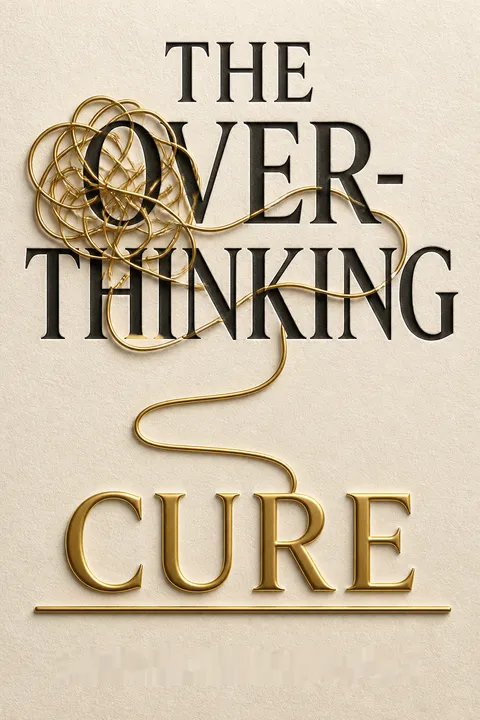
Readers found The Overthinking Cure to be a quick, simple read with mixed reactions. Many appreciated its straightforward advice on managing anxiety and overthinking, finding it helpful for daily life. Some readers felt it lacked depth or originality, with criticisms of typos and formatting issues. Positive reviews noted its easy-to-implement strategies and clear ideas. Negative reviews cited repetitive content and oversimplification of complex issues. Overall, the book seems best suited for those seeking basic techniques to combat everyday stress and overthinking.
People Also Read







Glossary
Action Commitment Therapy
Acceptance linked to actionThe name the book gives its mindfulness-based approach to anxiety and overthinking. It combines acknowledging internal experiences that cannot simply be controlled with choosing actions that reflect personal values. The text presents awareness, acceptance, values, and committed action as connected skills for responding to life rather than being driven by automatic reactions.
Psychological distance
Space from immediate experienceA way of stepping back from intense thoughts or emotions enough to notice them and consider options. The book describes creating distance through changes in physical location, social separation, imagining the future, or picturing a different possible response. Distance is not emotional numbness; it is a means of gaining perspective before acting.
Cognitive defusion
Seeing thoughts as thoughtsA practice of separating a thought from the reality it describes. A person may notice a prediction, memory, or interpretation as mental content rather than an unquestionable fact or instruction. The aim is not to force the thought away, but to reduce its power to dictate attention and behavior.
Experiential avoidance
Resistance to inner experienceThe effort to escape, suppress, or resist unwanted thoughts, feelings, and bodily sensations. The book argues that this may offer short-term relief but can contribute to longer-term distress by keeping attention fixed on what must not be felt. Acceptance instead means acknowledging an experience without requiring approval or surrendering the ability to act.
Observing self
Awareness of ongoing experienceThe perspective from which a person notices thoughts, emotions, bodily sensations, and events without being wholly absorbed by them. The book distinguishes this awareness from ordinary thinking, which generates interpretations and memories. From this observing position, a person can recognize an experience and choose a response instead of reacting automatically.
Cognitive restructuring
Revising unhelpful interpretationsA deliberate process of identifying automatic thoughts, examining how they affect behavior, and considering more useful alternatives. The book stresses that this is not simply replacing negative statements with positive slogans. Alternatives should be plausible, related to personal values, and capable of supporting a different choice or action.
Cognitive distortions
Biased patterns of interpretationRecurring ways of interpreting events that can narrow perspective or make conclusions more extreme than the available evidence supports. Examples in the book include catastrophizing, magnification, overgeneralization, and black-and-white thinking. Recognizing a distortion is intended to create room for a more balanced view, not to shame oneself for having the thought.
3M Strategy
Move, make, or meetA brief set of alternatives for interrupting a rumination loop. Move by engaging in physical activity, make something through a practical or creative task, or meet another person for social contact. These actions redirect attention away from repetitive internal thought and can help restore perspective before returning to a problem.
Four A’s of Stress Management
Four responses to stressA framework for deciding how to respond to a stressor: avoid what is unnecessary, alter what can be changed, accept what cannot be changed, and adapt to ongoing conditions. The sequence encourages a person to distinguish removable stress from unavoidable difficulty, rather than treating every stressor as a demand to worry or endure.
Non-duality
Wholeness beyond fixed oppositesA perspective that questions rigid divisions such as good and bad, or right and wrong, when those labels turn complex people and events into fixed categories. In the book, non-duality encourages accepting that contrasting qualities can coexist and that a single event may change meaning as circumstances unfold. It is not presented as a reason to ignore harmful behavior.
FAQ
What's "The Overthinking Cure" about?
- Focus on Overthinking: "The Overthinking Cure" by Nick Trenton is a guide to overcoming the habit of overthinking, which often leads to stress and anxiety.
- Present Moment Awareness: The book emphasizes staying in the present moment and reducing mental chatter to achieve a calmer, more focused mindset.
- Practical Techniques: It offers practical strategies and exercises to help readers manage their thoughts, reduce negativity, and improve emotional well-being.
Why should I read "The Overthinking Cure"?
- Improve Mental Health: The book provides tools to manage stress and anxiety, which are common issues in today's fast-paced world.
- Enhance Emotional Well-being: By following the strategies in the book, readers can achieve greater emotional balance and happiness.
- Actionable Advice: It offers actionable steps and exercises that can be easily integrated into daily life to foster a proactive mindset.
What are the key takeaways of "The Overthinking Cure"?
- Proactive Mindset: Cultivating a proactive rather than reactive mindset is crucial for reducing anxiety and stress.
- Mindfulness and Acceptance: Embracing mindfulness and acceptance helps in dealing with life's uncertainties and challenges.
- Cognitive Restructuring: Restructuring negative thoughts and beliefs can lead to a more positive and fulfilling life.
How does Nick Trenton suggest we handle stress and anxiety?
- ACT Model: Trenton introduces Action Commitment Therapy (ACT), which involves accepting what cannot be controlled and taking action on what can be changed.
- Four A's of Stress Management: The book outlines avoiding, altering, accepting, and adapting as strategies to manage stress effectively.
- Mindfulness Practices: Incorporating mindfulness into daily routines helps in staying present and reducing overthinking.
What is the difference between being proactive and reactive according to "The Overthinking Cure"?
- Proactive Approach: Proactive individuals take responsibility for their actions and focus on creating conditions that align with their values.
- Reactive Approach: Reactive individuals respond to external circumstances and often feel powerless, leading to increased anxiety.
- Mindset Shift: The book encourages shifting from a reactive to a proactive mindset to gain control over one's life and emotions.
How does "The Overthinking Cure" address cognitive distortions?
- Awareness of Thoughts: The book emphasizes becoming aware of automatic negative thoughts and cognitive distortions that affect mental health.
- Cognitive Restructuring Techniques: Techniques like the two-column method and Socratic questioning help in challenging and reframing negative thoughts.
- Positive Alternatives: By identifying and adopting more useful and positive thoughts, individuals can change their self-concept and behavior.
What role does mindfulness play in "The Overthinking Cure"?
- Present Moment Focus: Mindfulness is about being fully present and aware without judgment, which helps in reducing anxiety and overthinking.
- Grounding Techniques: The book suggests grounding techniques like the 5-4-3-2-1 method to connect with the present moment through the senses.
- Observing Self: Developing an observing self allows individuals to detach from their thoughts and emotions, gaining a clearer perspective.
What are the best quotes from "The Overthinking Cure" and what do they mean?
- "Life is 10% what happens to you and 90% how you deal with it." This quote emphasizes the importance of mindset and response over external circumstances.
- "What you resist, persists." It highlights the idea that resisting reality often leads to prolonged suffering, whereas acceptance can bring peace.
- "All we have is now." This quote underscores the significance of living in the present moment rather than dwelling on the past or future.
How does "The Overthinking Cure" suggest we deal with judgment?
- Non-Judgmental Awareness: The book encourages dropping judgment of oneself and others to foster acceptance and reduce anxiety.
- Focus on Facts: By focusing on facts rather than interpretations or assumptions, individuals can avoid unnecessary conflict and stress.
- Non-Duality Concept: Embracing non-duality helps in seeing the wholeness and connectedness of life, reducing the tendency to judge and categorize.
What is the significance of acceptance in "The Overthinking Cure"?
- Acceptance Over Resistance: Acceptance involves acknowledging reality without resistance, which can lead to greater peace and less anxiety.
- Surrender to the Present: The book suggests surrendering to the present moment and letting go of the need to control everything.
- Pain vs. Suffering: Acceptance helps differentiate between inevitable pain and avoidable suffering, allowing individuals to let go of unnecessary distress.
How can imagination help in managing overthinking according to "The Overthinking Cure"?
- Creating Distance: Imagination can be used to create psychological distance from overwhelming emotions and thoughts.
- Advising a Friend Technique: Imagining advising a friend can provide a fresh perspective on personal issues.
- Visualizing Alternatives: Visualization exercises help in exploring different possibilities and solutions, reducing the grip of negative thoughts.
What exercises does "The Overthinking Cure" recommend for reducing overthinking?
- Two-Column Technique: This exercise involves writing down negative thoughts and reframing them into positive alternatives.
- Sensory Meditation: Engaging fully with the senses in the present moment helps in calming the mind and reducing overthinking.
- 3M Strategy: The book suggests moving, making, and meeting as quick ways to break out of rumination and engage with the present.
About the Author
Other books by Nick Trenton



Download PDF
Download EPUB
.epub digital book format is ideal for reading ebooks on phones, tablets, and e-readers.








