

Key Takeaways
Question the beliefs that quietly choose your life for you
Unexamined values steer choices. Socrates argues that people act according to what seems good to them, even when their priorities are confused. The Sneetches divide themselves over tiny belly stars, treating a meaningless difference as proof of superiority. Gertrude McFuzz wants more feathers because she mistakes appearance for worth, and Yertle wants a taller throne because he confuses power with a good life. Their stories make abstract questions personal: What do you value, and why?
Examination changes the view. Socratic questioning tests whether beliefs are coherent and supported, rather than accepted just because everyone repeats them. The goal is not perfect certainty. It is to notice when a fashionable measure of success is making life smaller or less humane.
What's striking is how the stories make self-examination concrete without turning it into a lecture. Social psychology offers a useful parallel: people often judge themselves through comparison with peers, which can make status feel like an objective measure of worth. The Sneetches dramatize that trap. Still, reflection alone does not remove every pressure. Work, money, and social standing can be necessities, not merely vanity. The practical question is therefore not whether to care about external goods, but whether they have silently become the definition of a worthwhile life.
Make courage wise, not merely stubborn when danger arrives
Endurance needs judgment. In Plato's dialogue about courage, the general Laches first describes it as standing one's ground. Socrates points out that armies sometimes need to retreat, and that stubbornness can serve foolish or harmful aims. A broader definition, endurance of spirit, also fails: risking death for a pointless dare is not virtue.
Risk should serve something worthy. Horton stays on Mayzie's egg through storms, ridicule, and danger because he has given his word. Bartholomew Cubbins shows a different courage when he challenges King Derwin, whose demand for novel weather unleashes sticky oobleck on the kingdom. Together, their examples suggest that courage includes facing fear, judging what matters, and accepting risk for a defensible purpose.
The distinction between courage and obstinacy matters well beyond military life. In medicine, activism, and leadership, persistence is praised, but continuing a failing course can deepen harm. The book's examples make room for both resolve and revision: Horton keeps a meaningful commitment, while Bartholomew resists a ruler's reckless insistence. That balance is stronger than a simple celebration of grit. The remaining difficulty is practical: people rarely know in advance which risks are worth taking. Courage therefore depends on judgment under uncertainty, not just a fixed supply of bravery.
Stop waiting for a pain-free life; make hardship serve a chosen life
Trouble cannot be escaped. In I Had Trouble in Getting to Solla Sollew, a character travels toward a place promised to have almost no problems. He arrives to find its entrance blocked, and its gatekeeper is heading to another supposed refuge. The repeated detours expose the fantasy that life can be made trouble-free simply by moving elsewhere.
Choose a response, not a denial. Schopenhauer sees striving as an endless cycle of wanting, brief satisfaction, and renewed want. Nietzsche answers not by denying suffering, but by asking people to affirm and shape their lives despite it. The character turns back toward home, prepared to meet trouble rather than keep fleeing. This is not a guarantee that suffering is good; it is a case for refusing to let it define the whole of life.
This contrast separates acceptance from resignation. A person can acknowledge real pain without treating pain as the final verdict on existence, a distinction useful in both resilience work and care for people facing chronic hardship. Nietzsche's imagined test of reliving one's life presses the question of whether a life can be embraced in its entirety, not just in its pleasant parts. Yet the language of strength has limits: suffering can overwhelm rather than ennoble. Affirmation is most credible when paired with efforts to reduce preventable harm, not used to excuse it.
Don't buy status to repair a life emptied by work
Work can estrange people. Marx's account of alienation describes a worker separated from the activity, product, and purpose of labor. In the chapter's example, Pontoffel Pock fills pickle jars through a rote task that leaves little room for choice or self-expression. Work becomes a way to earn money for life, rather than a meaningful part of life.
Consumption offers a false repair. The Sneetches buy stars to gain acceptance, while Gertrude seeks extra feathers to feel valuable. Their purchases cannot satisfy the deeper need to belong or express themselves. Marx's critique is not that every purchase is bad, but that a society organized around selling can encourage people to treat consumption as a substitute for meaningful work and human connection.
The connection between work and identity remains potent in economies where people spend much of their time doing work they did not design. The argument also anticipates a familiar marketing strategy: attach a product to belonging, confidence, or status, then sell the feeling as if it came in the package. However, meaningful work is not always available, and consumption can provide genuine comfort or pleasure. The useful distinction is between goods that enrich a life and goods asked to compensate for unmet needs that require social, relational, or workplace change.
Care whether claims are true, not merely useful to your agenda
Not all false speech is lying. A liar knows or believes the truth and tries to conceal it. The chapter, drawing on philosopher Harry Frankfurt, distinguishes this from bullshit: making claims without caring whether they are true, because they serve some other purpose. Sam's companion insists he dislikes an unfamiliar meal before trying it, mainly to stop Sam's persistence. His claim functions as a defense, not as a report based on experience.
Desire can distort judgment. In The Big Brag, a rabbit and bear compete to prove superiority, while a worm exposes how little their contest matters. In What Was I Scared Of?, fear makes a narrator interpret empty moving pants as a threat. These stories show how ego, comfort, and fear can steer belief away from evidence.
The distinction is especially useful in public debate, where confident language can create an impression of knowledge without any real commitment to accuracy. Self-deception is harder to catch because a person may sincerely defend a belief that mainly protects identity or comfort. The chapter's remedy, intellectual integrity, is a practice of openness, evidence-checking, consistency, and honest limits. A caution: not every casual exaggeration is a serious moral failure. The key issue is whether indifference to truth becomes a habit in decisions that affect other people.
Let doubt trigger investigation, not a permanent pose of skepticism
Beliefs are habits of action. Pragmatist Charles Sanders Peirce calls genuine doubt an unsettled state that prompts inquiry; belief is a more settled state that guides conduct. In Green Eggs and Ham, the resistant character has no evidence that he dislikes the dish, but repeats the claim until Sam persuades him to try it. The example makes an everyday point: a belief can be a reflexive rule, not a conclusion reached carefully.
Prefer beliefs you can correct. Peirce distinguishes reliance on authority, abstract reasoning, or sheer repetition from a scientific method that tests hypotheses against experience and remains open to revision. Marco's hope that fish may live in a polluted pool is imaginative, but its truth depends on evidence. Knowledge is not simply confidence; it requires reasons that connect belief to the world.
The value of this approach is that it treats uncertainty as a task rather than a permanent identity. Modern scientific practice similarly depends on claims being exposed to potential correction, not protected by the status of their author. The chapter also complicates the idea of a neutral knower: people encounter evidence from different bodies, histories, and social positions, so sharing perspectives can reveal what one observer misses. Still, experience is not self-interpreting. A failed test, faulty instrument, or biased sample can produce misleading confidence, so inquiry requires scrutiny of its methods as well as its conclusions.
Question universal rules without pretending every practice is equally just
Every worldview has boundaries. In On Beyond Zebra!, Conrad believes the alphabet ends at Z, while his companion imagines new letters and possibilities beyond it. The chapter uses this story to explain a metanarrative, an overarching account that claims to set the rules for what counts as knowledge or truth. Postmodern thinkers such as Lyotard and Foucault question whether one such framework can capture every human experience, and examine how accepted categories can also regulate people.
Difference still needs judgment. The Yooks and Zooks treat opposite ways of buttering bread as proof of moral inferiority, while the Sneetches use stars to exclude others. Respecting plural ways of living does not require accepting oppression as harmless. The book argues for questioning who benefits from a norm and whether it denies others dignity or voice.
This is a productive tension: universal rules can erase differences, but rejecting all shared standards can leave vulnerable people without grounds for challenging abuse. The chapter's best move is to distinguish openness to plural perspectives from moral indifference. Social categories can be historically constructed and still have powerful material effects, so exposing their origins does not make their consequences unreal. At the same time, showing that a norm is contingent does not by itself prove it unjust. A further argument is needed about whose freedom, safety, or participation the norm limits.
Use ethical theories as lenses, then deliberate about the actual case
Three theories ask different questions. Kantian ethics tests whether an action's guiding rule could apply consistently to everyone. Utilitarianism asks whether the likely consequences increase overall happiness. Aristotle's virtue ethics asks what kind of person a repeated pattern of action creates, and whether it supports a flourishing life. Thidwick's crowded horns make the differences vivid: hospitality helps guests, but unlimited generosity leaves the moose unable to live freely.
Dewey adds inquiry to judgment. He rejects the idea that one formula can settle every moral conflict. Deliberation means imaginatively testing possible actions, their consequences, and the habits they cultivate, often with help from others. The point is not that every choice is equally good. It is that sound judgment grows through reflection, experience, and willingness to revise.
These theories function less like rival calculators than like different instruments for noticing moral features: fairness, aggregate harm, and character. Complex cases often involve all three, which explains why a single metric can feel too thin. Dewey's emphasis on deliberation also connects ethics to institutional learning, where decisions can be reviewed against their effects. The danger is endless reflection that delays action. A practical discipline needs both inquiry and decision: identify the conflict, hear affected people, choose provisionally, and remain accountable for what follows.
Treat people as persons, while reserving heroism for what exceeds duty
Dignity is not a size test. In Horton Hears a Who!, Horton hears tiny beings on a speck of dust and treats their lives as worthy of protection, despite mockery from the larger animals. Kant's idea of treating humanity as an end means not using another person merely as a tool for one's own plans. Mayzie violates that respect when she misleads Horton into caring for her egg without honestly explaining her intentions.
Duty has limits worth debating. Horton Hatches the Egg celebrates his promise-keeping even when it costs him comfort and safety. The chapter questions whether every sacrifice, including risking one's life, can be required of everyone. It distinguishes ordinary moral responsibility from heroism: protecting others matters, but a person is not necessarily blameworthy for refusing an extreme sacrifice.
The account protects two ideas that can pull against each other: people deserve equal respect, and each person also has a life that cannot simply be spent for someone else's purposes. That tension is central in emergency ethics and caregiving, where assistance can be morally important without being limitless. The chapter's heroic distinction offers a useful safeguard against turning admirable sacrifice into an enforceable expectation. Its boundary remains contestable, since duties to dependents may be stronger than duties to strangers, and context can change what counts as an extreme cost.
Demand consent and fair rules before accepting anyone's authority
Government needs justification. Social contract theories explain political authority through agreements that protect people from insecurity or injustice. Hobbes emphasizes a powerful sovereign to prevent a return to violent conflict. Locke argues that government exists to protect people's rights and can be replaced when it becomes tyrannical. In Yertle the Turtle, the king forces his subjects to form a living throne, ignoring Mack's plea that those below him also have rights. Mack's burp topples the arrangement.
Fairness tests the rules. Rawls's original position asks people to choose principles without knowing their own social position. That veil of ignorance makes it harder to design rules that favor one's own group. The framework asks whether institutions would still seem fair if anyone might occupy the least advantaged place.
The stories clarify that political order is not justified merely because it exists or because a majority approves it. Consent, protection, and fair terms matter, especially when power is concentrated. Rawls's thought experiment is powerful because it turns impartiality into a practical imagination exercise. But hypothetical agreement cannot replace the voices of people actually affected by policy. It works best as a check on self-serving rules, alongside participation, evidence about consequences, and protections for those with less power.
Make business answer to people and ecosystems, not profit alone
Profit is not the only stake. Shareholder theory treats profit as a company's primary obligation, while stakeholder theory asks managers to consider employees, customers, communities, suppliers, and others affected by company decisions. Sylvester McMonkey McBean sells stars to the Sneetches, then sells ways to remove them, exploiting their insecurity rather than meeting a lasting need. The Once-ler similarly treats the Truffula forest as raw material for a fast-growing business.
Growth needs limits. The Lorax warns that production is degrading habitats, air, and water, but the Once-ler keeps expanding until the trees are gone and the factory has no resource to use. The book distinguishes doing more from improving well-being. Sustainable development requires attention to renewal, waste, and the conditions future generations inherit.
The stakeholder view challenges the fiction that business decisions are morally neutral simply because they occur inside a company. External costs, such as pollution, do not disappear when they are shifted onto workers, communities, or future residents. The Lorax makes that transfer visible. Yet broad responsibility can be difficult to operationalize when stakeholders' interests conflict, and managers may lack clear authority to resolve public problems. Transparent goals, enforceable standards, and meaningful representation can help turn concern into accountability rather than branding.
Let art widen perception, even when beauty is not the point
Art changes what can be noticed. The book uses three approaches to explain why Seuss's work matters aesthetically. Beardsley connects art to the capacity to produce an aesthetic experience, one that draws attention away from immediate practical use. Danto emphasizes that an object's meaning and historical setting help determine whether it counts as art, as shown by works that resemble ordinary objects. Cultural criticism reads stories such as The Lorax and The Butter Battle Book as imaginative critiques of consumerism and nuclear rivalry.
Play can carry serious thought. Seuss's unusual drawings, invented creatures, rhythm, and humor invite readers to see familiar assumptions from a strange angle. His work need not be conventionally beautiful or offer a tidy moral lesson to matter as art. Its imaginative force can make a political or ethical problem newly visible.
The chapter's plural approach reflects a broader insight in aesthetics: art can be valued for experience, interpretation, history, or social meaning, and no single test captures every case. Seuss is especially apt because visual play and moral unease coexist in the same work. The framework also guards against treating children's literature as culturally minor. Still, an artwork's political message does not automatically make it artistically successful. Attention to form, audience, and interpretation remains necessary alongside admiration for its cause.
Analysis
This collection is not a single philosophical system but a guided tour whose recurring method is to let a familiar story make an abstract dispute tangible. Horton becomes a test case for promise-keeping, courage, and respect. The Once-ler lets readers see how private ambition can impose public costs. The Sneetches expose how arbitrary differences acquire social power. These fables do not prove philosophical theories, but they make the theories easier to question, compare, and remember.
The book's strongest contribution is pedagogical. It makes philosophy feel less like a museum of difficult names and more like disciplined attention to ordinary choices: what counts as evidence, when persistence becomes stubbornness, how much sacrifice can be demanded, and who bears the cost of prosperity. Its movement from personal character to knowledge, ethics, politics, business, and art also suggests that philosophical questions are connected. How people define success shapes what they buy, how they work, and what they permit institutions to do.
That accessibility carries a risk. A Seussian character can make a theory look cleaner than it is. A story may expose an intuition, but it cannot settle contested claims about freedom, property, universal duties, or justice. The book is most persuasive when it treats its analogies as invitations to inquiry rather than as proofs. Its best readers will preserve the playful entry point while testing each philosophical account against complications the fable leaves outside its frame.
The resulting lesson is not simply that readers should question everything. Skepticism can become its own comfortable pose. The more demanding aim is reflective judgment: remain open to correction, notice whose interests a rule serves, and accept responsibility for decisions even when no formula guarantees a perfect answer. Seuss supplies the memorable scenes; philosophy supplies habits for thinking beyond them.
Review Summary
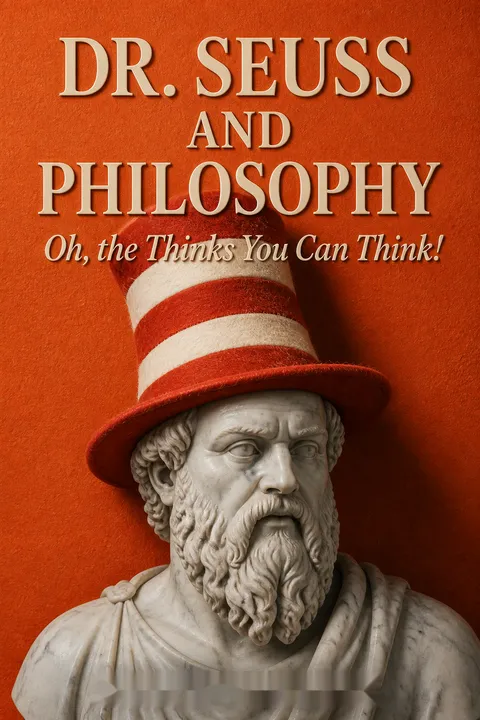
Readers generally enjoyed Dr. Seuss and Philosophy, praising its unique approach to introducing philosophical concepts through beloved children's stories. Many found it accessible and thought-provoking, appreciating the insights into Dr. Seuss's works. Some readers noted repetition and slow pacing, suggesting it's best read in small doses. The book's use of Seussian examples to explain complex ideas was widely appreciated. While some criticized perceived political biases, others found it a refreshing introduction to philosophy for both adults and children.
People Also Read








Glossary
will to life
unceasing drive to striveIn Schopenhauer's philosophy, the will to life is the blind, persistent force that drives living beings to want, pursue goals, and continue existing. Because each achieved goal gives only temporary satisfaction, striving resumes and brings fresh frustration. The book presents this view as the basis of Schopenhauer's philosophical pessimism.
alienation
estrangement from one's laborIn Marx's account, alienation is the separation workers experience from their work, its products, and their own capacity for free, conscious activity. When labor is controlled by someone else and performed mainly to earn a living, it can feel like something external to the worker rather than an expression of the worker's abilities and purposes.
intellectual integrity
disciplined truth-seekingIntellectual integrity is a commitment to considering different ideas, assessing their support, examining their implications, recognizing the limits of one's methods, and honestly representing what one concludes. The book contrasts this truth-oriented practice with rhetoric, self-deception, and claims made without concern for whether they are accurate.
genuine doubt
unease that prompts inquiryFor Charles Sanders Peirce, genuine doubt is an unsettled state that interrupts habitual thought or action and motivates a person to investigate. It differs from merely professing uncertainty or adopting skepticism as a pose. Inquiry aims to resolve the disturbance through beliefs that can guide action and remain open to correction.
Method of Science
testable, revisable inquiryPeirce's Method of Science settles belief by carefully defining what is in doubt, proposing a relevant hypothesis, and testing it against experience. Unlike reliance on authority, abstract reasoning alone, or stubborn repetition, this method makes it possible to discover mistakes and revise conclusions. Its strength lies in correction, not in guaranteeing certainty.
metanarrative
overarching rule for truthA metanarrative is a broad framework that claims to establish the rules by which knowledge, truth, or other accounts are judged. In the book's discussion of postmodern thought, questioning metanarratives means asking whether one supposedly universal framework excludes experiences or perspectives that do not fit its categories.
normative hubris
arrogance about one's normsNormative hubris is the assumption that one's own cultural standards are best for everyone, and that people who live differently are therefore inferior or wrong. The book links this attitude to exclusion and discrimination, while distinguishing the recognition of different practices from the judgment that every practice is morally acceptable.
categorical imperative
Kant's moral commandKant's categorical imperative is a principle for judging whether an action is morally permissible. One formulation asks whether the rule behind an action could be consistently adopted by everyone; another requires treating people as ends in themselves, not merely as tools. The book also considers whether strict duties allow exceptions in extreme conflicts.
original position
fairness thought experimentJohn Rawls's original position is a hypothetical decision-making situation in which people choose principles for society without knowing their own future social status, abilities, or advantages. This veil of ignorance is intended to prevent people from designing rules solely for their own benefit and to make fairness easier to assess.
stakeholder theory
business responsibility to affected groupsStakeholder theory holds that company decision-makers should consider the interests of people and groups affected by the company's activity, not only those of its owners. Stakeholders can include employees, customers, suppliers, communities, and people affected by environmental consequences. The approach treats profit as important without making it the sole moral measure.
sustainability
preserving future capacitySustainability concerns whether present activity can continue without undermining the resources and conditions required by future generations. In the book's environmental discussion, this includes using renewable resources no faster than they regenerate, replacing nonrenewable resources with alternatives, and limiting pollution to what natural systems can absorb or neutralize.
aesthetic experience
focused engagement with artIn Monroe Beardsley's account, an aesthetic experience is an absorbed encounter with an artwork in which perception, feeling, and thought form a unified experience. It is not primarily directed toward using or consuming the object. The book contrasts this approach with theories that emphasize an artwork's historical context or cultural meaning.
Download PDF
Download EPUB
.epub digital book format is ideal for reading ebooks on phones, tablets, and e-readers.








