

Plot Summary
Prologue
The introduction contrasts two photographs of William Johnson. In the first, he is a languid Yale student with a careless grin; in the second, he is a hardened man standing in Cheyenne with a scar above his lip.
The story fills the distance between them, tracing how a summer wager sends a sheltered young man into the dangerous West and leaves him with a new face, new judgment, and a life he could not have imagined.
The photographs make change visible before the narrative explains it. Johnson’s altered posture and scar turn the story into an account of how experience is written on the body, not just remembered by the mind. The frame also invites skepticism: the scar’s origin is presented as a story Johnson later told, reminding us that survival and self-invention can become difficult to separate. His transformation is not a simple conversion from weakness to courage. He acquires competence through repeated mistakes, fear, and responsibility for other people.
A Bet Becomes a Vocation
William Johnson, a wealthy Philadelphia freshman, has spent his first year at Yale gambling, drinking, and wasting other people’s property. When his rival Harold Marlin bets that he will never travel West, Johnson boasts that he will join Professor Othniel Marsh’s fossil expedition.
Marsh accepts him only after Johnson falsely claims to be a photographer. To make the lie useful, Johnson struggles through lessons in wet-plate photography, learning patience by ruining glass plates until his instructor approves his work.
He buys guns, field tools, and chemical supplies, then tells his worried family he wants to make something of himself. His father supports the decision; his mother fears the Indian Wars. Johnson leaves for the West with equipment and pride, but little practical sense.
The wager begins as a performance for an audience, not an expression of curiosity. Johnson commits because retreat would cost him status among his peers, then discovers that keeping his boast requires real labor. Photography becomes his first discipline: a craft in which wealth cannot make chemicals behave or skill arrive faster. His father’s encouragement gives the trip a second meaning, one Johnson only half understands. He is setting out to prove himself, but the proving will happen through obligations he did not yet know how to imagine.
Marsh's Missing Student
On the train west, Johnson learns that Marsh treats paleontologist Edward Drinker Cope as a dangerous enemy and suspects anyone who asks about him. In Cheyenne, Johnson falls for Lucienne, a theater performer who shares one tender night with him before his expedition continues.
The next morning, Marsh’s party has left without him, after telling hotel staff that Johnson had quit. While Johnson tries to understand the abandonment, Cope introduces himself and offers him a place on a smaller expedition bound for Montana.
Johnson accepts, despite Marsh’s warnings and the danger of the destination. Cope arrives with his wife Annie, fossil hunter Charles Sternberg, anxious survivor J.C. Isaac, and several students. Johnson trades Marsh’s order and Lucienne’s promise of a future visit for an uncertain journey with Cope.
The first rupture in Johnson’s planned adventure comes from a person he had been taught to distrust. Cope’s welcome contrasts with Marsh’s suspicion, but the novel does not make openness identical to safety: Cope’s confidence will also lead his party toward grave danger. Lucienne gives Johnson an early experience of affection beyond his sheltered social world, yet he leaves without securing any real claim on her. His choices are still reactive, but they now bind him to people and work rather than to a bet alone.
Montana After Little Bighorn
Cope’s expedition crosses the mountains and travels by stage toward Fort Benton, where a sheriff arrests him on a false murder warrant that Cope believes Marsh arranged. Cope knocks the sheriff down, then leaves town when the charge cannot be cleared promptly.
At Fort Benton, the party learns that Custer and the Seventh Cavalry have been destroyed at Little Bighorn. The commanding officer warns that the Judith River basin is dangerous, and a War Department order forbids civilians from entering disputed territories.
Cope buys costly, poor-quality supplies anyway and waits until the cavalry rides out before slipping away with his group. Their Shoshoni guide, Little Wind, leads the scientists toward the fossil beds. Johnson has followed Cope into a war zone where even the army has been ordered to stay out.
The expedition’s scientific purpose is entangled with the consequences of land seizure. The army’s warning recognizes a danger that Cope chooses to treat as a logistical obstacle, while the prohibition exposes the political reality that the fossil country is also contested Indigenous land. Cope’s temper and resolve make him magnetic, but his confidence can turn other people’s risk into the price of his ambition. Johnson, who once thought Western danger an entertaining wager, now sees that the route itself is shaped by violence and competing claims.
The Buffalo Thunder
On the plains, Cope’s party is mistaken for gunrunners by a drunken cavalry captain. The soldiers fire at them, wound Toad in the hand, kill a horse, and set the wagon canvas alight. The group survives, then loses tents and equipment when a storm drives a huge buffalo herd into a stampede.
Cope refuses to turn back, and Little Wind searches the nearby ground after suspecting that gunfire, not lightning, started the panic. He finds spent cartridges and tracks leading east, evidence that Marsh’s men have followed them.
The surviving expedition reaches the Judith badlands and discovers a Crow encampment of more than a thousand teepees. Isaac greets the Crow in a Sioux language, offending them and raising the prospect that the scientists may not be allowed to leave alive.
These ordeals strip away the fantasy that wilderness is merely a backdrop for scientific heroics. The cavalry, acting under fear and anger, attacks civilians it has not bothered to identify; the stampede then makes human plans seem small beside forces no one controls. Yet the discovery of Marsh’s tracks shows that danger is not only environmental or political. The rivalry has entered the landscape with them. Johnson’s earlier appetite for adventure now meets consequences that cannot be shrugged off as colorful incidents.
Crow Country, Bone Country
The Crow leaders have been told that Cope murdered his father and is hostile to Indigenous people, so the expedition must spend the night explaining who it is and why it wants to dig. The story about Cope came from the Sioux, traditional enemies of the Crow.
The Crow keep Toad at their camp, partly because his injured hand interests their healer, White Deer. By morning, Toad returns to the scientists, and the treatment has begun to improve his arm.
With the immediate danger eased, Cope shows the students how to recognize fossil bone in the cliff face and extract it without destroying it. Johnson learns that patience, observation, and careful recording matter as much as strength. The group begins uncovering extinct animals from rock that had looked empty.
The encounter asks the scientists to depend on people whose knowledge they have not earned, while their own assumptions nearly make a diplomatic crisis worse. Toad’s injury gives the Crow a reason to keep him, but the episode also reveals that the visitors are not the only people capable of healing or interpreting the land. Cope’s teaching echoes Johnson’s photography lessons: both require trained attention before the important thing becomes visible. Scientific discovery here begins not with conquest of nature, but with learning how to look carefully.
Marsh Comes Hunting
As the excavation produces more fossils, Little Wind finds that two mounted men have visited the expedition’s spring and pulled up a weed that makes the water dangerous. He and Johnson follow their tracks and identify Marsh and his foreman, Navy Joe Benedict, camped nearby.
Cope invites Marsh to dinner, but first assembles a false, tusked dinosaur skull from fragments to bait his rival. The professors exchange polished insults while Marsh studies the discoveries. After dinner, Cope orders the camp to keep watch.
Marsh and two men creep back toward the display, and Cope fires into the air, shouting that Indians are attacking. The intruders flee. Johnson has now seen the feud move from accusations and sabotage to a direct contest over who will control the evidence.
The rivalry is no longer an abstract quarrel between scholars. It reaches into the expedition’s water supply and threatens the physical safety of the people doing the work. Cope’s false skull is a theatrical counterattack, but it also shows how scientific evidence can be manipulated for advantage when reputation becomes the prize. The men are capable of careful observation at a fossil face and deliberate deception around a rival. Their conflict exposes the thin boundary between the pursuit of knowledge and the pursuit of credit.
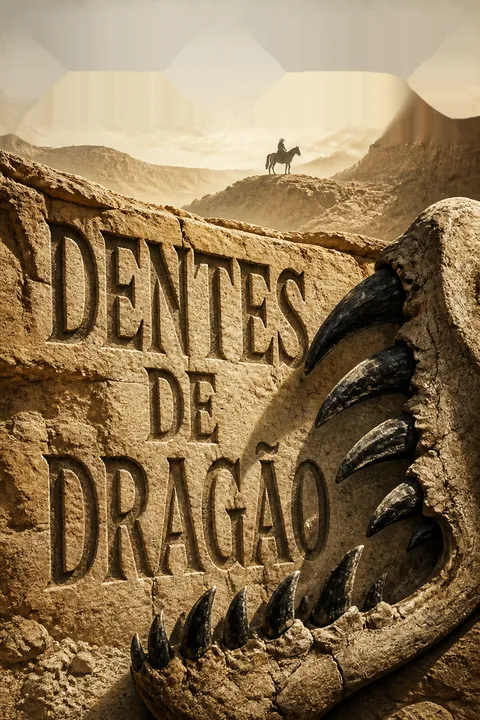
Teeth of a Dragon
While Johnson is clearing rock from a slope, Cope recognizes the rounded pieces he has disturbed as enormous dinosaur teeth. He measures them, calculates the animal’s possible size, and names the unknown giant Brontosaurus.
Johnson photographs the find in place, understanding that his camera is recording evidence for people who have not yet seen it. The party continues excavating, then moves its camp onto the high plains as cold weather and the approaching Sioux make the badlands harder to occupy.
When fossil crates must be hauled to Cow Island in two trips, Cope marks the box containing the teeth for the return load. Sternberg falls ill, so Johnson volunteers to lead the second journey with Toad, Cookie, and Little Wind. For the first time, Cope entrusts him with responsibility beyond the camera.
The teeth transform labor into scale: a few fragments force the scientists to revise their sense of what once lived on Earth. Johnson’s photograph connects his personal growth to the expedition’s larger purpose, turning a skill he learned reluctantly into a record that can outlast the men who made it. Cope’s decision to let him lead marks a shift in their relationship. Johnson is no longer simply a rich student carried west by other people’s expertise; he has become someone expected to choose and act.
The Badlands Take Their Price
On the return trip, Cookie reveals that he and Little Wind plan to leave rather than face Sitting Bull’s approaching Sioux camp. The two students continue alone toward the fossil crates, then meet the Sioux on their way back.
Little Wind returns under pursuit and helps Johnson drive the loaded wagon toward the badlands. Toad is killed by arrows, and Johnson is wounded in the leg and face. Little Wind removes the arrow, guides him through the dark terrain, and leads him toward the sacred mountains. He dies before they reach safety.
Johnson eventually reaches Deadwood with the fossils and both bodies. He buries Toad in the town cemetery and Little Wind apart from the white settlement, then sleeps for thirty hours. The boy who left Yale to win a wager has returned from the plains carrying the cost of survival.
Johnson’s coming-of-age is inseparable from grief and debt. His survival depends on Little Wind’s knowledge, while the deaths of Toad and the scout make the fossil crates feel less like scientific property than a burden entrusted to him. The two burials also expose the town’s racial hierarchy: Deadwood permits Toad a grave among whites but refuses Little Wind the same place. Johnson’s decision to bury them both marks a moral independence that no Yale lesson or paternal blessing could have supplied.
Deadwood's Camera Witness
Stranded in Deadwood without money or a safe road out, Johnson sells his wagon and opens the Black Hills Art Gallery. His portraits earn enough to keep him alive, but his crates attract rumors that they contain stolen treasure.
A long-exposure photograph of the Grand Central Hotel appears empty; a shorter exposure records movement in the street and two figures in a hotel window. Enlarging the plate reveals a man strangling Texas Tom, with a snake tattoo on the killer’s wrist. The evidence points to Black Dick Curry.
Before the inquest can protect Johnson, Judge Harlan places him in custody, and General Crook’s cavalry leaves without him. The camera that first brought him into the West now captures a crime, but its proof entangles him more deeply in Deadwood’s lawless politics.
Photography changes from a trade into a form of accidental testimony. Johnson does not set out to investigate Texas Tom’s death; the plate records what ordinary vision missed, demonstrating how technical choices can preserve evidence beyond the photographer’s intention. Yet evidence is not the same as justice. Harlan’s custody protects Johnson while also costing him his chance to leave with the army. In Deadwood, a true image can reveal a crime without creating a reliable institution capable of answering it.
Emily and the Curry Guns
Emily Williams arrives in Deadwood claiming to seek her lost brother. She first approaches Johnson under pressure from Black Dick, who wants to know what his crates contain, but she comes to believe that they really are fossils.
When the Curry brothers threaten to take them, Johnson hires Wyatt Earp to guard the room. Earp stays away, playing cards with the gang, and Clem Curry breaks in; Johnson shoots and kills him in the dark. Dick then forces a street showdown.
Following Earp’s advice, Johnson watches Dick’s hands and eyes, fires once, and wounds him rather than killing him. Now famous as a gunfighter and in greater danger, Johnson arranges to leave Deadwood with Emily and Earp. He hides the fossils outside town before the stage departs.
Emily’s shifting loyalties expose the difference between sympathy and trust: she begins as an instrument of Dick’s curiosity, yet recognizes Johnson’s sincerity once she sees the fossils. Johnson, meanwhile, discovers that competence does not require becoming the kind of man who enjoys violence. He kills Clem in a confused nighttime defense, then deliberately refuses to finish Dick when he has the chance. That restraint may cost him, but it preserves a distinction between surviving the frontier and adopting its simplest moral code.
Two Ambushes, One Bargain
Wyatt and Morgan Earp escort Johnson and Emily south in an armed stagecoach. The Curry gang attacks once on the road, then again at Spring Creek, where the coach becomes trapped in the water after a horse is killed.
Wyatt runs toward the gunfire, frightens the attackers into retreat, and gets the coach moving again. At Red Canyon, the travelers pass a burned station and the bodies left by Persimmons Bill’s gang. In Laramie, Johnson learns that Wyatt has heard Marsh is buying fossils and intends to sell him a share.
Emily helps Johnson devise a substitution: he coats rocks with rice paste, packs them into the crates, and hides the real fossils. Marsh pays for the decoys, while Johnson and Wyatt recover the genuine collection and continue east.
The road forces Johnson to rely on Wyatt, whose motives are mixed: the gunfighter offers real protection while expecting a share of what he assumes is treasure. Johnson’s deception is a survival tactic, but it also completes his separation from the naïve boy who once lied only to gain entry to an expedition. Now he understands how information and appearances can be used to protect something valuable. The false crates make Marsh’s hunger for ownership visible, while the real fossils remain safe because Johnson has learned to keep his purpose concealed.
The Man Who Came Home
In Cheyenne, Johnson is arrested after his father reports that his son is dead and someone is impersonating him. Emily leaves him and resumes her real identity as Miranda Lapham, a Washington railroad lobbyist. Johnson proves who he is by sending his father a telegram with private family memories; the sheriff releases him, and Johnson secures the fossils before taking the train east.
In Philadelphia, Cope welcomes him and confirms that the marked crate still contains the Brontosaurus teeth. Johnson confronts Marlin at Yale and collects the wager. He then visits Marsh, who has failed to recognize him and claims the fossils as his own. Johnson tells him Cope has them all, then returns to college changed in body and judgment.
The false-death arrest literalizes the distance between Johnson’s former identity and the person he has become. His father’s private memories restore his name, while his weathered appearance and hard-won confidence show that identity is also shaped by action. Emily’s departure confirms that affection in the West was never a promise of domestic belonging. Johnson returns not as a triumphant conqueror, but as a witness who has chosen Cope’s claim to the discoveries and can finally face Marsh without fear.
Epilogue
The postscript follows the historical figures beyond Johnson’s fictional summer. Cope dies young and financially exhausted after years of fighting Marsh; Marsh dies alone and embittered two years later. Wyatt Earp lives into old age and later helps shape the story told about his own life.
Sternberg becomes a celebrated fossil collector and writes about his work with Cope. Their later reputations preserve different versions of the same frontier: scientific achievement, personal rivalry, and stories revised by the people who survive to tell them.
The postscript refuses to let the adventure settle into a simple victory. The fossils endure, but the men who pursued them pay different prices in money, isolation, and memory. Earp’s later self-narration underscores how the West becomes a story as well as a place: reputations are assembled after the danger has passed, and the teller can shape what remains. By setting fictional Johnson beside historical lives, the ending also marks the limits of the novel’s invention and reminds readers that its imagined witness moves through real conflicts and real ambitions.
Analysis
Dragon Teeth makes scientific discovery a physical and moral undertaking. The fossils do not emerge from a neutral wilderness: the expedition travels through Indigenous lands during a war intensified by broken treaties and white incursions into the Black Hills. The novel’s danger is therefore not simply nature’s indifference. It also comes from institutions and individuals who treat territory, evidence, and other people as things to be possessed.
Johnson’s development is built from repeated transfers of responsibility. He first lies to Marsh to get onto the expedition, then learns photography because the lie has consequences. Cope teaches him how to see fossils; Little Wind teaches him how to read the land; Deadwood forces him to judge whom to trust and what he is willing to defend. His maturation is not a conversion into a gunfighter. He kills when threatened, but resists treating violence as proof of manhood, and he protects the discoveries even when doing so offers no immediate reward.
The rivalry between Cope and Marsh sharpens the book’s question about knowledge and ownership. Both men can recognize remarkable evidence, yet competition makes them spy, sabotage, and scheme. Johnson’s camera and the false crates reveal a counterpoint: tools are not virtuous by themselves. Their meaning depends on the observer’s purpose and the responsibility attached to their use. The fossils outlast the summer, but the human story around them remains unstable, shaped by ambition, memory, and the unequal power to decide whose account becomes history.
Review Summary
Dragon Teeth receives mixed reviews, with an average rating of 3.85/5. Many praise its blend of paleontology and Wild West adventure, finding it entertaining despite not being Crichton's best work. Readers appreciate the historical elements and character development. Some criticize the pacing and lack of scientific depth compared to Crichton's other novels. Several note it feels unpolished, likely due to being published posthumously. While not reaching the heights of Jurassic Park, most find it an enjoyable read for Crichton fans and Western enthusiasts.
People Also Read


Characters
William Johnson
The reluctant field photographerA rich Philadelphia student whose idleness has protected him from consequence. Johnson initially joins Marsh’s expedition to win a wager, not from scientific conviction, and he resents the patience required to learn photography. Work in the field gradually gives him a practical identity: he records discoveries, carries responsibility, and learns to read danger instead of treating it as spectacle. His manners and education remain part of him, but neither money nor polish can solve the problems he faces. What drives him increasingly is a duty to the fossils and to the people who have trusted him with them.
Edward Drinker Cope
The brilliant, volatile scientistA gifted paleontologist whose quick perception and scientific imagination make him an inspiring leader. Cope sees patterns in rock, fossils, and human behavior that others miss, and he treats discovery as a calling rather than a pastime. His temper and iron will can make him dangerous to oppose, however, and his confidence pushes his companions into risks they did not choose for themselves. His relationship with Johnson begins as an opportunity offered to an abandoned student, then grows through fieldwork and trust. Cope’s curiosity is genuine, even as his rivalry with Marsh clouds his judgment.
Othniel Marsh
Cope's suspicious rivalYale’s professor of paleontology, Marsh is powerful, disciplined, secretive, and convinced that Cope is plotting against him. He can command money, institutional influence, and loyalty, yet interprets ordinary uncertainty as evidence of conspiracy. His desire to control discoveries is bound up with a hunger for recognition and authority. He hires Johnson for his photographic skill, then treats him as a possible spy. Marsh’s scientific ability is substantial, but his rivalry consumes the attention that might otherwise have gone toward independent discovery.
Emily Williams
The charming frontier operatorA poised young woman who arrives in Deadwood with a carefully shaped story and a talent for reading people. Emily moves comfortably among men who underestimate her, using charm as both social currency and protection. She is drawn to Johnson’s earnestness, but her sympathy does not erase her own ambitions or make her easy to know. Their connection offers Johnson a glimpse of affection and intimacy beyond his Eastern upbringing, while her shifting names and alliances remind him that people in the West may be living several lives at once.
Wyatt Earp
The calculating gunfighterA composed, observant gunfighter who understands that survival often depends on reading a situation before drawing a weapon. Earp helps Johnson navigate Deadwood and the dangerous road south, but he also sees opportunities in the fossils and negotiates for a share. His calm can look like indifference, though he is more strategic than Johnson first realizes. He becomes a practical teacher in the use of firearms and deception, showing Johnson that courage can mean discipline rather than bravado.
Little Wind
The land-reading scoutA Shoshoni scout whose knowledge of tracks, water, weather, and terrain repeatedly exceeds the white party’s assumptions. Little Wind speaks sparingly, but his observations guide the expedition through country the others cannot read. He is wary of disturbing the ancient bones and sees meaning in them beyond scientific classification. His practical skill and spiritual understanding make him indispensable to Cope’s party, while his caution challenges the group’s confidence.
Leander Toad Davis
The asthmatic studentA bespectacled, asthmatic student with a serious interest in Indigenous society. Toad is observant and better informed about Plains life than many of his companions, even when his physical vulnerability makes him seem an unlikely frontiersman. His injured hand brings him into close contact with the Crow village, and his willingness to accept responsibility shows a steadiness beneath his awkward appearance.
Charles Sternberg
The seasoned fossil hunterA practiced fossil collector with a limp, a dry sense of humor, and a clear eye for the hardships of fieldwork. Sternberg understands how to find game, manage fragile specimens, and judge the limits of an expedition. He respects Cope’s abilities but does not mistake brilliance for infallibility. His experience gives Johnson a model of competence grounded in patience and routine.
Lucienne
The Cheyenne performerA young theater performer in Cheyenne who meets Johnson during his first night in the West. Lucienne is warm and direct, but her affection is shaped by her own work and circumstances rather than by Johnson’s romantic expectations. Their brief closeness gives him a first taste of intimacy and a reason to imagine returning, even as the expedition carries him farther away.
Black Dick Curry
The feared Deadwood outlawA violent, swaggering member of the Curry brothers who relies on intimidation and the town’s absence of law. Dick’s vanity and temper sit beside a practiced ability to make others fear the consequences of refusal. He regards Johnson’s crates as a prize and resents the photographer’s refusal to submit. His presence turns Deadwood’s rough customs into a personal threat.
Sam Perkins
The watchful hotelkeeperThe courteous proprietor of Deadwood’s Grand Central Hotel. Perkins understands the town’s informal rules and explains its dangers without pretending that he can control them. His interest in Johnson’s photographic work helps bring the murder image to light, though his influence has clear limits in a place with no dependable law.
Kang
The resourceful laundry boyThe young son of Johnson’s Chinese landlord, Kang speaks English well and understands Deadwood’s Chinese community better than Johnson does. He helps move and conceal the fossil crates when white townspeople refuse to help. Practical, observant, and alert to the value of his labor, Kang negotiates fairly and becomes an unexpected ally.
Harold Marlin
Johnson's wealthy Yale rivalJohnson’s handsome, privileged Yale classmate and competitive foil. Marlin provokes the wager that sends Johnson west, using public mockery to make retreat costly. He represents the social world Johnson must answer to before the journey gives him a different measure of himself.
J.C. Isaac
The fearful expedition studentA young member of Cope’s party whose earlier encounter with an attack has left him wary of Indigenous people and prone to panic. Isaac’s fear often amplifies danger, but it also reflects a real experience that the other students have not shared. His reactions expose the distance between their imagined frontier and the one they have entered.
Cookie Hill
The stubborn teamster cookThe expedition’s cook and wagon driver, known for his blunt speech, repeated warnings, and unappealing meals. Cookie understands the practical burdens of moving supplies across the plains and distrusts plans that ignore basic survival. His skepticism provides a counterweight to Cope’s determination.
Morgan Earp
Wyatt's armed brotherWyatt’s brother and a capable companion on the stagecoach journey. Morgan helps defend the coach and remains steady under attack. His presence adds another layer of practical protection, while his departure before the final leg shows that even the strongest escort has limits.
Navy Joe Benedict
Marsh's hard-handed foremanA scarred, imposing foreman who works for Marsh and moves through the West on the professor’s behalf. Benedict’s presence signals that Marsh’s rivalry is supported by hired muscle as well as academic influence. He is a functional threat, rarely separated from the work Marsh wants done.
Plot Devices
The Yale wager
A boast becomes obligationMarlin’s thousand-dollar challenge supplies Johnson’s initial reason to travel west. Because the wager becomes public, Johnson cannot simply admit that he has no genuine interest in fossils without losing face. The bet starts as a social contest, but it places him in a setting where status offers little protection. Its eventual settlement measures how far he has changed: he returns able to demand what he is owed without relying on the boyish bluff that began the journey.
The wet-plate camera
Skill becomes evidenceJohnson learns to coat glass plates with light-sensitive chemicals and expose them before they dry. The difficult process trains him to work carefully and gives him a useful role on the expedition. Later, a short exposure of the Grand Central Hotel records a murder in a window that looked empty to the naked eye. The camera therefore does more than document fossils: it preserves an event and implicates a killer, changing Johnson’s prospects in Deadwood.
The marked fossil crate
A box anchors the chaseCope marks the crate containing the Brontosaurus teeth so it can be retrieved on the second journey from the badlands. That mark identifies the expedition’s most important discovery and gives the box a clear purpose amid hundreds of pounds of fossils. Once Johnson is separated from Cope, the marked crate becomes the heart of his obligation. He protects the collection through burial, transport, and a decoy exchange, preserving the evidence that first made the expedition matter to him.
Rice-paste decoys
A thief receives worthless stoneSternberg first uses boiled rice paste to protect fragile fossils during transport. Johnson later applies the same material to rocks, disguising them as fossil specimens before packing them into crates for Marsh. The scientific technique becomes a tool of deception, allowing Johnson to conceal the real collection while satisfying Marsh’s demand for ownership. The device links practical knowledge to survival: Johnson can only outwit the professor because he remembers a field solution developed to preserve the bones.
FAQ
Synopsis & Basic Details
What is Dragon Teeth about?
- A Wager's Wild West Odyssey: Dragon Teeth follows William Johnson, a pampered Yale student in 1876, who, on a foolish bet, joins Professor Othniel Marsh's fossil-hunting expedition to the American West. Abandoned by Marsh, Johnson is then recruited by Marsh's fierce rival, Professor Edward Drinker Cope, plunging him into the cutthroat "Bone Wars" amidst the dangers of the Indian Wars and lawless frontier towns.
- From Naiveté to Resilience: The narrative charts Johnson's dramatic transformation from a naive, self-absorbed Easterner into a hardened, resourceful survivor as he navigates betrayals, violence, and the brutal realities of the Montana badlands and Deadwood Gulch, all while safeguarding a monumental paleontological discovery.
- The Quest for Ancient Giants: At its core, the story is a thrilling adventure centered on the discovery of enormous dinosaur fossils—the "dragon teeth"—which become a coveted prize in the intense scientific rivalry between Cope and Marsh, forcing Johnson to make morally ambiguous choices to protect his invaluable cargo and, ultimately, his own life.
Why should I read Dragon Teeth?
- Historical Adventure Thriller: Readers seeking a blend of meticulously researched historical context, fast-paced action, and a compelling coming-of-age story will find Dragon Teeth a captivating read. Michael Crichton masterfully recreates the brutal yet exhilarating American West of the 1870s, making it a must-read for fans of historical fiction and adventure.
- Crichton's Signature Blend: The novel showcases Crichton's unique ability to weave scientific detail, high-stakes suspense, and complex character development into a seamless narrative. It offers a fascinating look into the real-life "Bone Wars" and the early days of paleontology, appealing to those interested in science-infused fiction and the origins of the Jurassic Park author's fascination with dinosaurs.
- A Journey of Transformation: Beyond the thrilling plot, the book offers a profound exploration of personal growth, as protagonist William Johnson sheds his privileged innocence to confront the harsh realities of survival, betrayal, and moral ambiguity, making his journey a compelling study of human resilience and the forging of character.
What is the background of Dragon Teeth?
- The Fierce "Bone Wars": Dragon Teeth is set against the backdrop of the real-life "Bone Wars" of the late 19th century, a period of intense and often unscrupulous competition between paleontologists Othniel Charles Marsh and Edward Drinker Cope to discover and name new dinosaur species in the American West. This historical rivalry, fueled by ambition and personal animosity, forms the central conflict of the novel.
- A Nation in Flux: The Gilded Age Frontier: The story unfolds in 1876, America's Centennial year, a time of rapid expansion, technological innovation (like the telephone and transcontinental railroad), and significant social upheaval. The narrative highlights the ongoing Indian Wars, the gold rush in the Black Hills, and the lawless nature of frontier towns like Deadwood, providing a vivid cultural and geographical context for Johnson's perilous journey.
- Scientific and Philosophical Debates: The novel subtly integrates the scientific and philosophical debates of the era, particularly surrounding Darwin's theory of evolution and the age of the Earth. Cope's discussions with his students and Native American guides reflect the clash between emerging scientific understanding and traditional religious beliefs, adding intellectual depth to the adventure.
What are the most memorable quotes in Dragon Teeth?
- "Nothing is obvious.": Professor Cope's mantra to his students while teaching them to spot fossils in the seemingly barren badlands ("We realized... that the entire cliff face was fairly stuffed to bursting with bones, which previously were invisible to us, yet now were as plain as the nose on your face. But as Professor Cope says, we had to learn to recognize the nose on your face, too. He likes to say, 'Nothing is obvious.'"). This quote encapsulates the novel's theme of hidden truths and the need for keen observation, both in science and in life, for William Johnson to survive the deceptions of the West.
- "Man becomes smaller when we realize what remarkable beasts went before us.": Cope's profound reflection upon the discovery of the Brontosaurus teeth ("If we are making discoveries such as this one... it means that we have barely scratched what is possible to learn. You and I are the first men in recorded history to glimpse these teeth. They will change everything we think we know about these animals, and much as I hesitate to say such a thing, man becomes smaller when we realize what remarkable beasts went before us."). This quote highlights the awe-inspiring scale of prehistoric life and the humbling perspective that scientific discovery can bring, a central theme in Dragon Teeth analysis.
- "I am not here to excavate trifling possessions from mud. I am here to excavate prehistoric bones.": Professor Cope's resolute declaration after the buffalo stampede destroys their camp ("We are greatly discouraged... Cookie argued to turn back, but as usual Cope was indomitable. 'I am not here to excavate trifling possessions from mud,' he said. 'I am here to excavate prehistoric bones.'"). This quote powerfully illustrates Cope's unwavering dedication to science and his indomitable will, which drives the entire expedition and the Cope Marsh rivalry explained through his relentless pursuit of discovery.
- "A man has to look out for himself, I'd learned.": William Johnson's cynical realization when negotiating with Wyatt Earp ("I realized then... that Mr. Earp was like all the others, and did not believe that these crates contained bones at all. I was faced with a moral dilemma... But I had received quite an education out West, one that Yale had been unable to provide. A man has to look out for himself, I'd learned."). This quote marks a pivotal moment in Johnson's character development, signifying his loss of innocence and adoption of the frontier's pragmatic, self-reliant ethos, a key aspect of William Johnson motivations.
What writing style, narrative choices, and literary techniques does Michael Crichton use?
- Journalistic Realism and First-Person Immersion: Crichton employs a pseudo-journalistic style, primarily through William Johnson's journal entries, which grounds the narrative in a sense of historical authenticity and immediacy. This narrative choice allows for intimate access to Johnson's evolving thoughts and fears, making his character development William Johnson feel deeply personal and raw, while also providing a plausible framework for historical detail.
- Pacing and Scientific Detail: The novel is characterized by Crichton's signature fast-paced, action-driven plot, punctuated by meticulously researched scientific and historical explanations. He seamlessly integrates details about paleontology, 19th-century photography, and frontier life, enriching the adventure without bogging down the narrative, a hallmark of Michael Crichton writing style.
- Foreshadowing and Dramatic Irony: Crichton frequently uses subtle foreshadowing, such as Marsh's early suspicions of Johnson or the recurring mentions of the dangers of the Indian Wars, to build tension and hint at future events. Dramatic irony is also present, particularly in Johnson's initial dismissal of the telephone or his naive assumptions about frontier safety, highlighting the gap between his Eastern perspective and the harsh realities of the West.
Hidden Details & Subtle Connections
What minor details foreshadow major events or character traits?
- Marsh's "Philadelphia" Obsession: Early in the novel, Marsh's intense, almost violent reaction to Johnson being from Philadelphia and his father being in "shipping" ("Marsh's face turned purple; his body shook with rage. 'And I suppose you are a Quaker, too? Hmmm? A Quaker from Philadelphia?'") subtly foreshadows his deep-seated animosity towards Cope, who is a Quaker from Philadelphia with a wealthy merchant father. This detail hints at the personal, almost irrational nature of the Cope Marsh rivalry explained by their shared origins and Marsh's paranoia.
- The "Cardiff Giant" Anecdote: Marsh's recounting of his triumph in exposing the Cardiff Giant as a "remarkable fake" in Chicago ("Marsh, in his capacity as the new paleontology professor from Yale, went to view the fossil and said, within earshot of a reporter, 'Very remarkable.' 'May I quote you?' said the reporter. 'Yes,' said Marsh. 'You may quote me as saying, "A very remarkable fake."'" ) subtly foreshadows his later susceptibility to Cope's own "fake" dinosaur skull. It highlights Marsh's pride in his discernment, which ultimately blinds him to Cope's trickery, a key element in Dragon Teeth analysis.
- Mrs. Peterson's Silent Grief: The stagecoach passenger, Mrs. Peterson, who frequently reads and then burns a letter before being met by grave army captains, is a quiet but powerful foreshadowing of the Custer massacre news. Her silent, contained grief and the somber military reception hint at the brutal realities of the Indian Wars that await Johnson, underscoring the pervasive danger and loss in the historical context Dragon Teeth.
How does Crichton use environmental descriptions to reflect character states?
- The Badlands as a Crucible: The desolate, stark beauty of the Judith badlands, described with "pastel bands of pink and black rock" and "gargoyles," mirrors Johnson's internal struggle and transformation. The harsh, alkaline dust that "burned the eyes, stung the nose, caked the mouth" and the "oppressive" silence reflect the physical and psychological toll the West takes on him, forcing him to shed his pampered exterior and develop resilience, a core aspect of William Johnson motivations.
- Cheyenne's Dual Nature: Cheyenne, initially appearing "disappointingly tame by day," transforms into a "positively sinister aspect at night" with its gambling, violence, and "nymphs du pave." This duality reflects Johnson's own internal conflict between his Eastern upbringing and the raw, dangerous allure of the frontier, where he experiences both love and betrayal, highlighting the moral ambiguity of the setting in themes in Dragon Teeth.
- The "Sea of Grass" and Lostness: The vast, trackless "sea of grass" of the plains, where landmarks are scarce and getting lost is easy, symbolizes Johnson's initial disorientation and lack of purpose. His growing understanding of this landscape, guided by Little Wind, parallels his journey of self-discovery and finding his own direction amidst the chaos, a subtle detail in Dragon Teeth analysis.
What subtle narrative choices reveal deeper character motivations?
- Cope's "Mildness" in Religious Debates: Despite his "pugilistic temperament," Cope exhibits an almost "lazy indifference" and "tranquil, calm voice" when discussing religious topics like the age of the Earth or Little Wind's "Great Spirit" beliefs. This subtle shift reveals his internal conflict as a devout Quaker grappling with scientific findings that challenge traditional dogma, suggesting a deeper, unspoken struggle between faith and reason that informs his relentless pursuit of truth, a key aspect of Professor Edward Cope character analysis.
- Marsh's "New York Send-off" Strategy: Marsh's meticulous planning of the "New York send-off" as "the most productive part of the field trip," where he "handpicked his students from socially prominent and wealthy families," reveals his underlying motivation for funding and status. This isn't just about science; it's about securing patronage and influence, highlighting the Gilded Age's blend of ambition and social climbing that fuels the Cope Marsh rivalry explained.
- Emily's "Washington was always your first love": Miranda Lapham's (Emily's true identity) casual remark to Collis Huntington, "Washington was always your first love," after she has betrayed Johnson, subtly reveals her true ambition and priorities. Her "love" for Johnson was a means to an end, and her ultimate loyalty lies with power and influence in the political sphere, underscoring the theme of Emily Lapham motivations and the transactional nature of relationships in the West.
Who are the most significant supporting characters?
- Little Wind: The Embodiment of Indigenous Knowledge and Sacrifice: The Shoshoni scout, Little Wind, is crucial not only for his tracking skills and knowledge of the land but also as a symbolic figure. His ability to "read the land" and his spiritual connection to the "Everywhere Spirit" contrast sharply with the white men's scientific approach. His ultimate sacrifice, dying to protect Johnson and the bones, underscores the tragic cost of the frontier's expansion and the invaluable, often unacknowledged, contributions of Native Americans, a poignant element in symbolism in Dragon Teeth.
- Sam Perkins: The Pragmatic Voice of Frontier Reality: The proprietor of the Grand Central Hotel in Deadwood, Sam Perkins, serves as Johnson's cynical but ultimately helpful guide to the town's lawless ways. His dry humor, practical advice ("You're in Deadwood. You can't leave your money unattended for a breath."), and willingness to bend rules for a price embody the moral ambiguity and self-preservation ethos of the frontier. He represents the common man adapting to chaos, offering a grounded perspective amidst the grand ambitions of scientists and outlaws.
- Charles Sternberg: The Steadfast, Experienced Mentor: Cope's loyal fossil hunter, Charles Sternberg, acts as a practical mentor to Johnson, teaching him the realities of fieldwork and survival. His calm competence, wry humor, and unwavering loyalty to Cope provide a stark contrast to the volatile personalities of the professors and the dangers of the West. Sternberg's presence highlights the importance of experience and steadfastness in a world of shifting allegiances, offering a model of professional dedication in Dragon Teeth analysis.
Psychological, Emotional, & Relational Analysis
What unspoken motivations drive the characters' actions?
- Johnson's Quest for Self-Worth: Beneath William Johnson's initial prideful wager and later determination to protect the fossils lies an unspoken, deep-seated need to prove himself worthy, not just to his rival Marlin or his demanding father, but to himself. His transformation from "indolent and badly spoilt" to a resilient survivor is driven by this internal yearning for purpose and validation, making his journey a profound exploration of William Johnson motivations.
- Marsh's Fear of Irrelevance: Professor Marsh's extreme paranoia, secrecy, and relentless pursuit of Cope are fueled by an unspoken fear of being overshadowed or deemed irrelevant in the burgeoning field of paleontology. His reliance on his uncle's wealth and his "self-made" status suggest a deep insecurity that manifests as a desperate need for scientific priority and public recognition, driving the destructive nature of the Cope Marsh rivalry explained.
- Emily/Miranda's Pursuit of Security and Influence: Emily Lapham's (Miranda) elaborate deception and manipulation of Johnson are driven by an unspoken desire for security and a return to a life of influence, as hinted by her past as a "lobbyist" in Washington. Her actions, though seemingly opportunistic, reflect a calculated effort to navigate the chaotic West and secure her future, revealing a complex interplay of self-interest and survival in Emily Lapham motivations.
How does the frontier environment psychologically impact William Johnson?
- Erosion of Innocence and Naiveté: The constant exposure to violence, betrayal, and death—from the Cheyenne shootout to the Indian attack and the murder in Deadwood—systematically strips away Johnson's privileged innocence. His initial "puffed-up, brave" attitude gives way to a grim pragmatism, as evidenced by his detached observation of Toad's body and his later ability to kill in self-defense, marking a significant shift in his character development William Johnson.
- Development of Hyper-Vigilance and Cynicism: The unpredictable nature of the West, where danger lurks in every interaction and alliances are fluid, forces Johnson into a state of hyper-vigilance. He learns to distrust appearances, question motives, and anticipate betrayal, leading to a cynical outlook that contrasts sharply with his initial trusting nature. This psychological hardening is crucial for his survival and is a key theme in Dragon Teeth.
- A Deepening Connection to the Natural World: Despite the hardships, Johnson develops a profound, almost mystical connection to the vast, untamed landscapes of the West. His daily rides to the spring become "an experience that approached the mystical," and his appreciation for the "glory" of the mountains and plains reflects a spiritual awakening that transcends his scientific mission, offering a counterpoint to the human-made chaos and highlighting the psychological impact frontier life.
What are the major emotional turning points?
- The Abandonment in Cheyenne: Johnson's discovery that Marsh has deliberately left him behind in Cheyenne, after a night of romantic bliss with Lucienne, is a crushing emotional blow. This betrayal shatters his youthful trust and forces him to confront his vulnerability, marking the end of his naive reliance on others and initiating his journey of self-reliance, a critical moment in William Johnson motivations.
- The Death of Toad and Little Wind: The brutal Indian attack and the subsequent deaths of Toad and Little Wind, whom Johnson is forced to bury, represent a profound emotional trauma. His initial refusal to accept their deaths ("His mind simply refused to accept it") and later tears ("Then he sat down and cried until he was too cold to stay out anymore") signify the deep personal cost of his adventure and the loss of his companions, underscoring the psychological impact frontier life.
- The Confrontation with Emily/Miranda: The revelation of Emily's true identity and her calculated betrayal in Cheyenne, after Johnson has developed genuine affection for her, is a final, devastating emotional turning point. This experience solidifies his cynicism about human nature and the transactional relationships prevalent in the West, completing his transformation from an idealistic youth to a wary, self-sufficient man, a key aspect of Emily Lapham motivations.
How do relationship dynamics evolve?
- From Rivalry to Mutual Exploitation (Johnson & Marsh/Cope): Johnson's relationships with both Marsh and Cope evolve from initial mentorship (or perceived mentorship) into complex dynamics of rivalry and mutual exploitation. Marsh abandons him, viewing him as a spy, while Cope recruits him, seeing him as a useful tool in the Bone Wars. Johnson, in turn, learns to manipulate both, ultimately outsmarting Marsh to protect the fossils, demonstrating the shifting alliances and betrayals inherent in the frontier's moral landscape.
- The Transactional Nature of Frontier Bonds (Johnson & Earp/Emily): Johnson's relationships with Wyatt Earp and Emily (Miranda Lapham) highlight the transactional nature of trust and loyalty in the West. Earp's assistance is always for a price, and Emily's
Download PDF
Download EPUB
.epub digital book format is ideal for reading ebooks on phones, tablets, and e-readers.








