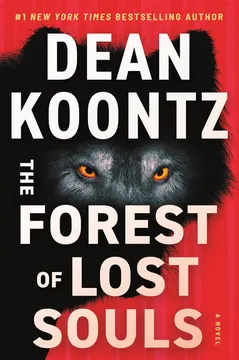


Plot Summary
Ogden's Stone House
Vida loses her mother at birth and her police-officer father at five, then leaves Los Angeles with her great-uncle Ogden for his secluded mountain home. He teaches her to repair machinery, work a gemstone mine, and trust the forest, giving her the safety she has never known.
At ten, she visits a mysterious seer, who accepts an angry book as payment and predicts a life containing both grief and joy. The seer also casts Vida as a future guardian of nature and warns her not to force the meaning of certain puzzling words. Ogden encourages Vida’s unusual ability to sense where beauty and valuable stones lie, while cautioning her that being different can attract danger.
The house gives Vida more than shelter. Ogden turns practical competence into a form of attachment: she is loved by being taught how to live, not protected by being kept helpless. The seer’s forecast complicates that security. It offers no escape from pain, only a framework in which pain and happiness belong to one life. The combination of ordinary skills and supernatural suggestion also establishes the novel’s terms. Vida’s specialness appears not as a spectacular power but as attention, patience, and a relationship with the natural world.
The Courthouse Fall
Years later, Vida loves José Nochelobo, a respected school principal who has asked her to marry him. She is still deciding whether she can fit into his public life when he speaks against New World Technology’s proposed development of the Grand Plateau. José argues that the project will damage both people and the natural world.
Five teenagers throw water bottles at him as a truck horn drowns out his speech. José falls down the courthouse steps and dies before reaching the hospital. The crowd sees a freak accident; Vida sees the man she meant to marry disappear in a moment. His death turns her private grief into a question about who wanted his opposition silenced.
José’s death is staged to look like a public accident, which makes the crowd itself part of the concealment. The attack exploits the disorder created by the bottles and the horn, converting a carefully timed killing into an event witnesses believe they understand. For Vida, the loss also arrives before she has fully accepted his proposal. Her grief therefore carries a sharp unfinished edge: she is mourning not only José, but a shared future she had finally decided to choose.
Anna Finds the Wound
Weeks after the funeral, Anna Lagare, the daughter of the county coroner and funeral-home owner, visits Vida with a disturbing discovery. Her father halted José’s autopsy after noticing a small puncture and bruise near his neck, then failed to examine the body properly. Anna suspects a dart carrying a lethal toxin struck José before he fell, and that the fall disguised the assassination.
She also heard her father arguing with Aubrey Norland, José’s attorney, about fabricating a cremation document. Before leaving town, Anna gives Vida a scrap found in José’s shirt pocket. It links two unfamiliar names to a smoking river, a message that echoes the seer’s old warning and gives Vida a lead she cannot yet interpret.
Anna’s discovery shifts the story from suspicion to evidence, but the evidence is deliberately incomplete. A puncture wound can suggest a method without identifying a shooter, and a falsified autopsy points toward complicity without revealing its limits. Anna’s divided loyalty matters too: she exposes her father’s conduct while still grieving the family bond she is leaving behind. The coded note binds the political murder plot to Vida’s childhood prophecy, making her investigation feel less like a chosen hobby than a responsibility that has found her.
Ceecee Meets Morgan
Following Anna’s warning, Vida studies the family of Morgan Slyke, one of the teenagers who pelted José. She approaches him under the invented name Connie Cooper and plays the part of a flirtatious neighbor.
Morgan is high on drugs supplied through Belden Bead’s criminal network, and he boasts that Bead recruited him for profitable work. As Vida keeps him talking, Morgan reveals that he and his friend Damon Orbach helped with the courthouse bottle attack. He also describes Bead as the gatekeeper for drugs and local influence.
Vida leaves after Morgan collapses into a drug-induced hallucination, removing signs of her visit so he will struggle to remember her. She now knows Bead was involved, though not how much he knows about José’s murder.
Vida’s disguise works because Morgan mistakes attention for attraction and assumes he controls the encounter. Her method is neither a conventional interrogation nor a simple seduction. She listens for what his vanity makes him reveal, then protects herself by leaving little evidence behind. Morgan’s casual account of helping to target José shows how organized violence can recruit people who see themselves as opportunists rather than conspirators. His drug use blurs responsibility without erasing it.
Bead's Last Bargain
Belden Bead comes to Vida’s porch with forged land records and a scheme to make her write a false letter accusing José of possessing child pornography. If she refuses, Bead threatens to have her evicted and José’s reputation destroyed. Vida recognizes the threat as part of an attempt to silence her, but she has no lawful protection she can trust.
When Bead reaches for his gun, she blasts him with bear spray. He fires blindly, hits his own thigh, and severs an artery. Vida does not help him as he dies. She wraps his body, uses Ogden’s backhoe to bury Bead and his Plymouth beneath the meadow, and keeps his white fedora. The buried car gives the murder a physical secret that will later draw danger to her.
Bead’s forged documents weaponize institutions as effectively as his gun. The threat is not merely physical: it would erase José’s public integrity and strip Vida of her home. Her response is violent, but the scene preserves the distinction between deliberate attack and self-defense. Burying Bead and his car protects her in the immediate moment while creating a vulnerability that can be exploited later. The fedora becomes a small, portable remnant of the crime, linking memory, scent, and evidence.
The Sheriff Wants Submission
Eight months later, Deputy Nash Deacon arrives after watching Vida from the woods. He identifies himself as Bead’s cousin and lets her know he has found the grave. Then he begins a campaign of intrusion, leaving roses, Bead’s photograph, and his own toothbrush inside her locked house.
Vida asks Lupo, the wolf who visits her, to track Bead’s scent from the fedora; Lupo finds the grave and confirms how exposed she is. During their forced dinners, Deacon reveals he is now interim sheriff and recounts arranging his wife Tanya’s murder, then poisoning the hired killer with Bead’s help.
Vida serves Deacon monkshood in soup, takes his gun, and buries him with his Trans Am. His disappearance brings a larger, more dangerous search party toward her.
Deacon treats law enforcement as a private instrument, using his badge, access, and new authority to make coercion seem inevitable. His domestic intrusions are designed to occupy Vida’s mind as well as her house. She counters by performing fear while gathering information, then uses the same familiarity with food and plants that sustains her life to defend herself. The burial of Deacon and his car repeats the concealment of Bead’s death, but the second grave is also the event that turns a local threat into an organized hunt.
A Hunt For Vida
Terrence Boschvark, the billionaire behind the Grand Plateau project, cannot reach Deacon and orders Galen Vector to investigate. Vector recruits Sam Crockett, a scarred veteran who searches with his German shepherds and accepts the job partly to protect them from the criminals employing him.
At thirteen, Sam had visited the same seer after his father abandoned him and his mother; she advised him to keep one photograph of his father and assured him his mother could recover. Now Sam’s dogs give him purpose, though he does not yet know what this search is for.
Meanwhile, New World Technology executive Regis Duroc-Jersey meets Wendy, the half-sister of two enforcers. Wendy’s uncanny ability to draw out the truth makes Regis confess his complicity and reconsider his allegiance.
The hunters are not presented as a single, seamless force. Sam is compromised by fear for his dogs, while Regis is trapped by ambition and the knowledge that he has helped a corrupt system function. Their different forms of complicity leave room for choice. Wendy’s influence does not erase Regis’s actions; it makes him hear himself describe them. Sam’s earlier encounter with the seer gives his present loyalty to his dogs a longer emotional history, joining the book’s separate lives through repeated acts of care.
The House Goes Dark
Vida expects the men connected to Deacon to come for her, so she hides a crossbow and supplies in a crashed airplane deep in the forest and leaves her house before they arrive. Vector, Frank Trott, and the half-brothers Monger and Rackman break in after midnight, find the house empty, and discover fresh earth where Vida has buried Bead and Deacon.
They realize she has escaped on foot. At dawn, Sam brings his dogs to follow her scent, although Vector refuses to explain why she matters. Vida hears the search party and moves deeper into the mountains. Sam begins to understand that this is not an ordinary missing-person search, but his concern for the dogs keeps him attached to the men who sent him.
The house, once Vida’s dependable refuge, becomes evidence of how much she must leave behind to survive. Her preparations show that independence is not the same as invulnerability; she has to anticipate the methods of people who control both criminal violence and official power. Sam’s position is morally unstable. He recognizes the lie around the search, yet the dogs’ safety has been used to bind him to it. The pursuit tests whether care can remain care when it is being exploited.
The Crossbow's Answer
A helicopter drops tiny tracking devices onto Vida, letting the search party follow her even when the dogs lose the trail. She cuts the devices from her clothes and hair, then uses some to mislead her pursuers toward the wrecked airplane. When Rackman and Monger approach the aircraft and fire into it, Vida shoots them with her crossbow from a concealed position.
She then kills Trott and Vector as they panic and return fire. Sam lies down with his dogs rather than taking part in the attack. When Vida emerges, he tells her the search party lied to him and offers his help. She believes him, spares him, and learns that he can guide her to the people named in José’s note.
The tracking devices turn technological power into a physical nuisance that Vida must remove by hand, even at the cost of injuring herself. She then reverses the hunt by feeding the trackers false information and choosing the terrain. The crossbow, a quiet weapon introduced before the attack, lets her resist without adopting the hunters’ preferred terms of force. Sam’s refusal to shoot does not instantly make him trustworthy, but his concern for the dogs and his willingness to state the truth give Vida grounds to risk an alliance.
The Smoking River
Sam leads Vida to Two Moon and Sun Spirit, a Cheyenne couple living in a remote glen beside the river’s geothermal vents. They recognize the note’s names but had not known José or the development proposal. Vida discovers that Sun Spirit is the granddaughter of Eternal Fawn, the artist who gave Ogden his portrait and once loved him.
The women’s shared history connects Vida’s home to the couple’s retreat. Two Moon explains that the Grand Plateau was once a burial ground used by several Indigenous nations. Carefully placed objects can prove its significance without disturbing human remains. Vida and Sam help him locate the evidence, giving José’s opposition a concrete path forward and a reason for the powerful to fear the note.
The revelation changes the plateau from contested real estate into a place with an older human history that the developers have overlooked or chosen to ignore. The evidence is not obtained by violating graves, but by reading what was left above them, a method that contrasts with Boschvark’s extractive view of land. The connection between Ogden and Eternal Fawn also gives Vida’s inheritance a communal dimension. Her home and the hidden settlement are not isolated refuges; they are linked by affection and memory across generations.
Boschvark Takes Aim
Boschvark learns that Vida is heading for Two Moon and Sun Spirit and flies there with security chief Mack Yataghan in a quiet, weaponized helicopter. He opens fire on the plateau, where Vida, Sam, Two Moon, and Sun Spirit are exposed. Sam and Two Moon drop into the grass and escape the bullets.
Vida loads a crossbow bolt and strikes the helicopter’s engine, damaging its turbine until the aircraft crashes into the trees. Yataghan dies in the wreck. Boschvark, trapped and helpless, faces the white mountain lion associated with the name Rhadamanthus and vanishes into darkness. The others survive, and Two Moon and Sun Spirit plan to use the burial evidence to challenge the project publicly.
Boschvark’s wealth has insulated him from ordinary limits, so his decision to attack personally reveals how deeply Vida and the burial site threaten his self-image as well as his investment. He turns a technological advantage into an indiscriminate assault, while Vida’s single precise shot disables the system on which he depends. The ending’s supernatural judgment remains deliberately ambiguous: the lion may be animal, mythic presence, or both. What is not ambiguous is the political contrast between a billionaire’s force and the community’s evidence.
José's Gift Opens
A month after the plateau, Vida and Sam have begun sharing meals and a life built around work, dogs, and the forest. At dinner, she finally opens the birthday package José had sent her through his brother after his death. His card repeats the seer’s message about looking kindly on people who suffer and tells Vida he believed she could help others find their way out of darkness.
Inside are a pair of yellow sneakers like the seer’s. The gift joins José’s love to the guidance Vida received as a child, without asking her to remain trapped in mourning. Sam raises a glass to José’s faith in her, and Vida allows herself to grieve while accepting the future they may build together.
The box has mattered because Vida chose not to treat curiosity as permission. Opening it only after she has survived the hunt allows the gift to become an inheritance rather than an instruction that replaces her own judgment. The shoes connect the seer’s mysterious presence to José’s ordinary, intimate knowledge of Vida. Grief does not disappear; it becomes compatible with new attachment. Sam’s place in the scene is not to replace José, but to witness Vida carrying love forward without denying its earlier forms.
Epilogue
Vida and Sam enlarge Ogden’s house to accommodate Sam and his dogs, then work the gemstone mine together. They search for lost children and wandering adults, while Lupo and his pack visit the meadow and share the blackberries Vida gathers. The buried cars remain undisturbed.
From the porch, Vida sometimes wears white and yellow sneakers, and people come to her with troubles they cannot yet name. She listens and sees what they need. The forest remains her refuge, but human beings still arrive seeking help, and she no longer mistakes solitude for the only form of peace.
The final life is built from repetitions with altered meaning. Vida still mines, gathers berries, tends Ogden’s grave, and listens to visitors, but these acts are no longer merely defenses against a hostile world. She and Sam turn survival skills into service, while the dogs and wolves preserve a connection between the domestic and the wild. The ending does not claim that corruption has vanished or that the forest is harmless. Instead, it relocates safety in reciprocal attention: Vida belongs because she respects the land, and others find her because she recognizes their need.
Analysis
The novel makes a sharp distinction between solitude and isolation. Vida’s mountain life is solitary, but it is full of reciprocal relationships: Ogden teaches her, animals share space with her, and her labor respects the limits of the land. By contrast, the corporate and criminal networks that dominate Kettleton are intensely social yet profoundly isolating. Their members relate through leverage, surveillance, money, and fear. That contrast gives the wilderness its moral force without making nature sentimental. Predators kill to live; the human villains organize harm for status and profit.
José’s death joins environmental politics to intimate grief. His objections to the Grand Plateau project are specific, but his murder reveals how easily public debate can be converted into spectacle and then buried beneath an official story. Vida’s investigation challenges that conversion through attention to physical traces: a puncture wound, a scent on a fedora, the details of a grave, and objects left above ancestral remains. Truth is not presented as a speech that automatically wins. It must be preserved, connected, and carried by people willing to risk something for it.
The supernatural elements deepen rather than replace this practical struggle. The seer gives Vida no shortcut around choice; Lupo helps through animal perception, not human explanation; the white lion remains open to natural and mythic readings. The book’s myths matter because they offer ethical identities that resist the roles imposed by power. Vida becomes a protector by acting, not by receiving a title.
Sam and Regis offer two different accounts of complicity. Sam’s fear for his dogs has been used to constrain him, but he can still decide what kind of man he will be. Regis has more privilege and more excuses, yet Wendy’s insistence on truth makes his moral escape possible only through confession and change. Together, these arcs argue that conscience is not a clean past. It is the continuing willingness to stop serving what one knows is wrong.
Review Summary
Reviews for The Forest of Lost Souls are largely positive, averaging 4.28/5. Many readers praise Koontz's atmospheric, poetic prose and compelling protagonist Vida, a young woman with a mystical connection to nature. Recurring themes include good vs. evil, environmental destruction, and corporate greed. Common criticisms include an overly slow start, a rushed ending, underdeveloped supporting characters, and excessive descriptive detail. Some longtime fans feel Koontz's recent writing has declined, while others believe this novel marks a return to form.
Characters
Vida
Mountain-wise protectorAn orphan raised by her great-uncle in a remote mountain home, Vida is self-reliant, observant, and wary of attention. She can repair machinery, mine gemstones, read animal behavior, and sense possibilities other people overlook. Her solitude is a chosen form of order, not a lack of feeling: she loves deeply, but she has learned that attachment can expose people to loss and danger. The death of José tests her belief that patience will eventually make sense of suffering. Vida’s defining strength is not fearlessness; it is the ability to stay attentive and make difficult choices while afraid. Her respect for nature is practical as well as spiritual.
Sam Crockett
Scarred dog-handlerSam is a veteran whose face bears severe burns and whose closest family is his pack of German shepherds. He takes work from criminals because their threats put the dogs at risk, though he maintains a personal code that keeps him from becoming one of them. His childhood encounter with the seer taught him to consider the difference between inherited betrayal and chosen conduct. Quiet and self-conscious, Sam distrusts grand claims about himself, yet he trusts the dogs’ judgment and responds to their needs without resentment. His skill in the mountains and his affection for the animals make him useful, but his deeper quality is a conscience that remains active even when fear gives him reasons to obey.
Regis Duroc-Jersey
Aide to the powerfulRegis is a polished young executive who has helped Terrence Boschvark advance the Grand Plateau project. He is ambitious, status-conscious, and frightened of becoming irrelevant, so he has treated wealth and influence as proof that his choices are sound. Underneath that performance, he is anxious and morally uneasy. Wendy’s unusual ability to draw out his honesty exposes the gap between the man he wants to appear to be and the harms he helps arrange. Regis is neither a fearless reformer nor a simple villain. His importance lies in the possibility that a person implicated in a corrupt system can begin to recognize his own agency and consider what responsibility requires.
José Nochelobo
Beloved school leaderJosé is a former history teacher, principal, and football coach, admired for courage and warmth rather than cultivated celebrity. He has already risked himself to protect students and speaks publicly against a development he believes will harm people and nature. His love for Vida is patient and sincere; he sees value in the life she has built rather than asking her to become a different person. His opposition to the Grand Plateau project makes him a threat to powerful interests, while his reputation gives those interests a reason to conceal what happened to him.
Ogden
Vida's steadfast guardianOgden, Vida’s great-uncle, takes her in after her father dies and makes the mountain house a place of safety. A Korean War veteran and skilled prospector, he teaches her practical independence, from gemstone work to maintaining the household. He is direct without being harsh and treats silence as a way to give another person room to think. His lasting influence comes from the example of a life made meaningful through useful work, kindness, and respect for the natural world.
The Seer
Prophet in yellow shoesA mysterious woman in a white robe and yellow tennis shoes, the seer accepts what visitors value least instead of money. She speaks of future pain alongside future happiness and urges people to discover meaning through the lives they choose, not through a fixed script. Her meetings with Vida and Sam become private moral landmarks rather than simple predictions. She is also difficult to classify: her insight may be supernatural, but she directs people toward practical courage, responsibility, and patience.
Nash Deacon
Predatory lawmanDeacon is a county deputy whose authority, self-regard, and appetite for control shape the way he approaches other people. He presents coercion as courtship and assumes that access to the law makes him untouchable. His confidence is supported by a network willing to protect powerful men and silence inconvenient witnesses. Deacon’s manner is calculated rather than impulsive, and he enjoys making others doubt their ability to resist him.
Terrence Boschvark
Billionaire project architectBoschvark is the founder and chief force behind New World Technology’s proposed Grand Plateau development. Wealth has encouraged him to treat people, landscapes, and public institutions as instruments for plans he considers inevitable. He values control and self-preservation, and he surrounds himself with layers of employees and intermediaries. His smooth public manner conceals contempt for those who oppose him. He sees objections to the project less as arguments to answer than as obstacles to remove.
Wendy
Relentless moral rescuerWendy is the half-sister of Monger and Rackman, a successful business owner who believes people can turn away from destructive lives. She is energetic, practical, and unexpectedly perceptive, with a gift for recognizing when someone is trying to deceive her. Her kindness is not passive: she confronts the people she hopes to change and refuses to disguise their harm as harmlessness. Her relationship with Regis begins in a moment of moral crisis, and she offers him a future grounded in accountability rather than ambition.
Anna Lagare
Uneasy truth-bearerAnna is a licensed mortician and the daughter of Kettleton’s funeral-home owner and coroner. Her connection to José as a former teacher makes the irregularities surrounding his body impossible for her to dismiss. She is cautious, frightened, and direct, choosing to warn Vida even though doing so implicates her own family. Anna’s conflict is not a lack of courage, but the cost of acting against people she has loved and institutions she once trusted.
Belden Bead
County crime brokerBead is the Yale-educated son of a powerful local family and a criminal operator who uses legal knowledge to shield illegal business. Stylish and practiced in persuasion, he prefers threats that leave a victim doubting whether resistance is possible. He recruits teenagers and keeps influence over the county’s drug trade, while presenting himself as a pragmatic survivor caught between larger forces. His polished manners conceal a capacity for cruelty and sexual predation.
Lupo
Wolf-pack leaderLupo is a large wolf-dog crossbreed who leads a wild pack and forms a rare bond with Vida. He accepts food from her and later visits her home, but keeps the conventions of his pack when he is in the forest. His intelligence and composure make him more than a symbol of wilderness; he is an animal with his own social world and boundaries. Vida trusts his senses when human evidence fails her.
Sun Spirit
Cheyenne writer and guardianSun Spirit lives with her husband, Two Moon, in a remote woodland glen, deliberately limiting contact with a society they believe has lost its way. She writes fiction and carries the memory of her Cheyenne family, including her grandmother Eternal Fawn. Though wary of the outside world, she is hospitable to Vida and willing to help protect a place with deep significance. Her understanding of history is grounded in both cultural memory and a clear-eyed view of human nature.
Two Moon
Keeper of buried historyTwo Moon is Sun Spirit’s husband and a skilled woodsman who lives by gardening, hunting, and careful use of the land. He knows that the Grand Plateau served as a burial ground for several Indigenous nations and understands how to identify surface evidence without disturbing the dead. His knowledge supplies Vida’s investigation with a concrete way to challenge the development. He is reserved, but his tenderness toward Sun Spirit is unmistakable.
Morgan Slyke
Reckless teenage informantMorgan is a self-absorbed teenager whose drug use and contempt for his parents have hardened into a sense of grievance against nearly everyone. He takes pride in frightening his family and in the criminal work that promises him independence. His vanity makes him susceptible to Vida’s assumed identity, while his loose talk exposes how adults have used him. He is dangerous less because he is a master planner than because he treats cruelty as entertainment and consequences as someone else’s problem.
Galen Vector
Criminal operations chiefVector runs the criminal enterprise that fills the vacuum left by Bead. He manages drug trafficking, exploitation, fraud, and violence with professional efficiency, while remaining dependent on the larger corporate project that uses his organization. His gaudy clothing and affected manner make him easy to underestimate, but he is ruthless and politically alert. He wants to preserve his authority and enjoys power over those he can intimidate.
Frank Trott
Violent local enforcerTrott is a longtime criminal associate whose life has been shaped by violence and expedience. He is crude, opportunistic, and proud of his toughness, but memories of his mother and the bodies he has concealed occasionally unsettle him. He quickly tries to smother that unease with anger.
Monger
Psychopathic enforcerMonger is one of two physically imposing half-brothers used as muscle by criminal interests. He is drawn to violence and follows the immediate excitement of a fight rather than considering its consequences. His sister Wendy continues to believe he can change, a belief he does not share.
Rackman
Methodical enforcerRackman is Monger’s half-brother and a disciplined, highly dangerous killer. More controlled than Monger, he treats violence as a source of distinction and gratification. He and his brother share contempt for conventional intimacy and a deep investment in their own power.
Herbert Lagare
Compromised county coronerHerbert is Anna’s father, the county coroner, and the owner of the local funeral home. He is respected in public life and ambitious for greater prosperity. His desire to advance himself leaves him vulnerable to pressure from people with money and influence, creating a painful conflict for his daughter.
Sherlock, Whimsey, and Marple
Sam's searching packSam’s three working German shepherds are trained to search without barking and to follow his cues. They are energetic, affectionate, and observant, each with a distinct temperament. Their loyalty to Sam is mutual: he treats them as family, and his fear for their safety shapes the choices he makes.
Plot Devices
The Seer's Prophecies
Moral compass and foreshadowingThe seer’s meetings with Vida and Sam connect their childhoods to the dangers they later face. Rather than giving a step-by-step forecast, she describes opposing experiences that can coexist and leaves each person responsible for choosing how to live. Her warnings about patience, nature, and future suffering gain meaning through events, especially when Vida receives José’s birthday gift. The prophecies create a supernatural possibility without resolving whether the seer has literal foresight or exceptional insight.
Vida's Natural Attunement
Instinct guides survivalVida’s unusual ability to recognize promising gemstones and read the forest is introduced through ordinary work. She knows where to dig, which paths are safe, and how to interpret signs others miss. Later, this sensitivity helps her make decisions under pressure, from trusting Lupo to treating a wound with a leaf. The ability is never reduced to a mechanical superpower. It is tied to long practice, respect for nature, and a capacity to notice patterns before she can explain them.
José's Birthday Box
A delayed inheritanceJosé’s wrapped birthday present reaches Vida after his death, but she postpones opening it because she senses that its meaning depends on the right moment. The box holds a card and an object that connect his affection to the seer’s earlier guidance. Its delay lets Vida grieve without being asked to replace the past or make an immediate decision about the future. When opened, the gift becomes a bridge between her enduring love for José and her willingness to accept new companionship.
The Tracking Widgets
A technological trailA helicopter scatters small, adhesive electronic devices that cling to Vida’s clothing and hair. The devices allow the searchers to monitor her movement through the forest, turning their pursuit into a technological hunt. Vida recognizes the danger, removes and relocates the trackers, and uses the false signals to draw armed pursuers toward the crashed airplane. The devices contrast the hunters’ remote surveillance with Vida’s direct knowledge of terrain and practical ability to adapt.
The Plateau's Burial Objects
Evidence against developmentTwo Moon explains that objects placed above Indigenous graves can establish the Grand Plateau’s historical and cultural significance without disturbing human remains. This knowledge turns José’s opposition to the project from a moral argument into a potentially actionable claim. The objects connect the present fight to histories that commercial development has treated as irrelevant or invisible. Their role also sharpens the novel’s ethical contrast: one side reads the land as an asset, while the other recognizes it as a place carrying obligations to the dead.
About the Author




Download PDF
Download EPUB
.epub digital book format is ideal for reading ebooks on phones, tablets, and e-readers.








