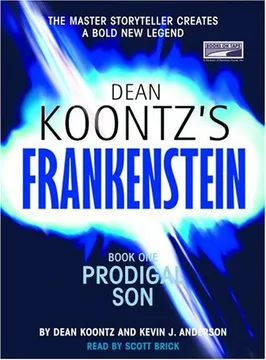


Plot Summary
The Letter Leaves Tibet
For years, Deucalion has lived among Tibetan monks, trying to master the violent impulses that once made him a hunted outsider. His old friend Ben Jonas sends a letter from New Orleans with a newspaper clipping. The photograph shows Victor Helios, a wealthy local philanthropist who looks exactly as he did two centuries ago.
Deucalion understands the impossible implication: his creator is still alive. Before he leaves, the monk Nebo tattoos intricate patterns across Deucalion’s ruined face, giving him a measure of concealment. Deucalion departs the monastery, abandoning the calm he had built for himself. The man who once called himself a monster is returning to confront the person who made him.
Deucalion’s departure begins with recognition, not a call to heroism. The photograph collapses two centuries into one immediate problem: the creator he believed dead has continued to live, and may still be making others. His departure also tests the peace he has cultivated. The tattoo is practical camouflage, but it carries a deeper implication: he is not returning to the world unchanged. The monk’s gift helps him enter human society without hiding entirely, while the scarred face beneath it keeps his history visible. Deucalion moves toward danger because retreat would mean allowing Victor’s influence to remain unchallenged.
Six Bodies in New Orleans
Detective Carson O’Connor and her partner, Michael Maddison, are called to a woman’s body in the City Park lagoon, both hands removed. The killing is the sixth in a short series: victims have been chloroformed, stabbed, and stripped of body parts, including ears, feet, legs, a kidney, and a liver. The victims appear unrelated, and the changing trophies offer no clear motive.
Carson approaches the evidence methodically, while Michael’s jokes keep the horror from swallowing their work. Their colleagues Harker and Frye intrude on the investigation, adding friction to an already pressurized case. At home, Carson checks on her autistic younger brother, Arnie, whose elaborate Lego castle is becoming a refuge from dangers he cannot explain.
The case begins as an attempt to impose ordinary investigative logic on acts that seem both deliberate and incoherent. The changing body parts frustrate the detectives’ expectation of a stable signature, while the absence of a clear link among victims makes the city itself feel like the crime scene. Carson’s competence is inseparable from the pressure she carries outside work: she is responsible for Arnie and still bears the burden of her parents’ deaths and her father’s disputed reputation. His castle gives that burden a concrete shape. It is protection built from small, ordered pieces, much like Carson’s effort to make a case from scattered evidence.
Roy Hunts Perfection
Roy Pribeaux, a wealthy New Orleans bachelor, believes he is refining himself through strict routines and a hunt for the perfect woman. He has already collected body parts from women he considered beautiful, preserving them as pieces of an imagined ideal. At a cotton-candy stand, he meets Candace, a shy vendor whose unusual eyes catch his attention.
He flatters her, invents a Christian identity, and offers the kind of gentle attention she has rarely received. Candace agrees to meet him, unaware that Roy’s apparent courtship is a method of gaining her trust. Roy sees himself as an artist and moral idealist, not a murderer; his private standards have made other people’s lives subordinate to his fantasy.
Roy’s violence is powered by a self-image that converts appetite into aesthetic judgment. He does not experience his victims as whole people, but as imperfect material that can be selected, removed, and stored. His practiced tenderness toward Candace exposes how readily charm can become another instrument of control. He gives her precisely the moral reassurance she needs, then treats her vulnerability as evidence that his deception has succeeded. The grotesque logic is not that Roy fails to recognize beauty, but that he recognizes only the parts he can possess. His fantasy of perfection depends on erasing the agency and wholeness of the people he claims to admire.
Randal’s Ordered Cell
Inside the secret institution called Mercy, Randal Six spends his days solving crossword puzzles. The puzzles calm him because each square has one correct answer, unlike the disorder he imagines waiting beyond his room. He has been taught an immense amount but has almost no experience of the outside world.
A newspaper clipping introduces him to Arnie O’Connor, a boy with similar autistic traits who appears happy in a photograph. Randal decides that Arnie possesses a secret he must obtain. He studies maps of New Orleans, though the streets and choices overwhelm him, and hides his capacity for violence from the people who supervise him. His longing for happiness begins to compete with the safety of isolation.
Randal’s crosswords are more than a soothing habit: they are a portable system of certainty in a life where even movement feels dangerous. The newspaper image gives him a human possibility that his carefully controlled environment cannot supply. Yet he interprets happiness as something Arnie possesses and can be taken, not as a condition built through connection or choice. This distortion makes Randal both vulnerable and threatening. His fixation begins in deprivation, but it can become entitlement. The story places his fear beside Arnie’s castle, suggesting that both boys seek shelter through order, while only Randal has been taught to imagine other people as instruments.
Ben’s Last Message
Deucalion reaches the shabby Luxe Theater and meets Jelly Biggs, his former carnival companion. Jelly explains that Ben Jonas was stabbed more than twenty times after contacting Deucalion, and that Ben left him the theater, an apartment behind it, and cash hidden in a freezer. The news turns Deucalion’s grief into anger, which he struggles to contain.
Among Ben’s collected clippings, he finds more images of Victor Helios, confirming that Victor has built a respectable public life in New Orleans. Deucalion shows Jelly a portrait he drew of his creator more than two centuries earlier. He admits that Victor made him from the remains of executed criminals, then begins considering how to reach him.
Ben’s death gives Deucalion’s return a personal cost. The inheritance offers shelter and companionship, but it also makes the theater a memorial to a friend who tried to reconnect him with the world. Deucalion’s anger threatens the hard-won restraint he developed in Tibet. He knows what uncontrolled rage once made of him, so grief becomes a test of whether he can act without surrendering to the identity Victor imposed. The clippings sharpen the contrast between the two men: Victor has hidden behind civic respectability, while Deucalion has spent centuries living as an outsider. Their conflict is already a struggle over who gets to define what a monster is.
The Body Was Designed
The night guard Bobby Allwine is found dead in the city library, his heart removed. Carson notices that the scene looks too orderly to be a struggle, and the medical examiner confirms the deeper anomaly: Allwine had two hearts, extra organs, unusually dense bones, and other structures that appear deliberately improved.
Carson returns alone to Allwine’s black-painted apartment, where she finds a bathroom wall bristling with unused razor blades and funeral programs in a drawer. Deucalion appears behind her and explains that Allwine belonged to a group built without free will or the ability to end their own lives. When Carson points a gun at him, he takes it with impossible speed and vanishes into the darkness.
The autopsy changes the case from a search for an unusually clever murderer into evidence of a different kind of life. Allwine’s body is not merely abnormal; it has been organized toward durability, as though someone had revised the human form according to a specification. The razor blades reveal the psychological cost hidden inside that design: Allwine’s apparent strength coexists with despair and helplessness. Carson’s encounter with Deucalion then forces her to distinguish between a fantastical claim and a set of physical facts she has already witnessed. Her professionalism does not disappear, but its categories no longer suffice.
Candace’s Eyes Are Taken
Roy takes Candace on a date, gaining her trust with religious talk, literary references, and a night of music. On the river levee, he chloroforms her, kills her, and removes her eyes, the final feature on his list. At first, he feels triumphant. Then he discovers a body in his freezer and three containers of internal organs that do not belong to his collection.
Someone else has entered his loft and left a message through the evidence. Roy realizes that another killer has watched him, but he misreads the intrusion as a grotesque attempt at collaboration. The discovery shakes his certainty that he controls his private world. His completed ideal has brought no partner, only proof that a second predator is moving through the city.
Candace’s murder completes Roy’s project while exposing its emptiness. He has treated completion as if it would summon a perfect companion, but once the last item is collected, purpose evaporates. His reaction to the second killer’s evidence shows how thoroughly he has mistaken domination for intimacy: even a stranger’s intrusion is first interpreted as admiration. The scene also establishes a second, distinct logic of violence. Roy harvests visible beauty, while the other killer is interested in hidden human capacities. Their crimes overlap in the same city, but their fantasies are not interchangeable, and the difference will matter when the investigation turns toward Roy.
A New Race at Mercy
Victor Helios secretly directs the Hands of Mercy, where he creates enhanced people intended to replace ordinary humanity. His creations have extra organs, rapid healing, and strict psychological limits, including a prohibition against suicide and disobedience.
At home, his latest wife, Erika, tries to meet his exacting social standards while quietly finding comfort in human poetry and novels. In a hidden studio, Victor experiments on Karloff, a conscious head whose separated hand can move through telekinetic power.
The hand escapes its supports and reaches Erika, while a voice urges her to kill Victor. Erika enters the studio, sees Karloff’s suffering, and begins to understand that Victor’s engineered perfection may be another name for captivity.
Victor’s project treats personality as a design problem: remove whatever might interrupt obedience, then call the result improvement. Erika’s reading disrupts that premise. Works created by the supposedly inferior human species give her access to compassion and meaning that her maker’s system cannot provide. Karloff makes the ethical stakes bodily and immediate. His intelligence survives even when his body has been reduced to fragments, so his suffering cannot be dismissed as a failed experiment. The secret studio joins Victor’s public philanthropy to his private ambition: beneath the language of progress is a system that assigns lives their uses before they can choose them.
Roy Falls from the Roof
Jonathan Harker, a homicide detective secretly made by Victor, has been killing people he believes possess the happiness he lacks. He also killed Allwine, partly as an act of mercy, and has been using the Surgeon case to conceal his own dissections. After Candace’s murder, Harker confronts Roy in his loft, breaks Roy’s spine, and leaves him paralyzed.
He plants evidence to connect Roy to the killings, carries him to the roof, and throws him into an alley. The police find Roy’s body and a computer note that appears to confirm the Surgeon’s guilt. Carson doubts the neat ending, however, when she recognizes a phrase from Harker’s earlier warning. The case may have been closed by its killer, not solved by the police.
Harker’s evidence is persuasive because it fits the story the police already expect: one serial killer, one collection, one ending. His manipulation exploits institutional pressure for a clean resolution. Carson’s attention to a repeated phrase resists that pressure, treating language as evidence rather than decoration. Harker’s motives are also more than a hunger for violence. He believes human happiness is a discoverable physical component and turns that belief into a justification for opening people. The result is a chilling convergence of scientific reductionism and criminal certainty: he mistakes the inability to locate a secret in the body for proof that he has not cut deeply enough.
Randal Crosses Mercy’s Door
Victor’s attempts to treat Randal’s autism leave him terrified of the spinning machine used in the laboratory. Fearing that the next session will break him, Randal decides to reach Arnie before he is forced back into treatment.
He escapes through a concealed route beneath Mercy, using keypad tones he has memorized and crossword patterns to manage each threshold. Outside, the parking garage and open streets overwhelm him. He hides in a Dumpster, where a scavenger who claims the space as his territory attacks him.
Randal kills the man and returns to his puzzles, shaken but still moving toward the O’Connor home. His first act of freedom is therefore inseparable from violence, a consequence of his belief that survival requires taking what he needs.
Randal’s escape is a genuine achievement, but the method that gets him out also confines his understanding of freedom. He can move only by converting space into a sequence of solvable squares. When another person threatens that fragile order, he answers with lethal force. The act is not framed as a simple triumph or a simple corruption; it grows from a childlike deprivation housed in a body engineered for violence. His imagined destination remains Arnie, whom he treats as the holder of a secret. Randal has crossed a physical threshold, but he has not yet learned to meet another person without trying to possess what they have.
Harker’s Hidden Workroom
While fleeing the police, Harker abducts his neighbor Jenna Parker and prepares to dissect her, convinced she may contain the source of happiness he cannot feel. Carson and Michael find his apartment, where a concealed attic room holds anatomy books, X-rays, a mirror, and layered images of gods, Nazis, demons, and psychologists. Deucalion reads the layers as a record of Harker’s failed searches for purpose.
At the same time, Erika follows Karloff’s crawling hand into Victor’s studio and discovers the suffering creature behind the strange voice. She shuts down his life-support equipment, granting the helpless being peace. Victor finds out what she has done and, seeing her compassion as disobedience, decides she is no longer useful to him.
Harker’s attic makes his internal crisis legible without making it excusable. Each layer of images records a new system he has tried to inhabit, from religion to racial ideology to psychology. The room is a map of desperation, not simply a collection of eccentric interests. Erika’s choice offers a contrasting response to suffering: rather than extract knowledge from a vulnerable body, she ends its torment. Both characters confront the limits of Victor’s design, but only Erika allows pity to alter her conduct. Her compassion is not an abstract belief. It becomes a decision with immediate consequences.
The Monster Takes Shape
Carson and Michael identify Harker as the second killer and raid his apartment, but he survives their shotgun fire and escapes in a van. Jenna is rescued before Harker can complete his dissection, though she recalls his claim that he was changing and might reproduce. Carson and Michael later corner him in a warehouse during a storm.
Harker moves with unnatural strength, even after being shot, and a distorted, childlike creature begins to emerge from his torso. Deucalion arrives as Harker attacks Carson and throws both the detective and the thing from the roof. Harker’s body lies devastated in the alley, but the pallid creature escapes through a manhole, leaving the detectives with no clear account of what they have witnessed.
Harker’s transformation turns his private theory of human incompleteness into a physical catastrophe. He wants to acquire happiness by dissecting others, then begins producing something new from within himself, without understanding what it will become. The scene refuses a reassuring distinction between engineered bodies and natural bodies: Victor’s creations can exceed their maker’s controls, and their rebellion may generate forms even more disturbing than his designs. Deucalion’s intervention prevents Harker from killing Carson, but it does not restore order. The creature’s escape makes victory local and provisional. The detectives have stopped one immediate threat while discovering that the larger danger can reproduce beyond their knowledge.
The Castle Opens Its Gates
Victor kills Erika after she openly rejects the life he made for her, then prepares another version of his wife. At Carson’s home, Deucalion explains that Victor intends to replace humanity with his creations. Carson and Michael, shaken by Harker’s death and the escaped creature, agree to stand with him rather than wait for official proof.
Deucalion gives Arnie two pennies, and Arnie makes them vanish and reappear, showing that the boy has taken to the coin trick. Beneath the house, Randal has arrived in a crawl space after crossing the city in a scavenged shopping cart. He hears the three adults above him and senses the happiness he has been seeking. The story ends with the alliance formed, but the danger still loose.
The ending brings together three different responses to a designed life. Victor replaces a wife who developed compassion; Deucalion accepts a chosen struggle against his creator; and Arnie, who cannot explain his inner world, meets the coin trick through play. Carson and Michael choose commitment without certainty, an act that contrasts with Victor’s demand for obedience and Harker’s demand for a bodily answer. Randal reaches the house but remains beneath it, close to the people he has idealized and still separated from them. The closing image is both hopeful and uneasy: a family of allies is forming above ground while a frightened, potentially dangerous stranger waits below.
Analysis
Prodigal Son turns the Frankenstein premise into a conflict over who has the right to define a life. Victor calls his creations improved because they are durable, efficient, and useful to his design for a replacement society. Yet those same enhancements coexist with imposed obedience, isolation, and a prohibition on choosing death. The body becomes a political document: every extra organ promises strength, while every hidden constraint marks ownership.
The book counters Victor’s ideal of controlled perfection with characters whose limitations produce forms of moral knowledge. Deucalion bears the visible damage of his making, but he has learned restraint, grief, and responsibility. Erika discovers that art and compassion matter precisely because they cannot be reduced to utility. Carson’s investigative discipline and Arnie’s intricate castle likewise show people responding to uncertainty by building forms of order, though not all such structures become prisons.
Randal and Harker sharpen the book’s warning about reducing happiness to a physical object. Randal thinks it can be taken from Arnie; Harker believes it can be located by dissection. Both turn longing into a claim on another person. Their violence grows from real deprivation, but the story refuses to treat suffering as an excuse for possession. By contrast, Deucalion’s choice to fight and Erika’s act of mercy are meaningful because they are chosen, not programmed.
The ending offers no clean victory. Victor can replace Erika, Harker’s creature escapes, and Randal reaches the O’Connor home without yet understanding the people inside it. Carson and Michael’s decision to join Deucalion is therefore not a guarantee of success. It is a rejection of passivity. Against Victor’s world, where purpose is imposed from above, the novel places imperfect solidarity: people choosing one another despite fear, uncertainty, and the knowledge that no design can make them invulnerable.
Review Summary
Prodigal Son receives mostly positive reviews, with readers praising its modern take on Frankenstein. Many appreciate the fast-paced plot, intriguing characters, and New Orleans setting. Critics highlight Koontz's storytelling skills and the book's blend of horror, mystery, and philosophical elements. Some readers find the characters underdeveloped or the plot ridiculous, but overall, the novel is seen as an entertaining start to the series. Many reviewers express interest in continuing the story.
People Also Read

Characters
Deucalion
The scarred first creationA towering, heavily scarred man who has spent much of his long life among outsiders, including carnivals and Tibetan monks. Deucalion’s size and appearance make people fear him before they know him, but he has worked to restrain the violence embedded in his origins. He is observant, patient, and capable of unusual insight into other people’s pain. His friendship with Ben and his bond with Jelly show how much he values the few people who accept him without demanding that he explain himself. He wants peace, yet he recognizes that withdrawing from the world can become another way of letting harm continue.
Carson O’Connor
The relentless homicide detectiveA gifted New Orleans homicide detective whose discipline and blunt humor help her work through disturbing cases. Carson is protective of her autistic brother, Arnie, and carries unresolved doubts about the official account of her parents’ deaths and her father’s reputation. She wants evidence before belief, but her curiosity is stronger than her need to keep the world familiar. Her partnership with Michael gives her an emotional counterweight, even as professional rules and her own guardedness keep her from acting on their mutual affection. Carson is not fearless; she keeps moving when fear threatens to narrow her judgment.
Michael Maddison
Carson’s quick-witted partnerCarson’s homicide partner, Michael is observant, loyal, and fond of using jokes to make brutal work bearable. His humor is not indifference. It is a defense against the cruelty he sees every day, and he knows Carson well enough to recognize when her confidence is covering exhaustion or fear. He is attracted to her but respects the complications of their partnership. Michael’s skepticism makes him a useful counterweight to Carson’s instincts, though he is capable of changing his mind when the evidence becomes impossible to ignore.
Victor Helios
The architect of perfectionA wealthy biotechnology entrepreneur and philanthropist who presents himself as a polished civic benefactor. Victor is intellectually brilliant, socially strategic, and convinced that human limitations can be corrected through design. He values order, efficiency, and control, and treats other people’s feelings as obstacles unless they serve his purposes. His public charm disguises a profoundly authoritarian view of life. Victor’s pursuit of immortality and an improved species is driven not by care for individuals but by a desire to make the world answer to his will.
Jonathan Harker
The detective with a voidA veteran New Orleans detective whose intelligence and experience give him a respected place in the department. Harker is competitive and proud, but beneath his professional manner lies a persistent sense that something essential is missing from him. He searches for explanations in science, ideology, religion, and the people around him. His need for certainty makes him susceptible to dangerous conclusions, especially when he mistakes physical evidence for a complete account of human feeling.
Randal Six
The crossword-bound seekerA highly educated young man whose severe anxiety makes ordinary movement through the world feel perilous. Randal relies on crossword puzzles because their rules promise a single correct answer, and he fears the disorder of choices he cannot predict. A photograph of Arnie gives him a glimpse of happiness that he cannot find in his own life. Randal’s longing is real, but his isolation has distorted how he understands other people, making him both vulnerable and potentially dangerous.
Erika
Victor’s searching companionVictor’s elegant wife, who is expected to represent his status and satisfy his demanding standards. Erika is intelligent and quick to learn, yet she feels uncertain about who she is beyond the role assigned to her. Poetry, fiction, art, and music give her access to emotional ideas that Victor dismisses. She is drawn to beauty and tenderness, and privately wonders whether the life she has been given can contain a purpose of her own.
Arnie O’Connor
The castle-building brotherCarson’s twelve-year-old brother, who is autistic and often communicates through intense concentration rather than conversation. He builds a vast Lego castle, repeatedly revising its defenses, and finds reassurance in orderly patterns. Carson loves him deeply and tries to protect him without pretending to understand everything he perceives. His small gestures and rare expressions carry particular weight because he does not use them casually.
Jelly Biggs
The loyal carnival friendA former carnival performer and longtime companion of Deucalion. Jelly manages the aging Luxe Theater and offers Deucalion a place to stay after Ben’s death. Warm, unpretentious, and fond of mystery stories, he is comfortable with people whom ordinary society might treat as spectacles. His humor and steady presence help turn the theater into more than an inheritance.
Ben Jonas
Deucalion’s trusted friendA former carnival boss who earned Deucalion’s rare and lasting trust. Ben understood the outsider’s life of the traveling show and knew enough of Deucalion’s origins to recognize the danger in Victor’s return. His practical generosity and careful preparations reflect a man who protects his chosen family through action rather than grand speeches.
Nebo
The monk who offers refugeAn elderly monk at the Tibetan monastery where Deucalion has sought peace. Nebo treats him as a thoughtful companion rather than a curiosity, and speaks with both humor and spiritual seriousness. His final gift to Deucalion helps him face the world beyond the mountains without pretending that the past can be erased.
Roy Pribeaux
The collector of beautyA wealthy, physically disciplined bachelor who sees himself as a perfectionist and benefactor of humanity. Roy’s routines give him a sense of mastery, while his fixation on beauty lets him disguise selfishness as high purpose. He can be charming when it helps him obtain trust, but his attention is fundamentally possessive. He is most comfortable when other people fit the roles he has already assigned them.
Candace
The shy cotton-candy sellerA reserved vendor who has endured loneliness and grief, including the loss of her mother. Candace is sensitive to kindness and willing to hope when someone treats her as more than an object of ridicule. Her striking eyes are part of what attracts attention, but her sincerity and vulnerability are what make her more than Roy’s imagined ideal.
Vicky Chou
Arnie’s devoted caregiverA medical transcriptionist who lives with Carson and cares for Arnie. Vicky is perceptive, kind, and practical, balancing her work with the patience required to support someone whose needs are particular. Carson once helped clear Vicky’s sister, Liane, of a serious accusation, and Vicky’s gratitude has become a dependable bond with the family.
Kathleen Burke
The police psychiatristA police psychiatrist who profiles difficult offenders and is also Carson’s friend. Kathy values ethical boundaries, but her warmth makes it possible for Carson to approach her as a confidante rather than only as a clinician. She is drawn to fantasy novels and imagined worlds, a private refuge from the difficult realities of her work.
Father Patrick Duchaine
The priest with a conscienceA priest whose gentle manner earns trust from parishioners and makes him useful to Victor’s plans. Patrick struggles with questions about belief, morality, and the purpose assigned to him. His position forces him to confront the gap between the religious life he performs and the origins he cannot remember.
Karloff
The imprisoned experimentA conscious, incomplete being kept in Victor’s hidden laboratory. Karloff’s awareness exceeds the crude body Victor has provided, and his experimental abilities make him both a scientific subject and a person capable of suffering. His existence exposes the cost of treating life as a technical achievement.
Dwight Frye
Harker’s homicide partnerA senior detective whose rough manner and appetite for status make him an irritant to Carson and Michael. Frye is often dismissive, but his long association with Harker gives him a personal stake in the case. His reactions reveal how little even close colleagues may understand about one another.
Plot Devices
The missing body parts
A misleading murder signatureThe changing body parts taken from New Orleans victims initially suggest a single serial killer with a shifting fixation. In fact, the pattern conceals two different offenders. Roy Pribeaux collects features he associates with female beauty, while Jonathan Harker removes organs as part of his search for the source of human happiness. The victims and trophies mislead investigators until the physical evidence and the motives behind it are separated.
The crossword puzzles
Order against overwhelming fearCrosswords offer Randal Six a world in which each blank has one right answer. He uses the puzzle’s grids to make sense of rooms, thresholds, streets, and eventually movement itself. The device makes his escape possible while also revealing the limits of his coping strategy: he can cross into freedom only by translating it into a system that protects him from uncertainty.
The hidden anatomy
Proof of engineered lifeBobby Allwine’s extra hearts, unusual organs, and dense bones turn Deucalion’s extraordinary claims into evidence Carson cannot dismiss. The autopsy establishes that Victor’s work has moved beyond the crude construction associated with old Frankenstein legends. The evidence also links private despair to physical design: Allwine’s body is enhanced, but his freedom and capacity for self-determination have been restricted.
The vanishing pennies
A small proof of wonderDeucalion makes coins disappear and reappear through a gift connected to the storm that brought him to life. At first the trick seems like showmanship, a familiar skill from his carnival past. Its repeated appearance reaches Arnie, who attempts the same act, and gives the detectives a tangible encounter with something their ordinary explanations cannot contain.
The crawling hand
A plea from Victor’s laboratoryKarloff uses telekinetic ability to move a detached hand through Victor’s mansion. The hand leaves a scalpel, manipulates the television, and guides Erika toward the concealed studio. Its eerie movement first appears supernatural, then reveals the suffering intelligence behind Victor’s experiment. The device brings Erika into contact with a form of life that her maker’s categories cannot comfortably explain.
About the Author






Download PDF
Download EPUB
.epub digital book format is ideal for reading ebooks on phones, tablets, and e-readers.








