

Plot Summary
The Florida Freight
In Boca Raton, Colonel Talmadge Clerkenwell gives freight handlers Dooley Peebles and Rosco Moseley a massive crate supposedly filled with books, addressed to Benjamin Catspaw in California. Rosco suspects crime; Dooley senses the colonel’s unusual kindness but cannot explain why.
At the airport, sealing the shipping papers gives Dooley a sudden chill. That night, Clerkenwell appears in his dream and makes him forget the crate, its recipient, and his own warning sensation.
He leaves Dooley one exception: the colonel himself must be remembered if the world becomes impossible to set right. The cargo reaches Los Angeles, where a manager inspecting it collapses and loses two hours. Before anyone can explain the reaction, the unusual shipment continues toward Benny.
The shipment begins as an ordinary logistical problem, then quietly breaks the rules of ordinary knowledge. Dooley’s selective forgetting is especially telling: the intervention does not erase his entire experience, only the pieces that would expose the crate before it reaches its intended recipient. The colonel’s benevolence therefore operates not as simple comfort but as a form of controlled protection. The freight workers’ contrasting instincts, Rosco’s suspicion and Dooley’s trust, also establish the story’s central uncertainty: whether goodness can recognize danger without becoming governed by fear.
Benny's Perfect Life Breaks
At twenty-three, Benny Catspaw appears to have built the life his childhood denied him: a successful real-estate career, a beautiful home, and a future with agent Jill Swift. Then his boss, Handy Duroc, abruptly ends their business arrangement while insisting that Benny has done nothing wrong.
Jill arrives soon after, returns his house key, and leaves him without explaining why his prospects have suddenly narrowed. Benny’s applications to other brokerages draw no reply, and his bank rejects a loan.
A video from Talmadge Clerkenwell identifies the sender as Benny’s great-uncle and promises an extraordinary inheritance, while warning him to keep it secret. Benny cannot reach Clerkenwell. The next morning, freight workers deliver a huge crate that Benny had expected to be an ordinary package.
Benny’s crisis is frightening partly because it has no clear accusation attached to it. Handy’s nervous evasions and Jill’s vague explanations leave Benny with consequences but no cause, a form of social exclusion that makes self-correction impossible. His instinct is to assume that better behavior or greater effort will restore what he has lost. That instinct is generous, but it also exposes him to manipulation: he keeps searching himself for a fault that powerful people have deliberately concealed. The mysterious inheritance arrives at the moment his familiar measures of security, work and romance, have both failed.
From Violence to Briarbush
Benny’s history explains why he meets adult cruelty with patience rather than rage. When he is seven, a man who has fought his father shoots him in their kitchen; Benny’s mother, Naomi, remains in bed with a migraine and does not witness it.
His maternal grandmother, Cosima, takes him in and tries to school him through grim lessons about death and disaster. Naomi later marries wealthy traveler Jubal Catspaw, who adopts Benny but leaves him behind while he and Naomi tour the world.
At thirteen, Benny is sent to Briarbush Academy, a remote school for the children of powerful families. There he meets his roommate Jurgen Speer and the brilliant Mengistu Gidada. Both boys, like Benny, suspect that the school’s orderly surface hides something deeply wrong.
Benny’s gentleness is not the product of an uncomplicated childhood. He has repeatedly been placed near violence, neglect, and adult self-absorption, yet refuses to make other people responsible for the pain he has survived. That refusal is a strength, but it is also a learned strategy: a child with little control over his surroundings can preserve a sense of self by choosing his own response. Briarbush threatens that remaining control. Its promise to prepare privileged boys for leadership makes Benny’s arrival especially unsettling, because he has already experienced how easily adults can call abandonment an opportunity.
Bugboy Under Glass
Jurgen tells Benny that their former roommate, Prescott Galsbury, was supposedly expelled after developing an urge to eat ants. Mengistu has seen Prescott alive behind a window in the laboratory of the headmaster’s wife, Catherine Baneberry-Smith.
The three boys climb onto the lab roof and find him clinging to a wall like an insect, begging to be fed. The following night, they follow armed men and Baneberry-Smith into the forest. The altered Galsbury attacks, kills one agent, and is shot apart by the others.
Hidden nearby, the boys overhear Baneberry-Smith explain that an alien encounter gave her advanced knowledge, which she is using to alter students and serve her own ambitions. The headmaster soon dies in a supposed fall, and Baneberry-Smith takes charge of the school.
Briarbush turns education into a metaphor for coercive formation: the boys are not merely being taught what to think, but altered so that independent thought becomes harder. Galsbury is both victim and threat, which prevents the friends’ sympathy from becoming a simple moral answer. Their decision to keep watching, despite the danger, arises from a conviction that understanding is necessary for resistance. Baneberry-Smith’s revelation widens the horror beyond a single laboratory. The school’s rituals, its secrecy, and its cultivation of future leaders are now part of a larger project that treats young people as material to be redesigned.
The School Lets Go
After the headmaster’s death, Baneberry-Smith steadily gathers students into a compliant network, while Benny, Jurgen, and Mengistu remain alert to the changes. They break into her house and discover the headmaster’s severed head suspended in a glass sphere, speaking in an alien language.
Before they can act, Naomi arrives: Jubal has died abroad, her finances have changed, and she is taking Benny away to be homeschooled. She refuses to let him stay with his friends. Benny later spends five isolated years with retired psychologist Fernsehen Liebhaber.
At eighteen, he returns to Briarbush and finds the school abandoned. A former agent tells him that an experiment later destroyed the campus and killed students, while Jurgen and Mengistu had vanished into the wilderness years earlier. Their fate remains unknown to Benny.
The severed head makes Briarbush’s project literal: even death does not release the body from being used as an instrument. But the deeper wound is Benny’s forced separation from the first friends who recognize and protect his real self. Naomi’s decision repeats an old pattern in which adults determine Benny’s future without asking what he needs. His years with Dr. Liebhaber offer safety but little intimacy, leaving him to build his identity through books and solitude. The apparent loss of Jurgen and Mengistu then becomes an unfinished grief, one that Benny cannot resolve with either evidence or certainty.
A Guardian in the Crate
In his garage, Benny opens the crate and finds a smooth, cold metal container rather than books. A hammer rings against it with an impossible sound, and its head breaks loose. When Benny returns from a walk, his kitchen has been ransacked and the metal container has become an ornate wooden box covered in scenes of people fleeing an unseen danger.
The pictures move beneath his hands, and a voice inside threatens him. Benny calls his friend, private investigator Robert Jericho, for help. Harper Harper, a waitress and aspiring investigator who works with Bob, arrives first; Bob follows and investigates the scene.
In the garage, Bob falls into a trance. The box opens to reveal Spike, a towering being who identifies himself as Benny’s supernatural protector. He promises to find who targeted Benny.
The mysterious container gives Benny’s private anxieties a physical address. Its transformation from sleek metal to detailed, animated imagery also marks a change in how he must understand reality: the problem cannot be solved by buying the right tool or cleaning up a mess. Harper and Bob make the revelation relational rather than solitary. Benny reaches for help instead of dismissing his fear as irrational, and the people who answer him become part of the danger. Spike’s arrival offers protection, but his powers immediately raise a harder question: how can a vulnerable person accept help without surrendering his judgment?
The Better Kind's Trail
Spike explains that he is a craggle, a protector assigned to people whose goodness makes them targets, and insists that Benny let him investigate. Benny, Harper, and Spike visit Handy Duroc, who admits that powerful people pressured him to push Benny out of Surfside Realty.
At Handy’s house, they find Jill Swift there with him, confirming that she has chosen her career prospects over Benny. Spike freezes both Jill and Handy in place, then frightens Handy into naming attorney Oliver Lambert.
At Lambert’s extravagant party, Spike corners the lawyer and forces him to reveal that a powerful financier, F. Upton Theron, directed the effort to erase Benny’s career. Lambert remembers Benny and Harper but not Spike, leaving him frightened and unable to explain his own humiliation.
The investigation reveals that Benny’s professional rejection was engineered through ordinary institutions rather than through a dramatic public accusation. Handy and Lambert are useful because they show how coercion can travel down a hierarchy: each person may be powerful in his own sphere while acting as an instrument for someone higher. Jill’s presence makes the betrayal intimate, not merely professional. Spike can expose hidden pressure, but his methods involve intimidation and control. Benny’s discomfort with those methods is important; he does not confuse an effective intervention with a morally uncomplicated one.
The Rabbit at Palazzo
At F. Upton Theron’s heavily secured estate, Benny invents a story to reassure Theron’s physician, while Harper searches the house for Arabella, Theron’s beloved white rabbit. The doctor’s description alerts the group that Theron may intend to die beside the animal.
Harper finds Arabella in his bedroom and carries her away. Theron has already prepared a sealed drawing room and injected himself with an antidote to the nerve gas he plans to release. Spike disables the trap and confronts him.
Theron’s confidence in wealth, power, and future immortality collapses when Spike displays his beating heart. Under pressure, Theron identifies the group behind Benny’s persecution as the Better Kind, a wealthy alliance led by Llewellyn Urnfield. He suffers a fatal heart attack before the group can leave.
Theron’s fear of death clarifies the emptiness beneath his vision of mastery. He has spent his life treating other people as expendable while imagining that technology and money will exempt him from the same limits. Arabella interrupts that fantasy: his attachment to one vulnerable creature reveals a capacity for care, but one too narrow to challenge his cruelty toward everyone else. Harper’s rescue of the rabbit is therefore not a decorative detour. It exposes the difference between affection as possession and compassion as responsibility. Theron’s final disclosure turns the conspiracy from a chain of intermediaries into a direct confrontation with its leader.
The Bullet Stops
At Llewellyn Urnfield’s modest-looking home, the billionaire dismisses Benny as insignificant and threatens Harper when he refuses to explain how he found her. Spike reveals his supernatural abilities, but Urnfield answers by drawing a pistol and shooting at Harper.
Spike freezes time. Harper, Urnfield, the dog, and the bullet stop in place; Benny alone can move. He cannot remove the gun or move Harper, so he must decide whether to alter the suspended round.
Spike warns that a mistake could injure Benny, leave the bullet on course, or cost him his ability to play piano, a talent he has not used since childhood. Benny carefully redirects the bullet toward Urnfield. When time resumes, the shot kills her. Spike tells the others that Urnfield shot herself, concealing their intervention.
The climax turns Benny’s habitual reluctance into a test of judgment rather than a celebration of violence. He cannot preserve his innocence simply by refusing to act; inaction would leave Harper exposed to a murderer. At the same time, the frozen moment strips away the social machinery that has defined him. There is no crowd to persuade and no institution to petition, only a consequential choice he must make himself. His decision draws on compassion, but also on discernment: treating every person kindly cannot mean protecting someone who is actively trying to kill an innocent person.
Friends Found in Arizona
Once the immediate danger passes, Benny returns home with Harper, Spike, and the rescued rabbit, whom they rename Lily. Bob is released from his trance and brought into their confidence. Harper and Benny acknowledge their growing love, and she proposes; he accepts.
Spike arranges an engagement dinner in Arizona, where Benny discovers Jurgen and Mengistu alive and thriving. Jurgen manages a restaurant they own, and Mengistu is its inventive chef. Their uncle helped them escape Briarbush and build new lives after they vanished into the wilderness.
Their reunion repairs a grief Benny had carried for years without proof that his friends had survived. Bob helps Benny choose an engagement ring, while Spike treats the widening circle of friends as a family.
The reunion answers the story’s deepest unresolved question without pretending that the intervening years were painless. Benny has carried hope for Jurgen and Mengistu as a choice, not as knowledge; finding them alive confirms that hope while giving it a human consequence. His relationship with Harper also develops in a world where trauma and absurdity arrive together. Their engagement is not a retreat from danger but a commitment made after they have seen each other act under pressure. The growing circle around Benny offers what his childhood lacked: relationships sustained by recognition rather than obligation.
A Wedding Under Siege
Benny and Harper marry with Spike as best man, Bob carrying Lily, and Virginia Woolf, the whippet, as ring bearer. A bogadril from another dimension appears as the couple leave the ceremony.
The three craggles present, Spike and two others, freeze the guests and dispatch it before anyone is injured; the wedding party remembers none of the attack. At the reception, Tyler Pinkflower and his band play. Benny joins Tyler at the piano, revealing a musical gift he has neglected since childhood.
The performance draws the band into a new level of musicianship, and Benny and Tyler recognize a creative partnership. Harper later joins them as a singer. The story closes with Benny’s future expanding beyond real estate into marriage and music, while Spike remains beside him as protector and friend.
The wedding’s interruption makes the ending’s happiness active rather than sheltered: danger persists, but it does not dictate the shape of the couple’s life. The craggles protect the guests without turning the ceremony into a public spectacle, preserving the ordinary meaning of the celebration. Benny’s music provides a second kind of restoration. The talent he discovered as a boy, then set aside amid successive upheavals, returns in a community that can appreciate it rather than fear it. The story’s abundance of comic and fantastical events ultimately serves a clear emotional purpose: Benny gains a future built through shared affection, work, and creative possibility.
Analysis
The novel makes niceness consequential rather than decorative. Benny’s patience and generosity are not presented as proof that the world will reward him; they repeatedly expose him to people who interpret decency as weakness or as a threat to their authority. His growth lies in adding judgment and courage to kindness, not in abandoning kindness for aggression. The decision at Urnfield’s house crystallizes that change: Benny recognizes that refusing to act can itself leave an innocent person unprotected.
The story’s two central institutions, Briarbush Academy and the Better Kind, share a method. Each claims to improve the future by deciding which people should be shaped, silenced, or removed. Their ideological language disguises a fear of unpredictable human agency. The school makes that process bodily through its experiments; the conspiracy makes it social through job loss, financial pressure, and manufactured isolation. Both systems depend on their targets believing that their misfortune is personal failure.
Against this machinery, the novel builds a counter-community. Harper, Bob, Jurgen, Mengistu, Tyler, and Spike do not share one temperament or one kind of power, but their loyalty makes them difficult to isolate. The reunion with Jurgen and Mengistu gives emotional weight to this resistance: friendship survives not as a sentimental memory but as a life the boys actively built after escaping Briarbush. Benny’s marriage and return to music extend the same idea into adulthood. His future is not a prize granted by the powerful; it is something made with other people.
The supernatural comedy also unsettles the usual division between realism and fantasy. Freight systems, real-estate contracts, security gates, restaurants, and family histories coexist with time-folding and interdimensional creatures. That mixture suggests that the marvelous does not remove ordinary responsibility. Even with a protector capable of impossible feats, Benny must still judge, choose, and risk. The ending’s hopeful claim is therefore not that goodness guarantees safety, but that decency joined to discernment, courage, and mutual care can make a life larger than the forces that try to constrict it.
Review Summary
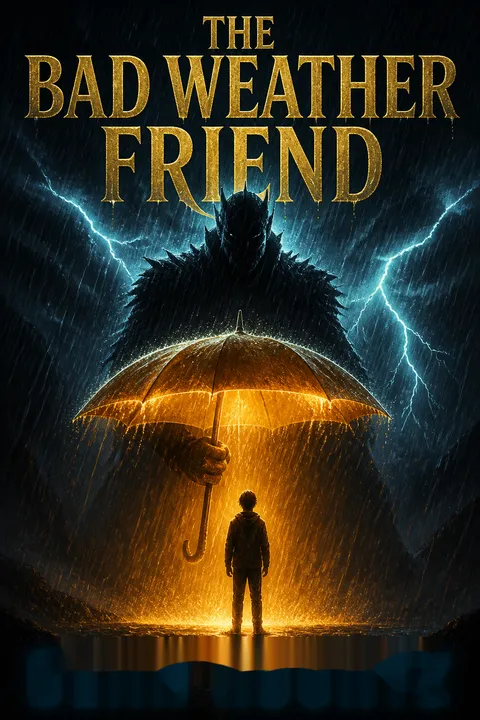
The Bad Weather Friend received mixed reviews, with an average rating of 3.89 out of 5. Many readers found it quirky, humorous, and entertaining, praising its unique blend of fantasy and comedy. Some appreciated the unconventional storytelling and character development. However, others were disappointed, expecting a typical Koontz thriller. Critics noted the bizarre plot, excessive wordiness, and lack of tension. Some readers struggled to connect with the characters or found the story pointless. Overall, opinions were divided, with fans enjoying the whimsical tone while others found it tedious.
People Also Read






Characters
Benny Catspaw
The persevering nice guyBenny is a young real-estate agent whose ambition is rooted in a childhood without dependable care. He is observant, capable, and unusually slow to anger, preferring to ask what happened before condemning anyone. That openness lets him build trust across professional and personal boundaries, but it can also leave him vulnerable to people who exploit his good faith. Benny wants a stable home and a loving family, goals that make him work hard without turning success into a license to dominate others. His optimism is not ignorance of suffering; he has witnessed violence and endured neglect. It is a deliberate effort to avoid passing cruelty onward, even when the people around him offer reasons to become bitter.
Spike
Benny's supernatural bodyguardSpike is an imposing, quick-witted protector whose immense strength and impossible physical abilities sit alongside an unexpectedly affectionate nature. He treats danger as a practical problem and enjoys using spectacle to unsettle people who threaten his companions. His confidence can shade into paternalism: he is inclined to decide what is best for Benny, even when Benny wants the right to make his own mistakes. Beneath the humor and bravado, Spike is bound by a serious sense of duty and a long history of protecting people who are vulnerable to powerful enemies. His relationship with Benny becomes more than a mission, because he wants friendship, shared pleasures, and a place in the young man’s ordinary life.
Harper Harper
The sharp-eyed investigatorHarper is a waitress, aspiring private investigator, and close associate of Robert Jericho. Colorful in dress and blunt in manner, she reads people quickly and is willing to move toward danger when someone she cares about needs help. Her humor keeps fear from controlling a room, though she is neither careless nor immune to uncertainty. Harper values competence and independence, and she is determined to develop the judgment required for investigative work. With Benny, she notices a gentleness that others might mistake for weakness and sees the courage beneath his awkwardness. Their attraction grows through shared danger and mutual attention, not through a conventional courtship. She brings warmth and initiative to a life Benny has often experienced alone.
Robert Jericho
The hard-boiled private eyeRobert Jericho, known as Bob, is a former homicide detective who now runs a private-investigation firm. He is imposing, charismatic, and experienced at reading threats, with firm limits on the cases he will accept. His teasing can make Benny self-conscious, but his loyalty is steady and practical. He offers help without exploiting friendship for profit and gives Harper a path toward investigative work. Bob’s confidence is valuable in a crisis, though it can make his judgments sound more certain than the evidence warrants.
Talmadge Clerkenwell
The secretive benefactorTalmadge Clerkenwell is an elegant older man whose manner suggests courtesy without naivete. His concern for others extends beyond humans, and he is careful about what he reveals and to whom. Benny has no personal history with him when the bequest arrives, so Talmadge’s kindness must initially compete with the strangeness of his instructions. He appears to understand that benevolence can require preparation as well as reassurance.
Handy Duroc
The frightened real-estate bossHandy Duroc is a successful Orange County broker who values wealth, status, and access to influential people. He is a gifted salesman with a polished public manner, but his ambition has limits: he fears becoming collateral damage in conflicts among the truly powerful. His relationship with Benny has included professional trust, which makes his abrupt withdrawal especially painful. Handy’s choices reveal how people who are not themselves masterminds can still help enforce a hidden agenda.
Jill Swift
Benny's ambitious former partnerJill is a successful real-estate agent with a strategic mind and a strong appetite for advancement. She and Benny once imagined building a brokerage together, but she is more comfortable than he is with hard choices made in the name of career survival. Her charm and beauty do not conceal the severity of her ambition. Jill embodies a world in which intimacy and professional opportunity can become difficult to separate.
Cosima Springbok
The cruel grandmotherCosima is Benny’s maternal grandmother, an educated and psychologically perceptive woman who uses her knowledge to frighten rather than nurture him. Her lessons dwell on death, disease, natural disaster, and human cruelty. She regards childhood as something to discipline out of a boy and treats affection as a weakness. Benny’s refusal to absorb her bleak worldview shows the difference between being taught about suffering and being taught to care.
Naomi Catspaw
Benny's distant motherNaomi is Benny’s mother, a woman who has spent much of her life trying to escape difficult relationships and circumstances. She can be self-absorbed and emotionally unavailable, even when she believes she is making sensible choices. Her treatment of Benny reflects a recurring divide between providing for a child materially and attending to his emotional needs. She wants freedom from the burdens of her past but rarely recognizes the cost her decisions impose on her son.
Jurgen Speer
Benny's wary school friendJurgen is Benny’s roommate at Briarbush, a guarded boy who uses silence, unsettling presentation, and sharp observation to protect himself. His suspiciousness is not merely theatrical; it develops from a real sense that the school is changing its students. Beneath his intimidating pose is a frightened adolescent capable of loyalty and companionship. He and Benny learn to trust one another through shared attention to what others would rather ignore.
Mengistu Gidada
The brilliant moral realistMengistu is a student whose intelligence ranges from academic study to the small details other people overlook. He speaks with precision and often frames danger as a problem requiring careful thought. His parents envision a powerful public future for him, but he has a different sense of what kind of life would be worthwhile. Mengistu’s loyalty to Jurgen and Benny gives his intellect a moral center: he wants knowledge not for status, but for the chance to protect people and choose his own future.
Catherine Baneberry-Smith
The brilliant headmistressCatherine Baneberry-Smith is a scientist and educator whose warmth can make her seem trustworthy to students and families. She is intelligent, self-possessed, and fascinated by the possibilities of scientific knowledge. Her ability to inspire confidence exists alongside a formidable will and a willingness to place her ambitions above the autonomy of the young people in her care. She represents the danger of expertise detached from restraint.
F. Upton Theron
The insulated billionaireF. Upton Theron is a wealthy recluse who sees money as a route to authority over the future. He is devoted to his rabbits and protective of the routines built around them, yet his tenderness is sharply limited. Theron’s certainty that he can outmaneuver mortality reflects a broader conviction that his desires should govern other people’s lives. He is most dangerous when he mistakes personal power for moral legitimacy.
Llewellyn Urnfield
The social architectLlewellyn Urnfield is a wealthy, intellectually confident woman who believes society can be redesigned by those she considers superior. She prizes control and treats disagreement as evidence of inferiority rather than as a reason to reconsider her plans. Her restrained home and formidable collection of art do not signal modesty so much as indifference to ordinary displays of status. Urnfield’s language of improvement masks a deep contempt for individual freedom.
Jubal Catspaw
The affluent stepfatherJubal is Naomi’s wealthy second husband and Benny’s adoptive stepfather. He delights in luxury travel and provides Benny with material comfort, but he is awkward with children and does not make the boy central to his plans. His fortune changes the family’s circumstances without creating the closeness Benny longs for.
Big Al
Benny's violent fatherBenny’s father is a large, volatile teacher and coach whose drinking and fighting make home life unpredictable. He brings his conflicts through the door and mistakes physical force for authority. Benny’s early exposure to his violence shapes the child’s understanding of danger without making him imitate his father’s aggression.
Fernsehen Liebhaber
The detached caretakerDr. Fernsehen Liebhaber is a retired child psychologist who agrees to care for Benny during his adolescence. Burned out by decades of listening to other people’s troubles, she sets strict emotional boundaries while still providing a stable home and education. Her love of novels, food, and television gives her a private world that Benny learns to understand indirectly. Their arrangement offers him peace without pretending to be a replacement family.
Tyler Pinkflower
The freight-handling musicianTyler works at the freight facility while pursuing a life as a pianist and singer. He worries that his surname may be a poor fit for the music career he wants, but he takes his ambition seriously and keeps performing. His path connects the mundane world of the shipment with Benny’s neglected musical ability.
Oliver Lambert
The powerful attorneyOliver Lambert is a well-connected lawyer whose confidence depends on his wealth, social position, and access to powerful clients. He moves easily among people who treat influence as proof of merit. Lambert’s polished status conceals a contemptuous view of those he considers insignificant.
Plot Devices
The time-out tube
A guardian hidden in transitThe enormous container shipped from Florida conceals Spike, a supernatural protector assigned to Benny. Its changing appearance and uncanny effects establish that the inheritance is not a conventional object of wealth. The tube also allows Spike to remain out of sight until Benny’s ordinary sources of security have failed. Its arrival converts the shipping mystery into a personal alliance, while its strange physical properties signal that the rules governing the story are wider than Benny’s familiar world.
The painted container
A warning made visibleAfter the metal shell becomes an ornate wooden box, its moving scenes show people fleeing through different landscapes from a threat kept out of view. Benny can become immersed in those images, making the box both an omen and a threshold into the novel’s supernatural logic. Its threatening voice anticipates the danger Spike is meant to confront. The images also echo Benny’s own condition: he is being pursued by powerful people before he understands who they are or why they chose him.
Craggle abilities
Protection with moral limitsSpike can bend time, alter his body, freeze people in place, and frighten or physically overpower attackers. These abilities make it possible for Benny and Harper to survive encounters they could not win by ordinary means. But Spike is not an unlimited solution: his rules restrict what he can do, and he insists that Benny retain agency. The powers create a continuing tension between rescue and overreach. They protect Benny from outside coercion while forcing him to decide when intervention is justified.
Briarbush's alien science
An institution reshapes its pupilsCatherine Baneberry-Smith’s contact with alien knowledge gives her the means to conduct experiments at Briarbush and alter students. The boarding school’s isolation and elite purpose help hide the abuse beneath a respectable educational mission. The device joins Benny’s childhood backstory to the larger plot: powerful adults treat young people as raw material for a planned social order. Its mysteries, from Galsbury’s transformation to the headmaster’s altered head, establish that knowledge without ethical limits can become a tool of domination.
The Better Kind algorithm
A hidden system selects targetsThe Better Kind uses data and an identifying process to single out people it considers threats to its preferred future. Rather than attacking Benny openly, its members pressure employers, romantic partners, lenders, and other intermediaries to isolate him. The system explains why his career and relationship collapse without a clear accusation, and why his search for a personal mistake cannot produce an answer. It turns the conspiracy into more than a group of villains: it is an organized method for suppressing people before they can influence others.
FAQ
Synopsis & Basic Details
What is The Bad Weather Friend about?
- Unexpected Inheritance Unravels Life: A young real estate agent, Benny Catspaw, receives a mysterious crate from a great-uncle he never knew, setting off a chain of bizarre events that upend his life.
- Conspiracy and Supernatural Elements: Benny discovers he's the target of a shadowy organization and is aided by a supernatural protector, Spike, as he navigates a world of hidden agendas and dangerous forces.
- Journey of Self-Discovery: The story follows Benny's quest to uncover the truth behind his misfortunes, confronting his past and learning the importance of friendship and integrity along the way.
Why should I read The Bad Weather Friend?
- Unique Blend of Genres: The novel seamlessly combines elements of suspense, mystery, and the supernatural, creating a captivating and unpredictable reading experience.
- Compelling Characters: Readers will be drawn to Benny's relatable struggles and Spike's enigmatic nature, as well as the complex supporting cast that adds depth to the story.
- Exploration of Timeless Themes: The book delves into themes of good versus evil, the power of friendship, and the importance of staying true to one's values, making it both entertaining and thought-provoking.
What is the background of The Bad Weather Friend?
- Contemporary Setting with Supernatural Twist: The story is set in modern-day Southern California, but it incorporates elements of the supernatural and the unexplained, creating a unique blend of the familiar and the fantastical.
- Focus on Individual vs. Systemic Power: The narrative explores the conflict between individuals and powerful, shadowy organizations, reflecting contemporary anxieties about control and manipulation.
- Exploration of Human Nature: The book delves into the complexities of human behavior, examining both the capacity for good and the potential for evil, as well as the impact of past traumas on present actions.
What are the most memorable quotes in The Bad Weather Friend?
- "Man is born unto trouble as sure as sparks fly upward.": This quote from Job 5:7 sets a tone of inevitable hardship and struggle, foreshadowing the challenges Benny will face.
- "Humor is emotional chaos remembered in tranquility.": This quote from James Thurber highlights the importance of finding humor in difficult situations, a theme that resonates throughout the story.
- "Whatever happens, no matter what—be not afraid. There is no reason to be afraid, though there may seem to be. Trust me.": This quote from Colonel Clerkenwell, while seemingly comforting, also carries a sense of foreboding, hinting at the dangers to come.
What writing style, narrative choices, and literary techniques does Dean Koontz use?
- Fast-Paced and Suspenseful: Koontz employs a fast-paced narrative style with frequent shifts in perspective, creating a sense of urgency and suspense that keeps readers engaged.
- Blend of Genres: He seamlessly blends elements of suspense, mystery, thriller, and the supernatural, creating a unique and unpredictable reading experience.
- Use of Foreshadowing and Symbolism: Koontz uses subtle foreshadowing and recurring symbols to hint at future events and deepen the thematic resonance of the story.
Hidden Details & Subtle Connections
What are some minor details that add significant meaning?
- The Crate's Transformation: The crate's initial appearance as a sleek, metallic container that then transforms into a wooden box with vivid, unsettling scenes foreshadows the hidden layers of the story and the supernatural elements at play.
- The Color White: The recurring motif of the color white in Benny's home and possessions symbolizes his desire for cleanliness and order, which is constantly disrupted by the chaos of his life.
- The Name "Catspaw": Benny's last name, "Catspaw," hints at his role as a pawn in a larger game, manipulated by forces beyond his control.
What are some subtle foreshadowing and callbacks?
- Handy Duroc's "Whale" Metaphor: Handy's statement about not being "Moby Dick" foreshadows his own powerlessness and the larger forces at play, while also hinting at the true nature of the conspiracy.
- The Recurring Spitting Motif: Fat Bob's obsession with spitting foreshadows the disrespect and betrayal Benny experiences, as well as the general nastiness of the world.
- The "Don't Worry, Be Happy" Song: Jill's use of this song title as she breaks up with Benny is a darkly ironic callback to the theme of finding happiness in the face of adversity, highlighting the absurdity of his situation.
What are some unexpected character connections?
- Cosima Springbok and Talmadge Clerkenwell: The revelation that Cosima and Talmadge are half-siblings adds a layer of complexity to Benny's family history and suggests a shared legacy of trauma and manipulation.
- Harper's Connection to Bob: Harper's working relationship with Bob, and her knowledge of his past, reveals a deeper connection between the supporting characters and the main plot.
- Bill Palmyra's Sudden Rejection: The abrupt denial of Benny's mortgage application by Bill Palmyra, a former mentor, highlights the extent of the conspiracy and the reach of its influence.
Who are the most significant supporting characters?
- Robert "Fat Bob" Jericho: Bob serves as a mentor and protector to Benny, offering practical advice and support while also providing a link to the world of private investigation.
- Harper Harper: Harper is not only Benny's love interest but also a capable ally, demonstrating her own strength and resourcefulness as she navigates the dangers alongside him.
- Jurgen Speer and Mengistu Gidada: Benny's former schoolmates, who represent the enduring power of friendship and the possibility of finding success and happiness even after experiencing trauma.
Psychological, Emotional, & Relational Analysis
What are some unspoken motivations of the characters?
- Talmadge Clerkenwell's Guilt: Clerkenwell's actions are driven by a sense of guilt and responsibility for the suffering of his family, particularly his nephew, Benny.
- Handy Duroc's Fear: Handy's decision to fire Benny is motivated by fear of the powerful forces that are pressuring him, rather than any personal animosity toward Benny.
- Llewellyn Urnfield's Arrogance: Urnfield's actions are driven by a deep-seated arrogance and a belief in her own superiority, which blinds her to the consequences of her actions.
What psychological complexities do the characters exhibit?
- Benny's Unwavering Niceness: Benny's extreme niceness is both a strength and a vulnerability, highlighting his struggle to maintain his values in a world that often rewards ruthlessness.
- Spike's Contradictory Nature: Spike's blend of supernatural power and childlike enthusiasm creates a complex character who is both intimidating and endearing.
- Llewellyn Urnfield's Delusions: Urnfield's belief in her own righteousness and her vision of a perfect society reveals a deep-seated narcissism and a detachment from reality.
What are the major emotional turning points?
- Benny's Job Loss and Breakup: These events mark a turning point in Benny's life, forcing him to confront his vulnerabilities and question his sense of self.
- The Discovery of the Crate's Contents: The transformation of the crate and the unsettling images it reveals trigger a sense of unease and foreshadow the dangers to come.
- The Reunion with Jurgen and Mengistu: This reunion provides Benny with a sense of hope and connection, reminding him of the importance of friendship and shared experiences.
How do relationship dynamics evolve?
- Benny and Jill's Relationship: Their relationship evolves from a seemingly loving partnership to a bitter betrayal, highlighting the complexities of human connection and the impact of external forces.
- Benny and Spike's Relationship: Their relationship evolves from a reluctant alliance to a deep friendship, as they learn to trust and rely on each other in the face of danger.
- Benny and Harper's Relationship: Their relationship evolves from a chance encounter to a deep and meaningful connection, as they find solace and strength in each other's company.
Interpretation & Debate
Which parts of the story remain ambiguous or open-ended?
- The True Nature of Craggles: The origin and purpose of craggles remain ambiguous, leaving readers to wonder about their place in the larger universe and their connection to the supernatural.
- The Extent of the Conspiracy: The full scope of the conspiracy against Benny and the motivations of its members are not fully revealed, leaving room for speculation about the forces at play.
- The Long-Term Impact of the Events: The long-term consequences of the events on Benny's life and the world around him are left open-ended, allowing readers to imagine the future possibilities.
What are some debatable, controversial scenes or moments in The Bad Weather Friend?
- Spike's Use of Violence: Spike's methods of intimidation and his willingness to use violence, even if not lethal, raise questions about the morality of his actions and the nature of justice.
- Benny's Decision to Redirect the Bullet: Benny's decision to redirect the bullet, while saving Harper, also results in the death of Llewellyn Urnfield, raising questions about the ethics of his actions.
- The Nature of "Niceness": The novel challenges the traditional notion of niceness, suggesting that it can be both a strength and a vulnerability, and that it must be tempered with wisdom and courage.
The Bad Weather Friend Ending Explained: How It Ends & What It Means
- The Defeat of Llewellyn Urnfield: The ending sees the defeat of Llewellyn Urnfield, the mastermind behind the conspiracy, but it also highlights the ongoing nature of the struggle against evil and the need for constant vigilance.
- Benny and Harper's Engagement: The engagement of Benny and Harper represents a new beginning, a testament to the power of love and friendship in the face of adversity.
- The Enduring Power of Hope: The ending emphasizes the importance of hope and resilience, suggesting that even in the darkest of times, there is always the possibility of finding happiness and meaning.
About the Author




Download PDF
Download EPUB
.epub digital book format is ideal for reading ebooks on phones, tablets, and e-readers.








