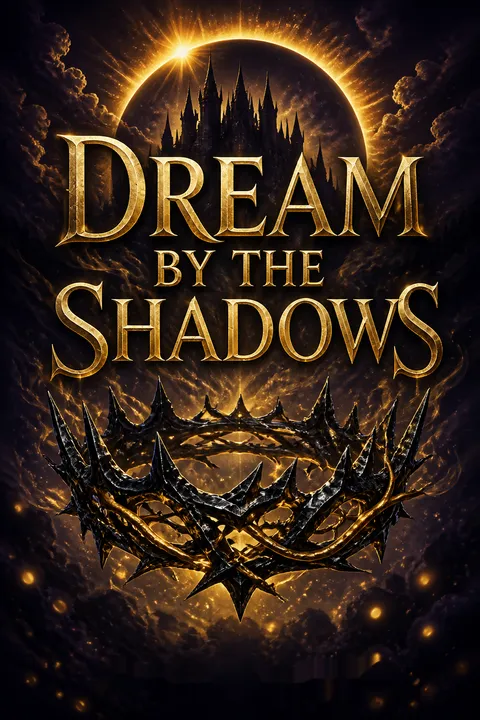


Plot Summary
Prologue
A prisoner in a ruined castle hates the darkness that has become his home. When a demon breaks into his chamber, he expects another tormentor, but the creature’s unwavering gaze makes him hesitate. Instead of killing it, he drives it from the castle balcony.
Alone again, he cannot explain why he spared it, only that his old certainty has begun to crack. His shadows still answer him, and his heart is still full of anger, but the act of mercy leaves a question the prisoner cannot bury: what if the monster is not the only one who deserves to escape?
The opening makes mercy feel less like a virtue than a disturbance in a life organized around punishment. The prisoner has absorbed the story told about him, that monsters belong in darkness, yet his anger shows he has never fully accepted that judgment. His choice to spare the demon does not redeem him or free him. It creates a small contradiction inside his isolation. That contradiction prepares the novel’s central reversal: appearances and inherited verdicts will prove unreliable, while an unexpected act of care can become the beginning of another history.
Eden’s Splintered Coffin
When Esmer’s older sister, Eden, dies Corrupted, the Light Legion declares her soul beyond the Light Bringer’s reach. Her family can offer no answer to the Legion’s questions, only a crude coffin and a burial under the village’s accusing gaze. Esmer remembers that the catastrophe began with her: seven years earlier, she persuaded Eden to pour away their protective elixir and dream with her.
Their first dreams offered escape from Norhavellis, but Eden’s changed into something lethal. Now Esmer imagines her sister’s lost soul trapped in the Shadow Bringer’s realm and turns grief into a private mission. If the monster took Eden, Esmer will find him and force him to give her sister back.
Esmer’s grief becomes tangled with responsibility because her invitation to dream was an act of love and rebellion, not malice. That distinction does not soften her guilt; it makes it harder to escape. She converts a loss she cannot reverse into a task with an apparent target, the Shadow Bringer. The choice gives her agency while narrowing her vision: revenge seems more manageable than asking why children in Norhavellis are so exposed to Corruption. Eden’s death is thus both intimate trauma and the first evidence that the village’s official account of evil may be incomplete.
The Torch in Norhavellis
Seven years later, visions still disturb Esmer’s sleep despite the elixir. One night Thomas Radler, a Corrupted villager, attacks her family at their torchlit home. He pins Esmer down and tries to smother her younger brother, Elliot, so she strikes Thomas with a burning torch.
Their father, Galen, then shoots the wounded boy with arrows. Thomas dies before the Light Legion can purify him, leaving Esmer convinced she has damned another soul. His father and brother blame Galen, and the family learns that Thomas had taken elixir regularly.
The incident makes their protection seem unreliable and exposes the village’s deepening crisis. Esmer’s parents decide the family must leave Norhavellis, just as the Legion begins watching them with suspicion.
The attack turns Esmer’s abstract guilt over Eden into a new, immediate moral injury. She saves Elliot, but Thomas’s death denies him the purification the village believes is necessary for salvation. Her action is defensible as protection, yet she judges herself by the system’s impossible demand that the living be saved without anyone being harmed. Thomas’s access to elixir also complicates the community’s explanation of Corruption. The danger is no longer limited to careless dreamers; the village’s safeguards appear compromised, and the family’s departure begins under the pressure of unresolved blame.
The Castle in Sleep
Before Esmer’s first full descent into the Dream Realm, the Light Bringer, Mithras, meets Theia, Weaver of the Future. Theia foresees a girl whose song may become the key to the Shadow Bringer, and Mithras fears the prisoner will find her first. That night, Esmer takes a village elixir vial after her family’s private supply runs low.
She wakes in a dream forest, mistakes pursuing demons for costumed men, then recognizes the danger and follows a strange creature to a vast castle. Inside, a silver-eyed man in black armor attacks her with living shadows and mistakes her for an enemy with Weaver-given power. He offers her freedom only if she opens his castle and releases him. Esmer refuses, but cannot wake.
The prophecy gives the reader a second frame for Esmer’s journey: Mithras and Theia already interpret her as a strategic instrument, while Esmer understands herself through grief and guilt. Her use of the village vial is an unknowing crossing of a boundary, linking her private dream to the kingdom’s political crisis. In the castle, both characters misread the other through inherited categories. Esmer sees a demon; the prisoner sees an empowered intruder. Their hostility is therefore not merely personal. It is the first collision between two histories that have been shaped by incomplete accounts.
Norhavellis Turns on Them
After the dream, the Light Legion intercepts Esmer’s family on the road and charges her parents, Elena and Galen, with theft, unlawful escape, and failing the people in their care. Villagers pelt the family as Legionnaires escort them home.
There, the commander orders the parents’ faces washed; their concealing paste comes away to reveal the marks of Corruption underneath. The Legion confiscates their supplies and refuses elixir to Esmer and Elliot. That night, angry villagers turn into a violent mob.
Esmer and Elliot escape their room with the help of Legionnaires Silas and Mila, while Corrupted neighbors attack the house. The siblings watch familiar faces fall, then Mithras’s song and incense put the survivors to sleep and carry them into the Realm.
This collapse makes the village’s hatred understandable without making it just. The Absolvers have hidden something consequential, but the Legion’s public punishment strips away context before anyone can learn why. Esmer and Elliot lose their home and their trust in every institution at once: family concealment, village accusation, and official judgment converge in a single night. The attack also unsettles the boundary between person and demon. Neighbors who still sound partly like themselves are nonetheless dangerous, leaving Esmer with no reliable outward sign by which to recognize when care must become defense.
The Shadow’s Borrowed Power
In the Realm, the castle prisoner appears beside a pool and again treats Esmer as a trespasser. When a demon drags her underwater, he refuses to intervene, so terror and anger awaken a force in Esmer that commands his shadows. She traps the demons, but the effort leaves the prisoner bleeding and enraged. Later, he reshapes Esmer’s dream into a vision of her family’s home burning.
He protects her from falling debris, and she realizes he is the Shadow Bringer, the figure she blames for Eden’s death. Mithras arrives in the same vision and attacks them both. A shadow tether links Esmer to the Bringer; when she tries to flee, she pulls him with her, and he drags the whole gathering into darkness.
Esmer’s first use of power is born from a rescue that the supposed villain refuses to provide. This does not immediately make the Bringer trustworthy, but it breaks the simple division between helpless victim and all-powerful monster. Her ability to command his shadows also makes intimacy and danger difficult to separate: the connection is involuntary, useful, and frightening. The burning-home vision then gives her private grief a public witness. Mithras’s violence and the Bringer’s protection coexist, denying Esmer the easy moral clarity she expected to find in the Realm.
The Absolvers’ Confession
Back in the waking world, Mithras gives Esmer five minutes with her family before separating them. Elena and Galen confess that they diluted the village’s elixir for five years.
When Elliot nearly died of fever, medicine consumed the money they needed for pure supplies; his parents kept the strongest elixir for their children and weakened the rest to pay for his treatment. Esmer understands why Norhavellis’s Corruption accelerated, though the confession does not excuse the damage.
Mithras sends her parents and the other surviving Corrupted toward purification at Citadel Firstlight. Elliot is assigned to service there, while Esmer is taken toward the Tomb of the Devourer. On the journey, Silas and Mila offer her food, guarded kindness, and a little knowledge of the Legion’s methods.
The confession replaces a simple accusation with a painful causal chain: poverty, a child’s illness, parental triage, and a village-wide harm that outlasts the original emergency. Elena and Galen acted from protection, yet their choice transferred risk to people who had not consented. Esmer can recognize their love without pretending it repaired the consequences. Mithras’s division of the family repeats the structure of their crisis: authorities decide who is worth saving, while the vulnerable are assigned roles rather than choices. Silas and Mila’s modest kindness offers contrast, not absolution.
A Tomb Without Certainty
As the Legion approaches the Tomb of the Devourer, Mithras’s men discover its entrance partly open. The Shadow Bringer has reached the tomb and recovered a memory of two loyal followers, Ceveon and Sorren, whose skeletons remain inside. Esmer finds him there when Mithras enters, and the two men fight with blades of light and shadow.
During the struggle, Esmer’s power strikes Mithras, making the Legion suspect she chose the Bringer willingly. She runs, but Silas brings her back rather than let Alcott bind her by force. At trial, Mithras offers a bargain: Esmer must guard the tomb and help contain its demons. In return, he promises her parents’ purification and Elliot’s care, making refusal dangerous for the people she loves.
The tomb exposes how badly the kingdom’s categories fit the people inside them. The Bringer’s recovered grief over Ceveon and Sorren complicates his reputation, while Esmer’s accidental power makes her look guilty to observers who already expect betrayal. The trial does not establish what happened; it converts uncertainty into leverage. Mithras’s offer is presented as service to the kingdom, but its terms exploit Esmer’s family loyalty. Her agreement is neither free consent nor simple submission. It is a survival choice made within a system that keeps moving the cost of safety onto those with the least power.
The First Prison Was Built
The story turns back five centuries to Erebus, before he became known as the Shadow Bringer. He has built a beautiful domain from shadow and starlight, a refuge for his work and the living shadows he hopes to protect. When the Seven Weavers arrive with Mithras, they accuse him of betrayal and attack the castle.
Erebus raises a barrier around his domain and uses the last of his strength to make the place inaccessible to those who do not understand darkness. His allies, Ceveon and Sorren, help seal him into the tomb below the castle, believing the boundary will keep him safe until they can return. The memory frames his imprisonment not as a settled verdict, but as a story whose crucial causes have been lost.
The flashback shifts the meaning of the castle from a villain’s lair to a constructed refuge that has been overtaken by its own defenses. Erebus’s barrier is simultaneously protection and confinement, an attempt to control danger that becomes a mechanism of isolation. The Weavers’ accusation is presented with force but not proof, preserving uncertainty rather than clearing him. Ceveon and Sorren’s loyalty gives the tomb a human history, while their promise of return introduces the painful gap between intention and consequence. The past is not a fixed explanation here; it is damaged evidence.
A Castle Repeats Itself
Mithras seals Esmer inside the tomb, where she finds Erebus beside the obsidian slab that anchors a sleeper to the Realm. Erebus urges her to rest and quietly uses the slab to exchange their positions: she wakes in his castle, while he remains confined underground. The castle’s furniture and rooms reset, but the demons keep scratching at the doors.
When they break through, Esmer’s improvised barricade fails, and they pour from the balcony into the forest. Somnus, Weaver of the Past, arrives after the castle’s boundary breaks. He gives Esmer a sword that can channel her gifts, then tests her resolve by sending her into an old nightmare. Her escape has come at the cost of unleashing the beings Erebus had contained.
Erebus’s betrayal grows from an instrumental view of Esmer: he treats her as a replacement capable of carrying a burden he can no longer bear. His desperation explains the decision without making it harmless. For Esmer, the castle’s reset is a cruel imitation of stability; objects return to their places, but the threat does not. Somnus’s arrival converts the breach into a test of agency. The sword is not simply a weapon but an invitation to act where Esmer has been acted upon. Yet she must learn its use in a crisis caused by someone else’s choice.
Elliot’s Forgotten Nightmare
Somnus sends Esmer into a childhood dream from the winter when Elliot nearly died of fever. She finds him as a frightened, weakened child facing an enormous armored demon that hates light. The sword helps her draw out the small living brightness hidden inside the creature. As the demon shrinks, Elliot’s body and clothes return to health, and Esmer defeats it.
The Weavers arrive, but Mithras treats the dream as a scene to erase, not a warning about a vulnerable child. He wakes Elliot and orders the dream’s memory altered, explaining why her brother never told the family what he had seen. Esmer returns with proof that her weapon can expose what lies beneath a demon’s monstrous form.
The nightmare changes Esmer’s understanding of power from destruction to discernment. Her sword defeats the demon by finding and drawing out light, not by overpowering its size. That method makes the scene morally distinct from the Legion’s purification rituals, which present death as the price of salvation. Mithras’s immediate erasure of Elliot’s memory also reveals that official protection can include silencing the protected. The dream links Esmer’s private family history to the larger system without making Elliot a mere clue: his terror and recovery remain the emotional measure of what her intervention is for.
Somnus Sets the Terms
Unable to escape the tomb and unwilling to let Esmer suffer alone, Erebus returns to the Realm. Somnus binds him in a web and explains that the release of the castle’s demons has broken a barrier around the domain. He proposes three dangerous dreams where the darkness is strongest, promising freedom if Esmer and Erebus can uncover what links their histories and confront what they find.
Erebus resists, suspecting another Weaver’s trap, but Somnus forces the journey forward. In their first shared memory, they enter a prosperous-looking parlor with a mist-veiled exit and hear laughter beyond it. The pair must cooperate despite Esmer’s anger over the exchange and Erebus’s habit of treating her as a tool.
Somnus turns the plot from escape into investigation, but his method remains coercive. His promise of freedom is the only alternative he offers to death within the castle, so the protagonists enter the quest with unequal power and incomplete trust. Erebus’s return is significant because it reverses his earlier decision to leave Esmer in his place; guilt has begun to interrupt self-preservation. The shared dream makes that change practical: neither can progress alone. Their alliance starts not with reconciliation, but with a negotiated demand for knowledge and a stubborn insistence that the other accept responsibility.
The Boy in the Pond
The first memory takes Esmer and Erebus to an old cottage near a foul pond. They watch a young, raven-haired Erebus try to deliver food to his parents, who blame him for their hunger and approaching deaths. A red-eyed demon rises from the water and offers to end his loneliness by making the dark his purpose.
The boy cannot force it away, and the demon swallows him. The adult Erebus insists he once killed this creature, but cannot remember how. Esmer recognizes the same demon from Elliot’s nightmare and realizes it has hunted both their families. The creature’s appearance before the known rise of Corruption suggests the accepted history begins too late.
The scene brings the demon’s method into focus: it first repeats a victim’s shame, then offers belonging on the condition that the victim surrender to it. Young Erebus is not presented as innately monstrous but as a child whose deprivation has made the demon’s promise persuasive. The same figure appearing in Elliot’s dream connects two family histories across centuries, making coincidence increasingly implausible. Esmer’s recognition matters because it turns her from an observer of Erebus’s past into a participant who can name its pattern. Memory becomes evidence, though not yet a complete explanation.
Light Inside the Dark
Inside the demon’s stomach, Esmer finds young Erebus frightened and convinced he belongs to the dark because the Weavers never came to help him. She comforts him and challenges the belief that shadow makes him evil. Their joined shadows fill the false enclosure with stars, and the dream begins to break apart.
The demon’s hold collapses; outside, Erebus’s ruined pond becomes a bright landscape as he creates a world from his own imagination. Somnus appears and invites the boy to Evernight, while the adult Erebus tries to interfere but cannot be seen. The memory establishes that Esmer’s presence once reached him before their meeting in the castle, though neither can yet explain how.
Esmer’s intervention does not erase the boy’s loss or promise that the Weavers will treat him fairly. Instead, she offers a counterinterpretation of his power: darkness is something he can shape, not a destiny he must obey. The stars emerge through their shared connection, making the image of light within shadow a literal consequence of mutual recognition. The dream also complicates the idea of changing the past. Esmer can affect how Erebus experiences this memory, but the Weavers’ arrival and the later curse remain beyond her control. Care can alter a person’s self-understanding without instantly repairing history.
Evernight’s Glittering Trap
At the Nocturne, Erebus explains that the sea contains dreams and borders the Weavers’ domains. He recounts how his parents interpreted a king’s warning incorrectly, were banished, and died; the gifted child they left behind later became a scholar beside Mithras. The pair enter Evernight’s Revel, where Aris prepares Esmer for the celebration and confides that she and her twin may be cast out if no Weaver chooses them.
Esmer watches the Weavers, Mithras, and Erebus together, then dances with the younger Erebus as hidden demons mingle among the guests. He asks about Corruption and plans to destroy its darkness. Their attraction grows, but Esmer warns that his intended course leads to disaster.
Evernight’s luxury is shadowed by its own hierarchy. Aris’s fear of becoming houseless echoes Esmer’s earlier lack of choice, while the guests’ contempt for those without status shows that exclusion thrives even in a dream-built sanctuary. Erebus’s memories reveal how family shame and political power shaped him long before the castle. His friendship with Mithras makes the coming betrayal more than a tactical reversal; it threatens a bond built when both men were outsiders. The romance begins amid these pressures, where attention feels precious precisely because the world keeps sorting people into those who matter and those who can be discarded.
The Nocturne Breaks
When dawn approaches, Erebus remembers that he and Mithras once planned to lure demons away from the Revel while Erebus cleansed the Nocturne. Mithras instead brought the Weavers to witness Erebus fail as darkness burst from the sea, giving them reason to attack him. Esmer and the Bringer replay the catastrophe; the old Erebus plunges into the water, and his future self fights him before both sink.
Esmer reaches through the Nocturne and pulls them together, joining Erebus’s divided selves. She spares a fallen demon, which becomes a human woman and vanishes toward the afterlife. The transformation suggests that demons may contain the souls the kingdom believes have been devoured.
The revelation reframes the Bringer’s fall as a failed rescue plan shaped by betrayal, but it does not absolve him of every consequence. Mithras’s deception and Erebus’s inability to control the Nocturne both matter. Esmer’s decisive act is to refuse the old division between boy and monster; she pulls the two versions together rather than choosing one to preserve. The freed woman confirms that the demons’ bodies may conceal, rather than erase, human souls. That possibility overturns the moral foundation of the Legion’s rituals and transforms mercy from a private instinct into a potentially practical alternative.
A Promise in the Ruins
After escaping the Nocturne, Esmer and Erebus hide in his old Evernight room while the Weavers and their forces fight the released demons outside. Xander finds them but leaves when Erebus claims they need privacy. Alone, they acknowledge their desire and share a night together.
Esmer urges Erebus to stop treating his guilt as proof that he can do nothing to help; he accepts that their shared knowledge may still change the future. When they wake in the castle, his old name and identity have begun to return, and Esmer’s eyes carry the same starry shadows as his. She persuades him not to retreat into isolation again and takes his hand toward the castle doors.
Their intimacy follows a shift in the terms of their relationship. Esmer no longer sees Erebus as a weapon to use or a prisoner to pity, and he begins to receive care without converting it into another debt. The private room is a brief shelter from the battle and from the roles imposed on them, but it cannot resolve the danger outside. Their matching eyes make their connection visible and consequential, not merely romantic. Esmer’s insistence that they leave the room marks a further change: affection is not an excuse to hide from responsibility, but a reason to face it together.
The Castle Doors Open
Esmer opens the castle doors and draws Erebus across the threshold without the burning that once kept him prisoner. A horde of demons meets them, led by the two creatures that had spoken to Esmer in the forest. They ask to be cleansed, and Erebus and Esmer combine their powers to draw the shadows out of the horde.
The monsters become human souls, including Ceveon and Sorren, who have been trapped in demon bodies beside Erebus for five centuries. Somnus confirms that Corruption’s curse remains unresolved and warns them about the red-eyed demon that has pursued their families. The pair are free, but their work now includes an army of newly released souls and a threat still hunting them.
The immediate victory is a change in method, not simply a defeat of monsters. By joining their powers, Esmer and Erebus separate the souls from the forms that concealed them, proving that the apparent enemy may also be a victim. Ceveon and Sorren’s return gives Erebus the companionship he thought history had erased, while the mass release raises practical and ethical problems the novel does not resolve. The ending grants the protagonists movement but not safety. Their freedom opens the next responsibility: confronting a deeper source of Corruption without repeating the institutions’ habit of confusing containment with cure.
Epilogue
At Citadel Firstlight, Mithras hides in a chapel as a red-eyed demon takes increasing control of his body. The demon demands a suitable host and says it wants the souls of those who command darkness.
Mithras claims he has found someone for it, but his fear and failing control reveal that he is not simply directing the threat. When the demon withdraws, he collapses, unable to tell whether his body or his will still belongs to him. He weeps for the people he has harmed and begs forgiveness, including from Esmer and Erebus.
The epilogue turns the Light Bringer’s authority into a compromised disguise. Mithras’s public power has depended on presenting purification as a clean separation between evil and the innocent, yet he is himself sharing a body with the kind of force he claims to govern. His terror does not erase his choices or the damage they caused; it makes his responsibility harder to simplify. The demon’s interest in a host who can command darkness links the closing threat to Esmer and Erebus, ending the book with a warning that the central conflict has reached beyond their apparent victory.
Analysis
Dream by the Shadows builds its fantasy around a question of who gets to define a monster. Norhavellis teaches Esmer that Corruption is a visible moral stain, the Light Legion that purification is mercy, and legend that the Shadow Bringer caused the kingdom’s suffering. Each account offers order, but each also hides something: the Absolvers conceal years of diluted elixir, Mithras controls the terms of justice, and the Weavers’ history of Erebus is incomplete. Esmer’s most important skill is not simply her ability to command shadows. It is her refusal to let appearance settle the question of a person’s worth.
That refusal is not presented as easy forgiveness. Thomas dies after attacking her family; the Havenfalls’ actions have harmed an entire village; Erebus’s attempt to exchange places with Esmer releases the demons he had contained. Compassion does not erase consequence. Instead, it gives Esmer a way to investigate what consequence means when the supposed monsters may be victims, and when supposedly benevolent authorities use coercion or concealment. The transformation of the demons into human souls gives this moral inquiry a literal form: a body can be monstrous while the person inside it remains recoverable.
The novel also treats imagination as both refuge and risk. Esmer and Eden first dream to escape a cramped, frightening life, while Erebus uses imagination to build a world when neither family nor institutions protect him. The same capacity can be exploited by demons that turn fear into believable nightmares. The story therefore resists the comforting claim that hope alone is enough. Hope becomes consequential only when joined to attention, skill, and shared responsibility.
By the end, Esmer and Erebus have opened a prison and reunited lost companions, but the red-eyed demon remains active and Mithras remains compromised. Their victory is real, yet incomplete. The closing movement points toward a harder kind of repair: not merely defeating darkness, but learning how to restore those whom darkness has trapped without making another sacrifice of the vulnerable.
Review Summary
Dream by the Shadows receives mixed reviews, averaging 3.49/5 stars. Readers praise its gothic atmosphere, unique dream-world concept, and Beauty and the Beast meets Inception vibes. Many appreciate the Shadow Bringer character and dark fantasy elements. However, common criticisms include overly complicated world-building, confusing execution, weak character development, and inconsistent pacing. The romance disappointed some as underdeveloped or rushed. Several reviewers struggled with the abstract dream sequences and found themselves confused despite an intriguing premise. The audiobook narration received positive mentions. Opinion splits between those captivated by the atmospheric storytelling and those frustrated by unclear plot mechanics.
People Also Read


Characters
Esmer Havenfall
Reluctant shadow wielderEsmer is a young Absolver’s daughter from Norhavellis, shaped by years of caring for her family and living beside Corruption. She is fiercely protective of Elliot and carries guilt over persuading Eden to dream, which initially makes revenge feel like the only way to repair her loss. Her courage is practical rather than effortless: she is frightened, improvises, and acts anyway when someone beside her is in danger. Esmer’s instinct to look for the person beneath the monster’s appearance becomes a source of strength, though it can also lead her to trust before she understands the cost. She longs for a life beyond the village, yet is driven by responsibility to the people she loves.
Erebus
Imprisoned dream warriorKnown in Norhavellis as the Shadow Bringer, Erebus is a powerful figure imprisoned in a castle within the Dream Realm. His shadows obey him, but his isolation and damaged memory have narrowed his sense of what is possible. Suspicion protects him from further betrayal, while anger gives shape to grief he cannot fully name. He is not simply a brooding antagonist: he has a maker’s imagination, an old loyalty to companions, and a capacity for wonder that survives beneath his hardened manner. Esmer unsettles him because she neither fears his power unconditionally nor accepts his self-condemnation as a final truth.
Elliot Havenfall
Esmer’s cherished brotherElliot is Esmer’s younger brother, affectionate, imaginative, and quick to find humor even in a frightened household. He speaks with a distinctive, childlike cadence and treasures his blanket burrow and stuffed cow, Chester. His closeness with Esmer rests on mutual care: she protects him, while he notices when she is lonely or hiding fear. A serious childhood illness makes him the focus of his parents’ most desperate decisions. Elliot’s vulnerability is real, but he is not merely someone to be rescued; his courage and imaginative openness help Esmer endure the losses surrounding their family.
Mithras
Sovereign of the Light LegionMithras is the revered Light Bringer, sovereign of Noctis and commander of the Legion that tracks the Corrupted. He combines genuine strategic intelligence with a rigid faith in order, purification, and his own authority. His ability to sense Corruption gives him unusual power over a frightened kingdom, but his decisions often place the burden of survival on other people. In public he presents certainty; in private he is more troubled than his role permits him to admit. His history with Erebus gives their conflict personal depth, while his treatment of Esmer shows how readily protection can become coercion.
Eden Havenfall
Esmer’s lost sisterEden is Esmer’s older sister, thoughtful enough to question danger but loving enough to join Esmer’s forbidden dream experiment. Her death becomes the defining grief of the family and the source of Esmer’s guilt. The remembered Eden is not simply a symbol of innocence; she had her own judgment and desires, even when Esmer’s enthusiasm helped tip the sisters toward risk.
Galen Havenfall
Burdened Absolver fatherGalen is Esmer and Elliot’s father, a farmer and Absolver who patrols the family property to protect the village from Corruption. He is disciplined and protective, but years of service have left him exhausted. His care for his children is sincere, even when the choices he makes on their behalf harm the wider community.
Elena Havenfall
Healing, concealing motherElena is Esmer and Elliot’s mother, a healer and Absolver who treats Corrupted villagers with dignity even when she can offer only temporary concealment. She meets frightened families with patience and practical care. Her instinct to shield her children from hardship can become secrecy, reflecting the painful line between protection and withholding the truth.
Somnus
Weaver of the PastSomnus is an immortal Weaver whose calm, spectral manner conceals a sharp sense of strategy. He reads emotional impressions and can shape or enter memories, giving him unusual influence over how the past is encountered. He offers Esmer tools and a path forward, but his methods are frequently coercive; he treats danger as a lesson that must be endured. His interest in Erebus and Esmer suggests that he sees their connection as part of a larger conflict, though he rarely explains the whole design.
Silas
Thoughtful LegionnaireSilas is a young Light Legionnaire who tries to balance duty with decency. He helps Esmer and Elliot during the violence at their home, later explains the Legion’s practices, and resists treating Esmer as guilty before judgment. His loyalty to Mithras remains important, but it does not erase his capacity to question how that loyalty is used.
Mila
Blunt Legionnaire allyMila is a sharp, capable Legionnaire whose irreverence can cut through the group’s stiffness. She helps the Havenfall siblings during the Norhavellis attack, supplies Esmer with food and elixir, and tends to express care through brisk action rather than solemn reassurance. Her wit does not make her careless; she understands the danger of the people she is trying to help.
Alcott Radler
Grieving LegionnaireAlcott is Thomas Radler’s older brother and a Light Legionnaire. His grief over his family’s losses hardens into suspicion of the Havenfalls, especially Esmer. He believes justice requires decisive punishment, and his anger makes him vulnerable to any leader who presents certainty as moral strength.
Thomas Radler
Corrupted village attackerThomas is a young villager whose Corruption turns a familiar community member into a threat to Esmer and Elliot. His access to elixir complicates the village’s explanations for why people become Corrupted.
Theia
Weaver of the FutureTheia is an immortal Weaver who perceives possible futures and warns Mithras that a girl may become central to the Shadow Bringer’s fate. Her knowledge gives her influence, but prophecy leaves room for uncertainty about what she sees and how others will act on it.
Xander
Weaver of the PresentXander is an immortal warrior Weaver associated with the present and known for his command of battle. He values discipline and expects those around him to meet a high standard. His authority makes him one of the powerful figures whose judgment shapes the Dream Realm.
Lelantos
Weaver of the AirLelantos is the Air Weaver, an imposing figure associated with wind, flight, and change. His Revel turns a gathering into a spectacle of clouds and wings.
Nephthys
Weaver of the WaterNephthys is the Water Weaver, a powerful immortal whose jeweled attire reflects her affinity for water and her taste for splendor. She appears among the Seven in memories of their former order.
Fenrir
Weaver of FireFenrir is the Fire Weaver, associated with flame and formidable force. He appears with the Seven in Erebus’s memories and at Evernight’s Revel.
Ceres
Weaver of the EarthCeres is the Earth Weaver, linked to growth, roots, and decay. Her domain and distinctive natural adornments embody the Dream Realm’s mingling of beauty and death.
Ceveon
Erebus’s loyal companionCeveon is one of Erebus’s trusted companions from before the imprisonment. His loyalty is warm and expressive, and he stands by Erebus even when the cost is immense.
Sorren
Erebus’s guarded companionSorren is Erebus’s other close companion, more reserved and cutting in manner than Ceveon. His practical judgment and enduring loyalty make him a steady presence in Erebus’s past.
Aris
Evernight scholarAris is a skilled Evernight scholar who prepares Esmer for the Revel. She is observant and generous, but anxious about becoming houseless if a Weaver does not choose her. Her concern reveals the insecurity beneath Evernight’s beauty.
Red-eyed demon
Family-hunting presenceThe red-eyed demon is an unusually powerful and elusive presence associated with nightmares that reach across generations. It exploits loneliness and fear, and its interest in Esmer’s family makes it more than a random threat in the Dream Realm.
Plot Devices
The elixir
Blocks dangerous dreamingThe costly elixir is Noctis’s main protection against dreaming and the demons that can reach people through it. Absolvers distribute and track the supply, so access is tied to both family survival and political authority. In Norhavellis, the Havenfalls’ decision to dilute the village supply becomes a hidden cause of widespread harm. The elixir also creates a cruel paradox: it protects people from the Dream Realm by cutting them off from dreams, but poverty can leave the most vulnerable unable to afford that protection.
The Dream Realm
Turns memory into actionThe Dream Realm is a vivid, dangerous world where memory and imagination can become physical. A dreamer may bleed, feel pain, shape objects, or be trapped by a memory, even though the Realm does not follow ordinary waking rules. Esmer’s visits first bring her into contact with the Shadow Bringer, then let her enter memories that expose hidden parts of his history. Because those memories can be altered or misread, the Realm serves as both setting and unreliable evidence.
The Nocturne
Holds the dreamers’ visionsThe Nocturne is a vast sea bordering the Weavers’ domains and holding the dreams of humanity. Its waters can draw a dreamer from one vision into another, making the sea a passage as well as a hazard. When darkness and demons corrupt it, the Nocturne becomes the site of Erebus’s defining failure and the betrayal that leads to his imprisonment. Its transformation later allows Esmer and Erebus to encounter souls hidden inside monstrous forms.
Somnus’s sword
Reveals light within demonsSomnus gives Esmer a weapon she can draw from her palm and use to channel her ability. It responds to her imagination and intention, allowing her to find and draw out the light concealed inside a demon rather than merely attack its exterior. The sword also becomes a practical measure of Esmer’s growing skill: its power is substantial, but she must learn to wield it while frightened, uncertain, and responsible for someone else’s safety.
Erebus’s castle
Prison and demon barrierThe castle is Erebus’s domain, a once-beautiful creation now damaged by centuries of isolation and inhabited by creatures that he has contained. Its doors, rooms, and objects respond to dreamers, while its boundary prevents Erebus from simply walking into the waking world. The castle’s resets make it seem stable, but the demons remain a constant threat. When Esmer is left inside, the breach that frees them changes the balance of the entire story.
Download PDF
Download EPUB
.epub digital book format is ideal for reading ebooks on phones, tablets, and e-readers.








