

Key Takeaways
Question the Soviet inheritance before treating Russianness as a debt to repay.
Belonging has a history. Idov’s family left Riga for the United States in 1992, after Latvia’s independence brought discrimination against Russian-speaking residents and Jews. In the Soviet system, Jewish identity was recorded as an ethnicity and could mark someone as a potential emigrant. The Stalin-era label “rootless cosmopolitan” captured the suspicion that Jews could never be fully Russian. Idov grew up carrying the country’s culture through its rock music, even after he had left it behind.
Identity resists tidy stories. In the United States, he rejected the familiar immigrant plots of being seduced by America or rediscovering authenticity in the old country. His return to Moscow for a magazine job, partly to give his daughter Russian fluency, reopened the question he thought he had settled: what did he owe the place he had left?
What's striking is that cultural inheritance here is neither a sentimental treasure nor a simple burden. It is a set of materials that people reinterpret as their circumstances change. That resembles the idea of narrative identity in psychology: people build a sense of self by revising the stories that connect past and present. Idov's refusal of stock immigrant plots also challenges the assumption that migration automatically makes a life more legible. Yet identity is not only personal choice. State categories, language, and social exclusion shape what belonging can mean, even when an individual rejects the label.
Do not mistake consumer normality for democratic institutions.
Glamour covered instability. In 1998, the arrival of Russian Vogue was presented as proof that Russia had finally joined the modern world. Days after its first issue went to press, the state defaulted on its debt and the ruble collapsed. The magazine survived, becoming an aspirational symbol amid an economy reshaped by oligarchs, criminal networks, and failing institutions.
The bargain had consequences. Idov describes the 1996 presidential election, when Boris Yeltsin’s campaign relied on oligarchic cooperation, media control, intimidation, and ballot fraud to prevent a Communist return. This choice put stability ahead of democratic legitimacy. Under Putin, the “power vertical” concentrated governing authority around the president, while a consumer-facing image of normal life helped make that concentration seem acceptable. Fashion, pizza, and functioning shops could feel like progress even as political accountability weakened.
The distinction between visible modernization and institutional modernization is useful well beyond Russia. New amenities and consumer choice can improve daily life while leaving citizens with little power over decisions. Political scientists often distinguish a government's performance legitimacy, its claim to rule because it delivers stability or prosperity, from democratic legitimacy based on consent and accountability. The danger is not that ordinary comforts are fake; they are real benefits. The danger is treating those benefits as evidence that the institutions are sound. A society can become more polished while becoming less able to correct abuses.
Turn election fraud's scattered witnesses into a network, not a rumor.
Apathy broke online first. After Russia's December 2011 parliamentary election, smartphone videos showed ballot stuffing and other irregularities. Translator Ilya Faybisovich posted his anger on Facebook and invited hundreds of contacts into the conversation. Activists used personal invitations, phone calls, and social platforms to draw thousands to an initial rally, then helped organize a sixty-thousand-person protest at Bolotnaya Square.
Small deeds hit a limit. For years, many young Muscovites had followed the “small-deeds theory,” a belief that citizens should improve local life rather than try to change the government. Cleaning up parks and creating cultural spaces seemed safer and more achievable. The protests showed that online networks could connect people who had been politically isolated. They also exposed the gap between improving city life and having a say in who governs it.
The movement illustrates connective action: people coordinating through personalized networks rather than joining a traditional organization with a fixed membership and doctrine. That model can mobilize quickly because participants need not agree on everything before showing up. Digital tools, however, lower the cost of gathering more readily than they solve the harder problems of leadership, representation, and sustained work. The protests' scale was real, but attendance alone could not supply a durable political program. The episode is a reminder that communication infrastructure can open a door; it cannot decide what should be built beyond it.
A hundred thousand can gather before a movement agrees what comes next.
Unity was temporary. The December demonstrations brought liberals, communists, nationalists, celebrities, and first-time protesters into the same public space. Their shared demands included a new election and the release of political prisoners, but agreement thinned when the rallies moved from rejecting fraud to deciding who should lead. At Sakharov Square, Alexei Navalny energized the crowd with a direct, populist style, while established opposition figures struggled to connect.
Repression changed the stakes. After the March 2012 presidential election, police arrested protesters at Pushkin Square. On May 6, a bottleneck at Bolotnaya Square turned a planned march into clashes; hundreds were detained, and some were prosecuted. Later gatherings dwindled. The protests had broken the assumption that public dissent could not happen, but their organizers had not built a coalition broad enough to overcome political divisions or withstand sustained pressure.
Coalition politics depends on a difficult balance: enough common purpose to act together, enough internal trust to tolerate disagreement, and enough organization to negotiate with power. A broad protest can make a government notice discontent without resolving who speaks for the crowd. The Russian demonstrations make this problem vivid because their initial openness was a source of strength and a source of fragility. It would be simplistic to blame disunity alone for their decline. The state controlled key institutions and used force. Still, movements need plans for the moment when shared anger stops being sufficient.
When advertisers own the page, editorial independence becomes a daily negotiation.
The editor inherited a sales machine. Idov took over GQ Russia hoping to broaden its coverage, commission reported features, and make the magazine more relevant to younger readers. Instead, he found a publication shaped by luxury advertisers. “Spetspozicii,” or special positions, were predictable editorial pages sold at a premium because brands wanted specific content beside their ads. Some stories existed to support an advertiser's product, and a large share of revenue came from just two retail groups.
Good intentions met weak leverage. Idov tried to make the magazine less dependent on celebrity columns and high-society conventions. But his original covers and long features often sold poorly, while advertisers objected to the new direction. The website offered more room for political coverage, yet generated only a small fraction of revenue. He learned that the editor's title did not mean he controlled the conditions under which the magazine operated.
This is a case study in how institutional incentives shape editorial choices without requiring a censor to issue orders. Dependence on a small number of advertisers creates a form of structural capture: the publisher anticipates objections and adjusts content before a direct threat is made. The same pattern appears in media funded by a single patron, platform, or state subsidy. Transparency helps readers understand these pressures, but it does not remove them. Idov's experience also complicates the heroic image of the editor as an independent voice. Independence is partly a personal ethic and partly a financing problem.
Defend rights consistently, or your opposition becomes another selective club.
The protest had blind spots. Russia's opposition rallied against electoral fraud and political repression, but many participants were uncomfortable with feminism, gay rights, and other causes that did not center on Putin. Pussy Riot's performance inside Moscow's Cathedral of Christ the Savior lasted about forty seconds. The state turned it into a major criminal case, charging three members with hooliganism motivated by religious hatred; two received prison sentences.
A trial became a culture war. The case helped the Kremlin present dissent as an attack on religion and Russian tradition. Yet the defendants' composed, carefully argued courtroom statements drew attention to the gap between their brief protest and the state's severe punishment. Their treatment also revealed how easily even liberal critics could dismiss activist women or treat minority rights as someone else's concern.
The episode exposes a recurring weakness in political coalitions: people often demand liberty for their own group while hesitating to defend it for groups they dislike. A rights-based movement is tested precisely when a dissenter's tactics offend its supporters. That does not mean every provocative action is wise or beyond criticism. It means punishment should be judged by fair rules, not by whether the target is popular. The author's account is especially valuable because it resists turning either side into a simple emblem of virtue. The opposition's limitations mattered, even as state power was vastly greater.
Cynicism protects against disappointment but quietly trains people to surrender.
The joke became a worldview. Idov arrived in Moscow as an editor and observer, then found himself inside the city's celebrity circuit: awards, luxury events, political arguments, and friendships with people close to power. He objected to the system's compromises but gradually accepted benefits he had initially resisted, including gifts and a free car. Each concession could be explained away as harmless, especially when others seemed just as compromised.
Satire created distance. To understand his own transformation, Idov and collaborators wrote a television comedy about a New York writer seduced by Moscow's status and money. The fictional character repeatedly sells out, then suffers the consequences. The project let Idov turn self-accusation into material he could examine. He eventually left magazine editing for screenwriting, finding that making work felt more meaningful than endlessly performing a role in the city's social theater.
Cynicism can function like emotional insurance: expecting corruption makes betrayal less surprising. But it can also lower the threshold for participation, because every compromise appears inevitable and therefore morally weightless. This resembles the difference between moral licensing and moral disengagement. People do not always abandon their standards in a dramatic decision; they often rename small departures until the new behavior feels normal. Satire can interrupt that process by making rationalizations visible. It is not a substitute for accountability, though. A joke may expose complicity while also making it easier to live with.
When truth becomes a shared performance, public complicity can look like national pride.
Ukraine sharpened the story. After Ukraine's 2014 Maidan revolution, Russia annexed Crimea and denied its direct role in events on the ground, despite evidence of Russian involvement. The phrase “Krym nash,” meaning “Crimea is ours,” became a test of national loyalty. Support for Putin surged, while dissenters were labeled traitors. The state's denials did not need to persuade everyone; their obviousness could itself signal defiance and invite supporters to join the performance.
The costs reached culture and work. New laws narrowed speech, independent media faced pressure, and the ruble's collapse damaged television production. Idov left GQ and moved toward Berlin while continuing to write for Russian television. His Moscow years had begun with a hope that the country might become a political turning point. They ended with a less comfortable insight: cynicism is not uniquely Russian, and people elsewhere can also trade truth for advantage, status, or belonging.
When audiences know a claim is false but accept it as a signal of allegiance, correction alone may not work. The statement is serving a social function, not an informational one. This is close to what political theorists call expressive belief: public speech communicates identity even when private conviction is uncertain. The insight helps explain why fact-checking can coexist with expanding propaganda. Still, shared performance is not total control. People can recognize the lie, refuse to repeat it, or build institutions that reward accuracy. The book's sharpest warning is that cynicism travels easily wherever accountability weakens.
Analysis
The book works as a memoir of attempted return, a portrait of a political moment, and a report from inside an institution that sells prestige. Its shape matters. Idov begins with a family history in which national identity is imposed, rejected, and carried across borders. He then enters Moscow at the precise moment when a generation of politically disengaged urbanites begins to test its collective strength. The magazine job places him between those protesters and the elite world they distrust. His career is not a side plot: it is the instrument through which the book examines how money, status, and professional roles soften resistance.
The narrative's central tension is not simply democracy versus authoritarianism. It is the contest between sincere public action and a culture that treats sincerity as foolish, every institution as a sham, and every motive as purchased. That worldview is politically useful to power because it makes people doubt the possibility of shared purpose. The protests briefly disprove the assumption that apathy is permanent, but the movement's diversity does not become a stable political alliance. Repression contributes to its defeat, while ideological purism and neglect of minority rights constrain its reach.
Idov's strongest method is self-implication. He does not write as a clean-handed foreign observer. He accepts the glamour, enjoys the access, compromises, and watches himself become the sort of participant he once mocked. That gives the book a sharper account of complicity than a conventional exposé would offer. His departure into television writing is neither a triumphant escape nor a simple retreat. It is a shift from trying to reform a compromised institution to making work within another imperfect one.
The memoir's limits are also part of its subject. The story is filtered through an unusually connected editor, and the Moscow media class can appear larger than the society it hoped to transform. Yet this vantage reveals how a politically narrow elite can mistake cultural visibility for popular legitimacy. The resulting portrait is less a history of all Russia than a close account of how one cosmopolitan circle encounters power, loses its moment, and recognizes its own part in the performance.
Review Summary
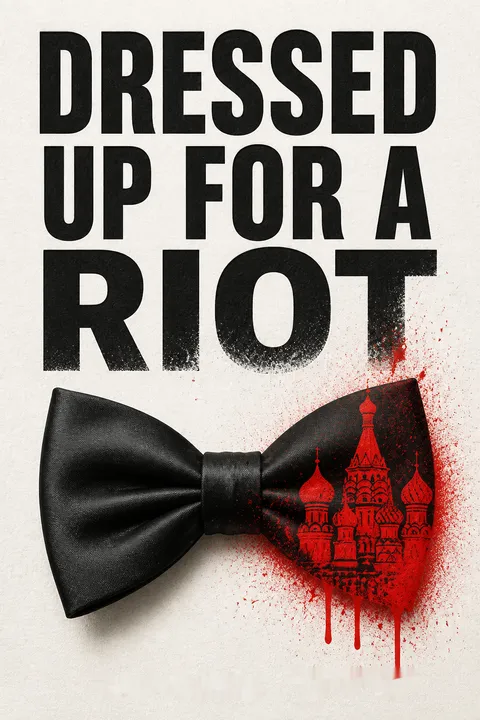
Dressed Up for a Riot receives mixed reviews, with readers praising its insights into contemporary Russian culture and politics. Many appreciate Idov's unique perspective as a Russian-American and his witty observations of Moscow's elite. Critics note the book's focus on a narrow social circle and sometimes confusing name-dropping. Some find it an engaging account of Putin-era Russia, while others criticize its self-importance. Overall, readers value the book's portrayal of Russian society, media, and opposition movements during a pivotal period.
People Also Read





Glossary
rootless cosmopolitan
Stigmatized outsider identityA Stalin-era label used to cast Jews and other supposed cosmopolitans as lacking genuine national loyalty. In Idov's account, it captures the contradiction of Soviet Jewish identity: Jews could be treated as permanently foreign while also being accused of wanting to leave. The term explains why belonging could feel conditional even for families raised inside Soviet society.
power vertical
Centralized presidential ruleA system in which effective authority is concentrated at the top, around the president, while other institutions have little independent power. Idov uses the term to describe the Putin-era arrangement that weakened elected regional leaders, made Parliament largely compliant, and reduced the space for organized political competition.
small-deeds theory
Local change over national politicsThe view that citizens should pursue achievable improvements in their immediate communities instead of trying to influence the national government. In the book, young Muscovites applied it to projects such as improving parks and creating cultural institutions. The December 2011 protests revealed both the civic energy this approach nurtured and its limits as a substitute for political participation.
New Decembrists
Young protest-era media organizersIdov's name for the young journalists, editors, and online activists who helped organize Russia's large 2011 to 2012 demonstrations. The label evokes the nineteenth-century Decembrist revolt while distinguishing this generation, which first gained influence through lifestyle media and social networks rather than established political parties.
protestainment
Protest as social spectacleA playful term for demonstrations becoming social events that participants attend partly for the excitement, atmosphere, and shared experience. Idov uses it to describe a risk perceived by organizers when rallies began to feel like entertainment. The term points to a real tension: an inviting protest can attract people, but spectacle alone does not sustain a political movement.
spetspozicii
Premium ad-adjacent pagesSpecial editorial placements in a magazine whose fixed position beside a particular advertisement makes them especially valuable to advertisers. In GQ Russia, these pages were prized partly because their content was predictable. The arrangement constrained editorial flexibility, since changing a page could disrupt the commercial package sold to a luxury brand.
Kapkovshchina
State-backed urban polishA term for the visible modernization associated with Moscow cultural official Sergei Kapkov: renovated parks, stylish public spaces, free Wi-Fi, and cosmopolitan leisure. These changes made city life more pleasant, but the book questions whether they also served as a polished substitute for political participation and helped the government project civic normality.
Roskomnadzor
Russian media regulatorThe Russian state body empowered to regulate communications and block websites. In the period described, its authority expanded through laws that created online blacklists and enabled access restrictions. Idov presents the agency as part of a wider system in which legal uncertainty and selective enforcement encouraged media organizations to censor themselves.
Krym nash
Crimea is oursA Russian slogan celebrating Crimea's annexation in 2014. Idov describes it as more than a claim about territory: it became a loyalty marker that separated patriotic supporters from people branded as national traitors. The phrase condensed grievance, imperial nostalgia, and public support for Putin into a simple expression.
Download PDF
Download EPUB
.epub digital book format is ideal for reading ebooks on phones, tablets, and e-readers.








