

Key Takeaways
Treat nutrition as support for health, not a cure for autism.
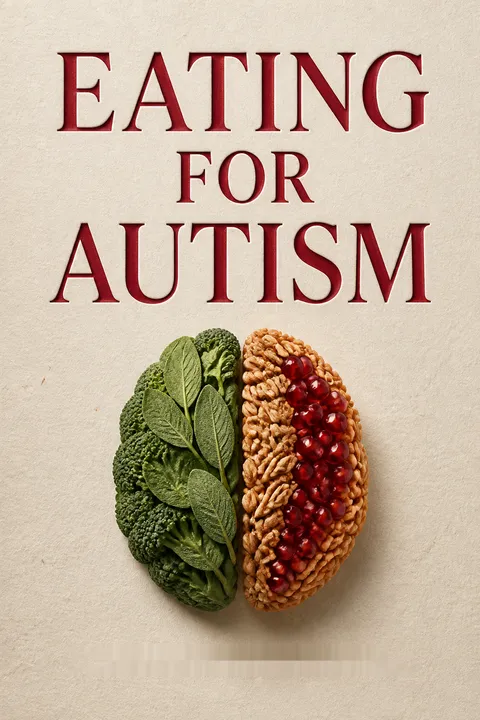
A practical starting point. Dietitian Elizabeth Strickland argues that nutrition belongs in a child's broader care because food supports growth, digestion, immune function, and brain development. Her central promise is not that a diet or supplement can cure autism. It is that addressing a real nutrition problem, such as a deficiency, allergy, or gastrointestinal disorder, may improve a child's health and make daily life and participation in other supports easier.
Individual needs come first. The book rejects a one-size-fits-all prescription and proposes moving from basic dietary needs toward more specialized interventions only when appropriate. Its cases show why symptoms need context: a behavior that looks like defiance may reflect pain, difficulty eating, or another unmet need. Nutrition is one part of care, not a replacement for medical, educational, communication, or behavioral supports.
The strongest version of this argument is about treating identifiable health needs, not changing a child's neurology. Adequate nutrition, relief from constipation, and effective allergy care matter whether or not they alter autistic traits. That distinction protects families from expensive promises and keeps the child's comfort at the center. The book sometimes links nutrition to behavioral gains more confidently than its evidence warrants, so improvement in mood or attention should be treated as a possibility to assess, not an expected outcome or a measure of autism treatment success.
Improve the everyday diet before testing restrictive diets or advanced supplements.
Build the basics gradually. Strickland begins with familiar foods and routines: reduce highly processed products, excess refined sugar, trans fats, and artificial colors, flavors, preservatives, and sweeteners; offer more varied, nutrient-rich foods. She recommends replacing pantry items gradually rather than clearing out the kitchen overnight, and making the shift a family effort instead of singling out the autistic child.
Avoid fear-based food rules. The book cites research suggesting some children may react to particular additives, including a 2007 study on food colors and hyperactivity. That is not proof that additives cause autism or broadly harm children's brains. The useful practical point is narrower: if a food seems to coincide with a child's symptoms, look for a pattern and discuss it with a clinician rather than assuming every ingredient is dangerous. The book also recommends regular meals and snacks, balanced with protein and less-refined carbohydrates.
Gradual household changes are a form of environmental design: they make the preferred choice easier without demanding constant self-control from parents or children. That is especially useful when a child's sensory preferences make sudden substitutions difficult. The caution is that the book's broad warnings about additives and chemicals go beyond what its cited evidence can establish. A sensible priority is improving overall diet quality and investigating reproducible individual reactions, not treating ordinary food labels as a toxicology report.
Use a food diary to uncover deficits hidden by normal growth.
Calories are not the whole story. A child may gain weight and grow while eating too little protein, fiber, healthy fat, or particular vitamins and minerals. To identify gaps, the book suggests recording everything a child eats and drinks for three days, then reviewing the pattern with a registered dietitian. Its example menu of sweetened cereal, macaroni and cheese, chicken nuggets, soda, and juice illustrates how a child can consume plenty of calories while missing variety.
Use standards as guides. The book explains Dietary Reference Intakes, or DRIs, a system that includes estimated requirements, recommended allowances, adequate intakes, and upper limits. These values help organize questions about nutrient intake; they are not a personalized diagnosis. The author also stresses hydration and fiber, especially for children who drink lots of juice or have limited food choices. A dietitian can help interpret the diary alongside growth, medical history, medications, and symptoms.
A short food record turns a vague concern into something a clinician can inspect, and it can reveal both nutritional gaps and patterns that family memory misses. It also avoids the common mistake of equating a healthy-looking growth curve with a nutritionally complete diet. Still, diaries are imperfect: portions may be misestimated, atypical days may distort the picture, and logging can burden caregivers. They work best as a focused assessment tool, not as a daily surveillance system or a substitute for clinical evaluation.
Prioritize omega-3 food sources, but do not promise behavior change.
Know the fats involved. The book highlights EPA and DHA, omega-3 fatty acids found especially in oily fish, as important to brain and retinal structure and function. It also discusses ALA, found in foods such as flaxseed and walnuts, while noting that the body converts ALA into EPA and DHA only to a limited extent. Strickland cites an estimate of just 19 milligrams of DHA per day in the average child's diet, based on research available when the book appeared in 2009.
Start with food and safety. The author suggests fish, fortified foods, and omega-3 supplements when diet alone does not meet a child's needs. She warns that fish can contain mercury and that excessive supplement intake can cause harm or interact with medication. The book's specific intake targets and its proposed ideal omega-6 to omega-3 ratio reflect its period and should not be treated as current individualized prescriptions. A clinician can help weigh diet, age, health, and product quality.
Omega-3 fats have clear nutritional roles, so correcting an inadequate intake is a reasonable health goal. That biological rationale does not establish that supplements improve autism-related behavior, and findings across neurodevelopmental conditions are mixed. The book's numbers and ratio-based advice are dated enough to warrant checking current pediatric guidance. The practical question is not whether omega-3s are universally therapeutic, but whether a child has a dietary shortfall and whether a safe, acceptable source can address it.
Treat severe food restriction as a clinical feeding problem, not fussiness.
Look beyond the word picky. The book distinguishes typical picky eating from a more serious feeding problem. Warning signs include a shrinking list of accepted foods, refusal even to tolerate unfamiliar foods nearby, strong distress at meals, and avoidance of whole textures. It describes Tyler, a toddler who ate only a few baby foods and drinks. With medical, speech-language, occupational, behavioral, and nutrition professionals involved, his feeding plan gradually helped him accept solid foods and eat at the table.
Find the reason before demanding a bite. Feeding difficulties can involve pain, swallowing or oral-motor skills, sensory responses, medication effects, and mealtime routines. A multidisciplinary team can assess these factors and set measurable goals. The book's home suggestions include predictable meal and snack times, reducing distractions and all-day grazing, offering small portions, and keeping meals positive. Its food-count thresholds are practical warning signs, not a diagnosis on their own.
The distinction matters because pressure can turn eating into a contest while leaving the actual barrier untouched. A child who avoids crunchy food may have sensory discomfort or difficulty chewing; a child who stops eating may be anticipating pain. The team's mix of medical, communication, sensory, and nutrition expertise fits the complexity of the task. Family routines can help, but they should not become rigid tests of compliance, and swallowing safety or nutritional compromise calls for professional assessment.
Investigate pain and bowel symptoms before labeling behavior as autism.
Behavior can carry a message. Strickland recounts Sara, a nonverbal child who drew a figure with a marked area from her stomach toward her chest. Her family sought medical assessment and discovered severe reflux and inflammation of the esophagus. The story illustrates a central clinical lesson: food refusal, irritability, or self-injury can sometimes signal physical discomfort, especially when a child cannot explain it verbally.
Check symptoms, not theories. The book cites a 2006 study reporting a lifetime history of gastrointestinal symptoms in 70 percent of the autistic children studied. It discusses constipation, diarrhea, reflux, vomiting, and abdominal pain, and recommends medical evaluation when symptoms persist. Hydration, fiber, and diet may matter, but suspected disorders need appropriate diagnosis and treatment. Proposed explanations such as leaky gut or yeast imbalance should not be assumed simply because a child is autistic.
This is one of the book's most durable insights: behavior is observable, but its cause is not self-evident. In clinical reasoning, a sudden change in eating, sleep, or distress can justify checking for pain before attributing it to a developmental condition. Sara's drawing shows how communication supports can reveal information that speech alone cannot. The reported 70 percent is a finding from a particular study, not a universal prevalence estimate, and gastrointestinal symptoms deserve assessment without implying that gut dysfunction explains autism itself.
Separate allergy, sensitivity, and intolerance before removing foods.
Different reactions need different explanations. In the book's terminology, a food allergy is an immune response to a food protein. Many immediate, potentially severe allergies involve IgE antibodies. Food intolerance, such as lactose intolerance, involves difficulty digesting a food rather than an immune reaction. Strickland uses food sensitivity more broadly for nonimmune reactions, including reactions attributed to additives. These categories are not interchangeable, and symptoms such as stomach pain or a rash do not identify the cause by themselves.
Avoid guessing with tests. The book notes that skin-prick and blood tests look for IgE-mediated reactions and can produce misleading results; they do not diagnose every food-related problem. It recommends medical assessment and, where appropriate, a planned elimination and reintroduction with a dietitian. The author's claim that most adverse reactions fall outside standard allergy testing should not be taken as an established universal ratio. Suspected severe allergies require specialist guidance, not an at-home food challenge.
Clear categories prevent a common trap: treating any symptom after a meal as proof of allergy. Diagnostic tests have defined uses and limitations, while an elimination diet can create nutritional problems if it removes major foods without replacements. The book is right to emphasize professional guidance, but its expansive framing of non-IgE reactions risks making hard-to-verify labels sound more certain than they are. Careful records, medical history, and an appropriate specialist assessment are more reliable than broad commercial testing or intuition alone.
Test gluten-free, casein-free diets as monitored experiments, not universal prescriptions.
A hypothesis is not a diagnosis. The gluten-free, casein-free diet removes gluten, found in grains such as wheat, and casein, a milk protein. The book also often includes soy in its elimination protocol. It presents the Opiate Excess Theory, the proposal that incompletely digested gluten or casein peptides might affect the brain after crossing an unusually permeable gut barrier. It also discusses possible immune reactions. These explanations remain hypotheses, not established reasons that autistic children generally need this diet.
Measure before and after. Strickland suggests recording symptoms before a trial, maintaining the diet for three months, and reintroducing excluded foods one at a time to see whether symptoms return. She stresses dietitian support and replacing nutrients lost with milk and grain foods, including calcium, vitamin D, and protein. Restricting a child's already narrow diet can make nutrition and feeding more difficult. A trial is most informative when it has a clear reason, objective measures, and a safe plan.
The book's mini-experiment idea is more useful than its speculative mechanism: define what would count as improvement, change one dietary factor, and check whether the effect repeats. Yet a family-run trial cannot fully control expectation, concurrent therapies, or ordinary symptom fluctuation. Research has not established GFCF eating as a general autism treatment. It can still be appropriate for diagnosed celiac disease, allergy, or another specific medical reason, and any broader trial should weigh nutritional adequacy and the child's willingness to eat.
Change one supplement at a time and track benefit against real risks.
More is not automatically better. The book recommends checking a child's diet and medical needs before choosing supplements, selecting products with credible quality testing, and comparing amounts with age-specific nutrient guidance and upper limits. It discusses basic multivitamins, omega-3 products, and more specialized supplements, while cautioning against starting many at once. Its high-dose vitamin B6 and magnesium discussion is explicitly controversial; excess B6 can cause sensory nerve symptoms. Supplements can also interact with medications or duplicate nutrients already in a multivitamin.
Use an orderly trial. A trial response means recording a baseline, introducing one intervention, tracking symptoms over time, and deciding whether to continue. The author suggests stopping an intervention that has no apparent benefit or makes symptoms worse, with clinical support for higher-risk trials. She also warns against unsupervised chelation, a treatment intended to remove metals that can cause serious harm. A registered dietitian or physician can assess whether testing, monitoring, or no supplement is the better choice.
One change at a time improves interpretability and reduces the risk of a crowded supplement routine becoming impossible to manage. Baseline records and follow-up are simple forms of outcome measurement, although they cannot eliminate placebo effects or observer bias. The book's emphasis on nutrient status and product quality is sound; its catalogue of advanced interventions reflects a field where proposed mechanisms often outpace dependable evidence. In particular, detoxification language should not be mistaken for proof that a child has toxin overload or needs a detox supplement.
Analysis
Eating for Autism is a practical nutrition guide organized as a progression from everyday diet and nutrient adequacy to feeding support, gastrointestinal assessment, food elimination, and supplements. Its most transferable contribution is not a particular diet. It is the insistence that nutrition questions be individualized, that eating problems deserve assessment, and that changes be documented rather than pursued as a string of hopeful guesses. The stories of Sara and Tyler make this concrete: a child's distress at meals may reflect pain, sensory overload, or motor difficulty, and the solution may require a team rather than parental persistence alone.
The book also illustrates a persistent challenge in integrative health: plausible biology can be mistaken for clinical proof. Nutrients do participate in brain function, but that fact alone does not show that extra doses improve autistic traits. Likewise, an appealing mechanism involving gut permeability, peptides, immune activity, or detoxification does not establish that it explains a child's behavior or warrants restrictive treatment. The book acknowledges limited evidence, yet some of its confident claims and anecdotes can blur that boundary. Its 2009 figures and recommendations should be treated as historical context, not current pediatric guidance.
A modern reading should keep two aims distinct: identify and treat co-occurring problems such as nutrient deficiency, allergy, constipation, or feeding difficulty; and respect autism as a neurodevelopmental condition rather than a nutritional defect to be corrected. Structured observation can help families and clinicians decide whether an intervention improves a specific health outcome. It cannot replace diagnosis, remove all bias, or justify an intervention that creates greater nutritional risk. The most defensible lesson is disciplined care: assess first, preserve adequate intake, use qualified support, and judge an intervention by a measurable benefit to the child's wellbeing, not by promises of cure or normalization.
Review Summary
Eating for Autism receives mixed reviews, with an average rating of 3.59/5. Readers appreciate the book's information on dietary changes and nutritional interventions for autism and other disorders. Many find it helpful for understanding the impact of diet on behavior and health. Some criticize the omission of certain diets and wish for more comprehensive information. The book is praised for its clear organization and practical advice, including recipes. While some find it basic, others consider it a valuable resource for parents of children with special needs.
People Also Read


Glossary
10-Step Nutrition Plan
A staged nutrition approachStrickland's sequence for integrating nutrition into a child's broader care. It begins with a healthier everyday diet and basic nutrient adequacy, then addresses supplements, feeding problems, gastrointestinal symptoms, and possible food reactions. More specialized diets and supplements are treated as later options, not automatic starting points. The book stresses adapting the sequence to the individual child.
Problem feeder
Severe, persistent food restrictionThe book's term for a child whose eating is substantially restricted or distressed, rather than a typically selective eater. Signs include accepting very few foods, losing previously accepted foods, avoiding entire textures, or becoming highly upset when unfamiliar foods are presented. The term is used to prompt assessment of medical, sensory, oral-motor, nutritional, environmental, and behavioral factors.
Elimination/Challenge Diet
Remove, then reintroduce foodsA structured way to investigate whether a suspected food is associated with symptoms. The food is removed for a defined period while symptoms are observed, then reintroduced according to a plan to see whether symptoms recur. The book recommends professional guidance, particularly for children with narrow diets or potentially serious allergies, and cautions that food removal can compromise nutrition.
Gluten Free Casein Free (GFCF) Diet
Diet without gluten or caseinAn elimination diet that excludes gluten, a protein found in wheat, barley, and rye, and casein, a protein in milk products. Strickland's protocol often also removes soy, a separate food protein. The book proposes a monitored trial and reintroduction, while emphasizing that nutrient replacements and dietitian support are important. Its proposed autism-related mechanisms are not established explanations.
Opiate Excess Theory
Proposed peptide effects on the brainA hypothesis described in the book that incompletely digested fragments of gluten and casein might enter the bloodstream through an unusually permeable intestinal barrier and affect opioid receptors in the brain. The theory was offered as one possible explanation for why a gluten-free, casein-free diet might help some children. It is not established as a general explanation of autism or a proven basis for dietary treatment.
Trial response
A tracked intervention testThe book's method for assessing a diet or advanced supplement. Caregivers first record the child's baseline symptoms, introduce one intervention, document observations over a defined period, and compare the results with baseline. The process is intended to avoid continuing an ineffective or harmful intervention. It can improve decision-making, but it is not a blinded clinical trial and cannot eliminate expectation or other sources of bias.
Sensory integration dysfunction
Difficulty organizing sensory inputThe book's term for difficulty processing and responding to sensory information, such as texture, smell, taste, sound, or visual features. During meals, this may contribute to distress, food refusal, or strong preferences. The book describes it as one possible factor in feeding problems and recommends assessment by an occupational therapist rather than assuming that all selective eating has a sensory cause.
Download PDF
Download EPUB
.epub digital book format is ideal for reading ebooks on phones, tablets, and e-readers.








