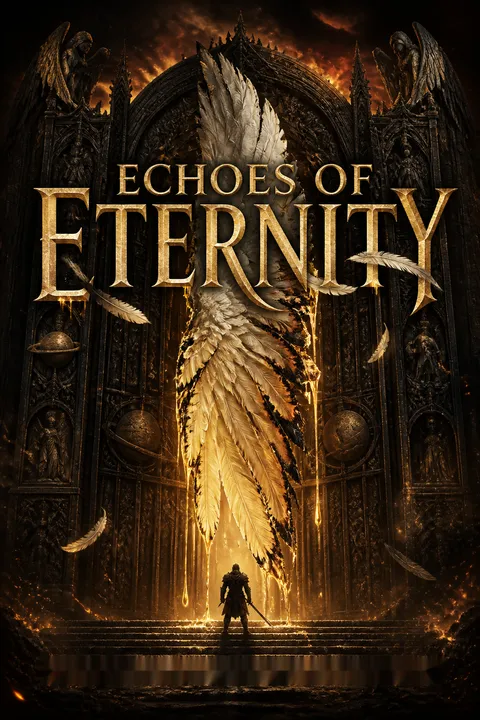


Plot Summary
Terra Under a Red Sun
The Imperial Palace has become rubble, and Terra is buried beneath dust, poison, and the warped unreality surrounding Horus's14 fleet. Lotara Sarrin,5 captain of the World Eaters' flagship, watches from orbit while her crew starves and the ship itself decays. She has remained loyal through mutiny, slaughter, and a water supply turned to blood, but cannot explain what the victory has made of them.
Khârn15 stands nearby, silent and wounded, though Lotara5 cannot tell whether he is truly there. When she retches up human fingers, the horror stops feeling like another hallucination. She asks what they have done, and receives no answer. The siege has reached its final, poisoned stage, with both armies marching toward the Emperor's last fortress.
The opening makes victory physically indistinguishable from catastrophe. Lotara's loyalty is not presented as an abstract political commitment: it is allegiance to a ship, a crew, and warriors with whom she has shared years of danger. That intimacy explains why she stays even as the Conqueror becomes monstrous. Her uncertainty about Khârn also establishes a crucial instability: the war has damaged not only bodies and institutions, but the boundary between memory and presence. The red sun is a concrete sign that Terra itself has been altered beyond ordinary repair.
Kargos Loses His Name
A World Eater wanders the ash with a chainaxe he cannot remember taking, driven forward by the Butcher's Nails in his skull. When surviving brothers find him among their dead, the word Apothecary briefly restores his identity: he is Kargos,2 a Legion medic who has lost the tools and gene-seed containers needed for his work.
The others vanish from his perception, leaving him alone with the failure. Later, the Word Bearer Inzar10 recognizes him and draws him into a gathering of scattered traitor forces.
Inzar10 calls Angron's6 transformation a path to immortality, and Kargos2 follows despite distrust of the preacher's faith. Their horde has overwhelmed the Inner Palace. Its disordered ranks are now forming for the assault on the final loyalist strongholds.
Kargos's first crisis is professional as well as personal. An Apothecary's duty is to preserve his brothers and their future, yet the Nails have made him unreliable even to himself. His missing gene-seed capsules turn an internal collapse into a tangible failure of continuity. Inzar offers a story that makes this damage seem purposeful, converting pain into proof of spiritual progress. Kargos does not fully believe him, but the companionship itself quiets the Nails. The scene shows how ideology gains power in a disintegrating army: it supplies a pattern where memory, command, and self-control have failed.
Hindarah's Broken Spear
Princeps Ulienne Grune11 leads her Warhound Titan, Hindarah, up the avalanche of the breached Ultimate Wall. When the rubble gives way beneath them, she fires an ursus harpoon into a Reaver Titan ahead. The anchor steadies Hindarah, but it also traps the Reaver; Ulienne's11 crew amputates their own weapon arm to escape as Varcarnerix crashes down the slope and kills its attendants.
Hindarah reaches the Inner Palace damaged, undersupplied, and increasingly difficult for Ulienne11 to control. As she advances toward Avalon Bastion, exhaustion blurs her crew's condition and her own senses. Then a fiery object appears above the walls. Ulienne's11 forces cheer Angron's6 name as the star begins to fall, heralding the daemon primarch's6 approach.
Ulienne's escape is an act of survival purchased with another machine's destruction. The harpoon is a practical solution that turns instantly into an irreversible sacrifice, a compact version of the siege's larger moral arithmetic. Her later confusion about whether her crew is alive shows how long combat has erased the distinction between duty and hallucination. Yet she continues to advance, not because she retains confidence in Horus's promised empire, but because the Titan's appetite and the army's momentum carry her forward. Angron's falling star makes that momentum visible: the horde's future is now being shaped by forces its own soldiers barely understand.
Amit Walks Alone
After Pythia Bastion falls, Nassir Amit,3 a Blood Angels captain, crosses a landscape so blinded by ash that he cannot find the other survivors. He has sent his remaining warriors and refugees toward the Sanctum, but cannot know whether they reached it.
The dead are merging with the corrupted ground, and the Emperor's weakening protection allows daemons to appear among them. When a horned creature climbs from a pile of corpses, Amit3 stops searching for living allies and attacks.
His chainsword and knife tear the newborn daemon apart within seconds. The killing confirms that the enemy can now manifest even in the districts once shielded from it. Amit3 resumes his march, still without reliable orders, toward the last fortress and whatever remains of his Legion.
Amit's defining response to uncertainty is to convert it into a target. He cannot recover the refugees he directed south, restore communication, or determine where the front lies, but he can kill the creature in front of him. This is not simple bloodlust. Amit has built his identity around being a weapon, and action protects him from the helplessness that would otherwise accompany the sight of a world becoming unrecognizable. The daemon's rapid arrival from a corpse marks a strategic change as well as a horror: the battle is no longer confined to military positions. Death itself has become an entry point for the enemy.
The Last Principa Holdout
At the wrecked Principa Collegiate, Skitarius Transacta-7Y112 continues obeying an old command to defend the ruins, though her superiors have gone silent. Sergeant Sylas Envaric18 stays beside her, even as radiation from her weapons slowly poisons him.
Their shared platoon dwindles until the two are alone. Transacta12 spots Emperor's Children moving through the auditorium and communicates their number with her dataslug. Before they attack, Envaric18 tries to raise her spirits with a joke she cannot interpret.
They ambush the traitors and kill two, but Transacta12 is knocked down and left for dead. Envaric18 is captured, impaled on a banner pole, and killed. The Collegiate falls. Transacta12 survives the mauling and later joins the scattered defenders moving toward the Sanctum.
Transacta's loyalty is built from procedures, while Envaric's is built from companionship. Neither has a full account of the war, and the difference between them never becomes an obstacle to cooperation. His jokes create a small human bridge across their radically different bodies and languages, though she understands their importance more than their humor. The old order to defend a ruined school exposes the danger of obedience without feedback: it can preserve duty after its purpose has disappeared. Transacta survives not because the system protects her, but because her own judgment and a passing connection to Envaric keep her moving.
No Foes Remain
At Arjuna Bastion, Space Wolf Rykath17 finds his pack nearly destroyed as the fortress falls. He refuses a chance to escape by gunship, choosing to remain beside the bodies of the brothers with whom he has fought for years.
When the traitors reach the battlements, Rykath17 takes up his own chainsword and his fallen leader's power sword, then fights until the enemy overwhelms him. He dies among the pack he would not leave.
A nearby Imperial Fists Thunderhawk attempts a desperate flight through the ash, but its engines choke and it smashes into a walkway, killing traitors pursuing a refugee convoy. Arjuna falls soon afterward. Another isolated defense has ended, while survivors continue toward the Sanctum through a world that offers no safe route.
Rykath's choice gives the book's retreat a counterpoint to mere survival. He does not mistake his last stand for a chance to win; he chooses it because his dead pack still defines where he belongs. The deed-name No-Foes-Remain becomes painfully literal, not through triumph but through the limit of one warrior's endurance. The Thunderhawk's crash complicates the solemnity of the moment: even a failed escape can kill pursuers and alter events for strangers. In this war, courage has no guarantee of a useful outcome, but it can still determine whom a person refuses to leave behind.
Sanguinius Kneels First
Years before the siege, Sanguinius1 meets the Emperor on Baalfora and demands that his people be left undisturbed. The Emperor promises, and Sanguinius1 accepts command of the Ninth Legion in return.
When he later meets the Revenants, warriors feared for their cannibal rites and brutal campaigns, he does not demand that they swear loyalty. Instead, he kneels and offers his own allegiance, promising to learn their ways and fight beside them. The Legion accepts him.
This history explains the bond between Sanguinius1 and the Blood Angels, whose discipline and artistry grow from their effort to master a violent inheritance rather than deny it. In the present siege, their exhausted loyalty rests on a relationship built through mutual obligation, not merely genetic command.
Sanguinius's authority begins with negotiated limits. He protects Baalfora by asking the Emperor for a promise, then approaches his Legion by placing himself beneath the warriors who might have expected to kneel to him. These gestures do not make him morally untouched by the Imperium's violence, but they distinguish his leadership from ownership. The Revenants are not asked to pretend their history is noble; they are offered a chance to build a different future without erasing what they have endured. That choice becomes the emotional foundation for their later willingness to follow him into a battle they know they cannot win.
Zephon Wakes Among Corpses
At Razavi Bastion, technoarchaeologist Arkhan Land9 finds Zephon,4 an injured Blood Angel captain stored in stasis among the dead and wounded. Zephon4 wakes with exquisite bionic limbs Land9 had fashioned after an earlier injury, but learns that the Ultimate Wall has fallen and most of his Legion's Apothecaries are dead.
He refuses to abandon living Blood Angels in nearby stasis pods, though he cannot save them, and follows Land9 through the infected catacombs with his thralls Shafia,21 Eristes,22 and Shenkai.19 Along the way, Zephon4 encounters a mutated woman begging for help and ends her suffering with a pistol. The journey restores him to the surface, where he reunites with the war and with Ceris Gonn,20 the civilian he once shielded.
Zephon's return forces him to confront the difference between compassion and rescue. He wants to save the sleeping warriors and the mutated woman, yet he has neither the resources nor the time to undo what the siege has done. Killing the woman is a decision made under unbearable limits, not a clean act of mercy. Land's bluntness keeps Zephon moving, but the older man's survival-mindedness also gives the Blood Angel someone against whom he can test his own values. Zephon's physical restoration therefore becomes a moral reawakening: he returns to battle with a sharper awareness of the lives his old role made easy to overlook.
Brothers Bound in the Pit
During the Great Crusade, World Eater Apothecary Kargos2 and Blood Angel Nassir Amit3 become chain-brothers in the Conqueror's fighting pits. After Kargos2 kills a rival gladiator, Khârn15 arranges a death bout against Kargos2 and Amit,3 who fight chained together against Ferakul and Jegreth.
They kill both opponents. Sanguinius1 reprimands Amit3 by asking him to remember what the violence has cost, then allows him to perform the Blood Angels' old rite of consuming a fallen foe's memories.
The ritual recalls the Ninth Legion's past as the Revenants, when eating the dead preserved their knowledge and identity. Kargos2 and Amit3 part as friends, their trust forged through repeated fights. Their old bond will later make their meeting on Terra more painful than a clash between strangers.
The arena gives violence a frame, rules, witnesses, and a shared history. That structure cannot make killing harmless, but it lets Kargos and Amit recognize one another inside it. Sanguinius's response matters because he neither excuses the death bout nor strips Amit of choice; he asks for remembrance as a form of responsibility. The meal after the fight carries the Legion's history into the body, making memory something literally consumed rather than archived. This tradition will contrast with the Butcher's Nails, which progressively erase Kargos's access to his own past. The two men share a language of violence, but only one can reliably remember what it means.
Gorechild Changes Hands
In the ash, Kargos2 finds Khârn15 apparently dead, kneeling beside his severed chain and the axe Gorechild. He takes the weapon and later joins Inzar10 in a raid on a refugee convoy. During the fighting, he faces Amit,3 his old chain-brother, but the Nails have reduced their history to noise. Amit3 recognizes him and uses Kargos's2 hesitation to cut his throat.
Kargos2 survives, though badly wounded, and is later seen again with Inzar.10 Before this encounter, Kargos2 had heard Khârn's15 final words as a vision and learned that Sigismund25 had struck him down. The axe thus carries the weight of two absences: a captain Kargos2 cannot save and a brother he can no longer remember.
Gorechild is more than a weapon passed from one warrior to another. Kargos takes it from a fallen commander, then carries it into a fight against the person most capable of recognizing the man beneath his rage. Amit's recognition briefly interrupts the Nails, but the interruption is not enough to restore Kargos's control. Their old intimacy gives Amit an advantage and turns a battlefield encounter into a betrayal neither chose. Kargos's survival keeps the wound open rather than resolving it. The scene makes memory a fragile form of loyalty: Amit can still honor their bond, while Kargos's damaged mind cannot consistently meet him there.
Horus Sends a Titan
Before the final assault, a Reaver Titan from the traitor lines approaches the Delphic Battlement as an emissary. It displays the mutilated Blood Angel Idamas, impaled through the body, and Sanguinius1 orders Transacta-7Y112 to shoot him before the Titan can crush him. The machine then relays Horus's14 offer: defenders may abandon the wall and receive pardon, while the Eternity Gate must remain open for the Warmaster.14
If they refuse him entry, Horus14 will treat them as enemies. Sanguinius1 lets the Titan withdraw, preserving the promised hour rather than answering cruelty with an impulsive attack. The defenders now face not only an overwhelming army but a calculated attempt to make surrender seem safer than continued resistance.
The emissary turns a captive into both a weapon and a message. Sanguinius's order to end Idamas's life denies the enemy the spectacle of further torture, but it also reveals the limits of what he can save. Horus's offer is strategically persuasive because it exploits exhaustion and the defenders' fear for civilians. It frames the gate as a test of loyalty while disguising the coercion behind a promise of mercy. Sanguinius's restraint in allowing the Titan to leave is not passivity: the hour it buys will let him address the defenders on terms that Horus has tried to control.
The Angel Offers Escape
Sanguinius1 addresses the defenders from the wall without promising victory. He admits that the traitors outnumber them and that the wall will probably fall within days. Rather than demand another sacrifice, he gives soldiers and civilians permission to leave without shame. Many consider running, including conscript Daenika,24 who has spent the war trying to escape the army, but she and the others around her choose to remain.
The answer spreads across the battlement as a refusal to abandon one another. Sanguinius1 then flies beyond the wall and kills Horus's14 Titan emissary, destroying the enemy's staged display and lifting the defenders' spirits. He returns to organize the wall, now followed by people who have chosen their own risk.
The speech matters because Sanguinius refuses to use the usual machinery of heroic command. He does not turn his soldiers' exhaustion into proof that they owe him more. By making departure permissible, he gives their decision to stay an ethical meaning that a compulsory order could not supply. Daenika's confession about her stolen identity and repeated attempts to desert makes that choice especially concrete: she remains not because she has become fearless, but because the people beside her have become her reason to stop running. The act of killing the emissary then channels this freely chosen solidarity into renewed resistance.
Vulkan Hunts Magnus
While the defenders prepare for the assault, Vulkan7 enters the damaged webway to stop Magnus8 from weakening the Emperor's shield. The labyrinth reshapes itself around intent, and Vulkan7 walks through shifting passages and the ruins of the Impossible City.
Magnus8 repeatedly appears as a version of the brother he once was, then reveals the monstrous being he has become. He argues that the Imperium is tyrannical and that Chaos offers truth, while Vulkan7 challenges him with the destruction of Prospero and Magnus's8 responsibility for breaking the webway.
Magnus8 kills Vulkan7 repeatedly, but Vulkan7 returns each time, slowly wearing down the sorcerer's focus. Vulkan7 finally understands that Magnus8 is lost and cannot find the Throne Room. Their struggle becomes a contest over whether Magnus8 can continue his assault at all.
Vulkan's persistence is physical, but the webway makes it an argument about agency. Magnus claims to be acting freely in pursuit of truth, yet his inability to reach the Throne Room exposes the limits of his supposed mastery. Vulkan, by contrast, admits little doubt about the Imperium's virtue, but his encounter with Magnus's accusations leaves a crack in that certainty. Neither brother can make the other innocent. The repeated deaths transform Vulkan's endurance from heroic immunity into costly labor, while Magnus's shifting masks suggest a self that has become inseparable from its justifications. The confrontation undermines both certainty and the fantasy that truth alone can undo damage.
The Delphic Wall Breaks
At dawn, Horus's14 forces launch their assault on the Delphic Battlement with Titans, gunships, tanks, and waves of infantry. Loyalist guns destroy thousands, but traitors climb the walls and force repeated breaches.
Zephon4 fights beside Anzarael while human soldiers and Blood Angels struggle to hold the line. Arkhan Land,9 Transacta-7Y1,12 and Zephon's thralls21 help carry wounded and clear bodies from the fighting. Eristes22 dies in a breakthrough, and Shafia21 is burned by a World Eater's unnatural fire; Shenkai19 survives with Land9 and Transacta.12
Meanwhile, daemons find ways into the Sanctum through exhausted refugees and corrupted flesh. The defenders must retreat toward the Eternity Gate, dividing their remaining forces between those who can run and those ordered to hold.
The battle strips away the distance between strategic decisions and their human costs. A breakthrough is not a symbol on Dorn's map but Eristes dying in Land's hands and Shenkai watching his mother burn. The defenders' organization persists only in brief intervals, as reserves replace exhausted fighters and survivors make improvised choices. The breach inside the Sanctum is especially devastating because the fortress had represented a protected center, yet its safety depends on the Emperor's weakening power and the refugees sheltered there. The wall's collapse therefore opens two fronts at once: the enemy physically advances, and the last distinction between battlefield and sanctuary disappears.
Ka'Bandha Reaches the Gate
Ka'Bandha,16 a Khorne daemon seeking redemption after an earlier defeat by Sanguinius,1 breaks through the damaged portcullises and attacks the Blood Angels. His god has set him a price: five hundred souls from the Ninth Legion, taken in the Angel's1 presence. He tears through the defenders to gather the strength needed for the task, repeatedly escaping Sanguinius1 and returning to kill more of his sons.
Zephon4 and other Blood Angels are knocked aside as the daemon drives toward the Eternity Gate. Sanguinius1 eventually spears Ka'Bandha16 through the body and breaks his back, then hurls him away from the gate. The victory costs the Angel1 further strength, and the horde still surges forward around the wounded defenders.
Ka'Bandha turns the battle into a grotesque audit of Sanguinius's leadership. The daemon's assignment makes the Blood Angels' deaths serve another power's demand, while his attacks force Sanguinius to choose between protecting his sons and engaging the threat directly. The Angel's eventual victory is real, but it does not restore the lost lives or stabilize the wall. Ka'Bandha's hunger for redemption also mirrors the traitors' pursuit of divine favor: both submit to systems that promise elevation by demanding more violence. His failure demonstrates that an enemy can be defeated without the structure producing him being weakened.
Angron's Last Pain
Angron6 descends on the defenders as a daemon primarch sustained by slaughter, while Horus14 urges him to kill Sanguinius.1 The brothers duel above and around the Royal Ascension. Angron's6 Black Blade wounds Sanguinius,1 but the Angel1 uses the opening to seize the cranial cables of the Butcher's Nails. He tears the pain engine from Angron's6 head.
For the first time since his transformation, Angron6 feels pain as more than a command to kill, and his remaining humanity surfaces in a final plea. Sanguinius1 rips the Nails free as they fall, killing Angron.6 The World Eaters lose what little control remained to them and turn on their allies and one another, turning the traitor assault into fresh chaos.
Angron's death reverses the logic that has governed his life. The Nails once converted suffering into violence and made violence the only available relief; when Sanguinius removes them, pain returns as an experience Angron can no longer master. His brief recovery of self is inseparable from his death, which makes liberation both merciful and devastatingly late. Sanguinius wins by exploiting the very instrument that shaped his brother's enslavement, not by overpowering him in a fair contest. The World Eaters' collapse afterward reveals how thoroughly their Legion has depended on Angron's presence, even as that presence destroyed their capacity for coherent loyalty.
The Eternity Gate Closes
As Sanguinius1 returns to the gate, the traitor Warhounds of Legio Audax fire ursus claws into its doors and drag them apart. Their chains keep the entrance open for Horus's14 forces even as the loyalists fall back inside. Sanguinius1 rises above the melee and cuts the chains one by one with his sword. The Gate's mechanisms finally move.
He must choose between continuing the fight outside with the defenders still stranded on the Royal Ascension and entering the Sanctum to protect those already within. He turns away from the battlefield and steps through. The doors close behind him, shutting out the last defenders and sealing the boundary between the doomed wall and the Emperor's inner fortress.
The gate makes Sanguinius's final decision mechanically visible. He cannot save everyone, and the Audax chains turn that impossibility into a physical obstacle he can cut but not morally erase. His earlier promise to let people choose their fate now reaches its hardest limit: he must choose which group to leave beyond reach. Closing the gate protects the Sanctum, yet the sound also confirms that the defenders outside have been abandoned to the horde. This is not a clean victory or a simple failure. It is a defensive act whose necessity does not remove its cost.
Lotara's Other Face
After Angron's6 death, the traitor fleet reels as Lion's Gate's surface defenses reopen fire. On the Conqueror, Lotara5 watches reports of the primarchs' deaths and the World Eaters' collapse.
When she approaches her command throne, a warped, throne-bound creature5 wearing her uniform identifies her as a ghostly memory of Lotara,5 while claiming the ship's monstrous body as its own. The apparition5 recognizes that it embodies the part of the captain that wanted to flee, then fades.
The living creature5 continues issuing orders. The fleet also intercepts a message from beyond the system, and the throne-bound Lotara5 orders it blocked from reaching Terra. The siege's final boundary has closed, but communication and rescue remain under hostile control.
Lotara's divided identity completes the opening's uncertainty about Khârn and the Conqueror's hauntings. The captain's loyalty has not simply survived corruption; it has become a conflict between the self who chose the war and the self who wanted escape. The creature's claim that the apparition is a severed doubt is persuasive without resolving whether either version can be called the original Lotara. Her command to block the incoming message shows that the fleet remains an active threat after the ground's decisive losses. The war's damage persists as a problem of identity and communication, not merely as wreckage.
Epilogue
A message from Roboute Guilliman reaches the traitor fleet as a coded transmission from beyond the Sol System. Guilliman tells Sanguinius1 that the Thirteenth Legion is approaching with reinforcements and urges Terra's defenders to hold.
The message does not reach its intended audience. The throne-bound Lotara5 orders the fleet to block it, leaving the loyalists inside the Sanctum without the news that help is close.
The final message offers hope at precisely the moment the book has shown how easily hope can be withheld, distorted, or misdirected. Guilliman's promise cannot alter what has already happened at the gate, and the people who might need it cannot hear it. Lotara's order makes the obstruction personal: the force keeping the message from Terra is commanded by a figure whose identity has been fractured by the war. The ending does not settle whether the defenders can endure. It leaves them inside a sealed fortress, separated from rescue by silence as much as by stone.
Analysis
Echoes of Eternity treats the Siege of Terra as a conflict fought at once on three unstable fronts: military, psychological, and metaphysical. The walls matter, but so do the minds and memories that keep their defenders capable of acting. Ash blinds soldiers to the larger battle; the Nails reduce Kargos's2 past to disconnected flashes; the webway turns intention into geography; the Emperor's shield determines where the enemy can exist. These are not separate fantasy ornaments. Each system makes inward damage visible as a physical condition of the world.
The novel's strongest recurring contrast is between chosen obligation and imposed compulsion. Sanguinius1 gives exhausted defenders permission to leave, making their decision to stay meaningful. Angron's6 sons inherit a pain engine that increasingly decides for them. Kargos's2 friendship with Amit3 survives in one mind but not the other, showing that loyalty requires memory as well as feeling. Lotara's5 divided presence aboard the Conqueror extends that problem into identity itself: the self who stayed and the self who wanted to flee can no longer be cleanly separated.
The book also refuses to make noble sacrifice uncomplicated. Rykath17 dies beside his pack, civilians burn in the defense of the wall, and Sanguinius1 seals the gate knowing that loyalists remain outside. These acts can be brave and necessary without becoming victories over loss. That restraint keeps the story from turning endurance into a simple moral reward. The defenders do not hold because they are certain of success; they hold because they have decided what their remaining time is for.
Magnus's8 rebellion complicates the conflict further. His criticism of the Imperium's violence is not baseless, yet his certainty that he alone can answer it has made him vulnerable to the powers he claims to understand. Vulkan's7 confrontation with him leaves the Emperor's project morally unsettled even as it defends the immediate survival of the Sanctum. The result is a tragedy of justified motives becoming instruments of ruin. No faction escapes responsibility by claiming necessity, and no individual can undo the cost by recognizing the truth too late.
Review Summary
Echoes of Eternity receives high praise for its atmospheric portrayal of the Siege of Terra's final moments. Readers appreciate the focus on Sanguinius and the Blood Angels, with many considering it the best entry in the series. The novel's exploration of character depth, particularly Sanguinius, is lauded. Some criticize the limited scope and flashbacks, feeling they disrupt the narrative flow. Overall, the book is praised for its emotional impact, action sequences, and ADB's writing style, though a few readers found it less engaging than expected.
Characters
Sanguinius
The Angel at the wallPrimarch of the Blood Angels and the figure around whom Terra's last defenders gather, Sanguinius leads through attention rather than simple authority. He remembers his warriors' names and recognizes the damage the war has done to them. His history with the Revenants taught him to approach a mistrusted Legion through mutual commitment, and his concern for his sons makes every battlefield choice intimate. He is admired as an ideal, yet the book emphasizes the exhaustion and fear beneath that image. His wings, beauty, and command do not remove his vulnerability. Sanguinius is driven by a desire to serve, but his belief in service is repeatedly tested by the impossible demand to save everyone.
Kargos
The Apothecary in chainsA World Eater Apothecary and former gladiator, Kargos once treated his Legion's bodies while fighting beside them in the pits. The Butcher's Nails increasingly interrupt his memory and judgment, making violence both a source of temporary relief and a threat to his sense of self. His friendship with Amit3 and loyalty to Khârn15 reveal a history of attachment that his damaged mind cannot always reach. Kargos is not a detached observer of the Nails' effects; he helped serve a Legion that embraced them and now lives inside their consequences. He values practical action, brotherhood, and survival, even when the implant in his skull makes those values difficult to act upon.
Nassir Amit
The Flesh TearerA captain of the Blood Angels, Amit is a disciplined warrior whose angelic appearance conceals the brutal history of the Revenant Legion. He was raised among a culture that consumed the dead to preserve memory, and he does not pretend that his Legion's transformation has erased its past. Amit keeps his emotions tightly controlled, but his temper and capacity for violence remain close beneath that restraint. His friendship with Kargos2 grew through years of fighting in the same arena, making their conflict on Terra personally charged. Amit's bluntness can seem cold, yet he is fiercely loyal to his brothers and attentive to the practical demands of keeping them alive.
Zephon
The wounded Blood AngelZephon is a Blood Angels captain and former Exarch of the High Host, marked by injuries that once seemed to end his place in the Legion. Arkhan Land's9 finely made bionics restored his ability to fight, though the recovery did not erase the isolation and bitterness of his earlier exile. Zephon is thoughtful, courteous, and unusually willing to acknowledge fear, qualities that distinguish him from the warriors around him without making him less dangerous. His bond with his thralls is long-standing, but he has spent too little time understanding their lives beyond their service. The siege forces him to confront both his own purpose and the human beings his old habits placed at the edges of his attention.
Lotara Sarrin
Captain of the ConquerorLotara commands the World Eaters' flagship, the Conqueror, and has earned respect through competence in a Legion that often treats ordinary hierarchy as optional. She values the ship, its crew, and the warriors she has served beside more than distant political claims. Her choice to follow Horus14 comes from trust and belonging as much as from ideology. She is sharp-tongued, practical, and proud, but the siege strips away the conditions that once made command feel controllable. On a ship where systems fail and familiar presences become uncertain, Lotara's identity is bound to the vessel in ways she cannot easily master.
Angron
The Red AngelPrimarch of the World Eaters, Angron was shaped by enslavement, the Butcher's Nails, and a lifetime of anger that he could not freely direct. His Legion copied the pain engine in his skull, turning their shared suffering into a brutal bond. By the siege, he has become a daemon primarch whose continued presence depends on slaughter, though little conscious identity remains beneath the rage. Angron's central contradiction is that he once hated slavery yet has become a servant of a power that controls him more completely than any mortal master. His story is inseparable from Kargos's2: the Legion's transformation gives its sons strength while progressively narrowing what they can feel or choose.
Vulkan
The last guardianPrimarch of the Salamanders, Vulkan is a maker, protector, and powerful ally of the Emperor. His practical nature does not prevent him from asking whether the Imperium's purposes justify its costs. The conflict with Magnus8 forces him to face both the destruction of the webway and the possibility that the Emperor's plan rests on imperfect foundations. Vulkan's compassion is a strength, but he understands that the powers of the warp can exploit it. He enters the labyrinth with a clear duty and meets a brother whose certainty is as compromised as his own. His ability to endure makes him suited to the task, though endurance is not the same as immunity to doubt.
Magnus
The lost sorcererThe Crimson King and primarch of the Thousand Sons, Magnus prizes knowledge and believes humanity must confront the forces hidden behind reality. His resentment of the Emperor's secrecy and the destruction of Prospero gives his rebellion a history that cannot be reduced to simple malice. Yet pride repeatedly convinces him that he alone understands what must be done. The power he sought has altered his body and narrowed his freedom even as he insists he remains in control. Vulkan's7 challenge unsettles him because it turns his own claims about truth and agency back upon him. Magnus is compelling partly because his grievances are real, while his conclusions lead to catastrophe.
Arkhan Land
The irreverent technoarchaeologistArkhan Land is a brilliant Martian technoarchaeologist whose inventions and knowledge make him valuable to the loyalists. He is vain, caustic, and committed to his own survival, often treating emotional appeals as distractions from practical work. His expertise allows him to restore Zephon4 and later helps him endure the siege, but competence cannot insulate him from fear or grief. Land's relationship with Zephon4 develops through arguments about what an Astartes life is worth and what a human life can still become. He resists sentiment, yet his actions increasingly contradict his self-image as a detached observer. His bond with Transacta12 and her small companion further draws him into obligations he did not expect.
Inzar
Kargos's Word Bearer guideInzar is a Word Bearer Chaplain who once served alongside the World Eaters and became a trusted companion to Kargos2. He interprets the Legion's pain through the language of faith, presenting Angron's6 transformation as a model for his sons to follow. Inzar is patient with Kargos's2 confusion but also manipulative, steering him toward a worldview that treats damnation as a choice worth making. His pragmatism can coexist with religious fervor, and he understands how to use both to influence a collapsing army.
Ulienne Grune
Princeps of HindarahUlienne commands the Warhound Titan Hindarah for the traitor Legio Audax. She is a capable princeps, accustomed to making decisions under enormous physical and psychological strain. Her bond with the Titan's machine-spirit makes the god-engine's impulses feel close to her own, even as the distinction between them grows unstable. Ulienne follows Horus14 because she wants a future in which the wars she knows how to fight can continue. The ruin of Terra forces her to wonder what such a victory would leave behind.
Transacta-7Y1
The half-blind SkitariusTransacta-7Y1 is a Martian Skitarius whose training has replaced much of her ordinary speech and bodily life with machine code and cybernetic discipline. She interprets orders through the doctrines of the Cult Mechanicus, yet battlefield isolation forces her to make judgments without reliable guidance. Her companionship with Envaric18 teaches her to value a connection that cannot be explained by rank or shared origin. She is methodical, dutiful, and curious about the limits of her own faith, even when she treats those questions as technical problems.
Rogal Dorn
The trapped strategistDorn is the Praetorian of Terra and the commander responsible for coordinating the loyalist defense from Bhab Bastion. He remains at his strategic post because millions of soldiers depend on the cohesion his orders provide. His discipline can make him appear emotionally distant, but he accepts enormous losses in the belief that each sacrifice buys time elsewhere. Dorn's isolation is structural: he sees the war as a vast system of connected fronts, while those fighting on the ground experience only the immediate struggle.
Horus
The Warmaster in orbitHorus is the Warmaster leading the assault on Terra and the former favorite son of the Emperor. His forces offer surrender and pardon while preparing to destroy the final loyalist defenses. By this stage, Horus is altered by the powers he serves, and his communications reveal a mind increasingly separated from ordinary human concern. He continues to speak in the language of victory and command, but the people around him cannot be certain how much of the original Warmaster remains in control.
Khârn
The silent captainKhârn is a World Eaters captain and former chain-brother of Kargos2. Before the Legion's full descent into madness, his self-control and battlefield judgment earned him unusual respect among his brothers. His bond with Lotara5 is built on years of shared service aboard the Conqueror. Khârn's presence in the siege is complicated by the way trauma and the ship's corruption blur the line between a living companion and a remembered one.
Ka'Bandha
The Blood God's championKa'Bandha is a powerful daemon of Khorne who seeks to restore his standing after an earlier defeat by Sanguinius1. His task at the Siege is shaped by a demand to harvest Blood Angels in the primarch's presence. He is patient enough to pursue a specific purpose, but his appetite for violence repeatedly threatens to override it. The daemon treats the defenders as fuel for his own redemption, turning a personal rivalry into a wider assault on the Ninth Legion.
Rykath
The steadfast Space WolfRykath, also known by the Fenrisian deed-name No-Foes-Remain, is a Space Wolf who measures honor through loyalty to his pack. He is a hunter as well as a fighter, and he regards sorrow for fallen brothers as a proper expression of attachment. His identity is rooted in shared custom and memory rather than Imperial rank alone.
Sylas Envaric
Transacta's human comradeEnvaric is a sergeant of the Helian Rifles who remains beside Transacta-7Y112 during the defense of Principa. He is a tired, joking soldier whose humor helps him manage danger and build trust with someone whose language he cannot understand. His willingness to stay with Transacta12 makes their improvised partnership more important than the orders that placed them there.
Shenkai
Zephon's young weaponbearerShenkai is the son of Zephon's4 longtime thralls, Shafia21 and Eristes22, and is trained to maintain and carry the Blood Angel's weapons. He has grown up within the Legion's culture while recognizing the contradictions in its treatment of human servants. His respect for Zephon4 is complicated by the captain's distance, but he is capable of courage and independent judgment when the siege forces him to act.
Ceris Gonn
The saved interrogatorCeris is an Imperial interrogator who survives the bombardment at Gorgon Bar because Zephon4 shields her from falling debris. She later encounters him again among the defenders. Her frankness and practical courage distinguish her from the more ceremonial figures around the Blood Angels, and her gratitude gives Zephon4 a rare reminder of a life he protected beyond the Legion.
Shafia
Zephon's devoted weaponbearerShafia is one of Zephon's4 longtime thralls and the mother of Shenkai19. She knows how to maintain his armor and weapons, and carries herself with the confidence of someone who has served the Legion for decades. Her devotion to Zephon4 exists within a system that gives her few choices, a tension the Blood Angel has rarely taken time to consider.
Eristes
Zephon's veteran assessorEristes is an older Legion thrall who assesses Zephon's4 condition and helps prepare him for battle. He is Shenkai's19 father and Shafia's21 partner, and his service spans much of Zephon's4 career. His quiet competence reflects the labor that sustains the Astartes but is often overlooked by the warriors they serve.
Malcador
The Emperor's weary regentMalcador is the Regent of the Imperium and one of the few figures able to coordinate the Emperor's defense from within the Sanctum. He is exhausted by the work of holding Terra together and understands that the final plan may demand lives he cannot spare. His familiarity with Vulkan7 allows him to speak plainly, though even his knowledge cannot remove the risks of the webway.
Daenika
The reluctant Imperial conscriptDaenika serves in the Imperial Army under the borrowed identity of Lorelei Kelvyr, a woman whose name she took while trying to escape the war. She has deserted more than once and carries guilt over the person she displaced. Her exhaustion is matched by a sharp capacity for survival, and her relationship with her squad changes the meaning of staying to fight.
Sigismund
The Black KnightSigismund is an Imperial Fists warrior whose skill and reputation reach even the scattered World Eaters. Kargos2 learns that Sigismund struck down Khârn15, a fact that turns Gorechild into a reminder of the losses surrounding him. His role in this account is limited, but his name carries weight among the warriors who survived the fighting.
Plot Devices
The Butcher's Nails
Pain becomes a commandThe Nails are cranial implants that punish World Eaters with escalating pain and reward violent action with temporary relief. They weaken memory, judgment, and emotional range, making the Legion's warriors faster and more dangerous while steadily reducing their control over themselves. Kargos's2 broken recollections show the human cost from inside a single mind. Angron's6 transformation makes the same device part of a larger tragedy, since the Legion has copied the machinery of its primarch's6 suffering. The Nails connect bodily pain to political obedience: what begins as a method of surviving battle becomes a mechanism that directs the Legion's behavior.
The Emperor's Shield
A barrier against the NeverbornThe Emperor's psychic power keeps many daemons from fully entering the material world and protects the Sanctum Imperialis. As the siege destroys Terra and the Emperor's strength wanes, manifestations become more frequent, eventually reaching places thought secure. The defenders cannot see the shield directly; they infer its condition from where daemons can appear and how close the traitor forces can approach. It gives their military positions a metaphysical dimension, since even a wall that remains physically intact may be lost once the shield weakens.
The Broken Webway
A labyrinth shaped by intentThe webway is an ancient passage between realities, damaged when Magnus's8 psychic intrusion opened it to the Neverborn. Its pathways shift according to a traveler's purpose and state of mind, so navigation depends on focus as much as direction. Vulkan7 enters it to disrupt Magnus's8 assault on the Emperor, but the labyrinth forces the brothers to confront more than physical distance. It externalizes their competing claims to purpose and control, repeatedly turning memory, illusion, and place into unstable terrain. The webway was meant to offer humanity an alternative route to the stars; in this story it is a monument to a plan broken by secrecy, pride, and war.
The Charnel Feast
Memory carried through the bodyThe Revenant Legion's rite of eating the dead allows its warriors to absorb fragments of a fallen person's memories and experiences. It began as a way to preserve knowledge and honor the dead without relying on records that outsiders might judge or destroy. In Amit's3 history, the custom connects the Blood Angels to the violent culture they are trying to transcend. The rite also offers a contrast to the Nails: one practice carries memory forward, while the other erodes a warrior's ability to remember. It makes remembrance physical, intimate, and morally difficult rather than ceremonial.
Ursus Claws
Harpoons that anchor giantsThe ursus claw is a Titan-mounted harpoon that fires a heavy, magnetically locking cable into another machine or structure. Ulienne11 uses one to stabilize Hindarah during a collapsing climb, sacrificing the Warhound's arm to escape the falling Reaver. Later, traitor Warhounds use the same technology to hook the Eternity Gate and keep it from closing. The device thus appears first as a desperate survival tool and later as a threat to the final defensive boundary. Its mechanical simplicity makes the consequences unmistakable: the gate can close only if the chains are severed.
About the Author

Download PDF
Download EPUB
.epub digital book format is ideal for reading ebooks on phones, tablets, and e-readers.








