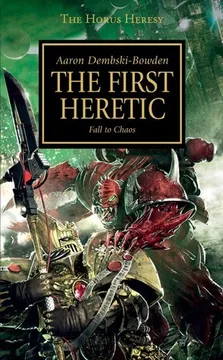


Plot Summary
Prologue
Years before the Legion’s fall, a grey-armoured warrior comes to take a boy from his family for the Word Bearers. The boy’s sisters weep, though he sees selection as an honour. His mother stands firm and asks the warrior’s name before giving her son’s.
The visitor is Erebus, a senior Word Bearer who will later shape the Legion’s faith. The child is Argel Tal. Their brief exchange binds the book’s beginning to its end: Argel Tal’s life starts with a family’s loss, and the story follows what his new family will ask him to become.
The opening makes recruitment feel intimate before the scale of the Crusade turns it into policy. Argel Tal experiences enlistment as an honour because he cannot yet imagine what his family understands: that belonging to the Legion means surrendering a life shaped by kin, home, and ordinary choice. His mother’s composure does not undo the loss, but it gives him a model of dignity that survives within him. Naming Erebus at the threshold also plants a quiet unease. The man who claims the boy will become a guide to faith, while the novel asks whether guidance can remain benevolent when it begins by taking someone away.
Monarchia’s False Angels
At eighteen, Cyrene Valantion watches blue-armoured warriors descend into Monarchia, a city whose people have spent generations worshipping the Emperor. The crowd welcomes them as divine messengers until Cyrene recognizes that their armour does not match the holy images she knows.
The Ultramarines announce that everyone must leave within six days, then open fire when frightened citizens resist. Cyrene stays in the city, demanding an explanation from an armed patrol.
Its leader lowers his cannon but gives her no reason beyond the Emperor’s command. At sunrise on the seventh day, orbital fire destroys Monarchia. The blast blinds Cyrene, leaving her alive among the ruins with the certainty that the god her people worshipped has condemned them.
Cyrene’s doubt begins as visual discernment: she notices that the arriving warriors do not match the sacred image her community has inherited. That mismatch matters because the crowd’s faith has trained it to interpret power as proof of holiness. When the Ultramarines turn weapons on worshippers, the distinction between divine authority and political force collapses. Cyrene’s blindness then makes the destruction more than physical punishment. It removes the very sense with which she identified the false angels, while sharpening her need to understand what she witnessed. Her question is not yet a rejection of faith; it is a demand that belief account for cruelty.
A City Reduced to Ash
Two months later, the Word Bearers arrive above Khur with a fleet prepared to avenge Monarchia. Their primarch, Lorgar, expects to confront the Ultramarines, but Guilliman orders the Legion to gather in the city’s crater. Argel Tal, captain of the Serrated Sun, searches the ash and hears movement beyond the landing zone. He finds Cyrene, starved, injured, and unable to see.
She fears the grey-armoured warrior is another false angel, then learns that he was among those who first brought the world into the Imperium. Argel Tal takes her aboard his ship. For him, she becomes a living reminder of the Legion’s failure; for Cyrene, the rescue opens an uncertain life among the warriors who helped destroy her home.
The return to Monarchia turns collective humiliation into a personal encounter. Argel Tal’s instinct to search the ruins interrupts the Legion’s urge to treat the city as an emblem of its shame. Cyrene resists becoming merely a symbol because she remains a person with injuries, fear, and questions. Their meeting also establishes a durable contrast: she has lost sight but not skepticism, while he can see clearly yet is increasingly unable to trust the beliefs that organize his life. His act of carrying her from the wreckage is compassionate, but it does not absolve him. It creates a relationship in which memory will keep confronting doctrine.
The Legion Kneels
Lorgar demands answers from Guilliman and Malcador, only to learn that the Emperor ordered Monarchia’s destruction because its people worshipped him as a god. The Emperor appears with Custodians and forces all one hundred thousand Word Bearers to their knees.
He condemns their slow conquests and the faith they planted on compliant worlds, insisting that the Legion was created to wage war, not build temples. Lorgar argues that his people’s devotion is genuine, but the Emperor rejects it as a dangerous falsehood.
After the Emperor leaves, Lorgar strikes Guilliman and nearly turns the gathering into a battle. Argel Tal helps him stand and guides him back toward the fleet, where the primarch’s fury gives way to a silence his sons cannot interpret.
The Emperor’s rebuke attacks Lorgar at the level of identity, not merely performance. He has built worlds around the conviction that worship can unite humanity, so the command to abandon that work makes his life’s central purpose appear fraudulent. The enforced kneeling is especially corrosive: a Legion whose ritual kneeling commemorates sacrifice is made to enact submission before its own humiliation. Argel Tal witnesses the distinction between obedience and consent, and his help to Lorgar is an act of filial loyalty without any power to repair the wound. The scene sets up the core danger: a shattered faith may seek truth, but it may also seek a replacement at any cost.
Faith Rebuilt in Fire
In seclusion, Lorgar revisits his youth on Colchis and recognizes that his visions once led him to wage a devastating holy war before the Emperor arrived. Kor Phaeron and Erebus urge him to recover the Old Faith, arguing that the Legion cannot live without belief.
Lorgar resists, then chooses to investigate whether ancient religions contain truth, beginning with his brother Magnus. Before that search can take shape, he brings Forty-Seven Sixteen to compliance by ordering the Word Bearers to kill its entire population.
The world’s artificial defenders prove difficult to destroy, and Argel Tal fights them beside Mechanicum robots, including Incarnadine. Cyrene questions the slaughter, but Argel Tal still defends it as duty. The Legion has exchanged public worship for obedience, not yet for conscience.
Lorgar’s pivot is not a clean conversion from faith to skepticism. He cannot accept that the beliefs that once united Colchis were simply lies, because that would make the violence of his youth irredeemable. Instead, he converts shame into inquiry, but his first campaign under the new policy is still genocide. The contrast between Cyrene’s questions and Argel Tal’s certainty shows how ideology protects action from moral scrutiny: the captain can explain why the world must die without being able to answer her simplest question about why its people deserve death. Incarnadine’s presence complicates the purge further, since the Legion condemns artificial life while relying on its own engineered weapons.
Home to Grey Flowers
The Word Bearers return to Colchis, where crowds treat the surviving refugees from Monarchia as holy figures and single out Cyrene as the Blessed Lady. Lorgar meets her in the Spire Temple and asks her to forgive the destruction of her city and her sight. She does, then accepts his offer to serve as a confessor for the Legion.
In private, Lorgar tells Argel Tal that he will travel with the Serrated Sun and its three hundred warriors, while the Custodes remain assigned to watch them. The decision gives Argel Tal a closer role beside his primarch and leaves Cyrene within the Legion’s orbit. Soon after, Lorgar meets Magnus to discuss the search for a truth beyond the Emperor’s doctrine.
Cyrene’s forgiveness gives Lorgar relief, but it should not be mistaken for a verdict that his actions were right. Her consent allows him to begin again, while the new role he offers her gives practical form to her desire to serve and to make meaning from survival. The Legion’s public treatment of her shows how quickly suffering can be converted into religious authority: her blindness becomes a credential in a culture hungry for sacred witnesses. Argel Tal’s appointment as Lorgar’s travelling companion also tightens the emotional bond that will make later choices harder. Loyalty becomes not a slogan but proximity, care, and dependence.
Magnus Refuses the Pilgrimage
On Colchis, Lorgar explains to Magnus that the Emperor’s rebuke has made him question the entire Crusade. He believes humanity needs faith and suspects that the Old Faith’s repeated stories of gods point toward a real power beyond the material universe. Magnus refuses to guide him into the warp, warning that grief has made him eager to worship something new.
He also reveals that the Emperor once considered destroying the Word Bearers, though Horus and Leman Russ argued against it. Lorgar takes Magnus’s refusal as a reason to proceed alone. He orders his Legion to pursue the Pilgrimage while continuing its conquests, and the Word Bearers begin spreading across the galaxy under the Emperor’s watchful Custodians.
Magnus offers Lorgar a psychologically accurate warning: the desire for truth can be displaced by the need to recover a lost object of devotion. Lorgar hears the warning but cannot separate the question of whether gods exist from the question of whether his life has meaning. His brother’s refusal therefore deepens both his isolation and his resolve. The revelation that the Emperor contemplated the Legion’s destruction gives Lorgar’s grievance an existential edge, making his search feel like survival as much as theology. Yet he still chooses to obey the Crusade’s outward demands, creating a divided project: conquest in public, spiritual investigation beneath the surface.
The Screaming World
Years into the Pilgrimage, the 1,301st Expeditionary Fleet struggles through a vast warp storm that has already swallowed three ships. Astropaths hear millions of screams and detect an even louder voice on the planet below. Lorgar recognizes the storm’s shape from Colchisian religious images and believes it answers the Legion’s search.
On the surface, violet-eyed tribespeople greet him by name. Their leader, Ingethel, claims the world is Cadia and identifies Lorgar as the favoured son of four powers. Lorgar allows her people to explain their beliefs, despite Custodian Vendatha’s demand that the mutants be destroyed. The first contact unsettles the Legion because the Cadians appear to have been waiting for them.
Cadia transforms the Pilgrimage from an abstract search into an encounter engineered by another intelligence. The Cadians’ recognition of Lorgar unsettles the expected hierarchy: the Legion arrives as conqueror, yet the natives frame it as a foretold visitor. Vendatha’s immediate urge to destroy them represents the Imperial response to difference, while Lorgar’s restraint reflects a genuine desire to investigate before judging. Still, the Cadians’ welcome is not neutral evidence. Their claims may be knowledge, manipulation, or both, and the book keeps that uncertainty active. Lorgar’s hunger for confirmation makes him especially vulnerable to a society that speaks in the language he wants to hear.
Vendatha’s Last Stand
In a cavern temple, Lorgar watches the Cadians prepare a rite that has already impaled nine people. Argel Tal and Vendatha object, but the primarch wants the promised answer. When Ingethel demands a tenth sacrifice chosen by Lorgar, Vendatha declares him a traitor and tries to seize him.
The Custodian’s teleport signal has been blocked, and the fight kills Word Bearer officers before Xaphen and Argel Tal bring Vendatha down. Lorgar orders the dying Custodian impaled with the others, accepting the rite’s consequence even as Argel Tal protests. Ingethel is then flayed and transformed into a daemon. Its first demand is that Lorgar send two of his sons into the warp as its guides.
The ritual makes the cost of Lorgar’s inquiry unmistakable. He has moved from studying faith to permitting human sacrifice, and when Vendatha intervenes, the conflict turns Imperial loyalty into bloodshed between supposed allies. Argel Tal’s protest marks a moral boundary that Lorgar steps over. The transformation of Ingethel does not settle whether the Cadians’ theology is true in any ethical sense; it proves only that their rites can summon a force powerful enough to demand more. Lorgar’s pursuit of revelation has now created an obligation to sacrifice the very people who brought it within reach.
The Eye Opens
Ingethel takes Argel Tal, Xaphen, and the survivors of the Serrated Sun into the warp aboard the Orfeo’s Lament. Beyond the ship’s Geller Field, they see human faces and hands forming in the storm, while Ingethel explains that emotion and souls shape this realm. It shows them the destruction of the Eldar empire and the birth of a new god from its people’s decadence.
Argel Tal names the realm Chaos, recognizing that the legends of heaven and hell share a material truth. The vision convinces Xaphen that the Legion must embrace the powers, but Argel Tal fears that bringing such knowledge to the Imperium will cause civil war. The ship presses deeper, carrying both revelation and dread.
The warp gives Lorgar’s theory a terrifying empirical form, but the evidence arrives through a guide who has every reason to shape its interpretation. Argel Tal sees a civilization destroyed by the consequences of its own collective desires, a vision that can be read as warning or recruitment. Xaphen treats the spectacle as proof of a new faith; Argel Tal sees the political catastrophe that will follow if the Imperium hears it. Their disagreement reveals that knowledge is not self-interpreting. The same vision can support surrender to power or caution against it, depending on the observer’s needs and moral commitments.
The Emperor’s Hidden Bargain
Ingethel shows the Word Bearers a vision of the Emperor’s gene-laboratory on Terra before the Primarchs’ scattering. They see the Emperor’s sons gestating in pods protected by an enormous Geller Field, and learn that the Emperor used knowledge gained from warp powers to create them.
The daemon also reveals flaws in Astartes gene-seed and says the Word Bearers’ unusually fierce loyalty to Lorgar is partly strengthened by their biology. Argel Tal and his brothers recognize the Geller generator sustaining the pods. Believing its destruction will trigger the scattering they have been shown, they cut into it with Argel Tal’s power swords. The blades explode, and the vision ends in psychic gold.
This revelation attacks the moral architecture of the Imperial Truth: the Emperor who forbids religion may have relied on the very powers he denies. Yet the claim comes from Ingethel, not from independent records, so it remains entangled with the daemon’s agenda. The disclosure about gene-seed is equally destabilizing because it makes loyalty partly biological without eliminating free will. Argel Tal must now ask whether his devotion is chosen or engineered, while still choosing to act. Their attack on the Geller generator is a point of no return: the Legion does not merely discover forbidden knowledge, it intervenes in the machinery that made its own history.
Seven Months in Hell
The Orfeo’s Lament vanishes into the storm, where time passes differently. Argel Tal and his brothers die, revive, and endure seven months without food or water, eventually consuming dead crew and killing fellow Astartes to survive. The ship returns to the fleet after only seconds have passed outside. Fewer than forty Word Bearers remain, and each carries a second soul from the warp.
Lorgar listens as Argel Tal reports what they learned, then orders the Cadian tribes destroyed to conceal the Legion’s contact with the daemons. He remakes the survivors as the Gal Vorbak, the Blessed Sons, while Cyrene becomes Argel Tal’s confessor. Lorgar later slips into the Eye himself, leaving his sons to spread the new faith in secret.
The voyage makes theological discovery bodily and irreversible. The survivors’ return is not a triumphant homecoming but an account of cannibalism, death, and possession, while their new strength is inseparable from violation. Lorgar responds by both honoring them and concealing the evidence, showing that his search for truth already requires political deception. The destruction of the Cadians is especially telling: the people who opened the door to his revelation are erased so that the Emperor will not know what lies beyond it. Cyrene’s role as confessor gives Argel Tal a human witness, but neither confession nor ceremony can restore what the expedition has taken from them.
A Secret Legion
Forty years later, Argel Tal commands the Serrated Sun while the Gal Vorbak remain an elite force. Chaplain Xaphen returns from the Iron Warriors with news that Word Bearer preachers have spent decades influencing other Legions.
Erebus has reached Horus, while Kor Phaeron and the Chaplains build a network of covert conversions. On Olympia, Perturabo’s assault on his rebellious home world has driven him toward rebellion. Xaphen reveals that Horus is gathering the Emperor’s Children, Death Guard, and World Eaters near Isstvan, with the Iron Warriors ready to join them.
Argel Tal distrusts the conspiracy and suspects Kor Phaeron and Erebus have shaped Lorgar’s plans. Still, he prepares to follow the primarch’s orders as the Legion’s hidden alliances approach open war.
The forty-year interval converts revelation into institution. The Word Bearers do not simply believe differently; they build channels of influence, ritual, and secrecy capable of changing other Legions. Argel Tal’s discomfort distinguishes conviction from complicity: he accepts much of Lorgar’s religious premise but distrusts the conspirators’ methods and the power they claim in the primarch’s name. His position is psychologically precarious because he is both insider and critic, bound by kinship to the very project he questions. Xaphen’s enthusiasm shows how a community can make clandestine action feel sacred, while Argel Tal recognizes that secrecy has begun to replace persuasion.
The Second Wave
Remembrancer Ishaq Kadeen joins the 1,301st Expeditionary Fleet, hoping to make images that will earn him recognition. On the eve of the Isstvan campaign, talk among the fleet’s human crews already favors Horus and treats the Emperor as an absent ruler. Lorgar reunites with Argel Tal and the Gal Vorbak, then brings leaders from the Word Bearers, Night Lords, Iron Warriors, and Alpha Legion together.
He argues that the Imperium is built on lies and presents Horus as the leader of a replacement empire. The gathered warriors seal their alliance and prepare to join the loyal Legions on Isstvan V. Ishaq, meanwhile, slips into restricted parts of the flagship in search of a pict that might make his career.
Ishaq’s ambition supplies an ordinary human scale for a betrayal planned by demigods. He seeks a striking image for professional survival, while the fleet’s soldiers adopt political explanations that make rebellion sound like justice. Lorgar’s speech binds very different grievances into one coalition, but the alliance is not founded on trust; it is held together by shared enemies and the promise of a transformed order. Ishaq’s desire to witness history without understanding its danger mirrors the broader Imperial public, which consumes heroic narratives while remaining distant from the violence producing them. His camera will eventually preserve what official loyalty cannot admit.
The Friendly Landing
At Isstvan V, the loyal Salamanders, Iron Hands, and Raven Guard believe the arriving Legions will reinforce them against Horus. Argel Tal takes his Gal Vorbak to the Iron Warriors’ prepared defenses, where the traitors wait behind fortifications. As exhausted Raven Guard captain Torisian approaches, Argel Tal remembers the family who lost him to the Legion and hesitates.
He then orders his warriors to fire. Hidden batteries and massed Word Bearers cut down the advancing Raven Guard, while the Salamanders are attacked elsewhere. Argel Tal’s second soul, Raum, urges him toward bloodshed, and the captain begins to transform as battle intensifies. The greeting the loyalists expected becomes the opening strike of the Dropsite Massacre.
Argel Tal’s hesitation is not a sudden return to innocence; it is a moment in which the cost of his decision becomes particular. He remembers his parents and sisters just before ordering other families’ sons to die. The memory gives him no escape, only a clearer view of the human scale of betrayal. The attack also fuses political choice with bodily change: Raum’s presence makes violence feel instinctive and energizing, threatening to turn action into appetite. Yet Argel Tal still gives the order himself. The possession intensifies his agency’s consequences rather than replacing it, which prevents supernatural influence from becoming an excuse.
Corax Meets Lorgar
As the ambush collapses, Raven Guard primarch Corax fights through Word Bearers to reach the gunships carrying his surviving warriors. Lorgar recognizes that his brother is drawing fire to save them, but joins the fighting only after realizing what Corax is doing.
Their duel leaves Lorgar gravely wounded and nearly killed. Night Lords primarch Konrad Curze intervenes, forcing Corax away and condemning Lorgar for weakness before returning to the battle. The Gal Vorbak undergo their full transformation, and Argel Tal finally yields control to Raum, becoming a horned, clawed creature in crimson armour.
Corax escapes toward his remaining forces, while the traitors continue slaughtering loyalists. The Word Bearers’ promised evolution has arrived as a monstrous weapon in the middle of betrayal.
The duel exposes the emotional disparity between the brothers. Corax fights to preserve his sons, while Lorgar fights from conviction mixed with remorse, and neither can persuade the other in the middle of a massacre. Lorgar’s refusal to let his brother die easily is a brief assertion of personal compassion inside a plan built on treachery. Curze’s intervention saves Lorgar for reasons that do not amount to tenderness, leaving the primarch alive but morally isolated. Argel Tal’s transformation parallels Lorgar’s crisis: each becomes more powerful at the moment his original identity is hardest to hold. The battle makes power visible, but not innocence.
The Custodes Find Proof
During the void battle, Ishaq crosses a sealed door on the flagship and photographs an astropathic chamber where tortured captives have been bound to daemons. When he shows the image to Custodian Aquillon’s astropath, the Custodes realize the Word Bearers have hidden the truth from Terra for decades. Aquillon leads an assault through the ship toward Cyrene, whom he believes can reveal what the Legion has done.
Tech-priest Xi-Nu 73 and Incarnadine defend her room; the robot is destroyed and Xi-Nu dies beside it. Aquillon kills Cyrene with a sword thrust before Argel Tal returns. Her final words identify the darkness and the sound of a monster breathing as a childhood nightmare made real. Argel Tal arrives too late to save her.
The secret chamber turns the rebellion’s abstract censorship into an embodied system of torture. Ishaq’s image matters because it makes hidden violence portable and verifiable; a single record defeats decades of carefully managed reports. Aquillon’s assault is driven by duty, but his choice to kill Cyrene destroys the person most capable of explaining the Legion’s history. Xi-Nu and Incarnadine’s defense complicates the battle’s moral categories, as a machine and its maker risk themselves for a human they need not protect. Cyrene’s final recognition returns the story to the childhood nightmare promised in her narrative frame: she understands the horror, but understanding cannot protect her from it.
The Last Brotherhood
Argel Tal finds Cyrene dying in the wrecked room and holds her as she dies. Raum surges forward, driving the captain through the flagship and toward Aquillon’s escaping gunship. Argel Tal orders the fleet to fire, and the Rising Sun crashes on Isstvan V. There, Aquillon and two surviving Custodians face the Gal Vorbak.
Aquillon calls Argel Tal deceived and reminds him that the Word Bearers have tortured astropaths and bound daemons into their ship. Argel Tal cannot deny the accusation, but grief over Cyrene’s death overwhelms his remaining restraint. The Gal Vorbak attack and kill the Custodians, including Aquillon. Argel Tal loses the friend he trusted most outside the Legion, and the fleet turns toward its next campaign.
The ending gives Argel Tal no clean moral position. Aquillon’s accusations are true, and Argel Tal knows it, yet the Custodian’s killing of Cyrene has made argument impossible for him to hear. His grief is sincere, but it also becomes the immediate fuel for violence that completes his break with the last person who might have anchored him outside the Legion. Raum’s influence heightens the impulse without erasing the choice. The result is a tragic convergence: Argel Tal kills a friend in response to a friend’s own fatal act, while the hidden crimes that provoked the confrontation remain real. Brotherhood survives as attachment, not as innocence.
Epilogue
As the Word Bearer fleet sails toward Calth, Argel Tal shuts himself away from the praise of his Legion. He keeps Aquillon’s sword and Cyrene’s unfinished message beside him, unable to find the words she meant to leave behind.
Lorgar has asked him to lead the assault on the Ultramarines’ world, and Argel Tal intends to obey despite the dead he carries with him. When grief tells him that his brothers are gone, Raum answers from within. The approaching battle will not restore what he has lost. It will give his remaining loyalty another battlefield.
The ending turns the book’s central relationship into an unresolved inner division. Argel Tal possesses Aquillon’s weapon and Cyrene’s unfinished writing, material traces of two bonds that the Legion’s cause has destroyed. Neither object can repair the loss, and the coming assault on Calth offers no genuine closure. His obedience to Lorgar shows that loyalty survives even when its emotional foundations have been damaged. Raum’s claim to be his brother is disturbing precisely because it answers loneliness with fusion rather than companionship. The novel ends not with conversion completed, but with a self divided and still marching.
Analysis
The novel treats heresy not as a sudden appetite for evil but as a crisis of interpretation. Lorgar is humiliated because his devotion has been declared useless, and his search for truth begins from a real moral injury. Yet the injury does not make his conclusions reliable. The warp supplies spectacular evidence, while Ingethel directs what that evidence is supposed to mean. The distinction between encountering power and judging its claims becomes the book’s central epistemic problem: intensity feels like proof, and a vivid revelation can recruit as effectively as an argument.
Argel Tal provides the emotional measure of that process. His loyalty to Lorgar is sincere, but his care for Cyrene, his unease about the Custodes, and his hesitation before killing the Raven Guard show that obedience never wholly erases moral perception. The daemon inside him complicates rather than cancels responsibility. Raum can sharpen appetite and violence, but Argel Tal still makes consequential choices, often while recognizing their cost. His story refuses the comfort of blaming every atrocity on possession or genetic design.
The novel also exposes how institutions manufacture certainty. The Emperor suppresses religion in the name of truth, yet rules through overwhelming force and leaves his motives opaque. The Word Bearers oppose that empire, then construct a clandestine system of propaganda, torture, and extermination. Both regimes claim necessity; both make individual lives expendable. Cyrene’s testimony and Ishaq’s image matter because they preserve particulars that official narratives erase. At the close, Argel Tal’s grief cannot reverse his allegiance. He carries evidence of his losses toward Calth, where the next campaign will demand the same obedience that helped create them. The tragedy is not simply that faith becomes violence. It is that every faction can describe its violence as protection of humanity.
Review Summary
The First Heretic is widely praised as one of the best entries in the Horus Heresy series. Readers appreciate the depth given to the Word Bearers legion and their fall to Chaos, particularly through the characters of Lorgar and Argel Tal. The book is commended for its exploration of themes like faith, betrayal, and the Emperor's flaws. Many consider it essential for understanding the Horus Heresy's origins. While some note minor issues with pacing or editing, the overall consensus is that it's a compelling and well-crafted addition to the Warhammer 40,000 universe.
People Also Read

Characters
Argel Tal
The divided captainArgel Tal is a Colchisian child taken into the Word Bearers and raised into a gifted captain of the Serrated Sun. He is devoted to Lorgar, but his compassion makes him unusually attentive to the costs of the Legion’s victories. His bond with Xaphen combines military trust with unresolved differences about faith, while Cyrene gives him a human perspective not contained by Legion doctrine. He is a disciplined warrior who values memory and keeps reminders of the dead. His central tension is between chosen loyalty and the suspicion that biology, authority, and supernatural influence all shape his choices. He seeks certainty, yet becomes most human when he doubts what certainty demands.
Lorgar
The searching primarchLorgar, primarch of the Word Bearers, is a visionary who believes humanity needs meaning as much as it needs political unity. Unlike brothers who embrace war as a natural vocation, he values architecture, scripture, and the creation of societies. The Emperor’s rejection of his worship wounds him because it attacks both his public achievements and his private sense of purpose. He is loving toward his sons and capable of humility, yet his need to discover ultimate truth can overrule compassion and caution. His relationship with Kor Phaeron, Erebus, and Magnus reveals how strongly he depends on trusted interpreters. Lorgar’s search is sincere, but sincerity does not prevent him from being manipulated or causing devastation.
Cyrene Valantion
The blind confessorCyrene is a young woman from Monarchia who doubts the returning warriors even while her neighbors kneel before them. The destruction of her city and her sight leave her dependent on sound, touch, and memory, but do not diminish her capacity to question authority. She treats Argel Tal with candor and offers Lorgar forgiveness without pretending that forgiveness erases his responsibility. Her willingness to serve the Legion grows from gratitude, loneliness, and a wish to make survival useful. As a confessor, she listens without being absorbed into the warriors’ certainty. Her blindness makes her an emblem to others, but her independence resists the conversion of personal suffering into mere religious proof.
Xaphen
The fervent chaplainXaphen is Chaplain of Argel Tal’s company and one of the captain’s closest brothers. He is a fierce guardian of Legion tradition, an eloquent preacher, and a man who believes faith can give warriors purpose beyond combat. His relationship with Argel Tal is affectionate but tested by their different thresholds for violence and secrecy. Xaphen’s certainty makes him effective at guiding others, yet it can also make him impatient with hesitation. He understands ritual as a practical force that binds a Legion, not merely as private belief. His devotion to Lorgar and the Word gives him a strong sense of direction, even when that direction asks others to accept terrible costs.
Erebus
The architect of faithErebus is the Word Bearers’ First Chaplain and an influential religious adviser to Lorgar. He recruits Argel Tal into the Legion and later helps shape the doctrines and secret practices that guide its transformation. Erebus is patient, controlled, and skilled at presenting a desired course as an inevitable truth. He cares about the power of shared belief, but his political ambition and appetite for influence make his counsel difficult to separate from manipulation. His former mentorship of Argel Tal leaves a history of admiration, resentment, and respect between them. Erebus represents the danger of a persuasive interpreter who can turn another person’s sincere search into a program of covert action.
Kor Phaeron
Lorgar’s foster fatherKor Phaeron raised Lorgar on Colchis and remains the primarch’s closest paternal adviser. Too old to become a true Astartes, he has been elevated through surgery, bionics, and privilege, a fact that troubles some of the Legion’s warriors. He is politically astute and deeply invested in the role of faith in human society. His influence comes from personal history as much as formal rank: he can speak to Lorgar as a son rather than a commander. Kor Phaeron’s care is genuine, but he also knows how to steer Lorgar toward choices that serve a larger religious and political design. That mix of intimacy and strategy makes him powerful.
The Emperor
The godless sovereignThe Emperor is the ruler of humanity and the father of the primarchs. He demands that the Great Crusade spread human rule under a rational doctrine that rejects worship of gods. His intervention at Monarchia makes clear that he regards Lorgar’s devotional conquests as a failure, despite the loyalty of the worlds they produced. He is powerful enough to compel a Legion to kneel, yet his refusal to explain himself leaves room for others to interpret his silence as hypocrisy. In Lorgar’s eyes he is both beloved father and inaccessible authority. The tension between his declared rejection of divinity and the mysteries surrounding his power fuels the Word Bearers’ search.
Roboute Guilliman
The disciplined brotherGuilliman is the primarch of the Ultramarines and the commander who carries out the Emperor’s order against Monarchia. He is controlled, strategic, and difficult for Lorgar to read, which makes his composure feel like a deliberate insult to the grieving Word Bearers. His Legion’s efficiency stands in contrast to Lorgar’s slower, more devotional approach to conquest. Guilliman believes he is executing a necessary mandate rather than pursuing a personal feud. Their conflict exposes how political obedience can look like cruelty to those who bear its consequences.
Magnus the Red
The wary elder brotherMagnus, primarch of the Thousand Sons, is Lorgar’s most intellectually intimate brother and a formidable psychic scholar. He shares Lorgar’s curiosity about the universe but rejects the idea that a shattered faith should be replaced by worship of unknown powers. Magnus’s warning is thoughtful rather than dismissive, which makes his refusal to guide the Pilgrimage especially painful. He values knowledge, yet knows that extraordinary perception does not guarantee wise interpretation. His relationship with Lorgar is shaped by affection and a real difference in how each understands the warp.
Ingethel
The warp’s emissaryIngethel first appears as a Cadian woman who claims the tribes have awaited Lorgar and recognizes him as a figure foretold by their religion. She serves as a guide between the Word Bearers and the warp, speaking with knowledge that is both compelling and threatening. Her role is to convert abstract myths into direct experiences, using visions and revelations to lead Lorgar’s sons toward a choice. Ingethel is not a neutral source of information. She is persuasive because she can offer evidence, but her demands reveal that the evidence is also a means of enlistment. Her presence tests whether Lorgar can distinguish truth from the agenda attached to it.
Aquillon
The Emperor’s watcherAquillon is a Custodian assigned to observe the Word Bearers on behalf of the Emperor. He is a formidable fighter, highly disciplined, and more independent in battle than the Astartes, whose strength often depends on brotherhood and formation. His long service beside Argel Tal builds a genuine bond across their opposing allegiances. Aquillon values evidence and duty, but he is not incapable of affection or judgment beyond orders. His presence makes the Legion feel watched, while his friendship with Argel Tal offers a rare connection beyond the Word Bearers. That connection is complicated by his responsibility to report what he sees.
Vendatha
The uncompromising CustodianVendatha is a Custodian who accompanies Lorgar’s party to Cadia. He interprets the violet-eyed inhabitants and their rituals through the Emperor’s demand for human purity, and he presses for their destruction. His certainty brings him into direct conflict with Lorgar and Argel Tal, who want to learn what the Cadians know. Vendatha is not merely a symbol of Imperial control; he believes that allowing dangerous deviation to spread could imperil humanity. His bluntness makes him difficult to persuade, but his objections force the Word Bearers to confront the consequences of the path they are choosing.
Ishaq Kadeen
The opportunist with a cameraIshaq is an imagist assigned to the 1,301st Expeditionary Fleet. Charming, restless, and alert to opportunity, he has survived by reading people and making himself useful, though his ambition often outruns his caution. He hopes to create an image that will secure recognition and status among the remembrancers. His curiosity takes him into restricted parts of the flagship, where he encounters evidence that the Legion has hidden from the Emperor. Ishaq is not a trained investigator or a warrior, which makes his accidental discovery more consequential. He represents the ordinary observer whose record can challenge an official story.
Xi-Nu 73
The devoted tech-adeptXi-Nu 73 is a heavily augmented tech-adept of the Mechanicum who oversees the Carthage Cohort’s war machines. He prizes precision, efficiency, and the transcendence of machine discipline over human limitation. His relationship with Incarnadine unsettles him because the robot appears to recognize and value the Word Bearers beyond its programmed function. Xi-Nu resists emotional interpretation, yet his attention to the machine reveals a form of attachment he would not readily name. His loyalty to his work places him alongside the Legion without making him fully one of them.
Incarnadine
The honored war machineIncarnadine is the Conqueror Primus of Xi-Nu 73’s maniple, a powerful combat robot inducted as an honorary member of the Serrated Sun. The Word Bearers treat it as a brother, and its behavior suggests a bond that its tech-adept cannot fully explain. Incarnadine stands at the meeting point of engineered intelligence, religious ritual, and military belonging. Its presence challenges the Legion’s confidence that human form and human purpose are inseparable, while its loyalty shows how recognition can create meaning even in a machine.
Arric Jesmetine
The veteran officerArric Jesmetine is a senior officer of the Euchar infantry and a long-serving member of the 1,301st fleet. Weathered by decades of campaigning and partly sustained by bionics, he is blunt, observant, and protective of his soldiers. His relationship with Cyrene becomes a private source of warmth amid the Legion’s increasingly grim political world. He is also one of the few ordinary humans who can speak plainly to the Astartes without mistaking their authority for infallibility. His practical humor and accumulated experience make him a grounding presence.
Horus
The favored warlordHorus is the Emperor’s favored son and Warmaster, entrusted with command over the Great Crusade. He is admired for his military success and ability to bring other leaders to his side. In this story he remains largely distant, but his authority becomes the focus around which several Legions organize their rebellion. His public reputation for brilliance helps make the revolt persuasive to soldiers who see conquest as the clearest measure of leadership. Horus’s importance lies in the scale of allegiance he can command.
Corax
The betrayed Raven LordCorax is the primarch of the Raven Guard, a fierce commander who values the survival of his warriors. At Isstvan V, he fights through the traitors to create a chance for his Legion to escape. His clash with Lorgar brings their opposing visions into direct physical conflict: Corax sees treason, while Lorgar believes he is serving humanity’s future. Corax’s actions show that even in a battle shaped by enormous political forces, a commander’s immediate concern can remain the lives of those under his protection.
Konrad Curze
The merciless intervening primarchCurze is the primarch of the Night Lords, whose violence and foreboding presence reflect a Legion built around fear. At Isstvan V, he intervenes in the fight between Lorgar and Corax, preventing Corax from killing Lorgar before returning to the battle. His intervention is tactical rather than tender, and his contempt for weakness makes even rescue feel like an insult.
Plot Devices
Cyrene’s testimony
Memory against doctrineCyrene’s account of Monarchia frames the political and spiritual collapse through the perspective of someone who loses her home and sight. Her memory repeatedly tests the explanations offered by the Word Bearers, especially when Argel Tal describes later purges as necessary. As a confessor, she gives warriors a place to voice guilt, but she is not simply an instrument of their redemption. Her testimony makes the cost of doctrine concrete: she remembers places, bodies, and ordinary choices that military language reduces to compliance or failure. The device links private trauma to the Legion’s public history.
The Pilgrimage
Faith as a dangerous questThe Pilgrimage gives Lorgar a reason to investigate the Old Faith after the Emperor condemns his worship. It directs the Word Bearers toward Cadia and the warp, transforming theological speculation into physical encounters and irreversible decisions. The quest also structures Lorgar’s vulnerability: because he wants evidence that faith has a real foundation, he is receptive to Ingethel’s staged revelations. The Pilgrimage therefore functions both as an inquiry and as a recruitment path. Its discoveries deepen the Legion’s knowledge while making it harder for them to return to the identity they held before.
The Geller Field
A barrier turned originThe Geller Field protects Imperial vessels from the warp, giving the crew a material boundary between ordinary reality and psychic danger. In Ingethel’s vision, the Word Bearers recognize the same principle around the Primarchs’ gestation pods. Argel Tal concludes that the field’s generator is part of the mechanism behind the scattering of the Primarchs and destroys it in the vision. Later, the field aboard the Orfeo’s Lament becomes the safeguard the daemon asks the Legion to lower. The device links creation, containment, and risk, making protection itself a focus of the Word Bearers’ rebellion.
The Gal Vorbak
Brotherhood split in twoThe Gal Vorbak are the Word Bearers who survive the journey into the Eye and carry a daemon soul alongside their own. Lorgar honors them as an elite brotherhood, while Argel Tal experiences the bond as both added strength and a threat to his independence. Their transformations emerge in waves, especially under the pressure of battle, so possession becomes a recurring conflict rather than a single event. The Gal Vorbak embody the Legion’s belief that divine power can remake humanity, while also making that belief visible as bodily corruption. Their shared identity raises the question of whether unity can survive when it depends on another will living inside each warrior.
Ishaq’s pict
Evidence breaks the coverIshaq Kadeen’s search for a career-making image leads him into restricted parts of the flagship during the battle. There he photographs the chamber where the Word Bearers have concealed their manipulation of psychic communication. The image gives Aquillon concrete evidence where suspicion and reports had failed. Ishaq’s camera turns private observation into a political threat, showing how an ordinary witness can expose an institution’s managed narrative. The device also contrasts the Legion’s control of information with the fragile, accidental ways truth can escape it.
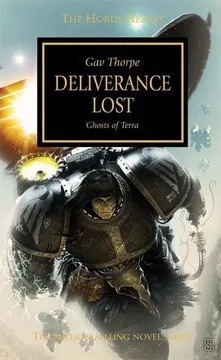
The Horus Heresy Series Series
About the Author

Download PDF
Download EPUB
.epub digital book format is ideal for reading ebooks on phones, tablets, and e-readers.








