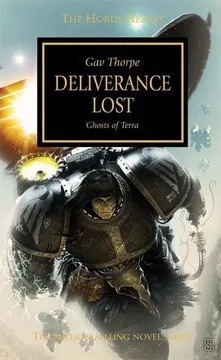


Plot Summary
Isstvan’s Last Lift
Years after Corax once welcomed Isstvan into the Imperium, he returns to its mountains as a hunted survivor. Horus’s forces have destroyed most of the Raven Guard, and Angron’s World Eaters are closing in on the remnants’ final position. Corax expects to die fighting, still ashamed that he fled an earlier confrontation with Konrad Curze.
Then black Raven Guard transports arrive under Commander Branne, who was supposed to be guarding Deliverance. His ships cover the survivors’ retreat, and Corax boards the last craft with fewer than three thousand warriors from the eighty thousand he brought to Isstvan. Branne’s rescue preserves the Legion, but Corax cannot mistake survival for victory. He orders the survivors to rebuild and strike again.
The rescue begins the novel with a victory that feels almost indistinguishable from defeat. Corax’s instinct is to measure himself against the dead and to treat survival as a debt he must repay, not a reprieve he can accept. His hesitation at the evacuation point makes leadership a conflict between personal honor and responsibility for others. Branne’s arrival interrupts the fantasy of a glorious final stand and forces Corax to choose the less consoling duty: living on with the consequences of failure.
The Invisible Escape
Corax sends the rescued fleet toward Isstvan IV to search for the Therion ships that helped Branne’s diversion. The Raven Guard activate reflex shields, which hide their emissions but leave the ships slow, half-blind, and vulnerable if attacked.
Traitor vessels tighten their search, firing torpedoes and experimental nova cannon shots into the space where they suspect the Avenger is passing. Corax holds to his evasive course rather than risk revealing the ship by raising its conventional shields.
At the last moment, he translates close enough to a Word Bearers cruiser to drag it into the warp wake. Its shields fail, and warp forces overwhelm the unprotected vessel. The Avenger escapes, but its passage leaves the crew with a stark lesson: Horus’s rebellion has opened a door to something worse than civil war.
The escape turns Raven Guard doctrine into a moral and psychological discipline. Corax survives not by striking harder but by refusing the urgent satisfaction of action when it would expose his people. His decision to let the Word Bearers cruiser be consumed by the warp is both tactical ingenuity and evidence that the war’s rules have changed. The scene also places ordinary fear beside primarch composure: Marcus Valerius and his servant endure the same bombardment without Corax’s certainty, showing how a military strategy can feel like helplessness to those inside it.
The Stolen Raven
The Alpha Legion’s primarch, Alpharius, must explain to Horus why he used the Warmaster’s authority to let Corax escape. He argues that the Raven Guard will lead Horus to a secret on Terra, and reveals that Alpha Legionnaires have entered their ranks wearing the faces of fallen Raven Guard.
His deeper purpose is less loyal than he admits: an alien emissary called Athithirtir has told him the Emperor will give Corax a powerful genetic secret, which the Cabal wants destroyed. Alpharius instead means for his twin, Omegon, to seize it for their Legion.
On Kiavahr, Omegon recruits old guild rulers and the Order of the Dragon, promising them a return to power. The Raven Guard’s survival is therefore bait, a theft in progress, and a risk Alpharius intends to manage for himself.
The Alpha Legion plot makes loyalty a problem of competing time horizons. Alpharius and Omegon claim to serve a future in which Horus’s victory has a larger purpose, while secretly protecting their own access to power. Their methods turn identity into an operational tool: stolen faces, coded transmissions, and allies who do not know the whole bargain. The Cabal’s certainty about a predicted outcome does not make the twins obedient. Instead, prophecy becomes another resource to manipulate, and the novel asks whether acting for a supposedly greater good can be distinguished from ambition when every participant controls part of the truth.
Terra Closes Ranks
The Avenger reaches the Sol system after a slow passage through warp storms that have disrupted travel and communication across the Imperium. Captain Noriz of the Imperial Fists initially threatens to destroy the Raven Guard ship unless it submits to inspection.
Corax cooperates, understanding that Isstvan’s betrayal has made even a primarch’s word insufficient proof of loyalty. Noriz reports fighting within the Mechanicum on Mars, while the Emperor remains inaccessible and Rogal Dorn directs Terra’s defenses.
Corax’s meeting with Dorn and Malcador sharpens their disagreement: Dorn wants the depleted Raven Guard stationed behind Terra’s fortifications, but Corax refuses to wait passively for Horus. He demands an audience with the Emperor, and Malcador’s warning that the Emperor is consumed by another war only deepens his unease.
Terra is not a refuge but a political landscape shaped by suspicion. Noriz’s inspection is procedurally reasonable, yet it makes visible how betrayal has damaged the ordinary currency of trust between Imperial forces. Corax and Dorn then embody two valid but incompatible responses to catastrophe: defend the center at all costs, or regain initiative before the enemy defines the whole war. Corax’s refusal is not simple insubordination. He believes that a Legion trained for stealth and attack will decay if reduced to a static emblem of loyalty.
The Emperor’s Gift
When Corax presses for an audience, the Emperor briefly speaks through Malcador and then draws the primarch into a vision of the Golden Throne. The Emperor explains that he is occupied with the Webway, where his forces are resisting daemons, and cannot lead the material war against Horus.
He heals Corax’s wounds and gives him fragments of the knowledge used to create the primarchs. That knowledge points to a concealed genetic archive on Terra, a means to rebuild the Raven Guard rapidly.
The Emperor grants Corax permission to retrieve it, but attaches a severe condition: if Horus learns the secret, Corax must destroy the archive and anything made from it. Corax accepts the burden, believing the technology can restore his Legion without sacrificing it in one last attack.
The gift answers Corax’s immediate need while transferring the Emperor’s dilemma into his hands. The primarch receives not merely technical knowledge but a conditional power: he may reproduce the Emperor’s creation, yet must be willing to erase it if it becomes dangerous. This complicates Corax’s desire to repair what Isstvan destroyed. His father’s healing restores his body, but the deeper wound remains, now attached to a project whose success could itself threaten the Imperium. The revelation of the Webway also reframes the Emperor’s absence as an unseen emergency rather than indifference, without making that absence easier for his sons to bear.
The Labyrinth Below
Corax leads Raven Guard, Custodians, and Mechanicum genetor Nexin Orlandriaz to a hidden facility inside a Terra mountain. He opens its entrance with a sequence of knocks, then guides the expedition through the Labyrinth, a shifting maze of lethal guns, changing gravity, and moving corridors.
Corax directs three teams from the entrance, but the traps kill and maim dozens before the survivors reach the vault. At its psychic lock, Custodian Arcatus refuses to let former Librarian Balsar Kurthuri use his powers.
The door opens only after a surge of power no one can explain. Inside, Corax finds the empty incubators where the primarchs were formed and a preserved sample of their genetic material. He orders the archive and equipment loaded for Deliverance.
The Labyrinth literalizes the problem of inherited knowledge: the archive is accessible only through a system that punishes ordinary attempts to reach it. Corax’s tactical intelligence turns the maze against itself, but his success depends on treating warriors as pieces in a calculation, including ordering a wounded legionary left behind. The psychic door then exposes a contradiction in Imperial doctrine. The Emperor’s ban on sorcery cannot be applied cleanly when an unexplained psychic intervention is what enables the mission. The vault offers a technological answer, but its retrieval is already marked by lives spent and rules bent.
Valerius Returns Home
Praefector Marcus Valerius returns to Terra without the Therion Cohort he sent into danger to help rescue the Raven Guard. The dreams that had helped guide him to Isstvan have stopped, leaving him uncertain whether they came from Corax or from something beyond his understanding.
Corax gives him a new duty: return to Therion and raise another force. Valerius arrives during a family celebration and reports Horus’s rebellion, the destruction of his command, and the Raven Guard’s survival.
His father, the Caesari, appoints him vice-Caesari and gives him authority to muster troops. Valerius accepts, while his servant Pelon helps him prepare for the journey and steadies his doubts. By the time the Raven Guard reach Narsis, Valerius has brought a vast new force to the campaign.
Valerius’s subplot translates galactic catastrophe into the intimate obligations of family and office. He cannot preserve the soldiers who followed him, so his recovery depends on accepting a new command rather than seeking recognition for the old one. His promotion is not a simple reward; it binds him more closely to the conflict and makes his private grief politically useful. Pelon’s practical care gives the scene an important counterweight to primarch-scale decisions. The Imperium’s ability to continue fighting rests not only on exceptional warriors but on servants, administrators, and survivors willing to make the next force possible.
Deliverance’s Atomic Scar
The genetic secret gives Corax a route home, but the sight of Deliverance also recalls how he won it. As a child found beneath a glacier, he grew among political prisoners and led their revolt against Kiavahr’s guild rulers.
When repeated fighting threatened to crush the rebellion, Corax authorized atomic strikes on cities below, killing civilians as well as the guilty and forcing the guilds to surrender. The ruined city remains a warning visible from the moon. Corax has never been able to treat that victory as clean.
Now the old guild networks are stirring again, and he must decide how to defend the Legion’s secret without repeating the logic that once made mass destruction seem necessary. Deliverance’s independence is both his greatest achievement and his oldest moral injury.
Corax’s past refuses the comforting division between liberator and tyrant. He freed a population from coerced labor, yet used weapons that killed people who had not chosen the regime he opposed. His memory of the atomic strike gives the novel’s later choices their moral pressure: necessity can explain an atrocity without cleansing it. The ruined city is not background decoration but a material record of the cost Corax would rather not repeat. His authority was formed by extraordinary power exercised in a desperate situation, and he continues to fear that urgency can make any decision appear righteous.
A Secret Rebuilt
Back on Deliverance, Corax orders the remembrancers to return to Terra with their records, preventing sensitive accounts of the Raven Guard and its defenses from falling into enemy hands. He also interrogates Word Bearers Chaplain Iarto Khoura, who claims ignorance of the massacre, then kills him in anger before gathering proof of his alleged treachery.
The episode unsettles his commanders, especially Solaro. At Ravendelve, Corax, Sixx, and Orlandriaz begin adapting the primarch material to Raven Guard gene-seed.
Their first calculations reveal thousands of incompatible variations, so Corax uses the Emperor’s implanted memories to narrow the search. He rejects direct cloning because identical warriors would lack the human variation and experience the Legion needs. Instead, he aims to accelerate recruits while preserving their individual minds and histories.
The first phase of reconstruction reveals how Corax’s need for decisive action can blur judgment. Killing Khoura may feel like a defense against treachery, but it denies the possibility of evidence and exposes how Isstvan has narrowed Corax’s tolerance for uncertainty. In the laboratory, he articulates a more careful principle: enhanced soldiers must remain varied people, not standardized products. That argument contrasts with the pressure to solve a military emergency through sheer output. His ambition is not simply to make more warriors; it is to preserve the human element that makes a Legion more than a weapon.
The Raptors Take Flight
The modified gene-seed transforms nine recruits into full-sized legionaries, though one dies from a hidden heart defect. Their rapid growth suggests that the process can produce warriors in days rather than years. Corax names the new formation the Raptors, and Branne becomes its commander.
A second wave expands the force, while new Mark VI armor gives the recruits equipment suited to their speed and stealth. Corax tests them at Cruciax, where Branne leads a raid on a Word Bearers monitoring station.
The Raptors destroy the outpost and escape, but their eagerness costs lives and alarms the veteran commanders. Alpharius, still posing as a Raven Guard, fights beside them and finds himself moved by their bravery. Their success makes Corax consider a much larger expansion.
The Raptors are the material answer to Corax’s wound: a Legion can be renewed faster than its enemies expect. Yet speed has a cost. The new warriors possess bodies before they have accumulated the discipline and emotional history of veteran legionaries, and their first victory exposes that gap. Alpharius’s response makes the experiment ethically unstable: the infiltrator begins to feel the claims of the people he is supposed to help destroy. The Raptors are both military innovation and a community in formation, and the question is whether accelerated physical creation can coexist with the slower development of judgment and belonging.
The Poison in the Seed
Omegon, watching Ravendelve from the surrounding wastes, fears that Corax’s growing force will soon become impossible to stop. The Order of the Dragon gives him a gene-virus intended to corrupt the Raven Guard template.
During an alarm at the facility, Alpharius uses his stolen authority to enter the gene chamber and combines the virus with the genetic material. The first five hundred Raptors appear unaffected, leading Omegon to suspect the operation failed. Later, however, a larger batch begins to mutate.
Recruits suffer pain, deformity, and violent physical changes; many become barely recognizable. Corax orders them quarantined while Sixx and Orlandriaz search for a cause. The first successful experiment has become a threat to the very warriors it was meant to save.
The corruption exploits the project’s central vulnerability: its scale makes a hidden intervention difficult to distinguish from a flaw in the science itself. Because the first Raptors survive, Corax and his researchers have reason to doubt that sabotage occurred, while the delayed effects make every later success suspect. The mutation also destroys the clean division between weapon and victim. The new warriors bear the physical cost of decisions made above them, yet retain enough identity to fear what is happening. Their condition forces Corax to confront whether his rescue plan has become another form of sacrifice imposed on the young.
Ravendelve Under Siege
Omegon’s allies launch a revolt across Kiavahr, bringing an Imperator Titan and other war machines against Mechanicum strongholds, while a guilder column moves on Ravendelve. Corax’s forces are caught between the public assault and the Alpha Legion’s hidden operation.
Alpharius kills his Raven Guard squadmates and joins the infiltrators as they try to seize the gene research. Commander Solaro, also an Alpha Legionnaire using a stolen identity, leads the theft inside the infirmary. Apothecary Vincente Sixx discovers the danger and is stabbed before he can secure the gene-seed.
In quarantine, the mutated Raptors arm themselves, answer Sixx’s warning, and move to defend the laboratory. Navar Hef is wounded by a supposed Raven Guard guard, forcing the Raptors to understand that the enemy wears their own Legion’s face.
The siege converts the book’s abstract crisis of trust into a practical battlefield problem: uniform, insignia, and shared history can no longer guarantee allegiance. The external guild revolt is also a useful distraction, allowing the Alpha Legion to act inside the institution while its defenders face a larger threat. Sixx’s death leaves the genetic project without its most experienced human custodian at precisely the moment it needs judgment. The Raptors’ decision to arm themselves matters because they are not simply objects of rescue. Even altered and confined, they choose to protect the Legion that created them.
Brothers Beneath the Masks
As fighting spreads through Ravendelve, Agapito identifies the impostors through clues their stolen identities cannot conceal. He traps the false Solaro and other Alpha Legionnaires near the landing apron, where a hidden atomic charge blocks their escape.
Solaro kills another infiltrator before he and the true Alpha operatives die in the confrontation. Omegon escapes with stolen research and the original genetic material, but Horus receives a flawed copy. The Raven Guard secure Ravendelve, and Orlandriaz’s testing exposes the infiltrators.
Corax halts the gene project rather than risk more recruits, but refuses to kill the mutated Raptors; they have fought for their Legion and will be treated as warriors. Stradon Binalt restores Corax’s damaged flight pack, and the primarch prepares to take the Raven Guard back into battle.
This resolution separates two kinds of loyalty. Agapito’s suspicion is grounded in observation and sacrifice, while the Alpha Legion’s loyalty remains instrumental, always subordinate to a larger private calculation. Corax’s decision to close the project is a rare act of restraint: he gives up the fastest route to rebuilding rather than expose more recruits to an uncertain process. Yet he does not erase those already harmed. Binalt’s restored flight pack offers a small, concrete image of repair, not a return to the past. The Raven Guard can continue only by acknowledging the wounded members it cannot make whole.
The Perfect Fortress Falls
Corax sends Valerius’s Therions against Narsis, where Emperor’s Children captain Hasten Luthris commands a city designed as one vast fortress. Valerius’s soldiers advance without a bombardment, trying to spare the civilians woven into the defenses, but hidden guns and killing corridors inflict devastating losses.
Corax has planned for the defenders to believe the attack is failing. When Luthris sends his warriors out to destroy the retreating Therions, Corax brings in drop-pods and hidden Raven Guard forces.
He personally cuts through the Emperor’s Children while Raptors, Talons, Hawks, Imperial Fists, and Custodians strike across the city. Narsis’s garrison is driven back, and Valerius remains with the growing loyalist force. Corax departs before Horus can answer, carrying the war onward through raids rather than waiting behind walls.
Narsis tests whether Corax’s refusal to become a static defender is strategy or merely temperament. The Therions’ losses show the real cost of a plan built around deception, while the civilian presence prevents easy solutions such as flattening the fortress. Corax wins by making the enemy mistake restraint for weakness, then striking when the defenders abandon their protected positions. The outcome is deliberately provisional: he leaves a loyal force to hold what the Raven Guard cannot, while preserving the Legion’s mobility. Victory here means denying Horus a quick triumph, not securing a final peace.
Epilogue
Omegon meets Athithirtir aboard the Alpha after the campaign. The emissary warns that giving Horus the genetic research could strengthen the powers of Chaos, but Omegon reveals that the information passed to Horus is deliberately flawed. He has kept the genuine genetic material for the Alpha Legion, intending to make his warriors a Legion in truth.
Athithirtir insists that the Cabal must still direct events. Omegon rejects its authority, carries the alien globe to an airlock, and orders the docking bay opened to space. With the Cabal’s envoy expelled and the original sample hidden, Omegon leaves the Alpha Legion’s future in his own hands.
The ending replaces the Cabal’s confident design with a more immediate contest over who gets to define the future. Omegon has not become loyal to Horus or returned to the Emperor; he has simply refused to let either the Warmaster or the Cabal control his prize. His deception may frustrate a predicted outcome, but it does not make him benevolent. The genetic secret remains dangerous precisely because every faction can describe its own appropriation as necessary. The final image of the alien cast into space closes one alliance while leaving the consequences of the theft unresolved.
Analysis
Deliverance Lost is organized around the effort to recover from a betrayal without reproducing its logic. Corax begins by interpreting survival as a personal failure, then turns that shame into a program: find the Emperor’s genetic archive, build a new generation, and return the Raven Guard to the war. The Raptors promise to make time obey military need. Their rapid creation seems to repair the asymmetry between a shattered Legion and Horus’s massed forces, but the mutations expose what the arithmetic excludes: bodies can be accelerated, while responsibility for them cannot.
The novel repeatedly tests the difference between protection and control. Dorn protects Terra by fortifying it; Corax protects the Imperium by refusing to wait behind its walls. The Emperor grants Corax extraordinary knowledge but binds it to destruction if it falls into hostile hands. Corax’s own past makes that dilemma personal. He freed Lycaeus through violence that killed innocents, and the surviving scars prevent him from treating necessity as moral absolution. His later decision to stop the gene project is therefore not a retreat from responsibility. It is a recognition that his desire to restore the Legion could make new recruits pay for old losses.
Identity is the story’s other contested resource. The Alpha Legion steals faces and memories, while the Raven Guard try to define brotherhood through shared service rather than ancestry alone. The corrupted Raptors remain members of the Legion because they choose to defend it, even when their bodies no longer fit its expected form. That recognition resists the same instrumental logic that treats soldiers as replaceable materials. Meanwhile, Alpharius and Omegon turn secrecy into a rival form of authority, denying both Horus and the Cabal a complete hold over the future.
The final campaign at Narsis brings these tensions into strategy. Corax refuses to destroy a civilian city merely because its defenses make conquest difficult. He uses deception and mobility instead, then leaves the occupation to a larger loyal force. The Raven Guard cannot end the war or restore what they lost. Their victory is narrower but meaningful: they remain capable of acting without surrendering their identity to vengeance, walls, or production quotas.
Review Summary
Deliverance Lost receives mixed reviews, with ratings ranging from 3 to 5 stars. Readers appreciate the exploration of Corax's character and the Raven Guard's struggles post-Isstvan V. The Alpha Legion's infiltration plot adds intrigue, though some find it underwhelming. Critics note pacing issues, particularly in the middle section, and a somewhat anticlimactic ending. The book's political undertones and character development receive both praise and criticism. Overall, it's considered a solid entry in the Horus Heresy series, offering valuable insights into the Raven Guard and Corax's backstory.
People Also Read

Characters
Corvus Corax
Wounded Raven Guard primarchPrimarch of the Raven Guard, Corax is a commander shaped by the prison moon of Lycaeus, where he led an uprising against the rulers of Kiavahr. He values stealth, planning, and freedom from imposed authority, but his fierce sense of responsibility can become a demand that he personally repair every loss. Isstvan leaves him injured in body and confidence, while his desire to rebuild the Legion tests his judgment. Corax believes warriors need more than strength: they need discipline, memory, and a purpose they can own. His central struggle is to fight without letting grief turn into vengeance or let necessity excuse every cost.
Alpharius
Alpha Legion’s masked primarchOne of the twin primarchs of the Alpha Legion, Alpharius treats secrecy as both a military method and a way of life. He works through misdirection, compartmentalized plans, and agents whose identities can be changed as readily as their orders. Though he can appear loyal to Horus, he measures events against a private understanding of the war’s possible outcomes. He is neither a straightforward servant nor a simple rebel against his allies. His confidence rests on controlling information, but the competing agendas around him make even a carefully managed deception difficult to contain.
Omegon
The other Alpha primarchAlpharius’s twin and counterpart, Omegon directs the Alpha Legion’s operations on Kiavahr. He recruits the planet’s dispossessed guild rulers and coordinates with the Order of the Dragon, not from devotion to their cause but because their unrest can serve his larger plans. Like his twin, he resists sharing the whole truth, even with supposed allies. Omegon’s defining quality is strategic independence: he will use Horus, the Cabal, the guilds, and the Raven Guard when they advance his goals, but accepts no authority as final. His secrecy is a source of power and a growing source of risk.
Branne Nev
Raven Guard rebuilderCommander of Recruits and brother to Agapito, Branne remains on Deliverance when Corax goes to Isstvan. He later brings the fleet that rescues the survivors, an achievement that leaves him proud yet uneasy around veterans who share an experience he missed. Corax entrusts him with rebuilding the Legion and later places him in command of the Raptors. Branne’s practical instincts make him alert to discipline, security, and the consequences of overconfidence. He wants the respect of his brothers, but his most important strength is his capacity to turn that need for recognition into useful work.
Agapito Nev
Commander of the TalonsBranne’s brother and commander of the Talons, Agapito survives the massacre at Isstvan and carries its memory in ways he struggles to share. He distrusts haste, especially when it puts the Legion or its recruits at unnecessary risk. His discomfort around Branne comes from a gap in experience rather than simple resentment: Agapito cannot make the brother who stayed behind understand what the dropsite did to him. He is a capable battlefield commander whose guardedness can make even his allies uncertain. His relationship with Branne gives the novel a personal measure of how shared loyalty can coexist with an unbridgeable difference in memory.
Marcus Valerius
Therion commander and allyPraefector of the Therion Cohort, Valerius is a mortal officer fighting beside transhuman warriors. Strange dreams help direct him toward Isstvan, and he risks his command in the effort to rescue Corax’s survivors. After the Cohort is lost, he returns to Therion to raise a replacement force. Valerius is brave in conventional battle but finds the Raven Guard’s stealth warfare psychologically punishing, because it offers little visible control over danger. His growth comes through accepting responsibility after failure rather than insisting that sacrifice alone proves his worth.
Rogal Dorn
Architect of Terra’s defensesPrimarch of the Imperial Fists and commander of Terra’s defense, Dorn approaches the rebellion by fortifying the center and preparing for Horus’s inevitable attack. He respects Corax but disagrees with the Raven Guard’s refusal to remain on Terra. Dorn’s confidence in duty and the Emperor’s judgment provides a counterpoint to Corax’s need for independent action. He is not indifferent to his brother’s losses; he fears that grief and impatience could spend the remaining Raven Guard before the larger war is decided.
Malcador
The Emperor’s regentKnown as the Sigillite, Malcador manages Terra’s affairs while the Emperor is occupied with a hidden struggle. He receives Corax, conveys the Emperor’s presence through his own body, and helps prepare the expedition to the gene-vault. Malcador is cautious about what he reveals and treats knowledge as a security risk as well as a source of power. His reserve frustrates Corax, but it reflects the burden of protecting plans whose full shape even he does not entirely understand.
The Emperor
Creator of the primarchsThe Master of Mankind appears to Corax through a psychic encounter, revealing that he is occupied with the Webway and the daemonic threat beyond ordinary reality. He heals Corax, grants him fragments of the primarch project, and entrusts him with the genetic archive. The Emperor’s gift is inseparable from a demand that Corax destroy it if it threatens the Imperium. He represents immense authority and vision, but his secrecy leaves his sons to interpret the limits of their own power.
Arcatus Vindix
Custodian expedition leaderA warrior of the Legio Custodes assigned to accompany Corax, Arcatus is responsible for the Emperor’s security and wary of Raven Guard intentions. He opposes the use of psychic powers and questions whether the genetic archive should leave Terra. The Labyrinth forces him to rely on Corax’s judgment, although his trust remains conditional. Arcatus embodies a security culture in which obedience and containment take precedence over opportunity.
Vincente Sixx
Raven Guard chief apothecarySixx oversees the medical and genetic work that might restore the Raven Guard. More cautious than Orlandriaz, he insists that recruits are people rather than production units and worries about the consequences of cloning and accelerated transformation. His experience is limited by the heavy Apothecarion losses at Isstvan, but he accepts responsibility for a project far beyond ordinary practice. Sixx’s perspective keeps the ambition to rebuild tied to the care owed to individual warriors.
Nexin Orlandriaz
Mechanicum genetorA senior Mechanicum genetor, Orlandriaz brings technical expertise to Corax’s effort to interpret the primarch archive. He thinks in terms of data, reproducibility, and scalable processes, sometimes clashing with Sixx’s concern for the recruits’ psychological and human development. His knowledge helps turn Corax’s fragmentary memories into experiments, but the project’s failures reveal the limits of technical confidence. Orlandriaz is a valuable collaborator whose priorities differ from those of the Legion he is helping.
Navar Hef
Young Raptor recruitA young Deliverance recruit, Navar longs to become a Raven Guard and watches the first Raptors with admiration. His transformation gives him the body and heightened senses of a legionary, but later events subject him to a painful genetic change. Even then, he continues to identify with the Legion and acts to defend it. Navar’s perspective makes the project’s consequences immediate: he is not a statistic in a genetic experiment but a young person trying to understand what his changed body means.
Praefector Pelon
Valerius’s steadfast servantPelon serves Valerius as manservant, organizer, and perceptive companion. He attends to food, clothing, travel, and the small practical burdens that accompany his master’s military and political duties. Though he understands the limits of his station, he can read Valerius’s uncertainty and offer support without demanding recognition. Pelon gives the Therion storyline a grounded view of service, class, and loyalty.
Nasturi Ephrenia
Raven Guard controllerEphrenia is an experienced controller who serves the Raven Guard’s command network and later directs operations on Deliverance. As a child on Lycaeus, she was among the first people Corax encountered after his discovery. Her presence links his earliest life to his later command structure. Ephrenia is precise, observant, and steady under pressure, a human specialist whose competence remains essential despite the Legion’s superhuman warriors.
Captain Noriz
Imperial Fists liaisonNoriz is an Imperial Fists captain assigned to inspect the Avenger and later coordinate with the Raven Guard. His suspicion of Corax’s survivors reflects Terra’s strict security posture, while his later cooperation shows that protocol need not prevent respect. He brings the Raven Guard Mark VI armor and eventually commits his small force to Corax’s campaign.
Horus
Warmaster turned enemyThe Warmaster and former commander of the Sons of Horus, Horus has turned against the Emperor and gathered several Legions to his cause. His betrayal drives Corax’s flight from Isstvan and the race to prepare Terra. Horus expects obedience from his allies and watches Alpharius with particular suspicion. His strategic strength lies in combining military force with the disruption of communication and trust.
Athithirtir
Cabal’s alien emissaryAn antedil emissary housed in a small environmental globe, Athithirtir serves as the Cabal’s link to Alpharius. Its empathic ability detects the primarch’s concealment, and it insists that events follow the Cabal’s plan. Its presence introduces an alien perspective on the war’s stakes and shows that human factions are not the only powers trying to direct its outcome.
Balsar Kurthuri
Former Raven Guard LibrarianBalsar once served in the Raven Guard Librarius before the Edict of Nikaea restricted the Legion’s use of psychic powers. At the gene-vault, his abilities become relevant to a sealed psychic barrier, forcing the expedition to confront the limits of the Emperor’s prohibition. Balsar is dutiful, wary of breaking his oath, and uncertain about where authority lies when circumstances change.
Stradon Binalt
Raven Guard TechmarineBinalt repairs the Raven Guard’s improvised armor and weapons after Isstvan, using salvaged enemy parts to keep the Legion combat-ready. He approaches grief through skilled work, finding purpose in tasks whose results he can see and touch. His craftsmanship supports the Legion’s recovery and gives its warriors practical signs that their identity has survived.
Plot Devices
Reflex shields
Concealment at a costThe Raven Guard’s modified void shields redirect the energy a ship emits, making it difficult for enemy sensors to detect. The technology suits Corax’s preference for stealth and allows the Avenger to escape Isstvan’s blockade. It also forces the ship to run at reduced power, limits its sensors, and leaves it without normal protection while the generators switch modes. In the novel, the shields make survival depend on restraint and precise navigation rather than firepower.
Primarch gene archive
A dangerous route to renewalThe hidden Terran vault contains genetic material and research associated with the creation of the primarchs. The Emperor gives Corax knowledge that helps him find it, but requires him to destroy it if Horus might take it. Corax hopes to adapt its contents to rebuild the Raven Guard quickly. The archive drives the expedition, the secret research at Ravendelve, the Alpha Legion’s infiltration, and the final choice to abandon the experiment.
Raptor gene-seed
Rapid Legion rebuildingCorax and his researchers modify Raven Guard gene-seed using information from the primarch archive. The process turns young recruits into full-sized legionaries in days, allowing the depleted Legion to recover far faster than usual. The first successful Raptors encourage Corax to expand the program, but later batches develop severe mutations. The device therefore binds military hope to experimental risk and makes the recruits themselves bear the consequences of the Legion’s urgency.
Stolen Raven faces
Infiltration through identityAlpha Legionnaires undergo surgery and use memories taken from dead Raven Guard to pass as members of Corax’s Legion. Their disguise lets them escape suspicion, monitor the gene project, and gain access to secure areas. The method depends on fractured communications, the Raven Guard’s losses, and the difficulty of distinguishing shared behavior from genuine belonging. It transforms routine trust into a security vulnerability and makes loyalty impossible to judge by appearance alone.
The warp storms
Isolation and uncertaintyWidespread warp storms obstruct travel and long-distance communication, slowing the Avenger’s journey to Terra and making reports from other Legions unreliable. They help Horus isolate worlds and prevent loyal forces from coordinating their response. The storms also reveal that the rebellion is connected to powers beyond ordinary military politics, as the warp can expose ships and crews to lethal entities. Their practical effect is to keep Corax dependent on the forces he can gather himself.
The Horus Heresy Series Series

Download PDF
Download EPUB
.epub digital book format is ideal for reading ebooks on phones, tablets, and e-readers.








