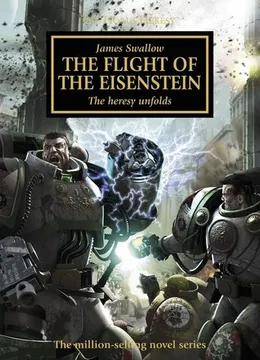


Plot Summary
Mortarion Joins the Spear
As the Death Guard fleet gathers to attack a vast alien cylinder, Battle-Captain Nathaniel Garro receives his repaired sword, Libertas, from Kaleb Arin, his devoted human housecarl. Garro is an old Terran-born warrior who values the Legion's customs, even as those customs begin to fade. Captain Ullis Temeter brings startling news: their primarch, Mortarion, has arrived and taken command from Calas Typhon.
At the briefing, Mortarion assigns Temeter to break the alien picket, Ignatius Grulgor to seize the engines, and Garro to destroy the hatcheries. He also brings Amendera Kendel and the silent Sisters of Silence, whose presence signals that the mission has a purpose beyond exterminating an alien threat.
The opening makes authority feel both intimate and immense. Kaleb's care for a sword and Garro's attachment to old Legion customs give the military machinery a human scale, while Mortarion's sudden arrival rearranges that world with a single act of command. Garro's assignment to the hatcheries also places him at the intersection of two kinds of duty: the obvious work of war and the unexplained purpose of the Sisters. His respect for tradition is not nostalgia alone. It is an attempt to preserve a shared identity as the Legion changes around him.
The Hatchery's Hidden Child
The assault boats punch through the cylinder and land in a chemical lake, where Death Guard forces overwhelm the startled jorgall defenders. As the aliens launch winged attackers, the Sisters of Silence fight beside Garro's company, and he saves one from a diving strike. At the hatchery, the squad finds a slain Sister and follows the trail to a giant cyborg guarding a bundled creature.
Garro kills the guardian, exposing a malformed jorgall child whose psychic force freezes his sword arm and invades his thoughts. Kendel shoots the child before it can control him. The remaining eggs begin to hatch in a frenzy, so Garro and the Sisters burn the nursery, destroying the jorgall's young and the threat they might pose.
The child makes the battle more than an encounter with unfamiliar biology. Its intrusion exposes a crack in Garro's confidence: his discipline can resist the psychic assault, but not prevent him from hearing a prediction that troubles his certainty about the future. The Sisters' intervention saves him, yet their silence leaves him without an explanation. Meanwhile, burning the hatchery turns victory into an act with moral weight. Garro treats the destruction as necessary military work, but the scene quietly establishes how easily the Imperium's language of protection can encompass the killing of the helpless.
The Lodge Behind the Armour
After the battle, Kaleb witnesses Grulgor privately distributing a brass token and is later mocked for having failed the Death Guard's trials as an aspirant. Apothecary Meric Voyen defends his value as Garro's housecarl, then confirms that the tokens belong to warrior lodges where Astartes meet beyond the chain of command.
Garro refuses membership because secrecy conflicts with the Legion's public ideals, though he lets Voyen remain in his company after demanding a pledge of loyalty.
Mortarion honors Garro with a poisonous ceremonial drink and privately probes his refusal to join the lodges. He then orders Garro to accompany him as equerry to a meeting with Warmaster Horus, placing the principled captain inside the political crisis gathering around the Legions.
The lodge is compelling because it offers something the formal military hierarchy cannot: the experience of brotherhood without rank. Garro's refusal protects his ideal of transparency, but it also risks leaving him outside the conversations shaping his own Legion. Voyen's choice makes that tension personal rather than abstract. Mortarion, meanwhile, treats praise and private access as tools for binding his warriors together. Garro accepts the honor but remains wary of the conditions around it. His loyalty is not yet in doubt, but the structures that once made loyalty simple are already shifting.
Isstvan's Deadly Message
Before the fleet leaves the jorgall system, the alien world-ship is driven into the local sun, erasing nearly all evidence of its existence. Mortarion then gives Garro a recorded distress signal from Isstvan III, discovered by chance after a transport ship's damaged warp journey.
A terrified Imperial officer reports rebellion on the planet, but the transmission ends in a scream and no further messages arrive. Garro carries the recording to Horus's war council aboard the Vengeful Spirit.
There he sees Mortarion, Angron, and representatives of the Emperor's Children and Sons of Horus assemble around a plan to retake Isstvan. The report turns a routine campaign briefing into the first warning that Imperial forces may be fighting their own people.
The recording changes the scale of the story without yet revealing its full cause. A delayed message makes time itself part of the danger: the officer's plea is already years old, and the silence since it arrived leaves room for dread rather than certainty. Garro's role as courier also matters. He is trusted with evidence before he understands what it proves. At the war council, the gathering of celebrated leaders gives the crisis an appearance of order, but Garro notices strain among Horus's captains and unease in the room. The coming betrayal is first registered as a pattern of small irregularities.
The Song Above the Ziggurat
On Isstvan Extremis, Garro reunites with Saul Tarvitz, an Emperor's Children captain he trusts from an earlier campaign. Their companies attack a rebel sensor station, where they discover a strange stone ziggurat and a levitating Warsinger whose voice distorts air and matter.
Her sound crushes Pyr Rahl and tears away Garro's leg. Tarvitz and Lord Commander Eidolon continue the climb while Solun Decius helps Garro survive on the battlefield below. Eidolon kills the Warsinger, ending the defenders' unnatural song.
Garro wakes later with an augmetic limb and is barred from the coming ground assault. Instead, Typhon assigns him and Grulgor to supervise the frigate Eisenstein, keeping Garro alive but removing him from the troops about to face Horus's next move.
The Warsinger's attack breaks the assumption that Astartes resilience makes them invulnerable. Garro's injury is not merely a physical cost; it removes him from the expected chain of events and places him where he can witness what the fleet is hiding. Decius's efforts to protect him also deepen their bond, giving the later conflict between them a foundation beyond rank. Tarvitz's presence offers Garro a rare connection across Legion boundaries, one based on earned trust rather than shared allegiance. The battlefield's strange music foreshadows a universe in which supposedly impossible forces will become impossible to ignore.
A Frigate Full of Secrets
Back from the war council, Garro finds his authority reduced by his injury and his company divided by the lodge question. Typhon places him aboard the Eisenstein with Grulgor, whose Second Company is carrying unexplained crates. Following Garro's order to inspect the cargo, Kaleb watches Grulgor's men unload glass spheres filled with a lethal viral agent.
Voyen recognizes the markings as Life-Eater, a weapon capable of destroying a city. He rescues Kaleb from Grulgor's men and sends him to warn Garro. Before the captain can act, an Emperor's Children Thunderhawk appears on the frigate's scopes, pursued by fighters. Its pilot is Tarvitz, who has broken ranks and risked his life to reach them.
The frigate gathers the novel's private conflicts into one cramped space. Garro's injury has made him dependent on a command arrangement with Grulgor, while Kaleb's ability to move unnoticed lets him find evidence that rank and official channels conceal. Voyen's decision to help him shows that his lodge affiliation does not erase his moral judgment. The Life-Eater spheres give physical form to a danger that had previously appeared only as a disturbing recording. Tarvitz's arrival then turns suspicion into an urgent choice: Garro must decide whether the word of a trusted friend outweighs an order from the fleet.
The Oath Beneath the Guns
Tarvitz tells Garro that Horus intends to virus-bomb Isstvan III and kill the loyal Astartes below. Garro refuses Eidolon's order to destroy the Thunderhawk. He fires at the pursuing fighters instead, using their explosion to mask Tarvitz's escape. Grulgor then openly rejects the Emperor's authority and confirms the virus attack is deliberate.
Garro and his small party fight Grulgor's men among the gun decks, where a stray bolt damages a Life-Eater sphere. Kaleb shoots to divert Grulgor's aim, takes the commander's knife, and uses his last strength to close the blast doors, sealing the virus inside. Garro swears his surviving crew to carry the warning to Terra and prepares to flee.
Garro's defining choice is not simply disobedience. He accepts that loyalty to a person or institution cannot excuse the planned murder of comrades. Kaleb makes that principle costly: the housecarl acts with the agency of a soldier even though the Legion has never treated him as one. His death also forces Garro to confront the faith Kaleb kept private, a belief that gives his sacrifice meaning without making it less terrible. The oath transforms scattered survivors into a community bound by a specific task. They have lost the protection of the fleet, but gained a responsibility they chose together.
Isstvan Becomes a Pyre
The Eisenstein's survivors watch the fleet release virus bombs over Isstvan III. On the surface, Temeter tries to get his Death Guard into shelter while the dreadnought Huron-Fal stays with him; both die in the advancing Life-Eater, choosing their final stand rather than leave one another. A second bombardment ignites the planet's spreading cloud of decay, and Horus's flagship adds a firestorm that consumes the dead world.
Before the frigate escapes, Iacton Qruze arrives in a stolen Thunderhawk with Kyril Sindermann, Mersadie Oliton, and Euphrati Keeler, refugees from Horus's ship. Garro welcomes them and learns that the warning has reached the planet, even if he cannot know how many of the betrayed warriors survived.
The planetary attack destroys any remaining possibility that the crisis is a misunderstanding. The Life-Eater makes allegiance meaningless at the level of flesh: loyal and rebellious, human and Astartes, all are reduced to the same vulnerability. Temeter and Huron-Fal's final act offers a counterimage to Horus's command. Where Horus spends lives as material, the two companions choose to remain together. The refugees aboard the Eisenstein also broaden the mission beyond a military dispatch. Garro now carries witnesses, memory, and a new form of conviction alongside the warning.
The Moonshot Escape
As the fleet watches Isstvan burn, Garro orders the Eisenstein toward a jump point. Vox officer Tirin Maas secretly alerts Typhon, who pursues in the battleship Terminus Est and opens fire.
Shipmaster Baryk Carya and executive officer Racel Vought use the gravity of Isstvan's White Moon to slingshot the damaged frigate away from Typhon's firing line. The maneuver leaves the ship battered, but it reaches the warp. With its Navigator struggling against violent turbulence and the Geller field failing, warp-born creatures break aboard.
Garro's crew fights them through the ship while Decius is wounded by Grulgor's corrupted blade. The threat forces Garro to order an emergency return to real space, though the journey costs them their Navigator and leaves the frigate lost.
The escape is won through cooperation between people whose skills and loyalties differ. Vought's orbital calculations, Carya's command, and Garro's willingness to act under uncertainty matter more than the frigate's limited weapons. Maas's betrayal shows how an oath can be understood as obedience to authority rather than service to its purpose. The emergency reversion saves the ship from the warp, but it exacts a terrible price and strands the survivors. Garro has escaped Horus's immediate reach, yet the attempt to preserve the warning has brought the danger inside the hull.
The Dead Return Aboard
The Eisenstein's dead, including men killed by the Life-Eater, rise as diseased creatures in the warp's influence. Grulgor returns among them in a corrupted form and attacks Garro's crew. Decius is infected during the fighting and collapses as the plague spreads through him.
When the Geller field begins to fail, Garro orders Iacton Qruze to force the ship out of the warp, despite the risk of an uncontrolled reversion. The creatures vanish as the frigate returns to real space, but Navigator Severnaya and his attendants are dead, and no one can plot a safe course.
Adrift in unknown space, Garro refuses to release Decius. The survivors eventually use the frigate's remaining warp engines as a beacon, hoping another vessel will detect the flare.
The return of the dead makes the horror of Isstvan impossible to contain within military language. Garro's opponents are no longer merely men who chose another allegiance; their bodies have been remade into evidence that the universe contains forces his worldview cannot explain. He responds by focusing on practical choices, even when those choices kill the Navigator. His refusal to give up on Decius contrasts with Voyen's clinical assessment and anticipates the emotional conflict that follows. The beacon is both a technical gamble and a confession of dependence: the survivors can no longer save themselves by discipline alone.
A Flare Finds Dorn
The warp flare reaches a fleet trapped inside a storm, and Rogal Dorn's fortress-ship, the Phalanx, finds the drifting Eisenstein. Dorn takes Garro and the survivors aboard, then demands an account of the rebellion.
At first he refuses to believe that Horus could betray the Emperor. Garro's testimony alone cannot persuade him, and anger nearly turns the meeting violent. Mersadie Oliton connects her memory implants to a hololith and shows Dorn the events she witnessed aboard Horus's flagship, including the bombing of Isstvan.
The images confirm Garro's account. Dorn sends Sigismund and most of his fleet back toward Isstvan while he carries the warning to Terra, and orders the damaged Eisenstein destroyed after its survivors are transferred.
Dorn's disbelief is not simple stubbornness. Horus's reputation has become part of the evidence Dorn uses to judge reality, so the accusation threatens both his political understanding and his attachment to a brother. Oliton's record supplies what Garro cannot: an independent witness whose stored impressions make the horror visible. The scene gives testimony a material form, but it does not make truth emotionally easy. Dorn's decision to divide his force shows him moving from denial to action while preserving caution. The Eisenstein's destruction closes the survivors' first refuge and marks the end of their life as a ship's crew.
Luna Holds the Survivors
On the journey to Luna, Garro reads Kaleb's religious tracts and begins to question the Imperial Truth he once treated as complete. At the Somnus Citadel, the Silent Sisters take Keeler, Sindermann, and Oliton for examination, while Garro and his Astartes are kept under guard as the Council decides whether they can be trusted.
Decius remains in an isolation chamber, still ravaged by Grulgor's infection. The waiting makes the survivors feel less like rescued warriors than suspects held outside the decisions that will shape the war. Garro tries to understand whether his survival carries a purpose, while Keeler's absence leaves him without the person whose conviction has begun to steady him.
Rescue does not restore belonging. The survivors reach humanity's center only to meet suspicion from its defenders, and the citadel's hospitality has the structure of confinement. Garro's reading of Kaleb's papers marks a change in how he interprets his own experience: the facts have not altered, but the framework that organized them has weakened. Keeler's separation sharpens that uncertainty. Her faith can guide others, but it cannot spare them from political institutions that fear what they cannot classify. Decius's continued illness keeps the costs of Garro's earlier choices physically present.
Decius Becomes the Swarm
Decius's infection transforms him into a plague creature, and he breaks from the isolation ward, killing Sendek and other guards. Garro hears Keeler's warning through a sudden psychic bond and rushes to the infirmary. The creature that calls itself the Lord of the Flies has rejected his former identity and blames Garro for allowing him to suffer.
It attacks the Silent Sisters, then turns on its old captain. Garro fights it through the citadel and out into the lunar open, where he uses the low gravity and his sword to gain the advantage. With Kaleb's icon in hand, he kills the corrupted Decius. The battle ends one immediate threat, but leaves Garro grieving the young warrior he had hoped to shape into a brother and leader.
Decius's transformation is tragic because it grows from recognizable needs: pain, resentment, fear of weakness, and the desire to belong to a powerful cause. The corruption exploits those needs rather than replacing them with wholly alien motives. Garro's choice not to grant Decius release was intended as an act of hope, but the creature turns that choice into an accusation he cannot dismiss. Their final fight makes command feel ethically burdened, not merely tactical. Garro can stop the danger, but he cannot preserve the person he once saw as promising.
A Purpose Beyond Survival
After Decius's death, Malcador the Sigillite summons Garro and Qruze. He confirms that the warning has reached him, though the Emperor cannot meet Garro, and proposes a future duty: hunting threats such as witches, traitors, mutants, and xenos. Garro accepts the prospect of serving without a Legion, finally able to see his mission as more than carrying a message.
Voyen, shaken by the events and his own lodge affiliation, gives up his status as a Death Guard to pursue a cure for the plague. Keeler returns after questioning by the Sisters. Garro tells her that he now believes his survival and duty are bound to the Emperor's purpose, and they face the coming war together in prayer.
The ending resolves the opening's central question of where Garro belongs. He began as a captain whose identity rested on his Legion, its traditions, and its chain of command. Those structures have failed him, but Malcador offers a new form of service defined by vigilance rather than membership. Voyen's departure similarly reframes loyalty: he remains committed to his brothers by choosing a healer's work outside the Legion. Garro's emerging faith does not undo the losses or explain every horror. It gives him a way to continue acting when certainty, comradeship, and institutional trust have all been damaged.
Analysis
The novel turns a military escape story into a crisis of interpretation. Garro is not only trying to get a warning to Terra; he is trying to decide which forms of authority deserve belief after the Warmaster, his primarch, and members of his Legion become implicated in violence against their own people. The plot repeatedly makes evidence physical: a recorded distress call, the Life-Eater spheres, Oliton's stored memories, and the bodies reshaped by the warp. Each object challenges a different defense against knowledge. The signal can be dismissed as incomplete, the virus as an unexplained weapon, the witness as biased, and the warp's creatures as impossible. Garro's task is to act before certainty becomes available.
The contrast between Garro and Horus is therefore more than one of loyalty. Horus uses institutions and military discipline to make mass killing appear orderly. Garro's resistance begins when he refuses to let procedure override the lives it is meant to protect. His choices are never clean: he kills former brothers, abandons warriors on Isstvan, and orders a desperate warp reversion that costs the Navigator's life. The book presents moral agency as responsibility for consequences, not as freedom from them.
Faith develops alongside this conflict, but not as a simple replacement for reason. Garro does not receive a complete explanation of the warp or the future. Keeler and Kaleb instead help him continue acting when the available facts cannot settle every question. Their conviction also creates community among people divided by Legion, rank, and occupation. Voyen's final choice extends that idea: service can survive even when a person leaves the institution that first gave it meaning.
The title's flight is both literal and ethical. The Eisenstein escapes the fleet, but Garro also leaves behind the assumption that brotherhood and command are inherently trustworthy. He reaches Terra's orbit with a warning, a small company of survivors, and a new conception of purpose. The ending offers no restoration of the old Imperium. It offers the harder beginning of vigilance.
Review Summary
The Flight of the Eisenstein is the fourth entry in the Horus Heresy series, following Death Guard Captain Nathaniel Garro as he flees the Isstvan III massacre to warn the Emperor of Horus's betrayal. Most reviewers praise Swallow's gripping ship combat, atmospheric warp sequences, and Garro's compelling character arc. Common criticisms include the first half retreading events from the previous book and Garro feeling similar to Loken. Overall, readers consider it a strong, action-packed installment with genuine emotional weight, averaging 4.13 out of 5.
Characters
Nathaniel Garro
Duty-bound battle captainGarro commands the Death Guard's Seventh Company and is an experienced warrior born on Terra before the Legion settled on Barbarus. He values discipline, candor, and the old customs that connect the Legion to its past. His loyalty is not merely obedience: he measures authority against the Emperor's stated ideals and takes responsibility for the people placed under his command. Garro is reserved, often more comfortable with a clear battlefield than with politics or private uncertainty. His relationships with Kaleb, Voyen, Decius, and Qruze reveal different forms of trust, mentorship, and disagreement, while his encounters with Keeler challenge the rational framework he has relied upon.
Euphrati Keeler
The unshaken witnessKeeler is a remembrancer and imagist whose experiences have given her an intense, growing religious conviction. She does not rely on rank or force to influence others; instead, she offers certainty and compassion when fear has left people unable to act. Her relationship with Garro is built on a recognition that both are being pushed toward purposes they did not choose. Keeler's calm is not passivity. She can challenge powerful figures directly, and her faith gives frightened civilians and warriors a language for endurance. She remains an individual with doubts and a developing understanding of what her unusual experiences mean.
Kaleb Arin
The loyal housecarlKaleb is Garro's human housecarl, responsible for caring for the captain's weapons and equipment aboard the Death Guard ships. He has lived for years among Astartes while remaining physically and socially apart from them, and he understands how to move through their spaces without attracting notice. His devotion to Garro is practical as well as emotional: he observes the Legion's mood, performs his duties carefully, and acts when he believes his master is in danger. Beneath his reserved manner, Kaleb keeps private convictions that shape how he interprets service, courage, and the Emperor's protection.
Mortarion
The Death Guard primarchMortarion leads the Death Guard with a harsh pragmatism shaped by Barbarus, the poisonous world where he was raised. He values endurance and direct action, yet understands that warriors also need recognition and a sense of belonging. His authority is quiet but absolute, and his presence can make even seasoned captains feel newly uncertain. Mortarion treats Garro as a capable officer whose judgment deserves attention, while also seeking unity across the Legion and its allies. His guarded manner leaves those around him to interpret the distance between personal respect and political intention.
Ignatius Grulgor
The bitter company commanderGrulgor commands the Death Guard's Second Company and resents Garro's influence, Terran heritage, and attachment to older Legion traditions. He is forceful, proud, and eager to be recognized by those above him. His blunt style can look like straightforward military confidence, but his contempt for weakness often becomes contempt for anyone who does not share his values. Grulgor is drawn to tight bonds among warriors and to the authority of the primarch and Warmaster. His rivalry with Garro turns personal differences into a persistent test of how much loyalty should demand.
Solun Decius
The ambitious young warriorDecius is a young member of Garro's command squad, talented in close combat and impatient to prove himself. His energy and appetite for glory sometimes outrun his judgment, which makes him a source of friction with the older veterans. Garro sees potential in him and tries to guide him toward the discipline required of a leader. Decius wants recognition, but also wants to believe that strength and victory can settle difficult questions. His relationship with Garro is therefore both mentorship and rivalry, with the younger warrior seeking independence before he has fully learned what it costs.
Meric Voyen
The healer divided by loyaltyVoyen is the Seventh Company's Apothecary, a skilled healer responsible for preserving the lives and biological inheritance of his battle-brothers. He is thoughtful and capable of deep loyalty, but he also believes that private fellowship can reveal truths formal command suppresses. This makes him an important counterpoint to Garro's suspicion of secrecy. Voyen's judgments are shaped by both his medical training and his emotional bonds with the men he treats. He can disagree sharply with Garro without ceasing to regard him as a brother, and his choices reveal the strain between military identity and the obligations of healing.
Iacton Qruze
The veteran dissenterQruze is an aging captain of the Sons of Horus, often dismissed by younger warriors as an outdated voice. Experience has made him attentive to small changes in behavior and language that others overlook. He is candid, dryly humorous, and burdened by the knowledge that he did not always act on his suspicions soon enough. Qruze becomes a trusted ally to Garro because both men recognize that obedience can become complicity when leaders misuse it. His long perspective helps Garro distinguish an isolated crisis from a deeper change spreading through the Legions.
Amendera Kendel
The silent witchseekerKendel is an Oblivion Knight of the Silent Sisterhood, trained to hunt psychic threats and communicate through signs rather than speech. Her quiet presence unsettles those around her, but her movements in battle are disciplined and purposeful. She treats Garro as a potential ally when their duties overlap, though her allegiance remains to the Sisterhood and its orders. Kendel represents an institution that investigates dangers the Imperial military prefers not to discuss, and her measured judgment often matters more than her silence suggests.
Saul Tarvitz
The honorable Emperor's ChildTarvitz is an officer of the Emperor's Children and an old friend of Garro, bound to him by shared combat and mutual respect. He is a capable commander who does not depend on the polished status of his Legion to establish his worth. Tarvitz is direct, brave, and willing to act on his judgment even when doing so isolates him from powerful superiors. His friendship gives Garro a rare point of trust outside the Death Guard and makes their shared understanding of honor consequential.
Ullis Temeter
The steadfast company captainTemeter commands the Death Guard's Fourth Company and is an old friend of Garro. He combines dry humor with practical courage and is comfortable sharing the burdens of command. Temeter understands the Legion's direct approach to warfare but is less interested in status than in the welfare of his men. His easy relationship with Garro offers a glimpse of the comradeship the Legion once made possible across differences of origin and rank.
Andus Hakur
The veteran's steady handHakur is Garro's veteran sergeant, an old warrior with a dry tongue and a keen sense of how fear and grief affect a squad. He uses teasing to manage tension but is attentive to the losses his men carry. Hakur respects Garro's command while offering candid advice, and he often protects younger warriors from their own impatience. His practical loyalty is expressed through discipline, readiness, and a refusal to abandon those under his care.
Tollen Sendek
The squad's careful scholarSendek is a methodical Death Guard warrior who studies enemy biology and tactical information rather than relying on instinct alone. His reserved manner can seem pessimistic, but it comes from a desire to understand risks precisely. He often corrects the more impulsive members of Garro's squad, especially when their confidence outruns their knowledge. Sendek's commitment to evidence makes him a useful foil to characters whose decisions depend on loyalty or faith.
Rogal Dorn
The Imperial Fists primarchDorn is the primarch of the Imperial Fists, a formidable commander whose identity is bound to fortification, order, and service to the Emperor. He approaches claims of betrayal with disciplined skepticism because the accusation threatens the foundations on which he has organized his understanding of the Imperium. Dorn expects evidence and obedience from those around him, yet his severity does not make him incapable of changing course when proof becomes undeniable. His relationship with Garro tests the limits of judgment when loyalty to a brother conflicts with loyalty to the Emperor.
Kyril Sindermann
The questioning iteratorSindermann is a senior iterator, trained to explain and uphold the Imperial Truth among the Imperium's people. Thoughtful and intellectually disciplined, he is accustomed to treating religious belief as a problem to be answered with reason. His experience among the refugees forces him to examine the limits of that certainty. He becomes a careful listener and a guide for civilians seeking meaning in events that official explanations cannot contain.
Mersadie Oliton
The memory keeperOliton is a remembrancer and documentarist whose implanted memory systems preserve what she witnesses. She is observant and composed, though the violence around her leaves her frightened and vulnerable. Her work gives her a role beyond recording history: she can provide direct evidence when powerful people dispute what happened. Oliton's relationship with Keeler grows from professional observation into a shared effort to preserve testimony and meaning.
Baryk Carya
The frigate's shipmasterCarya commands the frigate Eisenstein and knows its systems, crew, and limitations intimately. He is brisk and proud of his vessel, but his authority is rooted in experience rather than ceremony. When Garro's orders challenge the ship's chain of command, Carya must decide whether loyalty means following the Warmaster or protecting his crew and the truth. His practical perspective gives the Astartes a necessary grounding in the realities of shipboard survival.
Racel Vought
The daring deck officerVought is the Eisenstein's executive officer, skilled in navigation and willing to trust difficult calculations when conventional tactics fail. She is confident in her technical judgment but has little patience for authority that discourages independent thought. Her expertise helps the frigate exploit the White Moon's gravity, and her courage under pressure earns Garro's respect.
Calas Typhon
The primarch's first captainTyphon is Mortarion's First Captain and a powerful figure within the Death Guard. He is guarded, ambitious, and attentive to the rivalries and loyalties that shape the Legion. Typhon understands how to use another warrior's resentment for strategic ends, and his confidence makes him difficult to challenge. His relationship with Mortarion is shaped by service, proximity, and the desire to exercise influence in his own right.
Horus
The celebrated WarmasterHorus is the Emperor's favored son and Warmaster, entrusted with command of the Great Crusade. His reputation rests on military brilliance, charisma, and an ability to unite competing Legions under his leadership. To warriors such as Garro, Horus represents the height of Imperial achievement, which makes any sign of division around him difficult to interpret. His authority reaches across the fleet, shaping assignments, alliances, and the expectations other commanders bring into every meeting.
Sigismund
Dorn's formidable first captainSigismund is the First Captain of the Imperial Fists and Dorn's trusted military deputy. He is direct, disciplined, and accustomed to translating his primarch's intentions into action. His concern for the security of the Imperium can place him at odds with visitors whose claims remain unverified. Sigismund's professional reserve conceals the strain of confronting evidence that threatens the loyalties on which his Legion depends.
Malcador
The Sigillite of TerraMalcador is the Regent of Terra and a powerful adviser to the Emperor. He works through guarded instructions and long-term plans, often seeing dangers before military commanders can name them. His manner is quiet rather than martial, but his authority reaches into the most consequential affairs of the Imperium. He values people who can investigate threats as well as fight them.
Eidolon
The Emperor's Children commanderEidolon is a senior officer of the Emperor's Children, known for pride, polish, and a hunger for distinction. He is a capable fighter who expects recognition and uses his rank assertively. His presence offers a sharp contrast to Tarvitz's quieter, more personal sense of honor.
Huron-Fal
The veteran dreadnoughtHuron-Fal is an ancient Death Guard warrior whose body has been enclosed in a dreadnought's armored frame. His battlefield experience and enduring friendship with Temeter give him the bearing of a veteran who has outlasted generations of war. He speaks with blunt familiarity to those he trusts.
Plot Devices
The Isstvan distress recording
A warning hidden in staticA recording from an Imperial officer on Isstvan III reaches the Death Guard after a damaged transport picks it up in space. The message is incomplete, years old, and ends in a scream, so it gives Garro evidence of rebellion without an explanation. Mortarion sends Garro to carry it to Horus's war council. Later, Tarvitz's account of the planned bombardment turns the recording from an isolated warning into proof that the fleet's attack is part of a wider betrayal.
Life-Eater virus bombs
The weapon aimed at IsstvanThe glass spheres contain an engineered virus capable of rapidly consuming organic life. Grulgor's men load them into the Eisenstein's guns, exposing the plan to destroy the loyal forces and population of Isstvan III. One sphere cracks during the fight aboard the frigate, and Kaleb triggers a blast door that contains the release. The fleet later uses the same weapon on the planet, establishing the scale of Horus's betrayal in a form no report can soften.
The Lectitio Divinitatus
A faith carried in secretKaleb keeps religious writings and a small handmade icon in private, despite the Imperium's rejection of gods. The texts help Garro interpret experiences that his old secular framework cannot explain, including Keeler's visions and the horrors in the warp. The writings do not provide a tactical solution or resolve every uncertainty. Instead, they give the survivors a language for endurance and help Garro understand his duty as something that may persist beyond his Legion.
The Geller field and warp flare
A shield, then a beaconThe Eisenstein's Geller field protects the ship from the dangerous warp, but it weakens as the frigate's engines and hull suffer damage. When warp creatures threaten to overwhelm the ship, Garro orders an emergency return to real space, sacrificing the Navigator's life and leaving the crew stranded. Later, the survivors overload and eject the warp engines to create a flare detectable across the immaterium. That signal reaches the trapped Imperial Fists fleet and leads the Phalanx to them.
Oliton's memory implants
Witness made visibleMersadie Oliton's implants preserve her visual memories and allow her to project them through a hololith. When Dorn doubts Garro's account, Oliton's recorded experience aboard the Vengeful Spirit shows Horus's conduct and the bombardment of Isstvan III. Her evidence changes Dorn's response from disbelief to action. The device emphasizes that testimony can carry authority when a witness's words alone are dismissed, while the emotional cost of replaying trauma remains with the person whose memory is displayed.
The Horus Heresy Series Series

Download PDF
Download EPUB
.epub digital book format is ideal for reading ebooks on phones, tablets, and e-readers.








