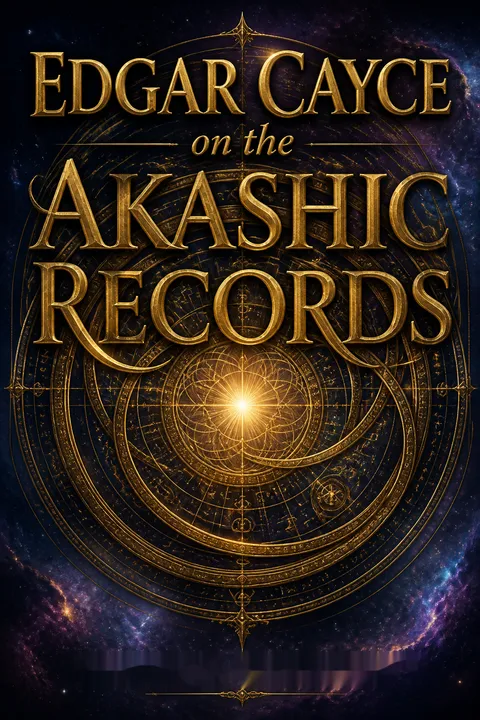


Key Takeaways
Treat the Akashic Records as a living map, not a fixed ledger
A cosmic memory system. In Edgar Cayce’s account, the Akashic Records are a nonphysical archive of every soul’s thoughts, intentions, actions, and experiences. The term comes from a Sanskrit word associated with boundless space. The records are not merely a replay of the past: they also shape present inclinations and contain possible futures. Cayce described them as a source anyone might access, though his readings were said to select only the information most useful to a person’s current situation.
A guide, not a verdict. The records’ proposed purpose is to help souls learn through experience and move toward compassion and connection with the Creator. The book compares them to a universal database, but its central claim is that they are active influences, not inert storage. This is a metaphysical account, not an independently demonstrated mechanism.
The archive metaphor makes a difficult spiritual idea accessible: personal history can be understood as a store of patterns that influence what feels familiar, attractive, or threatening. That has a secular parallel in psychology, where prior learning shapes perception without dictating behavior. The important distinction is that Cayce’s account goes further, proposing a cosmic record that includes lives beyond ordinary memory. The metaphor can still be useful without treating that claim as established fact. It invites reflection on how experience leaves traces, while leaving open whether those traces are spiritual, psychological, or both.
Read the moral weight of an act through its purpose
Purpose shapes the pattern. Cayce’s readings place unusual emphasis on intention. In one case, a woman’s earlier life as an entertainer in a frontier tavern was interpreted differently from her mother’s work there. The daughter was said to have pursued personal gain, while the mother was described as trying to support and guide women in difficulty. In their later lives, the mother retained a reputation for helping others, while the daughter struggled with the consequences of self-focused choices.
Intention guides application. In this framework, the deed matters, but its purpose helps explain what the experience reinforces in a person. That emphasis is meant to move moral judgment beyond appearances and toward the motives behind behavior. It does not mean that good intentions automatically make an action harmless.
Looking at motive can deepen ethical judgment. The same outward behavior may express care, fear, ambition, or coercion, and those differences matter when deciding what a person is learning or reinforcing. But intention should not become an escape hatch from accountability. A person can mean well and still cause serious harm; consequences and the perspectives of those affected must remain part of the assessment. The book’s strongest version of this idea is therefore not that motive replaces conduct, but that motive helps explain conduct and points toward what needs to change.
Treat recurring relationship pain as a prompt for self-examination
Patterns surface between people. The book presents relationships as places where people encounter their own habits and unresolved feelings. Anna Campbell and her sister Vera fought from childhood, with jealousy and distrust marking the relationship for decades. Cayce’s readings interpreted their conflict through a shared past-life story. Regardless of whether a reader accepts that explanation, Anna’s account shows how entrenched resentment can become part of everyday family life.
Repair takes sustained effort. Anna later cared for Vera when she was bedridden. After years of difficult interactions, the sisters reconciled near the end of Vera’s life. The book treats this as a chance to work through a recurring pattern rather than as proof that either sister was fated to suffer. Its practical emphasis is to notice one’s own contribution and choose a different response.
Repeated conflict can be revealing even without a past-life explanation. Familiar arguments often involve stable roles: one person pursues, another withdraws; one criticizes, another defends. Naming those roles can create room for a different interaction, much as family-systems approaches examine patterns rather than assigning one person all the blame. The spiritual framing may help someone approach a difficult relative with patience, but it can also romanticize harmful dynamics. Reconciliation is not always possible or safe. Self-examination should support clearer boundaries, not require tolerating mistreatment.
Choose a spiritual ideal, then measure today's choices against it
Give choices a standard. A spiritual ideal, in Cayce’s vocabulary, is a guiding purpose against which a person can test daily thoughts and actions. The readings recommend qualities such as compassion, service, and understanding, rather than treating achievement or status as the measure of a life. The key is application: a stated ideal matters only when it changes how someone behaves toward others.
Start with what is here. Cayce’s advice repeatedly turns attention from uncovering a grand destiny to acting constructively in the present. A person facing a difficult job, relationship, or disappointment can ask whether the next choice expresses the ideal they claim to hold. The book describes this as a way to direct the habits and inclinations drawn from the past, rather than letting them direct the person.
An ideal works like a decision rule: it can simplify choices when immediate desires pull in different directions. This resembles values-based approaches to behavior, which distinguish a chosen direction from a guaranteed outcome. The book’s emphasis on small, repeated applications is persuasive because character is expressed in ordinary conduct, not only in declarations. A useful safeguard is to make the ideal concrete. Compassion, for instance, might mean listening carefully, telling the truth, or setting a firm limit, depending on the situation. Without that specificity, spiritual language can remain inspiring but inert.
Use dreams to ask questions, not certify past-life memories
Inner imagery can prompt inquiry. Cayce believed dreams, spontaneous imagination, meditation, and guided reveries could reveal information from the records. The book describes his dream of an ancient Egyptian ceremony, which a later reading reportedly connected to a real event he had witnessed. It also offers guided exercises that invite people to imagine a historical setting, notice details, and compare apparent patterns with their present lives.
Interpretation needs restraint. The book cautions readers to compare psychic impressions with what they already know about themselves and to value insights that support constructive change. Vividness alone is not offered as a guarantee of accuracy. A dream or reverie can be treated as material for reflection without being taken as verified history.
Dreams are often useful because they condense emotion, memory, and concern into memorable scenes. Treating them as questions can make them a route into reflection: what feeling is this image carrying, or what current situation does it resemble? Treating them as documentary evidence is much riskier. Guided imagery can generate convincing detail, and confidence in a memory does not establish its historical accuracy. The book’s own advice to test interpretations against lived knowledge provides a valuable check. An exercise is most responsible when it encourages insight without pressuring participants to believe a literal past-life story.
Read predictions as conditional possibilities, not fixed destinations
A forecast depends on choices. Cayce’s readings describe the future as a set of potentials shaped by past tendencies and present decisions, rather than a settled script. Jimmy Hamilton’s infant reading predicted extraordinary political influence if he received appropriate guidance. His parents’ unstable relationship, repeated separations, and frequent changes in schooling formed a very different childhood, and he did not follow the predicted political path.
Possibility is not promise. The book presents Jimmy’s story as evidence that a forecast can describe one possible direction without guaranteeing it. It also stresses that decisions by parents and children affect the conditions in which potential talents develop. Read this way, a prediction should sharpen attention to choices and circumstances, not make someone believe that a future is inevitable.
Conditional forecasting can be motivating when it identifies capacities and the conditions that might help them grow. It becomes dangerous when adults treat a prediction as a child’s destiny, or interpret ordinary setbacks as proof of spiritual failure. Jimmy’s story exposes the ethical stakes: family choices matter, but no reading can establish what would have happened under a different upbringing. The account is more useful as a reminder that potential depends partly on support and opportunity than as evidence that a psychic forecast can reliably map a life.
Test a talent through service, even when its career path surprises you
A reading meets resistance. At fourteen, Patrick Thompson was told that his abilities suited work with clothing and people. He was supporting his mother and sister, but had no interest in entering the clothing business. For several years he remained at a newspaper job and tried unsuccessfully to find a different position. After a family connection introduced him to a uniform manufacturer, he was hired as a traveling salesman at twenty-four.
Skill grows through use. Patrick eventually spent more than thirty years in the clothing trade, became responsible for training salespeople, and reported that the work brought both satisfaction and a chance to help others. He also applied the reading’s ethical advice to deal fairly with customers and competitors. The story links vocation not just to a supposed innate talent, but to persistence, opportunity, and conduct.
Patrick’s story is strongest as a case for experimentation, not obedience to a prediction. He initially resisted the suggested occupation, and the opportunity appeared through an existing relationship after years of searching. That sequence resembles career development as a combination of interest, skill, access, and deliberate action. The spiritual frame gave him a way to understand his work as service, but the practical evidence was his own experience of success and satisfaction. A proposed calling deserves a trial, not unquestioning submission, especially when financial security or personal choice is at stake.
Do not mistake a famous past-life identity for present-day growth
Most histories were ordinary. The book notes that Cayce’s files included more than ten thousand names connected to past-life readings, but fewer than two hundred were identified as famous. Cayce sometimes told people who felt linked to a celebrated historical figure that they had known or worked with that person, rather than being that person. He also suggested that a famous figure may represent a pattern of behavior or experience that resonates with someone’s current life.
Present conduct matters more. The readings place little value on prestige in a former identity. Their priority is what someone does now with the traits, interests, and challenges they experience. Whether a person once held a celebrated role or lived an ordinary life, the practical question remains how they treat others and use their abilities.
The warning counters a familiar status bias: people are drawn to stories that make identity feel exceptional. A famous past-life claim can be emotionally meaningful, but it is difficult to verify and may encourage a person to build self-worth around an untestable status. The more durable question is what the story helps someone notice about present behavior. A historical figure can function as a symbol or mirror without being a literal former identity. That distinction preserves the reflective value while resisting the temptation to treat grand narrative as evidence.
Analysis
The book is a spiritual interpretation of Edgar Cayce’s readings, organized around past, present, and future. Its storytelling engine is the case history: people receive readings, reinterpret their problems through soul history, and then face choices about how to act. Anna Campbell’s family supplies the fullest narrative arc, while cases such as Patrick Thompson and Jimmy Hamilton show contrasting relationships between prediction, circumstance, and choice.
Its central idea has two layers. Metaphysically, the Akashic Records are a universal archive that stores experience and influences what people encounter. Ethically, the past is a pattern to work with, not an excuse to surrender agency. The second layer is more immediately useful even for readers who do not accept reincarnation. It encourages attention to repeated behavior, motive, present responsibility, and the difference between talent and its application.
The book’s evidence is primarily Cayce’s readings and retrospective reports from people connected to them. These accounts can illuminate how a spiritual framework gives meaning to a life, but they cannot independently establish the existence of a cosmic record or verify a past-life identity. Some reports are selected because they appear to fit a prediction, and the text does not systematically compare accurate-seeming cases with failures or alternative explanations. That limitation matters most when readings are treated as factual guidance for health, family, or a child’s future.
The most balanced use of the book is therefore neither credulity nor dismissal. Its metaphysical claims remain open to doubt, while its practical questions can still be tested: What pattern keeps recurring? What purpose is guiding this choice? What response would better express a chosen value? By shifting attention from who someone supposedly was to what they do now, the book makes its own strongest case for agency. The records may be beyond verification, but the responsibility to shape present conduct is concrete.
Review Summary
Edgar Cayce on the Akashic Records receives mostly positive reviews, with readers praising its insights into reincarnation, karma, and spiritual growth. Many find the concept of Akashic Records fascinating and appreciate the book's explanation of how past lives influence the present. Readers value the case studies and Cayce's unique perspective. Some note the formal language can be challenging, and a few are skeptical of the claims. Overall, reviewers find the book enlightening and recommend it for those interested in spirituality and self-discovery.
People Also Read




Glossary
Akashic Records
Universal soul-history archiveIn Cayce’s system, a nonphysical record of every soul’s thoughts, feelings, intentions, and actions. It contains past experience, influences the present, and holds possible futures. Cayce described it as accessible through altered states of consciousness. The book treats it as a spiritual reality, though the claims are presented through readings and case reports rather than independent verification.
Book of Life
Record of a soul’s choicesA name Cayce’s readings use for the record each soul creates through its thoughts, actions, and relationships. It is closely associated with the Akashic Records and is presented as both a history and an influence on current experience. In this account, the record reflects a person’s choices and can be interpreted in ways meant to support growth.
karma as memory
Past patterns shaping responseCayce’s reinterpretation of karma as accumulated memory and tendencies from a soul’s previous experience, rather than a fixed debt or punishment. These patterns may appear as talents, attractions, fears, or recurring difficulties. They influence a person, but do not determine the response: present choices remain central to how a pattern develops.
spiritual ideal
Guiding ethical purposeA chosen standard that gives direction to a person’s intentions and daily behavior. In the book, suitable ideals emphasize qualities such as compassion, service, patience, and understanding. Cayce’s readings recommend using an ideal to assess choices, rather than treating spiritual growth as a matter of status, profession, or knowledge alone.
reverie
Guided imaginative reflectionA relaxed, guided exercise in which a person uses imagination to explore a past, present, or possible future scene. The book’s reveries invite participants to notice images and feelings, then consider how they relate to current patterns. They are presented as a possible source of insight, not as independent proof that imagined events literally occurred.
FAQ
What's "Edgar Cayce on the Akashic Records" about?
- Overview: The book explores the concept of the Akashic Records, described as a universal database that records every thought, word, and deed of every individual throughout history.
- Edgar Cayce's Role: It delves into how Edgar Cayce, a renowned psychic, accessed these records to provide insights into people's past, present, and future.
- Purpose of the Records: The Akashic Records are portrayed as a tool for personal growth, helping individuals understand their life purpose and spiritual journey.
- Author's Approach: Kevin J. Todeschi uses Cayce's readings to explain how these records influence our lives and how we can access them for personal development.
Why should I read "Edgar Cayce on the Akashic Records"?
- Understanding the Akashic Records: The book provides a comprehensive understanding of what the Akashic Records are and their significance in spiritual and personal development.
- Insights from Edgar Cayce: It offers insights from one of the most documented psychics, Edgar Cayce, who used the records to help thousands of people.
- Practical Applications: Readers can learn how to access these records themselves to gain insights into their own lives and make informed decisions.
- Spiritual Growth: The book encourages readers to explore their spiritual journey and understand their connection to the universe.
What are the key takeaways of "Edgar Cayce on the Akashic Records"?
- Records as a Supercomputer: The Akashic Records are likened to a universal supercomputer that stores all information about every soul since creation.
- Influence on Daily Life: These records influence our everyday lives, relationships, and the potentials we draw toward us.
- Role of Free Will: While the records provide a framework of potentials, free will plays a crucial role in shaping our experiences and future.
- Path to Self-Discovery: Accessing the records can lead to self-discovery, helping individuals understand their past, present, and potential future.
How did Edgar Cayce access the Akashic Records?
- Trance State: Cayce would enter a self-induced trance state, allowing him to access the records and provide readings.
- Hall of Records: In his altered state, Cayce described visiting a "hall of records" where an old man would hand him a book containing the information he sought.
- Selective Information: Cayce would select information that was most helpful and hopeful for the individual at that time.
- Accuracy and Documentation: His readings were documented and are considered highly accurate, covering a wide range of topics.
What are the Akashic Records according to Kevin J. Todeschi?
- Definition: The Akashic Records are described as a central storehouse of all information for every individual who has ever lived.
- Interactive Nature: They are not just a static memory storehouse but are interactive, influencing our lives and relationships.
- Connection to Divine Mind: The records are a portion of the Divine Mind, guiding and transforming individuals to become their best selves.
- Historical References: The concept of the records is traceable in folklore, myth, and religious texts, including the Bible.
How can one access the Akashic Records?
- Dreams and Intuition: The subconscious mind can access the records through dreams and intuitive insights.
- Meditation and Reveries: Meditation and imaginative reveries are methods to tap into the records for personal insights.
- Psychic Readings: Consulting a reputable psychic can provide access to the records and offer guidance.
- Esoteric Sciences: Tools like astrology and numerology can also provide glimpses into the records.
What role does free will play in the Akashic Records?
- Choice and Consequence: Free will is the most significant factor in shaping one's life experiences and future.
- Not Predestined: The records provide a framework of potentials, but individuals are not bound by a predetermined fate.
- Cocreators of Destiny: Individuals are active cocreators of their destiny, with the power to change their life path through choices.
- Learning and Growth: The records present lessons that will be repeated until they are learned, emphasizing personal growth.
What are some best quotes from "Edgar Cayce on the Akashic Records" and what do they mean?
- "The records are everywhere": This quote emphasizes the omnipresence of the Akashic Records and their influence on every aspect of life.
- "Mind is the builder": It highlights the power of thoughts in shaping one's reality and future.
- "Line upon line, precept upon precept": This suggests that spiritual growth is a gradual process, built upon small, consistent efforts.
- "For each soul enters each experience for a development": It underscores the purpose of life experiences as opportunities for soul growth.
How do the Akashic Records influence the present?
- Daily Experiences: The records provide individuals with the experiences and relationships needed for personal growth at any given time.
- Framework of Potentials: They offer a framework of potentials and probabilities that individuals can draw upon.
- Role of Intent: The intent behind actions is crucial, as it determines the quality of experiences drawn from the records.
- Guidance and Transformation: The records guide individuals toward transformation and self-discovery.
What are some case histories mentioned in "Edgar Cayce on the Akashic Records"?
- Anna Campbell's Family: The book details how Anna's family relationships were influenced by past-life connections and unresolved issues.
- Jimmy Hamilton: A child with the potential to become a significant political figure, whose upbringing and choices shaped his future.
- Patrick Thompson: A young man whose career in clothing was predicted by Cayce, leading to a successful and fulfilling life.
- Lucille Williams: A socialite who discovered her passion for stained glass, fulfilling Cayce's prediction of her future in art.
What is the significance of the Akashic Records in spiritual growth?
- Path to Self-Discovery: The records help individuals understand their life purpose and spiritual journey.
- Connection to the Divine: They are a tool for connecting with the Divine Mind and understanding one's relationship with God.
- Lessons and Learning: The records present lessons that facilitate personal growth and transformation.
- Universal Connection: They emphasize the interconnectedness of all souls and the importance of compassion and service to others.
How does "Edgar Cayce on the Akashic Records" relate to the concept of reincarnation?
- Continuity of Life: The book suggests that life is a continuous experience, with the soul evolving through multiple incarnations.
- Past-Life Influences: Reincarnation explains the differences in individuals' talents, challenges, and relationships.
- Karma as Memory: Karma is described as memory, influencing present experiences based on past actions and choices.
- Purposeful Rebirth: Each incarnation is an opportunity for the soul to learn and grow, guided by the records.
About the Author
Other books by Kevin J. Todeschi
Download PDF
Download EPUB
.epub digital book format is ideal for reading ebooks on phones, tablets, and e-readers.








