

Key Takeaways
Train emotional intelligence: your first feeling is automatic, your response is learnable.
Feel first, choose next. Emotional intelligence, or EQ, is the ability to recognize emotions in yourself and others, then use that awareness to manage behavior and relationships. The book opens with Phineas Gage, a capable railroad foreman whose personality changed after an iron rod damaged much of his prefrontal cortex. He could still reason, but his judgment and emotional control deteriorated. The story illustrates how closely feeling and decision-making are linked, though it should not be read as a complete map of the brain.
Four connected skills. EQ combines self-awareness, recognizing your feelings and tendencies; self-management, choosing how to act; social awareness, reading other people; and relationship management, using both perspectives to communicate and handle conflict. The book argues that these abilities are flexible and can grow through repeated practice, unlike relatively stable IQ and personality.
The book’s strongest opening move is to make EQ practical rather than mystical: emotions are information, not commands. Gage’s case gives that claim memorable force, while the four skills turn it into a usable map. The distinction between feeling and acting also avoids the false choice between being rational and being emotional. One caution is that brain regions do not operate as isolated control panels. The neurological story is best treated as an illustration of interdependence, not a simple explanation of complex behavior.
Name the feeling beneath anger before it chooses your next move.
Catch the emotional handoff. A trigger event is an experience that produces an especially strong or lasting emotional reaction. The book’s anger funnel describes how people may convert less acceptable feelings, such as fear, shame, or grief, into anger because anger feels easier to express. Bradberry describes being cut off in traffic, then realizing his fury masked fear about getting home safely to his new child. Recognizing the underlying feeling weakened the anger and revealed what mattered.
Ask before reacting. When anger rises, ask what seems to have caused it, what feeling lies underneath, and why that feeling is so difficult to tolerate. Naming an emotion can create enough distance to examine it rather than obey it. The goal is not to suppress anger or perform constant cheerfulness. It is to identify what the emotion signals and decide on a response that fits the situation.
This approach is useful because it treats anger as a clue whose source may be hidden, rather than as proof that someone else deserves punishment. The questions also uncover needs, such as safety, fairness, or recognition, that can guide a more constructive response. Still, anger is not always a disguise. Sometimes it is an appropriate reaction to mistreatment or danger. Looking underneath it should deepen judgment, not invalidate the feeling or excuse the person who caused harm.
Treat stress and happiness as habits, not verdicts handed down by circumstance.
Interrupt the stress spiral. The book distinguishes brief stress, which can sharpen attention, from prolonged stress, which can impair thinking and self-control. Its practical aim is to keep stress from becoming continuous: pause to breathe, identify one positive fact, reframe sweeping thoughts, set limits on work messages, and protect sleep. It also recommends structuring time off with exercise, family, personal interests, and small planned outings rather than letting chores consume every break.
Build satisfaction deliberately. Research cited in the book estimates that genes account for about half of happiness, circumstances about 10%, and habits and outlook about 40%. Major wins may lift mood temporarily, but people tend to return toward a baseline. Gratitude, savoring ordinary pleasures, helping others, social connection, and spending on experiences rather than possessions are presented as practices that support more lasting satisfaction.
The valuable shift here is from waiting for life to improve to shaping the conditions of everyday experience. Recovery, gratitude, and connection are not decorative extras; they influence how much capacity a person brings to the next demand. The distinction between short-lived pleasure and durable satisfaction is especially helpful when status purchases or promotions become stand-ins for a good life. The percentages are estimates, not a personal formula, and structural hardship can sharply restrict someone’s choices. Habits matter without making every outcome an individual responsibility.
Make people feel understood before trying to make them agree with you.
Attention beats performance. The book argues that likeability is not reserved for the naturally charming. In a UCLA study it cites, sincerity, openness, and understanding ranked above traits such as attractiveness or intelligence. Practical habits include asking follow-up questions, putting away the phone, remembering names, and noticing how the other person prefers to be treated. The platinum rule, as the book calls it, means adapting to another person’s preferences rather than assuming everyone wants the same treatment.
Read signals cautiously. Tone, posture, facial expression, and gestures can add context to words. Open posture and genuine attention can help a conversation feel welcoming, while turning away or checking a screen can signal disengagement. But no single cue reliably reveals a person’s thoughts. Crossed arms might mean discomfort, cold, or simply habit. The most useful response to an ambiguous signal is curiosity, not a confident diagnosis.
The section’s deeper point is that social skill begins with shifting attention away from self-presentation. Questions and attentive listening make interaction more accurate, not merely more pleasant. This connects naturally to the difference between empathy and agreement: understanding another person’s perspective does not require adopting it. The caution around body language matters because popular advice often turns context-dependent gestures into supposed mind-reading codes. Good social awareness gathers clues, checks interpretations, and leaves room for the other person to explain.
Repair conflict by protecting respect, not by winning the argument.
Spot the four warning signs. The book adapts the Four Horsemen of the Apocalypse, a relationship framework from researchers at the University of Washington. The four patterns are criticism of someone’s character, contempt or disrespect, defensiveness that blocks responsibility, and stonewalling that shuts down discussion. Conflict itself is not the deciding factor; the way people handle it matters more. A repair is an attempt to restore respect and cooperation, such as acknowledging a valid concern, proposing a compromise, or taking responsibility for one’s part.
Make room for repair. The author recalls grandparents who stayed together for more than 70 years and treated disagreements as problems to work on together, not contests to win. A repair begins by calming down, trying to see the other person’s perspective, making a respectful attempt to reconnect, and discussing how to handle conflict better. A first attempt may miss. The aim is not perfect phrasing, but a clear signal that the relationship matters more than scoring a point.
This framework is memorable because it separates disagreement from disrespect. That distinction can help people stop treating every argument as evidence that a relationship is failing. Repair attempts also make cooperation visible, especially when the original disagreement cannot be resolved by proving one person right. The framework is most helpful when applied to recurring patterns, not used as a label to win a dispute. In relationships involving intimidation or abuse, preserving safety takes priority over mutual repair.
Replace one automatic habit at a time, then keep practicing through slips.
Map the habit loop. The book describes a habit loop as a trigger, a behavior, and a reward. Stress might prompt someone to browse social media, and temporary relief rewards the behavior, making it more likely to recur. Repetition can make the response automatic. To change it, first notice what tends to trigger the habit, then choose a different response that meets the need more effectively. The author presents a 66-day process: investigate triggers, recruit accountability, watch for relapse patterns, and mark progress with a reward that does not revive the old behavior.
Treat failure as information. A growth mindset is the belief that abilities can improve through effort and learning. It turns a mistake from a verdict on identity into evidence about what to adjust. The book uses Angela Duckworth’s research on grit, the persistence and sustained effort directed toward long-term goals, to argue that talent alone does not ensure follow-through. Choose a small number of behaviors, practice them, and return to the plan after setbacks.
Pairing a cue-and-reward model with a growth mindset makes change less dependent on heroic willpower. A lapse becomes an occasion to inspect the trigger or reward, instead of a reason to abandon the effort. Accountability can help, provided it feels supportive rather than shaming. The 66-day figure is a planning guide drawn from a particular study, not a universal biological deadline. Different behaviors and circumstances take different amounts of time, so persistence matters more than a calendar’s finish line.
Slow big decisions enough to separate evidence, emotion, and instinct.
Create room to think. The book cites a Columbia University estimate that people make roughly 70 decisions a day. Small choices can be routinized to preserve attention for consequential ones. For major decisions, notice the emotion involved, compare options against clear criteria, seek a perspective that might challenge your preferred answer, and set a deadline so reflection does not become paralysis. Sleeping on a decision can allow emotional intensity to ease, while reviewing past choices can reveal patterns worth correcting.
Question your first story. Confirmation bias is the tendency to favor information that supports an existing belief and discount information that challenges it. Other biases in the book include the planning fallacy, underestimating how long tasks will take, and the ostrich effect, avoiding threatening information. Intuition can also carry useful signals: in a card experiment described by the author, participants showed bodily responses to the losing deck before they could consciously explain the pattern. Treat a gut reaction as a clue to examine, not as a substitute for evidence.
The practical strength of this advice is its refusal to declare either analysis or intuition the winner. Deliberation can expose trade-offs, while fast impressions may register patterns that have not yet reached conscious explanation. Both can also mislead: careful analysis can be captured by a preferred conclusion, and intuition can reflect fear or bias. A sound decision process therefore asks what each source is telling the decision-maker, what it might be missing, and what evidence could change the answer.
Trade frantic multitasking for protected focus, sleep, and genuine breaks.
Busy is not the same as productive. Research cited in the book found that switching tasks can increase completion time, while interruptions may leave workers taking about 15 minutes to return to demanding work. The author recommends tackling the most dreaded task early, keeping one consolidated task list, reducing notifications, and acting on an item rather than repeatedly reopening it. One workplace tracking study found strong productivity among employees who alternated focused work with short, real breaks. The exact interval is less important than protecting attention and stepping away to recover.
Sleep is part of performance. The book says most adults need seven to nine hours and describes sleep as essential to attention, memory, emotional control, and stress management. It recommends a consistent wake time, less late-day caffeine, fewer evening screens, and an end to work messages before bed. When work repeatedly invades rest, productivity suffers along with health and relationships. Better systems should reduce avoidable interruptions, not simply demand more effort from an exhausted person.
The chapter challenges a workplace culture that treats visible activity as proof of value. Focused work and actual recovery are harder to display than a crowded calendar, yet they are more compatible with sustained performance. The recommended routines are tools, not laws: a person’s ideal work interval varies with the task, health, and setting. Likewise, sleep advice cannot solve every sleep problem. Persistent difficulties may require professional attention rather than another productivity rule.
Lead through trust and clarity, not the authority printed on your title.
Influence is the work. The book defines leadership as helping other people contribute at their best, whether or not the leader has a formal title. Its portrait of a strong leader combines conviction with humility: communicate clearly, admit mistakes, listen to dissent, share information, recognize contributions, and take responsibility for team outcomes. In research cited from a survey of more than 60,000 employees, leaders who balanced attention to people with attention to results were rated as great more often than leaders who emphasized only one side.
Make the workplace safer to contribute. The book links supportive management to engagement and retention, while describing how unnecessary rules, chronic overwork, ignored accomplishments, and poor performers left unaddressed can drain a team. A leader should set a direction without pretending uncertainty does not exist, and should create conditions in which people can raise problems early. The standard is not being endlessly pleasant. It is combining high expectations with respect, accountability, and useful support.
This is a notably relational view of leadership: authority becomes effective when people can trust how it is used. Balancing results and care avoids two familiar failures, humane intentions without execution and strong output purchased through fear. The emphasis on clarity and dissent is especially important because leaders often receive filtered information from people who depend on them. Still, an individual manager cannot repair every structural defect in an organization. Leadership habits matter, but institutions also need policies that make good practice possible.
Set work boundaries before your health and relationships set them for you.
Notice the cost of always-on work. The book uses the term telepressure for the stress created by feeling obliged to answer work messages outside working hours. It reports that many people check work email during evenings, weekends, and vacations, leaving little chance to disengage. Warning signs of burnout include fatigue, declining concentration, irritability, reduced motivation, strained relationships, and poorer self-care. The author recommends defining limits around availability, scheduling relaxation, taking real breaks, using support from friends and family, and monitoring physical signs of stress.
Protect what work cannot replace. The book highlights family time, health, personal identity, professional relationships, and integrity as things an employer should not quietly consume. Its account of regrets reported by people near the end of life points repeatedly to overwork, neglected friendships, unspoken feelings, choices made for approval, and postponed happiness. These are not arguments against ambition. They are reminders to judge work by the life it supports, not only by the hours it absorbs.
Boundaries are not merely private acts of discipline; they reveal what a workplace expects and rewards. An employee may need to set limits, but organizations share responsibility when constant availability is treated as commitment. The regrets described here are powerful because they make opportunity costs concrete: time spent pursuing one priority cannot also be spent with someone else. The challenge is to make boundaries specific and workable, rather than treating balance as a vague ideal that each person must somehow achieve alone.
Analysis
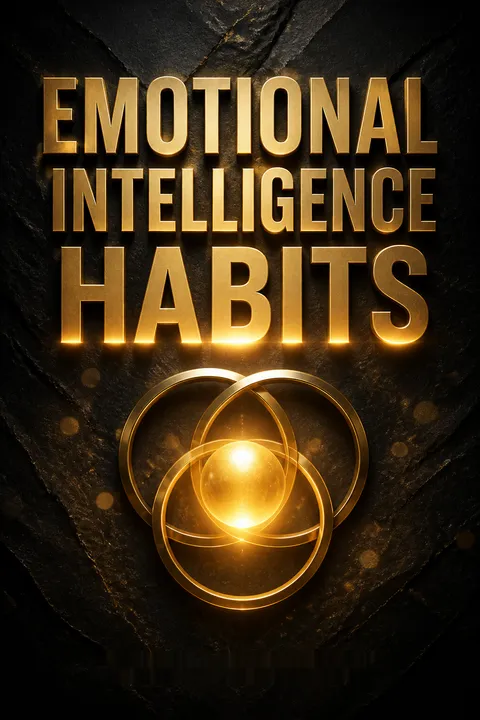
Emotional Intelligence Habits is a broad, practical handbook organized around a single proposition: emotional skill improves when people repeatedly practice better responses in ordinary situations. Its opening story of Phineas Gage gives the premise a human and neurological frame, while the four competencies offer a compact map. The rest is deliberately modular. Readers can enter through stress, anger, sleep, relationships, leadership, or procrastination, then apply the same underlying practices of noticing, interpreting, and choosing.
That breadth is both the book’s advantage and its main summarizing challenge. Its chapters range from happiness to office politics, so a short adaptation can easily become a list of generic advice. The strongest organizing thread is not the topic catalog but the repeated movement from automatic reaction to informed action. Naming a feeling, questioning an assumption, listening for another perspective, or adding a boundary are all variations on that move. Habit formation supplies the bridge between insight and durable behavior.
The book is most persuasive when it translates emotional intelligence into observable conduct: pausing before an angry response, owning a mistake, asking a clarifying question, or protecting time away from work. Its examples make abstractions testable. Some numerical claims and brain explanations, however, are presented with more certainty than a broad popular guide can fully support. Reported correlations between EQ and income or performance do not establish that EQ alone causes those outcomes, and a memorable study result should not be confused with a guarantee for every person.
A fair reading therefore preserves the book’s practical confidence while resisting its occasional implication that personal habits can overcome every constraint. Emotional skills can improve choices and relationships, but poor management, financial pressure, illness, and unsafe relationships are not simply failures of mindset. The most useful takeaway is neither self-blame nor passivity: practice what is within reach, seek evidence about what is not, and evaluate success by both results and the human costs of producing them.
Review Summary
Emotional Intelligence Habits receives overwhelmingly positive reviews, with readers praising its practical advice, actionable strategies, and comprehensive approach to improving emotional intelligence. Many find the book's format, which allows readers to focus on specific areas of improvement, particularly useful. Reviewers appreciate the scientific backing and real-world examples provided. While some criticize repetitiveness or question certain claims, most readers find the book transformative, helping them enhance personal and professional relationships, manage stress, and develop better habits.
People Also Read







Glossary
Emotional intelligence
Recognizing and managing emotionsThe ability to recognize and understand emotions in oneself and other people, then use that awareness to guide behavior and relationships. The book organizes emotional intelligence around four skills: self-awareness, self-management, social awareness, and relationship management. It presents EQ as a learnable capacity that can improve through deliberate practice.
Anger funnel
Hidden feelings expressed as angerA metaphor for the way people may redirect emotions they find difficult to acknowledge, such as fear, shame, grief, or embarrassment, into anger. Anger can feel easier to express and can offer someone to blame, but it may obscure the original feeling and the need beneath it. Identifying that underlying emotion can clarify a more useful response.
Four Horsemen of the Apocalypse
Four destructive conflict patternsA relationship framework naming criticism, contempt, defensiveness, and stonewalling as patterns that undermine constructive conflict. Criticism attacks character rather than a specific behavior, contempt communicates disrespect, defensiveness blocks responsibility, and stonewalling shuts down discussion. The framework emphasizes that conflict itself is not decisive; how people handle it shapes the relationship.
Repair
An attempt to restore cooperationA gesture or statement made during conflict to reduce hostility and help people work toward resolution together. A repair may acknowledge the other person’s perspective, accept responsibility, propose a compromise, or use appropriate humor to ease tension. A repair does not require agreement. It signals respect and willingness to protect the relationship while addressing the problem.
Habit loop
Trigger, behavior, and rewardA recurring sequence through which a cue prompts a behavior and the result rewards that behavior, increasing the chance it will happen again. The book uses this model to explain why responses such as stress-driven scrolling can become automatic. Changing a habit involves noticing its trigger and reward, then practicing an alternative response.
Growth mindset
Belief that ability can improveA view of ability as capable of development through effort, learning, and adjustment. In this view, mistakes provide information about what to change rather than proof of permanent inadequacy. The book contrasts this with a fixed mindset, which treats difficulty as evidence that improvement is impossible, and connects a growth mindset with persistence and learning from failure.
Telepressure
Stress to answer work messagesThe prolonged stress associated with feeling expected to respond to work-related messages outside normal working hours. The term captures how constant access to email and other communication can prevent genuine disengagement from work. The book links this always-on pressure with difficulty relaxing and argues for explicit limits on availability and message checking.
FAQ
What's Emotional Intelligence Habits about?
- Focus on EQ: The book emphasizes the significance of emotional intelligence (EQ) in achieving personal and professional success, distinguishing it from cognitive intelligence (IQ).
- Practical Habits: It offers over 30 actionable habits to enhance EQ, covering areas like stress management, relationship building, and decision-making.
- Real-World Applications: The book illustrates how EQ can improve outcomes in various situations, equipping readers with tools to navigate emotions effectively.
Why should I read Emotional Intelligence Habits?
- Enhance Personal Growth: Understanding and improving your EQ is crucial for personal development, influencing behavior and decision-making.
- Boost Professional Success: EQ accounts for 58% of performance in all jobs, and improving it can enhance productivity and leadership skills.
- Improve Relationships: The habits in the book help build stronger, more authentic relationships through better communication and conflict resolution.
What are the key takeaways of Emotional Intelligence Habits?
- Four Core Competencies: EQ is broken down into self-awareness, self-management, social awareness, and relationship management.
- Importance of Mindset: A growth mindset is crucial for developing EQ, impacting your ability to succeed.
- Practical Strategies: The book provides strategies like mindfulness and stress management for immediate application.
What are the best quotes from Emotional Intelligence Habits and what do they mean?
- “Emotional intelligence is your ability...”: Highlights the role of EQ in personal and interpersonal effectiveness by recognizing emotions.
- “Good decisions require far more...”: Emphasizes that emotional mastery is critical for sound decision-making beyond factual knowledge.
- “Happiness depends upon ourselves.”: Encourages taking responsibility for emotional well-being through actions and mindset.
How does Emotional Intelligence Habits define emotional intelligence?
- Understanding Emotions: EQ is the ability to recognize, understand, and manage your own and others' emotions.
- Applying Emotions: It involves using emotions to facilitate thinking and decision-making.
- Developing Skills: EQ can be developed through practice and intentional effort, enhancing it over time.
How can I increase my self-awareness according to Emotional Intelligence Habits?
- Reflect on Emotions: Take time to think about your emotions and triggers to improve self-awareness.
- Seek Feedback: Ask trusted friends or colleagues for feedback to gain insights into how others perceive you.
- Keep a Journal: Writing down thoughts and feelings helps clarify emotions and track growth over time.
What strategies does Emotional Intelligence Habits suggest for managing stress?
- Practice Mindfulness: Mindfulness techniques help stay present and reduce stress by becoming aware of thoughts and feelings.
- Limit Caffeine Intake: Reducing caffeine can improve stress management by decreasing anxiety and improving sleep.
- Engage in Physical Activity: Regular exercise releases endorphins, improving mood and combating stress.
How does Emotional Intelligence Habits define self-management?
- Control Over Emotions: Self-management involves using emotional awareness to direct behavior positively.
- Flexibility in Responses: It allows adapting responses based on context, maintaining composure in challenges.
- Long-Term Goal Orientation: Involves delaying gratification to achieve long-term goals, aligning actions with values.
What is the significance of a growth mindset in Emotional Intelligence Habits?
- Embracing Challenges: A growth mindset views challenges as learning opportunities, fostering resilience.
- Learning from Failure: Sees failure as a stepping stone to success, using mistakes to inform future decisions.
- Increased Motivation: Reinforces the belief that effort leads to improvement, driving pursuit of goals.
How can I improve my relationships according to Emotional Intelligence Habits?
- Practice Active Listening: Truly listening fosters understanding and connection, making others feel valued.
- Use Positive Body Language: Non-verbal cues like open body language and eye contact enhance rapport.
- Address Conflicts Constructively: Handle conflicts with empathy and respect to strengthen relationships.
What are cognitive biases, and how do they affect decision-making in Emotional Intelligence Habits?
- Definition of Cognitive Biases: Systematic patterns of deviation from rational judgment, leading to illogical conclusions.
- Impact on EQ: Cognitive biases can cloud judgment and hinder EQ, making awareness crucial for informed decisions.
- Common Examples: Includes confirmation bias and halo effect, recognizing them helps mitigate their effects.
How does Emotional Intelligence Habits suggest I deal with toxic people?
- Set Boundaries: Establish clear boundaries to protect emotional well-being, deciding when and how to engage.
- Focus on Solutions: Emotionally intelligent people focus on solutions, maintaining control and reducing stress.
- Use Support Systems: Lean on friends, family, or colleagues for perspective and coping strategies.
About the Author
Other books by Travis Bradberry

Download PDF
Download EPUB
.epub digital book format is ideal for reading ebooks on phones, tablets, and e-readers.








