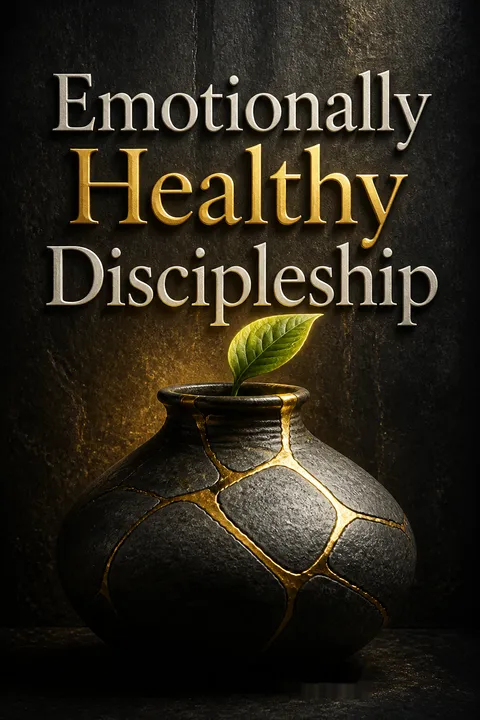


Key Takeaways
A busy, successful church can still produce spiritually shallow people
A polished exterior can hide cracks. Peter Scazzero spent years preaching, planting churches, studying Scripture, and leading a fast-growing congregation. Yet conflict, staff departures, and a split that took about 200 Spanish-speaking members exposed the immaturity beneath the activity. His wife, Geri, eventually said the church was harming her, forcing him to face problems he had mistaken for ordinary ministry strain. He argues that adding programs or working harder cannot repair a faulty approach to formation.
Build for inner change. Scazzero calls surface-level formation “cladding discipleship”: religious activity that looks sturdy but has not become load-bearing character. Emotionally Healthy Discipleship, or EHD, joins spiritual formation with emotional maturity, so a person’s inner life, relationships, and ministry change together. Its four diagnoses are emotional immaturity, activity replacing communion with God, neglect of church history, and success measured mainly by numbers.
The opening crisis makes the book’s argument concrete: activity can conceal dysfunction, and a leader’s habits can become a congregation’s habits. Organizational research offers a useful parallel: institutions often optimize what they can count, even when the counts fail to capture their real purpose. Attendance and programs may show reach, but they say little about whether people can handle conflict, grief, or limits with care. The caution is not to dismiss measurable growth. It is to treat numbers as partial evidence, then ask what kind of people and relationships that growth is producing.
Let your work flow from communion, not use work to replace it
Presence precedes service. Scazzero contrasts two mornings for Carlos, a church leader. In one, Carlos rushes through prayer, avoids tension with his wife, checks his phone, and reaches a meeting harried. In the other, he spends time in silence, notices anxiety, writes down what is troubling him, asks his wife what is wrong, and arrives prepared. The difference is not simply a longer devotional routine. Carlos has made room to notice God, himself, and the people he serves.
Practice before performance. Jesus spent years outside public ministry and chose followers first to accompany him, then to serve. Scazzero recommends deliberate rhythms such as Sabbath, brief pauses for prayer during the day, silence, and a personal Rule of Life. These habits help keep service from exceeding a person’s emotional, physical, and spiritual capacity.
This reframes productivity as a question of source, not volume. Attention research and contemplative traditions both suggest that repeated pauses can interrupt automatic reactions and improve awareness of competing demands. Carlos’s changed morning also shows that inward practice is tested in ordinary relationships, not measured by how serene a person feels alone. Still, contemplation can become another performance metric. Its value lies in whether it makes someone more truthful, attentive, and capable of acting with care, not in whether every day contains an idealized routine.
Follow the cross-shaped Jesus, not the version that guarantees visible success
Reject borrowed scoreboards. When Jesus tells his followers that he will suffer, Peter objects because he expects a victorious Messiah, not a crucified one. Scazzero sees the same impulse in churches that equate faithfulness with popularity, influence, expansion, or avoiding failure. He contrasts those values with Jesus’s willingness to accept obscurity, rejection, and suffering rather than perform for approval or force a result.
Measure faithfulness differently. John the Baptist’s public following declined as people turned toward Jesus, yet Jesus praised him. Scazzero uses this contrast to question whether visible momentum is a reliable measure of success. Leaders can set goals and work hard, but they must also release control of outcomes, listen before acting, and accept that their calling may not produce the growth they hoped for.
The sharpest insight is that success can become a rival source of identity, not merely a useful indicator. In that light, limits on growth may protect a mission from being reshaped around applause. The argument needs one important guardrail: suffering is not automatically evidence of spiritual faithfulness, and the language of taking up a cross must never excuse abuse, exploitation, or preventable harm. The point is not to seek pain. It is to stop treating comfort, acclaim, and expansion as proof that a choice is right.
Treat limits as guidance, while testing which barriers faith should cross
Limits require discernment. A fable in the book describes a passerby handed a rope by a stranger who then jumps from a bridge. The passerby feels responsible for holding on, even as the stranger refuses to help himself. Scazzero uses the scene to expose a familiar trap: assuming every need is ours to solve. Boundaries can protect a person’s health and help others take responsibility.
Not every limit is final. Some limits should be received, such as finite time, family responsibilities, health, and capacity. Others may be challenges to address, including fear, avoidance, or undeveloped skills. Jesus did not meet every need or accept every invitation. Scazzero also describes having to confront his own avoidance of planning and supervision, rather than calling it a God-given inability.
The distinction between accepting a constraint and challenging an avoidance is more useful than the familiar advice to simply do less. It resembles decision-making under limited resources: attention and energy have opportunity costs, so saying yes to one demand means declining another. The bridge story also raises an ethical question. Boundaries are not a license to abandon people in danger; they clarify what help is sustainable and who else must share responsibility. Discernment is therefore relational and contextual, not a slogan for self-protection.
Grieve what changed before demanding that pain become useful
Loss needs honest attention. The writer Gerald Sittser lost his wife, his mother, and his young daughter in a traffic collision. Scazzero draws on Sittser’s account to argue that grief does not simply disappear when someone resumes normal life. Loss can become part of a person’s story and deepen their capacity to understand others. Smaller changes, such as leaving a community or a familiar home, can also deserve mourning.
Move through grief without rushing it. The book describes a flexible process: name the pain, endure the uncertain period when no explanation or resolution is clear, and become open to what can grow from the ending. These movements can overlap. The Psalms model lament, and the book notes that a substantial share of them are laments. Forgiveness, too, may require grieving what was taken before a person can release resentment.
This account resists the pressure to turn suffering quickly into a lesson. Grief research likewise cautions against treating mourning as a uniform sequence with a fixed timetable; people respond differently, and setbacks are common. The religious framing adds a communal dimension by giving lament a place in worship rather than making pain private or embarrassing. At the same time, the promise of growth should remain an invitation, not an obligation. Some losses leave enduring wounds, and support from trained clinicians may be essential, especially after trauma.
Measure spiritual growth by how safely and attentively you love people
Love is visible in relationships. The theologian Martin Buber once met a young visitor while absorbed in his own spiritual thoughts. He later learned that the visitor had been seeking help and regretted that he had not been fully present. Scazzero uses the episode to question a spirituality measured mainly by knowledge, prayer, or ministry output. If close relationships experience someone as harsh, defensive, or unavailable, spiritual activity has not yet become mature love.
Treat people as persons, not tools. Buber’s I-It and I-Thou distinction describes relating to someone as an object for one’s purposes versus meeting them as a distinct person worthy of attention. Scazzero’s practice of incarnational listening asks one person to share what is weighing on them while the other listens, reflects back, and resists rushing to fix or judge.
The relational test is powerful because it moves maturity from private self-description into observable interaction. It also connects with interpersonal research on attunement: people often feel understood when another person accurately reflects both their words and emotional cues. Listening, however, is not the same as agreement, and respectful curiosity does not require abandoning moral judgment in every circumstance. Healthy love includes limits and accountability. The central discipline is to resist reducing someone to a problem, a category, or a means to advance a cause.
Trace inherited family patterns before mistaking them for your personality
The past travels into the present. Scazzero describes how he treated yelling as normal because it had been ordinary in his childhood home. Other patterns shaped his leadership: he pursued work relentlessly, avoided conflict with forceful people, and wanted approval. He argues that conversion does not automatically erase learned ways of relating. Family and cultural histories can keep shaping behavior unless they are brought into view.
Map patterns, then practice new ones. A genogram is a visual map of family relationships and recurring themes across generations. It can reveal repeated conflict avoidance, addiction, favoritism, or emotional distance. Scazzero’s framework is to recognize inherited patterns, understand one’s new identity in the Christian community, and practice different ways of living. The purpose is not to blame parents or claim the past determines the future, but to identify what needs to change.
A genogram turns vague self-criticism into a more precise question: where did this response become normal, and what keeps it going? That resembles family-systems approaches, which examine how behavior is reinforced across relationships rather than locating every problem inside one individual. The method can foster compassion without removing responsibility. It should not be used to make unsupported claims about biological inheritance or to reduce a complex life to a family tree. The past is explanatory context, not a verdict; new behavior still requires practice and supportive relationships.
Let people see your real limits, not a polished performance of faith
Weakness can deepen leadership. In the garden before his arrest, Jesus expresses sorrow and asks his companions to stay near him. Paul also describes an affliction he could not remove, while David’s failure and repentance became part of the community’s scripture and worship. Scazzero argues that leaders who hide every weakness teach others to perform strength rather than seek help, face failure, or depend on God.
Be vulnerable with wisdom. After his own ministry and marriage reached a crisis, Scazzero began admitting when he did not know what to do, asking for forgiveness, and speaking honestly about struggle. The goal is not confession without judgment or disclosure without boundaries. It is teachability, accountability, and honest presence. His image of kintsugi, repaired pottery whose cracks are highlighted, suggests that wounds can remain visible without defining a person only by damage.
Vulnerability can make authority more trustworthy because it reduces the gap between a leader’s public claims and private reality. It also makes it easier for others to ask for help before a crisis grows. Yet disclosure is not inherently safe or virtuous. Leaders hold power, and sharing personal material can burden a team or blur professional boundaries. The useful standard is purposeful honesty: reveal what serves truth, repair, and mutual dignity, while protecting other people’s privacy and using appropriate support when the issue exceeds a community’s competence.
Change the church’s operating system, not merely its calendar of programs
Culture shapes formation. Scazzero urges Christians to learn from the wider history of the church rather than treating one modern tradition as the whole story. He highlights the Nicene Creed, affirmed in the fourth century, as shared ground across major Christian traditions, while also asking Protestants to face failures in their own history. The point is humility and a broader store of spiritual practice, including silence, stillness, and prayerful discernment.
Build change from the inside out. EHD is presented as a long-term shift in how a church understands maturity, leadership, relationships, and mission. Scazzero estimates that integrating the approach can take seven to ten years. Leaders begin with their own lives, develop their teams, and then shape the wider community. Courses can provide structure, but attendance alone cannot substitute for sustained practice and follow-up.
The operating-system metaphor clarifies why adding a curriculum may leave a church’s real incentives untouched. Culture is reproduced through schedules, hiring, leadership behavior, and what receives praise, not only through sermons. The long horizon is plausible for changing shared habits, though the book’s timeframe is a pastoral estimate, not a guaranteed result. Its historical appeal also works best when traditions are approached as conversation partners rather than idealized alternatives. A community can retrieve wisdom while still scrutinizing its inherited blind spots.
Analysis
The book’s central move is to redefine discipleship as formation of the whole person, not accumulation of religious activity. Its opening story gives the thesis moral force: a leader can sincerely love Jesus, perform competent ministry, and still reproduce relational immaturity. The proposed remedy is not a technique layered onto an unchanged life. It is a reordering of attention, ambition, responsibility, memory, and community.
The seven themes cohere around one practical claim: spiritual maturity becomes visible in how a person handles ordinary human realities. Can the person notice emotion without being ruled by it, accept finite capacity without using limits as an excuse, mourn rather than deny loss, hear another person without turning them into a project, and acknowledge inherited patterns without surrendering agency? This makes emotional health a theological concern and gives churches concrete behavioral signs to assess alongside belief and service.
The book also shifts the unit of change from the isolated believer to a forming community. A leader’s pace and defensiveness shape norms; those norms determine whether people can speak honestly, refuse overwork, and learn from conflict. Historical memory matters for the same reason: traditions transmit both practices and distortions, so humility requires learning beyond one’s own movement.
Its strongest evidence is narrative and pastoral, supported by biblical interpretation and concepts from counseling and family-systems theory. That makes the framework compelling as a guide for reflection, but it is not a controlled demonstration that a particular program produces uniform outcomes. The emotional-adulthood language could also be misused to prize calmness over righteous anger or to interpret structural injustice as an individual’s inner problem. Scazzero’s emphasis on boundaries, community, and the poor partly counters that risk. Read well, the model does not tame emotion or excuse institutions. It asks whether faith is making people more truthful, more loving, and less driven by performance, even when the result is slower and less impressive by conventional measures.
Review Summary
Emotionally Healthy Discipleship receives high praise for its insightful approach to deep spiritual transformation. Readers appreciate Scazzero's emphasis on emotional maturity as essential to spiritual growth. The book challenges traditional discipleship models, encouraging readers to slow down, embrace vulnerability, and focus on being with Jesus rather than just doing for Him. While some find certain theological statements questionable, most reviewers consider it a valuable resource for church leaders and laypeople alike, offering practical guidance for personal growth and leadership development.
People Also Read







Glossary
Emotionally Healthy Discipleship
formation of the whole personA way of following Jesus that joins spiritual practices with emotional maturity, self-awareness, healthy relationships, and mission. It asks disciples to attend to their inner lives and histories, accept human limits, grieve loss, and learn to love others well. The book presents it as a church-wide approach to formation, not simply an individual devotional method.
cladding discipleship
surface-level religious formationScazzero’s metaphor for discipleship that looks convincing from the outside because it includes worship, service, Bible study, and church participation, but has not formed deep character beneath the surface. Like a thin stone covering on a building, it can imitate something load-bearing without providing the inner strength needed to endure conflict, loss, or pressure.
false self
identity built on approvalA constructed way of presenting oneself that depends on external markers such as achievement, talent, status, or other people’s approval. It can protect against rejection while obscuring a person’s feelings, limits, and values. In the book’s Christian framework, spiritual growth includes becoming less governed by this performance and more grounded in one’s identity as loved by God.
Daily Office
fixed times for prayerA practice of pausing at set points during the day to remember and attend to God. The book connects it to biblical traditions of regular prayer and to monastic practice. Its purpose is not to escape ordinary responsibilities, but to create recurring moments of stillness that help a person remain aware of God during work, relationships, and other daily activities.
Rule of Life
a plan for spiritual rhythmsAn intentional arrangement of spiritual practices and life commitments designed to keep God central. It may include prayer, Scripture, Sabbath, solitude, and other rhythms suited to a person’s temperament, responsibilities, and season of life. In the book, a Rule of Life provides structure for sustained formation rather than relying on occasional bursts of motivation.
genogram
a map of family patternsA visual representation of family relationships and recurring dynamics across several generations. Used in the book as a discipleship tool, it helps people notice patterns involving conflict, emotional expression, addiction, loss, or intimacy, and consider how these shape present behavior. It is intended to increase awareness and responsibility, not to assign blame or treat family history as destiny.
I-It and I-Thou
objectifying versus genuine encounterMartin Buber’s terms for two ways of relating. An I-It relationship treats another person as an object, category, or means to an end. An I-Thou relationship meets the other as a distinct person deserving attention and respect. Scazzero applies the distinction to Christian maturity, emphasizing presence, curiosity, openness, and recognition of another person’s dignity.
incarnational listening
listening to enter another’s experienceA structured practice in which one person shares what is most affecting them while another gives full attention, reflects the speaker’s meaning, and asks whether there is more to hear. The listener attends to emotion and nonverbal cues without immediately advising, correcting, or defending. Its aim is to help the speaker feel understood, not to guarantee agreement or solve the problem.
Explore the Iceberg
a prompt for naming feelingsA reflection exercise that invites a person to notice anger, sadness, anxiety, and gladness, including feelings that may be hidden beneath everyday reactions. The person pauses, writes what comes to mind, and may share it with a trusted listener. In the book, the exercise helps connect emotional awareness with prayer and discernment.
discretion
patient spiritual discernmentA traditional Christian term used in the book for careful discernment about what to do, when to act, and when not to interfere. It involves prayerful waiting, attention to circumstances, self-restraint, and consultation with mature companions. The aim is to avoid confusing urgency or a promising opportunity with God’s direction.
FAQ
What's Emotionally Healthy Discipleship about?
- Deep Transformation Focus: The book emphasizes moving from superficial Christianity to a deeper, transformative relationship with Jesus, integrating emotional health with spiritual maturity.
- Seven Marks of Discipleship: Scazzero outlines seven key principles that define emotionally healthy discipleship, such as "Be Before You Do" and "Follow the Crucified, Not the Americanized, Jesus."
- Emotional Health Integration: The author argues that emotional health is crucial for spiritual maturity, suggesting that many Christians have been "babied" in their discipleship, leading to immaturity.
Why should I read Emotionally Healthy Discipleship?
- Addressing Shallow Discipleship: The book tackles the issue of shallow discipleship prevalent in many churches today, providing a roadmap for deeper spiritual growth.
- Practical Tools and Frameworks: It offers practical tools, such as the Emotionally Healthy Discipleship Course, to help individuals and churches implement these teachings effectively.
- Personal and Community Growth: Readers will learn how to foster personal transformation and create a healthy church culture that nurtures deep relationships and emotional maturity.
What are the key takeaways of Emotionally Healthy Discipleship?
- Emotional Maturity is Essential: Emotional health is intertwined with spiritual growth, and one cannot be spiritually mature while remaining emotionally immature.
- The Importance of Limits: Embracing God’s gift of limits helps individuals understand their boundaries and responsibilities in ministry and life.
- Grief and Loss as Growth: Grief and loss can lead to profound personal transformation, encouraging readers to embrace their pain as a pathway to deeper faith.
What are the best quotes from Emotionally Healthy Discipleship and what do they mean?
- “You cannot give what you do not possess.”: Emphasizes the importance of being spiritually and emotionally healthy before attempting to lead or serve others.
- “The state you are in is the state you give to others.”: Highlights how a leader's emotional and spiritual condition directly impacts those they lead.
- “Loss can also make us more.”: Reflects the idea that through grief and loss, individuals can experience growth and transformation.
What are the seven marks of emotionally healthy discipleship in Emotionally Healthy Discipleship?
- Be Before You Do: Emphasizes the importance of a personal relationship with Jesus before engaging in ministry activities.
- Follow the Crucified, Not the Americanized Jesus: Encourages embracing the suffering and humility of Jesus rather than a culturally comfortable version.
- Embrace God’s Gift of Limits: Understanding and accepting personal limits is crucial for maintaining emotional and spiritual health.
How does Emotionally Healthy Discipleship define an emotionally healthy disciple?
- Slows Down to Be with Jesus: Prioritizes time with Jesus over busyness and activity, foundational for spiritual growth.
- Goes Beneath the Surface: Engages in self-reflection and allows God to transform their inner life, leading to genuine change.
- Offers Life as a Gift: Recognizes that their life and gifts are meant to bless others, living with a sense of stewardship and purpose.
What are the four failures that undermine deep discipleship in Emotionally Healthy Discipleship?
- Tolerating Emotional Immaturity: Many churches accept emotional immaturity as normal, hindering true spiritual growth.
- Emphasizing Doing Over Being: Focus on activities for God rather than cultivating a relationship with Him can lead to burnout.
- Ignoring Church History: Learning from the historical church provides valuable insights into spiritual formation and discipleship.
How does Emotionally Healthy Discipleship address the issue of grief and loss?
- Grief as a Pathway: Grief is a necessary process for healing and transformation, encouraging individuals to embrace their losses.
- Spiritual Growth through Loss: Losses can lead to new beginnings and deeper insights, with the resurrection bringing good from losses.
- Community Support: Emphasizes the importance of community in navigating grief, encouraging churches to create supportive spaces.
What are the three phases of processing grief and loss in Emotionally Healthy Discipleship?
- Pay Attention to Pain: Acknowledging and confronting the pain of loss is essential for healing and growth.
- Wait in the Confusing In-Between: Emphasizes patience and trust in God during times of uncertainty and confusion.
- Allow the Old to Birth the New: Encourages letting go of the past and embracing new beginnings, trusting in God's plan.
How does Emotionally Healthy Discipleship define vulnerability?
- Embracing Weakness: Vulnerability is seen as a strength, where individuals acknowledge their weaknesses and limitations.
- Authentic Relationships: Encourages creating a culture where people can share their struggles and failures openly.
- Living Out of Brokenness: True leadership and discipleship come from a place of brokenness, relying on God’s grace.
What is the significance of the genogram in Emotionally Healthy Discipleship?
- Understanding Family Dynamics: The genogram visualizes family relationships and patterns, impacting current behavior and emotional health.
- Breaking Negative Patterns: Recognizing and breaking unhealthy patterns that may hinder spiritual growth and relationships.
- Facilitating Healing: Encourages reflection and discussion, leading to greater self-awareness and healing from past wounds.
How can I implement the principles of Emotionally Healthy Discipleship in my church?
- Assess Emotional and Spiritual Health: Evaluate the emotional and spiritual maturity of your congregation using tools like the Emotionally Healthy Discipleship Personal Assessment.
- Create a Culture of Vulnerability: Encourage open discussions about emotional health and the importance of grief and loss.
- Integrate the Seven Marks: Teach and model the seven marks of emotionally healthy discipleship within your church community.
About the Author
Other books by Peter Scazzero




Download PDF
Download EPUB
.epub digital book format is ideal for reading ebooks on phones, tablets, and e-readers.








