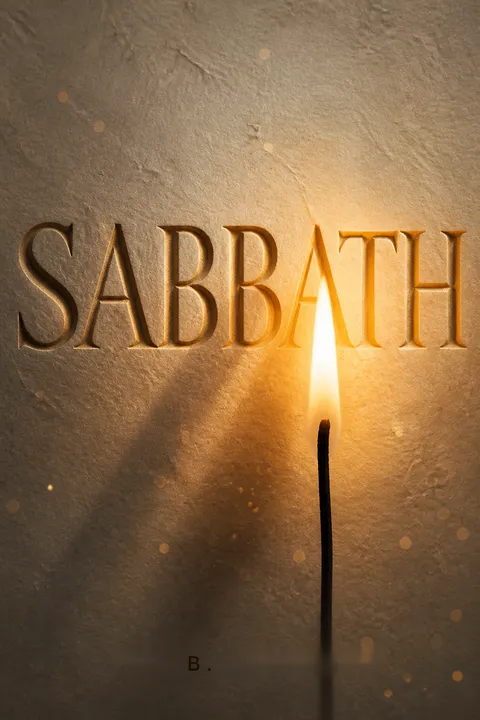


Key Takeaways
Make Sabbath a feast of divine delight, not a recovery shift
More than a break. Allender’s central claim is that Sabbath is not a day off designed to restore workers for another week. It is a commandment to set apart time for delight, play, and communion with God, people, and creation. The day remembers creation and anticipates its renewal, making future hope something to practice now. A week spent resting on a beach may still be only an escape if it leaves people hungry for more distraction.
A feast amid suffering. In a Thai refugee camp, Allender and his wife spent an evening listening to Dr. Simon, a Karen leader who had lived in exile for eighteen years. Their conversation held stories of persecution and hope, shared food, and music. The suffering remained real, yet the time felt holy. Sabbath, in this vision, is not denial of pain but a deliberate celebration of goodness in its presence.
The distinction between recovery and celebration changes the measure of a day: the question is not only whether someone feels rested, but whether attention, gratitude, and relationship have been renewed. That makes Sabbath more than a private wellness technique. It is a counterpractice to a culture that values leisure mainly for its ability to restore productivity. The refugee-camp story gives the idea moral weight, since delight appears alongside hardship rather than after hardship has been solved. The challenge is practical: delight cannot be prescribed uniformly. A meaningful Sabbath must be shaped around real bodies, responsibilities, and forms of joy.
Plan the day before it arrives, then guard its freedom
Make room beforehand. Allender argues that delight usually needs preparation. Choose a day that fits the household’s work, decide what activities sound life-giving, and handle routine tasks in advance. A meal can be prepared early, supplies gathered before a hike, or art materials set out before family play. The point is not to create a rigid schedule, but to keep ordinary errands from taking over the day.
Protect the threshold. Allender divides the practice into receiving, intending, and protecting the day. Welcome it with anticipation, make concrete plans with the people involved, and limit predictable interruptions such as email, work calls, and errands. On his own six-month sabbatical, illness and family needs disrupted the plan. Choosing to continue to Prague, while remaining ready to return, showed that Sabbath can be chosen amid uncertainty, not only when life is tidy.
Preparation is not the enemy of spontaneity. It can remove the small logistical frictions that otherwise make a day dissolve into default habits, while leaving room for unexpected discoveries. The distinction between a plan and a script matters: a plan creates protected space, whereas a script can turn delight into another performance standard. This practice also makes Sabbath relational. If one person plans the celebration while another carries the hidden work, the day reproduces the very imbalance it is meant to interrupt. Shared preparation is therefore part of the observance, not merely a convenience.
Train your senses to find worship in ordinary beauty
Beauty invites attention. For Allender, worship begins when beauty draws people beyond themselves into awe and gratitude. The senses are not distractions from spiritual life; they help people encounter creation as meaningful. A wall in his home, arranged with family photographs, candles, crosses, and an Ethiopian coffee pot, carries stories that make ordinary objects shimmer with memory and connection. The Sabbath is a time to attend to such beauty through sight, smell, sound, touch, and taste.
Receive and respond. During a visit to Ethiopia, Allender washed the feet of Jacob, a man who served women escaping prostitution. Both men wept as the gesture honored Jacob’s costly care. The moment transformed an often-overlooked part of the body into a sign of dignity. Sabbath invites people to notice a part of creation, or a person, with patient attention, then answer that encounter with gratitude rather than possession.
This account treats attention as an ethical act, not simply a way to feel calmer. To notice the stories carried by an object, or the dignity embodied in another person, is to resist reducing the world to utility. The emphasis on sensory experience also gives spiritual practice a material texture: food, music, landscape, and touch become ways of attending. Still, beauty can be unevenly accessible. Some people encounter pain, disability, or sensory overload in the same environments others find restorative. The invitation works best when it expands the range of what counts as beauty rather than setting one sensory ideal.
Receive time as a gift, not a resource to spend
Time is not inventory. Allender challenges the habit of treating hours as property to use, save, lose, or recover. He traces this outlook to the spread of clock-regulated labor, when timekeeping helped employers direct workers’ days. The book cites surveys from the 1990s and 2000s in which many Americans reported feeling overworked and short on time. Those figures are historical, but they illustrate the pressure Allender is describing: time feels like a scarce commodity to manage rather than a reality to inhabit.
Find the rhythm. Sabbath interrupts that accounting. It connects the week just lived with the week ahead, and recalls creation while anticipating renewal. Allender describes fly-fishing as an activity in which attention to water, line, and fish lets him lose track of the clock without feeling that time is wasted. The weekly Sabbath offers a distinct opportunity to live in that kind of unhurried attention.
The argument is strongest when it distinguishes clock time from experienced time without pretending that schedules are dispensable. Shared clocks make coordination possible, but treating every hour as an asset can make life feel like a sequence of transactions. Sabbath creates a recurring limit on that logic. It also offers a useful test: an activity can be busy yet absorbing, or still yet numbing. The relevant contrast is not motion versus rest, but instrumental attention versus presence. The book’s older survey statistics should be read as period evidence, not as a current measurement of work patterns.
Choose play that risks failure and opens a less predictable future
Play is creative risk. Allender presents play as more than entertainment or escape. It temporarily loosens familiar rules so people can try something new, fail, adapt, and discover possibilities they could not control in advance. The connection to Sabbath is theological: creation itself is portrayed as an expression of divine delight, not merely a necessary job. Play therefore offers a way to practice freedom rather than simply recover from work.
Let the outcome surprise you. Allender recalls making an unlikely cast into a small pocket of water behind a boulder while learning to fly-fish. A trout struck, and the unexpected fight became a moment of shared delight with his fishing mentor. The point is not that every experiment ends in success. A Sabbath game, conversation, or creative activity may feel awkward. Its value can lie in the willingness to risk a different kind of experience together.
Play is presented as a rehearsal for agency: participants encounter limits, negotiate rules, and test alternatives without knowing exactly what will happen. That makes it relevant beyond recreation. A family inventing a game or friends trying an unfamiliar art form practice flexibility in a low-stakes setting. The emphasis on failure is especially useful because it counters the pressure to make every leisure activity impressive or efficient. Yet not every risky activity is liberating. The risk should be chosen, proportionate, and shared with care, rather than imposed on people who have less power to refuse.
Practice peace by refusing to reduce people to their worst acts
Accusation deepens division. Allender describes how conflict encourages people to simplify one another into labels: the selfish ex-partner, the incompetent boss, the lazy child. These judgments can bring brief relief, but they also recruit allies, fuel gossip, and make reconciliation harder. Sabbath offers a different stance, called shalom: a vision of peace that holds people in relationship without pretending that harm never happened.
Practice a future view. While writing, Allender’s wife asked him to help with a task he had expected to postpone. He responded with irritation, then noticed how quickly blame was taking over. He apologized, and the conflict softened. Sabbath invites people to imagine the dignity and wholeness they hope others may one day embody, then act toward them with curiosity and care in the present. This is not a demand to excuse abuse or abandon boundaries.
The practice of imagining another person beyond a current conflict can interrupt the self-reinforcing logic of contempt. It does not require agreement, instant trust, or reconciliation on demand. That distinction is crucial: peace without truth can protect the person causing harm, while truth without any vision of repair can harden into permanent condemnation. The small domestic example shows how this posture can begin with an ordinary rupture, not only a dramatic betrayal. Sabbath’s imagined peace is most useful as a disciplined way to hold both accountability and human possibility.
Counter scarcity by noticing gifts and sharing them freely
Envy feeds emptiness. Allender identifies two kinds of middle-class destitution: anxiety about an uncertain future and grief over a life that differs from the one imagined. Envy tries to fill that emptiness by acquiring what someone else has, often only until a newer status symbol appears. Consumer pleasures can offer a brief lift while leaving the underlying hunger untouched.
Abundance begins in gratitude. Allender describes a shared Ethiopian meal as a feast, not because it was lavish by Western standards, but because hosts welcomed guests with generosity and care. He argues that abundance is better measured by gratitude and the willingness to give than by possessions. The book cites a 2005 study in which lower-income households gave a larger share of income than households earning above $100,000. The figures are historical and context-specific, but they support Allender’s challenge to equate wealth with generosity.
The shift from owning abundance to receiving it helps expose how comparison can turn even genuine comfort into a sense of lack. The Ethiopian meal makes the point through hospitality: what gives a table its richness is not only what is served, but the welcome surrounding it. Gratitude can also motivate redistribution, which keeps the idea from becoming a private mood or a way to ignore poverty. At the same time, gratitude should not romanticize deprivation. A full account of abundance must include material security and the conditions that allow people to share without sacrificing basic needs.
Let joy face grief without handing despair the final word
Hope is not control. Allender distinguishes routine work, where a person can often control the result, from labor that opens a path toward something larger but uncertain. Writing a poem after a parent’s death, for example, may require patience without any guarantee of what the work will produce. Despair resists that exposure through regret about the past and worry about the future. The Sabbath interrupts this cycle by making room for hope that cannot be bought or commanded.
Joy can coexist with sorrow. Allender does not define joy as success or uncomplicated happiness. He describes it as a deep awareness of goodness that can appear even amid death, loss, or disappointment. During a walk, he and his wife struggled with a painful friendship. Honest admission of hurt, followed by humor and renewed conversation, helped them re-enter the day. Sabbath does not erase grief; it refuses to treat grief as proof that joy is impossible.
The distinction between work and labor helps explain why some meaningful commitments feel more frightening than ordinary tasks: their value depends partly on outcomes no one can guarantee. The account of joy does not promise relief on demand, which makes it more credible than forced positivity. It also leaves room for grief to be real rather than an obstacle to be quickly overcome. A useful caution is that despair may involve clinical depression or other conditions that need professional care. A spiritual practice can support people, but it should not replace appropriate treatment.
Use silence and ritual to hear what constant noise conceals
Quiet reveals the inner weather. Allender argues that silence can expose voices usually covered by screens, music, and activity, especially contempt, regret, and grief. He recommends doing the harder work of confronting those voices during the other six days, so Sabbath silence does not become an exhausting session of self-analysis. Meditation, in his account, means turning an idea or memory over patiently until it reaches the heart; prayer can then become praise or an invitation to listen.
Give the day a shape. Simple rituals, such as lighting candles, sharing a meal, blessing one another, or taking a quiet walk, help mark the transition into holy time. They are not rules that guarantee a spiritual experience. Their purpose is to make attention easier and to remind participants what the day means. Silence may be part of Sabbath, but Allender does not prescribe a day of forced quiet.
Rituals function here as cues for attention: a candle, shared meal, or repeated blessing marks a change in how people inhabit time. That can make an abstract intention tangible, especially when ordinary habits keep pulling attention elsewhere. Silence, however, is not automatically peaceful. For some, it intensifies intrusive thoughts or loneliness. The book’s distinction between preparation and celebration is valuable because it discourages turning Sabbath into compulsory introspection. A humane practice leaves room for conversation, music, movement, and support when quiet is not the right setting.
Make your rest include the freedom of everyone under your power
Rest must be shared. The Sabbath commandment extends beyond the household head to children, servants, foreigners, and working animals. Allender stresses that others are to rest as their employers or hosts do, not to continue laboring in order to make someone else’s celebration easier. The principle makes Sabbath a practice of equality, not a privilege reserved for people with control over their schedules.
Remember the larger release. The book connects the weekly Sabbath to the Jubilee, a scriptural year after seven cycles of seven years that proclaimed freedom and return to ancestral land. Allender sees both practices as reminders that power and property are not absolute. Sabbath can prompt concrete acts of care, hospitality, and support for people facing poverty, exploitation, or exclusion. Its justice is not achieved by one day of rest alone, but that day can expose how much ordinary life depends on unequal burdens.
This is the book’s most demanding test of integrity: a household cannot celebrate rest by quietly exporting work to people with less power. The command reaches beyond personal well-being toward the organization of labor and access to time. That connection also complicates individual advice. People in low-wage jobs, caregiving roles, or unstable housing may not be able to protect a full day by willpower alone. The ethical response is not to blame them for failing at Sabbath, but to ask how families, workplaces, and communities can share the cost of making rest possible.
Analysis
Allender’s most distinctive move is to redefine Sabbath from recuperation into celebration. Rest is not treated as fuel for future productivity, but as a weekly refusal to let productivity dictate what a human life is for. That reframing gathers the book’s varied themes into one practice: beauty trains attention, feasting makes gratitude communal, play rehearses freedom, silence exposes what distraction hides, and justice asks who is still doing the work that makes another person’s leisure possible.
The religious architecture matters. Sabbath is presented as command, memory, and anticipation, rooted in creation and liberation and oriented toward a renewed world. This gives the practice a narrative that ordinary wellness routines often lack. A secular reader can still recognize the value of a protected interval for shared meals, unhurried attention, and noncommercial pleasure, but the author’s claim that delight is a divine invitation depends on Christian commitments rather than empirical proof. The book is strongest when it shows how those commitments shape conduct, not when they are treated as universally self-evident.
The major tension is between personal observance and structural access. A person with control over a calendar can plan, protect, and celebrate a day more easily than someone with precarious work, intensive caregiving, illness, or little control over housing. Allender’s insistence that servants, foreigners, animals, and land share the rest points toward a systemic answer, but the book offers more spiritual imagination than institutional design. That gap does not invalidate its proposal; it clarifies the scale of the challenge. A genuine Sabbath ethic must change who carries the labor, not merely help privileged people feel less guilty about their leisure.
The most useful practical implication is therefore not a perfect Sabbath itinerary. It is a recurring boundary that makes gratitude, attention, shared delight, and justice harder to postpone indefinitely. The day can be imperfect and still enact its central claim: life is more than useful output, and hope deserves rehearsal before the world is repaired.
Review Summary
Reviews of Sabbath are generally positive, averaging 3.93/5. Readers appreciate Allender's reframing of Sabbath as active delight rather than passive rest, with his central question—"What would I do for twenty-four hours if the only criteria was to pursue my deepest joy?"—resonating deeply. Many found the book transformative in shifting their perspective on rest and God's invitation to delight. Common criticisms include overly poetic, sometimes unclear prose, lack of practical application, and grandiose personal anecdotes that feel unrelatable. Several reviewers recommend pairing it with more practical works by John Mark Comer.
People Also Read








Glossary
menuha
Joyful reposeA Hebrew term for rest that Allender, drawing on Jewish interpretation, presents as more than stopping work or recovering from fatigue. It suggests tranquility, harmony, and delight. In this account, God’s seventh-day rest is an appreciative celebration of creation, and Sabbath rest invites people to enter that same posture of enjoyment.
Sabbath play
Playful practice of hopeAllender’s name for the Sabbath as a day of creative, communal play rather than mere leisure or escape. Through play, people loosen ordinary patterns, risk failure, and imagine a future shaped by peace, abundance, and joy. The practice is meant to celebrate creation and redemption while resisting the forces of division, scarcity, and despair.
Sabbath Jubilee
A year of proclaimed freedomThe biblical Jubilee year follows seven cycles of seven years. Allender connects it to Sabbath because it proclaims freedom, return to ancestral land, and a break in ordinary economic and social arrangements. He treats the Jubilee as a larger expression of Sabbath’s demand that power not permanently trap people in servitude or dispossession.
holy fiction
Hope rehearsed as presentAllender’s phrase for living out, during Sabbath, a foretaste of the promised future in which peace, abundance, and joy prevail. It is not meant as denial that suffering exists. It describes a deliberate enactment of hope, using shared meals, play, care, and reconciliation to practice the world believers anticipate.
sanctuary in time
A set-apart weekly intervalA description of Sabbath as a recurring period distinguished from ordinary time. Rather than treating hours as units to spend or control, the practice creates a weekly threshold for rest, delight, memory, and anticipation. Its value lies in the change of attention and relationship it makes possible, not simply in the number of hours away from work.
About the Author
Other books by Dan B. Allender







Download PDF
Download EPUB
.epub digital book format is ideal for reading ebooks on phones, tablets, and e-readers.








