

Key Takeaways
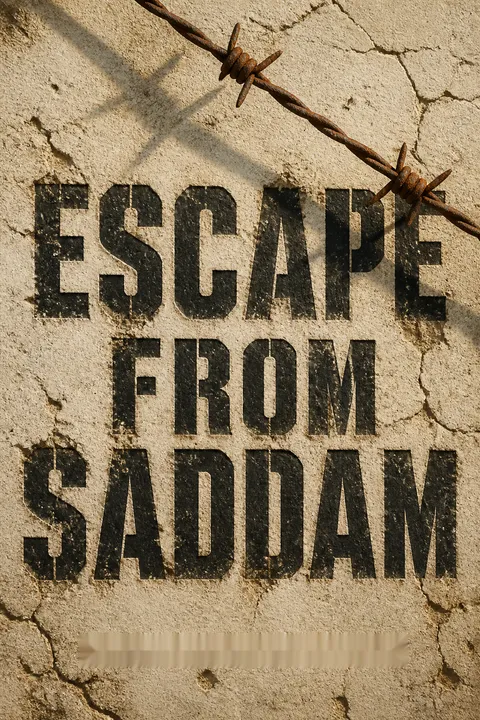
Escape from Saddam was not one flight, but a years-long fight for family.
The escape kept changing shape. Sarmed is drafted into the Iraqi army after his plans to leave legally collapse. He slips out of his unit, crosses the desert, and eventually reaches England using forged documents. But his own escape is only the beginning: his family remains in Iraq, exposed to reprisals for his desertion. The memoir follows repeated attempts to bring them to safety, including a disastrous plan, a British prosecution, and years of further effort.
Freedom becomes shared work. The story is not simply about reaching a border. It is about trying to protect the people left behind, even when each new route brings fresh risks. Sarmed’s journey keeps moving because the meaning of safety changes when his family is still in danger.
The book’s structure gives escape a less cinematic, more accurate shape: crossing a border changes the immediate danger, but does not settle the obligations that remain. That distinction echoes the experience of many displaced people, whose legal status, family separation, and exposure to danger can persist long after departure. The narrative also asks what freedom means when one person is safe and loved ones are not. Its strength is to make that question concrete through repeated decisions, rather than treating asylum as a single triumphant arrival.
Under dictatorship, refusing service can make survival a family-wide gamble.
Obedience was enforced physically. Sarmed’s army training included beatings, humiliation, and an exercise in which recruits were ordered to interrogate and assault one another. He watched a fellow soldier attack a prisoner, then was forced into the chair himself. The training did not merely teach combat skills. It showed recruits that violence was ordinary, and that refusal could bring punishment.
The threat extended beyond the barracks. After Sarmed is assigned to a distant unit, an intelligence officer offers him a transfer to military intelligence. The apparent promotion would bind him more tightly to the regime and make escape more dangerous for his relatives. The author describes a society where the military could punish desertion severely and where families could be threatened to force compliance.
The training scenes show how institutions normalize cruelty by turning it into routine, hierarchy, and performance. This resembles a broader insight from organizational psychology: people may participate in harm not because they begin with unusual cruelty, but because authority rewards compliance and makes refusal costly. The memoir also sharpens that point by showing the family as part of the coercive system. Its account is personal, not a complete survey of Iraqi military life, but its vivid examples reveal how fear can govern behavior well beyond the person directly threatened.
When legal doors close, trusted relationships become escape infrastructure.
Saad made the impossible navigable. Sarmed’s uncle, a former officer and amputee, helps him pursue permission to travel for study. After Sarmed’s father obstructs the application, Saad calls in favors, finds unofficial documents, and eventually arranges a meeting with Bedouin guides near the border. He supplies money, a destination in Amman, and a weapon for protection. Each step depends on relationships that cannot be found on an official form.
The help carries real risk. Saad accompanies Sarmed through military checkpoints, using his uniform and status to draw attention away from his nephew. Before they part, he gives Sarmed the name of a trusted friend in Amman. The memoir presents family loyalty not as sentiment alone, but as practical work: contacts, money, judgment, and repeated acts of courage.
Saad’s role makes social trust visible as a kind of infrastructure. When formal systems are hostile, information and access travel through people who know whom to call, what to conceal, and when to stop talking. That network is powerful precisely because it is specific and earned, not because every relative or contact is automatically safe. The story also highlights an asymmetry: Saad can use status and local knowledge, while Sarmed depends on them. Such networks can sustain people under pressure, but they are fragile, costly, and difficult to reproduce.
Improvisation buys seconds, but never gives a fugitive control.
Survival depended on split-second decisions. During his first escape attempt, Sarmed is shot while crawling beyond the army compound. A taxi driver finds him, takes him to a discreet doctor, and later drives him to Baghdad. The doctor removes the bullet without proper hospital facilities, knowing that helping the young deserter could endanger his own family. In the desert crossing, Bedouin guides help Sarmed pass patrols by presenting him as a relative herding sheep.
No plan removed the danger. After the guides leave him, Sarmed hears wolves nearby. He panics, fires his Beretta, and keeps moving despite his reopened wound. His route depends on judgment, but also on chance: the bullet misses bone, a driver stops, and the animals turn toward injured pack members.
These episodes distinguish agency from control. Sarmed makes choices, but outcomes depend on other people, terrain, timing, and luck. That is a useful corrective to stories that turn survival into a simple lesson in courage or cleverness. His resourcefulness matters, yet so does the taxi driver’s compassion and the doctor’s skill. The scene also shows how acute fear narrows decision-making: Sarmed knows what might be safer, but panic takes over. In extreme danger, good judgment is valuable without being omnipotent.
A refuge can feel free while keeping its doors legally half-shut.
Jordan offered breathing room, not security. In Amman, Sarmed can move through the city without Iraqi checkpoints and find work. But his passport and entry stamps are false, and he has limited time before the risk of deportation grows. At the United Nations office, he is processed as one applicant among many and told to return weeks later. The encounter leaves him feeling that no institution can guarantee his safety.
A new life remains precarious. He works first in an office and later at a gym, saves money, studies, and builds friendships. Yet he must hide his status, use coded calls with family, and watch for police. When an officer stops him, his illegal stay becomes impossible to conceal. The relief of being outside Iraq coexists with the constant possibility of being sent back.
The memoir captures the gap between physical refuge and durable protection. A person may be outside the reach of one government while remaining vulnerable to another government’s immigration rules, labor market, and discretion. This is a form of limbo that can be hard to see from the outside because ordinary routines, such as work and friendship, look like stability. The details also complicate the idea that a single international agency can quickly solve a refugee’s problem. Sarmed’s encounter does not prove institutions are useless, but it shows how slow procedures can feel when danger is immediate.
Judge helpers by their conduct, not their promises or polish.
Credibility showed itself over time. In Amman, Sarmed hears confident claims from people who promise easy passage to the West in exchange for money up front. Some disappear when asked to explain their plans. By contrast, the architect Abu Firas speaks cautiously, warns Sarmed to be suspicious, and proposes a risky route through Malaysia using separate passports. A gym owner also protects Sarmed during a police visit, then gives him his wages and extra money while insisting he leave before trouble returns.
Help is not a guarantee. Abu Firas’s plan gets Sarmed to England, but later a different smuggler’s counterfeit Spanish passports fail during his family’s attempted escape. Good intentions and a credible manner cannot ensure that a route or document will work. The memoir’s lesson is to look for evidence of reliability, while recognizing that clandestine help remains uncertain.
The contrast between salesmanship and demonstrated care offers a practical way to think about trust under pressure. In uncertain environments, confidence is cheap; consistency, transparency about risks, and help that does not demand immediate payment are more informative signals. Still, the story resists a neat screening formula. Abu Firas’s advice works for Sarmed, while another apparently skilled contact supplies passports that fail. Trust can improve a decision, but it cannot abolish uncertainty when a person is navigating illegal markets and shifting border controls.
When the state punishes relatives, ordinary ethics become painfully constrained.
Sarmed’s family became leverage. Iraqi intelligence interrogates and abuses Saad after Sarmed escapes, then arrests Sarmed’s mother and brother. His sister is spared, but the others face prison and threats intended to force Sarmed to return. In Britain, he sees no legal way to get them out and no affordable loan large enough to pay smugglers. At work, he handles company accounts and realizes he can transfer money.
He steals £37,500. Sarmed uses the money to pay corrupt officials and arrange his family’s escape. He knows the transfers are criminal and expects to be caught; he acts because he believes that doing nothing could leave his family imprisoned or worse. The memoir does not present the theft as a clean solution. It is a desperate choice with consequences for his employer, his reputation, and his own future.
This is the book’s hardest moral problem because coercion does not make the harm disappear, yet a simple appeal to property law cannot capture the danger facing Sarmed’s family. The decision resembles a classic conflict between duties: he owes honesty to his employer, and he feels a more urgent duty to protect relatives from state violence. The memoir does not make those duties commensurable or offer a general permission to steal. It shows how authoritarian pressure can force people into choices where every available path carries moral damage.
A forged passport can win one checkpoint and fail at the next.
The family’s documents looked convincing at first. Sarmed arranges counterfeit Spanish passports for his mother, brother, and sister after a Romanian smuggler assures him they are genuine-quality documents. The family enters Malaysia without difficulty. At the airport, however, British officials recognize the passports as poor counterfeits and stop them as they try to board for London. Sarmed and his family are detained, and the counterfeit scheme collapses in front of them.
The failure reverses the escape. After paying fines, the family is deported through Jordan and back to Iraq, where they receive prison sentences. Saad later pays to get them into a religious course in Abu Ghraib that can lead to release. The episode shows how one successful inspection can create false confidence, while a single more careful check can undo months of preparation.
The failed passports expose a central feature of clandestine travel: success at one checkpoint is weak evidence about the next. Different officials have different databases, incentives, and levels of expertise. A document that passes once can become a liability when scrutinized elsewhere. The episode also illustrates the danger of delegated expertise. Sarmed has few ways to independently verify the smuggler’s claims, and the family bears the cost when those claims prove false. The failure is not simply carelessness; it is a consequence of making high-stakes decisions with little reliable information.
A fair court can punish fraud while recognizing coercive circumstances.
British law still held Sarmed accountable. He eventually pleads guilty to conspiring to defraud William Hill of £37,500. His employer has suffered a real breach of trust, and the judge acknowledges that the crime warrants a custodial sentence. Sarmed provides evidence showing where the money went and explains that he used it to help his family escape imprisonment and abuse in Iraq.
The judge weighs context without erasing the offense. He describes the mitigation as exceptional and imposes a two-year sentence, suspended for two years, with no deportation recommendation. The judgment contrasts sharply with the arbitrary court process Sarmed’s family faces in Baghdad. His case is not an acquittal: he remains convicted, and the consequences affect his work and citizenship prospects.
The courtroom scene offers a model of contextual judgment rather than either automatic punishment or complete excuse. A fair process can name the breach of trust and still consider the pressures that shaped it. That distinction matters because compassion is not the same as denying harm. The judge’s response is also contingent on an individual decision, which the memoir makes clear through its contrast with Iraqi courts. A just outcome depends not only on rules, but on whether officials can hear evidence, assess circumstances, and treat the accused as a person.
Reunion restores daily life, but fear can outlast the regime.
Safety arrived in stages. Sarmed’s sister reaches Britain first. His mother and brother remain in danger for years, moving through Iraq, Kurdistan, and Turkey while he searches for another route. When they finally arrive in the UK, he embraces his mother in a reunion that makes the long effort feel worthwhile. The ordinary things he wants afterward are simple: meals together, uncoded conversations, and the comfort of living near family.
The past stays present. Sarmed describes nightmares, panic, and post-traumatic stress disorder after reaching safety. He receives therapy and medication, while his family carries its own scars. His story ends not with every wound healed, but with a renewed chance to build a life together. Even his later success as an actor does not erase the years shaped by surveillance, imprisonment, and separation.
The ending refuses the idea that rescue instantly restores a person to an earlier self. Safety changes the conditions of life, but the body and mind may continue responding to threats that have passed. The family’s reunion is powerful partly because its desired rewards are ordinary, not grand: privacy, shared meals, and speech without codes. The book also makes a useful distinction between reaching safety and recovering from what happened. The former is a political and practical achievement; the latter is slower, uneven, and shared across a family.
Analysis
This memoir’s central subject is not simply escape, but the collision between personal agency and systems designed to make agency costly. Sarmed repeatedly plans, improvises, and negotiates, yet the decisive resources are rarely his alone. His uncle’s standing, a taxi driver’s compassion, a doctor’s skill, a stranger’s advice, and a judge’s discretion all shape outcomes. The story therefore resists the familiar survival narrative in which courage and cleverness appear sufficient. They matter, but they operate inside networks of dependence and chance.
The account also moves across different kinds of authority. Iraqi officials use military discipline, surveillance, and threats against relatives; Jordanian and Malaysian officials control entry, detention, and deportation; British authorities investigate and sentence Sarmed, while also allowing his asylum claim and considering his circumstances. These systems are not equivalent. The memoir’s comparison rests on the difference between arbitrary coercion and a legal process in which evidence and mitigation can be heard, even though that process still punishes him and limits his future.
A careful reader should distinguish the levels of evidence within the narrative. Sarmed directly witnesses some events, learns others from relatives, and recounts some atrocities as rumors circulating in Iraq. Those differences do not negate the book’s account of pervasive fear, but they matter when using the memoir as historical evidence. Its strongest contribution is experiential: it shows how fear enters ordinary decisions, from what one says on a phone call to whether one trusts a stranger with a passport.
The title promises escape from a dictator, but the deeper story concerns the relational cost of freedom. Sarmed’s safety creates obligations toward those still exposed to danger, and his attempted rescue brings him into conflict with the law he hopes will protect him. The book’s moral force lies in keeping that conflict unresolved. It neither celebrates every desperate act nor pretends that legality alone answers the question of what a person owes family under threat.
Review Summary
Escape from Saddam is highly praised for its gripping narrative and eye-opening portrayal of life under Saddam Hussein's regime. Readers appreciate Alsamari's determination and bravery, finding the book educational and thought-provoking. Many express gratitude for their own freedoms after reading about the challenges faced by Iraqi citizens. The book is described as well-written, intense, and emotionally engaging. Some reviewers note the author's relatable human experiences amidst extraordinary circumstances. Overall, it's recommended as an important read that offers valuable insights into Iraqi life and the struggle for freedom.
People Also Read









Glossary
Al-Istikhbarat
Iraqi intelligence serviceThe Arabic name Sarmed uses for Iraq’s intelligence service, particularly the military intelligence apparatus that monitors, questions, and punishes people considered disloyal. In the memoir, its reach extends beyond individuals: officials pressure relatives to force fugitives to return or reveal their whereabouts.
Al-Mukhabarat
General Directorate of IntelligenceThe memoir’s term for Iraq’s General Directorate of Intelligence. Sarmed associates it with state surveillance and coercive interrogation. Its prison, Al-Haakimiya, becomes the place where his mother, brother, and uncle are held after his escape, making the service a continuing threat even after he reaches Britain.
Al-Haakimiya
Intelligence service prisonThe prison associated in the memoir with Iraq’s intelligence service. Sarmed describes it through accounts of cramped, filthy cells, illness, hunger, and physical abuse. His family is detained there because authorities seek to pressure him into returning to Iraq.
Red Berets
Checkpoint and security troopsThe name Sarmed uses for armed Iraqi security personnel who man checkpoints and enforce military control. Their inspections can delay or detain travelers, and their presence makes ordinary movement dangerous for deserters. Sarmed recounts being stopped by them while trying to return to Baghdad and while traveling toward the border.
the genuine man
A family-loyal personSaad’s personal ideal for a person who remains loyal to family despite distance and danger. He uses the idea to remind Sarmed that reaching safety is not the end of his responsibility to those still in Iraq. The phrase gives the memoir its ethical center without making family loyalty an easy or cost-free duty.
Download PDF
Download EPUB
.epub digital book format is ideal for reading ebooks on phones, tablets, and e-readers.








