

Key Takeaways
Treat menopause symptoms as real health problems, not a character test
Symptoms hide in plain sight. Menopause can bring far more than hot flushes: insomnia, palpitations, joint aches, urinary discomfort, vaginal dryness, anxiety, and difficulty concentrating. Because these problems resemble other conditions, women may see several specialists without connecting them to changing hormones. In the SWAN study, about 80 percent of women reported symptoms, with hot flushes and related symptoms lasting a median of 7.4 years. They often lasted longer for Black women and for women whose symptoms began during perimenopause.
Relief can change daily life. After chemotherapy brought on Martha’s menopause, she struggled with sleep and memory. The authors report that estrogen quickly eased her symptoms. They argue that hormone therapy is the most effective treatment for many menopausal symptoms, while herbal remedies and lifestyle measures generally do not match its relief.
What's striking is how easily a symptom can become invisible when it is split among medical specialties. A clinician may see palpitations, poor sleep, or low mood as separate problems, while the patient experiences one disruptive change in her life. A careful symptom history can reconnect those pieces. At the same time, menopause should not become a catch-all explanation: similar symptoms can have other causes. The practical lesson is neither to dismiss symptoms as aging nor to assume hormones explain them, but to ask about timing, pattern, severity, and alternatives.
Read the WHI by asking whom it studied and what it measured
A trial is not every patient. The Women’s Health Initiative, or WHI, was a large randomized trial of hormone therapy and chronic disease in postmenopausal women. Its participants had a median age of 63, and the authors say women with moderate or severe symptoms were discouraged from joining. Only 13 percent of participants had those symptoms, so the trial was poorly positioned to judge relief for women seeking treatment during early menopause.
Headlines outran context. In 2002, alarming announcements about breast cancer and other risks preceded the journal paper. The authors argue that early findings were overstated, that some conclusions relied on weak or changing statistical signals, and that subsequent analyses softened several alarms. The study remains important, but its results cannot automatically answer every question about younger women, different hormone preparations, or symptom relief.
The authors make a useful distinction between a study’s internal credibility and its reach beyond the people enrolled. Random assignment can make a comparison more trustworthy, but it cannot make a 63-year-old cohort representative of someone just entering menopause. Nor does a limitation erase a trial’s findings for the population it did study. The strongest reading keeps both points in view: scrutinize how results were presented, then resist turning criticism of the WHI into proof that every hormone regimen is safe.
Translate risk headlines into absolute numbers before making decisions
Percentages need a baseline. Relative risk describes how much a rate changes compared with another rate. A 26 percent increase sounds alarming, but its meaning depends on the starting risk. The authors illustrate the distinction with the WHI breast cancer estimate: roughly five cases per 100 women versus six per 100, if that comparison is expressed in those terms. A relative increase can be important, trivial, or unstable depending on the absolute numbers and the study’s uncertainty.
Look for a whole pattern. The authors use the Bradford Hill criteria, a set of viewpoints for judging whether an association supports causation. They include strength, consistency, timing, dose response, and plausible alternatives. They also warn against data mining, searching many subgroups after results appear until one association looks significant. Such findings can suggest new questions, but should not be treated as confirmation.
Risk communication is a form of decision design. People react differently to “a 26 percent increase” than to a change from five cases to six, even when the statements describe the same comparison. Showing both numbers helps patients compare a treatment with the risk of doing nothing. Still, small absolute risk does not mean no risk, particularly when outcomes are serious or individual circumstances differ. The authors’ framework is most useful as a demand for transparent evidence, not as a shortcut for declaring a disputed cause disproven.
Do not mistake an estrogen receptor for proof that estrogen caused cancer
A marker is not a cause. Some breast cancers have receptors that respond to hormones, but the authors argue that finding a receptor does not establish that estrogen created the cancer. They point to evidence they see as inconsistent with a simple causal story: breast cancer rates rise with age after menopause, pregnancy involves high hormone levels without raising lifetime risk overall, and estrogen has been used to treat some advanced breast cancers.
Formulations matter. In the WHI, estrogen alone did not show the same breast cancer signal as combined estrogen and progestin; long-term follow-up found lower breast cancer incidence in the estrogen-alone group. The combined-treatment result was small and disputed by the authors. These findings do not make all hormone products interchangeable, or establish that every woman faces the same risk.
The authors correctly separate a biological feature of a tumor from a complete account of how that tumor began. A receptor can help explain how a cancer behaves or responds to treatment without identifying its original cause. Their broader case, however, asks readers to accept a strong conclusion from mixed forms of evidence. Pregnancy, cancer treatment, and menopause involve different hormone patterns and populations. Those examples challenge a simple theory, but they cannot alone settle the safety question for every formulation or duration.
For breast cancer survivors, weigh symptom relief against uncertain recurrence evidence
The evidence is uneven. Bluming followed 248 breast cancer survivors who chose hormone therapy for 14 years and reported no higher recurrence rate than among comparable women not taking it. The authors also review 26 studies of survivors: most reported no increased recurrence, but the HABITS randomized trial found more new breast cancers among women receiving hormones. Its early termination, treatment differences, and lack of baseline mammograms are among the authors’ criticisms. A separate Swedish randomized study, called the Stockholm study, did not find the same increase.
A difficult choice remains. The authors argue that severe menopausal symptoms can justify considering hormone therapy after breast cancer. Their evidence does not establish that it is safe for every survivor, especially because the studies are limited and the randomized findings conflict.
This is the book’s most consequential and least settled argument. Observational studies can be informative, but women who choose treatment may differ from those who do not, creating a healthy-user effect. Conversely, a prematurely stopped trial with relatively few events may exaggerate an apparent difference, yet its signal cannot simply be dismissed. The ethical response is transparent uncertainty: acknowledge symptoms and quality of life, review cancer history and treatment, and make any discussion of systemic hormones with the clinicians responsible for the survivor’s care.
Start heart-risk discussions with timing and existing vascular disease
Timing may change the balance. The authors argue that hormone therapy is more likely to benefit cardiovascular health when started near menopause, roughly within ten years of the last period or before age 60. Starting much later may offer less benefit and could carry risk, particularly when a woman already has arterial disease. They use this timing distinction to explain why results from older WHI participants may not apply to women beginning treatment earlier.
Prevention is not one-size-fits-all. The book describes studies in which early treatment was associated with fewer cardiac events, while a trial involving women with established coronary disease found an early increase in heart events. The authors challenge blanket claims about statins as an equivalent alternative. These arguments do not establish hormone therapy as a universal heart-disease preventive or replace individual cardiovascular assessment.
The timing argument is a reminder that the same intervention can have different effects at different stages of disease. A therapy that supports healthy vessels may not reverse long-standing damage, and an older, higher-risk study population cannot cleanly answer questions about early use. But timing is not a guarantee: age, symptoms, formulation, route, and medical history all matter. The book is persuasive when it asks readers to examine those differences, less so when it presents hormone therapy as broadly superior to other cardiovascular approaches.
Distinguish bone density from the resilience that prevents fractures
A stronger scan is not everything. The authors compare bone density to a building’s outer shell and resilience to its flexible inner framework. A scan measures mineral density, not the full ability of bone to bend without breaking. They argue that calcium and vitamin D supplements do not reliably prevent fractures in postmenopausal women, while estrogen can reduce hip fractures by about one-third in the WHI and by 30 to 50 percent in other studies they cite.
The benefit depends on continuing treatment. Bone protection fades after hormone therapy stops, and the authors say it may require many years of use. Hip fractures can bring severe disability and are associated with substantial mortality among older adults. Other osteoporosis medicines can help, but the authors describe possible side effects and limits, including atypical fractures with long-term bisphosphonate use.
The distinction between a measurable proxy and the outcome people care about is valuable well beyond bone health. A test score can improve without a meaningful change in fractures, just as a drug can change a laboratory value without improving survival. Yet the book’s broad dismissal of supplements and favorable comparison with hormone therapy should not substitute for assessment of an individual’s fracture risk. Bone health involves falls, age, medical conditions, and prior fractures as well as density; the relevant question is which intervention best fits that risk.
Treat hormone therapy’s brain effects as promising, not proven dementia prevention
Biology offers a plausible route. The authors describe animal and laboratory findings in which estrogen supports connections between neurons, blood flow, and other processes involved in memory. Some observational studies of women associate hormone use near menopause with lower later dementia risk. The authors call this a “window of opportunity,” meaning that timing may matter: benefits appear more plausible when treatment begins near menopause than when it begins much later.
The WHI signal involved older women. In its memory study, dementia incidence rose from about 1 percent in the placebo group to 1.8 percent among women taking combined therapy. The authors emphasize the small absolute difference and participants’ older age. They also discuss a later Danish observational study that found a small association, not proof of cause. Estrogen should not be presented as a guaranteed way to prevent Alzheimer’s disease.
Mechanisms can make a hypothesis biologically credible, but they are not the same as a demonstrated clinical benefit. Animal findings, observational associations, and randomized outcomes answer different questions, especially when the outcome may emerge decades after treatment begins. The authors help readers notice how age at initiation can change interpretation; the caution is that “window” can sound more certain than the underlying evidence warrants. Memory concerns deserve assessment in their own right, rather than being automatically attributed to menopause or treated with hormones.
Choose hormone type and duration through informed, individual tradeoffs
The uterus changes the prescription. The book uses HRT to mean estrogen plus progesterone or a related progestin. Estrogen alone can raise the risk of cancer of the uterine lining, so the authors explain that women with a uterus are generally given a progestogen for protection; women without a uterus may take estrogen alone. They distinguish micronized progesterone from synthetic progestins, and FDA-approved products from compounded “bioidentical” mixtures, which are not standardized or FDA-regulated.
No single duration fits everyone. The authors reject routine stop dates and the slogan “lowest dose for shortest time,” favoring individualized decisions with periodic review. Martha took HRT for 26 years, then had a small recurrence at her original cancer site. She and Avrum could not know whether hormones caused it, delayed it, or had no role. Her story captures both the benefits she valued and the uncertainty that remains.
This ending makes the book’s central ethical point stronger than any promise of certainty: a decision to treat has risks, and a decision not to treat has consequences too. Shared decision-making works best when clinicians explain options in plain language, invite the patient’s priorities, and revisit the balance as circumstances change. The authors’ skepticism toward compounded products is especially useful because “natural” branding can disguise uncertain dosing. Their rejection of automatic time limits should not become an automatic endorsement of indefinite treatment; review and clinical context still matter.
Analysis
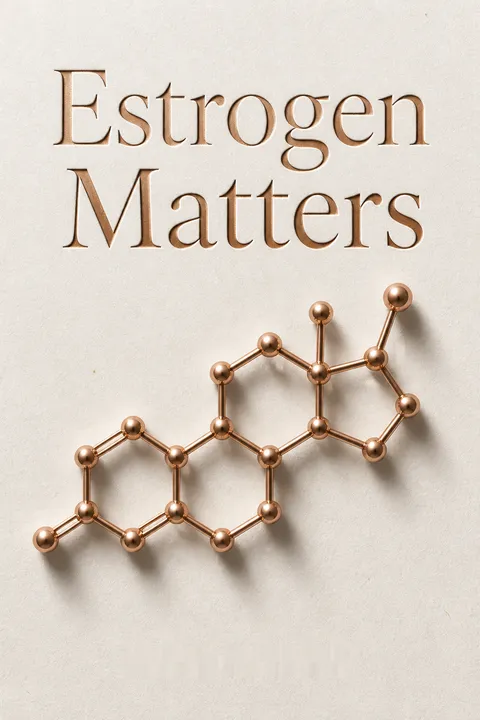
Estrogen Matters is both a medical argument and a story about how a scientific claim becomes public policy. Avrum Bluming’s experience with his wife’s symptoms gives the debate human stakes; Carol Tavris adds a lens on gender bias, professional certainty, and the tendency to protect a favored theory. The book’s durable contribution is not simply its defense of hormone therapy. It asks readers to notice who was studied, what outcome was measured, whether a reported risk is absolute or relative, and whether later evidence supports the first headline.
That skepticism is valuable, particularly when symptoms are dismissed or when one feared diagnosis overwhelms discussion of other health risks. But skepticism must run in both directions. The authors examine the WHI’s limitations with intensity while often treating favorable observational findings as persuasive and unfavorable randomized findings as methodologically compromised. Their account of breast cancer survivors is a clear example: many studies are reassuring, yet the randomized HABITS result remains a real uncertainty, not merely a statistical nuisance. Evidence that a treatment relieves symptoms is also different from evidence that it prevents heart disease, fractures, or dementia.
The book therefore works best as a guide to asking better questions, not as a universal prescription. Its most important distinctions are between estrogen-only and combined therapy, early and late initiation, local and systemic treatment, and symptom treatment versus disease prevention. Those distinctions make blanket claims suspect, including both “hormones are dangerous” and “hormones are safe.”
Medical guidance can change as evidence accumulates, and recommendations may differ with a person’s symptoms, age, health history, and cancer history. This summary presents the authors’ case, not individualized medical advice or a substitute for current clinical guidance. The book’s strongest conclusion is procedural: patients deserve clear explanations of benefits, risks, uncertainty, and alternatives, and their experience should be part of the decision.
People Also Read






Glossary
Women’s Health Initiative (WHI)
Large hormone-therapy trialA major U.S. research program that included randomized trials of menopausal hormone therapy and long-term health outcomes. One arm studied estrogen plus progestin in women with a uterus; another studied estrogen alone in women who had undergone hysterectomy. The book argues that early public interpretations overstated risks and did not apply equally to younger women starting treatment near menopause.
Bradford Hill criteria
Causation assessment frameworkA set of epidemiological viewpoints used to evaluate whether an observed association may be causal. The book highlights strength, consistency, specificity, timing, dose response, plausibility, coherence, and experimental evidence, and adds consideration of alternative explanations. The criteria organize evidence across studies; they are not a checklist that can prove causation by itself.
relative risk
Risk compared with a baselineA measure expressing how much an outcome rate differs between groups, often as a ratio or percentage. It does not show how many people experience the outcome in absolute terms. The book argues that relative-risk headlines can exaggerate the apparent importance of a small change unless readers also see the baseline rate and the absolute difference.
window of opportunity
Early-treatment timing hypothesisThe authors’ term for the proposed period near menopause when hormone therapy may have a more favorable balance of effects than when started many years later. They generally describe this as the first decade after the last menstrual period, particularly for cardiovascular and cognitive outcomes. The timing hypothesis is not a guarantee of benefit or a substitute for assessing individual risk.
HABITS study
Trial in breast cancer survivorsA Swedish randomized study of hormone therapy for menopausal symptoms after breast cancer. It stopped early after more new breast cancer events appeared in the hormone group than in the comparison group. The authors question its interpretation because of its early termination and design limitations, but the result remains an important source of uncertainty about systemic therapy for survivors.
data mining
Searching results for patternsThe practice of exploring a large dataset through many unplanned comparisons or subgroups after the main analysis has failed to find a clear result. Some patterns may appear statistically significant by chance. The book argues that these findings can generate hypotheses for future research, but should not be treated as reliable confirmation without testing them independently.
compounded bioidentical hormone therapy
Custom-mixed hormone preparationHormone products prepared by a compounding pharmacy for an individual prescription, rather than manufactured as standardized, FDA-approved medicines. The term “bioidentical” refers to hormones with a molecular structure matching hormones produced by the body, but does not establish that a product is safer or more effective. The book cites concerns about inconsistent dosing and limited safety evidence.
Download PDF
Download EPUB
.epub digital book format is ideal for reading ebooks on phones, tablets, and e-readers.








