

Key Takeaways
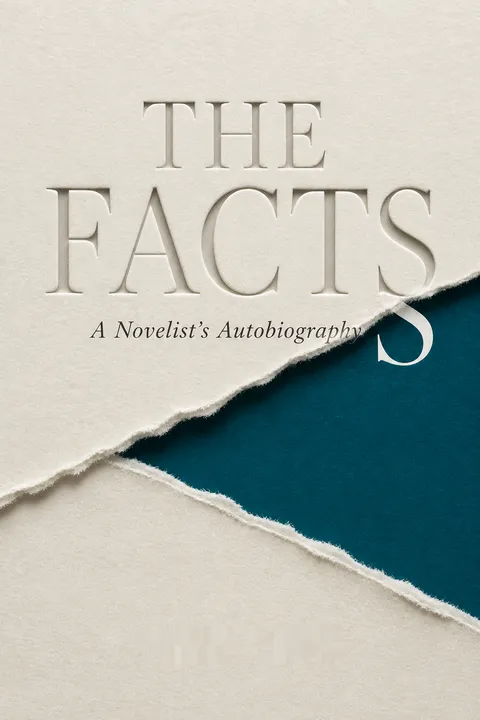
Calling memoir The Facts does not make memory transparent.
Memory arrives interpreted. Roth opens by writing to Nathan Zuckerman, a recurring fictional writer, and asking whether this account of his life should be published. He contrasts his usual process, turning lived experience into fiction, with this attempt to present experience before imaginative transformation. But he also recognizes that memory is not a storehouse of untouched facts. Each remembered event has already been shaped by what the rememberer felt and believed.
The title makes a promise it questions. Zuckerman replies that autobiography also selects, arranges, and withholds. The reader gets no neutral referee, only Roth's account and a fictional critic asking what that account leaves out. The book's central tension is not whether facts matter, but whether any life story can present them without interpretation.
What's striking is how the book anticipates a central insight from memory research: recollection is reconstructive, not a replay of an intact recording. That does not make remembered events useless or false. It means confidence and accuracy are different things, and the story built around an event can change its significance. Roth's exchange makes this distinction unusually visible by placing the narrator's account beside a critic who questions its design. Still, skepticism about memoir should not become the claim that all versions are equally reliable. Interpretation shapes evidence, but it does not erase the difference between an honest mistake and a deliberate falsehood.
Use plain recollection to recover yourself when invention has exhausted you.
A crisis turns him backward. In 1987, at fifty-five, Roth's recovery from unexpected complications after surgery brought severe depression and a sense that he was coming apart. He began retracing his life, not to find one decisive origin but to recover a sequence of beginnings. For decades, he had treated experience chiefly as material to transform. Now, rendering it without fictional embellishment felt like a way to regain his footing.
Family memory supplies the ground. The book begins with his father nearly dying from appendicitis in 1944, then recalls the father's tears on returning home to his sons. Roth also remembers his mother's death in 1981 and his aging father facing the end of life. Recalling a time when his family was still together offered comfort, though it could not undo loss.
The memoir treats narration as a way to restore continuity after illness, a task that overlaps with therapeutic storytelling without being identical to therapy. Reconstructing a timeline can help a person notice what changed and what endured. The father's recovery becomes a remembered model of resilience, while the child's viewpoint preserves the fear he could not fully understand at the time. Yet a coherent account can soothe by making a life seem more orderly than it was. Its value may lie less in proving a single cause than in making experience bearable enough to examine.
Use shared rituals to claim belonging without hiding difference.
Belonging felt ordinary and contested. Roth grew up Jewish in Newark during the Second World War, certain that America was his home while aware of anti-Semitism around him. His father faced limits on Jewish advancement at Metropolitan Life. At the Jersey shore, Jewish families were attacked by gangs shouting slurs. These experiences made prejudice visible without making Jewishness feel incompatible with being American.
Baseball made membership tangible. Neighborhood teams gave Roth and his friends a shared American pastime that did not seem to require them to conceal their origins. They felt both Jewish and wholly at home in the country. That welcome had limits: Roth notes that Black Americans remained excluded from baseball's professional world until 1947. His childhood sense of belonging was real, but it was not universal.
Shared rituals can make abstract citizenship feel lived: a game, a neighborhood, or a familiar weekly gathering lets people belong through participation rather than permission. Roth's baseball memories show how an immigrant community could claim national identity without treating its own customs as a defect. The qualification about Black exclusion matters. A community may experience itself as welcomed while overlooking who remains outside the same institution. The story therefore holds two truths at once: collective belonging can be a powerful answer to prejudice, and every account of inclusion should ask whose access made that feeling possible.
Leave home to become an adult without mistaking escape for rejection.
Independence begins as a negotiation. After starting college at Rutgers' Newark branch, Roth longed to study somewhere farther from home. A neighborhood friend returned from Bucknell sounding newly confident and independent, making college life elsewhere seem possible. Roth wanted room to make his own choices, especially as he grew older and his father's rules began to feel constraining.
His father makes the leap possible. Roth's family had lost savings in a failed business, and his father was still repaying debt. When Bucknell offered admission but no immediate scholarship, Roth expected he could not go. His father told him the family would find a way. The conflict over his independence still came, but the departure was not a rejection of his parents. It was an attempt to grow without turning love into a permanent argument.
This is a more useful picture of independence than the familiar story of a young person simply breaking free. Roth wants distance partly because he hopes to spare a hardworking father and an independent son a damaging struggle. The father's financial support also complicates any simple opposition between family duty and personal ambition. Developmental psychology often treats autonomy as a change in how people relate, not the disappearance of attachment. The book shows that departure can preserve a bond by changing its terms, even when the old tensions do not vanish.
Write from the life you once edited out.
Respectability hid his subject. At Bucknell, Roth first wrote earnest stories about sensitive young people, leaving out Jewish Newark, family comedy, and the characters he imitated for friends. He wanted to sound refined and harmless. The ordinary life he knew seemed too local to belong in literature, so his early fiction tried to escape the very world that had formed his ear.
Satire brings the neighborhood back. As editor of the student magazine Et Cetera, Roth attacked the campus newspaper with a comic imitation. The dean reprimanded him, and a student confronted him, but the episode helped reveal a sharper voice than his earlier stories had shown. Family anecdotes, street-corner humor, and Jewish comic energy became artistic resources rather than embarrassing details to remove.
The turn here is not simply toward autobiographical subject matter. Roth discovers that the voice he had treated as too coarse for literature could be more original than his polished imitations. That is a lesson about craft as much as identity: the familiar material becomes art through selection, rhythm, and comic judgment, not through mere confession. There is also a risk in treating one's community as a ready-made source of characters. Writing from intimacy can deepen a portrait, but satire can still wound, flatten, or expose the people who supplied its raw material.
Interrogate your role before making another person the villain.
Roth recounts a damaging attachment. In Chicago, he pursued Josie, a divorced woman with two children and a painful family history. He describes a relationship that became chaotic, including her announcements of pregnancies that he later understood to have been fabricated. He stayed, felt responsible for her, and eventually married her. The marriage brought years of conflict, legal battles, and alimony.
The fictional critic challenges his account. Zuckerman asks whether Roth presents himself too readily as the innocent man trapped by another person's disorder. He suggests that Roth's choices and desire for danger deserve scrutiny, while also speculating that Josie may have been an alcoholic. That theory is not established as fact. The letter makes a sharper point than any diagnosis: a memoir can expose another person while disguising the narrator's own motives.
The episode invites moral complexity without requiring the reader to reverse the verdict and make Roth the villain instead. His account describes serious harm, but Zuckerman notices that being harmed does not explain every choice to stay, rescue, or return. This is a useful distinction in narratives of damaging relationships: accountability is not the same as self-blame. The fictional critic's theory about alcoholism remains conjecture, a reminder that an alternative account can expose a blind spot and still invent its own. A counterstory should widen inquiry, not pose as a diagnosis.
Turn private wounds into art, but do not confuse usefulness with justification.
A new form emerges from converging pressures. After separating from Josie, Roth found support in his relationship with May, in conversations with Jewish friends, and in psychoanalysis. At the same time, the Vietnam-era political climate encouraged a more openly rebellious comic voice. These influences converged in Portnoy's Complaint, published in 1969. Roth describes the novel as a comic counteranalysis: not a clinical record, but an imaginative performance of self-examination.
Pain becomes material, not a verdict. Roth connects the book's energy to his marital ordeal, his Jewish identity, and his growing freedom to write without the restraint of his earlier literary models. Yet the fact that suffering helped shape a work does not prove the suffering was necessary or beneficial. Artistic transformation can give experience a form; it cannot retroactively make every cost worthwhile.
The creative account is strongest when it describes convergence rather than a single source of genius. Intimate conversation, political anger, analysis, and ethnic self-scrutiny supply different pressures, and the novel's comic voice is the form that holds them together. This resembles a broader feature of art: private experience gains public meaning when it is shaped, not merely disclosed. The ethical complication is equally important. If people become useful because they suffer, a writer may begin to treat their lives as instruments. Making art from harm can be meaningful without making the harm good.
Use a fictional countervoice to expose the memoirist's blind spots.
Zuckerman reads against the portrait. In his long reply, Roth's fictional character argues that the autobiography makes its author too decent and composed. He asks about the anger, ambition, sexual motives, and family tensions that the memoir leaves largely unexamined. His point is not that Roth's memories are false, but that a careful account can still omit what would change their meaning.
A counterlife tests one version. The term describes an imagined alternative to the life presented, a way to examine identities and motives that the official account cannot settle. Zuckerman's reply performs that challenge, but it is not a final authority: he, too, speculates and interprets. The book ends without resolving the argument or giving a simple answer about publication.
A fictional critic lets a writer argue with himself without pretending that self-knowledge has produced a final verdict. Zuckerman is valuable less as a fact-checker than as a pressure test: he asks what the author's preferred version makes invisible. This resembles a productive form of intellectual dissent, where an opposing voice clarifies assumptions even when its own claims remain contestable. The device has limits. A novelist controls both sides of the exchange, so the countervoice may challenge the author while still serving his design. Its force lies in making that control visible.
See how escape from one marriage can harden into lifelong self-protection.
Freedom acquires a defensive edge. After Josie's death and the end of years of legal conflict, Roth describes feeling released from the marriage. His relationship with May had brought tenderness and a measure of recovery, yet he chose not to marry her. The court battles had left him unwilling to place his intimate life under the authority of marriage law again. By the book's close, independence is both a hard-won refuge and a force shaping what he will not risk.
The ending stays unresolved. Roth's choice may reflect a considered need for solitude, not simply fear. But the memoir's closing tension is clear: a strategy that protected him from one painful arrangement may also narrow later possibilities. The book does not decide whether this is wisdom, injury, or both. It lets the reader see the cost alongside the relief.
Protective habits often outlast the conditions that formed them. Roth's refusal to remarry is understandable after years of subpoenas, court appearances, and financial conflict, yet the narrative leaves open whether freedom has become defined mainly as avoiding renewed vulnerability. That question should not be answered by treating marriage as the default measure of a healthy life. The more precise distinction is between a chosen solitude and a rule imposed by past fear. The book gives enough evidence to notice the tension, but not enough to diagnose the choice from the outside.
Analysis
The Facts is a memoir built around a dispute about whether memoir can be factual. Roth selects a life story focused on the making of a writer: childhood in Jewish Newark, departure for college, the discovery of a comic voice, a destructive marriage, conflict with Jewish critics, and the emergence of Portnoy's Complaint. This is not a comprehensive biography. It is a sequence of formative encounters organized around the question of how experience becomes literature.
The book's most distinctive structural move is to append a letter from Nathan Zuckerman, Roth's fictional writer, who reads the memoir as a skeptical editor. Zuckerman praises its tenderness but argues that its restraint hides the anger and motives that fiction can make visible. His criticism is especially forceful around Josie, because Roth's account of her also protects him from confronting his own attraction to the relationship's danger. But Zuckerman is no neutral witness. His speculative explanations reveal how readily a counterstory can acquire its own distortions. The disagreement therefore does not yield a stable truth; it demonstrates that self-criticism needs another voice, while reminding readers that every voice has a position.
The book also resists a simple account of assimilation. Roth feels deeply American and deeply Jewish, and his childhood contains both communal ease and antisemitic exclusion. His art grows from the comedy and speech of his neighborhood, then collides with readers who regard his depiction of Jews as betrayal. These episodes show that representation is never just a private aesthetic choice when a group feels exposed or stereotyped.
A modern reader can see the memoir as an experiment in narrative identity: Roth uses recollection to recover continuity after illness, while Zuckerman tests the self-image that recollection creates. The experiment's limitation is also its subject. Women who shaped Roth's life remain filtered through his account, and the fictional rebuttal does not grant them independent testimony. The book offers no final key to a life. It shows why the writer keeps turning between memory and invention, each form revealing what the other cannot confidently claim.
Review Summary
The Facts is an unconventional autobiography by Philip Roth, framed as a letter to his fictional alter ego, Nathan Zuckerman. Readers appreciate Roth's exploration of his Jewish upbringing, early writing career, and disastrous first marriage. The book's clever structure, with Zuckerman critiquing Roth's memoir in the final chapter, challenges the notion of autobiographical truth. While some find the central narrative tedious, many praise Roth's prose and insight into the relationship between fact and fiction in literature.
People Also Read








Glossary
counterlife
An imagined alternative lifeA counterlife is an imagined version of a person's life that tests the identity and motives presented in the accepted account. In this book, Roth uses the term for a return to lived experience after years of fictional transformation. Zuckerman's response also makes the idea a challenge: another version can reveal omissions without becoming the final truth.
counteranalysis
Comic fictional self-examinationCounteranalysis is Roth's description of a comic, invented form of self-examination. Rather than report psychological experience as a clinical record, a novel reshapes it into a character and a performance. In the book, Roth uses the term for the imaginative method behind Portnoy's Complaint, where exaggeration and comedy disclose tensions that literal recollection may leave obscure.
self-hatred
Internalized rejection of group identityIn Roth's discussion of accusations against his early fiction, self-hatred means an internalized aversion to one's recognizable group identity. He describes it as potentially appearing in efforts to erase signs of that identity or in contempt for group members who do not do so. The term is part of a charged dispute, not a neutral diagnosis of Roth or his critics.
occupatio
Mention by claiming not to mentionOccupatio is a rhetorical device in which a speaker announces that a subject will be left unmentioned, thereby bringing it to the audience's attention. In Zuckerman's letter, Maria invokes the device to question what Roth's autobiography excludes. The term highlights how silence can communicate, while also suggesting that omissions may be part of a narrator's design.
a.c.o.a.
Adult child of an alcoholicA.C.O.A. is an abbreviation for adult child of an alcoholic, used in Zuckerman's letter while proposing a possible way to understand Josie's history. The book does not establish this as a diagnosis of her. It matters chiefly as an example of the fictional critic offering an alternative interpretation that may illuminate the story while remaining speculative.
About the Author
Other books by Philip Roth


Download PDF
Download EPUB
.epub digital book format is ideal for reading ebooks on phones, tablets, and e-readers.








