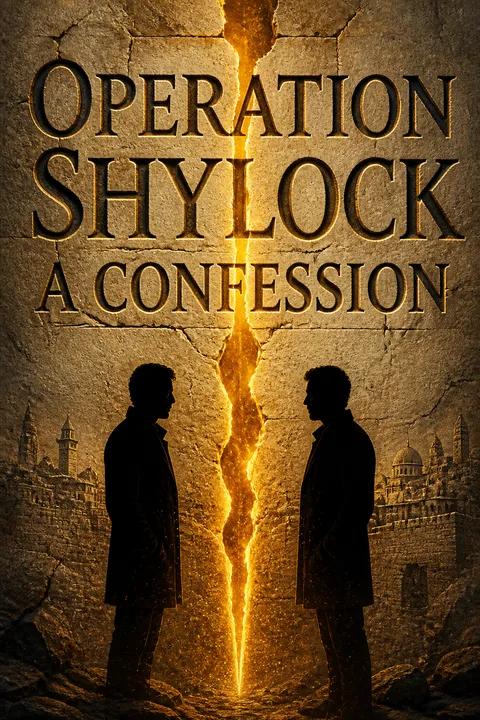


Plot Summary
A Mind Comes Apart
After a minor knee operation leaves him in worsening pain, Philip Roth begins taking Halcion and spends a hundred days in terror, compulsive rituals, hallucinations, and thoughts of suicide.
His wife, Claire, watches him lose the settled self he trusts; a friend finally identifies the sleeping pill as the likely cause and helps him withdraw from it. Roth gradually recovers, though he remains unsure whether the breakdown exposed something in him or was only the drug's work.
Months later, while living in a Manhattan hotel with Claire, he hears from his cousin Apter and novelist Aharon Appelfeld that a man named Philip Roth has appeared in Jerusalem, attending a war-crimes trial and giving interviews. The news arrives just as Roth is preparing to return there.
The breakdown makes identity a bodily problem before it becomes a literary one. Roth cannot summon his usual will, and the image of his lost self feels as concrete as his pain. His recovery therefore does not restore certainty; it teaches him that a person may be vulnerable to forces he cannot interpret or control. The reports of a namesake strike this newly fragile self at precisely its weakest point. A double might be comic material to a confident novelist, but to someone who has recently wondered where his own identity went, it sounds like evidence that the self can be displaced.
The Diasporist on the Phone
Aharon confirms that the second Roth has advertised a Jerusalem lecture and spoken in Poland with Lech Walesa. The Israeli press reports that this man promotes Diasporism, a plan to move Israeli Jews of European descent back to Europe, where he believes Jewish life can be rebuilt and a future catastrophe avoided.
Roth calls the King David Hotel, disguises his voice as a French journalist, and interviews the stranger about the proposal. The man answers at length, arguing that Israel now endangers Jewish survival and that European governments could welcome Jewish return.
Roth hears a voice with his name but a politics he rejects, then hangs up without identifying himself. He decides that lawyers and public retractions can wait, and travels to Jerusalem to see what the impostor intends.
The phone interview turns an identity puzzle into an argument about Jewish history and political belonging. The stranger's scheme is not merely eccentric: it converts the memory of European Jewish destruction into a case for returning there, while treating Israel as a new source of danger. Roth's resistance is equally compromised. He rejects the plan, yet his curiosity leads him to impersonate a journalist and invite the man to elaborate. The episode establishes the book's central instability: public identities are performances, and even an author who studies performance can find himself drawn into another person's script.
The Trial Draws Him In
In Jerusalem, Roth stays at an Arab hotel to avoid the King David, where the other Roth is registered. He studies the prosecution and defense claims in John Demjanjuk's trial, then meets Appelfeld to discuss fiction shaped by Holocaust experience.
His cousin Apter, a survivor who lives by painting tourist landscapes, waits for him, but Roth's fixation on the double pulls him elsewhere. A storm drives him into a hotel lobby, where the second Roth appears in person, embraces him tearfully, and greets him as the original.
Roth sees a close physical resemblance, though not an exact match, and demands an explanation. The stranger praises Roth's books and insists their lives are linked. Instead of calling the police, Roth agrees to hear him out over lunch.
The trial supplies a moral gravity that the double's theatricality cannot contain. Roth arrives intent on investigating a personal nuisance, but the courtroom forces him to look at the disputed identity of a man accused of mass murder. That parallel does not solve anything; it makes identity more dangerous, because a mistaken face can bear legal, historical, and human consequences. His choice to meet the double after witnessing the trial shows how easily intellectual curiosity becomes a form of exposure. He knows the encounter may destabilize him, yet he cannot stop treating it as material that must be examined.
A Million-Dollar Mix-Up
The second Roth explains his anti-Semitic recovery group, A-S.A., and his ambition to make Jewish survival his life's work. His nurse and partner, Wanda Jane Possesski, known as Jinx, visits the real Roth with a letter and recounts how caring for dying cancer patients fed her hatred of Jewish doctors before her relationship with the other Roth drew her into recovery.
She insists that he is sincere, despite his extravagant impersonation. At lunch the next day, the disabled Louis B. Smilesburger gives Roth a check for one million dollars, mistaking him for the Diasporist.
Roth accepts it without correcting the error. Walking through Jerusalem afterward, he names the other man Moishe Pipik, a comic childhood nickname that shrinks the double's grandeur, though the money now binds their confusion to a concrete consequence.
Jinx's history complicates the easy division between prejudice and affection. Her hatred grew from grief, exhaustion, and helplessness around death, but the stranger offers her a totalizing path to redemption. The attraction is not simply ideological; it answers her need to be needed. Roth recognizes the danger of this emotional machinery yet becomes its beneficiary when Smilesburger mistakenly hands him the check. His failure to correct the donor is an ethical lapse, not just a comic accident. By naming Pipik, Roth tries to regain interpretive control, but the nickname cannot undo the material confusion he has accepted.
Ramallah's Old Friend
In Jerusalem's market, Roth unexpectedly meets George Ziad, a former University of Chicago friend who is now a Palestinian academic living under Israeli occupation. George describes returning to his family's lost home and feeling consumed by anger at the state that displaced them.
He brings Roth to a military courtroom in Ramallah, where George's friend Kamil is trying to secure medical care for his teenage brother, who he says has been weakened by an injection in detention. Roth objects when Kamil compares Israeli conduct to Nazi crimes, but he stays.
At George's home, his wife Anna and son Michael watch as Roth, pretending to share Pipik's convictions, delivers an impassioned case for Diasporism. Anna hears the scheme as another fantasy that might endanger her family, while George takes Roth's performance as political solidarity.
George's return brings the cost of political abstraction into a domestic room. His anger is rooted in a specific dispossession, but it has expanded until every encounter becomes evidence in a total indictment. Roth's performance offers George the public ally he wants, yet it also turns Anna and Michael into witnesses to a political fantasy they have not chosen. Anna sees the burden passed from one generation to the next, while George treats his son's future as part of a historical duty. The scene exposes how political conviction can become intimate coercion, even when it begins as a response to real injustice.
The Roadside Search
George's Arab taxi driver carries Roth toward Jerusalem along a dark, indirect route. The driver repeatedly asks whether Roth is a Zionist, then stops the car to relieve his stomach, leaving Roth to fear an ambush. Israeli soldiers descend on them, search the vehicle, and seize Roth in the confusion.
A young lieutenant, Gal Metzler, recognizes Roth as the author of a book he has just finished and drives him back to his hotel. During the ride, Gal confides that military service and his father's expectations have left him ashamed and divided; he dreams of leaving Israel to study film.
Roth answers with another defense of Diasporism, drawn into the role he had only pretended to play at George's house. The night ends with Roth back at his hotel, still uncertain which parts of the day were danger and which were performance.
The journey makes political identity a question of immediate risk. The driver wants Roth to declare where he stands, while the soldiers treat an unfamiliar car on a restricted road as a possible threat. Gal's recognition briefly converts a military encounter into a literary one, but his confession reveals that reading has not freed him from the institution he serves. Roth's response is telling: he uses the language of Pipik's cause to comfort a young man whose doubts are real. His impersonation has become less a strategy than a reflex, blurring the boundary between performance and conviction.
The Double Takes the Bed
Back at the American Colony Hotel, Roth learns that someone claiming to be him has taken his room key. He finds Pipik stretched across his bed, reading Appelfeld's Tzili and demanding the million-dollar check.
Pipik produces a passport bearing Roth's name and photograph, then reveals that he is a Chicago private investigator who specializes in missing-person cases. He describes a career built on tracking people and living dangerously, while insisting that the writer has misunderstood their connection. Roth offers money to make him leave, but Pipik refuses the bargain and turns furious over the missing check and Roth's contempt.
The argument ends when Pipik exposes his artificial erection and lunges; Roth shoves him into the corridor. The encounter leaves Roth shaken by the double's vulnerability, aggression, and uncanny knowledge of his childhood.
The hotel room turns likeness into a struggle over possession. Pipik has entered Roth's private space, taken his key, and carried an identity document that makes the impersonation administratively real. His claim to be a detective adds a bitter irony: the man who finds the missing is himself a person without a stable account of who he is. Roth's offer of money attempts to reduce the crisis to a transaction, but Pipik wants recognition as well as the check. The confrontation makes clear that dismissing him as a joke is not neutral. Contempt becomes fuel for the very rivalry Roth hopes to end.
Jinx Brings the Star
After Pipik leaves, Jinx slips into Roth's room with a cloth Star of David and warns that Pipik is consulting militant Jews about kidnapping Demjanjuk's son, John Junior, to force a confession from the accused war criminal.
Roth doubts her account, but she explains that Pipik wears the star Walesa gave him and that his cancer, pain medication, and need for a cause have made him increasingly unstable. She traces her own passage through a chaotic childhood, religious conversion, nursing, and anti-Semitism, describing how Pipik became another figure to whom she could surrender herself.
Roth calls the police about masked men carrying rocks outside, but withholds the alleged kidnapping plot. He and Jinx then have sex. By morning, he is exhausted, compromised, and unable to tell whether he has heard truth, delusion, or both.
The star makes historical memory a prop in a present-day crisis, and Roth's anger at its apparent misuse reveals how little distance he has maintained from the events. Jinx arrives both as a warning and as someone seeking escape from Pipik, but her own account shows how readily she has moved between systems that promise certainty and belonging. Roth sees the pattern and still becomes physically involved with her. His decision to report the rocks but not the kidnapping threat is a crucial moral evasion: he protects his privacy from the chaos while leaving another person's safety uncertain.
A Witness Changes Everything
Planning to flee Jerusalem, Roth is intercepted by two Israeli students asking about his stories and by antiquarian David Supposnik, who gives him the travel diaries of Leon Klinghoffer and asks him to write an introduction. Roth then goes with George to the Demjanjuk trial.
Survivor Eliahu Rosenberg is questioned about a 1945 memoir stating that Ivan died during a camp uprising; he explains that the account recorded what other survivors told him, not what he witnessed. Demjanjuk's son watches the testimony, while Roth struggles to decide what the contradiction proves.
Outside, an argument over Ukrainian history distracts the crowd. Two men seize Roth, carry him to a shabby schoolroom, and leave him alone. His flight has ended in an abduction whose authorship he cannot identify.
Rosenberg's testimony shows memory working under pressure rather than as a perfect archive. His earlier account records the survivors' hope that their tormentor had died, while the trial demands a sharp distinction between what he saw and what he heard. Roth recognizes the human reasons for the discrepancy but cannot turn them into certainty about Demjanjuk. The abduction arrives amid competing performances of historical injury, and Roth cannot tell whether he is a pawn in a political operation or the victim of Pipik's improvisation. The schoolroom makes his old education and present helplessness occupy the same space.
The Handler Takes Charge
Roth waits in the schoolroom, where Hebrew writing on the blackboard recalls the lessons he once abandoned. Smilesburger arrives, explains that the men who brought Roth there work for Israeli intelligence, and returns the million-dollar check, which had been recovered from the roadside.
He says the agency is concerned about Jewish donors allegedly supporting the PLO and wants Roth to travel to Athens, then possibly meet Yasir Arafat. Roth objects that he was never asked to become an operative, and Smilesburger insists that his public status and recent encounters make him useful.
To explain the Jewish conflict at the heart of the affair, Smilesburger speaks about malicious speech among Jews and the need to restrain it. Roth leaves with the mission unresolved in the room, but later acknowledges that he agreed to gather intelligence.
Smilesburger's revelation replaces one uncertainty with another. Roth has not imagined the surveillance, but knowing that an agency arranged it does not make the events coherent or ethically acceptable. The handler's appeal rests on a familiar Jewish tension: individual freedom against communal obligation, and the danger that loyalty can be used to recruit a person without clear consent. His lecture on harmful speech also mirrors the book's own appetite for accusation and exposure. Roth's eventual agreement is neither a clean conversion nor a simple surrender; it extends his habit of entering situations he cannot fully control.
Epilogue
The epilogue reveals that Roth did undertake the intelligence mission, then removed a final chapter describing the meetings in Athens and a later European expedition after Smilesburger warned that publication could endanger agents. Years later, the retired handler asks him to cut the chapter or present the book as fiction.
Roth refuses to mislabel or censor what he wrote, though Smilesburger warns that the agency can ruin his reputation and offers him money. Roth leaves the cash in the handler's attaché case. The book closes by keeping its own status unsettled: a reader's note calls the confession false, even as the narrative insists that its improbable events happened.
The ending refuses the clean distinction between testimony and invention that the story has repeatedly tested. Roth withholds a chapter because an intelligence agency claims the truth could cause harm, then resists the agency's attempt to control how the remaining account is labeled. Yet the final note destabilizes that act of resistance by calling the confession false. The book's uncertainty is not a puzzle with a hidden answer so much as an ethical condition: the reader must weigh competing claims without an external authority capable of settling them. Censorship, fiction, and confession become rival ways of managing facts that may be dangerous precisely because they cannot be made fully secure.
Analysis
Operation Shylock makes the act of telling a story inseparable from the struggle to decide who is entitled to tell it. Roth's double does not simply steal a name. He takes up the writer's public authority and directs it toward a political cause, forcing Roth to confront the possibility that reputation is a tool others can use without the owner's consent. Yet Roth also repeatedly borrows Pipik's convictions, most visibly when he addresses George and Gal. The boundary between impersonator and original is therefore crossed from both sides.
The novel's political disputes resist easy moral sorting. Demjanjuk's trial asks whether memory and evidence can identify a criminal decades later. George's anger arises from Palestinian dispossession, but his certainty can overwhelm the needs of his wife and son. Smilesburger condemns Jewish division while using secrecy and coercion to advance state interests. Each character's account contains insight and self-protection at once. The book does not make these contradictions equivalent; it makes them difficult to avoid.
Roth's breakdown establishes that uncertainty is not merely an intellectual theme. His mind has already betrayed his confidence in perception, so the Jerusalem events press on a genuine vulnerability. He reaches for literature and humor to regain control, but those tools sometimes delay action, as when he reports the rock runners and withholds the warning about Demjanjuk's son. His curiosity can be a form of courage, but it can also excuse choices that affect other people.
The ending's refusal to certify its own truth is therefore more than a literary trick. The narrator can offer documents, memories, and an intelligence handler, yet none becomes a final authority. The reader is left to judge not only what happened, but how institutions, writers, and communities shape what can be said. The book's deepest skepticism falls on the wish for a perfectly innocent witness, a person who sees clearly, acts cleanly, and owes nothing to anyone.
Review Summary
People Also Read







Characters
Philip Roth
The shaken novelistThe narrator is an American Jewish writer recovering from a catastrophic breakdown when he learns that another man is using his name in Jerusalem. He is observant, combative, and deeply curious, with a habit of turning confusion into a problem of interpretation. That habit serves him as a writer but can make him reckless when real people are at risk. His relationships with Claire, Aharon, George, Pipik, and Smilesburger expose different versions of his Jewish identity: private, literary, political, and communal. He wants to remain independent of causes and institutions, yet repeatedly enters the roles others offer him. His intelligence is real, but it does not protect him from vanity, desire, or self-deception.
Moishe Pipik
The rival in Roth's skinPipik is a Chicago private investigator whose resemblance to Roth lets strangers mistake him for the novelist. He uses that confusion to gain attention for Diasporism, a political program advocating the return of Israeli Jews of European descent to Europe. He is passionate, volatile, and eager to be recognized as both a public figure and a Jewish advocate. His admiration for Roth mixes with resentment, and he treats their shared appearance as evidence of a deeper bond. Pipik's ability to move between sincere conviction, theatrical exaggeration, and apparent instability makes it difficult to know when he is manipulating others or simply overwhelmed by his own performance.
Wanda Jane Possesski, Jinx
The searching nurseJinx is an oncology nurse whose work places her beside patients and families facing severe pain and death. She is physically confident, emotionally generous, and prone to attaching herself to people who offer a consuming explanation for her life. Her history includes religious conversion, disillusionment, and anti-Semitism, which she tries to confront through the recovery group Pipik creates. She is drawn to his illness and zeal, but her care for him does not erase her own doubts or need for refuge. Jinx makes compassion difficult to sentimentalize: she can comfort the dying, harbor prejudice, desire intensely, and still struggle to distinguish devotion from self-erasure.
George Ziad
The exiled professorGeorge, whom Roth knew as Zee at the University of Chicago, is a Palestinian Christian academic who returns to live in the occupied West Bank. The loss of his family's Jerusalem home shapes his politics and his sense of responsibility to Palestinians. He is learned and eloquent, but his anger can make him relentless, converting every conversation into a case against Israeli power. His wife and son experience the costs of his political commitment at close range. George is not simply a symbol of grievance: his memories of his father, his old friendship with Roth, and his fear for his family reveal the intimate wounds beneath his public rhetoric.
Smilesburger
The enigmatic handlerSmilesburger is an elderly, disabled Jewish man whose appearance suggests fragility while his manner conveys patience and strategic control. He first seems to Roth like a philanthropist, then becomes a source of pressure and instruction. He speaks fluently about Jewish history, communal responsibility, and the danger of speech, yet his own methods rely on concealment and manipulation. He understands how to make obligation feel personal, especially to a writer whose identity is bound to Jewish experience. Roth cannot decide whether Smilesburger is a protector, a deceiver, or both, and the handler's force comes from making those categories difficult to separate.
Claire
Roth's wary anchorClaire is Roth's wife and the person who witnesses his breakdown at close range. Her concern is practical and unsentimental: she wants him safe, and she recognizes that his confidence may outpace his recovery. When Roth decides to pursue the mystery in Jerusalem, she warns him against meeting an unknown and potentially unstable man. Her caution contrasts with his appetite for risk and interpretation. Claire's own exhaustion matters too; she has endured the helplessness of watching someone she loves lose control, and she does not mistake a return of bravado for proof that danger has passed.
Aharon Appelfeld
The survivor novelistAppelfeld is an Israeli novelist and Roth's friend, a Holocaust survivor whose childhood included escape from a concentration camp and years of hiding. He writes from the limits of memory and imagination, transforming lived trauma rather than presenting it as a simple record. In Jerusalem, he offers Roth serious conversation about fiction, childhood, and Jewish experience, providing an alternative to the double's political theatrics. Appelfeld is attentive without being intrusive, and his composure has been shaped by experiences Roth cannot claim as his own. Their friendship gives Roth a rare space for inquiry that is neither a public performance nor a demand for allegiance.
Apter
The frightened cousinApter is Roth's cousin, a Holocaust survivor whose childhood trauma has left him emotionally vulnerable in late middle age. He paints scenes of Jerusalem for tourists and struggles to value his own work. His fear of the violence around him deepens his dependence on Roth, whom he sees as a possible source of safety. Apter's fluency in several languages contrasts with his difficulty asserting himself. His presence connects the novel's identity games to the ordinary needs of a person who wants shelter, family, and a life no longer governed by fear.
John Demjanjuk
The accused camp guardDemjanjuk is a Ukrainian American autoworker on trial in Jerusalem, accused of being Ivan the Terrible, a guard at Treblinka. He presents himself as a harmless family man and contests the identification evidence against him. The proceedings place his ordinary life beside testimony about extraordinary cruelty, forcing spectators to confront how little appearance can establish about a person's past. The summary does not resolve the case; the novel's attention lies in the conflicting evidence, the survivors' memories, and the pressure the trial places on everyone who watches.
John Demjanjuk Jr.
The loyal sonDemjanjuk's son attends the Jerusalem trial and publicly supports his father's claim of innocence. His presence makes the case a family crisis as well as a historical and legal one. He represents the burden placed on children when a parent's past becomes a public accusation.
Anna Ziad
The wary wifeAnna is George's wife, a former advertising worker who now helps produce Palestinian political materials. She lives with the strain of occupation and fears for their teenage son. Unlike George, she does not treat political commitment as a self-evident duty; she questions whether any national cause is worth placing Michael in danger. Her clear-eyed resistance makes the family consequences of George's choices visible. Anna's skepticism is neither indifference nor cowardice. It comes from a parent's insistence that life cannot be reduced to historical symbolism.
Michael Ziad
The son under pressureMichael is George and Anna's teenage son, caught between his father's political commitments and his own desire for a less burdened future. His silence and resistance show how a parent's historical mission can feel to a child like an imposed inheritance.
David Supposnik
The keeper of diariesSupposnik is a Tel Aviv antiquarian who collects rare books and brings Roth the travel diaries of Leon Klinghoffer. He sees in the ordinary entries a record of Jewish life and loss worth preserving. His request for Roth to write an introduction turns private papers into a question of public memory. Precise, formal, and forceful, Supposnik believes that the right writer can help others understand what was destroyed. His certainty contrasts with Roth's growing suspicion of every document and every claim.
Gal Metzler
The conflicted lieutenantGal is a young Israeli army lieutenant who recognizes Roth during the roadside confusion and drives him back to Jerusalem. He is troubled by the moral compromises of military service and by his father's expectations, though he remains inside the institution he questions. Reading gives him temporary distance from the pressures of service, and he hopes to study film abroad. His conversation with Roth reveals how political duty can divide a family as much as it defines a nation.
Kamil
The jailed boy's advocateKamil is a Palestinian poet and lawyer whose teenage brother is being held by Israeli authorities. He asks Roth to witness the military court proceedings and presents the case as part of the broader occupation. His urgency tests whether Roth's sympathy will translate into action.
Plot Devices
The Roth double
Identity made unstablePipik's physical resemblance to Roth allows him to use the writer's name, passport likeness, reputation, and public associations. The device begins as a newspaper oddity, then becomes an in-person rivalry that disrupts Roth's sense of reality. It also mirrors the Demjanjuk trial, where the identification of one man with another carries moral and legal stakes. Because Roth never receives a fully verifiable account of Pipik's identity, the double functions both as a character and as a test of how much a person depends on others to recognize him.
The Halcion breakdown
Fragility before the mysteryRoth's drug-induced collapse precedes the Jerusalem plot and shapes his responses to it. Panic, hallucination, compulsive behavior, and suicidal thoughts have recently taught him that his own perceptions can become unreliable. As a result, every coincidence involving Pipik, the trial, or the intelligence operation can be read as either an external event or a threat to his recovering mind. The breakdown is not just background; it raises the cost of Roth's curiosity and prevents him from treating uncertainty as a safe literary game.
Diasporism and A-S.A.
Politics through personal salvationPipik's Diasporism proposes relocating Israeli Jews of European descent to Europe, while his Anti-Semites Anonymous group treats prejudice as a condition from which people can recover. The paired schemes connect geopolitics to private need: Pipik wants to protect Jews, and Jinx wants to escape the hatred she developed while nursing the dying. Their idealism also gives them access to journalists, donors, and public attention. Roth's skepticism is challenged because the schemes are absurd enough to seem comic but serious enough to attract real loyalties and money.
The Demjanjuk trial
History under disputed testimonyThe trial places survivor testimony, documentary evidence, family loyalty, and the accused man's ordinary American life in direct conflict. Rosenberg's earlier memoir says he heard that Ivan died during the Treblinka uprising, while his courtroom testimony clarifies that he did not witness the death. The contradiction does not settle Demjanjuk's guilt, but it makes the limits and pressures of memory visible. The trial also gives Pipik's impersonation a dangerous setting, where public identity and historical responsibility are already being contested.
The check and diaries
Objects that demand trustSmilesburger's million-dollar check turns a mistaken identity into a material dispute, while Klinghoffer's travel diaries invite Roth to turn mundane records into testimony about Jewish life. The check changes hands amid deception, surveillance, and mistaken assumptions about who owns it. The diaries raise a different problem: their ordinary details gain force because the reader knows their owner was murdered. Together, these objects make evidence tangible without making it self-explanatory. Roth can hold them, lose them, and study them, but he cannot make them resolve the larger questions of identity and truth.
About the Author





Download PDF
Download EPUB
.epub digital book format is ideal for reading ebooks on phones, tablets, and e-readers.








