

Key Takeaways
Treat disinformation as a broken information system, not a pile of bad posts.
The problem is structural. Disinformation is deliberately misleading information, while misinformation can be wrong without an intent to deceive. The distinction matters, but neither makes sense in isolation. Coper argues that societies have always had lies, political propaganda, and competing interpretations. What has changed is the setting: trusted news sources have weakened, social media sorts what people see, and groups can build realities with few shared reference points.
Facts need common ground. During the pandemic, people could encounter public health guidance beside claims that the disease was fabricated or that vaccines were dangerous. The result was not simply disagreement over evidence. It was a loss of trust in the institutions and shared facts that allow disagreement to remain constructive. Coper calls this wider breakdown the Disinformation Age.
What's useful here is the shift from asking only whether a post is false to asking what conditions help it spread. That systems view makes room for media economics, platform design, and social identity in one explanation. It also cautions against treating fact-checking as a complete remedy. The risk is that a broad diagnosis can make responsibility feel diffuse, as though no single actor can be held accountable. The structural view is strongest when paired with specific scrutiny of the decisions made by platforms, publishers, political leaders, and users.
When news loses its watchdogs, outrage fills the empty local newsroom.
The business model broke. Newspapers once paid for reporting through advertising bundled with classifieds and other listings. The internet unbundled those services, and platforms such as Google and Facebook captured much of the advertising market. In the United States, about 2,000 newspapers closed over two decades. Australia lost thousands of newsroom and related media jobs in 2020 alone, while News Corp controlled roughly 70 percent of the newspaper market.
Clicks changed the product. To survive online, outlets chased attention with speed, sensational headlines, and emotionally charged stories. Subscription paywalls offered another route, but could leave people outside them with less access to reporting. The loss of local journalism also means fewer reporters watching councils and local institutions, leaving communities with less shared information and more dependence on social feeds.
The chapter's economic explanation is more revealing than a simple story about bad journalism. When the reward for reporting shifts from public attention to advertising clicks, editorial choices change even without a conspiracy. Local reporting matters especially because it connects abstract politics to decisions residents can observe directly. Still, rebuilding journalism cannot mean restoring every old institution unchanged. The book's own history shows that news was never free from political influence. The useful goal is a sustainable watchdog function, with plural ownership and accountability.
Build friction before sharing, because engagement algorithms do not check truth.
Attention is the product. Social platforms use algorithms, sets of rules that select and rank content, to keep users engaged. Facebook said it would promote posts likely to prompt interaction. That can reward anger, fear, and conflict because they often generate comments and shares. The system is not designed to distinguish an accurate explanation from a provocative falsehood.
Personal feeds fragment reality. Platforms also use behavioral data to tailor what each person sees. Two people searching the same question may receive different results, while recommendation systems can guide users toward increasingly similar or extreme material. The risk is not merely that people find false claims. It is that they inhabit different information environments, without realizing how much those environments have been filtered for them.
A ranking system is a form of editorial power, even when its designers describe it as personalization. The book's account helps readers see that seemingly individual choices are partly shaped by the order in which information appears. A practical implication is to add a pause before sharing, and to seek sources beyond a personalized feed. Yet algorithmic incentives are not the only cause: people also create and share material for political, social, or financial reasons. Changing ranking rules can reduce amplification, but it cannot erase those motives.
Question sudden online consensus before treating it as public opinion.
A crowd can be staged. Coordinated Inauthentic Behaviour describes groups using fake identities to mislead people online. A prominent example was J.R. Cliff, a supposed Black veteran supporting Donald Trump who gained 24,000 followers despite posting only eight times. The account's image belonged to someone else. Its apparent popularity gave a manufactured political message the appearance of authentic support.
Repetition can make a trend. In Australia, researcher Timothy Graham traced the spread of the hashtag #DanLiedPeopleDied during Victoria's lockdown. One account repeated it more than 200 times in seven hours, and a small cluster of new or suspicious accounts helped drive attention. Real users and news outlets then amplified the discussion. The origin of such activity can be difficult to attribute, but artificial volume can still shape what appears widely believed.
The important distinction is between a claim's popularity and its representativeness. Online visibility can be manufactured, then become genuinely popular as real people respond to it. That transition makes simplistic judgments difficult: a suspicious origin does not prove every later participant is inauthentic. The book's examples encourage readers to inspect account history, repetition, and timing rather than accept a trend at face value. A fair analysis also needs restraint. Evidence of coordinated behavior should prompt investigation, not automatic certainty about who commissioned it.
Expect people to defend belonging before they defend a fact.
Beliefs become social commitments. Coper describes motivated reasoning: people interpret new evidence in ways that protect existing views and group ties. In an experiment involving a disputed football game, students from two universities watched the same footage but saw more fouls by the opposing team. The evidence did not arrive in a neutral mind. It was interpreted through allegiance.
Familiarity leaves residue. The Continued Influence Effect describes how an earlier false claim can keep shaping thought after it is corrected. The Illusory Truth Effect describes how repetition can make a statement feel more credible simply because it is familiar. One study cited in the book found that false news spread online about six times faster than true news. Corrections may help, but they do not reliably erase the first impression.
These findings explain why a correction can feel like an attack on identity rather than a useful update. They also show why the messenger and the social setting matter, not just the evidence itself. The book is careful to note that the often-cited backfire effect is contested and varies by context. That qualification is important: resistance is common, but not every correction makes beliefs worse. The practical lesson is neither cynicism nor surrender. It is to make room for people to change their minds without requiring them to abandon every group or value at once.
Treat conspiracy communities as belonging systems, not just bad arguments.
A conspiracy can offer a community. QAnon began with anonymous online claims that a secret government insider was revealing a hidden struggle against a powerful child-abuse cabal. The claims lacked evidence, but the story offered villains, victims, clues, and a heroic role for followers. Participants could investigate together, interpret cryptic hints, and gain recognition from others who shared the theory.
Online stories can escape the screen. QAnon became a broad home for other conspiracies, and its claims were linked to real-world threats and violence. Anthony Comello, who killed a New York crime boss, believed his target belonged to the supposed cabal. The book's point is not that every conspiracy believer becomes violent. It is that group belonging, social media recommendations, and an emotionally satisfying plot can make unsupported beliefs durable and consequential.
Seeing conspiracy belief as a social experience helps explain why a list of counterarguments often misses the point. The theory offers purpose and recognition as well as an explanation, so removing the explanation alone may leave the underlying needs untouched. This does not excuse harmful claims or actions. It suggests that responses should distinguish a person from the belief and preserve routes back to ordinary relationships. The account also warns against using the most extreme cases to define every believer. Such cases clarify the stakes, but they do not establish a universal path from belief to violence.
Teach people the lie's techniques before its claims arrive.
Prevention beats correction. Inoculation theory proposes that exposure to a weakened version of a misleading argument can prepare people to resist a stronger one. The online game Bad News let players practice techniques such as impersonation and emotional manipulation. In tests involving thousands of players, participants became better at recognizing fake news. A related game, Go Viral!, focused on common methods used in COVID-19 misinformation.
Warn without spreading the claim. Prebunking means explaining a likely tactic or warning about a misleading approach before people encounter it. Researchers who explained how the tobacco industry manufactured doubt found participants more resistant to similar tactics used against climate science. A simple prompt to consider accuracy before sharing also improved people's ability to distinguish true from false headlines. These approaches target the process, not just one claim.
The strength of inoculation is that it gives people a reusable skill rather than a list of debunked claims that quickly goes stale. It also respects how attention works: a warning about a tactic can arrive before the false narrative has become familiar. But resilience should not become a demand that individuals solve a platform-wide problem by themselves. Games and prompts can help with careless sharing; they are less likely to stop deliberate campaigns. Prevention works best as one layer alongside responsible political leadership, platform design, and reliable reporting.
Make truth persuasive by telling it in the audience's own moral language.
Facts need a frame. People often form moral and political judgments intuitively, then use reasoning to defend them. That is why a factual rebuttal can fail if it makes someone feel that accepting it means betraying their identity. Coper recommends finding shared values, listening, and lowering the social cost of changing a position. A private conversation can make it easier to revise a belief than a public argument watched by peers.
Tell the stronger story. When a correction is necessary, the book recommends a fact sandwich: state the accurate account, briefly identify the misleading claim, explain how it distorts, then restate the facts. The broader aim is to offer a compelling alternative story, not merely a list of denials. Curiosity can also help: asking a person to consider a question may open more space for thought than announcing that they are wrong.
This approach treats persuasion as a relationship, not a courtroom victory. Its emphasis on shared values is especially useful when a disputed issue has become a marker of group identity. The private setting also reduces the pressure to perform certainty for an audience. Still, value-based framing should not become manipulation or a reason to soften clear evidence. Respectful conversation can create an opening, but it cannot guarantee agreement. The standard should be honest explanation delivered in a form the listener can consider, not a clever tactic for winning at any cost.
Rebuild common ground with local reporting and accountable platforms.
Individual hygiene is not enough. Coper argues for digital media literacy that teaches people how information systems work, how online identities can be manipulated, and what responsibilities come with sharing. The book cites an Australian survey in which 81 percent supported media literacy education for children. Such education can build resilience, but it cannot replace trustworthy public information.
Institutions must repair the setting. Platforms should give independent researchers meaningful access to data so their effects can be examined. Governments should support local reporting, investigative journalism, and public broadcasting rather than rely only on takedowns or warnings. The goal is not to restore an imaginary age when news was pure. It is to rebuild enough common reference points that people can argue about policy without first arguing over whether reality exists.
The closing argument rightly refuses to place the full burden on the person who encounters a misleading post. Newsrooms, regulators, and technology companies shape the conditions in which individual judgment operates. The proposal for platform transparency is especially important because outsiders cannot assess systems whose most consequential data remain private. The book also avoids treating regulation as a magic fix, since rules can be misused to control speech or protect favored incumbents. The durable objective is a healthier information environment, with measurable accountability and enough independent reporting to support informed disagreement.
Analysis
Coper's central contribution is an ecological account of disinformation. A false claim matters, but its reach depends on the channels that carry it, the institutions that once supplied shared context, and the social rewards attached to belief and sharing. This approach connects political communication to media economics and cognitive psychology. It explains why correcting an individual sentence can leave the broader narrative untouched, and why online popularity can be mistaken for public agreement.
The book is most persuasive when it shows mechanisms in operation: local reporting disappears as advertising migrates online; platforms optimize for engagement; coordinated accounts make a message look popular; real participants then amplify it. The progression from manufactured signal to genuine social movement is more useful than a simple distinction between bots and people. Similarly, the psychological discussion reframes belief as an activity tied to identity and affiliation, not merely a calculation based on evidence.
A necessary caution is that the book's strongest political examples are concentrated in the United States and Australia, during a particularly turbulent period. The mechanisms travel, but their scale and effects depend on political institutions, language, media systems, and public trust. Nor should the well-documented resistance to correction be mistaken for proof that persuasion is futile. The book itself describes cases where targeted messages and private conversations changed attitudes. Its framework is most accurate when it treats those outcomes as conditional, not guaranteed.
The practical recommendations also operate at different levels. Accuracy prompts and prebunking can reduce unintentional sharing, while coordinated actors require enforcement and transparency. Private conversation can preserve relationships, but it cannot substitute for institutional accountability or put every burden on individuals. The strongest synthesis is therefore neither technocratic nor purely interpersonal: protect shared information infrastructure, make manipulative tactics legible, and communicate facts in ways that preserve people's capacity to revise beliefs without surrendering dignity or belonging.
Review Summary
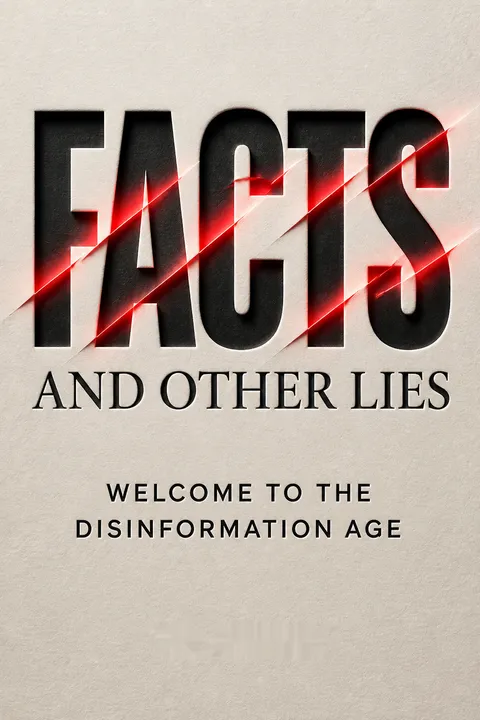
Facts and Other Lies receives high praise for its insightful exploration of disinformation in the digital age. Readers appreciate Coper's engaging writing style, humor, and thorough research. The book offers a comprehensive look at how misinformation spreads, its psychological impact, and strategies to combat it. Many found it eye-opening and relevant, particularly in its analysis of social media algorithms and political manipulation. While some criticized its focus on right-wing examples, most reviewers considered it essential reading for understanding modern information ecosystems and improving critical thinking skills.
People Also Read




Glossary
Disinformation
Deliberately misleading informationInformation that is false or misleading and is shared with the intention of deceiving. It may appear as a fabricated article, a genuine image presented in a false context, a misleading advertisement, or a coordinated campaign. The term describes intent, not simply whether a claim happens to be inaccurate.
Misinformation
Unintentionally wrong informationInformation that is false or misleading but may be shared without an intent to deceive. A mistaken statistic or an inaccurate report that is later corrected can be misinformation. The distinction from disinformation concerns the purpose behind sharing, not the practical harm the content may cause.
Coordinated Inauthentic Behaviour
Coordinated deception using fake identitiesA platform term for accounts that work together to mislead people while pretending to be independent or authentic users. Such accounts can repeat slogans, create the appearance of a groundswell, and help content trend. The label describes a behavior pattern, but does not by itself identify who directed it or why.
The MAGAphone
A partisan amplification networkCoper's name for a connected media and political ecosystem that can spread and reinforce conservative narratives. It includes prominent commentators, partisan websites, cable news, social media groups, and engaged supporters. Its combined effect is to amplify messages across multiple sources, making them appear more widespread and credible.
Pink slime
News-shaped political contentLow-quality or politically motivated content presented in the appearance of local journalism. It can fill gaps left by the closure of genuine local outlets, using regional branding and news-like articles while advancing partisan messages or promotional interests. Its misleading feature is not always a fabricated event, but the false impression of independent reporting.
Continued Influence Effect
False claims persist after correctionThe tendency for misinformation to keep affecting people's thinking even after they have learned it was wrong. A correction may be understood in the moment, yet the original claim can still shape later judgments when its context is forgotten. Supplying a credible alternative explanation can help replace the false account.
Illusory Truth Effect
Familiar claims feel more truthfulThe tendency to judge information as more credible after repeated exposure, even when it is inaccurate or comes from an unreliable source. Repetition makes a claim easier to process, which can be mistaken for evidence of truth. Corrections that repeat a myth can therefore risk making it more familiar.
Inoculation theory
Resistance through weakened exposureThe idea that people can become more resistant to persuasion by first encountering a weakened version of an argument and learning how it works. Applied to disinformation, it means teaching common manipulation techniques before a person sees a specific false claim. Games such as Bad News put this approach into practice.
Prebunking
Warning before a false claimA preventive approach that alerts people to likely misleading tactics before they encounter a particular piece of disinformation. It can explain how manipulation works, identify who may be spreading it, or provide accurate information first. Unlike a conventional correction, prebunking aims to reduce a false claim's initial advantage.
The Fact Sandwich
Facts surrounding a brief correctionA response format for situations where a false claim must be addressed. It begins with the accurate information, briefly identifies the misleading claim, explains how it distorts the issue, and ends by repeating the facts. The format limits repetition of the myth and gives readers a factual alternative to remember.
participatory disinformation
A feedback loop of false claimsA process in which political leaders or influencers introduce a misleading narrative and supporters circulate apparent evidence that reinforces it. The resulting online activity can look like spontaneous public consensus even when it is encouraged from above. Each side of the loop strengthens the narrative's visibility and perceived legitimacy.
Download PDF
Download EPUB
.epub digital book format is ideal for reading ebooks on phones, tablets, and e-readers.








