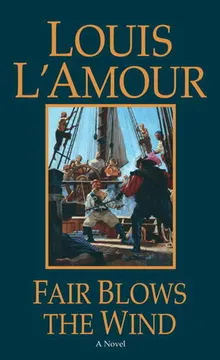


Plot Summary
The Ship Leaves Tatton
Tatton Chantry has gone ashore with two sailors to collect fresh water when Indigenous attackers rush the beach. The sailors die, and the boat escapes after one of its crew fires into the attackers. Hidden among sparse trees, Tatton watches the Good Catherine take on the water casks and sail away, carrying his savings and every possession he hoped would fund a new life.
He has a sword, a knife, and no clear route to safety. After the attackers leave, he steps out from cover and walks south along the coast, choosing the unknown land over waiting to be found. His composure is partly pride, but hunger and exposure soon make survival more urgent than any grand plan.
A Camp of Castaways
Tatton builds shelter from driftwood, then follows the smell of roasting meat to a Spanish party led by Don Diego, guardian to the young Guadalupe Romana. Don Manuel, another passenger, wants to march south; Don Diego hopes to find a passing ship. Tatton warns that hostile communities, swamps, and rivers make an overland journey deadly, and persuades them to let him repair their damaged boat with help from Armand, a Basque soldier.
Guadalupe privately reveals that her guardians want her knowledge of hidden Inca wealth and ancient traditions, while Don Manuel also expects to marry her himself. Tatton offers to help her, but their immediate bargain is practical: he will guide the party if they take him back to Europe.
The Galleon in the Sound
While the Spaniards settle into camp, Tatton searches the inland waterway and spots their supposedly sinking ship, the San Juan de Dios, grounded but intact. He repairs their boat, then discovers the camp abandoned during his night watch.
Taking the boat, he boards the galleon and finds food, weapons, and a vast cargo of silver, along with three heavy chests that he hides in his boat. Smoke leads him to a second camp, where Silliman Turley, a long-stranded English sailor, helps him spy on the missing party.
Their captor suspects the galleon was deliberately abandoned so its treasure could be stolen, and believes someone among the Spaniards knows where the missing chests went. Tatton realizes Guadalupe and her companions are in immediate danger.
The Boy Behind Chantry
As he waits in the Carolina woods, Tatton remembers the life that made him wary of capture. British soldiers kill his father and destroy the family home; following his father's preparations, the boy escapes through familiar caves and reaches England under a borrowed name.
After a tavern keeper's men chase him, Robert Vypont and his daughter Eve offer him shelter, but the pursuers force him back onto the road. The peddler Thomas Bransbee feeds him and introduces him to Kory, a master swordsman who trains the boy alongside the work of wandering traders.
Tatton later confronts the cruel young Rafe Leckenbie, loses their duel, and escapes by tumbling down a steep slope. The defeat gives him a purpose: become skilled enough not to be helpless again.
A Swordmaster on Skye
Fleeing Leckenbie, Tatton reaches Scotland with help from the Irish patriot Angus Fair and is directed toward Fergus MacAskill. Fergus recognizes the boy's talent, takes him in as an adopted son, and trains him in the rapier, claymore, bow, and the discipline of reading an opponent. After months of practice, a violent storm wrecks their boat near Islay.
Tatton saves an old traveler who has nearly given up, and the man, Jacob Binns, reveals himself as a scholar searching for forgotten repositories of learning. Binns joins Tatton on the journey to London. Fergus's instruction gives Tatton confidence with a blade; Binns gives him a new model of purpose, built around curiosity and the preservation of knowledge.
London's Thieves' Press
In London, Binns lodges Tatton at a discreet inn and introduces him to a city where writers, merchants, and thieves all compete for a foothold. Tatton befriends the struggling actor and writer Tosti Padget, then sells a comic road tale to printer Richard Field.
Hoping to expose Leckenbie, he gathers reports of the man's criminal network and publishes a revealing pamphlet. Instead, Leckenbie uses the publicity to frighten rivals into joining him.
A white-haired gentleman summons Tatton, hints at his connection to Leckenbie, and tries to control what he writes; Tatton refuses to drink wine he suspects has been tampered with and leaves. Binns warns that powerful men are using criminals to climb toward influence, then directs Tatton to invest through Emma Delahay.
A Duel Wins a Commission
Leckenbie meets Tatton and admits the pamphlet has enlarged his reputation, then tries to recruit him as a writer and agent. Tatton refuses and prepares a more damaging account of Leckenbie's plans.
Before he can leave London, Captain Charles Tankard challenges him on behalf of the criminal power surrounding Leckenbie. Tatton reads Tankard's showy attack, exploits an opening, and wounds him in the arm and chest without killing him. His victory earns him notice from Sir George Clifford, Earl of Cumberland, who recruits him for a fleet preparing against Spain.
When an arrest order appears, Tatton tells Clifford of the danger but keeps his Irish identity secret. Clifford protects him aboard ship, and Tatton chooses to honor his commission rather than flee.
The Prize Ship's Surrender
Cumberland's fleet catches a Spanish galleon, and Tatton leads the boarding party that takes it. When four more Spanish ships close in, the prize is damaged and cannot escape. Rather than let his British crew face capture, Tatton negotiates with the young Spanish commander, Don Vicente Uvalde y Padilla: the crew may escape by longboat if Tatton surrenders personally.
Don Vicente accepts, and the British sailors reach safety while Tatton becomes a well-treated prisoner. In Cadiz, Don Vicente protects him from officers who would claim him for the Inquisition. The arrangement turns captivity into an uneasy friendship, and Don Vicente introduces Tatton to General Hugo O'Connor, an Irish officer serving Spain.
An Irishman in Spain
General O'Connor recognizes Tatton's family and hears him disclose the Irish identity he has concealed under the Chantry name. Ransom cannot free him safely from Spain, so O'Connor arranges for him to join Spanish forces in the Low Countries. Before leaving, Tatton learns that Don Vicente faces a hired assassin, Don Fernand Sarmiento.
When Sarmiento provokes a confrontation, Tatton steps between the men and kills the assassin in a duel, then escapes with O'Crowley to avoid imprisonment while authorities investigate. O'Connor takes Tatton north to serve in the wars. At Arques and Ivry, Tatton sees defeat, injury, and the cost of fighting under orders he does not control. After the Swiss surrender, he is brought before Henry of Navarre.
The King Frees a Wanderer
Henry of Navarre questions Tatton's shifting loyalties, then frees him with a horse, money, and a fine sword after hearing of the Irish home he hopes to reclaim. Riding through France, Tatton interrupts a band of robbers holding a young woman who calls herself Marie d'Harcourt.
He defeats the gang's leader, Andre de Tankarville, and escorts her toward safety, only to learn she has stolen the robbers' valuables and slipped away before dawn. Tatton reaches London after four years abroad.
Emma Delahay has vanished, but Captain Dabney reports that Tatton's earlier investments have grown substantially. Tatton also receives gems from a masked woman who asks him to invest for her and keep her identity secret. He decides to sail with the Good Catherine again.
Back to the Carolina Trap
The story returns to the Carolina coast, where Tatton has been left ashore and the Spanish party is held under guard. He and Turley spy on the captors and learn their leader wants the missing treasure, not merely the galleon's cargo.
Guadalupe signals Tatton to stay hidden, but Armand and Felipe create an opening for her and Conchita to escape. Turley draws the guards away with staged animal cries and thrown stones, while Tatton leads the women through streams and woods to Turley's hidden swamp refuge.
There they rest with Armand and Felipe, then travel by canoe to Tatton's concealed boat. He recovers the chests and supplies, and the group sails for a cove where the Good Catherine may shelter. A pursuing pinnace closes in as they reach the inlet.
Tosti's Other Side
The pinnace fires on Tatton's overloaded boat, forcing him and the others to return fire as they race toward the cove. Guadalupe recognizes one of the pursuers as Tosti Padget, the friend Tatton left in London, now entangled with the pirates. The Good Catherine appears at anchor, and its captain brings guns to bear on the pinnace while Tatton's group fights off its longboat.
Armand and Felipe's shots disable the oarsmen, and Guadalupe and Conchita reach the merchant ship. Tatton stays behind with Turley rather than abandon his companions. During the confusion, the pirate leader comes alongside. Tatton finally recognizes him as Rafe Leckenbie, the boy who once defeated him and the criminal chief who had escaped London.
Leckenbie Boards at Last
After a hurricane traps the Good Catherine in the cove, Leckenbie sends men swimming to board while his pinnace feints outside. Captain Dabney has hidden the crew below, so the attackers meet a sudden counterattack instead of an undefended deck. Tatton and Leckenbie face each other amid the fighting.
Leckenbie's skill has grown, and he cuts Tatton several times, but Tatton withstands the assault and wounds him with a deep thrust. Leckenbie forces Tatton toward the deck, then loses the struggle for strength and balance. Badly injured, he throws his sword, draws a hidden blade, and finally dives over the rail into the sea. The pinnace withdraws rather than face the Catherine's guns. No body appears in the bloodied water.
The House Rebuilt
Tatton returns to Ireland with Guadalupe and the wealth recovered from the Carolina coast. He buys back his family's land and rebuilds the granite house his father lost, then makes a home with Guadalupe and their son, named for Tatton's father.
His neighbors know his true identity but keep it quiet; outsiders take him for a sailor who survived the Armada and years abroad. The masked woman's gems remain unclaimed, so Tatton preserves her share and continues managing it.
He keeps the silver-hilted sword above the hearth and teaches his son the histories his own father taught him. Friends from his wandering life still visit, but Tatton chooses not to leave again. The sea continues to call, while home becomes the future he once feared he might never reach.
Analysis
Fair Blows the Wind makes survival more complicated than staying alive. Tatton begins with a sword and a borrowed name, but the story repeatedly shows that neither strength nor identity is self-sufficient. He escapes Ireland through knowledge his father has given him, gains technical skill from Kory and Fergus, and survives political danger by learning when to fight, when to bargain, and when to conceal the truth. Each teacher offers a different instrument: memory, technique, or judgment. Tatton's maturity consists in combining them.
The novel's recurring contrast between inherited rank and practical competence becomes especially sharp on the Carolina shore. Don Diego and Don Manuel arrive with titles and expectations, but Tatton's ability to repair a boat and assess danger determines whether anyone can travel. In London, the same principle shifts from wilderness to public life. Tatton's pamphlets are supposed to expose crime, yet the first one strengthens Leckenbie by converting notoriety into authority. The episode argues that information has consequences beyond its truth; an audience can mistake a frightening reputation for proof of power, while a criminal can use that mistake as political capital.
Tatton's relationships complicate his independence. Turley distrusts attachment because he has survived by avoiding obligations, but Tatton's decision to help Guadalupe draws him into danger and gives the journey a purpose beyond profit. Guadalupe is not a reward for courage. Her secrecy, judgment, and insistence on choosing her own future make the relationship reciprocal. Tatton's eventual return to Ireland is therefore not a rejection of wandering so much as a choice made possible by it. He keeps the knowledge and wealth gathered abroad, then uses them to rebuild a home whose value is measured not only in land but in memory, teaching, and family. The ending answers the opening's loneliness with a place and people he can protect, while the unclaimed gems and the sea preserve the story's remaining uncertainty.
Review Summary
Fair Blows the Wind is a swashbuckling adventure novel set in 16th century Europe and America. Readers praise L'Amour's storytelling, historical detail, and character development. The book follows Tatton Chantry, an Irish fugitive who becomes a skilled swordsman and trader. Many enjoy the departure from L'Amour's typical Westerns, comparing it to works by Stevenson and Dumas. While some found the pacing uneven due to flashbacks, most appreciated the action, romance, and philosophical insights. Overall, it's considered an engaging read with a 4.13/5 rating on Goodreads.
Characters
Tatton Chantry
The fugitive swordsmanTatton is an Irish exile living under a name he borrowed from a dead stranger. His father taught him history, languages, and a sense of inheritance; years on the road teach him that survival also depends on reading people and adapting quickly. He carries a gentleman's pride but has learned to work, bargain, and accept help when refusing it would be foolish. His skill with weapons gives him confidence, yet his choices repeatedly test whether courage means winning a fight or taking responsibility for others. He is drawn to distant places and old knowledge, but the desire to recover his family's home remains the emotional compass beneath his wandering.
Guadalupe Romana
The guarded Inca heirGuadalupe is a young Peruvian woman of Spanish and Inca heritage, traveling under the guardianship of men who treat her as a bargaining piece. She understands more about their motives than they assume and protects what she knows about old places and traditions. Her reserve is not passivity: she watches, chooses when to speak, and acts decisively when danger narrows her choices. She and Tatton recognize a shared experience of displacement, though their histories and cultures differ. Guadalupe values self-determination and does not mistake rescue for ownership, making her a partner who insists on retaining authority over her own future.
Rafe Leckenbie
The ambitious bladeLeckenbie is a powerful, charismatic swordsman whose appetite for dominance extends beyond personal combat. As a young man, he abuses his family's standing to bully travelers and punish anyone who resists him. In London, he turns criminal connections into a political instrument, imagining that wealth and usefulness will eventually secure him respectability. He is perceptive enough to exploit other people's fear, yet his self-belief makes him underestimate anyone he has already categorized as weaker. His conflict with Tatton begins as a contest of skill and grows into a struggle between two men who understand that neither can safely ignore the other.
Fergus MacAskill
The Highland swordmasterFergus is a formidable fighter from the Hebridean clans, equally capable with a claymore and a rapier. He takes Tatton seriously as a student and offers him the disciplined training that his earlier teachers could not complete. Beneath his appetite for combat is a reflective man who has seen clan feuds consume generations and questions who truly owns contested land. He values loyalty and recognizes kinship beyond formal bloodlines. His warmth toward Tatton gives the fugitive boy a rare experience of belonging without requiring him to surrender his independence.
Silliman Turley
The swampwise castawayTurley is an English sailor who has survived alone on the Carolina coast for years by learning its waterways, food, and hiding places. His rough humor masks practical intelligence and hard-earned caution. He distrusts romance and heroics because experience has taught him that survival often means knowing when to retreat. Tatton's concern for Guadalupe irritates him, but he still risks himself to help the group. Turley's hidden swamp refuge embodies the self-reliance he has built, while his reluctant friendship with Tatton opens the possibility that even a settled life in the wilderness need not remain solitary.
Jacob Binns
The wandering scholarJacob Binns first appears to be a humble traveler, but his learning and connections reach across borders and social ranks. He treats knowledge as a shared inheritance and encourages Tatton to follow curiosity rather than mistake wealth for a complete purpose. Binns helps him enter London and directs him toward people who can turn small savings into trade. He guards his affiliations and private work closely, which makes him difficult to understand even to a friend. His mixture of practical aid and intellectual mystery broadens Tatton's sense of what a life might serve.
Armand
The loyal Basque soldierArmand is a Basque soldier with experience at sea and in the armies of Spain. He recognizes Tatton's competence before the Spanish gentlemen do and helps him repair the boat. Armand has little patience for commands that waste lives, and his loyalty rests on judgment rather than rank. He becomes an ally to Tatton and a protector of the vulnerable members of the castaway party.
Don Vicente Uvalde y Padilla
The honorable Spanish captainDon Vicente is a young Spanish commander raised to expect privilege, yet he proves capable of restraint and honor under pressure. When Tatton captures his ship, Vicente accepts a bargain that saves the British crew and keeps Tatton in his custody. Their relationship rests on reciprocal respect rather than nationality. He is proud of his family and conscious of the obligations attached to his position, which makes him both generous and vulnerable to men who exploit honor.
Don Manuel
The calculating courtierDon Manuel is a Spanish official whose polished manner conceals ambition. He treats Guadalupe's knowledge, marriage, and inheritance as resources to be controlled, while dismissing the physical realities of survival. His authority depends on connections and manipulation more than practical skill. He represents the danger Tatton sees in people who assume status will protect them even in a wilderness where rank cannot repair a boat or find food.
Tosti Padget
The drifting writerTosti is a witty, socially hungry young writer who has education and verbal talent but struggles to persist at a craft that demands solitude. He envies the security and recognition he lacks, yet his failures arise as much from indecision as from unfair conditions. He befriends Tatton in London, offering companionship when both men are without firm roots. His choices are shaped by a desire to become someone without a reliable plan for how to do it.
Emma Delahay
The independent traderEmma is a capable London merchant who took over her husband's trading business and continues to invest in voyages on her own judgment. She recognizes Tatton's writing and commercial instincts, offering him a practical route into trade. She is discreet about her background and keeps her feelings separate from business. Her confidence in managing risk contrasts with the uncertainty of the young men who seek her advice.
Don Hugo O'Connor
The Irish general abroadO'Connor is an Irish general who has built a distinguished life serving Spain. He recognizes Tatton's family and offers protection shaped by the solidarity of Irishmen living far from home. A strategist as well as a soldier, he understands the political danger surrounding the Inquisition and the shifting alliances of European war. His pragmatism does not erase his attachment to Ireland, though he has made a different accommodation with exile.
Thomas Bransbee
The generous peddlerBransbee is an educated peddler who has exchanged former status for a life of travel and self-sufficiency. He feeds Tatton when the boy is hungry and connects him with Kory, changing the course of his training.
Kory
The traveling fencing masterKory is an elusive Romani swordsman who teaches Tatton through relentless practice and tests his discipline as much as his technique. He combines deep experience with the freedom and caution of a man accustomed to life on the road.
Sir George Clifford
The ambitious naval patronClifford, Earl of Cumberland, is a nobleman seeking both naval glory and the money to repair his fortunes. He recognizes Tatton's initiative aboard ship and protects him when an arrest order threatens to remove him from service.
Captain Dabney
The prudent merchant captainDabney runs the Good Catherine as a disciplined trading ship and gives his crew a stake in its success. He is a cautious investor, a well-read traveler, and a steady commander who weighs the safety of his ship against Tatton's desire for vengeance.
Captain Charles Tankard
The hired swordsmanTankard is an experienced duelist employed by men seeking influence through violence. His confidence and polished technique make him dangerous, but he is not beyond recognizing skill in an opponent. His challenge forces Tatton to test his training in a real fight.
Robert Vypont
The country gentlemanVypont is Eve's father, a former soldier who offers shelter to the hunted Irish boy without demanding his history. His courtesy gives Tatton a brief experience of safety and reminds him of the parental care he has lost.
Plot Devices
The borrowed Chantry name
A shield for a fugitiveTatton adopts the name of a stranger who died at his family's home, concealing the Irish identity that could expose him to enemies. The assumed name lets him travel and make a place for himself, but it also becomes a test of inheritance: he must decide whether a name is merely protection or a promise to restore what his family lost. Its history links his father's teaching, his flight, and his eventual desire to return home.
The sword's long apprenticeship
Skill earned through survivalTatton's fencing develops through successive teachers rather than a single miraculous talent. His father gives him a foundation, Kory sharpens his technique, and Fergus MacAskill teaches him to read an opponent and use different weapons. Leckenbie's early victory exposes the limits of what Tatton knows. Later fights test that accumulated learning against experienced killers, turning swordsmanship into both a practical survival tool and a measure of Tatton's discipline.
Pamphlets as weapons
Reputation shaped in printTatton uses cheap printed stories to earn money and expose London criminals. His first account of Leckenbie backfires because it makes the criminal seem more powerful, drawing new followers rather than isolating him. Tatton learns that publicity does not simply reveal a person; it can manufacture the reputation that person wants. His later writing becomes more deliberate, using specific claims to challenge Leckenbie's carefully planned rise.
The hidden galleon treasure
Wealth that attracts dangerThe San Juan de Dios contains a huge silver cargo and valuable chests, while the castaways believe it has sunk. Tatton's discovery gives him the means to build a fortune, but it also places him in the path of men willing to abduct or kill for the treasure. The ancient medallion found aboard the ship connects Guadalupe's inheritance to older histories, keeping wealth and knowledge entangled throughout their flight.
The masked investor's gems
A fortune without a faceA veiled woman entrusts Tatton with valuable gems and instructions to invest them without investigating her identity. The arrangement gives him capital just as earlier business ties and political dangers have unsettled his future. He treats the trust as an obligation, not simply a windfall, and preserves the woman's share after she disappears. The book leaves her identity and eventual return unresolved, making the investment a continuing bond to a life Tatton cannot fully explain.
About the Author
Other books by Louis L'Amour




Download PDF
Download EPUB
.epub digital book format is ideal for reading ebooks on phones, tablets, and e-readers.








