

Key Takeaways
Treat a cheap burger as a receipt for a much larger system
More than a meal. Schlosser argues that fast food is not merely a convenient product. It is a system that reshaped work, farming, communities, advertising, and the American landscape. In 1970, Americans spent about $6 billion on fast food; by 2001, the figure exceeded $110 billion. Its growth reflected changes such as more women working outside the home, falling real wages, and the spread of car-dependent suburbs.
Choices, not destiny. The industry expanded alongside publicly funded highways, subsidies, declining minimum-wage value, and political resistance to stronger consumer and worker protections. The familiar low price, Schlosser argues, leaves out costs borne by workers, farmers, communities, and public health. The book’s figures describe the period it investigates, not current spending.
The central move is to shift attention from the visible transaction to the institutions that make it possible. That is a useful habit of analysis: a low price can signal genuine efficiency, but it can also mean that costs have been transferred elsewhere. Schlosser’s account is strongest when it identifies specific mechanisms, such as highway spending or concentrated purchasing, rather than treating corporate growth as a single cause. The caution is important: fast food is one force within a wider economic transformation, not a complete explanation for it.
Standardization made fast food cheap, replicable, and culturally contagious
A factory behind the counter. In 1948, Richard and Maurice McDonald redesigned their San Bernardino restaurant around a short menu, paper packaging, self-service, and workers assigned to narrow tasks. Their Speedee Service System brought assembly-line logic into restaurant kitchens. Workers needed less training, orders moved faster, and customers received nearly identical meals. Ray Kroc saw that this method could be reproduced across the country.
Cars carried the model. Southern California’s drive-in culture and the new interstate system gave the chains room to spread. Franchising extended their reach, while strict rules protected the uniform product and appearance. The same convenience that reassured customers helped replace distinct local businesses with familiar chains. Carl Karcher’s rise from hot-dog cart owner to chain founder captures both the entrepreneurial energy and the landscape-changing force of this transformation.
Standardization is not simply sameness for its own sake. It lowers uncertainty for customers and makes a business easier to scale, while shifting judgment and skill from individual workers into procedures and equipment. That trade can be valuable in settings where reliability matters. The book’s concern is what happens when uniformity becomes the overriding measure of quality: local adaptation and worker discretion are treated as defects. A consistent meal is a real benefit, but it is not the only value a food system can serve.
Protect children from marketing designed to turn affection into brand loyalty
The customer is very young. McDonald’s and its peers sold more than food to children. Ronald McDonald, playgrounds, toys, cartoon characters, and film tie-ins made restaurants part of a child’s imaginative world. Schlosser describes a 1997 promotion in which McDonald’s sold about 100 million Happy Meals in ten days by including collectible toys. The strategy encouraged repeat visits and made a meal feel like entertainment.
Influence reaches home and school. Marketers studied children’s preferences and sought to prompt requests to parents. Some school districts sold advertising space or accepted branded food and beverage deals to raise money. The tension is plain: schools need resources, while children are a captive audience whose judgment is still developing. The book presents marketing not as decoration around the meal, but as a deliberate way to create habits and emotional attachment.
Marketing becomes especially consequential when it borrows the emotional authority of play, trusted characters, or school. Children may not experience a commercial partnership as a sales pitch; they encounter it as part of the environment adults have built for them. The structural problem is that underfunded institutions can be pushed to finance public goods by selling access to students. Yet not every branded encounter has the same persuasive force. The relevant questions are who controls the setting, what is being promoted, and whether families can meaningfully refuse.
Measure a kitchen by what its speed costs workers
Throughput sets the pace. Throughput is the speed and volume of work moving through a production system. Fast food kitchens pursue it through standardized tasks, timers, manuals, and equipment that limits variation. Schlosser follows Elisa Zamot, a sixteen-year-old McDonald’s worker who starts early, prepares breakfast, and spends hours at the counter. In the book’s reporting, about two-thirds of fast food workers were under twenty.
Replaceability is built in. When jobs require little training and each task is tightly prescribed, employers can replace workers quickly. The reported annual turnover in fast food reached roughly 300 to 400 percent, with many workers leaving within months. Long hours can also crowd out schoolwork and activities, especially for teenagers who work to support family needs or afford transportation. Efficiency at the counter may therefore coexist with instability behind it.
Throughput is a powerful lens because it asks how much a system produces, not only how many people it employs. But the metric can hide the human consequences of reaching a target faster. Repetitive work, unpredictable schedules, and high turnover may be treated as ordinary operating costs even when they shape workers’ health and options. Schlosser’s account also leaves room for distinctions among workplaces: a supportive manager can make a job more tolerable, but goodwill cannot by itself correct a business model built around low wages and replaceability.
Follow fries upstream: processors gain leverage as farmers lose independence
The margin travels upward. Schlosser traces the french fry from Idaho fields to processing plants and restaurant kitchens. A few companies came to dominate frozen fries, while fast food chains used their buying power to demand low prices and consistent products. In the book’s estimate, a farmer received about two cents from a $1.50 restaurant order of fries. The processing companies and chains captured far more of the final value.
Many sellers, few buyers. An oligopsony is a market where a small number of buyers have power over many sellers. Idaho potato farmers faced this imbalance as processors consolidated, prices fluctuated, and expensive equipment raised the cost of staying in business. Similar pressures affected cattle ranchers and poultry growers. The book’s warning is not that scale always harms producers, but that efficiency gains can leave the people doing the growing with less bargaining power and more risk.
The supply-chain view corrects a common blind spot: a product’s retail price does not reveal who captures its value or who bears its volatility. Concentration can create coordination and lower costs, but it can also weaken the alternatives available to producers. Schlosser’s examples make bargaining power visible in a way that abstract talk of market prices often does not. Still, farmers are not a uniform group, and the book itself notes that producers’ choices and reluctance to organize can also shape their vulnerability.
Remember, much fast-food flavor is engineered away from the restaurant
Taste has an industrial supply chain. Many fast-food ingredients arrive frozen, dehydrated, or precooked. Schlosser visits flavor laboratories where chemists create aromas and tastes for processed foods. Food aroma contributes heavily to what people experience as flavor, so additives can restore or create qualities lost during processing. After McDonald’s switched from beef tallow to vegetable oil for its fries, it used flavoring to preserve their familiar taste.
Labels can mislead by implication. The book explains that natural and artificial flavors may contain the same chemicals, though they are produced differently. A natural label does not automatically mean a flavor is healthier or less processed. The central point is not that flavor technology is inherently dangerous. It is that a meal that seems freshly made in a restaurant may depend on sophisticated manufacturing elsewhere, hidden behind ordinary packaging and familiar taste.
Food technology can improve consistency, reduce waste, and make products affordable. The more revealing question is what the technology is optimizing and what consumers are led to believe about the result. Flavor engineering can make standardized food appealing, but it can also separate taste from the ingredients or preparation people imagine. That gap is a matter of transparency, not proof that every additive is harmful. The book usefully directs attention to the production process without requiring the reader to treat chemistry itself as a villain.
Centralized meat can turn one infected animal into a national hazard
Scale multiplies contamination. In 1997, health officials traced an E. coli outbreak to frozen hamburger patties from a Hudson Foods plant. The company eventually recalled about 35 million pounds of ground beef, much of which had already been eaten. Schlosser explains why grinding increases risk: meat from many animals is combined, so contamination from one animal can spread through a large batch. He reports that one infected animal could contaminate tens of thousands of pounds.
Safety depends on incentives. The book describes weak inspection, underreported injuries and food-safety problems, and a USDA that lacked authority to order meat recalls. It also recounts Jack in the Box’s farm-to-fork testing program, which required supplier tests and rejected meat from plants that performed poorly. The case illustrates that technology can help, but oversight, traceability, and incentives determine whether it is used consistently.
Centralization creates a risk-reward asymmetry. It can make production and distribution efficient, while allowing a single failure to affect many people quickly. The book’s strongest safety argument is institutional: prevention requires reliable records, testing, and authority to act, not merely trust in company assurances. Its historical cases should not be mistaken for a description of every current plant or rule. They do, however, clarify why food safety is a public responsibility as well as a matter of careful cooking at home.
When a brand travels, it exports a supply chain and a vision of progress
The arches carry a model. Schlosser describes Plauen, a German city that endured industrialization, Nazism, communism, and then the arrival of McDonald’s after the Berlin Wall fell. To many residents, the restaurant represented access to Western consumer culture. But the company’s expansion also brought suppliers, standardized operations, and a familiar retail landscape. Its international growth was not simply the export of hamburgers; it helped export a system of farming, marketing, and service work.
Local meanings differ. In China, the chain could signify modernity and status; in France, it became a target for people defending food culture and farming. The same logo can mean convenience, opportunity, cultural intrusion, or all three. Schlosser’s account shows how global brands become symbols onto which people project hopes and fears, even as the underlying business practices travel across borders.
A global brand is both a commercial object and a cultural shorthand. Its appeal can be real: a new restaurant may represent novelty, reliable service, or economic opportunity. But the image of choice can obscure the systems that determine sourcing, labor conditions, and local competition. The book is most persuasive when it allows these meanings to coexist rather than treating every customer as duped or every critic as correct. Cultural change is not simply imposed; people adopt, adapt, and contest what arrives.
Treat convenience as a nutrition policy, not a neutral shortcut
The portion became part of the pitch. Schlosser links the expansion of fast food to larger servings of soda, fries, and burgers, alongside a more sedentary, car-centered way of life. In the book’s period, a large McDonald’s Coke contained about 310 calories, and the chain’s Super Size fries about 610. He connects the rise in obesity to changes in both eating and daily activity, while acknowledging that fast food is one factor among several.
Habits start early. Children were frequent targets of advertising, and the book argues that tastes formed in childhood can persist. The concern is therefore not only individual willpower. It is the food environment: what is cheap, available, heavily promoted, and easy to consume. The historical statistics in this section reflect the late twentieth century and early 2000s, rather than present-day measurements.
This framing makes nutrition more than a private test of discipline. When portions, prices, advertising, transportation, and school food all shape what is easy to choose, public health is partly designed into the environment. At the same time, correlation does not establish that fast food alone caused rising obesity. Schlosser recognizes the roles of reduced physical activity and broader social change. The useful takeaway is therefore not a single-cause diagnosis, but a wider question: which institutions make certain eating patterns routine, and who benefits from that routine?
Use consumer leverage, but do not mistake markets for sufficient regulation
Better models already exist. Schlosser closes with businesses that resist the industry’s dominant formula. At Conway’s Red Top, workers make fries from fresh potatoes and cooks prepare burgers to order. In-N-Out, a larger chain, paid comparatively high wages, offered benefits, and kept a simple menu. Rancher Dale Lasater raised grass-fed cattle using methods designed to protect the land. These examples show that speed and scale are not the only routes to a viable food business.
Pressure can travel upstream. McDonald’s used its purchasing power to require suppliers to follow feed rules and improve animal handling. Schlosser argues that customers can demand similar standards for worker safety, wages, and food quality, while supporting stronger public rules. The book’s final choice is practical: buy differently, ask what the price excludes, and organize enough pressure that companies have reason to change.
The ending avoids both fatalism and the fantasy that one purchase can repair an entire system. Consumer demand can move a powerful buyer, especially when reputation and sales are at stake. Yet consumers have unequal budgets, information, and access to alternatives, so choice alone cannot substitute for enforceable standards. The independent restaurants and ranches matter because they demonstrate workable alternatives, while collective pressure and regulation address harms that an individual shopper cannot reliably detect or prevent.
Analysis
Fast Food Nation works as investigative history, social criticism, and a journey through a supply chain. Its narrative begins with the comforting surface of the meal, then moves outward: from a suburban restaurant to a worker, a potato field, a feedlot, a slaughterhouse, a flavor laboratory, and finally a city abroad. That widening camera is the book’s central method. It makes distant consequences feel connected to an everyday act without pretending that every burger causes every social problem described.
The most durable argument is about accounting. The menu records the money a customer pays, but not the public infrastructure that enabled the business, the bargaining position of farmers, the injuries workers may absorb, or the risks created by centralized production. The book therefore challenges a narrow definition of efficiency. A system can be efficient for the firm while transferring costs to people with less power to refuse them.
Schlosser’s vivid cases give this argument force: Elisa’s early shifts, the Idaho potato grower facing a handful of buyers, the contaminated beef recall, and Plauen’s sudden encounter with a global brand. These stories reveal mechanisms that an abstract critique could miss. They also make the narrative morally charged. The reader should distinguish documented institutional patterns from the book’s broader causal interpretations, especially where fast food, obesity, urban sprawl, and political change overlap with other forces. The author acknowledges some of these limits, and the strongest reading preserves them.
The book’s original statistics and policy debates belong to its reporting period, around 2001. Their present-day accuracy should not be assumed. Its deeper question remains useful: when a product is cheap, uniform, and everywhere, what has been optimized, and who pays for what the price leaves out? That question turns eating from a purely personal preference into a way of examining power, design, and accountability.
Review Summary
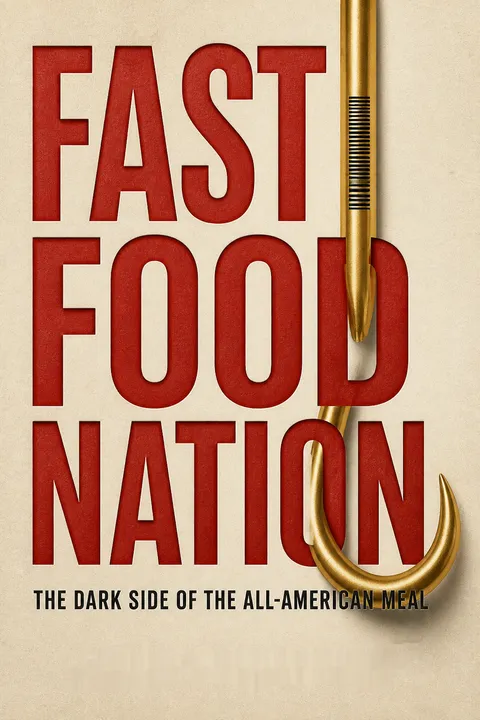
Fast Food Nation is a controversial book that exposes the dark side of the fast food industry. While some readers found it eye-opening and impactful, others criticized its biased approach. The book covers topics like food safety, worker exploitation, and corporate greed. Many readers reported feeling disgusted by the revelations about meat processing and food quality. Some found the historical context interesting, while others felt it was dated. Overall, the book sparked discussions about consumer responsibility and the need for industry reform.
People Also Read




Glossary
Speedee Service System
Assembly-line restaurant methodThe operating system developed by Richard and Maurice McDonald at their San Bernardino restaurant. It shortened the menu, divided food preparation into simple repeated tasks, used disposable packaging, and required customers to collect their own orders. The method reduced preparation time and reliance on skilled cooks, making the restaurant easier to replicate.
throughput
Production speed and volumeThe rate and volume at which work or goods move through a production system. In the book, throughput is a central goal of assembly-line businesses: make more products, more quickly, with fewer inputs. In a restaurant kitchen, this focus affects equipment, task design, and the pace expected of workers.
oligopsony
Few buyers, many sellersA market structure in which a small number of buyers purchase from many sellers. Because producers have relatively few alternative customers, the buyers can exert strong influence over prices and contract terms. Schlosser uses the term to explain how concentrated food processors can pressure independent potato farmers.
fallacy of composition
Individual gain, collective lossThe mistaken assumption that a strategy beneficial to one person or business remains beneficial when everyone adopts it. The book applies this idea to farmers who increase output to compete with neighbors. When many producers do so, supply rises, prices fall, and the group may be worse off despite each producer’s rational attempt to gain an advantage.
captive supplies
Cattle controlled outside open marketsCattle a meatpacker obtains through its own feedlots or advance agreements rather than buying through a public auction. Schlosser reports that these supplies can make market prices harder for independent ranchers to observe and challenge. Critics argue that the practice gives large processors additional influence over the price paid for cattle.
Hazard Analysis and Critical Control Points
Preventive food-safety systemA food-safety approach that identifies the stages in production where contamination is most likely, then monitors those points through procedures, tests, and records. The book describes Jack in the Box’s farm-to-fork program as an early fast-food application. Its effectiveness depends on adequate staffing, honest records, and meaningful oversight.
McDonaldization
Efficiency-driven social standardizationA term associated in the book with sociologist George Ritzer’s analysis of fast-food principles spreading into other areas of society. It describes the growing emphasis on efficiency, predictability, calculation, and control through technology. Schlosser connects this model to standardized retail environments and the reduction of worker discretion.
McWorld
Homogenized global consumer cultureA term cited by Schlosser from political thinker Benjamin Barber for a world increasingly shaped by global brands and standardized consumer experiences. In the book, fast-food chains symbolize this cultural spread, while their supply networks export farming and business practices as well as recognizable food and advertising.
FAQ
What's Fast Food Nation about?
- Exploration of Industry: Fast Food Nation by Eric Schlosser investigates the rise of the fast food industry in America and its impact on society, culture, and the economy.
- Cultural and Economic Impact: The book highlights how fast food has transformed American eating habits and reflects broader social changes.
- Critique of Practices: Schlosser critiques major fast food corporations for their business practices, including labor exploitation and environmental harm.
Why should I read Fast Food Nation?
- Informed Choices: The book equips readers with knowledge about the fast food industry, enabling healthier and more informed food choices.
- Social Awareness: It raises awareness about socio-economic issues tied to fast food, such as labor exploitation and environmental degradation.
- Cultural Reflection: Schlosser’s work prompts readers to consider the cultural significance of fast food in shaping modern American identity.
What are the key takeaways of Fast Food Nation?
- Health Consequences: The book discusses health risks like obesity and foodborne illnesses linked to fast food consumption.
- Labor Exploitation: Schlosser reveals the harsh realities faced by fast food workers, emphasizing low wages and poor working conditions.
- Environmental Impact: The fast food industry contributes to pollution and resource depletion, harming ecosystems and communities.
What are the best quotes from Fast Food Nation and what do they mean?
- “You are what you eat.”: This quote suggests that food choices reflect personal and societal values, impacting health and social dynamics.
- “The fast food industry is a reflection of the American way of life.”: It highlights how fast food embodies American culture, such as convenience and consumerism.
- “Things don’t have to be the way they are.”: Schlosser encourages readers to challenge the status quo and advocate for healthier food systems.
How does Eric Schlosser in Fast Food Nation address the issue of labor in the fast food industry?
- Worker Exploitation: Schlosser highlights the exploitation of fast food workers, who often earn minimum wage and lack benefits.
- Unionization Challenges: The book examines the difficulties workers face in unionizing, including corporate resistance and legal obstacles.
- Community Impact: The industry's labor practices contribute to economic instability and social inequality in local communities.
What role does marketing play in the fast food industry according to Fast Food Nation?
- Targeting Children: Schlosser discusses how fast food marketing is aimed at children, creating brand loyalty from a young age.
- Psychological Manipulation: The book explores tactics like urgency and emotional appeal used in advertising to drive sales.
- Cultural Influence: Fast food marketing shapes cultural norms and expectations around food consumption, reinforcing consumerist values.
How does Fast Food Nation discuss the environmental impact of fast food?
- Industrial Agriculture: Schlosser highlights the environmental consequences of industrial farming practices driven by fast food demand.
- Resource Depletion: The book discusses the overuse of natural resources, posing long-term risks to the environment and food security.
- Waste Management Issues: Schlosser addresses the waste generated by the fast food industry, emphasizing the need for sustainable practices.
How does Fast Food Nation connect fast food to globalization?
- Cultural Export: Schlosser discusses how American fast food has become a symbol of globalization, spreading American culture worldwide.
- Global Supply Chains: The book examines the interconnectedness of food production and distribution, often prioritizing profit over ethics.
- Impact on Local Economies: The globalization of fast food can undermine local economies, leading to job losses and reduced opportunities.
What solutions does Fast Food Nation propose for the issues it raises?
- Consumer Awareness: Schlosser emphasizes informed consumer choices to promote responsible consumption and advocacy for change.
- Support for Local Agriculture: The book advocates for supporting local farmers and sustainable practices to counteract industrial farming effects.
- Policy Changes: Schlosser calls for reforms to improve labor conditions, regulate marketing, and address environmental concerns.
How does Fast Food Nation address food safety concerns?
- Contamination Risks: Schlosser details how industrial meatpacking can lead to contamination, highlighting specific outbreaks.
- Regulatory Failures: The book critiques inadequate oversight by agencies like the USDA and FDA, prioritizing corporate interests over safety.
- Call for Reform: Schlosser advocates for a complete overhaul of the food safety system, emphasizing transparency and accountability.
What are the economic implications discussed in Fast Food Nation?
- Impact on Farmers: The rise of fast food has led to the decline of independent farmers, affecting rural communities economically.
- Labor Exploitation: Schlosser highlights low wages and poor conditions in the industry, arguing profit often comes at workers' expense.
- Hidden Consumer Costs: While fast food appears cheap, societal costs like healthcare for obesity-related illnesses are significant.
How does Fast Food Nation illustrate the global impact of fast food?
- Cultural Homogenization: Schlosser discusses how fast food chains contribute to cultural homogenization, erasing local traditions.
- Economic Influence: The book highlights how fast food corporations exert power in foreign markets, often undermining local businesses.
- Health Implications: The global spread of fast food is linked to rising obesity rates and health issues in other countries.
About the Author
Other books by Eric Schlosser

Download PDF
Download EPUB
.epub digital book format is ideal for reading ebooks on phones, tablets, and e-readers.








