

Key Takeaways
Treat routine work around armed systems as high-consequence engineering.
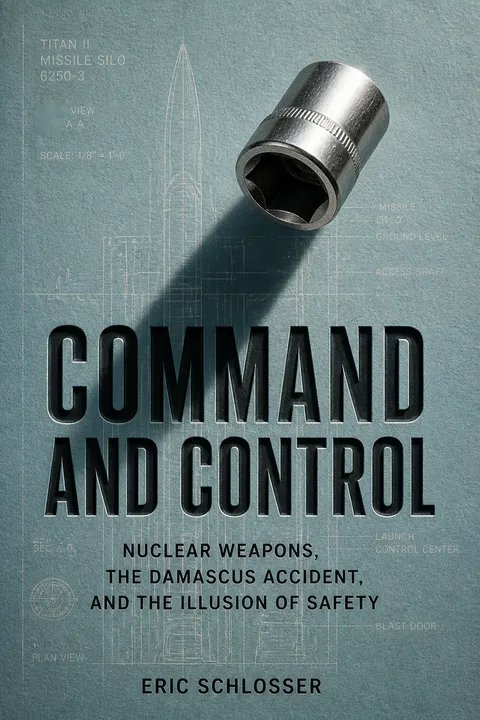
A small mistake, enormous stakes. On September 18, 1980, airmen David Powell and Jeffrey Plumb were doing routine maintenance on a Titan II missile near Damascus, Arkansas. A nine-pound socket fell through a narrow gap and punctured the missile’s fuel tank. Above it sat a W-53 thermonuclear warhead with a yield of nine megatons. Conflicting alarms, rising tank pressure, and uncertainty about whether a fire had started left the crew without a clear procedure for the emergency.
The system kept changing. Almost eight hours after the leak began, a reentry team switched on a ventilation fan. Seconds later, the silo exploded. Investigators never established the precise ignition source. The warhead was thrown clear without detonating, but airman David Livingston later died from inhaling oxidizer, and others were badly injured.
The story is a sharp argument against treating safety as the sum of individual competence. Powell’s error mattered, but so did equipment design, training, maintenance delays, ambiguous alarms, and the decisions made after the leak. Safety engineering often distinguishes blame from causal analysis: accountability asks who acted, while prevention asks why the system made one mistake so consequential. A no-blame culture does not mean no responsibility. It means investigators must follow the failure chain beyond the person closest to the wrench.
Make weapons safe against accidents, not merely ready for launch.
Two goals collide. Nuclear weapons must function reliably when ordered, yet remain inert through crashes, fires, mistakes, or unauthorized handling. The book describes this as the “always/never” problem: a weapon should always work when intended and never work by accident. Military leaders often gave greater weight to readiness, since a safety feature that prevented use in wartime could undermine deterrence.
The tradeoff was physical. Early weapons could be armed by simple electrical signals, and some designs were vulnerable to fire, impact, or faulty wiring. A weapon might be safe in a storage bunker but hazardous once assembled, loaded onto an aircraft, or placed on alert. Each new operating condition changed the risks, while the demand for rapid launch pushed weapons toward greater readiness.
This is a classic reliability paradox: safeguards can prevent one failure while creating another, such as making a weapon impossible to use when needed. The useful response is not to choose safety or readiness in the abstract, but to design multiple barriers that fail independently. In aviation and medicine, layered checks work best when each catches a different class of error. Nuclear weapons raise the stakes, but the design principle is familiar. A safeguard that merely shifts risk elsewhere is not a complete safety solution.
Expect complex systems to fail through interactions, not just individual mistakes.
Failures compound. In 1965, a fire in a Titan II silo near Searcy, Arkansas, killed 53 of the 55 workers inside. The fire filled the silo with smoke, power failed, and workers found their escape routes blocked or confusing. With the cooling system down, heat also threatened the missile’s volatile oxidizer. The disaster grew from interacting hazards, not from flames alone.
A useful framework. Sociologist Charles Perrow calls certain failures “normal accidents”: events that arise when a system is tightly connected, complex, and hard to interrupt once something goes wrong. At Damascus, a fuel leak altered pressure and temperature, alarms contradicted one another, and the crew had no checklist for the exact emergency. In such systems, a small initiating event can produce consequences no one planned for.
Perrow’s framework is powerful because it redirects attention from the visible trigger to the architecture around it. Yet “normal” should not be mistaken for inevitable. Organizations can reduce risk through simpler systems, independent shutdowns, realistic training, and candid reporting. The tension is that standard procedures are excellent for predictable operations but can become brittle when conditions change. High-risk work needs both discipline and permission for informed improvisation, a difficult balance for any hierarchy.
Scale turns experimental uncertainty into an industrial safety problem.
The first bomb was improvised. The plutonium core for the Trinity test spent a night in a New Mexico ranch house before scientists assembled it by hand. The device depended on precisely timed explosives and electrical components, one of which had previously misfired during a lightning storm. Just a year later, physicist Louis Slotin received a fatal radiation dose in a criticality experiment after a screwdriver slipped.
Weapons became an industry. As the arsenal grew, nuclear components were made by contractors and assembled, transported, stored, and maintained by thousands of people. New weapons were designed for longer storage and quicker use, but each added process created new ways for parts, people, and procedures to interact. An experimental device had become a worldwide logistics system.
The shift from laboratory prototype to mass deployment changes the central safety question. A lab can focus expert attention on one device; a production system must preserve knowledge across contractors, bases, shifts, and decades. This resembles the challenge faced by commercial aviation and pharmaceutical manufacturing, where reliability depends on traceable components and consistent procedures. Standardization helps, but it can also conceal local differences. The history makes clear that technical sophistication does not automatically create institutional competence.
A false missile gap can still produce a real thousand-missile arsenal.
Fear shaped force levels. After Sputnik, American leaders and politicians warned that the Soviet Union might soon outnumber the United States in long-range missiles. Later intelligence found only four Soviet missiles capable of reaching the United States in 1961. The feared gap was largely a myth, sustained by incomplete information, Soviet boasts, and domestic politics.
The buildup was real. President Kennedy’s administration nevertheless approved a force of 1,000 Minuteman missiles, a figure one adviser described as a convenient round number. Earlier, a bomber-gap scare had helped spur a U.S. fleet that reached nearly 2,000 long-range bombers, while the Soviet Union had about 150. The threat was exaggerated, but the resulting weapons and institutions were not.
The episode illustrates how worst-case planning can become self-reinforcing. Once a threat estimate guides procurement, the resulting force can be cited as evidence that the threat deserved a response. This dynamic appears in other policy domains whenever uncertainty combines with concentrated political rewards for visible action. Still, not every alarming estimate is fabricated: adversaries conceal capabilities, and intelligence is imperfect. The practical lesson is to publish assumptions, compare forecasts with later evidence, and make procurement decisions reversible where possible.
Keep decision authority clear, because communications and warning can fail.
One plan, little flexibility. The first U.S. Single Integrated Operational Plan, or SIOP, assigned 3,423 nuclear weapons to 3,729 targets. Estimates suggested it could kill roughly 220 million people in the Soviet Union and China within days. It was designed for execution at enormous scale, not for pauses, negotiation, or a narrowly limited response.
Authority was divided. At the same time, presidents secretly delegated nuclear-use authority to some commanders if Washington could not be reached. A centralized plan and decentralized emergency powers were meant to solve different problems, but together they complicated control. The Cuban Missile Crisis showed how missed messages, false alarms, and poorly understood deployments could make presidential intentions difficult to carry out.
Command and control is not simply a communications network. It includes the authority to decide, the quality of the information available, and the ability to confirm that an order was understood. Redundant channels can preserve a message while still transmitting a false warning. The challenge resembles emergency governance more broadly: speed matters, but so do verification and legitimacy. A system built for rapid retaliation can make deliberation look like weakness, even when waiting is the safest decision.
Treat every near miss as an engineering report, not an embarrassing exception.
The warnings were concrete. In 1961, a B-52 broke apart near Goldsboro, North Carolina, and two hydrogen bombs fell from it. One completed nearly the entire arming sequence. A single cockpit switch remained in the safe position and prevented a nuclear explosion. In 1966, a B-52 crash near Palomares, Spain, scattered plutonium and left one bomb lost at sea for more than two months. Two years later, a fire and crash at Thule, Greenland, spread radioactive debris across the ice.
The record was larger than the headlines. Sandia engineers found that at least 1,200 nuclear weapons had been involved in significant accidents or incidents by 1968. Most did not produce a nuclear yield, but fires, drops, lightning strikes, and short circuits exposed weaknesses that a clean record of detonations could not reveal.
Near misses are valuable because they expose vulnerabilities before they become disasters. In safety-critical fields, the quality of incident reporting often matters more than a simple count of fatal outcomes. However, a near miss does not prove that catastrophe was certain; it shows that a pathway existed and deserves examination. The institutional temptation is to treat survival as validation. A stronger practice asks what barriers failed, which ones worked, and whether the same chain could recur under different conditions.
Put multiple independent safety barriers inside each weapon.
Safety must survive abnormal conditions. Tests of “one-point safety” examined whether setting off explosives at one point on a weapon could trigger a nuclear yield. Other safeguards tried to prevent use by unauthorized people. Permissive Action Links, or PALs, placed coded locks in weapons, separating possession from the ability to arm them. The military resisted locks because a malfunction could make a weapon unusable during war.
A stronger design emerged. Sandia engineers developed three complementary principles: incompatibility, so accidents could not mimic the required firing signal; isolation, to protect critical circuitry; and inoperability, so a component would fail safely in an abnormal environment. These approaches became known as weak link/strong link safety. One part should predictably fail first, while a protected part resists damage.
The key insight is defense in depth: no single switch, crew member, or procedure should carry the full burden of preventing disaster. Independent safeguards are especially important because fire, impact, and electrical faults can defeat several protections at once. Yet safety features need testing under realistic conditions and maintenance across a weapon’s life. A lock that jams or a barrier that can be bypassed offers reassurance without reliable protection. The history shows that engineering proposals also need institutional champions and sustained funding.
Share hazard information with the people responsible for keeping weapons safe.
Secrecy impaired response. During the Damascus accident, the Air Force gave local officials and residents little information about the leak, the toxic cloud, or the warhead. Sheriff Gus Anglin had to decide whether to evacuate homes without dependable guidance. After the explosion, officials refused to confirm whether a nuclear weapon was involved, while state agencies sought radiation information from other sources.
Experts were kept in the dark, too. Safety engineer Bob Peurifoy discovered that accident information was not consistently shared with the people working to prevent future failures. His warnings about vulnerable weapons were met with delays and more studies. Secrecy protected operational details, but it also concealed hazards from maintainers, safety specialists, and the public living near armed systems.
Some nuclear information genuinely requires protection, especially details that enable sabotage or unauthorized use. But operational secrecy and safety learning are not the same thing. A sound system can restrict targeting data while still giving maintainers, medical personnel, emergency managers, and independent investigators the information needed to reduce harm. This distinction is familiar in cybersecurity, where vulnerability disclosure can be controlled without pretending vulnerabilities do not exist. Silence may prevent embarrassment in the short term while increasing exposure to preventable risk.
A perfect accident record is no reason to keep forces on hair-trigger alert.
Zero is not a guarantee. The United States built about 70,000 nuclear weapons, and none detonated accidentally or without authorization. Yet the record included repeated near disasters, false alarms, and safety failures. As of the book’s publication, the United States and Russia still kept thousands of missiles ready for launch within minutes. In 1995, a research rocket launched by Norway triggered a Russian warning that an attack might be underway.
Risk can be reduced. Bob Peurifoy favored removing land-based missiles from alert and retaining a smaller submarine force that could retaliate without requiring a rapid launch decision. The book presents this as one option between vast arsenals and immediate abolition. Whatever policy is chosen, reducing time pressure gives leaders more room to verify warnings and avoid mistakes.
A long period without catastrophe is evidence that safeguards and human judgment have often worked, not proof that they will always work. Risk is shaped by both probability and consequence, so even a rare failure can justify reducing exposure when the potential harm is extreme. De-alerting is not costless: it can affect deterrence and force survivability. Still, the comparison should include the danger of mistaken launches, not just the danger of a delayed response. The book’s strongest practical case is for treating time pressure itself as a safety hazard.
Analysis
The book’s most important move is to shift nuclear history from presidents, doctrines, and weapons counts to the systems that connect them. The Damascus accident makes that shift tangible: a dropped socket, incompatible radio networks, confusing warning lights, incomplete checklists, delayed decisions, and uncertain authority all mattered. None alone explains the explosion. Together they show why command and control is not a layer added to nuclear weapons, but part of the weapon system itself.
Its historical sweep reveals a persistent design conflict. Deterrence requires credible readiness, while safety requires barriers against accident, mistake, and unauthorized action. Centralized control promises discipline but depends on communications that may disappear. Delegated authority promises response under attack but can transfer life-and-death decisions to people with limited information. The SIOP’s scale and rigidity make this conflict especially visible: a plan intended to preserve national survival could leave a president with little meaningful choice.
The narrative also demonstrates how organizations learn badly. Accidents are hidden or classified as isolated mishaps, safety improvements are delayed as procurement competes for funds, and the people nearest the hazard are blamed for errors produced by the wider system. Yet the account does not show that disaster was inevitable. Technical barriers, disciplined crews, and individual courage prevented many incidents from becoming worse. The more defensible conclusion is that safety was achieved imperfectly and often without reliable knowledge of the odds.
There is a useful tension in the book’s argument. A succession of near misses illustrates vulnerability, but it cannot by itself establish a precise probability of catastrophe. Conversely, the absence of an accidental nuclear detonation cannot establish that the system was safe. This is a central problem in evaluating rare, high-consequence events: evidence is necessarily limited, and the cost of waiting for statistical certainty may be unacceptable. The prudent response is not panic or confidence, but transparent learning, independent safeguards, clear authority, and reduced dependence on split-second decisions.
Review Summary
Command and Control is a meticulously researched and terrifying account of nuclear weapons safety and control issues. Readers praise Schlosser's engaging writing style, alternating between a detailed history of nuclear weapons development and the 1980 Damascus accident. The book reveals numerous near-misses and accidents, highlighting the precarious nature of nuclear arsenals. Many reviewers express shock at how close the world has come to accidental nuclear disasters and appreciate Schlosser's ability to make complex technical information accessible. Overall, the book is described as eye-opening, important, and deeply unsettling.
People Also Read


Glossary
Command and control
Nuclear orders and oversightThe people, procedures, communications networks, sensors, and equipment used to detect threats, authorize nuclear action, transmit orders, and carry them out. It must prevent unauthorized use while preserving the ability to respond to attack. The book shows how this system can fail through damaged communications, false warnings, unclear authority, or plans that cannot be changed once launched.
always/never
Reliability versus safetyThe design conflict between making a nuclear weapon always detonate when deliberately ordered and never detonate by accident or unauthorized action. A safeguard that makes a weapon safer in storage might also prevent it from working when military leaders expect it to. The phrase captures a structural tension, not a problem that can be solved simply by asking technicians to be more careful.
One-point safety
Resistance to accidental yieldA nuclear weapon design goal concerning what happens if its high explosives are initiated at one location rather than in the coordinated pattern intended to produce a nuclear explosion. Testing sought to determine whether an imperfect, asymmetric detonation would scatter the weapon’s materials without producing a nuclear yield. Passing a one-point test did not address every danger, including fires, electrical faults, or plutonium dispersal.
Permissive Action Links (PALs)
Coded weapon-use locksElectromechanical or electronic devices that require an authorized code before a nuclear weapon can be armed or used. PALs were intended to separate physical custody of a weapon from the ability to detonate it, especially when weapons were deployed among allied forces. Military leaders resisted them because a failed lock or unavailable code could prevent authorized use during a crisis.
Weak link/strong link
Fail-safe weapon componentsA safety approach developed at Sandia that pairs a deliberately vulnerable component with a protected one. The weak link should fail predictably under abnormal conditions, disabling the weapon, while the strong link protects critical firing circuitry from heat, impact, or electrical interference. The approach also depends on a unique arming signal that accidents cannot easily imitate.
SIOP
U.S. nuclear war planThe Single Integrated Operational Plan was the United States’ centralized plan for nuclear war, spelling out targets, weapons, timing, and forces. Its early version grouped thousands of targets into a highly coordinated attack. The plan was designed for large-scale execution and could not easily be paused or adjusted, limiting the president’s options once an order was given.
Normal accident
Failure from system interactionsA concept associated with sociologist Charles Perrow, describing accidents that emerge from complex, tightly coupled systems where failures interact and unfold faster than operators can understand or stop them. Such events can arise even when no single person’s error explains the outcome. The concept does not mean every disaster is inevitable, but it warns that complexity can make surprises unavoidable.
Titanic Effect
Confidence breeds complacencyThe belief that a system is so safe that accidents are nearly impossible can encourage riskier operation and reduce attention to warning signs. The book applies the term to nuclear weapons after safety mechanisms appeared to work repeatedly. Confidence in past success can therefore weaken vigilance, especially when weapons are used in new settings such as aircraft alerts or rapid-response deployments.
FAQ
1. What is Command and Control: Nuclear Weapons, the Damascus Accident, and the Illusion of Safety by Eric Schlosser about?
- Comprehensive nuclear history: The book explores the development, management, and risks of the U.S. nuclear arsenal, from the Manhattan Project through the Cold War and into the present.
- Focus on accidents and safety: Schlosser details numerous nuclear accidents, including the 1980 Damascus Titan II missile explosion, to illustrate the dangers and illusion of safety surrounding nuclear weapons.
- Analysis of command systems: The narrative examines the complexities and failures of command and control systems designed to prevent unauthorized or accidental nuclear detonations.
- Human and systemic factors: The book highlights the interplay of human error, technological complexity, and organizational culture in creating vulnerabilities within nuclear weapons management.
2. Why should I read Command and Control by Eric Schlosser?
- Reveals hidden nuclear dangers: The book uncovers secret histories of nuclear accidents and near-disasters, many of which were concealed from the public.
- Insight into Cold War strategy: Schlosser provides context on how nuclear weapons shaped international relations, military planning, and deterrence strategies.
- Humanizes nuclear management: Through personal stories and interviews, especially from the Damascus accident, the book shows the bravery and fallibility of those handling nuclear weapons.
- Ongoing relevance: The risks and challenges discussed remain pertinent today, making the book essential for understanding current nuclear policy and safety debates.
3. What are the key takeaways from Command and Control by Eric Schlosser?
- Nuclear weapons are inherently risky: Complex systems and human fallibility mean that accidents are not just possible but inevitable over time.
- Secrecy increases danger: Excessive classification often hid safety problems, impeding reforms and public accountability.
- Command and control remain vulnerable: Despite technological advances, systems are still prone to technical glitches, false alarms, and cyber threats.
- Political leadership and vigilance matter: Effective oversight, transparency, and continuous safety improvements are crucial to reducing nuclear risks.
4. What was the Damascus Titan II missile accident, and why is it significant in Command and Control by Eric Schlosser?
- Accident overview: In 1980, a dropped socket punctured a Titan II missile’s fuel tank in Arkansas, causing a hazardous leak and eventual explosion.
- Systemic failure example: The incident exemplifies how minor human errors can escalate into major disasters in complex, tightly coupled systems.
- Near-nuclear catastrophe: The explosion destroyed the silo and killed one airman, but the warhead did not detonate, narrowly averting disaster.
- Secrecy and aftermath: The Air Force initially withheld details, and the event exposed deep flaws in maintenance, safety protocols, and institutional transparency.
5. What are the most important nuclear accidents and “Broken Arrow” incidents described in Command and Control by Eric Schlosser?
- Titan II missile accidents: The 1978 Rock, Kansas, and 1980 Damascus, Arkansas, incidents highlighted maintenance errors and systemic vulnerabilities.
- Goldsboro and Palomares B-52 crashes: These accidents involved hydrogen bombs nearly detonating or dispersing plutonium, revealing environmental and safety risks.
- Mars Bluff and Thule incidents: Accidental bomb drops and crashes caused significant damage and contamination, underscoring the frequency of nuclear mishaps.
- Human and systemic failures: Across these events, Schlosser emphasizes the roles of human error, aging equipment, and flawed command systems.
6. How does Command and Control by Eric Schlosser explain the concept of “normal accidents” in nuclear weapons management?
- Definition of normal accidents: Based on Charles Perrow’s theory, normal accidents are inevitable in complex, tightly coupled systems where failures interact unpredictably.
- Application to nuclear weapons: The book shows how minor errors or equipment failures can cascade into major incidents, as seen in the Titan II explosion.
- Limits of safety measures: No system can guarantee perfect control, and even well-designed safety devices can introduce new risks.
- Call for humility and vigilance: Schlosser argues for continuous risk reduction, transparency, and skepticism about claims of absolute safety.
7. What is the “always/never” problem in nuclear weapon safety, as discussed in Command and Control by Eric Schlosser?
- Definition of the dilemma: Nuclear weapons must always work when ordered but never detonate accidentally, creating a fundamental design and operational challenge.
- Technical and operational challenges: Early weapons lacked effective safeguards, making them vulnerable to accidental arming or detonation.
- Safety innovations: The development of permissive action links (PALs), weak link/strong link devices, and insensitive high explosives improved safety but did not eliminate all risks.
- Persistent tension: Achieving perfect reliability in both respects remains extremely difficult, and trade-offs between safety and readiness are ongoing.
8. How did secrecy and misinformation impact nuclear weapons safety and policy in Command and Control by Eric Schlosser?
- Government concealment: The U.S. government often withheld information about nuclear accidents from the public and even from those responsible for safety.
- Cover-ups and misinformation: Officials sometimes minimized the severity of incidents to avoid alarm or political fallout, undermining trust and accountability.
- Impeded safety reforms: Secrecy hindered learning from accidents and delayed necessary changes, perpetuating unsafe practices.
- Comparative perspective: The Soviet Union’s even greater secrecy increased risks of decapitation attacks and automated retaliation.
9. What were the key problems with nuclear command and control systems described in Command and Control by Eric Schlosser?
- Complexity and unreliability: Systems like the World Wide Military Command and Control System (WWMCCS) were often outdated, unreliable, and vulnerable to failure or sabotage.
- Communication breakdowns: Failures during crises and accidents, such as the Titan II incident and NORAD false alarms, exposed the fragility of these systems.
- Human factors: Centralized, top-down management sometimes led to confusion, delays, and errors, especially under stress.
- Launch-on-warning risks: Policies allowing nuclear launch based on warning systems prone to false alarms increased the danger of accidental war.
10. What is the “Titanic Effect” as explained in Command and Control by Eric Schlosser?
- Definition of Titanic Effect: The safer a system is believed to be, the more catastrophic the accidents to which it is subject, due to complacency and overconfidence.
- Application to nuclear weapons: Perceived high safety led operators and managers to underestimate risks, making rare but devastating failures more likely.
- Importance of vigilance: Schlosser argues that constant awareness of nuclear dangers is necessary to prevent accidents.
- Lesson for policy: Overconfidence in safety measures can be as dangerous as technical flaws.
11. How did drug and alcohol use among military personnel impact nuclear weapons safety according to Command and Control by Eric Schlosser?
- Widespread substance use: During the 1970s and early 1980s, illegal drug use was prevalent among military personnel, including those with access to nuclear weapons.
- Security and reliability concerns: Drug use raised serious questions about the judgment and reliability of those responsible for nuclear safety.
- Inconsistent enforcement: The military often downplayed or inadequately addressed substance abuse, reflecting broader cultural and institutional challenges.
- Increased accident risks: Impaired personnel handling nuclear weapons heightened the potential for mistakes and accidents.
12. What are the best quotes from Command and Control by Eric Schlosser, and what do they mean?
- “Ring the bells that still can ring / Forget your perfect offering / There is a crack, a crack in everything / That’s how the light gets in.” — Leonard Cohen’s lines open the book, symbolizing the inevitability of imperfection and the need to learn from vulnerabilities.
- “We are living on borrowed time.” — Bob Peurifoy’s assessment underscores the precariousness of relying on flawed systems and human vigilance for nuclear safety.
- “To err is human … to forgive is not SAC policy.” — This reflects the Strategic Air Command’s unforgiving culture, which could discourage openness about mistakes and exacerbate risks.
- “The whole point of the doomsday machine is lost … IF YOU KEEP IT A SECRET!” — From Dr. Strangelove, highlighting the absurdity of secretive deterrence systems that fail if not transparently communicated.
About the Author
Other books by Eric Schlosser

Download PDF
Download EPUB
.epub digital book format is ideal for reading ebooks on phones, tablets, and e-readers.








