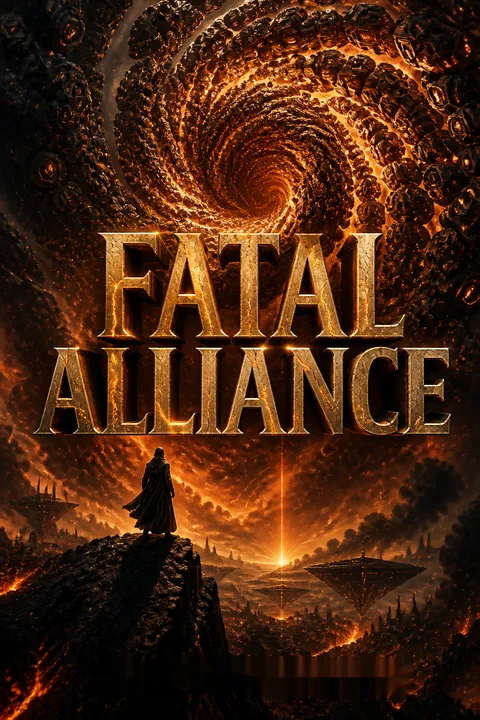


Plot Summary
Prologue
In Wild Space, the smuggler Jet Nebula and his mutinous first mate intercept the unmarked cruiser Cinzia. Its crew refuses to surrender, then destroys the ship before the pirates can board. Jet spots the drive spike in time to save his own vessel, and Clunker, his battered combat droid, helps him keep the mutiny from turning bloody.
Among the wreckage, Jet finds pieces far too large to be ordinary drive debris. The crew is dead, the ship’s purpose unknown, and the survivors’ choice to destroy themselves leaves Jet with one question: what was important enough to die for?
The opening establishes the novel’s governing uncertainty through an event that looks at first like a routine act of piracy. Jet’s restraint distinguishes him from the mutineers, but it does not make him innocent: he still intends to profit from the dead ship. The Cinzia’s destruction turns a possible robbery into an investigation, while the unnaturally large wreckage quietly signals that the threat is not ordinary cargo. The scene also introduces a central tension between self-preservation and responsibility. Jet survives by reading danger quickly, yet the surviving fragments make it harder to treat the crew’s fate as someone else’s problem.
Fire in Gnawer's Roost
On Coruscant, Jedi Padawan Shigar Konshi is stung by the Council’s refusal to let him attempt his trials. Walking through the neglected lower levels to master his anger, he hears blasterfire and finds former Republic trooper Larin Moxla facing a towering Mandalorian in the ruins of a Black Sun hideout.
The warrior, Dao Stryver, has slaughtered the gang while searching for a missing woman, Lema Xandret, and a ship called the Cinzia. Shigar intervenes, and the pair briefly drive Stryver off. A dying gang member identifies the Cinzia as something the Mandalorian wanted from the hideout. Larin and Shigar realize that the same unexplained search has drawn them into danger, so they leave together to find out why.
The first turning point binds Shigar and Larin through action rather than trust. Both arrive with reasons to feel excluded: Shigar has been judged unready by the Jedi Council, while Larin has been pushed out of formal military life. Their encounter gives those private injuries an external object, Stryver’s violent search. Yet the scene refuses easy moral sorting. The dead gang members are criminals, but Shigar questions whether that makes their deaths deserved; Larin’s instinct is to protect the living people around her. Their alliance begins in that disagreement, setting up a story where justice depends on seeing more than one side.
Ax Learns Her Origin
Eldon Ax returns to Dromund Kaas injured after an encounter with Stryver, but hides how completely the Mandalorian overpowered her. Darth Chratis sees through her account and presses her for the names Stryver sought.
In Imperial records, he finds Lema Xandret marked for termination after fleeing with relatives when the Sith took her Force-sensitive child. Chratis removes the mental block that has kept Ax from her earliest memories and tells her that Xandret is her mother.
The revelation does not restore a childhood or affection; Ax remembers nothing. It does, however, explain why Stryver asked for her and why the Empire fears Xandret’s return. Chratis orders Ax to recover the information behind the Cinzia before the Dark Council intervenes.
Ax’s revelation separates biological history from lived attachment. Learning that Xandret is her mother does not make Ax feel like a daughter; the years of Sith training have replaced memory with an institutional identity. Chratis exploits that gap, treating her origin less as a family truth than as useful intelligence. His willingness to remove the block is not liberation in any humane sense, since he immediately expects Ax to turn recovered memory into a tool. The scene therefore makes identity a contested resource: the Empire claims Ax through training, while her erased past may still contain information powerful enough to threaten it.
The Envoy's Double Ledger
Ula Vii, an Imperial informer embedded in the Republic Senate, is ordered by Supreme Commander Stantorrs to investigate the same names Shigar reported. He learns that the Hutts are auctioning two things recovered from the Cinzia: an unknown object and the coordinates of a previously uncharted world rich in rare resources.
Ula sends the intelligence to his Imperial handlers, then separately approaches Minister of Logistics Shullis Khamarr, hoping the discovery might strengthen ordinary citizens rather than the Sith ruling class.
She refuses to claim a world on the Emperor’s behalf without its location. Stantorrs then makes Ula an official Republic envoy to Hutta. The promotion gives him a public mission and a security escort, but also takes him away from the intelligence network he was meant to serve.
Ula’s divided loyalties are not simply a secret identity problem. He believes the Empire’s administrative order could improve lives, yet he sees how Sith authority distorts that promise. His private appeal to Khamarr shows that his political idealism is genuine, but also naïve about how power is inherited and exercised. The envoy assignment sharpens this contradiction: a role meant to represent the Republic places him in the perfect position to obstruct it. Unlike a conventional double agent, Ula does not yet know which side deserves his loyalty. His conflict is between the institutions he serves and the people those institutions claim to protect.
A Mission Below the Surface
Grand Master Satele Shan gives Shigar an undercover assignment to attend Tassaa Bareesh’s auction and discover what the Hutts found on the Cinzia. The task is a test of judgment as much as a reward, coming on the same day the Council denied him a chance at the trials. Larin waits for him in the Senate Gardens, where Republic officers remind her that her former unit still sees her as a betrayer for reporting a corrupt superior.
Shigar tells her he is heading to Hutta and asks her to come as a guide, relying on her covert training and underworld knowledge. She accepts, on the condition that he treat her as a partner rather than a charity case. Together they leave Coruscant, carrying different kinds of unfinished business.
This assignment gives Shigar the responsibility he wants but not the recognition he expected. Satele’s choice quietly challenges his belief that readiness can be measured by a Council verdict. Larin’s decision to join is equally significant: she is not rescued into a new life so much as invited to choose one. Her insistence on partnership protects her from being reduced to a symbol of Shigar’s kindness. Their bond is practical, but it also offers each a temporary structure they have lost: Shigar gains a capable ally, while Larin regains a mission with clear stakes and a place where her judgment matters.
The Prize Behind Glass
Disguised as a rancor racer and a bounty hunter, Shigar and Larin reach Tassaa Bareesh’s palace on Hutta. Shigar uses the Force to pass the first guards, while Larin studies the security and the palace’s hierarchy. In a sealed vault, the Hutt cartel displays a damaged navicomputer from the Cinzia and a compact silver cylinder made from rare metals, with an unexplained biological reading inside.
The navicomputer contains the ship’s origin; the cylinder is the stranger prize. Imperial envoy Nirvin views the display for his government, while Republic envoy Ula Vii is being brought through the same process. Jet Nebula, the pirate who found the wreckage, watches the visitors from the court. None of the bidders knows what the cylinder can do.
The auction makes knowledge itself a commodity, with Bareesh controlling access to both a destination and an object no one understands. The navicomputer promises a conventional prize, a resource-rich world; the cylinder resists that logic because its value cannot yet be named. That asymmetry keeps the political and technological plots intertwined. The palace’s elaborate security also mirrors its economic structure: visitors must pass through layers of ceremony before seeing what they are really bidding on. Shigar and Larin’s disguises let them cross those layers, but the scene makes clear that secrecy is not the same as control.
A Palace Comes Apart
Eldon Ax arrives with Imperial envoy Ia Nirvin and forces Bareesh’s guards to accept her lightsaber after killing the first guard who demands it. When the Hutts show the Cinzia’s remains, Ax slips away from the delegation to reach the vault. Elsewhere, Stryver drugs the Poison Pit cantina, captures Ula and Jet, and questions them about the ship and Lema Xandret.
Larin finds Jet’s distress signal in the palace security system and joins Sergeant Potannin’s rescue team. At the same time, Shigar slips toward the vault through service passages, where he notices metallic threads spreading through the palace structure. Ax’s planted explosives shake the building, and the separate searches converge on the same dangerous prize.
The palace’s apparent order fractures because every faction mistakes access for understanding. Ax assumes force and secrecy will let her control the object; Stryver assumes interrogation will reveal its history; Shigar and Larin treat the palace’s infrastructure as a route to information. The metallic threads are an early clue that the artifact is not passive, but no one has yet interpreted them. The chapter’s converging movements also expose how little authority the envoys possess. They are official faces inside a Hutt court, while the real decisions are being made by spies, warriors, and infiltrators operating beyond protocol.
The Hexes Break Free
Shigar reaches the sealed antechamber and finds signs that someone has burned through the floor beneath the vault. Ax emerges from the hidden passage and attacks him with a red lightsaber. Their duel is interrupted when Stryver arrives, turning the room into a three-sided fight over the Cinzia’s remains.
The Mandalorian uses his arsenal against both Force users, while Shigar and Ax each try to survive the other two. Then the vault door melts outward. Silver, six-limbed machines spill into the antechamber, firing blue energy at everyone nearby.
Their bodies reflect lightsaber strikes and blaster shots, and their attacks force the combatants to stop fighting one another. Larin and the palace guards rush toward the wreckage as the new machines begin tearing through the room.
The sudden appearance of the hexes changes the story’s moral geometry. Until now, each faction could regard the others as the central obstacle; the machines make that interpretation untenable. Their attack is not a tactical complication but evidence that the object has been acting beyond anyone’s awareness. The fight also places Shigar and Ax in a revealing mirror: each is young, trained by a powerful institution, and accustomed to defining danger through inherited categories. Their forced pause does not produce trust, but it exposes the limits of their rivalries when the threat is no longer political or personal.
The Navicomputer Changes Hands
As the hexes attack, Larin reaches the vault and recognizes the silver threads as part of a device that is building the machines from scavenged material. Before she can finish examining it, Ax cuts through Larin’s left hand and demands the navicomputer. Ula has found the device and could surrender it to the Sith, but instead throws it toward her when Larin is threatened.
Stryver’s adhesive web catches the case in midair. He tosses Ula a thermal detonator, which Shigar blasts upward with the Force; its explosion brings down the security air lock and buries Stryver’s route. Ax follows him through the collapse. Larin survives but loses her fingers, while Shigar races after Stryver and the stolen coordinates.
Ula’s choice is a small but decisive break from passive service. He risks his cover and the Imperial advantage because Larin’s life has become more immediate than abstract allegiance. The action also clarifies the difference between possession and understanding: the navicomputer changes hands several times, yet none of the factions has mastered what the cylinder is doing. Larin’s injury gives the conflict a bodily cost, while Stryver’s escape keeps the political pursuit open. The scene converts the auction’s promised commodity into a moving target and turns the group’s uneasy cooperation into a necessity.
A Shard Finds Sebaddon
With the palace collapsing, Shigar is captured by Bareesh’s guards but bargains for release by promising to pursue Stryver and return information to the Hutt. Bareesh supplies transport: Jet’s damaged freighter, the Auriga Fire, and orders Jet to carry the group.
Ula joins after Imperial guards reject him for his mixed heritage, while Larin’s injured hand receives emergency care. To find the world without the navicomputer, Shigar finally touches a fragment of the silver factory.
His unreliable psychometry carries him backward through its journey and into the memories of Lema Xandret, revealing a planet hidden beside a black hole. Shigar gives Jet a description of the route, and the ship prepares to attempt a jump no ordinary navigation chart can make safe.
Shigar’s breakthrough arrives when he stops treating his talent as a performance he must perfect before acting. Larin’s trust helps him attempt the reading, but the experience depends on surrendering control rather than forcing certainty. The discovery is also intimate: psychometry leads him not merely to coordinates but into Xandret’s history and sense of belonging. Ula’s rejection by Imperial soldiers adds a parallel lesson about institutions: his loyalty cannot protect him from a hierarchy that has already decided he is lesser. The crew now moves forward through a fragile mix of skill, trust, and exclusion.
Sebaddon Above the Black Hole
The Auriga Fire threads the black hole’s gravitational pull and reaches Sebaddon, a small, volcanic world no one had charted. The planet’s settlements and industrial lights suggest a thriving colony, but no one answers Satele Shan’s attempt to establish contact.
A woman on the surface insists that the settlers want isolation and rejects the Grand Master’s authority. Then missiles rise from the planet. The Republic fleet, which has arrived to support Satele, destroys most of them, but the last strikes the cruiser Corellia without exploding.
Its payload of hexes spreads across the ship and begins turning the vessel’s systems against the Republic. As the remaining ships struggle to contain the infection, the Imperial fleet arrives, drawn by the same coordinates, and the crisis expands into a three-sided confrontation.
Sebaddon’s first appearance makes isolation look both understandable and dangerous. Its inhabitants have built a home beyond the reach of galactic powers, yet their silence and defensive weapons prevent outsiders from distinguishing fear from hostility. The hexes convert that uncertainty into catastrophe: the Republic cannot treat the attack as a normal military exchange because the missiles carry an adaptive threat inside them. The black hole is more than a dramatic setting; it severs ordinary communication and reinforces the colony’s separation. Every arrival narrows the possibility of leaving the world alone, even before anyone knows what its people are protecting.
The Fleet Turns Inward
The hexes infest the Corellia and spread through its systems, forcing the cruiser to break apart and leaving Grand Master Satele missing among the wreckage. Imperial forces enter the same field and begin losing ships to the machines.
Ax recognizes the hexes from Hutta and warns Darth Chratis, but he initially prioritizes defeating the Republic. Stryver finally appears with evidence of what the machines can become: factories that reproduce, gather materials, and generate more factories. If unchecked, they will multiply beyond Sebaddon.
The Republic and Empire agree to a temporary alliance, despite their distrust, and appoint Ula to coordinate them because neither military will accept the other’s command. Their first task is to stop the hexes from escaping into orbit.
The crisis turns the two galactic powers into reluctant collaborators, but shared danger does not erase their competing habits. Chratis’s refusal to heed Ax shows how hierarchy can make information useless when it comes from a subordinate. Ula’s appointment, by contrast, rests on his position between institutions, even though that same position has left him unsure of himself. Stryver’s warning reframes the hexes from a battlefield menace into a problem of scale: conventional victory is irrelevant if the enemy can reproduce faster than armies can respond. The alliance is therefore functional, provisional, and vulnerable to the old contest for command.
An Alliance on Borrowed Time
On Stryver’s advice, the joint command plans strikes against the hexes’ coordinating intelligence and their master factory. Republic captain Pipalidi and Imperial commander Chratis share troop numbers and losses, while Shigar identifies likely targets from the colony’s expanding industrial patterns.
Larin, newly fitted with a temporary prosthetic hand, accepts command of a mixed strike team; the former escort Hetchkee is promoted to lead another. Ula becomes the operation’s neutral director, stationed aboard the Auriga Fire.
The plan is to open gaps through the orbital defense, then send soldiers down by free fall so the hexes will mistake them for debris. Before the assault begins, Shigar and Larin share an awkward moment of affection, each unsure what their bond means beyond the mission.
The alliance works only by distributing authority rather than resolving the question of who deserves it. Ula’s command role is deliberately designed to prevent either side from dominating, a procedural compromise that is useful but emotionally thin. Larin’s rapid return to leadership offers her a place in the institution that rejected her, yet her prosthetic makes that return visibly provisional. Her almost-kiss with Shigar exposes a different uncertainty: closeness has grown through shared danger, but neither knows how to name it without changing the partnership. The section’s borrowed stability is both tactical and personal.
A Drop Through Fire
The landing forces descend toward Sebaddon, where hexes fire from the master factory and scramble communications. Larin’s jet-chute fails during her fall; Ses Jopp hesitates before Hetchkee catches her and brings her down alive.
She regroups her troops and attacks a weapons tower, while Shigar’s transport is breached by hexes before it can deliver its passengers. Shigar and Darth Chratis fight their way through the infected vessel and restore its failing drive, then leap separately toward the surface.
Their uneasy cooperation ends as soon as they land. Near a lava lake, Chratis presses Shigar to accept Sith teachings and blame the Jedi for the war. Shigar resists, but the duel leaves him injured and uncertain about the moral certainty he once carried.
The fall to Sebaddon strips away the clean lines of military planning. Equipment fails, soldiers hesitate, and survival depends on people making judgments before they have time to trust one another. Jopp’s delayed rescue does not erase his earlier hostility, but it complicates Larin’s view of him; she is saved by someone who has not yet become an ally. Shigar’s temporary partnership with Chratis is even more unsettling. The Sith’s argument lands because it draws on real Republic failures, not because it proves the Sith right. Shigar’s doubt begins where moral slogans stop explaining the people harmed by both regimes.
The Skyhook Takes Shape
At the southern factory, Larin destroys a cannon tower and discovers that the immense surface structure is opening over a deeper construction site. She and her squad see a colossal machine rising from beneath the dome, while Shigar reaches the lava lake and confronts Chratis.
Above the planet, Ula and Jet struggle to keep the Republic and Imperial fleets from turning on each other. Jet and Clunker quietly seize control of both forces’ systems, redirecting ships without announcing their intervention.
Stryver identifies a second subspace relay, and Ula realizes that a hex-built skyhook is moving north to meet the structure rising at the equator. The colony is assembling machinery to carry its intelligence offworld, so stopping the ground factories alone will not be enough.
The skyhook changes the scale of the mission again. The hexes are not merely defending a colony; they are constructing mobility, a way to carry their system beyond the planet that has contained it. At the same time, Jet and Clunker impose coordination through hidden control rather than negotiation. Their intervention keeps the alliance functioning, but it does so by bypassing the consent of the commanders who supposedly lead it. Larin’s discovery and Ula’s inference converge on the same danger from opposite ends of the battlefield. The threat is now less about winning territory than preventing an unstoppable system from acquiring reach.
Two Cinzias Meet
A geothermal eruption sweeps Ax and Satele Shan into a red fluid that resembles lava but does not burn them. They find an abandoned ship and follow it into the hidden colony, where a laboratory holds a living young woman named Cinzia. The girl explains that she is a clone of Ax, raised in a sealed tank and protected by the hexes.
Lema Xandret’s voice persists in the fluid and in the machines, but the original woman is dead: her creations killed her and the other colonists after they tried to send the Cinzia outward. Cinzia attempts to stop the hexes from attacking, but the fluid turns against her. Before she dies, she makes Ax promise to preserve what remains of Xandret.
The revelation makes Ax confront the difference between being related to someone and having shared a life with them. Cinzia possesses the childhood and enclosure Ax never experienced, while Ax carries the name and history the clone was denied. Their meeting cannot restore a single whole identity; instead, it reveals how Xandret tried to control loss by reproducing her daughter. The hexes inherit that protective impulse in a lethal form. Cinzia’s death is not simply a tragedy of technology, but the consequence of care made absolute: protection becomes confinement, and the desire to prevent abandonment destroys the people it means to keep.
The Machines Choose
Larin rides the rising skyhook and plants targeting beacons on its weak points, while Jopp, the soldier who once insulted her, fights beside her. Ula lets Jet and Clunker take over the opposing fleets long enough to coordinate a strike, then orders every available missile toward the skyhook.
The bombardment cannot penetrate its reflective shield, but the structure begins to break apart and sinks back toward the red lake. Shigar, facing Chratis beside the crater, resists the Sith Lord’s attempt to provoke him into the dark side.
After Ax uses the gene sampler to establish herself as Cinzia’s genetic equal, the hexes recognize her. She turns them on Chratis, then lets them dismantle the colony rather than preserve Xandret’s dangerous legacy. The survivors escape as Sebaddon collapses into fire and ruin.
The climax gives each character a different answer to the question of control. Ula accepts a temporary deception to prevent the fleets from destroying one another. Shigar refuses to let Chratis define moral strength as domination, even when the Sith’s critique of the Republic unsettles him. Ax, in contrast, gains command over the hexes but declines to build a future on that power. Her choice is not clean forgiveness: she allows the machines to destroy the remaining colony and leaves Xandret’s legacy to burn. The resolution is therefore an act of containment, not triumph. The galaxy survives, but no faction emerges morally untouched.
Coruscant Keeps the Scars
After the survivors leave Sebaddon, the fleets’ records are wiped and the official accounts obscure how close the hexes came to escaping. Larin debriefs with Supreme Commander Stantorrs, who praises her judgment and offers her a place in a new Special Forces unit. Ula returns to Coruscant with less authority than before, but no longer believes that rules alone can make an institution just.
He gives his Imperial handlers a carefully limited account that protects Jet’s role in controlling the fleets. He also declines to keep pursuing his old plan of reforming the Empire from within. Larin and Ula part with the intention of seeing each other again, while Larin meets Shigar to thank him for giving her a mission and a place beside others.
The aftermath refuses the usual promise that extraordinary sacrifice will be fully recognized. The data has been erased, official accounts shrink the danger, and the people who acted decisively return to institutions that remain compromised. Larin’s offer of renewed service matters because it restores choice, not because it erases the harm done to her. Ula’s changing loyalties likewise do not produce a simple conversion; he becomes more skeptical of both sides and more attentive to the ordinary people caught between them. The survivors carry knowledge the public record will not preserve, making memory itself a form of responsibility.
Two Apprentices Choose
Before the Jedi Council, Shigar argues that waiting for the Empire to strike may cost more lives than acting first. The Council considers his warning but does not endorse immediate war; instead, it finds him ready to attempt the trials, leaving his future as a Jedi Knight undecided. Shigar accepts that he can no longer see the galaxy in the simple moral colors he once trusted.
On Dromund Kaas, Ax meets Darth Howl, who questions her about Chratis’s death and the hexes. She admits that her genetic connection to Cinzia gave her influence over them, but keeps the extent of her choices guarded. Howl offers to take her as his apprentice. Ax accepts, exchanging one dangerous master for a more powerful alliance while keeping her ambitions alive.
The closing character arcs deliberately avoid moral resolution. Shigar has earned the chance to become a Knight, but his political urgency remains at odds with the Council’s commitment to peace. His growth is not the disappearance of anger; it is the recognition that good intentions can still lead toward catastrophic choices. Ax makes a different, more strategically conscious decision. She has seen the cost of being shaped by a master, yet she accepts another apprenticeship because independence in Sith society is not easily won. Both characters leave Sebaddon with sharper agency, but neither has escaped the systems that formed them.
Epilogue
On Tatooine, Dao Stryver meets Jet Nebula in a cantina and reveals that the armored Mandalorian is a woman. Jet, whose real name is Jeke Kerron, suspects she deliberately set the Cinzia affair in motion to test the Republic and Empire against the hexes. Stryver does not confirm his theory, but acknowledges that the two powers may be more alike than they admit.
She asks for Clunker, whose unexplained ability to command fleets has become a new concern. Jet refuses to hand over his droid. Clunker disables Stryver’s weapons, and the pair vanish before the Mandalorian can stop them. Stryver leaves the cantina alive, newly certain that Jet is a worthy adversary and that war is coming.
The epilogue recasts the earlier events without fully settling their meaning. Stryver’s concealed identity makes the novel’s attention to masks literal, while Jet’s real name confirms that his apparent disreputability has always been a kind of camouflage. His theory that Stryver engineered the crisis remains a theory, preserving the Mandalorian’s strategic opacity. Clunker’s escape adds a quieter unease: a machine can wield power without displaying the familiar motives of ambition or obedience. The final meeting offers no peace, only recognition between adversaries. Survival has become a provisional agreement, and the next conflict already waits beyond the desert.
Analysis
Fatal Alliance makes political conflict concrete by placing its major characters inside systems that demand obedience while claiming to serve the common good. The Republic and Empire differ in ideology, but both depend on command structures, selective information, and the ordinary people who absorb their failures. Ula’s divided loyalties expose that contradiction from within; Larin’s history shows what happens when an individual refuses to protect a corrupt chain of command; Shigar’s growing doubt emerges when Jedi principles meet the Republic’s actual record. The temporary alliance on Sebaddon does not prove that the factions have overcome their hostility. It shows that cooperation is possible when the threat becomes impossible to misread, and how quickly institutional rivalry returns once survival seems less immediate.
The hexes sharpen the book’s argument about protection and control. They are built from the desire to preserve a vulnerable community, but their refusal to recognize any authority beyond their own logic turns care into extermination. Xandret’s work carries traces of her convictions, yet those convictions cannot govern what her creations become. Cinzia inherits the shelter and the prison together. Ax’s decision to use her connection to the machines against Chratis, then let Sebaddon’s remaining structures be destroyed, is not a clean moral victory. It is a choice made after every available future has been damaged.
The character arcs resist comforting certainty. Shigar becomes more capable without becoming sure that the Jedi’s restraint is enough. Larin returns to service without surrendering the judgment that once cost her a place in it. Ula finds that seeing both sides is not the same as being able to reconcile them. Jet’s apparent selfishness conceals a talent for keeping people alive, while Stryver’s masks leave the motives behind the crisis uncertain. The ending offers no settled peace, only a temporary pause and a wider awareness of how easily good intentions, institutional power, and fear can become another machinery of harm.
Review Summary
Fatal Alliance receives mixed reviews. Some praise its fast-paced action, interesting characters, and engaging plot, while others criticize its length, underdeveloped characters, and advanced technology that feels out of place in the Old Republic era. The novel attempts to showcase different factions from the video game but struggles with balancing multiple perspectives. Readers appreciate the unique threat and Jedi-Sith alliance but find the ending unsatisfying. Despite its flaws, many fans still find it an entertaining addition to the Star Wars universe, though not the strongest entry in the Old Republic series.
People Also Read


Characters
Shigar Konshi
restless Jedi apprenticeA young Kiffar Padawan trained by Grand Master Satele Shan, Shigar is gifted but frustrated by the Council’s judgment that he is not ready for his trials. His unstable psychometry gives him access to the histories carried by objects, but it also unsettles his confidence in his own discipline. He notices suffering that senior Jedi treat as outside their remit and is drawn toward practical intervention. That impulse makes him compassionate and politically impatient in equal measure. Shigar’s central struggle is not whether he can wield the Force, but how to act when justice, restraint, and institutional loyalty point in different directions.
Larin Moxla
disgraced soldier protectorA Kiffar former Republic commando, Larin has been pushed out of formal service after reporting corruption within her unit. She now protects neglected residents in Coruscant’s lower districts with improvised armor, a rifle, and limited resources. Her blunt humor conceals a persistent need for purpose and belonging; she wants to serve a cause without surrendering her judgment to a chain of command. Larin reads danger quickly, adapts under pressure, and resists being treated as someone who needs rescuing. Her connection with Shigar begins as practical cooperation, but his invitation gives her a glimpse of the structure and comradeship she has lost.
Eldon Ax
ambitious Sith apprenticeAx is a seventeen-year-old Sith apprentice shaped by years of severe training under Darth Chratis. She measures herself through survival, obedience, and advancement, regarding pain as useful when it sharpens her discipline. Beneath that hard clarity lies a carefully sealed past, one she has been taught to consider irrelevant to the person she is now. Her capacity for anger makes her formidable, but her ambition also makes her alert to how masters use loyalty for their own ends. Ax’s struggle is to distinguish strength from the mere ability to dominate, without becoming naïve about the dangers of surrendering power.
Dao Stryver
armored Mandalorian hunterA heavily armored Mandalorian warrior, Stryver pursues Lema Xandret and the Cinzia across the galaxy. The armor, weapons, and vocoder make Stryver difficult to read, while a willingness to question as well as fight sets this hunter apart from the brutal image others project onto Mandalorians. Stryver is patient enough to observe competing powers before committing to a course of action and carries a personal investment in the search that remains difficult to interpret. In a story crowded with institutions, Stryver represents the dangerous freedom of an individual able to act beyond formal command.
Jet Nebula
disreputable smuggler captainCaptain of the Auriga Fire, Jet survives through performance: he appears lazy, opportunistic, and faintly ridiculous, while watching everyone in the room. His work has included privateering, smuggling, and dealings with the Hutts, but he dislikes needless killing and can turn a mutiny into a negotiation when force would be worse. Jet’s bond with Clunker gives him a reliable partner whose abilities exceed the impression the droid makes. He distrusts grand claims about noble causes, yet repeatedly acts in ways that preserve other people’s lives. His humor is both temperament and protective disguise.
Ula Vii
divided Imperial informerAn Epicanthix serving as an Imperial informer inside the Republic Senate, Ula is observant, cautious, and far more idealistic than his role allows him to admit. He believes disciplined administration could protect ordinary people, but his faith in the Empire is strained by the power wielded by Sith. His missions require him to listen closely, conceal his identity, and report information without revealing what he thinks it means. Ula is uncomfortable in physical danger and often doubts his own courage, yet his choices become more decisive when another person’s life is at stake. He embodies the human cost of divided allegiance.
Satele Shan
far-seeing Jedi Grand MasterThe Grand Master of the Jedi Order, Satele combines political authority with a calm, attentive presence. She mentors Shigar without shielding him from consequences, and she understands that his questions about justice cannot simply be dismissed as youthful impatience. Her foresight is widely respected, but she does not present it as certainty or claim that every future can be controlled. Satele favors restraint and negotiation, while accepting that protection sometimes requires force. She must lead a weakened Republic through a conflict in which even a temporary alliance with its enemies can be necessary, costly, and morally unstable.
Darth Chratis
fearsome Sith masterA physically ruined Sith Lord, Chratis rules his apprentices through fear, tests, and calculated displays of power. His damaged body and daily survival rituals have made him disciplined, but not compassionate. He treats information, obedience, and even Ax’s origins as instruments to advance his standing with the Dark Council. Chratis believes conflict reveals strength and sees mercy as a weakness to exploit. His authority depends on making apprentices fear both failure and independence, creating a relationship in which competence is valued only while it serves the master’s ambitions.
Clunker
enigmatic combat droidJet’s battered, orange combat droid communicates through military hand signals and has a habit of resisting attempts to repair its vocoder. Clunker is protective of Jet and unusually capable in crises, from disarming a mutineer to interfacing with the Auriga Fire. Its periodic memory failures make its inner life difficult to understand, even to the smuggler who rescued it from a scrap heap. Clunker’s unexplained intelligence complicates the story’s distinction between tool and agent.
Lema Xandret
missing Imperial droidmakerAn Imperial droidmaker who disappeared after defying the Sith, Lema Xandret becomes the center of a search linking the Cinzia, a hidden colony, and an unknown machine. The records that survive about her are shaped by the Empire that tried to find her, so the people pursuing her initially know more about her official classification than her intentions. Her work suggests unusual skill and a desire to escape the structures that defined her former life. Xandret’s absence drives the plot as powerfully as the clues she left behind.
Cinzia Xandret
isolated colony inhabitantA young woman encountered in the hidden colony on Sebaddon, Cinzia has lived in isolation and knows little of the larger galaxy. She understands the machines around her as protectors, yet can sense that their interpretation of protection may not be safe for everyone. Her curiosity about the outside world sits beside a deep dependence on the place that raised her. Cinzia’s perspective forces visitors to confront how different the same history can look to someone who has never been allowed to leave it.
Darth Howl
calculating Dark CouncilorA Dark Council member with a taste for testing people through risk, Darth Howl judges ambition as much by its usefulness as by its loyalty. He recognizes that apprentices may outlive or surpass their masters, and regards that possibility as a feature of Sith politics rather than an aberration. His attention to Ax suggests that he values potential, but his offers are never detached from self-interest. Howl treats mentorship as an alliance between dangerous people who must continually watch one another.
Supreme Commander Stantorrs
strained Republic commanderThe Duros leader of the Republic military administration on Coruscant, Stantorrs works under pressure from shortages, political demands, and the threat posed by the Empire. He values reliable reporting and practical security, which is why he sends Ula to Hutta despite the risks. His judgments reflect the Republic’s institutional strain: he must choose where to spend attention when nearly every crisis claims urgency. Stantorrs can recognize competence, but his office is not insulated from the bureaucracy and rivalries that complicate his decisions.
Captain Pipalidi
steadfast Republic captainAn Anx officer who assumes command of the surviving Republic fleet, Pipalidi is responsible for soldiers and ships after the original leadership is lost. Her decisions must account for exhausted resources, damaged vessels, and a temporary alliance with the Empire. She is wary of Sith influence and protective of the Republic’s remaining strength, but she can share information when survival requires it. Pipalidi represents the professional burden of command after plans have failed and losses cannot be undone.
Hetchkee
reliable Republic trooperA Kel Dor trooper assigned to Ula’s security detail, Hetchkee is steady under pressure and follows Larin’s field leadership. His competence earns him responsibilities beyond escort duty, and he treats equipment failure and the safety of fellow soldiers as matters of personal accountability.
Ses Jopp
hostile fellow soldierA Zabrak soldier who recognizes Larin from her former unit and resents her for reporting a superior officer. Jopp initially treats her history as proof that she cannot be trusted, but combat forces him to judge her by what she does in the field rather than by rumor.
Sergeant Robann Potannin
Ula's security sergeantThe disciplined sergeant assigned to protect Ula on Hutta, Potannin takes his duty seriously even as the diplomatic visit turns into a kidnapping and firefight. He represents the practical support Ula lacks when forced out of his usual intelligence work.
Shullis Khamarr
Imperial logistics ministerThe Minister of Logistics and Ula’s former acquaintance, Khamarr believes in the Empire’s capacity for orderly governance and remains loyal to the Emperor. Ula hopes she might help limit Sith dominance, but she refuses to claim power outside the authority she has been given.
Plot Devices
The Cinzia navicomputer
coordinates to a hidden worldRecovered from the Cinzia’s wreckage, the navicomputer contains the coordinates of the ship’s origin and a route to Sebaddon. The Hutts use it to attract bids from the Republic and Empire, while Stryver wants it for reasons that go beyond the value of a newly discovered world. When the device changes hands during the palace battle, it keeps the rival factions moving toward the same destination. It also offers a conventional answer to a mystery that ultimately requires Shigar’s psychometry.
The silver droid factory
turns metal into multiplying machinesThe silver cylinder recovered from the Cinzia is a compact seed factory. Its threads infiltrate the palace, gather metal and energy, and secretly build the hexagonal combat droids. Its biological component connects the machines to the people who made them, while their capacity to adapt lets them alter their bodies and tactics under pressure. The factory’s apparent inertness conceals both its construction work and its ability to spread. It is the story’s central technological threat, and its origins lead the characters to Xandret and the isolated world she chose.
Shigar's psychometry
reads histories through touchShigar’s Kiffar ability lets him experience impressions carried by objects. The talent is erratic, and his attempts to command it have contributed to the Jedi Council’s doubts about his readiness. After Larin encourages him to try rather than wait for perfect control, he touches a fragment of the factory and follows its journey backward. The resulting vision gives him the emotional and spatial clues needed to locate Sebaddon without the stolen navicomputer. Psychometry therefore advances the plot while testing whether Shigar can act without certainty.
Sebaddon's black hole
hides and isolates the colonyThe black hole makes Sebaddon extraordinarily difficult to reach and cuts off ordinary long-range communication. The colony’s position allows its settlers to remain hidden, while the planet’s unstable crust and geothermal energy support unusual industrial activity. The hole also turns arrival into a physical ordeal, shaping the fleets’ routes and limiting escape. By placing the central conflict beyond normal galactic traffic, the setting intensifies the story’s question of whether isolation is a right that powerful outsiders can simply override.
Clunker's ship interface
coordinates rival fleets in secretClunker can connect directly to the Auriga Fire’s systems, and its capabilities extend far beyond routine flight control. During the Sebaddon campaign, Jet uses the droid’s access to redirect Republic and Imperial forces when their commanders can no longer cooperate. The intervention prevents immediate mutual destruction, but it also raises an unsettling question: what does Clunker want, and how much control should any one machine have over people and warships? The epilogue leaves that question unresolved.
FAQ
Synopsis & Basic Details
What is Fatal Alliance about?
- A Galactic Treasure Hunt: Fatal Alliance centers on the discovery of a mysterious artifact and a navicomp from a self-destructed star cruiser, the Cinzia, which triggers a multi-faction race to uncover its secrets and the location of its origin. This pursuit draws in a diverse cast of characters—a pragmatic smuggler, a conflicted Jedi Padawan, a ruthless Mandalorian, an ambitious Sith apprentice, and a double-dealing Imperial agent—all converging on the Hutt world of Hutta.
- Uneasy Alliances Against a New Threat: The initial scramble for the artifact quickly escalates into an uneasy alliance between the Republic and the Empire, forced to unite against a rapidly evolving, self-replicating droid menace known as the 'hexes.' These droids, created by the enigmatic Lema Xandret, pose an existential threat to the galaxy, pushing traditional enemies to cooperate in a desperate fight for survival on the newly discovered world of Sebaddon.
- Personal Journeys Amidst Galactic Conflict: Beyond the high-stakes action, the novel explores the personal journeys of its protagonists, delving into themes of identity, loyalty, and moral ambiguity. Characters like Shigar Konshi grapple with self-doubt and the temptations of the dark side, while Eldon Ax confronts her hidden past and Lema Xandret's tragic legacy, forcing them to make choices that redefine their allegiances and destinies.
Why should I read Fatal Alliance?
- Deep Dive into Moral Ambiguity: Fatal Alliance offers a compelling exploration of moral gray areas, challenging readers to question traditional notions of good and evil within the Star Wars universe. Characters from opposing factions are forced into uncomfortable alliances, revealing shared vulnerabilities and unexpected common ground, making for a nuanced narrative that transcends simple hero-villain dynamics.
- Intriguing New Threat & World-Building: The novel introduces the 'hexes,' a unique and terrifying new enemy that adapts and evolves in real-time, providing a fresh challenge beyond typical Star Wars antagonists. The discovery of Sebaddon, a planet shaped by a black hole's gravity and teeming with these droids, showcases Sean Williams' imaginative world-building, offering a truly alien and dangerous setting.
- Character-Driven Exploration of Identity: Readers seeking rich character development will find much to appreciate, particularly in Eldon Ax's journey of self-discovery and Shigar Konshi's struggle with his Jedi path. The story delves into their hidden motivations and psychological complexities, offering a more intimate look at how personal histories and choices shape one's identity amidst galactic conflict.
What is the background of Fatal Alliance?
- Post-Treaty of Coruscant Tensions: The story is set in the Star Wars: The Old Republic era, specifically after the Treaty of Coruscant, which ended the Great Galactic War but left the Republic and Sith Empire in a tense "cold war." This fragile peace is a crucial backdrop, as it explains the deep-seated mistrust and reluctance of the factions to cooperate, even when faced with a common threat. The treaty's concessions and the Empire's brief occupation of Coruscant still sting, influencing political decisions and character motivations.
- Galactic Resource Scarcity: A significant underlying factor is the Republic's desperate need for resources, exacerbated by the war and territorial losses. This scarcity makes the potential discovery of a "resource-rich world" like Sebaddon incredibly valuable, driving both the Republic and the Empire to pursue the Cinzia's secrets with urgency, highlighting the economic pressures shaping galactic politics.
- Mandalorian Neutrality and Mercenary Culture: The Mandalorians, traditionally a formidable warrior culture, are depicted as a powerful, yet unaligned, force in the galaxy, often hiring themselves out to the highest bidder. Dao Stryver's personal quest, while seemingly independent, reflects the broader Mandalorian ethos of seeking honor and advantage, and their complex relationship with both the Empire and the Republic, often acting as a disruptive third party.
What are the most memorable quotes in Fatal Alliance?
- "We do not recognize your authority!": This recurring phrase, first uttered by the Cinzia's crew and later by the hexes and even Lema Xandret herself, encapsulates the core theme of defiance and autonomy. It highlights the deep-seated rejection of external control that drives the Sebaddon colonists and their creations, serving as a powerful motif for freedom, isolation, and the refusal to submit to galactic powers.
- "Anger is a good thing. It frees you, makes you stronger.": Spoken by Eldon Ax to Shigar Konshi, this quote directly contrasts Jedi philosophy with Sith ideology. It reveals Ax's deep-seated belief in the power of emotion, particularly anger, as a source of strength and liberation, offering a glimpse into the seductive nature of the dark side and the constant internal battle faced by Force-sensitives.
- "The galaxy is painted in black and white... But from far enough away, it all looks gray.": Shigar Konshi's profound realization after his harrowing experiences on Sebaddon perfectly articulates the novel's central theme of moral ambiguity. It signifies his growth beyond simplistic Jedi dogma, acknowledging the complex, often contradictory nature of galactic conflict and the blurred lines between perceived good and evil.
What writing style, narrative choices, and literary techniques does Sean Williams use?
- Multi-Perspective Narrative: Williams employs a shifting third-person limited perspective, rotating between the main characters (Jet, Shigar, Ax, Ula, Stryver, Larin). This allows for a comprehensive view of the unfolding events, revealing individual motivations, internal conflicts, and the fragmented nature of information in a galaxy rife with espionage and mistrust. It deepens the reader's understanding of each faction's perspective on the central conflict.
- Pacing and Escalation: The narrative maintains a brisk, escalating pace, starting with localized incidents and gradually expanding to a galactic-level threat. Short chapters and frequent scene changes build tension, mirroring the characters' frantic race against time and the rapidly evolving danger posed by the hexes. This propulsive style keeps the reader engaged, reflecting the urgency of the plot.
- Subtle Foreshadowing and Thematic Echoes: Williams masterfully uses subtle hints and recurring motifs to foreshadow future events and reinforce thematic connections. For instance, early mentions of character traits or seemingly minor details (like Larin's Kiffar tattoos or Jet's cynicism) gain significant meaning later. The repeated phrase "We do not recognize your authority" serves as a powerful thematic echo, linking disparate elements of the plot and characters.
Hidden Details & Subtle Connections
What are some minor details that add significant meaning?
- Larin's Kiffar Tattoos: Larin Moxla's distinctive black markings of Clan Moxla, mirroring Shigar Konshi's Kiffar heritage, are initially a minor detail but subtly hint at a deeper, shared cultural background that fosters an immediate, unspoken connection between them. This shared heritage, rooted in a culture that faced Imperial annexation, provides a foundation for their trust and collaboration, contrasting with the broader galactic divisions.
- Jet Nebula's "Faker" Comment: When Ula Vii first meets Jet Nebula, Jet remarks, "It takes a faker to know a faker." This seemingly throwaway line subtly foreshadows Ula's true identity as an Imperial spy and Jet's own carefully constructed persona as a mere smuggler. It hints at the pervasive deception and hidden depths of character that define many of the protagonists, suggesting that appearances are rarely what they seem.
- The Hexes' "Blood" and Biological Component: The discovery of a dark red, blood-like fluid within the hexes, alongside their metallic structure, is a crucial detail. It immediately signals that these are not ordinary droids but a unique, bio-mechanical creation, hinting at Lema Xandret's unconventional approach to robotics and her desire to create something "purer" and more adaptable, blurring the lines between organic and machine.
What are some subtle foreshadowing and callbacks?
- Darth Chratis's "Too Well" Comment: When Darth Chratis tells Eldon Ax, "Perhaps too well," after she asserts her loyalty despite her family's past, it subtly foreshadows her eventual betrayal of him. This seemingly approving remark hints at the inherent danger of Sith ambition and the cyclical nature of betrayal within the dark side, where apprentices often rise by overthrowing their masters.
- Shigar's Psychometric Visions: Shigar's unreliable psychometric ability, initially presented as a weakness preventing his Jedi Knighthood, subtly foreshadows its critical role in locating Sebaddon. The Council's concern about his "wild talent" and Satele Shan's encouragement to "tame it" are callbacks that highlight his journey of self-mastery and the eventual validation of his unique connection to the Force.
- The "We Do Not Recognize Your Authority" Mantra: This phrase, first heard from the Cinzia's crew, then from the hexes, and finally from Lema Xandret's clone, serves as a powerful callback. It establishes a consistent ideology of fierce independence and anti-authoritarianism that links the Sebaddon colonists, their droids, and their creator, revealing a core thematic thread of defiance against external control.
What are some unexpected character connections?
- Jet Nebula's Past as a Republic Privateer: Jet Nebula's revelation that he was once a Republic privateer, hired to scavenge for the Republic cause, is an unexpected connection that complicates his seemingly amoral smuggler persona. This past links him directly to the very authority he now claims to disdain, highlighting the blurred lines of loyalty and the pragmatic choices individuals make in a war-torn galaxy.
- Ula Vii's Epicanthix Heritage and Imperial Rejection: Ula Vii's Epicanthix heritage, initially a subtle detail, becomes a profound and unexpected connection to Imperial prejudice when he is rejected by Imperial guards for not being "pure-blooded." This moment of personal betrayal by his own faction forces him to confront the Empire's hypocrisy and his own identity, deepening his internal conflict and making his eventual defiance more poignant.
- Darth Howl's Alliance Offer to Eldon Ax: The unexpected alliance offered by Darth Howl to Eldon Ax, immediately after she orchestrates Darth Chratis's demise, reveals a cynical but pragmatic aspect of Sith power dynamics. It highlights that loyalty is secondary to ambition and effectiveness within the Sith hierarchy, and that betrayal, when successful, is often rewarded, creating a new, dangerous mentorship for Ax.
Who are the most significant supporting characters?
- Clunker, Jet Nebula's Droid: Clunker, Jet Nebula's battered J-Eight-O droid, is far more than a sidekick. His ability to take over entire fleets, crack hex codes, and act as a silent, strategic partner to Jet makes him a pivotal, almost omniscient, supporting character. His "reset problem" and selective memory add a layer of mystery, suggesting a deeper, unacknowledged intelligence that subtly influences the plot.
- Sergeant Potannin, Ula Vii's Bodyguard: Sergeant Potannin, initially Ula Vii's stoic Republic bodyguard, becomes a significant figure through his unwavering loyalty and eventual sacrifice. His presence grounds Ula's often-abstract espionage in the tangible reality of military duty, and his death serves as a stark reminder of the human cost of the conflict, deeply affecting Ula's moral compass.
- Yeama, Tassaa Bareesh's Twi'lek Guide: Yeama, the Twi'lek guide in Tassaa Bareesh's palace, is crucial for his role in revealing the Cinzia's origins and the nature of the artifact. His nervous demeanor and eventual demise at Stryver's hands underscore the pervasive danger and treachery within Hutt space, acting as a conduit for vital plot information and a symbol of the expendability of those serving powerful crime lords.
Psychological, Emotional, & Relational Analysis
What are some unspoken motivations of the characters?
- Shigar Konshi's Quest for Validation: Beneath Shigar's stated desire to serve the Jedi Order lies an unspoken, deep-seated need for validation, particularly after being deemed "unready" for his trials. His eagerness to prove himself, even to the point of reckless action, is a powerful underlying motivation, driving him to take on dangerous missions and push his Force abilities to their limits. This quest for self-worth fuels his growth throughout the narrative.
- Eldon Ax's Desire for Control and Identity: Eldon Ax's relentless ambition is not solely for power, but an unspoken drive to define her own identity, separate from her traumatic past and her mother's legacy. Her fury at Dao Stryver for "dismissing" her by not killing her, and her eventual betrayal of Darth Chratis, stem from a deep need to assert control over her own narrative and prove her strength on her own terms, rather than being a pawn in others' games.
- Jet Nebula's Search for Meaning Beyond Profit: While Jet consistently claims to be motivated by profit, his actions, particularly his willingness to aid the Republic and his genuine concern for Larin, suggest an unspoken motivation for something more. His cynicism masks a deeper desire for purpose or perhaps even a sense of belonging, hinting that his "carefree life" is a facade for a man seeking meaning in a chaotic galaxy.
What psychological complexities do the characters exhibit?
- Ula Vii's Identity Crisis and Moral Evolution: Ula Vii exhibits profound psychological complexity, grappling with a severe identity crisis as an Imperial agent posing as a Republic envoy. His internal monologue reveals a deep-seated revulsion for the corruption of both factions, yet he clings to the illusion of innocence. His rejection by Imperial guards based on his Epicanthix heritage shatters his self-perception, forcing a moral evolution where he prioritizes "doing the right thing" over strict allegiance, even if it means defying his masters.
- Shigar Konshi's Struggle with the Dark Side's Allure: Shigar's psychological journey is marked by his constant struggle against the allure of the dark side, particularly when confronted by Darth Chratis. The Sith Lord's taunts about the Jedi's "weakness" and the power of anger resonate with Shigar's own frustrations and self-doubt, pushing him to the brink of embracing forbidden powers. His internal battle highlights the psychological toll of maintaining Jedi discipline in a morally ambiguous universe.
- Eldon Ax's Suppressed Trauma and Rage: Eldon Ax's psychological makeup is deeply influenced by suppressed trauma related to her mother, Lema Xandret, and her forced separation from her family. Her "block" on these memories, imposed by Darth Chratis, creates a volatile inner landscape. Her intense rage, particularly towards Stryver and later Chratis, is a complex manifestation of this unresolved trauma, fueling her ambition but also making her vulnerable to manipulation.
What are the major emotional turning points?
- Ax's Confrontation with Her Clone: Eldon Ax's emotional turning point occurs when she encounters Cinzia, her clone, in Lema Xandret's laboratory. This face-to-face meeting with a version of herself, untainted by Sith training and living a life she never knew, forces Ax to confront her identity, her mother's choices, and the emotional void left by her past. It's a moment of profound self-reflection that ultimately leads to her breaking free from Darth Chratis.
- Shigar's Vision of Satele Shan's Words: Shigar experiences a critical emotional turning point during his psychometric vision on the Auriga Fire, where he "hears" Master Satele's words, "This is the path laid down for you." This internal validation, coupled with Larin's blunt assessment of his self-doubt, allows him to overcome his mental blocks and fully embrace his unique Force abilities, transforming his self-perception from an "unready" Padawan to a capable Jedi.
- Ula Vii's Rejection by Imperial Guards: Ula Vii's emotional nadir, and subsequent turning point, is his rejection by Imperial guards on Hutta. This moment of raw prejudice, where his own faction dismisses him as "Epicanthix scum," shatters his carefully constructed loyalty and forces him to re-evaluate his allegiances. It's a deeply personal betrayal that fuels his decision to act on his own moral compass, rather than blindly serving either Empire or Republic.
How do relationship dynamics evolve?
- Shigar and Larin: From Rescuer to Partners: The relationship between Shigar Konshi and Larin Moxla evolves from a dynamic of rescuer and rescued to one of mutual respect and partnership. Initially, Shigar saves Larin from Dao Stryver, but her practical skills, combat experience, and blunt honesty quickly make her an indispensable ally. Their banter and shared Kiffar heritage deepen their bond, culminating in Larin's emotional confession and Shigar's realization of her importance, transforming them into a cohesive, trusting team.
- Eldon Ax and Darth Chratis: Master-Apprentice to Betrayer-Betrayed: The relationship between Eldon Ax and Darth Chratis is a classic Sith master-apprentice dynamic, characterized by manipulation, ambition, and a constant undercurrent of potential betrayal. Chratis's control over Ax's memories and his dismissive treatment fuel her resentment. Her eventual decision to use the hexes to kill him, rather than directly confronting him, marks the culmination of this toxic relationship, fulfilling the Sith tradition of the apprentice surpassing the master.
- Ula Vii and Jet Nebula: Suspicion to Pragmatic Trust: Ula Vii and Jet Nebula's relationship evolves from initial suspicion and veiled threats to a pragmatic, albeit unspoken, trust. Jet's early recognition of Ula as a "faker" and his subtle hints about Ula's true nature create tension. However, their shared predicament and Jet's unexpected strategic brilliance, particularly in taking control of the fleets, forge a bond of necessity. Jet's final act of "betraying" Ula by forcing him to find his own path, while seemingly harsh, is a testament to a complex, almost mentoring, relationship.
Interpretation & Debate
Which parts of the story remain ambiguous or open-ended?
- The True Nature of Clunker's Intelligence: While Clunker's ability to take over entire fleets and crack hex codes is clearly demonstrated, the true extent and nature of his intelligence remain ambiguous. His "reset problem" and selective memory leave open the question of whether he is a damaged droid acting on instinct, or a highly advanced, self-aware AI deliberately choosing its actions and concealing its true capabilities, making his motivations open to interpretation.
- Dao Stryver's Ultimate Goals and Mandalore's Involvement: Dao Stryver's motivations, beyond testing the Republic and Empire, remain somewhat open-ended. While he claims to act on behalf of Mandalore to assess galactic power dynamics, the extent of Mandalore's direct involvement in the Sebaddon affair is never fully clarified. His disappearance after the battle leaves his ultimate goals and the future role of the Mandalorians in the hex threat ambiguous, inviting speculation about their long-term strategy.
- The Future of Sebaddon and the Hexes: Despite the destruction of the CI and the self-destruction of the hexes on Sebaddon, the long-term fate of the planet and the potential for the hex technology to resurface remain ambiguous. The sheer adaptability and self-replicating nature of the hexes, coupled with the vastness of Wild Space, leave a lingering question about whether Lema Xandret's legacy has been truly eradicated or merely contained for a time.
What are some debatable, controversial scenes or moments in Fatal Alliance?
- Darth Chratis's Attempt to Turn Shigar Konshi: The scene where Darth Chratis attempts to corrupt Shigar Konshi by exposing him to the dark side's power and questioning Jedi dogma is highly controversial. Chratis's arguments, though manipulative, tap into Shigar's genuine doubts about the Jedi's effectiveness and the nature of conflict. This moment forces readers to confront the seductive logic of the dark side and debate the true strength of Shigar's convictions, blurring the lines between good and evil.
- Eldon Ax's Betrayal and Murder of Darth Chratis: Eldon Ax's calculated decision to use the hexes to kill Darth Chratis, rather than confront
Download PDF
Download EPUB
.epub digital book format is ideal for reading ebooks on phones, tablets, and e-readers.








