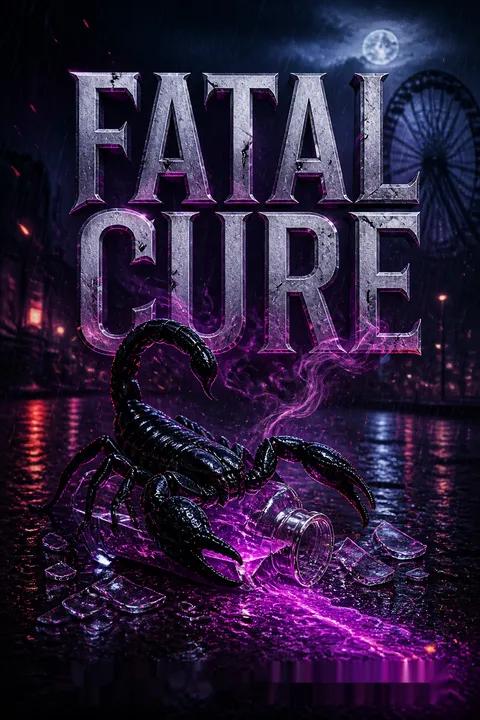


Plot Summary
Smoke Between Floors
Fallon O’Connor has built her life around joining a DEA task force, hoping to stop the drug trade that destroyed her family. On the morning of her first briefing, an elevator traps her between floors with Dillon McPherson, a handsome stranger carrying a gym bag.
When smoke pours into the shaft and fire swallows the building, Fallon climbs through an escape hatch and uses Dillon’s bag strap to haul him to safety. They escape just before the elevator plunges. Fallon arrives late, but Dillon’s gratitude becomes an invitation to dinner. Her first impression of him is attraction; the first fact she learns is that he trusts her with his life.
The emergency makes Fallon’s defining strategy visible before she can explain it: she assesses danger, acts, and refuses to leave someone behind. Her competence is real, but it is also an adaptation to a childhood in which dependable adults vanished into addiction. Dillon’s willingness to follow her lead creates intimacy through action rather than easy confession. Their rescue binds them, yet the fire also establishes the book’s central tension: survival can bring people together without making their lives safe or their values compatible.
A Body in the River
At headquarters, DEA Sergeant Marcus Burch introduces the Chicago Syndicates, a powerful narcotics organization whose members have stayed silent even after a protected informant and his family were killed. Fallon joins the investigation despite Burch’s anger at her lateness, then goes with the team to a riverbank where a Syndicates captain, Adam Terrell, has been tortured and left in public.
Terrell had confirmed that a distinctive scorpion tattoo belonged to a captain. Burch reads the killing as a warning. Before the team can focus on the body, a homicide detective questions Fallon about the skyscraper fire: it began beside her elevator, and witnesses saw men nearby. Burch suspects someone meant to kill her.
The investigation begins with two forms of intimidation: Terrell’s public torture warns the organization against speaking, while the fire suggests violence can reach beyond criminal targets to a crowded city. Fallon’s new professional identity promises agency, but her first case immediately places her under suspicion and possible attack. Burch’s experience helps him see patterns, though his certainty also encourages him to interpret incomplete evidence as a coherent threat. The scene establishes the story’s uneasy balance between sound investigative caution and the pressure to act before another person disappears.
The Childhood She Missed
As Fallon and Dillon begin dating, his attention unsettles her practiced distance. He takes her to a carnival because she missed ordinary childhood pleasures while caring for herself in a home overtaken by addiction.
She tells him how her mother became dependent on pain medication after surgery and how her father later followed; Dillon describes leaving school-aged poverty behind by working to support his mother and disabled brother, Dexter. His thoughtfulness makes Fallon question whether work has become a shield against intimacy.
Meanwhile, the task force recovers three names from Terrell’s swallowed, rubber-wrapped USB drive. Fallon investigates Rodrigo Ramirez, a vanished Midwest narcotics figure whose name appears beside current Syndicates members, and finds no clear trace of him.
The carnival is not simply a romantic gesture. Dillon notices a deprivation Fallon has treated as ordinary, then offers pleasure without demanding that she first justify her pain. Their disclosures create recognition, but not equivalence: both grew up in hardship, while each learned a different method of coping. Fallon turns survival into discipline and a career; Dillon turned responsibility into a willingness to cross moral boundaries. The USB drive provides a parallel mystery. Just as Fallon discovers there are hidden parts of Dillon, the task force finds a name whose absence may be more revealing than its appearance.
The Tattoo Changes Everything
After spending the night at Dillon’s apartment, Fallon sees the scorpion holding an American flag tattooed across his back. The mark matches the task force’s only image of a Syndicates captain. She searches his room and finds a handgun and unopened burner phones, then confronts him. Dillon admits he is a captain and explains that he began dealing drugs as a teenager to feed Dexter and protect his family after gangs attacked them.
Fallon reveals she is a police officer on the task force investigating him and tries to detain him, but he restrains her, then lets her go with cash and a phone so she can escape his organization’s reach. Before she can report him, Burch summons the team: Officer Anthony Marks has disappeared.
Fallon’s discovery collapses the separation between her private life and her professional mission. The tattoo makes an intimate body into evidence, while the burner phones confirm that affection has never given her the whole truth. Dillon’s origin explains his choices without cleansing them: protecting his family became the story that allowed him to live inside a business that harms other families. Fallon’s failed arrest is not just tactical; it exposes how difficult it is to act cleanly when love, danger, and duty occupy the same room. Marks’s disappearance turns that conflict into an urgent public threat.
A Father Finally Explains
With Marks missing, Fallon meets her estranged father, Philip, at a diner. He says he has been attending recovery meetings and explains that, after her mother Kimberly died, he attempted suicide with her leftover pills. The near-fatal dose led to his addiction.
Fallon recognizes that his drug use began in unbearable grief, not indifference to her, and offers to rebuild their relationship. He also reveals that he has terminal cancer. Before a late meeting with Dillon, Fallon traces Ramirez through passenger records to a one-way flight to Mexico fourteen years earlier.
Dillon confirms that the Syndicates have cartel connections and warns that the skyscraper fire was deliberate. A call interrupts them: Philip has died, and Fallon rushes to identify his body.
Philip’s confession revises Fallon’s understanding without erasing the harm she endured. The distinction matters: explanation permits compassion, but it does not make childhood neglect harmless or guarantee recovery. Fallon’s response marks a shift from waiting for a perfect father to choosing a limited, honest relationship while there is still time. The cancer disclosure makes that time painfully concrete. In parallel, the Ramirez lead and Dillon’s warning enlarge the investigation from a local criminal network to a transnational danger. Fallon’s attempt to connect these facts is tested at once by the death she most fears.
The Journal's Last Entry
At the medical examiner’s office, Fallon identifies Philip and refuses to accept that he overdosed. While clearing his trailer, she finds his journal. Its final entry says he learned Kimberly may have taken her fatal dose intentionally, after a photograph of Fallon and Philip was found in her hand.
Believing he had driven Kimberly to suicide, Philip relapsed and took drugs after their last conversation. Fallon’s anger gives way to crushing guilt, though the journal also shows the torment of his recovery attempts.
At Philip’s funeral, task force colleagues gather around her, but Baja Cartel representatives attend too. One cartel enforcer stares Fallon down as she vows to keep fighting the drug trade. Burch later tells her that two Syndicates captains have been arrested and the USB drive yielded an address.
The journal changes the emotional meaning of Philip’s death without offering a simple verdict. Fallon learns that her father’s relapse followed a painful revelation, but the disease, cancer, and accumulated grief all shaped his final act. Her guilt reflects a child’s old belief that she can control a parent’s survival by saying the right thing. The funeral places private mourning under the gaze of public power: cartel figures turn even a farewell into intimidation. Fallon’s vow is both a moral commitment and a risky attempt to give helpless grief somewhere to go.
A Warehouse of Cocaine
Using the address recovered from Terrell’s USB drive, Burch leads the task force to an abandoned warehouse guarded by armed men. Fallon, Proctor, and two officers approach from one side, but gunfire erupts before the team can detain the guards. Fallon returns fire as officers are wounded and suspects fall. Once the building is secured, investigators find rows of cocaine bricks covering a huge distribution hub.
The seizure deals the Syndicates a serious financial blow. The scale of the bust also sharpens the danger: whoever lost this shipment has both the means and the motive to retaliate. Fallon has helped strike the organization, but she still has no answer about Ramirez, the cartel’s plans, or Marks’s whereabouts.
The raid converts an abstract investigation into material consequence: the task force can take away the Syndicates’ product, not merely collect names. Yet the success is double-edged. The warehouse’s scale suggests an operation large enough to absorb losses and powerful enough to answer them violently. Fallon’s courage in the gunfight shows her competence, but her commitment is increasingly shaped by personal grief and a need to make violence mean something. The scene makes the team’s progress feel earned while refusing the fantasy that one successful raid can end an entrenched criminal system.
The Cartel Is Coming
In a concealed basement meeting, Dillon confirms that the Baja Cartel is moving into the United States and that the Syndicates had planned to expand before the task force disrupted their operations. He believes the cartel took Marks because Terrell’s arrest raised fears that the missing USB contained damaging information.
Dillon offers Fallon a false passport, credit cards, and cash, urging her to leave the country. She refuses because her colleagues and the public would be left exposed.
Dillon also suspects a leak inside law enforcement, though he cannot identify it. The next day, officers find Marks’s body in the same warehouse the task force raided. Tortured and displayed, he confirms that the cartel has escalated its warning into a deliberate message to every officer pursuing it.
Dillon’s warning places Fallon before an ethical choice more difficult than arresting him: protect herself or remain accountable to people who cannot simply flee. His offer of forged documents is both care and an attempt to control danger by removing her from it. Fallon’s refusal reveals that her vocation is not only a career ambition; it is a promise she makes to the vulnerable. Marks’s death gives the warning its brutal proof. The warehouse becomes a contested symbol, first a site of law enforcement success, then a stage on which the cartel demonstrates that it can reclaim the narrative through terror.
Undercover at the Summit
With a meeting of the Chicago, Miami, and New York organizations only days away, Fallon volunteers to infiltrate it as an escort, hoping to overhear plans about the cartel’s arrival. Burch assigns Proctor to pose as waitstaff and places agents nearby, despite Shane’s fear that the operation is too rushed.
At the gathering, Fallon wears a red wig and uses the cover name Candice. The gathering is not merely a meeting between American crews: cartel leaders, including the enforcer who appeared at Philip’s funeral, arrive openly.
One recognizes something familiar about Fallon and tests her by pressing cocaine on her. She avoids using it, but the enforcer’s questions and the heightened security make clear that the team’s cover may already be compromised.
Fallon’s disguise turns gender into both access and exposure. The men’s assumptions about an escort grant her proximity, while the threat of sexual coercion makes that access precarious. Her training cannot control the conditions imposed by the people she is observing. The operation also exposes the cost of urgency: the team knows the cartel is dangerous, yet the short timeline leaves little room to build a convincing identity or safe exit. Fallon’s decision is not presented as fearless. It is a calculated wager shaped by the conviction that waiting could allow a larger catastrophe.
The Party Becomes a Trap
The cartel enforcer claims Fallon for himself, then accuses her of being a police informant and forces the gathering into a search for a suspected agent. Fallon uses the operation’s code word, but cartel men say they have already found the agents’ van.
They strip Proctor, discover his hidden microphone, and shoot him before Fallon can stop them. Captured and beaten, Fallon watches Dillon approach under the enforcer’s scrutiny. Dillon pretends to side with the cartel, then shoots the four men guarding her and gets her out through a concealed passage.
The cartel pursues them through underground tunnels and into the open. Dillon and Fallon escape in a stolen SUV, but a gunshot wounds his shoulder, leaving them hunted and without reliable help.
The party destroys the illusion that a wire and nearby backup can make undercover work manageable. The code word fails to summon safety because the cartel has anticipated the operation, and Proctor’s death makes the cost immediate. Dillon’s apparent betrayal is a performance designed to survive long enough to act, but Fallon cannot know that until he turns his weapon on the guards. His choice confirms the depth of his attachment while making their danger inseparable. The escape is not a clean rescue: Dillon is injured, their cover is gone, and both law enforcement and the cartel may now be searching for them.
Burch Sells the Team
At a roadside motel, Fallon cleans Dillon’s gunshot wound and contacts Shane. He arrives with supplies, but Burch soon follows after tracking Shane’s phone. Fallon explains the ambush and her suspicion of a leak. When Burch learns Dillon helped her, he accuses her of treason and cuffs them both. Fallon breaks free long enough to seize the SUV, but Burch regains control and drives her to a boat on Lake Michigan.
He admits the cartel has threatened his children, forcing him to provide intelligence and deliver Fallon. The cartel has already killed his children; their bodies lie aboard. Burch is shot dead when the exchange fails, and Gutierrez takes Fallon captive, threatening torture unless she helps the cartel penetrate the DEA.
Burch’s betrayal exposes how coercion can turn institutional authority into a weapon against the very people it is meant to protect. His choice begins in paternal terror, but the harm does not become less real because the threat was personal. Fallon’s trust in him had been earned through professional mentorship, so his treachery fractures more than the chain of command. The dead children reveal the cartel’s cruelty and the futility of Burch’s bargain: compliance never guaranteed safety. Fallon’s captivity strips away institutional protection, leaving her to decide what she will not surrender even when others’ lives are used as leverage.
The Bomb Above the Water
Gutierrez offers Fallon her life in exchange for intelligence, then burns a mark into her arm when she refuses. From his threat to send a warning to Chicago law enforcement, Fallon realizes the boat carries a bomb aimed at Navy Pier, where the mayor, police leaders, and thousands of visitors have gathered.
She interrupts the cartel’s livestream to announce the target, provoking Gutierrez to prepare a public torture. Shane and Dillon storm the boat and free her. Rodrigo Ramirez, now a senior cartel figure and Dillon’s estranged father, confronts them.
Ramirez admits the Syndicates targeted Dillon after the tattoo identified him. As a fight spreads fire through the boat, Fallon kills Ramirez, Dillon shields her from a final shot, and Fallon steers the vessel away from shore before it explodes.
The climax makes Fallon’s refusal active rather than merely defiant. By identifying the bomb and broadcasting its target, she converts the cartel’s intended spectacle into a warning that can save lives. The rescue depends on the bonds she chose to trust, including Shane and a Dillon who has repeatedly placed her safety above his own. Ramirez’s revelation links the criminal world to Dillon’s family history and to the drug network that harmed Fallon’s parents. The explosion destroys the immediate weapon, but it does not erase the moral costs of the violence needed to stop it.
A Future Worth Choosing
Dillon survives surgery after his heart stops three times, and Fallon stays beside him while doctors give him slim odds. When he wakes, she chooses their relationship without excusing his past. The cartel’s leadership fractures after the deaths aboard the boat, allowing a United States coalition to arrest cartel and Syndicates members.
Dillon cooperates with the DEA and receives immunity; he later advises the agency and funds community programs that offer families financial help and young people alternatives to dealing.
Fallon becomes a DEA case analyst, solving major investigations. She and Dillon marry, build a life near his mother and Dexter, and welcome a daughter named Kimberly. Holding her child, Fallon finally understands that her parents’ love existed even when addiction prevented them from showing it.
The resolution does not treat romance as absolution. Dillon has to leave the criminal economy and accept accountability through cooperation and service; Fallon can love him without pretending his choices were harmless. Her work shifts from a consuming attempt to repair her childhood to a sustainable way of protecting others. Motherhood gives her a new vantage on Kimberly’s and Philip’s love, but it does not retroactively make their addiction benign. Instead, Fallon can hold both truths: her parents loved her, and their illness deprived her of care. The ending offers repair as a practice, not a return to an untouched past.
Epilogue
Two years later, Fallon meets Zoey for the coffee date they have repeatedly postponed. Zoey is caring for her father after a hit-and-run left him recovering slowly, and she is determined to find the driver.
On a television above them, news reports cover a string of armed robberies that Fallon’s friend is investigating. Their conversation is interrupted by the book’s warning that Zoey’s own ordeal is approaching: three men will soon hold her hostage, and the identity of the person who sent them remains concealed.
The epilogue shifts attention from Fallon’s hard-won stability to Zoey’s unresolved vulnerability. Her father’s injury echoes the book’s concern with family bonds under pressure, while her determination to find the driver gives grief a concrete objective. The television’s robbery report creates a second strand of danger, but the final threat is deliberately more intimate: Zoey will be taken, and someone has arranged it. This is not a resolution to Fallon and Dillon’s story so much as a hinge toward another one. Its promise depends on contrast: the couple’s security is real, yet safety in their city remains provisional.
Analysis
Fatal Cure makes its romantic suspense plot turn on a question that neither romance nor policing can answer cleanly: how much can a person’s reasons explain the harm they cause? Fallon’s parents love her, yet their addictions leave her hungry, frightened, and emotionally abandoned. Dillon loves his family, yet his drug business contributes to the same machinery that destroyed hers. The novel resists treating intention as innocence. Care matters, but so do consequences, and Dillon’s path toward redemption requires him to leave the organization, cooperate with law enforcement, and make practical amends.
Fallon’s development follows a movement from control toward discernment. Work gives her structure and purpose, but at first it also protects her from the risk of needing anyone. Dillon’s attention helps her speak about her childhood, while his criminal identity forces her to test whether openness means surrendering judgment. Her eventual ability to love him and condemn his choices is more psychologically credible than either unquestioning forgiveness or total emotional closure. Similarly, learning the truth about Philip softens her anger without pretending that a child should have had to manage an addicted parent.
The suspense plot externalizes the limits of individual agency. Fallon can rescue Dillon, identify a cartel threat, and help divert a bomb, but she cannot prevent every loss or make institutions immune to coercion. Burch’s betrayal is especially pointed because corruption enters through a familiar paternal motive, protecting children, and becomes lethal when a leader acts alone under pressure. The book’s resolution therefore relies on relationships and systems together: Shane’s loyalty, Dillon’s cooperation, a broader government response, and Fallon’s continued work. Its final image of her holding her daughter reframes the past without erasing it. Understanding her parents’ love does not restore her childhood; it lets her stop mistaking their illness for proof that she was unlovable.
Review Summary
Fatal Cure receives overwhelmingly positive reviews, with readers praising its intense suspense, emotional depth, and well-developed characters. Many describe it as a thrilling page-turner with unexpected twists. The forbidden romance between DEA agent Fallon and drug kingpin Dillon captivates readers. While some critique the law enforcement portrayal or lack of chemistry, most applaud the author's storytelling skills. Reviewers appreciate the book's exploration of addiction's impact on families. Overall, fans of romantic suspense highly recommend this second installment in the Secrets and the City series.
People Also Read




Characters
Fallon O’Connor
The determined DEA recruitA Chicago police officer selected for a DEA task force, Fallon is disciplined, observant, and fiercely protective of people in danger. Her ambition grows from childhood shaped by her parents’ addiction, but work also gives her a way to avoid the vulnerability of close relationships. She is loyal to her friend Shane and drawn to Dillon before she understands his place in the criminal world. Fallon’s strength is not fearlessness; it is her habit of acting while afraid. Her central psychological struggle is learning that accountability and compassion can coexist, and that love does not require her to abandon her judgment or her own future.
Dillon McPherson
The protective drug captainDillon is a wealthy, confident man whose devotion to his mother and disabled brother, Dexter, sits beside his involvement in the drug trade. He began dealing as a teenager in poverty and danger, telling himself that providing for his family justified the work. His attraction to Fallon complicates that rationale because she represents the human cost he has learned to keep at a distance. He is protective and attentive, but those qualities do not erase the harm of his choices. Dillon’s conflict is whether he can move from private loyalty to public responsibility, accepting consequences rather than relying only on good intentions.
Shane Hernandez
Fallon's lifelong allyFallon’s best friend since childhood, Shane is a Chicago police officer and her roommate. He first protected her when they were children by disguising her hunger as an ordinary lunchroom mishap, and that instinctive loyalty still shapes their relationship. Shane is practical, emotionally perceptive, and deeply affected by the violence he encounters at work. His career hopes and doubts reveal a person trying to balance public service with the toll of witnessing cruelty. He challenges Fallon when her courage turns reckless, but he does not mistake disagreement for disloyalty.
Philip O’Connor
Fallon's addicted fatherPhilip is the father Fallon remembers as affectionate and devoted, and the addicted parent whose decline leaves her to fend for herself. He struggles with grief, shame, and dependence after his wife’s death, while his repeated promises of recovery make it difficult for Fallon to know when to hope. Their relationship is shaped by love that persists alongside neglect and broken trust. Philip’s story challenges Fallon’s childhood interpretation that drugs were a deliberate choice against her. His importance lies in the painful difference between what a parent feels and what a child is able to experience.
Marcus Burch
The veteran task force leaderA decorated DEA sergeant nearing retirement, Burch leads the task force with blunt authority and a reputation for producing results. He expects discipline and distrusts excuses, which makes Fallon’s lateness a professional liability in his eyes. His experience helps the team recognize the Syndicates’ scale, while his ambition to finish one last major case raises the stakes of his decisions. Burch is a leader who believes preparation can contain danger, but his confidence is tested by threats that reach beyond the briefing room and into his private life.
Anthony Marks
Fallon's trusted mentorMarks is a Chicago officer who mentors Fallon and welcomes her when she joins the force. He is devoted to his wife and young daughters, and his easy warmth makes him one of the people she most trusts on the task force. His experience and practical suggestions help Fallon approach difficult investigative questions from new angles. Marks represents the personal ties that make police work more than a contest of evidence and arrests: every case reaches into homes and families beyond the crime scene.
Kimberly O’Connor
Fallon's loving motherKimberly is a stay-at-home mother whose pain medication after shoulder surgery leads to opioid addiction. Before illness changes her behavior, she is attentive and affectionate, creating memories Fallon clings to even as her mother becomes increasingly absent. Her story reflects the way a medical treatment can open the door to a devastating dependency, while showing how addiction obscures love without necessarily extinguishing it. The gap between Kimberly’s care and Fallon’s experience of abandonment remains central to Fallon’s understanding of her childhood.
Dexter McPherson
Dillon's disabled brotherDexter has an intellectual disability after oxygen deprivation at birth and requires round-the-clock care. His needs shape Dillon’s adolescence and the choices he makes to provide for his family. Dexter is affectionate and finds joy in small rituals, including the treats Dillon brings when he visits. He is not merely a reason for Dillon’s decisions; he is a person whose vulnerability exposes the failures of the support systems around the family.
Proctor
Fallon's hostile colleagueA Chicago officer who resents Fallon’s success and rejects, Proctor needles her about her personal life and family. His insecurity often surfaces as mockery and competition, making him an uneasy teammate. He is also willing to take on dangerous work when the task force needs an undercover operative. Proctor’s presence tests Fallon’s ability to separate personal hostility from professional responsibility.
Rodrigo Ramirez
A shadow from Dillon's pastRamirez disappears from the Midwest narcotics world and resurfaces in the investigation through a name recovered from Terrell’s USB drive. His long absence and guarded history make him difficult for Fallon to place. The possibility that he has spent years outside the organization’s visible structure turns him into a clue as much as a person. His choices cast a long shadow over Dillon’s past and the larger criminal network.
Francisco Gutierrez
The cartel's ruthless leaderGutierrez leads the Baja Cartel with calculated cruelty and treats intimidation as a tool of business. He threatens officers, civilians, and their families to make resistance seem futile. His interest in Fallon comes from her position inside law enforcement and her access to information. Gutierrez embodies a power that depends on making violence public, forcing people to imagine what he might do before he acts.
Zoey
Fallon's coffee companionZoey is a woman Fallon meets at the gym and hopes to know better. She has recently endured a devastating loss and is still trying to regain her footing when Fallon first checks on her during the skyscraper fire. Their friendship grows through occasional messages and a long-delayed coffee date. In the epilogue, Zoey is caring for her injured father and determined to find the driver who hit him.
Plot Devices
The scorpion tattoo
A body becomes evidenceA surveillance photograph shows a captain’s back marked with a scorpion holding an American flag. Terrell confirms that the tattoo identifies a Syndicates captain, giving the task force a rare visual lead in an organization that protects its identities. Fallon later recognizes the same mark on Dillon and realizes that her lover is the man her team is hunting. The tattoo turns a private moment into a criminal identification, while its later link to Dillon’s past connects the task force’s evidence to the family history he has hidden.
Terrell's USB drive
A dead man leaves a leadTerrell swallows a USB drive before his captors torture him. Wrapped in rubber, it survives his body long enough for investigators to recover data from it. The contents yield several names, including Rodrigo Ramirez, and later provide an address that leads the task force to a vast cocaine distribution hub. The drive gives the case forward motion without making the organization suddenly transparent: every clue raises further questions, and its disappearance helps provoke the cartel’s suspicion and retaliation.
The elevator fire
A rescue binds the leadsA fire fills the shaft of a stopped elevator, forcing Fallon and Dillon to improvise an escape. Fallon climbs out first and uses Dillon’s gym-bag strap to pull him to safety before the elevator cable fails. The ordeal starts their romance, gives Dillon a reason to admire Fallon’s courage, and gives her a reason to trust him. Later evidence suggests the fire may have been deliberately set, transforming their first meeting from a chance disaster into a possible attack connected to the larger case.
The undercover microphone
A thin link to backupFallon’s escort disguise and concealed microphone are intended to let agents listen to the criminal gathering without exposing her. The device depends on the wire remaining hidden and the backup team being able to respond to her code word. At the party, cartel security searches the escorts, the enforcer suspects an informant, and the team’s van is compromised. The microphone’s discovery on Proctor confirms that the operation has failed and leaves Fallon without the protection the plan promised.
Philip's recovery journal
Private pages revise blameAfter Philip dies, Fallon finds the journal he kept while trying to recover from addiction. Its final entry reveals that he learned Kimberly may have died intentionally and believed himself responsible. His ensuing relapse gives Fallon a clearer account of what happened after their last conversation, though it also deepens her grief and guilt. The journal cannot settle every uncertainty about his death, but it lets Fallon see her father’s suffering from inside rather than interpreting his addiction only through the injuries it caused her.
Secrets and the City Series

About the Author


Download PDF
Download EPUB
.epub digital book format is ideal for reading ebooks on phones, tablets, and e-readers.








