

Plot Summary
The Ring for Therapy
Zoey Williams is already struggling to support her disabled father, whose hit-and-run injuries have left him dependent on her and in need of daily physical therapy. When her boss refuses her raise and Alex, the family friend treating her father, warns that unpaid work cannot continue, Zoey offers the only valuable thing she legally owns: a ruby ring her father gave her before college.
She sneaks to his empty condo to retrieve it, hoping a pawnshop can keep his rehabilitation on track. The plan ends before she reaches the safe. Someone binds and blindfolds her from behind, turning her private errand into a hostage crisis and leaving her father unaware that she may never come home.
The ring makes Zoey’s financial crisis visible in a single object: what once represented paternal devotion has become the last resource she can convert into care. Her choice to hide the errand from her father is loving, but it also repeats the family’s habit of withholding difficult truths. The inciting danger grows directly from her caregiving, not from recklessness for its own sake. By entering the condo to preserve her father’s recovery, Zoey places her body between private sacrifice and a criminal world whose costs she cannot predict.
Three Colors, One Verdict
The man who seized Zoey, called Green by his partners, initially questions what she saw and why she came. Brown, the most volatile of the three thieves, demands valuables, strikes her, and rejects her explanation that the condo holds little they can take. Orange watches as the men debate whether a witness can be allowed to live; their fear of prison wins over Green’s insistence that Zoey saw nothing.
While Green keeps her restrained, he also gives her his jacket, wipes away her tears, and refuses to let Brown’s violence go unanswered. Zoey learns that someone had arranged the robbery and supplied information about the condo. She has no proof of who, but the detail suggests the thieves were sent there for a specific reason.
The color aliases reduce the men to roles before Zoey can know their identities: Brown acts through aggression, Orange through anxious calculation, and Green through restraint. Yet Green’s tenderness does not cancel his complicity. This contradiction makes Zoey’s danger psychologically unstable, since the person who offers comfort remains part of the group deciding whether she lives. The hired job also widens the story beyond a burglary. Someone with access to the condo’s secrets has turned a financial crime into a planned encounter, and Zoey’s accidental arrival threatens to expose that arrangement.
The Wallet Comes Back
As Zoey tries to persuade Green to spare her, she explains the injuries and betrayals that shaped her: her father left the family, her boyfriend was murdered, and she still cares for the parent who wounded her.
Green recognizes her as the woman who returned his cash-filled wallet by the lakefront. He tells her he and his younger brother, Gavin, grew up in foster homes after their parents died, suffered abuse, and ran away to protect Gavin from a predatory foster parent. Stealing first kept them fed, then became their livelihood.
Once the robbery is finished, Green gives Zoey his real name, Easton, cuts her free, and guides her toward an unlocked fire exit. Brown catches her in the stairwell, but she breaks away and reaches a neighbor, escaping alive.
The wallet links two encounters that seemed unrelated: Zoey’s ordinary act of honesty once helped Easton survive a debt that threatened his and Gavin’s lives. He now returns that help by risking his place in the crew to free her. Their bond is not built on innocence, since Easton remains a burglar, but on reciprocal recognition: each sees a person beneath the damage or the crime. Zoey’s own history with her father primes her to understand that a harmful action can have a complicated context, even when context does not erase responsibility.
The Witness Gets a Warning
At the condo, Zoey withholds Easton’s identity from Detective Hernandez, telling herself that the man who helped her escape should not be treated like the men who assaulted her. Easton quietly returns her ring to her home, then meets her in an alley to explain the danger. Brown has ordered him to eliminate the surviving witness, and will send someone else if Easton refuses.
Easton also reveals that Zoey’s returned wallet rescued him from a loan shark: he had guaranteed Gavin’s debt, and the cash let him repay it in time. He confirms that Orange is Gavin, his brother. Zoey now knows that Easton’s protection carries a cost for both brothers, but she still chooses not to expose him.
Zoey’s silence is a moral decision made under pressure, not a simple rejection of justice. She knows Easton participated in the robbery, yet she cannot flatten his actions into one category after watching him risk himself to save her. Easton’s debt story gives her kindness a concrete consequence, while the hit order makes their attraction inseparable from immediate danger. Their growing trust therefore carries a real ethical burden: protecting Easton may also obstruct an investigation, and Zoey cannot yet know whether compassion will bring safety or deepen the threat.
A Dance Floor Ambush
Zoey tries to reclaim normal life by confiding in her friend Emily and going out for drinks. Emily recognizes that Zoey is beginning to consider why people make bad choices, a shift Easton has prompted, though Zoey resists naming her feelings. At the club, a man named Thomas steers Zoey onto the dance floor while his partner, Henry, stays with Emily.
Easton arrives, warns Zoey away from the drinks, and pursues Thomas when he realizes the men are working together to drug the women. Zoey alerts the bouncer, who finds capsules on Henry. In the alley, she discovers Easton has also beaten the men who harassed her at the train stop. His protection frightens her, but his actions make clear that his concern is not merely a tactic to control her.
The club scene tests Zoey’s new willingness to re-enter public life while showing how quickly ordinary social space can become unsafe. Easton’s possessiveness remains troubling, but he identifies a genuine threat and acts before either woman is incapacitated. Zoey, in turn, does not wait for him to solve everything: she warns Emily and gets the bouncer involved. Their dynamic begins to shift from captor and protected person toward partners who can recognize danger together, although Easton’s violence still complicates any uncomplicated image of him as a rescuer.
The Bounty Hits Home
After Zoey’s father and Alex hire a private investigator, she fears that new attention will provoke Brown before the police can protect her. Alex explains that he is funding the search because Zoey is family to him, recalling how her household sheltered him when his own parents’ affair broke apart his home.
Zoey’s father, newly protective after her ordeal, refuses to stop the investigation. Holly, his ex-wife, visits and focuses on a necklace she claims to have left in the condo, deepening Zoey’s suspicion that she knew what valuables were there.
Then the investigator presses the police to publicize the case. A news report offers a twenty-thousand-dollar reward for information leading to arrests, giving the thieves a fresh reason to silence Zoey before someone identifies them.
The hunt for the burglars becomes a conflict between two definitions of protection. Zoey wants the case to cool because she understands the retaliation risk; her father and Alex pursue justice because they cannot accept that violence should go unanswered. The reward intensifies both positions by turning public knowledge into a threat. Holly’s necklace gives Zoey a plausible suspect, but her certainty also exposes the danger of judging from motive alone. The episode puts emotional loyalty, investigative procedure, and physical safety on a collision course.
A Name at the Station
After the news report, Easton visits Zoey and urges her to give police his name so he can help identify Brown and protect her father. The next morning, Zoey’s father and Alex accompany her to the station, where Detective Hernandez has located a driver connected to an old partial plate number.
In a lineup, her father tentatively identifies a sixteen-year-old boy, who has confessed to hitting him while texting and driving. The answer brings no instant relief, since the boy’s mistake cannot restore the life her father lost.
Before leaving, Zoey asks to speak privately with Hernandez and admits she concealed Easton’s identity. A man watching from across the street disappears as she exits, confirming that the public investigation has drawn the criminals’ attention.
The lineup gives Zoey the justice she has pursued for her father, but denies her the clean emotional payoff she expected. The driver is a frightened teenager rather than the deliberate villain her anger had made imaginable. That recognition unsettles her habit of equating wrongdoing with an essentially bad person. At the same time, her admission about Easton marks a movement toward accountability: she stops managing the investigation through private loyalty and tells Hernandez what she withheld. The watcher outside the station then shows the danger of that honesty arriving before the police can secure her.
The Ring’s True Story
At home, Zoey’s father tells her why he left her mother: a false cancer scare pushed him to pursue career ambitions he had long postponed, and his coworker Holly encouraged him as his marriage deteriorated. He admits that he failed Zoey when he skipped their planned college conversation and gave her too much space instead of repairing the damage.
He also reveals that Holly mishandled their finances and sent the message that cut off Zoey’s tuition support. The matching ring Holly wore at Thanksgiving was one she bought herself; the original had always been meant for Zoey. Their apology finally becomes mutual. Soon afterward, Easton arrives, and Zoey leaves with him, still not having told her father who he is.
The ring’s meaning changes without being replaced: the treasured gift was genuine, but Zoey’s conclusion about her father was built from a painful, incomplete scene. His explanation does not excuse his absence; it makes the injuries and his responsibility more specific. Zoey also recognizes that her own cruelty has become part of the relationship’s history. Reconciliation begins when both can hold two truths at once, that love persisted and that harm occurred. Her continued secrecy about Easton shows that restored intimacy does not instantly eliminate fear or make every disclosure easy.
Easton Faces the Watcher
Easton picks Zoey up and drives toward the police station, determined to identify the man who watched her there. In the alley, they find Victor’s right-hand man, who pulls a gun and demands Zoey.
Easton disarms him, breaks his arm, and beats him unconscious, then takes Zoey to an off-the-books studio apartment. He intends to surrender and give police Brown’s identity, but first wants to ensure Zoey is safe. There, he and Zoey admit their feelings and spend the night together.
Gavin bursts in afterward, armed and furious that Easton has protected the witness. During their struggle, Gavin sees Zoey’s driver’s license and leaves with her name and address. Easton and Zoey race to her townhouse, where a van ambushes them as they try to collect her father.
Easton’s attack on Victor’s enforcer changes the threat from an order spoken at a distance into a direct confrontation. His plan to surrender is an attempt to accept legal consequences while limiting harm, but his protective instinct keeps pulling him into danger. The night with Zoey gives their relationship an explicit future to lose just as Gavin’s discovery makes that future precarious. Gavin’s actions arise from loyalty to his brother and ambition for a powerful crew, yet his gun turns those motives into an immediate threat. The story’s private romance can no longer be separated from the criminal network surrounding it.
The Condo’s Hidden Client
The men in the van bind Zoey and Easton, while Easton bleeds from a gunshot to his abdomen. Gavin accuses his brother of causing the crisis by refusing to kill Zoey, then calls Victor and redirects the group to Chicago’s abandoned underground freight tunnels.
There, Victor questions why Gavin did not bring the wheelchair user from Zoey’s home and warns that he will punish the person who hired the condo robbery if that client proves to be a police officer.
Gavin looks genuinely confused by the question, but the accusation gives Zoey a path through the clues: her father knew what was in the condo, watched reports about the thief crew, and worried about the family’s bills. She realizes he may have arranged the robbery, even as Easton struggles to remain conscious.
The revelation threatens the foundation Zoey has just begun repairing with her father. Her earlier suspicion of Holly offered a simpler explanation, but Victor’s reference to the client forces her to reconsider the person she has been caring for. The realization is not yet a confession or proof, and the uncertainty matters: trauma makes old details rearrange themselves into possible evidence. Easton’s wound keeps the scene anchored in immediate survival, preventing Zoey from resolving the family mystery before the danger is over. Her compassion is now tested by the possibility that someone she loves caused the crisis.
Justice Beneath Chicago
Zoey bluffs Victor by claiming police surround the tunnels, but he sends a man to check and learns she lied. Victor shoots Gavin in the abdomen, then orders his crew to kill Zoey and Easton. Zoey attacks one gunman and fires at another, while Easton frees himself and fights the men holding him. When Victor returns and beats Easton, Zoey grabs a dropped pistol, works out its safety, and shoots Victor before he can kill Easton.
Easton is unconscious but alive; Gavin and the other wounded men still have pulses. Police arrive after Zoey calls for help and find Victor dead, the remaining crew injured, and the brothers in need of urgent surgery. Her improvised courage has stopped the murder plan, though it cannot undo what the men have done.
Zoey’s bluff buys time, but the climax turns on her willingness to act when the performance fails. She does not defeat Victor through strength or a perfect plan; she learns how the gun works and chooses to use it while Easton’s life is at stake. That decision carries moral weight because it is both protective and lethal. The setting beneath the city literalizes the hidden machinery of the robbery, while the police arrival ends the immediate contest without simplifying its aftermath. Survival here requires Zoey to become an agent of force, not merely the object of someone else’s protection.
Two Confessions, One Chance
At the hospital, doctors operate on Easton and Gavin; both survive, while police confirm Zoey’s father and Alex are safe. Zoey tells Easton she kept pressure on Gavin’s wound because he is the only family Easton has, and explains that Gavin asked her to save his brother even after betraying them.
Then she confronts her father. He admits he hired the burglars because he could not bear watching Zoey shoulder his medical costs, and says he had already cooperated with Hernandez after the robbery.
He hid the truth from her out of shame and fear that she would reject him again. Zoey forgives him but insists on honesty between them. Easton gives police information about the crew and faces prosecution; her father also must answer for arranging the crime.
The two reconciliations mirror each other without making the characters’ offenses equivalent. Zoey’s father arranged a burglary out of desperation, while Easton and Gavin became part of the criminal world through different histories and choices. Their motives explain conduct but do not erase its consequences. Zoey’s decision to help Gavin preserves the possibility that he can repair his bond with Easton, just as her father’s survival allowed their apology. The narrative’s ethic is neither blanket absolution nor permanent condemnation: it asks whether people can accept responsibility and choose differently after harm has been named.
Home After the Sentence
Two years, six months, and thirteen days later, Zoey has built a life in her own Chicago apartment, started veterinary-science classes, and fulfilled her promise to visit the Grand Canyon.
Her father has recovered, moved into his own place, and started a consulting business; his cooperation helped reduce his punishment to thirty days in jail, probation, and community service. Zoey refuses the twenty-thousand-dollar reward after learning Anthony borrowed against his home to fund it.
Easton has served half of a five-year sentence, and she has visited and written to him throughout. When prison staff finally release him, Zoey waits outside in the snow. They embrace, kiss, and drive home together, no longer having to imagine their future from opposite sides of a locked gate.
The time jump measures repair through ordinary, material changes: a stable home, education, work, a father who can live independently, and a relationship sustained through visits and letters. Zoey’s refusal of the reward rejects a windfall built from her brother’s sacrifice and signals that survival need not be purchased at any cost. Easton’s sentence remains a consequence, not a romantic obstacle erased by devotion. Their reunion matters because both have endured the waiting they chose, while Zoey’s life continued to grow beyond caregiving and crisis.
Epilogue
At a restaurant with Zoey, Emily, and Jenna, Willow meets Fallon, a woman Zoey knows from the gym that burned down. Willow notices Detective Shane Hernandez, whose attention she has long wanted but never earned.
She does not yet know that he will soon investigate how she fell from a bridge into a dangerous river, or whether someone pushed her. The gathering closes Zoey and Easton’s story by opening a new one: Willow’s ordinary evening is about to become a mystery with a life-threatening question at its center.
The epilogue shifts the book’s suspense from a resolved romance to a new woman’s uncertain danger. Willow’s attraction to Hernandez is established before he becomes her investigator, setting personal desire against professional scrutiny. Her fall is presented as a question rather than an answer, so the ending offers no closure to her case. That open threat contrasts with Zoey’s hard-won stability: surviving one crisis does not make the city safe, and another character’s private life may soon become evidence in a crime.
Analysis
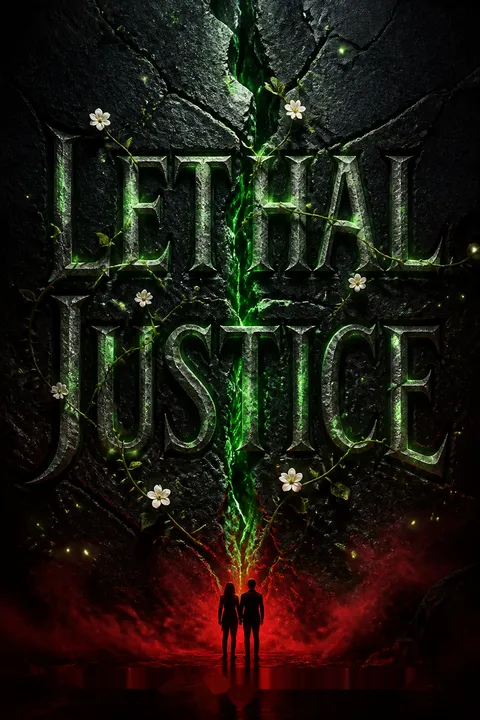
Lethal Justice makes its central moral problem intimate: Zoey must decide whether understanding a harmful person means excusing what they did. Her estrangement from her father has trained her to treat actions as final evidence of character. Easton destabilizes that rule because he is both a burglar who helps hold her captive and the person who risks his safety to free her. His childhood explains how theft became survival, but the novel keeps explanation distinct from innocence. He still has to face legal consequences, just as Zoey’s father must answer for arranging the condo robbery, even though his motive was to relieve his daughter’s burden.
The story also treats care as a form of power that can become destructive when it refuses honesty. Zoey’s devotion to her father drives her to exhaust her money, conceal her need, and risk entering the condo alone. Her father’s attempt to help by secretly commissioning a burglary repeats the same pattern of deciding what Zoey can bear without telling her. Their reconciliation becomes possible only when both acknowledge harm directly. Care does not repair a relationship by itself; it must make room for truth, boundaries, and the other person’s agency.
The ring, the wallet, and the reward each translate moral feeling into material stakes. The ring moves between affection and debt. The wallet makes one act of honesty consequential for Easton’s survival. The reward magnifies the danger of public justice while offering a route toward it. These objects keep the novel’s ethical questions grounded in choices people make under financial pressure. By the end, Zoey has learned neither to excuse every crime nor to reduce a person to their worst act. Her growth lies in holding context and accountability together, while continuing to choose the relationships she is willing to fight for.
Review Summary
Lethal Justice receives overwhelmingly positive reviews, with readers praising its intense suspense, unexpected twists, and emotional depth. Many appreciate the complex characters, particularly Easton's protective nature and Zoey's strength. The forbidden romance between captor and hostage captivates readers, who find the story gripping and impossible to put down. While a few critics found certain plot elements unbelievable, most reviewers highly recommend this thrilling installment in the Secrets and the City series.
People Also Read



Characters
Zoey Williams
The stubborn caretakerZoey is a twenty-six-year-old marketing analyst who supports her disabled father and takes responsibility for problems that should not belong to her alone. Years of family rupture and the murder of a boyfriend have made her wary of trust and quick to judge people by the harm they cause. Yet her devotion is not passive: she negotiates for her father’s care, fights back when held captive, and keeps asking what lies behind another person’s choices. Her strength is paired with guilt and over-responsibility; she often treats self-sacrifice as proof of love. Her relationship with Easton challenges her moral certainty, while her bond with her father forces her to consider whether forgiveness can include accountability.
Easton Wells
The dangerous protectorEaston is a skilled burglar whose controlled manner conceals years of instability and fear. He is fiercely protective of his younger brother, Gavin, and has built his life around keeping danger at a distance through money, planning, and force. His instincts can be compassionate, as when he tends to Zoey, but they are tangled with criminal choices and possessive impulses. Easton sees himself as irredeemable and treats affection as something he has no right to keep. Zoey’s trust unsettles that self-image, but does not absolve him of responsibility. His central conflict is whether survival and loyalty can be separated from the violence that has shaped his identity.
Zoey’s father
The estranged fatherZoey’s father is a former corporate executive whose accident leaves him wheelchair-bound and financially exposed. Before his injury, he was Zoey’s trusted guide; a painful separation from his family fractured that bond and left her unsure whether his love could endure disappointment. He is proud, used to providing, and uncomfortable with dependence, yet his vulnerability does not automatically make him easy to care for. His relationship with Zoey is shaped by unspoken remorse, her need for acknowledgment, and the practical strain of illness and debt. He represents a parent who can be loving and harmful at once, making reconciliation depend on truth rather than on the return of an idealized past.
Gavin Wells
Easton’s restless brotherGavin is Easton’s younger brother, raised alongside him after their parents’ deaths and shaped by a childhood in which safety was scarce. He is drawn to immediate money and the promise of influence, unlike Easton’s more cautious approach to crime. Their relationship carries gratitude, dependence, and resentment: Gavin knows Easton protected him, but also struggles with the sacrifices made on his behalf. His hunger for autonomy makes him susceptible to people offering power, even when their loyalty is uncertain.
Victor
The ruthless crew bossKnown to Zoey during the robbery as Brown, Victor is a violent criminal who sees witnesses as liabilities and his crew as tools for expanding his power. He expects obedience and has little patience for hesitation, even from people who might otherwise be useful to him. His methods turn a planned burglary into a lethal pursuit, placing him in direct conflict with Easton’s more cautious instincts. Victor’s authority depends on fear, and he interprets compassion as weakness that can be exploited.
Alex
The loyal family friendAlex is a physical therapist and longtime family friend who helps Zoey care for her father, even when money is tight. He once found refuge in Zoey’s home during a painful rupture with his own parents, which gives his loyalty a history beyond simple generosity. Alex is practical, protective, and willing to stretch his finances to support people he considers family. His care can become overinvolved, especially when he believes someone he loves is in danger, but his commitment to Zoey and her father is genuine.
Holly
The polished ex-wifeHolly is Zoey’s father’s former wife, a polished and status-conscious woman who entered his life during a vulnerable period in his marriage. She values comfort and appearances, and her history with Zoey is strained by the way the family changed after her arrival. Zoey distrusts her motives, while Holly presents herself as composed and reasonable. Her presence brings the family’s old divisions into the present, forcing Zoey to distinguish suspicion from evidence.
Detective Shane Hernandez
The persistent investigatorHernandez is a Chicago police detective who investigates the condo robbery and takes Zoey’s father’s hit-and-run seriously. He is methodical, attentive to inconsistencies, and careful about what he can promise a witness. His work offers Zoey a more credible path toward justice than she has experienced before, but police procedure cannot immediately remove the danger around her. In the epilogue, he becomes the focus of Willow’s attraction as well as a detective connected to her unexplained fall.
Emily
The candid confidanteEmily is Zoey’s lively, perceptive friend and coworker, willing to listen when Zoey finally shares the frightening details of the robbery. Her humor gives Zoey brief relief, while her observations help Zoey recognize that understanding someone’s motives is different from excusing their actions. Emily is socially confident and protective, though she sometimes reaches quickly for labels when she worries about her friend. Her willingness to challenge Zoey makes her a useful counterweight to Zoey’s isolation.
Anthony
The distant older brotherAnthony is Zoey’s older brother, living across the country with his wife and young child. He sends money to help cover their father’s medication and feels guilty that distance leaves Zoey carrying most of the daily care. His protectiveness is sincere, but he cannot solve the situation simply by returning home without giving up the life he has built. Anthony’s calls remind Zoey that family support can be real even when it arrives imperfectly or from far away.
Zoey’s mother
The graceful former wifeZoey’s mother is the woman her father left during his relationship with Holly. She carries the hurt of the marriage’s end without asking Zoey to stop loving her father. Her restraint reflects a deliberate effort to protect her children from being forced to choose sides, even as the family’s old wounds remain.
Zoey’s former boyfriend
The unfinished promiseZoey’s former boyfriend was murdered shortly after encouraging her to pursue a long-held dream of visiting the Grand Canyon. His death left her with grief complicated by guilt over their last unfinished exchange. The promise she made to him becomes a private measure of whether she can allow happiness back into her life.
Jenna
The absent college friendJenna is Zoey’s close friend from college, now occupied with a new baby and family life. Their bond grew partly from a shared experience of a father leaving his family. Zoey protects Jenna from the burden of her crisis, even though Jenna is one of the people she trusts most.
Willow
The hopeful friendWillow is an old friend from Zoey’s college circle who appears at the group gathering in the epilogue. She is quietly attracted to Detective Hernandez, though their connection has not moved beyond brief neighborly encounters. Her romantic hope sits beside an unexplained danger that is about to draw Hernandez into her life.
Fallon
The chance acquaintanceFallon is a woman Zoey recognizes from the gym that burned down. She joins the friends’ restaurant gathering after running into Zoey and offers a small bridge between their separate social circles. Her brief appearance helps set the scene for Willow’s emerging story.
Plot Devices
The ruby ring
A gift turned financial lifelineZoey’s father gave her a ruby-and-diamond ring before she left for college, making it a tangible reminder of the closeness they once shared. When the family’s money runs out, Zoey plans to pawn it to keep her father’s physical therapy going. Retrieving the ring takes her to the condo during the robbery, where it becomes part of the danger and later returns to her through Easton. Its history also exposes how a single image at Thanksgiving can be misread and how old family pain can distort the meaning of an object. The ring carries both economic value and the possibility of repairing a damaged bond.
The Robin Hood robberies
A public mask for private dangerNews reports describe a crew robbing wealthy homes and leaving anonymous donations for homeless shelters. The charitable pattern gives the gang a public identity that complicates easy judgments about criminality, especially once Zoey learns about Easton’s past. The robberies also provide the framework for the condo heist, the police investigation, and the reward that raises the stakes. Their reputation does not make the crew harmless: when Zoey interrupts a job, the men treat her survival as a threat to their freedom. The device asks readers to separate charitable acts from the violence that makes them possible.
The public reward
Pressure that exposes the witnessWhen police offer twenty thousand dollars for information leading to arrests, the condo robbery becomes widely visible. Zoey fears that the publicity will make Brown more determined to eliminate her, while her father and Alex see the reward as a way to push a stalled investigation forward. It also gives the police a reason to revisit leads and draws a watcher to the station. The reward is not merely a financial incentive; it converts Zoey’s private survival into a public case, changing what the criminals believe they must do and forcing Zoey to choose whether to disclose Easton’s identity.
The partial license plate
A delayed path to justiceA witness to Zoey’s father’s hit-and-run recorded only part of the car’s license plate, leaving the case unresolved for months. Hernandez later compares that fragment with traffic violations recorded after the accident and identifies a possible vehicle. The evidence leads to a teenage driver who confesses, giving Zoey and her father an answer but not restoring the health or financial security they lost. The clue’s delayed usefulness contrasts with Zoey’s assumption that an old case has gone cold forever. It also demonstrates how patient investigation can produce an answer without delivering emotional closure.
Chicago’s freight tunnels
A hidden route to the showdownThe abandoned underground freight tunnels, once used to move construction supplies through Chicago, provide Victor’s crew with a concealed place to hold captives and stolen goods. Their branching passages and poor visibility make escape difficult, while the underground setting removes Zoey and Easton from ordinary witnesses and help. Zoey’s knowledge that the tunnels exist gives her a way to understand where the criminals have taken them, but not an easy exit. The tunnels turn the story’s hidden criminal arrangements into a physical maze and concentrate the final struggle in a space built for movement that has long since been abandoned.
Secrets and the City Series

About the Author


Download PDF
Download EPUB
.epub digital book format is ideal for reading ebooks on phones, tablets, and e-readers.








