

Key Takeaways
Treat meaning as a path after acceptance, not a demand to explain death.
A description, not a staircase. Elisabeth Kübler-Ross’s five stages of grief, denial, anger, bargaining, depression, and acceptance, describe common responses, not a mandatory sequence or timetable. David Kessler adds meaning as a possible sixth stage: a way to live with loss while keeping love for the person who died. It does not mean approving of the death, finding it worthwhile, or finishing grief. Kessler’s own understanding was tested when his twenty-one-year-old son David died of an overdose. The grief expert became a bereaved father, unsure whether his ideas could help him.
Meaning can wait. Meaning may arrive months or years later, or take the form of gratitude, remembrance, service, or a changed sense of what matters. The loss itself is not a lesson or gift. The bereaved person decides what, if anything, to make from it.
What's valuable here is the distinction between a map and a prescription. A stage model can help people name confusing emotions, but it can also become a hidden grading system if readers assume they should progress neatly. Meaning works better as an invitation than an obligation. Kessler's own story gives the idea credibility without pretending expertise prevents devastation. It also suggests a humane test for any grief advice: does it make room for the person's actual experience, or ask them to perform recovery for other people's comfort?
Let grief be witnessed before anyone tries to brighten it.
Presence before reassurance. Kessler distinguishes grief, the inward experience of loss, from mourning, its outward expression. Both need room, but people often rush to comfort with optimism, spiritual explanations, or instructions to move on. A bereaved person may first need someone to listen without correcting the story or judging the intensity. Kessler describes a video in which a normally responsive mother turns expressionless toward her baby. The infant becomes distressed, illustrating how strongly people rely on emotional response and recognition.
Make loss visible. In one Australian village, residents reportedly move an object into their yards after a death, so the bereaved family wakes to see that the whole community has changed. Funerals and memorials can serve a similar purpose. Grief differs between people, even within one family: some cry openly, while practical grievers organize tasks and show little emotion. Neither style proves how much someone loved.
Witnessing is not passive agreement. It is accurate attention: noticing what the grieving person is saying, and resisting the urge to turn their pain into a problem to solve. The village ritual makes private loss publicly legible, a useful counterweight to cultures that expect mourners to return quickly to normal. Yet no single ritual suits everyone. A gathering can be healing, but it can also feel unsafe or unwanted. The deeper principle is not that everyone must hold a funeral; it is that mourners should not have to pretend nothing happened.
Make meaning from what the loss changes, not why it happened.
Meaning is personal. The question why a person died may have no answer that brings comfort. Kessler redirects attention toward the meaning of the person's life, the relationship, and the survivor's life after loss. Meaning can be large-scale, such as Candy Lightner founding Mothers Against Drunk Driving after her daughter was killed, or small and private. Marcy, for example, noticed a stamp featuring comedian Danny Thomas, a favorite of her late father. Using the stamps brought him to mind during ordinary tasks and gave her brief moments of warmth.
No explanation required. Gail donated her son Branden's organs after his death. Years later she learned that a painter working in her home had received one of his kidneys. The encounter deepened her sense of connection, but Kessler emphasizes that a coincidence need not be objectively extraordinary to matter. Meaning can be found in the death, the life, the relationship, or the survivor's next choices. It does not make the cost acceptable.
This approach preserves a crucial distinction: making meaning is not the same as claiming that events happened for a reason. The first gives survivors agency over their response; the second can imply that tragedy was planned or deserved. The examples also resist the idea that purpose must become a public campaign. Everyday reminders may be more sustaining than grand gestures because they weave remembrance into ordinary life. The caution is that meaning should remain the survivor's discovery. Pressuring someone to find a silver lining can turn a compassionate idea into another demand.
Retell the story until the worst moment no longer owns the whole life.
Stories shape suffering. After a death, the mind often searches for cause and blame, building a story around the loss. The story can comfort, or trap someone in repeated what-ifs. Kessler draws on psychologist James Pennebaker's research on expressive writing: people who wrote about painful experiences showed improvements in measures such as anxiety, depression, and physical health. The process helped writers explore causes and consequences, consider other perspectives, and find meaning without denying the harm.
Change the viewpoint. As a boy, Kessler felt abandoned when his mother died and judged his father for not discussing grief. Writing from his parents' perspectives helped him imagine his father's overwhelm and his mother's fear, and to see that his mother's death was not an act of abandonment. This did not alter what happened. It changed the frame around it. The aim is not to erase painful facts, but to place them within the fuller story of a person's life and relationships.
Narrative reframing can loosen a painful interpretation without falsifying the event. That is different from forced positivity: the facts stay, while the story gains context and additional points of view. Writing may be especially useful because it lets a person revisit difficult material at a chosen pace. Still, reflection is not a substitute for trauma-focused care when memories remain overwhelming or disabling. Nor should a new interpretation be imposed from outside. A story becomes more spacious when the person who lived it can recognize themselves in the revised version.
Ask what would make this moment meaningful while time remains.
Let mortality clarify priorities. Awareness of death can redirect attention from battling every limit to making the available time count. Lois, a nurse practitioner, regretted missing a final chance to speak with her father. After her mother developed terminal cancer, Lois moved her into her home. When appendicitis forced Lois to take time off work, she used those days to be with her mother, sharing meals and conversations. Later, when her mother asked the family to gather, the group ended up eating chips and dip late at night. It became their last shared evening.
Ask, then listen. Kessler encourages families to ask what matters to the dying person, rather than making every decision a medical battle. The answer may be time with family, comfort, a conversation, or a small pleasure. Such choices cannot control the outcome, but they can shape the experience of dying and the memories survivors carry. Meaning here is not a cure or a guarantee of peace. It is attention to the human life still present.
The question shifts care from abstract goals to values that can be acted on now. It fits naturally with palliative care, which attends to comfort and quality of life alongside medical treatment, rather than treating every decline as a failure to overcome. The idea also reaches beyond the bedside: ordinary time can become significant when people stop assuming there will always be another opportunity. The question should not become pressure to produce a profound final moment. Sometimes the most meaningful answer is simply companionship, with no speech and no lesson.
Test guilt against what you could actually control.
Regret is not proof of cause. Survivors often replay what they might have said or done, as if a different choice could certainly have prevented the death. Kessler describes Sandra, whose adult son died in a motorcycle accident. She blamed herself for not stopping him from riding, even though she could not know whether he would have obeyed her. Kessler asked whether she had examined the evidence or simply sentenced herself. The exercise helped her see that guilt had become a punishment, not a reliable account of responsibility.
Choose useful action now. For unresolved regret, Kessler suggests imagining what one would say to the person who died, or making a living amends: carrying forward the action one wishes had been taken. After an argument, for instance, someone might make a practice of reconnecting sooner. This does not rewrite the past. It gives remorse a constructive direction. The question is not how to undo the loss, but what response remains possible.
Counterfactual thinking can create an illusion of control: if a survivor can identify a missed step, the death seems less random. That feeling may be psychologically understandable without being factually accurate. At the same time, the reassurance that nothing could have been done must be used carefully. Some deaths involve preventable failures, and accountability can matter. The useful distinction is between evidence-based responsibility and endless self-prosecution. A living amends honors regret by changing behavior, rather than pretending that a new action can reverse an old outcome.
Treat addiction and suicide as suffering, not moral failure.
Illness changes the choices. Kessler argues that addiction and mental illness should not be treated as weakness or bad character. They affect the mind and can distort a person's ability to seek help or assess danger. His son David struggled with substance use and died after a relapse. Kessler describes addiction as a disease shaped by more than individual decisions, including trauma and the wider systems that supply addictive drugs. For survivors of suicide, he advises against assuming that one missed call or conversation caused the death. The causes are complex, and loved ones cannot control every outcome.
Separate care from blame. Al-Anon's Three C's offer a boundary for families affected by addiction: they did not cause it, cannot control it, and cannot cure it. Kessler also recommends language such as died by suicide, rather than wording that makes a death sound criminal or defines the person by it. Understanding illness does not erase grief or excuse harmful behavior. It can reduce shame and make room for compassion.
Replacing moral judgment with a health framework can help families seek care and grieve without adding stigma to loss. The Three C's are especially useful because they distinguish love from omnipotence: support matters, but relatives cannot become another person's treatment system. This framing should not be mistaken for helplessness. Prevention, treatment access, and responsible prescribing remain important. Nor does compassion require denying the damage addiction can cause to others. The strongest version of the argument holds both truths: people deserve dignity, and communities still have obligations to reduce preventable harm.
Choose one small act that brings you back into living.
Start below the horizon. After prolonged hardship, a person may learn to expect that nothing will help. Kessler connects this pattern to learned helplessness, a term for behavior shaped by experiences in which attempts to change circumstances seem useless. A grieving person who cannot imagine returning to work or social life may still manage a short walk, coffee with a friend, or a single phone call. Small actions can offer evidence that movement is possible, without demanding that grief disappear first.
Let help move both ways. Kessler describes a parable in which people at a table cannot feed themselves with long spoons, but can feed one another. The point is that helping another person can restore connection as well as offer practical support. A kind message or meal for a newly bereaved family may be enough. Choosing to live again is not a test of character, and it may take time. The useful beginning is the next manageable action, not a sudden return to the old life.
The emphasis on small steps makes recovery less abstract and less dependent on motivation arriving first. Action can precede confidence, particularly when a person's world has narrowed. The mutual-help parable adds an important social dimension: healing is not only an internal achievement but also a return to relationships and shared responsibility. Still, descriptions of choosing life can unintentionally burden people who are depressed, disabled, or unable to act. A small step should be an option offered with support, not a moral command or a measure of how well someone is grieving.
Give miscarriage and infant loss the rituals and recognition they deserve.
A brief life is still a relationship. Parents may bond with a child before birth, so miscarriage, stillbirth, and infant death can bring profound grief even when others minimize the loss. Maureen was told after a miscarriage that the remains were medical waste. Friends later told her their own miscarriage stories, easing her sense of isolation. Another mother, Elyse, found comfort in being able to visit a shared gravesite for miscarried babies. These stories show how silence and missing rituals can leave parents with pain and few ways to remember the child.
Make memories possible. Some hospitals now give parents time with a stillborn baby, offer photographs, or provide handprints and footprints. A funeral director named Nicolas focused on preparing infants for parents to see and helping create keepsakes. These practices recognize both parents' grief and give families tangible ways to mark a life. They are not required for healing, and parents differ in what they want. The essential change is to ask what would help, rather than decide that the loss is too small to acknowledge.
Recognition matters because social acknowledgment helps make a loss speakable. When a family has no ritual, record, or keepsake, the surrounding silence can compound grief and isolate parents from one another. The examples also challenge the assumption that fathers are merely observers of pregnancy loss. Care should remain responsive, however: some parents want photographs or time with the baby, while others do not. The humane standard is informed choice, offered without pressure. Rituals are valuable not because they guarantee closure, but because they give love and mourning a place to go.
Keep the relationship alive through love, memory, and deliberate legacy.
Connection can change form. The continuing bonds model describes how people maintain relationships with those who have died through memories, conversation, rituals, and an ongoing sense of influence. This does not require belief in an afterlife. Kessler notes that some people feel a loved one's presence, while others remember through stories or habits. He also cautions against treating closure as the end of a relationship. The relationship changes; it need not be erased.
Carry forward what mattered. A legacy can be a public foundation, a family tradition, a quality learned from the person, or a small act of service. For painful memories, Kessler describes a practice called taking in the good: recall an ordinary shared moment, add sensory detail, and stay with the memory long enough to absorb its warmth. When belongings become difficult to release, photographs and sharing objects with others can preserve their meaning without requiring the survivor to keep everything.
The idea of continuing bonds offers a more flexible account of attachment than a simple instruction to let go. Memory can be active: a person can carry a parent's courage into a new challenge or preserve a relationship through a ritual. This view also accommodates different beliefs about death without requiring one metaphysical answer. One important boundary is that connection should support life rather than freeze it. Keeping every object or refusing all change may intensify isolation. A meaningful legacy is not a monument to permanent sorrow; it is a way for love to remain part of a living world.
Analysis
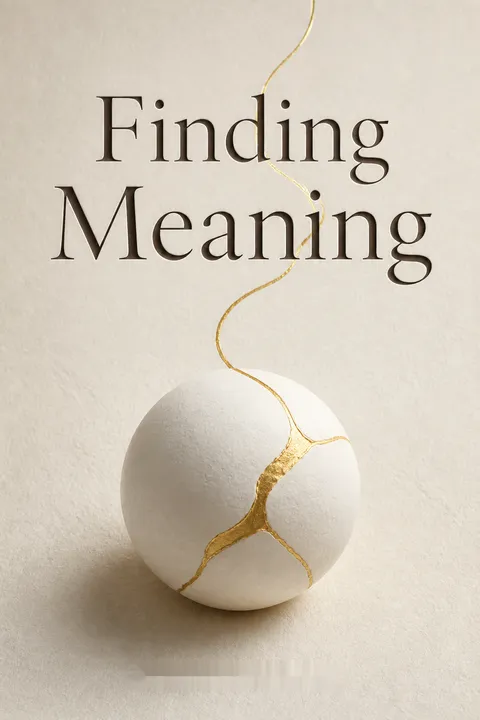
Finding Meaning is part memoir, part grief guide, and part collection of case stories. Its central argument is that acceptance does not finish grief: meaning can help a person carry love into a changed life. The book's most persuasive move is to make that claim personal. Kessler's son's death removes the protective distance of professional expertise, while the varied stories show that meaning need not look like a foundation, campaign, or public transformation. It may be a ritual, a remembered conversation, or a small act of care.
The model works best when meaning is treated as a possibility rather than a therapeutic requirement. Kessler repeatedly says that grief has no fixed timetable and that loss is not a lesson or blessing. That qualification matters because meaning-making can become another burden: a mourner may feel compelled to turn tragedy into growth before they are ready, or may conclude that continued suffering represents failure. His account is strongest when it protects the person's authority to decide what the loss means.
The five-stage vocabulary is likewise useful as description, not diagnosis. Grief is nonlinear, and differences in expression do not establish differences in love. The book's insistence on witnessing helps correct a common social error: offering optimism when the bereaved person first needs acknowledgment. Its advice also distinguishes emotional support from control. A relative can listen, offer practical help, and invite treatment, but cannot guarantee another person's survival.
Some claims, especially that meaning makes grieving easier or that people can choose to live again, should be read with care. The stories illustrate possibility, not a universal causal law. Severe trauma, depression, addiction, and material hardship may require professional and social support, not reframing alone. The book's most durable contribution is therefore not a promise of recovery, but a humane ethic: do not rush the pain, do not confuse guilt with proof, and do not assume that love must end when a life does.
Review Summary
Finding Meaning receives mostly positive reviews (4.43/5 average), with readers praising its compassionate approach to grief and the concept of meaning as a sixth stage. Many found it healing, especially those experiencing personal loss. Critics note repetitive content, excessive name-dropping, typos, and occasional lack of depth. Several reviewers mention Kessler's personal experience losing his son adds authenticity. The book helps readers understand that grief doesn't shrink—we grow larger around it. While some felt it recycled material, most recommend it for those navigating loss, particularly praising chapters on complicated relationships and specific types of loss.
People Also Read



Glossary
Sixth stage of grief
Meaning after lossKessler's proposed addition to the five commonly known stages of grief. It describes finding ways to carry love and memory into life after loss. It is not a required step, a fixed endpoint, or an explanation for why the death occurred. Meaning may emerge through remembrance, service, changed priorities, or small personal rituals.
Continuing bonds model
Ongoing connection after deathA model of bereavement in which the relationship with a deceased person changes rather than simply ends. Survivors may stay connected through memory, conversation, rituals, or a continuing sense of the person's influence. The model treats such bonds as potentially healthy and meaningful, without requiring belief in an afterlife.
Practical grievers
Grievers who focus on tasksKessler's term for people who respond to loss through practical action, reserve, or a return to routines rather than visible emotional expression. They may organize arrangements or avoid discussing the death. Their style does not prove they feel less or loved less, and others should not pressure them to grieve more publicly.
Posttraumatic growth
Positive change after traumaA term associated with psychologists Richard Tedeschi and Lawrence Calhoun for positive changes some people experience after trauma. Kessler describes possible changes in relationships, purpose, inner strength, spirituality, and appreciation of life. Growth does not make the trauma beneficial or cancel its harm, and it is not an expectation placed on every survivor.
Learned helplessness
Expecting effort to failA pattern in which repeated experiences of having little or no control lead a person to stop trying to change a situation, even when options later become available. Kessler applies the concept to grief and recommends small, manageable actions rather than overwhelming demands. The term describes a learned response, not a character flaw.
Three P's
Three pessimistic thinking patternsMartin Seligman's framework, as presented by Kessler, identifies personalization, pervasiveness, and permanence as patterns that can worsen responses to setbacks. In grief, personalization means blaming oneself, pervasiveness means believing the loss has ruined every part of life, and permanence means assuming the pain will never change.
Three C's
Limits of family responsibilityAn Al-Anon formulation for people affected by another person's addiction: they did not cause it, cannot control it, and cannot cure it. Kessler uses the framework to reduce misplaced guilt and clarify the limits of family responsibility. It does not mean relatives cannot offer care or encourage treatment.
Taking in the good
Absorbing a positive memoryA practice associated with psychologist Rick Hanson that Kessler uses to help grieving people give positive memories fuller attention. A person recalls a good moment, reconstructs details that make it vivid, and stays with the experience long enough to absorb its emotional value. It is meant to add context, not erase painful memories.
About the Author
Other books by David Kessler

Download PDF
Download EPUB
.epub digital book format is ideal for reading ebooks on phones, tablets, and e-readers.








