

Key Takeaways
Treat end-of-life visions as meaningful experiences, not proof or pathology.
Hope without certainty. David Kessler’s case for taking deathbed visions seriously begins with his father. Near death, his father described a visit from his late wife. The experience seemed to lift him from grief over what he was losing toward hope of reunion. Kessler cannot prove what his father saw, and presents the accounts as testimony rather than scientific proof of an afterlife.
Meaning matters, too. The book gathers stories from patients, relatives, nurses, doctors, counselors, and clergy. Across them, visions often bring calm, connection, or relief. The practical claim is modest but important: even when the cause is unknown, an experience can matter deeply to the person having it and to those nearby.
The distinction between meaning and proof is the book’s most useful safeguard. A vision can be psychologically real and consequential without settling what exists beyond death. This resembles a central principle in clinical care: validate a patient’s experience without claiming certainty about its cause. The approach also respects pluralism, since people can find comfort in different interpretations. The tension is that repeated stories may feel like cumulative evidence, even when they cannot establish frequency or mechanism. Treating testimony as worthy of attention, while keeping its limits visible, preserves both compassion and intellectual honesty.
Ask what the dying person sees instead of arguing them out of it.
Begin with curiosity. Kessler advises family and caregivers not to insist that a dying person is hallucinating or that a deceased visitor cannot be present. Instead, ask what the person sees or hears and what the visitor is saying. In one account, a daughter initially corrected her mother, who said her deceased husband had come to say goodbye. The mother’s husband had in fact just died, though the family did not yet know it.
Support, do not steer. Acknowledging the person’s account does not require declaring it supernatural. It can mean listening, noticing whether they seem distressed, and offering reassurance. This leaves room for the person’s reality without imposing a spiritual explanation or turning a potentially comforting moment into an argument.
This is a strong example of person-centered communication: first establish what the experience means to the person, then respond to their needs. The same stance is useful in many clinical settings, where premature correction can damage trust without improving safety. Curiosity is not credulity; a caregiver can listen while remaining uncertain about cause. One caution is that unusual perceptions can sometimes reflect treatable distress or illness. Respectful listening should therefore complement, not replace, appropriate assessment of pain, medication effects, confusion, and other symptoms.
Make room for loved ones who appear to greet the dying.
Familiar faces recur. In the accounts Kessler collects, dying people often describe seeing relatives or friends who have already died, especially parents and spouses. A physician’s patient, Regina, spoke with her late husband, then returned to coherent conversation with her family. In another story, a dying woman named Doris reportedly recognized her deceased father and then expressed surprise at seeing her sister, who had died recently without her knowledge.
The visitor can comfort. A man named Aaron called out to his sister Rose as he was dying. His family later learned that Rose had died the previous night. Such stories are emotionally powerful, but they remain individual reports. Their clearest shared feature is that the dying person often appears reassured or absorbed, while family members may find comfort in imagining a reunion.
The recurring image of a deceased loved one can be understood through several lenses: spiritual encounter, memory, attachment, or the mind’s way of organizing a profound transition. These interpretations need not be forced into competition when the immediate experience brings peace. Attachment theory, which studies how close bonds shape a person’s sense of safety, helps explain why a parent or partner might be especially consoling. Yet striking coincidences, such as the report about Rose, are not enough to establish paranormal contact. They invite careful documentation, not certainty.
Hear talk of tickets, buses, and packing as possible transition language.
A journey takes shape. Kessler describes a second recurring pattern: people near death talk as if preparing to travel. A cancer patient asked his wife whether his bags were packed. Another patient, Felicia, described relatives waiting on a dock and later announced that the boat had arrived. These people did not necessarily describe a journey into death; they spoke in ordinary language about leaving, getting ready, or reaching a destination.
Metaphor can guide care. A woman with a disability, Sharon, repeatedly waited for a bus she said needed a ramp. Her caregiver understood the detail as part of Sharon’s own image of a safe, accessible passage. The book suggests that listening closely to such language can reveal a person’s emotional world, even when its literal meaning remains uncertain.
Journey metaphors are powerful because they make an abstract transition imaginable. In cognitive science, metaphor is not merely decorative language; it can shape how people reason about unfamiliar experiences. For caregivers, asking about the destination, companions, or preparations can open a conversation without demanding a metaphysical explanation. The limits matter: journey talk may also reflect personal history, dreams, or confusion. Its value lies less in decoding a universal symbol than in discovering what that image means to this individual.
Allow the dying to describe a room crowded with people you cannot see.
A private crowd. In what Kessler calls crowded-room experiences, a dying person describes many visitors in a room that appears empty to everyone else. A retired science professor recalled seeing a long line of familiar people, including his wife, relatives, a former colleague, and a former student. As he remembered how many people had died across his family and decades of teaching, the crowd seemed less inexplicable to him.
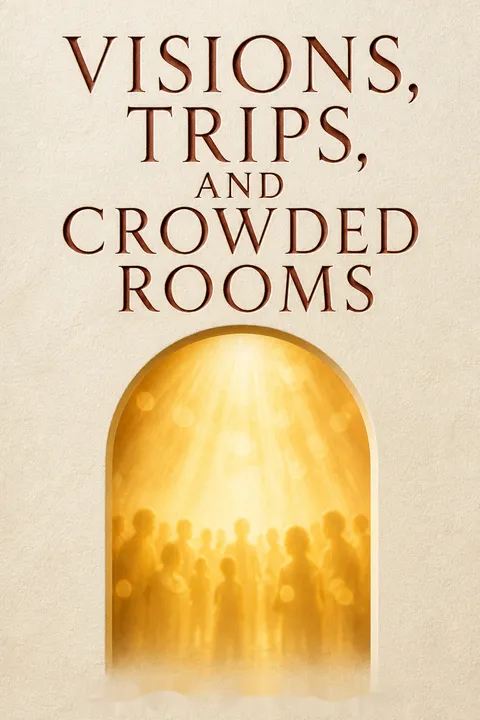
Reunion, not isolation. Another patient, Dorothy, described a door opening and a growing number of people entering. She told her mother they had come to help her. These accounts challenge the assumption that dying is experienced as solitary. They do not prove that unseen visitors are present, but they show that some people experience their final hours as populated and accompanied.
The crowded-room image expands the usual focus on one final visitor into a social portrait of a life. It also raises a useful question: how many meaningful relationships remain part of a person’s inner world, even when the living have forgotten them? Life-review work in psychology similarly invites people to reconnect with relationships and formative memories. Still, the professor’s inventory of the dead is an interpretation offered in conversation, not a verified explanation of his perception. The account is strongest as evidence of how the experience felt and what made it intelligible to him.
Do not use a vision alone to predict imminent death.
Timing is not a test. Many stories describe visions close to death, and caregivers in the book sometimes regard them as a sign that death is near. But one account complicates that pattern: Jessica, unconscious after a horse-riding accident, saw her deceased mother while recovering from a brain injury. She survived and later remembered neither the accident nor the vision. The experience did not, by itself, mean she was dying.
Check the whole picture. Kessler reports that medication, fever, and reduced oxygen are often suggested as explanations, while witnesses sometimes say these factors do not fit what they observed. Neither a spiritual account nor a physiological explanation can be assumed from a story alone. The practical lesson is to attend to the person’s comfort and medical condition, without treating a vision as a reliable forecast.
This is an important limit on pattern recognition. When a striking experience is associated with impending death, caregivers may begin to interpret every similar event as a prediction. Jessica’s recovery shows why an anecdotal pattern should not become a diagnostic rule. Perception can change for many reasons, and a clinician must evaluate the person rather than infer an outcome from symbolism. At the same time, medical uncertainty does not make the experience meaningless. Good practice can hold two questions together: what might be causing this, and how is the person experiencing it?
Honor spiritual imagery without assuming everyone shares your theology.
Belief shapes the image. Kessler reports that the spiritual figures described by dying people generally fit their own religious background. One patient spoke of Jesus; another described an angel; others recognized deceased relatives. The book also includes people who were skeptical or not especially religious but still found a vision compelling. In one family, a mother who rarely attended church said she saw Jesus, and her husband responded by comforting her rather than challenging the claim.
Respond to the person. The book’s emphasis is not on deciding which tradition is correct. It is on noticing whether the experience brings peace, fear, or confusion and responding with care. A caregiver can ask what the image means to the person, without turning the bedside into a debate about religion or declaring a belief on someone else’s behalf.
The account that spiritual imagery tends to fit a person’s faith suggests that culture and expectation may shape how an ambiguous experience is interpreted. That does not settle whether the experience is internally generated or spiritually real; it shows why listening must be culturally responsive. A pluralistic caregiver can affirm the comfort a vision brings without endorsing a specific theology. The harder cases are those in which an experience frightens the patient or conflicts with family beliefs. Then the priority is the person’s wellbeing, not forcing agreement among witnesses.
Use the law’s respect for last words as a prompt, not proof.
A striking contrast. The book compares medical skepticism about deathbed visions with the legal treatment of dying declarations. In United States evidence law, a dying declaration can be admitted in certain homicide prosecutions or civil proceedings when a person believes death is imminent and speaks about its cause or circumstances. The rationale is that awareness of impending death may reduce the motive to lie.
Different questions, different standards. This legal exception concerns specific statements about events, not visions of an afterlife. Kessler uses the contrast to ask why the dying person’s words may be taken seriously in court but dismissed at the bedside. The comparison encourages closer listening, but legal admissibility does not verify what a person perceived or establish that a supernatural visitor was present.
The legal analogy is rhetorically effective because it exposes how credibility changes by context. Yet the law’s rule is narrow and pragmatic: it creates an exception to hearsay restrictions for certain claims, not a general presumption that all final speech is accurate. Perception, memory, and interpretation remain fallible, even under emotional pressure. The useful lesson is not that medicine should adopt courtroom doctrine, but that professionals should avoid reflexive dismissal. Different institutions can be skeptical in different ways, and each should make its standards explicit.
Read artistic visions as cultural echoes, not clinical evidence.
Stories carry the image. Kessler finds visions and journeys in works from ancient epics to modern film. In the Epic of Gilgamesh, Enkidu dreams of death before his final illness. In Dickens’s Nicholas Nickleby, a dying character describes a beautiful garden filled with people. Films such as Titanic show a final reunion with the dead, giving viewers an image of connection beyond loss.
Art reveals what resonates. These recurring scenes show how writers and filmmakers give shape to fear, hope, and the desire for reunion. Kessler argues that such patterns reflect a familiar human concern, rather than functioning only as convenient plot devices. But artistic repetition cannot demonstrate that deathbed visions occur as depicted. Art offers evidence about cultural imagination and emotional needs, not proof about the afterlife.
Art can function as a cultural archive: recurring images reveal what audiences find emotionally legible, even when they say little about the external reality those images portray. The comparison helps explain why a vision of reunion feels familiar before anyone has personally witnessed one. It also guards against a common error: treating the prevalence of a motif as confirmation of its literal truth. Artistic patterns are valuable for understanding collective hopes, but they should be kept distinct from clinical observation and empirical evidence.
Prepare care teams to discuss visions with curiosity and without shame.
Silence leaves families alone. Kessler argues that dying people and their families may stay quiet because they fear being dismissed or labeled irrational. A pilot study by a palliative-care team in Camden, London, found that patients reported a wider range of deathbed phenomena than the familiar image of an apparition. The study also raised concerns that care teams lacked training and that patients might prefer to discuss these experiences with nurses rather than doctors.
Make room for conversation. The book calls for caregivers to ask open questions, learn what the experience means to the patient, and support comfort without promising an explanation. The aim is not to teach staff what to believe. It is to make honest reporting safer, help families feel less isolated, and include emotional and spiritual experience alongside physical care.
The institutional recommendation is practical because it does not depend on proving an afterlife. Training can teach staff to document what was reported, assess distress, and respond respectfully while keeping medical explanations in view. The Camden findings are a pilot, so they should be treated as exploratory rather than representative of all patients or settings. Even so, the research question is valuable: what experiences go unreported because the listener seems unreceptive? Better communication could improve care even if the underlying phenomenon remains unresolved.
Analysis
Visions, Trips, and Crowded Rooms is a story-led argument for taking end-of-life experiences seriously without pretending they can be conclusively explained. Its structure moves from Kessler’s personal motivation to professional testimony, religious interpretation, cultural representations, and three recurring patterns: deceased visitors, journeys, and crowded rooms. That accumulation gives the reader a strong sense of recurrence and emotional force. It also creates the book’s central evidentiary challenge. Most accounts are retrospective, selected for their relevance, and not gathered through a controlled study. Similarity among stories can suggest a shared human pattern, but it cannot by itself distinguish spiritual contact from memory, expectation, physiology, or some combination.
The book is most persuasive when it shifts the question from what caused a vision to how caregivers should respond. Listening without ridicule is compatible with scientific caution, and it can protect a patient’s dignity while offering relatives a way to discuss grief. Kessler’s distinction between a near-death experience and awareness during the dying process also helps prevent familiar accounts from being collapsed into a single category. The comparison with law and the discussion of art widen the conversation, though neither establishes the metaphysical claim. Legal exceptions address particular kinds of testimony; fictional motifs reveal cultural imagination.
The most important practical tension is between validation and interpretation. A caregiver can affirm that an experience feels real and significant without telling a patient what it means, predicting death, or endorsing a religious explanation. The book occasionally leans toward an afterlife interpretation, but its strongest argument does not require that conclusion. It asks medicine to recognize that a peaceful death involves more than symptom control, and to study experiences that patients may otherwise conceal. A careful next step would be descriptive research that records timing, medication, health status, cultural background, distress, and perceived comfort, while avoiding premature claims about cause. The result could improve care while keeping the mystery open.
Review Summary
Visions, Trips, and Crowded Rooms receives overwhelmingly positive reviews, with readers finding comfort and insight into end-of-life experiences. Many appreciate the personal stories shared by healthcare professionals and family members, describing deathbed visions of deceased loved ones and spiritual encounters. Readers report feeling less fearful about death and more understanding of their own experiences with dying relatives. Some criticize the repetitive nature of the stories, while others praise the book's ability to provide solace during grief. Overall, readers find the book thought-provoking and emotionally impactful.
People Also Read








Glossary
deathbed visions
visions near deathExperiences reported by people nearing death, often involving deceased relatives, religious figures, light, or other presences. Kessler treats them as distinct from experiences in which someone survives clinical death. The accounts in the book frequently describe comfort or connection, but the term does not establish whether a vision is spiritual, psychological, or physiological in origin.
near-death awareness
awareness during dyingA term used for perceptions or communications associated with the dying process, including reports of visitors, travel preparations, or changes in awareness. In Kessler’s account, it refers to experiences of people who are close to death, unlike a near-death experience in which a person survives and later recounts the episode.
deathbed phenomena
experiences around dyingA broad label for experiences reported by dying people, beyond the traditional image of seeing a deceased person. The pilot study discussed by Kessler uses the term to include a wider range of perceptions and experiences during the dying process. Reports may be spiritual, relational, symbolic, or otherwise difficult to classify.
near-death experiences
experiences after clinical crisisExperiences reported by people who survive a life-threatening event or clinical death and can later describe what they recall. Kessler distinguishes these from deathbed visions, which occur in people believed to be close to death and who often die soon afterward. The distinction is about the circumstances and outcome, not proof of an afterlife.
crowded rooms
perceived groups of visitorsA recurring deathbed experience in which a person says that a room is filled with people, although others present do not see them. The dying person may recognize relatives, friends, former colleagues, or people whose identities remain unclear. In the book, these accounts often feel like a gathering or welcome rather than a frightening intrusion.
dying declaration
statement under imminent deathA legal term for a statement made by someone who believes death is imminent, concerning the cause or circumstances of that expected death. Under a limited hearsay exception described in the book, such statements may be admitted in certain homicide prosecutions or civil proceedings. The legal rule does not apply to, or verify, claims about spiritual visions.
Camden Primary Care Trust pilot study
exploratory palliative-care studyA pilot study discussed in the book that interviewed patients and palliative-care workers about experiences near death. It reported that deathbed phenomena extended beyond apparitions, raised concerns about limited staff education, and suggested that some experiences may go unreported. Its findings are exploratory and do not establish how common the phenomena are or what causes them.
FAQ
1. What is "Visions, Trips, and Crowded Rooms" by David Kessler about?
- Explores Deathbed Phenomena: The book investigates the experiences of the dying, particularly the visions, journeys, and perceptions of crowded rooms that often occur in their final moments.
- Firsthand Accounts: It compiles stories from healthcare professionals, clergy, and family members who have witnessed or heard about these extraordinary events.
- Normalizes the Experience: Kessler aims to show that such phenomena are common and not necessarily signs of confusion or illness.
- Focus on Hope and Comfort: The narrative emphasizes that these experiences often bring hope and comfort to both the dying and their loved ones.
2. Why should I read "Visions, Trips, and Crowded Rooms" by David Kessler?
- Reduces Fear of Death: The book helps demystify the dying process, making it less frightening for readers facing their own mortality or that of loved ones.
- Validates Unspoken Experiences: It provides validation for those who have witnessed or heard about deathbed visions, showing they are not alone or "crazy."
- Encourages Open Dialogue: Kessler encourages families and professionals to talk openly about end-of-life experiences, fostering understanding and compassion.
- Offers Professional and Personal Insights: The blend of medical, psychological, and spiritual perspectives makes it valuable for both lay readers and professionals in end-of-life care.
3. What are the key takeaways from "Visions, Trips, and Crowded Rooms" by David Kessler?
- Deathbed Visions Are Common: Many dying people report seeing deceased loved ones, preparing for journeys, or perceiving crowded rooms.
- Not Hallucinations: These experiences are often dismissed as hallucinations, but Kessler presents evidence and stories suggesting they are meaningful and real to the dying.
- Brings Comfort and Hope: Such visions often reduce fear and bring peace to the dying and their families.
- Encourages Acceptance: The book advocates for accepting these phenomena as a natural part of dying, rather than something to be feared or dismissed.
4. How does David Kessler define and explain "deathbed visions" in "Visions, Trips, and Crowded Rooms"?
- Definition: Deathbed visions are experiences where dying individuals see or interact with deceased loved ones or spiritual figures, often shortly before death.
- Distinct from Hallucinations: Kessler distinguishes these from hallucinations caused by medication or illness, noting their clarity, consistency, and comforting nature.
- Historical and Cross-Cultural: He references historical accounts and notes that such visions are reported across cultures and time periods.
- Three Main Types: The book categorizes them into three types: visions of loved ones, preparing for a journey, and seeing crowded rooms.
5. What are the "three commonly shared experiences" at the end of life described in "Visions, Trips, and Crowded Rooms"?
- Visions of Deceased Loved Ones: The dying often report seeing or conversing with family or friends who have already passed away.
- Preparing for a Journey: Many describe getting ready for a trip, packing bags, or waiting for transportation, symbolizing the transition from life to death.
- Crowded Rooms: Some experience their rooms as being filled with people, sometimes recognizing them as deceased acquaintances, sometimes not.
- Universal Archetypes: Kessler suggests these experiences are archetypal and may challenge the idea that we die alone.
6. How does "Visions, Trips, and Crowded Rooms" by David Kessler address skepticism and medical explanations for deathbed phenomena?
- Medical Dismissal: The book notes that many in the medical field attribute these visions to medication, fever, or lack of oxygen.
- Legal Perspective: Kessler contrasts this with the legal system, which often treats dying declarations as truthful and significant.
- Personal and Professional Testimonies: He presents numerous stories from professionals who, despite initial skepticism, come to accept the authenticity of these experiences.
- Encourages Open-Mindedness: Kessler advocates for a more compassionate and open-minded approach, suggesting that not everything can be explained by current science.
7. What role do hope and comfort play in "Visions, Trips, and Crowded Rooms" by David Kessler?
- Central Theme: Hope is a central theme, with the book showing how deathbed visions can transform fear and sadness into peace and acceptance.
- Personal Stories: Kessler shares personal experiences, such as his father's vision of being reunited with his wife, which brought him hope in his final days.
- Comfort for Families: These experiences often comfort not just the dying, but also their loved ones, providing a sense of connection and continuity.
- Alternative to Suffering: The book suggests that, beyond pain management, these visions are a natural source of comfort at the end of life.
8. How does "Visions, Trips, and Crowded Rooms" by David Kessler explore the intersection of deathbed visions with spirituality and religion?
- Faith-Specific Visions: Kessler observes that people tend to see figures from their own faith tradition (e.g., Christians see Jesus, Jews do not).
- Angels and Universal Symbols: Angels appear across religious boundaries, offering comfort and guidance in many accounts.
- Clergy Perspectives: The book includes stories from rabbis, priests, and chaplains who have witnessed or supported such experiences.
- Spiritual, Not Just Religious: Kessler emphasizes that these visions are spiritual experiences, not limited to the devout or religious.
9. What are some of the most compelling stories or case studies in "Visions, Trips, and Crowded Rooms" by David Kessler?
- Family Reunions: Stories of dying individuals being visited by deceased spouses, parents, or children, often bringing peace and closure.
- Crowded Room Experiences: Accounts where the dying see rooms filled with people, sometimes recognizing long-lost relatives or former students.
- Journey Metaphors: Cases where patients prepare for a trip, wait for a bus, or see a boat at a dock, symbolizing their transition.
- Unexpected Visitors: Instances where skeptics or those with no prior belief in such phenomena experience or witness these events, leading to profound shifts in perspective.
10. How does "Visions, Trips, and Crowded Rooms" by David Kessler relate deathbed visions to cultural expressions in literature and film?
- Literary Examples: The book references classic and modern works (e.g., "Uncle Tom’s Cabin," "The Lovely Bones," "Les Miserables") that depict deathbed visions or afterlife encounters.
- Film References: Kessler discusses movies like "Saving Private Ryan," "Titanic," and "Ghost," where characters experience visions or are greeted by crowds after death.
- Art Imitates Life: He argues that these recurring themes in the arts reflect real human experiences and our collective hopes about death.
- Cultural Validation: The prevalence of such motifs in storytelling suggests that deathbed visions are deeply embedded in our cultural consciousness.
11. What practical advice does David Kessler offer in "Visions, Trips, and Crowded Rooms" for families and professionals dealing with deathbed visions?
- Validate the Experience: Rather than dismissing or correcting the dying, Kessler advises acknowledging and supporting their visions.
- Open Communication: He encourages families and caregivers to talk openly about these experiences, reducing fear and stigma.
- Avoid Arguing Reality: Telling someone their vision isn’t real can be distressing; instead, ask gentle questions and listen.
- Prepare for the Possibility: Professionals should educate themselves and families about the likelihood of such phenomena, so they are not caught off guard.
12. What are the best quotes from "Visions, Trips, and Crowded Rooms" by David Kessler and what do they mean?
- "Life ends, but love is eternal." – Emphasizes the enduring nature of love, even after physical death.
- "We come into this world alone, and we leave alone. But what if everything we know isn’t true?" – Challenges the belief that dying is a solitary event, suggesting unseen companionship at the end.
- "Fear doesn’t stop death—it stops life." – Encourages readers to live fully and not let fear of death diminish their experience of life.
- "What if the journey at the end of life is not a lonely path into eternity, but rather, an incredible reunion with those we have loved and lost?" – Offers a hopeful perspective on death as a reunion rather than an ending.
- "My hope—my 'great purpose' for this book—is to begin a conversation..." – Kessler’s call to action for more open, compassionate dialogue about death and dying.
Download PDF
Download EPUB
.epub digital book format is ideal for reading ebooks on phones, tablets, and e-readers.








