

Key Takeaways
Design cities for bodily encounter, not merely efficient passage

Space changes sensation. Sennett opens with a war veteran whose prosthetic hand unsettles moviegoers after they have just watched fictional bodies suffer. The contrast points to a wider problem: screens can make pain feel remote, while suburban roads and malls let people pass through places with little effort or attention. High-speed travel rewards clear, predictable routes, but those same qualities can make streets less vivid and encounters easier to avoid.
Notice the body's role. The book argues that buildings, streets, and transport shape how people see, hear, and touch one another. It is not simply a history of architecture. It asks whether urban forms help people become responsive to others, or make them comfortable spectators of life.
What's striking is the book's insistence that sensory experience is a civic issue, not just a matter of personal taste. Environmental psychology similarly studies how setting affects attention and interaction, although effects vary with culture, age, and ability. Efficient routes and accessible design can expand independence, so movement itself is not the villain. The sharper question is whether a city offers choices beyond frictionless transit: places to pause, notice, and meet without making contact compulsory.
Athens made exposed male bodies the price of citizenship

Visibility had limits. In Perikles' Athens, the ideal citizen displayed his body in the gymnasium and his opinions in public debate. The Parthenon presented young, perfected male figures as images of civic confidence. This body politic, meaning a model of society imagined as one organized body, connected masculine physical heat with reason, speech, and authority.
The ideal excluded most people. Women were expected to remain largely inside the home, and enslaved people were treated as naturally less capable of speech and judgment. Citizens themselves were a minority, estimated at no more than 15 to 20 percent of the population. Even the public assembly could expose citizens to the force of persuasive speakers, as the shifting trial of Athenian generals showed. Visibility could create belonging for some and vulnerability or exclusion for others.
The Athenian example shows that public visibility is never neutral: societies decide whose bodies count as representative. Contemporary debates about accessibility, gender, and public space inherit this problem whenever a supposedly universal design fits only a preferred user. Yet the lesson is not to abandon shared civic spaces. It is to ask who can enter, speak, and be taken seriously there, and whose presence has been quietly defined as out of place.
Create spaces where excluded people can redefine what their bodies mean

Ritual changed the frame. Athenian women were denied much of the public life celebrated by male citizens, but festivals gave them ways to gather and act together. At the three-day Thesmophoria, women mourned, fasted, and handled buried pig remains used in a fertility rite. In the Adonia, they gathered on rooftops at night to sing, drink, and express desire. These practices recast qualities called cold or passive as discipline, solidarity, or pleasure.
Agency had boundaries. Such rituals did not overthrow the political order, and the citywide plague described by Thucydides showed that ritual could not explain or contain every crisis. Still, ritual gave excluded people a temporary civic presence and a shared way to bear experience. Its power lay less in direct protest than in changing what a body and its actions could signify.
These festivals resemble what social scientists call counterpublics, settings where people excluded from dominant institutions develop shared language and recognition. Their temporary character is not necessarily a failure: repeated, protected gatherings can sustain identity and mutual support. But cultural expression cannot substitute for political rights or material security. The distinction matters today, since celebrating resilience can become a way of praising marginalized groups for surviving conditions that should instead be changed.
Treat visual order skeptically when it asks people only to watch and obey
Geometry made power visible. Hadrian's Pantheon joined a circular dome, a carefully ordered floor, and symmetrical niches into an image of a coherent Roman world. Roman planners used related geometric patterns to lay out cities in conquered territories, often imposing a new order over existing histories. In the teatrum mundi, the world imagined as a stage, public images and ceremonies were meant to look like reality itself, making imperial authority seem natural.
Order could numb judgment. Roman spectacles, including staged deaths in the amphitheatre, trained viewers to accept images as literal events. Early Christians challenged the authority of such appearances, but their own grand churches eventually adopted formal, hierarchical arrangements. The recurring tension is not between good and bad architecture. It is between spaces that invite interpretation and spaces that present a finished picture of power.
Visual order can make a complex place legible, which is valuable for navigation and public access. The danger appears when legibility becomes a single authorized account of who belongs and what history matters. This distinction is familiar in the study of monuments: public memory can unite, but it can also erase. A useful test for civic design is whether people can question and adapt its meanings, rather than merely consume them.
Make civic care visible where commerce leaves strangers exposed
Compassion found a place. In medieval Paris, the Imitation of Christ meant relating human suffering to the suffering of Jesus and responding to neighbors with care. A medical idea called syncope, in this historical context, described how one part of the body was thought to send warmth and support to an injured part. Some doctors extended the analogy to people who witnessed surgery: another's pain could stir a bodily response.
Paris made care public. Almoners and religious communities sought out the sick and homeless, while a low-walled garden beside Notre-Dame became a refuge for abandoned babies, lepers, and people without shelter. These spaces offered a moral counterweight to commercial streets, where competition and violence shaped daily life. The city did not become uniformly compassionate, but it made care for strangers visible and imaginable.
The bodily analogy turns compassion from a private sentiment into a social capacity: one person's distress can call others into response. Modern research on empathy likewise finds that attention and perspective-taking influence helping behavior, though neither is automatic. The Parisian example also warns against romanticizing charity. A garden or hospital may relieve immediate suffering, but care becomes more durable when institutions treat assistance as a responsibility rather than a favor.
Segregation can protect a minority while making persecution easier
Venice needed the Jews. After military defeats and setbacks to its trade, the city still depended on Jewish lenders, doctors, and merchants. In 1516, authorities confined many Jews to the Ghetto Nuovo, an island district that could be sealed at night. Residents could leave for work during the day, while gates and patrols were presented as protection from Christian mobs.
The enclosure carried a cost. Inside the Ghetto, Jews built synagogues and developed institutions that strengthened community life. But confinement also concentrated people, restricted housing, and made the community easier to target. During a 1636 pogrom, rumors about crimes supposedly hidden inside the Ghetto helped turn the enclosed population into a target. The arrangement offered a shield against some threats while giving the surrounding majority greater control over Jewish lives.
The Venetian case exposes a recurring ambiguity in policies described as protective: safety may be provided on terms set by the group that controls access and movement. Segregation can support cultural institutions, but it also increases surveillance, stigma, and collective punishment. The relevant distinction is between self-governed spaces chosen by a community and confinement imposed by authorities. Treating those as equivalent obscures who holds power.
Circulation frees movement, but can weaken attachment to place
A new body model emerged. In 1628, William Harvey argued that the heart pumps blood through the body. This challenged older medical theories that explained bodily life through unequal degrees of innate heat. The body increasingly appeared as a system sustained by circulation, and health came to mean free flow rather than a balance of humors.
The city adopted the image. Enlightenment planners applied the language of arteries, veins, and lungs to streets, sewers, and parks. Adam Smith's account of specialized work made a related economic case: exchange could connect people by making each dependent on others' skills. These ideas linked movement with health and independence. Yet the more freedom was measured by how easily people and goods could circulate, the easier it became to treat neighborhoods as routes rather than places to inhabit.
The connection between physiological circulation and urban flow is powerful because it shows how scientific metaphors can shape policy. Metaphors are not neutral descriptions: calling a street an artery encourages planners to prioritize throughput. At the same time, circulation brings real benefits, from sanitation to access to work. The challenge is not to halt movement, but to prevent the language of flow from making local life appear like an obstruction.
Empty public space can turn liberation into spectator passivity
Freedom was drawn as openness. Revolutionary planners in Paris cleared gardens and obstacles to create broad, unobstructed spaces. Architect Etienne-Louis Boullée imagined immense, nearly empty interiors that represented reason and liberty through sheer volume. Sennett calls this ideal the volume of liberty: an open space stripped of barriers so bodies and sightlines can move freely.
Open space did not guarantee participation. At revolutionary festivals on the Champ de Mars, large crowds struggled to hear instructions or understand how to take part. The empty field that was meant to unite citizens often left them confused and passive. The guillotine's large public settings also separated spectators from victims, turning execution into a distant spectacle. Space can make events visible without giving people meaningful agency in them.
The distinction between visibility and participation remains central to political design. A plaza can host mass gatherings, but without sound, shade, access, or a role for attendees, it may function mainly as a viewing platform. The same is true of digital forums: exposure is not the same as influence. Open space is most democratic when its users can shape activity there, rather than simply appear in someone else's carefully staged scene.
Comfort and speed make urban strangers easier to ignore
Movement became less demanding. In nineteenth-century cities, carriage and rail travel grew smoother, chairs more cushioned, and cafés more oriented toward sitting quietly and watching the street. Haussmann's broad Paris boulevards sped traffic and cut through poorer neighborhoods. London's Underground enabled workers to live farther from the center, while separating daytime diversity from nighttime life in more uniform suburbs.
Ease changed attention. Passengers could read in silence rather than converse; seated café customers watched passersby as a kind of show. These designs offered genuine rest, hygiene, and mobility, but also made movement less physically engaging and contact less expected. In this context, an image repertoire, a quick set of stereotypes used to classify unfamiliar people and places, could replace closer attention. Convenience made withdrawal feel ordinary.
The account usefully distinguishes a city that enables movement from one that makes movement the only priority. Comfort is not a moral defect, and accessible transport or quiet spaces can be essential. The question is what they displace. Urban design can pair efficient circulation with inviting, mixed-use places to linger. Without such alternatives, convenience risks narrowing public life to co-presence without interaction.
Build civic solidarity from shared vulnerability, not enforced sameness
Difference alone does not connect people. In Greenwich Village, Sennett sees diverse residents sharing streets while often remaining indifferent to one another. Some encounters are only visual: neighbors occupy the same urban scene without sharing a story or responding to one another's needs. The history of New York's neighborhoods also includes people left behind by suburban flight, then joined by new migrants and returning young residents.
The proposed starting point is vulnerability. Sennett argues that people become more responsive when they recognize their own incompleteness and accept that others suffer in ways they cannot fully know. His religious account treats bodily pain as a limit that no public design can erase. This is not a call to seek suffering. It is an argument for making suffering visible and giving it places, institutions, and relationships through which it can be acknowledged.
This ending is strongest when read as a claim about humility, not as a demand that pain itself ennoble people. Shared vulnerability can loosen the fantasy that any group is self-sufficient, but it does not automatically produce solidarity. Social trust also depends on reliable services, equal rights, and opportunities for people to act together. The urban challenge is to connect emotional recognition to institutions that reduce harm rather than merely display it.
Analysis
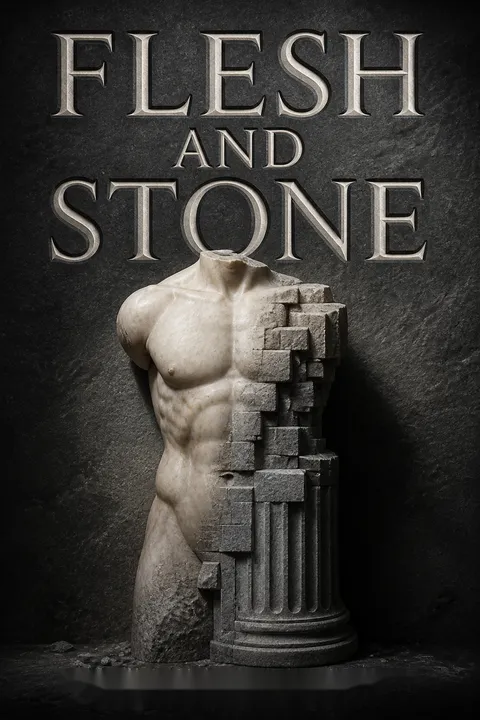
Flesh and Stone is a historical argument about urban space told through the body: how people move, perceive, suffer, and encounter difference. Its strongest contribution is to unsettle the familiar split between architectural form and social life. A street is not only a route, a square not only an empty area, and a monument not only an artwork. Each can train habits of attention, regulate visibility, and imply whose presence matters. The sequence from Athens through Rome, medieval Paris, Venice, revolutionary Paris, and modern New York makes this claim memorable by treating each city as a case in a long argument rather than as a detached historical portrait.
The central tension is between a city that organizes people into a coherent image and a city that lets dissonant lives meet. Athenian civic nakedness offered an ideal of public exposure while excluding women and enslaved people. Roman geometry made imperial authority appear stable. Medieval charity made strangers' suffering a public concern, while Venice's Ghetto shows how the language of community could become a rationale for confinement. Modern circulation and comfort broaden mobility, but can also turn the street into scenery. The episodes make a compelling case that urban design distributes not just access, but attention.
The argument is also vulnerable to overreach. Sennett often gives architectural form a strong explanatory role, and his chosen examples can make Western history look like a single march from embodied contact to modern passivity. Yet the same street or transit system can serve different people differently, and mobility can expand autonomy, especially for those denied safe access to public life. The book's own historical richness suggests that urban forms are contested rather than deterministic. A useful reading therefore treats its claims as diagnostic questions: who can linger, speak, and alter a space, and who is merely moved through it? The answer is rarely encoded in stone alone. It also depends on ownership, law, maintenance, and the organizations that make contact consequential. The book's durable insight is that civic connection needs material settings, but no design can guarantee compassion. Space can invite encounter; institutions and people must make it matter.
Review Summary
Flesh and Stone receives mostly positive reviews for its exploration of the relationship between human bodies and urban spaces throughout Western history. Readers appreciate Sennett's interdisciplinary approach and thought-provoking insights. Many find the book informative and well-researched, particularly praising sections on ancient Greece and Rome. Some criticize the later chapters as weaker or disagree with Sennett's conclusions. The writing style is described as both engaging and occasionally tedious. Overall, readers value the book's unique perspective on urban development and its impact on human experiences.
People Also Read






Glossary
body politic
Society imagined as a bodyA metaphor that represents a state or community as a human body whose parts have distinct roles. In the medieval version discussed by Sennett, the ruler functions as the head, merchants as the stomach, and workers as the feet. Such images can suggest social interdependence, but they can also make hierarchy seem natural.
teatrum mundi
The world as a stageA Roman way of imagining social and political life as theatrical performance. Public buildings, imperial ceremonies, coins, and spectacles presented authority through visible images and gestures. Sennett emphasizes that this theatrical order often encouraged Romans to accept appearances as literal truths, linking what they saw with what they were expected to believe.
Imitation of Christ
Compassion through Christ's sufferingA medieval Christian emphasis on identifying with the bodily suffering of Jesus and responding compassionately to the suffering of others. Unlike early Christian accounts that treated Christ's body as alien to ordinary human experience, this approach made human pain a basis for spiritual understanding and ethical concern.
syncope
A historical model of bodily sympathyIn the medieval medical usage described by Sennett, syncope referred to a supposed response in which the body's less-injured parts sent warmth and vital force toward an injured part. Some physicians extended the analogy to people witnessing surgery, suggesting that one person's suffering could provoke a sympathetic response in another.
volume of liberty
Freedom pictured as open spaceSennett's term for the revolutionary ideal of liberty represented by large, unobstructed public spaces. Planners believed that clearing obstacles could express openness and enable free movement. Sennett argues that such spaces could also confuse or pacify crowds when people lacked clear ways to participate in what happened there.
image repertoire
A shortcut for judging strangersA set of familiar mental images and stereotypes used to classify unfamiliar people or places quickly. Sennett uses the term to describe how a glance can reduce a complex urban encounter to a simple judgment, limiting attention and making it easier to withdraw from people marked as different.
economic time
Time organized around opportunitySennett's description of time shaped by trade, wages, and changing economic opportunities. Unlike a Christian narrative of life modeled on a known sacred story, economic time emphasizes flexible activity, measurable labor, and the possibility of revising an organization's purpose. It can enable adaptation while weakening durable attachments to place and community.
FAQ
What is Flesh and Stone: The Body and the City in Western Civilization by Richard Sennett about?
- Body-city relationship: The book explores how Western cities and human bodies have shaped each other throughout history, from ancient Athens to modern New York.
- Sensory and social experience: Sennett focuses on how bodily experiences—movement, sight, sound, touch, and smell—have influenced urban design, architecture, and social relations.
- Interdisciplinary analysis: The narrative weaves together history, philosophy, architecture, sociology, and psychology to reveal the deep connections between physical space and social life.
Why should I read Flesh and Stone by Richard Sennett?
- Unique historical perspective: The book offers a novel lens on urban history by centering bodily experience, enriching traditional accounts of city development.
- Relevance to modern cities: Sennett’s analysis of sensory deprivation, social fragmentation, and multiculturalism in contemporary cities provides valuable insights for urban planners, architects, and engaged citizens.
- Broad intellectual scope: Readers gain interdisciplinary insights that connect architecture, politics, philosophy, and everyday life, making the book relevant across multiple fields.
What are the key takeaways from Flesh and Stone by Richard Sennett?
- Cities shape and are shaped by bodies: Urban spaces are not neutral; they reflect and reinforce social identities, power relations, and bodily experiences.
- Tension between unity and difference: Western cities have struggled to honor bodily diversity, often imposing “master images” of the body that suppress difference and create social conflict.
- Modern urban challenges: Issues like sensory deprivation, social isolation, and fragmentation in today’s cities are rooted in historical patterns of urban design and cultural attitudes toward the body.
How does Richard Sennett in Flesh and Stone describe the relationship between bodily experience and urban design?
- Bodily discipline through design: Cities have been intentionally designed to regulate movement, social interaction, and even sensory experience, from the open agora of Athens to the boulevards of Paris.
- Comfort versus engagement: Modern technologies and designs (like central heating and elevators) have increased comfort but often at the cost of bodily engagement and social connection.
- Displacement and difficulty: Sennett argues that meaningful civic life arises from bodily discomfort and displacement, not from ease or insulation.
What are the main historical case studies and examples used in Flesh and Stone by Richard Sennett?
- Ancient Athens and Rome: The book examines how nakedness, public speech, and geometric order shaped civic life and social hierarchy.
- Medieval Paris and Venice: Sennett explores the interplay of religious compassion, economic competition, and spatial segregation, including the Jewish Ghetto in Venice.
- Revolutionary and modern cities: The narrative covers Paris during the Revolution, Edwardian London, and New York’s Greenwich Village, illustrating evolving concepts of citizenship, individualism, and multiculturalism.
How does Flesh and Stone by Richard Sennett address the role of ritual, festivals, and public ceremonies in urban life?
- Rituals as bodily expression: Festivals and rituals have been used to train citizens’ bodies for political solidarity, though often with mixed results.
- Limits of designed ritual: Attempts to control or energize crowds through planned ceremonies frequently failed, revealing the unpredictability of bodily and social dynamics.
- Symbolic figures: The book analyzes figures like Marianne and Hercules in revolutionary France, showing how gendered symbols reflect shifting political ideals.
What is the significance of the “master images of the body” in Flesh and Stone by Richard Sennett?
- Organizing urban space: Societies have used collective images of the body—such as the Vitruvian man or the Christian body of Christ—to structure cities and social order.
- Suppressing diversity: These master images often repress bodily difference, enforcing conformity and justifying social hierarchies.
- Cracks and resistance: Over time, these images fragment, revealing tensions between unity and diversity, and sparking resistance from marginalized groups.
How does Flesh and Stone by Richard Sennett explain the impact of modern technologies and urban planning on bodily experience?
- Facilitating segregation: Innovations like the London Underground enabled class-based spatial separation, while comfort technologies fostered bodily withdrawal.
- Comfort and passivity: Central heating, elevators, and overstuffed furniture reduced physical engagement with the city, encouraging solitude and social detachment.
- Urban design for movement: Modern planning prioritized individual mobility and linear movement, often at the expense of communal gathering and civic engagement.
What does Flesh and Stone by Richard Sennett reveal about the challenges of multiculturalism and social fragmentation in cities?
- Coexistence without connection: Cities like New York’s Greenwich Village exemplify diverse populations living side by side with limited interaction, resulting in a “visual agora” rather than true civic engagement.
- Historical roots of fragmentation: Patterns of segregation, economic inequality, and urban planning have reinforced social and spatial divisions.
- Need for compassion: Sennett argues that overcoming indifference requires acknowledging bodily vulnerability and fostering civic compassion beyond mere tolerance.
How does Flesh and Stone by Richard Sennett use the metaphor of circulation and the body to explain urban planning?
- Circulation as urban ideal: Inspired by William Harvey’s discovery of blood circulation, Enlightenment planners designed cities with arteries and veins to promote movement and health.
- Health and freedom: Free movement of air, water, and people became central to urban health and individual liberty.
- Mechanical metaphors: The city was conceived as a living body, with infrastructure mimicking physiological systems to support social and economic life.
What is the role of pain, bodily insufficiency, and compassion in civic life according to Flesh and Stone by Richard Sennett?
- Pain as civic foundation: Recognizing bodily pain and vulnerability is essential for empathy and social bonds in diverse urban societies.
- Historical loss of pain: Modernity has often erased or pacified bodily suffering, leading to passivity and alienation.
- Compassion over comfort: Sennett draws on religious and philosophical traditions to argue that civic engagement requires accepting difficulty and incompleteness, not just seeking comfort.
What are the best quotes from Flesh and Stone by Richard Sennett and what do they mean?
- On freedom and resistance: “Freedom which arouses the body does so by accepting impurity, difficulty, and obstruction as part of the very experience of liberty.” This means true freedom involves engaging with challenges, not avoiding them.
- On urban individualism: Tocqueville’s observation that individuals “touch them, but do not feel them; he exists only in himself and for himself alone” highlights the social solitude of modern cities.
- On pain and the body: Elaine Scarry’s insight, quoted in the book, that pain “differs from every other bodily and psychic event, by not having an object in the external world,” underscores the isolating yet profound nature of bodily suffering and its civic implications.
About the Author
Other books by Richard Sennett




Download PDF
Download EPUB
.epub digital book format is ideal for reading ebooks on phones, tablets, and e-readers.








