

Key Takeaways
Use food as feedback, not as a universal prescription
Two bodies, two outcomes. Colbin opens with two contrasting experiences. Her friend Elida, who had diabetes and used insulin, felt better during a week of simple meals built around whole grains, beans, and vegetables. Colbin's husband John, by contrast, became cold, depressed, and depleted on a strict vegetarian diet, then felt stronger after adding fish, poultry, and meat. These are personal stories, not controlled evidence, but they introduce the book's main claim: no single diet suits everyone at every stage of life.
Let results revise beliefs. Colbin argues that food choices should be judged by how they affect a person's health, energy, and daily life, not by allegiance to a diet's ideology. Her own thinking changed when experience challenged her assumptions about vegetarianism.
The opening stories make the book's flexibility concrete: a dietary pattern can help one person and fail another. That is a useful corrective to nutritional tribalism, and it anticipates the modern idea of individualized response. Yet anecdotes cannot establish why Elida or John changed, or whether the same changes would work for others. Elida's diabetes also makes medical oversight essential. The strongest lesson is not to copy either menu, but to treat experience as a reason to ask better questions, not as proof of a cure.
Build meals around whole foods, then adapt them to your life
Seven practical filters. In the anniversary preface, Colbin distills her food-selection advice into seven criteria: whole, fresh and natural, seasonal, local, compatible with food traditions, balanced, and delicious. Whole foods retain the edible parts that processing often separates, as when a grain is refined into white flour. Colbin also favors organically grown foods and foods that have not been heavily processed.
Make health enjoyable. Her preferred pattern centers on grains, beans, vegetables, fruit, nuts, and seeds, with fermented foods and optional animal foods. She recommends adjusting proportions to personal circumstances, climate, activity, and preference. The insistence on flavor matters: a meal that is nutritious on paper but miserable to eat is unlikely to become a sustainable way of eating.
These criteria translate nutrition into decisions made in kitchens and markets, rather than requiring constant calculation of calories or individual nutrients. The emphasis on enjoyment also recognizes that adherence depends on pleasure, habit, and culture, not just knowledge. Local and seasonal eating can support freshness and connection to place, but access, cost, disability, and food availability vary widely. The framework works best as a set of options, not a purity test: frozen or canned foods can be practical, and a healthful diet need not be expensive or locally sourced.
Choose dietary patterns, not isolated nutrients or supplement insurance
Context matters. Colbin distinguishes whole foods from what she calls fragmented or partial foods: ingredients separated from their original food matrix, such as refined sugar, white flour, extracted oils, and isolated supplements. Her example is wheat. Refining removes the bran and germ; adding back a few nutrients does not restore the original grain's full composition. She argues that a food's nutrient relationships and preparation matter alongside its laboratory-measured contents.
Supplements are not automatic insurance. Colbin cautions against taking many vitamins and minerals without a demonstrated need. She describes a student whose facial rash cleared after stopping a large daily supplement routine. Her point is that supplements can be useful as targeted treatment, but should not be assumed necessary simply because they are nutrients.
The book's matrix-based perspective remains valuable: foods contain interacting nutrients, and a dietary pattern cannot be reduced to a single number on a label. It also helps explain why an ordinary meal is a more useful unit of choice than a nutrient table. The argument becomes less reliable when it implies that isolated nutrients are inherently harmful or that whole foods always provide every needed nutrient. Supplements can be medically important for specific deficiencies, life stages, or dietary restrictions. The sensible distinction is between a targeted intervention and indiscriminate supplementation.
Use balance as a flexible map, not dietary law
A model of opposites. Colbin's Law of Opposites is a way to think about how eating patterns can lean in contrasting directions. She classifies foods along several continua, including expansive and contractive, warming and cooling, and buildup and breakdown. A person eating mostly raw fruit and salads, for example, might try more grains, beans, and cooked meals if feeling chilled or ungrounded. The categories are meant to guide observation, not divide foods into virtuous and forbidden camps.
Compare models, not commandments. Colbin also uses acid-forming and alkalizing categories, and the Chinese Five-Phase Theory, which links food qualities with organs, seasons, and moods. She presents these as mental models that can sometimes help explain experience, while acknowledging that no single model works in every situation.
The framework's strength is its refusal to treat eating as a contest between absolute opposites: it invites people to notice patterns and adjust, rather than obey a rigid menu. Its weakness is that metaphorical categories can be mistaken for established physiology. In particular, foods do not meaningfully shift blood pH in a healthy person, whose body tightly regulates it. The book's acid-alkaline chart should therefore not be used to diagnose illness or justify treatment. The broader practice of noticing how meal patterns affect comfort and energy is more defensible than the framework's explanatory claims.
Treat cravings as clues, while checking what they actually mean
Three possible sources. Colbin groups cravings into addiction or allergy, discharge, and imbalance. She uses addiction for a pattern in which consuming something such as sugar or coffee temporarily relieves discomfort that returns when it is removed. An allergy, in her account, produces an unwanted reaction after exposure. She calls cravings during dietary change “discharge,” proposing that the body is clearing stored material. Finally, she suggests that cravings can reflect an imbalanced mix of foods.
Investigate before obeying. A craving may be useful information, but Colbin's explanations do not all have the same evidentiary standing. She recommends observing what was eaten and how a person feels afterward. Persistent or severe symptoms, however, need appropriate medical assessment rather than an assumption that the body is cleansing itself.
Separating appetite, habit, and adverse reactions is a productive way to make cravings less mysterious and less morally charged. The idea that a craving can reflect learned reinforcement is especially plausible: a familiar food can relieve withdrawal or become linked to comfort. The proposed “discharge” of toxins is a much less secure explanation, and can encourage people to dismiss worsening symptoms as a sign of progress. A craving is evidence that something is desired, not a reliable diagnosis of what the body lacks. Curiosity should be paired with caution.
Change one thing at a time and track your response
Use a personal record. Colbin encourages readers to notice what they eat and how they feel afterward, including changes that appear over the next day. She suggests asking a simple question about a food or dietary plan: does it feel acceptable or not? This bodily check is not a substitute for clinical testing, but it can help people notice patterns they might otherwise overlook.
Choose a pace you can sustain. A gradual change allows time to adjust meals and routines; a sudden overhaul may produce more noticeable effects, but can also provoke a strong rebound toward previously restricted foods. Colbin's broader point is that a diet should be revised if it produces persistent fatigue, distress, or unwanted weight change, even if its advocates call it universally healthy.
The approach resembles a basic self-experiment: observe a baseline, change a limited number of variables, and record outcomes. That can reveal practical patterns, especially when repeated over time. But memory is selective, and symptoms fluctuate for reasons unrelated to food. A diary is more informative than a vague impression, while a clinician can help assess symptoms or medication effects. The body can provide valuable signals, but “feels right” is not a complete safety test, particularly when a change is restrictive or a person has a diagnosed condition.
Let cooking, fermentation, and variety make healthy food workable
Preparation changes the meal. Colbin describes cooking as a kind of predigestion: heat softens the structure of some foods and can make them easier to eat and digest. She also argues that cooking changes a meal's texture, flavor, and overall effect. Her example is leafy greens. She challenges the then-fashionable preference for lightly steamed greens, noting that boiling bitter greens can make them more appealing, even when some nutrients move into the cooking water.
Tradition adds useful techniques. Fermentation, used in foods such as miso, tempeh, pickles, and sauerkraut, changes flavor and can improve digestibility or increase certain nutrients. Colbin encourages using different grains, beans, vegetables, and cooking methods instead of relying on one “perfect” food.
This section brings food back from abstract nutrition rules to the sensory and practical work of preparing a meal. Cooking methods can affect texture, flavor, and the availability of some nutrients, while fermentation gives foods distinctive tastes and can alter their composition. The chapter also makes an important cultural point: preservation and cooking are not failures to eat naturally; they are longstanding human skills. Claims about particular cooking methods having broad effects on a person's energy or health should be tested carefully, but the case for variety and enjoyable preparation is strong.
Notice food's possible effects on mood without reducing mood to diet
Mood has a body. Colbin argues that emotional states can be influenced by physiological conditions, including food. She recounts a student who developed sudden despair after eating chocolate, which the student had avoided for years. Colbin suspected a food reaction and suggested salty umeboshi paste; the student's distress eased during their conversation. The episode illustrates Colbin's conviction that mood and bodily state can interact, but it is an anecdote, not evidence that chocolate caused the crisis or that salt treats depression.
Look beyond the plate. The book also discusses sleep, stress, drugs, and nutrition as possible influences on mood. Its most useful practical message is to observe whether a recurring pattern exists, rather than assuming every emotional problem is purely psychological or purely nutritional.
The mind-body connection is a valuable corrective to the idea that emotions happen in isolation from sleep, illness, medication, or nourishment. At the same time, attributing severe distress to one food can be dangerous if it delays mental-health care. Sudden thoughts of suicide require immediate support from qualified professionals or emergency services, not a dietary experiment. Colbin's story is best read as an invitation to include physical factors in an assessment, not as a treatment protocol or a reason to dismiss psychological explanations.
Use food to support healing, never to replace necessary care
A decisive exception. Colbin's own ectopic pregnancy challenged her skepticism about hospitals. An ectopic pregnancy occurs when a pregnancy develops outside the uterus, in her case in a fallopian tube. After consulting her physician and several alternative practitioners, she accepted surgery because the condition was dangerous and no safe dietary remedy was available. She describes using food and rest as support during recovery, not as a substitute for the operation.
Cooperation, not competition. The story anchors her proposal that food, traditional remedies, and medical treatment can have different roles. Food may support daily health and recovery, while urgent, structural, or serious conditions require professional care. Colbin's ideal is collaboration between patient and clinician, with the patient informed and involved in decisions.
This story gives the book a more balanced conclusion than its sharpest criticisms of medicine. A holistic approach need not reject technical care; it can recognize that surgery, medication, nutrition, and patient agency serve different purposes. The distinction is especially important because the book elsewhere makes sweeping claims about drugs and disease that its evidence does not establish. For readers, the safest synthesis is straightforward: use food to support health, seek qualified care for serious symptoms, and discuss dietary changes with clinicians when illness or medication is involved.
Analysis
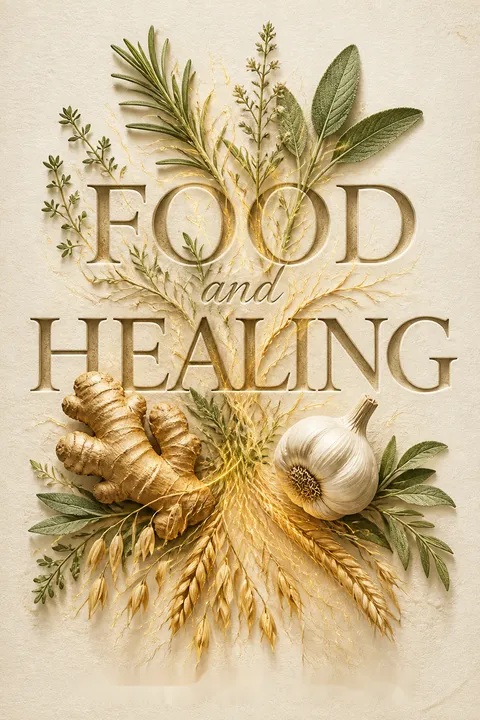
Food and Healing is a hybrid of nutrition guide, personal narrative, alternative-health philosophy, and practical cookbook. Its most durable contribution is not a prescribed menu but a method of resisting dietary absolutism. Elida's improvement and John's decline on vegetarian food make that point memorable, while Colbin's own ectopic pregnancy shows that self-care and hospital medicine need not be enemies. The book repeatedly returns to a useful cycle: notice a pattern, adjust food, observe the result, and revise the theory.
That flexibility is also the work's epistemic problem. Colbin moves between plausible observations about meal quality and personal tolerance, traditional concepts such as warming and cooling foods, and claims about electromagnetic fields, toxins discharged through symptoms, food-specific mood effects, and the causes of chronic disease. These claims are not equally supported, yet the book often presents them in one continuous explanatory voice. Its anecdotes can generate hypotheses but cannot verify causation. In particular, symptoms should not automatically be treated as benign cleansing, and diet should not be used to explain away serious illness or replace medical treatment.
The practical core remains recognizable: favor a varied pattern of minimally processed foods, make meals satisfying, and avoid turning nutrition into a moral identity. The book's own seven criteria, including balance and deliciousness, are more useful as flexible prompts than as rigid standards. Its attention to cooking and food culture is another strength, because nourishment depends on whether people can prepare, afford, and enjoy what they eat.
The best modern reading separates the behavioral wisdom from the speculative physiology. Personalized observation can complement established clinical guidance, but it cannot establish that a food caused a disease, correct a deficiency without assessment, or make a dangerous symptom safe to ignore. Colbin's broad vision is most valuable when it encourages curiosity, adaptability, and cooperation across forms of care, rather than when it turns one explanatory model into a substitute for evidence.
Review Summary
Food and Healing receives mostly positive reviews, with readers praising its comprehensive approach to nutrition and healing. Many appreciate the author's flexible, individualized perspective on diet and health. The book is lauded for its clear writing, helpful charts, and emphasis on listening to one's body. Some readers found it life-changing, while others criticized it as outdated or too "hippie." Critics also noted concerns about the author's stance on vaccines and modern medicine. Overall, readers found the book informative and thought-provoking, even if they didn't agree with all its ideas.
People Also Read





Glossary
Health-Supportive Whole-Foods Eating Style
Flexible whole-food approachColbin's adaptable way of eating, centered on whole grains, beans, vegetables, fruit, nuts, and seeds, with fermented foods and optional animal foods. It emphasizes freshness, variety, taste, and fit with a person's condition and circumstances. It is not meant to be a fixed menu or a list of absolute food prohibitions.
Law of Opposites
Balance through contrasting tendenciesColbin's organizing model for thinking about food and bodily states through contrasting qualities, including expansive and contractive, warming and cooling, and buildup and breakdown. She uses the model to interpret dietary patterns and suggest adjustments. The categories function as a heuristic in the book, not as a validated clinical system.
Five-Phase Theory
Five linked energy phasesA traditional Chinese model that organizes change through five phases, commonly named Wood, Fire, Earth, Metal, and Water. In Colbin's account, each phase is associated with seasons, organs, flavors, emotions, foods, and activities. She uses selected associations to discuss cravings and mood, while noting that the full system is extensive.
Hering's Law of Cure
Proposed symptom-reversal patternA principle in homeopathic and natural-healing traditions that describes improvement as symptoms moving from inner to outer parts of the body, from upper to lower regions, and disappearing in reverse order of appearance. Colbin uses it to interpret certain symptoms during dietary change. It should not be treated as an established medical rule or proof that a condition is healing.
Law of Remedies
Remedies can also cause symptomsColbin's proposed rule that a substance used to relieve a symptom may also produce that symptom if used in a different amount or when the symptom is absent. She advises stopping a remedy once its intended symptom has gone and warns that continued use may create new problems. The concept is a cautionary framework, not a substitute for medication guidance.
Download PDF
Download EPUB
.epub digital book format is ideal for reading ebooks on phones, tablets, and e-readers.








