

Plot Summary
The Green Book at Sickler's
On a cold Saturday, Lane Coutell waits at the station for Franny Glass, his college girlfriend, expecting a festive Yale football weekend. She arrives carrying a small green book and greeting him with more affection than she feels.
At lunch, Lane describes a literary essay he is proud of, while Franny listens with growing impatience and begins to see him as another campus intellectual performing for approval. She has already quit a college play and doubts the value of returning to school, but has not told him how deeply her doubts have unsettled her.
The book stays mostly hidden in her handbag. Their reunion therefore begins with a mismatch: Lane wants an admiring companion, while Franny is searching for something that can make her life feel honest.
The first fracture is not a dramatic betrayal but a difference in what each person wants from the encounter. Lane treats the date as a social stage on which shared taste confirms his standing; Franny experiences that same performance as evidence of a culture she can no longer tolerate. Her unspoken book gives the conflict a private center before she can articulate it. Salinger makes the reader notice how easily intimacy becomes an audience arrangement: one person performs, the other is expected to appreciate. Franny's disappointment is real, but her contempt also hints that she has begun to judge people by standards she cannot yet live by herself.
A Lunch Turns Combative
As lunch continues, Franny mocks Lane's polished analysis of Flaubert and rejects the literary professors he admires as writers without genuine poetic force. Lane bristles, then presses her to explain what counts as real art.
Franny admits she has left the theatre department because performing made her feel hungry for applause and ashamed of that hunger. She attacks not only academic status but every approved route to distinction, including the supposedly unconventional life of a bohemian.
Her untouched sandwich, pallor, and sweating make her contempt look less like a clever argument than a physical crisis. Lane tries to defend his ambitions and keep their plans on schedule, but Franny's attention keeps slipping away from him toward the book and the ideas inside it.
Franny's critique contains insight and evasion in equal measure. She sees how institutions turn art and learning into currencies of reputation, yet she treats withdrawal as if it could purify her motives. Her fear of applause does not mean she lacks ambition; it means ambition has become morally intolerable to her because she recognizes its power over her. Lane's defensiveness is equally revealing: he hears an attack on academic habits as an attack on his own worth. The scene gives neither character a clean victory. Instead, it shows how a valid criticism can become cruel when directed at people rather than at the incentives shaping them.
The Prayer Takes Over
Franny finally explains the book: it follows a Russian pilgrim who searches for a way to pray without stopping, then learns a repeated prayer centered on Jesus and mercy. She is fascinated by accounts of similar practices across religious traditions, and wonders whether repetition can change a person's inner life.
Lane treats the idea as a psychological curiosity and returns to practical plans for the game. Franny excuses herself, collapses near the restaurant bar, and wakes in the manager's office with Lane beside her.
He abandons the cocktail party and match, arranging to take her back to her lodging so she can rest. Left alone for a moment, Franny silently forms the prayer with her lips, showing that the book has become more than an intellectual interest.
The fainting turns Franny's crisis from argument into bodily fact. Her mind has been trying to solve spiritual dissatisfaction through analysis, but her body interrupts the performance of being merely clever or merely ill. The prayer offers a practice that does not require her to settle every theoretical question before beginning. Lane responds with immediate practical care, though he cannot understand the urgency the book has acquired for her. That contrast matters: his concern is genuine, but concern alone cannot meet the meaning she is seeking. The scene also introduces a tension that will govern the story: whether religious practice can loosen self-absorption or simply become a more exalted form of it.
Home Beneath the Ghosts
By Monday, Franny is back at her parents' Manhattan apartment, where she has spent much of the weekend crying, sleeping, and eating almost nothing. Her mother, Bessie Glass, keeps offering food and worries that Franny's condition is worsening, while Franny resists conversation and clings to the green book.
Zooey Glass, Franny's sharp-tongued older brother, has spoken with her for hours but doubts that another confrontation will help. He begins the day in the bath rereading a long letter from their brother Buddy, whose reflections on the siblings' childhood education and spiritual inheritance sharpen Zooey's unease.
The apartment's crowded rooms and family keepsakes surround Franny with a past she cannot easily escape, while Bessie searches for someone who can reach her.
The shift from college to the family apartment narrows the story's space while widening its history. Franny is no longer confronting anonymous academic culture; she is surrounded by the people who helped shape her standards and by objects that preserve the family's former public life. Bessie's practical concern can look comic, but her attention to food and sleep is also a form of care that does not depend on Franny's ability to explain herself. Zooey's rereading of Buddy's letter suggests that he, too, is trying to understand how inherited wisdom can become a burden. The crisis is therefore not simply Franny's private breakdown; it belongs to a family that has taught its children to think exceptionally and struggle privately.
Zooey Names the Inheritance
Bessie visits Zooey in the bathroom and urges him to speak with Franny, whose silence and poor appetite frighten her. Zooey deflects his mother's worry with jokes, then learns she believes Franny's religious reading began at college.
He corrects her: the two Pilgrim books came from Seymour and Buddy's old room, where they had long been kept. That discovery touches a more painful subject. Zooey resents how his older brothers introduced him and Franny to demanding spiritual ideas when they were children, leaving both younger siblings with standards that make ordinary life feel compromised.
He also tells Bessie that their family rituals still govern him, including Buddhist vows he repeats before meals. His humor cannot hide how deeply the education has marked him.
The revelation about the books changes them from a passing college discovery into an inheritance. Franny has not simply stumbled on an idea; she has returned to a world her brothers built around her before she could choose its terms. Zooey's resentment is psychologically precise because it contains gratitude and injury at once. He understands the value of spiritual teaching, yet feels trapped by the expectation that understanding should make him wise, kind, or free. His repeated vows expose how an ideal can survive as compulsion after its original meaning has thinned. Bessie, meanwhile, wants a practical intervention, while Zooey fears that treating Franny as a problem to be corrected will deepen her isolation.
The Sermon Breaks Down
Zooey wakes Franny on the living-room couch and listens as she describes her campus disgust, her growing habit of attacking classmates and professors, and her fear that knowledge has become another kind of hoarded wealth.
He recognizes his own reflex to judge television colleagues and turns the criticism back on both of them: their education has made them feel separate from ordinary people. When he questions whether Franny is using prayer to escape ambition, she insists she already fears that possibility.
Zooey then challenges her idealized view of Jesus, arguing that she cannot pray meaningfully to a figure remade to suit her preferences. His attack becomes too relentless; Franny collapses into sobs, and Zooey leaves the room, shaken by the harm his certainty has caused.
The siblings expose each other's defenses with unusual accuracy and very little gentleness. Franny uses moral critique to distance herself from people whose appetites resemble her own; Zooey uses brilliance to dominate the conversation and then condemns her for doing something similar. His central challenge is not that prayer is false, but that it can become an instrument for securing private purity. Yet he delivers that insight as another performance of superior understanding. Franny's breakdown marks the limit of argument: accurate diagnosis does not automatically become care. The scene forces the difference between seeing someone's contradiction and helping them bear it, a distinction Zooey has not yet learned to inhabit.
Seymour's Old Desk
After leaving Franny in tears, Zooey enters the room Seymour and Buddy once shared, a room he has avoided for years. He studies the densely written board of spiritual and literary passages on the door, then sits at Seymour's desk and opens a stack of old family notes. One account of a childhood birthday recalls the younger children performing for their parents, preserving a glimpse of warmth beneath the family's intellectual severity.
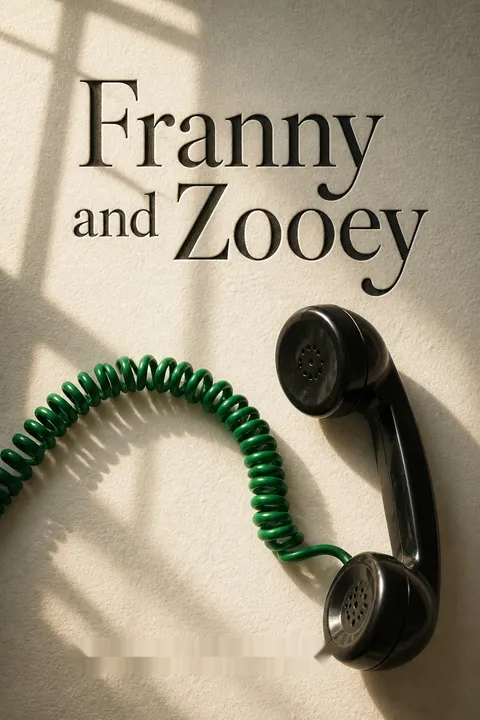
The room does not give Zooey a neat answer, but it reconnects him with the ordinary affection behind the teachings he resents. He moves to Buddy's old telephone and calls Franny. When she answers, he disguises his identity as her absent brother, hoping that she may listen before recognizing him.
The old room functions as a material archive, not a shrine that resolves grief. Its quotations place many traditions side by side, while the childhood note restores a less solemn family scene in which the children made their parents laugh. Zooey needs both records: the spiritual inheritance has become oppressive partly because he has forgotten the love that accompanied it. His use of Buddy's voice is a comic disguise, but it also reveals genuine hesitation. He cannot approach Franny directly after failing her in person, so he borrows a trusted identity to create a second chance. The maneuver is ethically imperfect, yet emotionally legible: he is trying to shift from winning an argument to making contact.
The Fat Lady's Face
Franny recognizes Zooey during the call, but he stops performing Buddy and speaks more plainly. He tells her that she need not abandon acting to pursue a spiritual life: she can do her work without making praise or prestige its purpose.
He recalls Seymour's instruction to shine his shoes before the radio show for the imagined listener he called the Fat Lady. Franny remembers receiving a similar lesson about performing for that unseen audience.
Zooey then enlarges the image: every person listening, including the people Franny dismisses, deserves the same attention, because the Fat Lady represents Christ. Franny listens, puts the telephone down, clears away her smoking things, and goes to bed. She falls asleep quietly, no longer fighting the moment.
The resolution does not answer Franny's metaphysical questions or cure her by revelation. It changes the scale of her attention. The Fat Lady makes an abstract obligation concrete: the audience is not a tribunal whose approval measures artistic worth, but a collection of particular people to whom one owes honest effort. Identifying that listener with Christ prevents Franny from dividing the world into the spiritually worthy and the spiritually shallow. It also gives Zooey a way to transmit Seymour's teaching without repeating his brothers' old pattern of turning wisdom into a lecture. Franny's return to bed is modest, but it matters: she can stop striving for a perfect explanation and rest inside an unfinished life.
Analysis
Franny and Zooey is structured around a family inheritance that is both nourishing and difficult to bear. The younger Glass siblings were taught to regard knowledge as insufficient unless it led toward wisdom, yet that education also made them acutely conscious of vanity, performance, and compromise. Franny responds by trying to withdraw from the arenas where she might seek praise. Zooey responds by attacking the hypocrisy he sees in other people, often turning his perception into another display of superiority. Their shared intelligence therefore becomes a defense as well as a gift: each can diagnose the other's self-deception more readily than offer comfort.
The story does not dismiss Franny's criticism of college, theatre, or popular entertainment. Instead, it asks what happens when critique hardens into contempt. Franny is right that institutions reward status and that artistic work can be emptied by formula, but she begins to treat imperfect people as proof that meaningful action is impossible. Zooey recognizes this trap because he is caught in a parallel one. His disapproval of commercial television can demoralize the very people with whom he works, just as Franny's judgments wound her companions. Their problem is not that they care too much about integrity; it is that integrity has become a means of sorting the world into the worthy and the false.
The Fat Lady offers a practical alternative to both escape and condemnation. It asks an artist to work for a human recipient rather than for applause, while Zooey's identification of that listener with Christ makes attention an ethical and spiritual act. The ending remains deliberately modest. Franny does not solve the problem of ego or complete a conversion; she rests after hearing a way to return to action without demanding that the world first become pure. The book's most durable claim is that spiritual seriousness is measured not by withdrawal from flawed people but by the quality of attention one can give them.
Review Summary
Franny and Zooey is a beloved book by J.D. Salinger that explores existential themes through the Glass family siblings. Many readers connect deeply with the characters' struggles and philosophical discussions. The book's dialogue and characterization are praised, though some find it pretentious or difficult. It's often seen as a more mature work compared to Catcher in the Rye. While some criticize its lack of plot, others appreciate its introspective nature and Salinger's writing style. The book tends to resonate most with those who read it at a younger age.
People Also Read










Characters
Franny Glass
Restless spiritual seekerFranny is a young college student, aspiring actress, and the youngest Glass sibling. Sensitive to performance and eager to recognize what is genuine, she becomes distressed by the pursuit of grades, acclaim, and social distinction, including her own desire for applause. Her sharp criticism is not simple arrogance: she is frightened by how readily she participates in the very competitions she condemns. The Pilgrim books give her a disciplined religious practice to consider, but she is unsure whether seeking spiritual peace is another form of self-interest. Franny's beauty and intelligence often make others treat her as composed, even when her body and attention show how overwhelmed she feels.
Zooey Glass
Brilliant, barbed brotherZooey is Franny's twenty-five-year-old brother, a successful television actor whose wit can entertain or wound. Raised with the same demanding intellectual and spiritual education as Franny, he distrusts easy praise, conventional artistic formulas, and people who mistake cleverness for wisdom. His contempt for hypocrisy often makes him perceptive, but it also narrows his patience and turns conversation into a contest he expects to control. Zooey is especially protective of his family, though affection comes from him tangled with teasing and irritation. His struggle is to make inherited teachings usable in ordinary relationships rather than treating them as standards by which everyone, including himself, must fail.
Lane Coutell
Status-minded boyfriendLane is Franny's college boyfriend, a confident student who enjoys literary debate and the recognition attached to academic success. He wants their weekend together to confirm their intimacy and fit neatly around campus life. His pride can make him defensive when Franny challenges his opinions, yet he shows real concern when she becomes physically unwell and abandons his plans to help her. Lane is not merely a symbol of conformity; he is a young man whose ordinary ambitions and care cannot answer the more radical questions Franny is asking.
Bessie Glass
Anxious family anchorBessie is Franny and Zooey's mother, a former vaudeville performer who manages the household through practical attention, worry, and a steady supply of food and cigarettes. She frets over Franny's health and tries to recruit her children into helping, often mistaking emotional crisis for a problem that can be managed through meals and family logistics. Her fussing can irritate Zooey, but it is rooted in attachment rather than indifference. Bessie carries grief and family memory without speaking about them directly, and her mixture of comic habits and deep concern makes her the household's imperfect but persistent center.
Buddy Glass
Absent-minded mentorBuddy is Franny and Zooey's older brother, a writer and former child performer who lives apart from the family. His long letter to Zooey reveals both affection and self-consciousness about the brothers' role in shaping the younger children's education. He is reflective, intellectually restless, and capable of seeing how ideals can become burdens, though his writing can also become elaborate and instructive. Buddy's presence is felt through old family materials and through the authority his siblings grant his voice, even when he is not physically available to them.
Seymour Glass
Influential elder brotherSeymour is the eldest Glass brother and a powerful influence on the younger siblings. His spiritual interests and ideas about attention, learning, and humility helped shape the family's unusual education. Seymour is remembered through books, old notes, and the lessons other family members carry into adulthood. His example is not uncomplicated: the younger children value what he taught while struggling with the weight of standards introduced before they could choose them. His character reaches the present indirectly, through memory and the different meanings his siblings assign to his guidance.
Les Glass
Practical family fatherLes is the Glass children's father and a former vaudeville performer. He preserves the family's broadcasting history in the apartment and tends to retreat into the radio or familiar routines when distress becomes difficult to face. His affection for his children appears in small domestic gestures, even when he struggles to respond directly to Franny's condition. Through him, the family's former life in public entertainment remains part of the home.
Waker Glass
Faraway priest brotherWaker is one of Franny and Zooey's older brothers and a Catholic priest serving far from the family home. Bessie considers contacting him but worries about his emotional sensitivity. His religious vocation represents one distinct path among the siblings, whose spiritual lives do not fit a single doctrine or temperament.
Boo Boo Glass
Married older sisterBoo Boo is one of the older Glass siblings, now married and raising a family. She appears mainly through the household's memories and family references. Her presence helps establish the breadth of the sibling group and the different lives its members have built beyond their shared childhood.
Walt Glass
Comic twin brotherWalt is Waker's twin and one of the older Glass children. Family stories remember his humor and his irreverent ideas about suffering and religious belief. Though he is not present in the action, his perspective shows that the siblings did not inherit one uniform response to their unusual upbringing.
Professor Tupper
Self-satisfied professorTupper teaches Franny's religion seminar. Franny sees him as vain and performative, particularly because she suspects he cultivates his appearance to seem more impressive. Her dislike of him shows how quickly her broader criticism of academic self-display becomes personal.
Dick Hess
Ambitious television writerHess is a television writer who hires Zooey for a new project and hopes to discuss his work with him. Zooey considers his script compromised by familiar formulas, although he recognizes Hess's energy and some personal appeal. Their relationship gives Zooey a concrete example of the entertainment world he criticizes.
Mr. LeSage
Television producerLeSage is Zooey's producer and employer, a polished professional who offers him conventional television roles. Zooey mocks his taste and status-consciousness but also recalls details that make him more than a simple target of contempt.
Plot Devices
The Pilgrim books
A practice for attentionThe two Russian Pilgrim books describe a wanderer seeking a way to pray continually and learning a repeated prayer centered on Jesus and mercy. Franny carries one of the books during her visit with Lane, and its teaching gives shape to her search for a life beyond academic and social ambition. Zooey later reveals that the books came from Seymour and Buddy's old room, tying Franny's current crisis to the spiritual education of her childhood. The books therefore operate both as religious instruction and as evidence of an inheritance she has not fully examined.
The Jesus Prayer
Repeated inward practiceThe prayer's repetition is presented as a practice that may move from deliberate words toward an inward habit of attention. Franny is drawn to its promise of spiritual change, while Zooey questions whether she is using it to pursue private peace and escape ordinary responsibilities. His challenge shifts the issue from whether prayer is valid to what purpose Franny gives it. The prayer also links Christian devotion with practices Franny has encountered in other traditions. Its meaning in the story depends less on a doctrinal answer than on whether it can deepen attention to other people.
Wise Child broadcasts
An inherited public stageThe Glass children grew up answering questions on a popular radio quiz program, becoming known for precocity and public performance. Those years taught them to speak brilliantly before an audience, but the habit persists into adulthood as a tendency to lecture, judge, and treat conversation like a broadcast. The old program also supplies the childhood memory of performing for an unseen listener, a memory that helps reframe artistic work. Its double meaning is central: the broadcasts fostered family closeness and talent while making ordinary social life feel like another test of intelligence.
The Fat Lady
An audience made sacredThe Fat Lady begins as Seymour's imagined radio listener, someone for whom the children should perform with care regardless of public acclaim. Buddy and Franny each remember receiving a version of this lesson. Zooey expands the image until it includes every person in an audience, including people Franny considers shallow or ignorant, and identifies the listener with Christ. The figure converts an abstract demand for humility into a practical rule for acting: do the work attentively for the person receiving it, not for prestige. Its final meaning directly shapes the resolution.
FAQ
Basic Details
What is Franny and Zooey about?
- Existential Crisis & Spiritual Search: The novella follows Franny Glass, a young college student experiencing a spiritual and existential crisis, feeling disillusioned with the superficiality and ego-driven nature of academia and society.
- Family Intervention & Dialogue: Her older brother, Zooey Glass, a cynical but deeply insightful former child prodigy, attempts to help her through her breakdown using their family's unique blend of Eastern philosophy, Western religion, and personal wisdom.
- Exploration of Meaning: The narrative delves into their intense conversations, revealing the complex dynamics of the highly intellectual Glass family and exploring themes of authenticity, spirituality, and the struggle to live meaningfully in the world.
Why should I read Franny and Zooey?
- Profound Character Insight: The book offers an intimate, psychologically rich portrayal of two siblings grappling with universal questions about purpose, authenticity, and the search for spiritual truth.
- Unique Narrative Voice: Experience J.D. Salinger's distinctive, conversational, and often meta-fictional narrative style, particularly through Buddy Glass's lengthy letter and Zooey's extended dialogue.
- Stimulating Philosophical Themes: Engage with complex ideas drawn from Eastern and Western religious and philosophical traditions, presented not as dry theory but as lived, often painful, experience.
What is the background of Franny and Zooey?
- Post-War American Context: Written in the mid-1950s, the story reflects a period of intellectual and spiritual searching amidst perceived societal phoniness and conformity, issues Franny explicitly rails against.
- Glass Family Saga: It's part of Salinger's larger body of work focusing on the Glass family, a fictional clan of intellectually precocious former radio stars, whose history and traumas (like Seymour's suicide and Walt's death) heavily influence the characters' present states.
- Publication History: Originally published separately in The New Yorker ("Franny" in 1955, "Zooey" in 1957), they were later released together as a single book in 1961, solidifying their connection as two parts of a larger narrative.
What are the most memorable quotes in Franny and Zooey?
- "Pray without ceasing.": This phrase, central to Franny's practice of the Jesus Prayer, is the catalyst for much of the story's spiritual exploration and her internal conflict, taken from the Bible (1 Thessalonians 5:17).
- "There isn't anyone anywhere that isn't Seymour's Fat Lady.": Zooey's climactic revelation, attributing Seymour's advice about performing for the Fat Lady to Christ himself, encapsulates the theme of universal compassion and seeing the divine in everyone.
- "I'm sick of ego, ego, ego.": Franny's frustrated outburst at Lane during lunch vividly expresses her core disillusionment with the self-importance and ambition she sees pervading her world.
What writing style, narrative choices, and literary techniques does J.D. Salinger use?
- Intrusive, Conversational Narration: The story features a highly self-aware narrator (Buddy Glass) who frequently addresses the reader directly, comments on his own writing process, and offers personal asides, creating an intimate yet sometimes distracting effect.
- Extended Dialogue & Monologue: Large sections consist of lengthy, philosophical conversations and internal monologues, particularly Zooey's extended speech to Franny, which serves as the primary vehicle for exploring the story's complex themes.
- Symbolism & Allusion: Salinger weaves in rich symbolism (the Jesus Prayer, the Fat Lady, the apartment's clutter) and numerous allusions to religious texts (Bible, Philokalia, Zen Buddhism), philosophy (Epictetus, Marcus Aurelius), and literature, reflecting the characters' intellectual background and spiritual quest.
Hidden Details & Subtle Connections
What are some minor details that add significant meaning?
- Bessie's Kimono Pockets: Her kimono, described as a repository for cigarettes, tools, and random objects like faucet handles and nails, subtly symbolizes her role as the family's burdened, practical anchor, constantly trying to fix things both literally and figuratively amidst their intellectual chaos.
- The Cluttered Apartment: The detailed description of the Glass apartment, overflowing with books, memorabilia from "It's a Wise Child," and various objects, serves as a physical manifestation of the family's accumulated intellectual history, emotional baggage, and inability to fully let go of the past.
- Zooey's Razor Incident: When Zooey slams his razor into the wastebasket after discussing Seymour and Buddy, it's a small but violent physical expression of his deep-seated resentment and frustration towards his older brothers' influence and perceived abandonment.
What are some subtle foreshadowing and callbacks?
- Franny's Pea-Green Book: The small, pea-green clothbound book Franny carries is introduced early as "just something," but its persistent presence and her protective gesture towards it foreshadow its central importance as "The Way of a Pilgrim" and the catalyst for her crisis.
- Lane's Disaffection with the Coat: Lane's shift from excitement about Franny's coat at the station to annoyance at its wrinkles later subtly foreshadows his growing impatience and lack of empathy for Franny's internal distress, highlighting his superficial connection to her.
- The Root-Beer Stain on the Ceiling: Zooey's gaze fixing on the old root-beer stain he made as a child is a callback to his own history within the apartment and his connection to the past, linking his present philosophical struggles to his childhood experiences and the family home.
What are some unexpected character connections?
- Zooey's Empathy for LeSage: Despite his harsh critique of the television producer Mr. LeSage, Zooey expresses a surprising moment of liking for him, specifically recalling LeSage's awkward but genuine admiration for his wife's resemblance to Carole Lombard, showing Zooey's capacity for seeing beyond superficial flaws.
- Franny's Shared "Fat Lady" Vision: Franny's immediate recognition and shared imagery of the "Fat Lady" (veiny legs, wicker chair, cancer, radio) with Zooey, based on Seymour's advice, reveals a deep, almost telepathic connection between the siblings rooted in their shared, unique upbringing by their older brothers.
- Buddy's "Lamb Chop Division" Vision: Buddy's letter mentions a sudden "vision of truth (lamb-chop division)" at the supermarket, connecting the mundane act of buying meat to Seymour's teaching about seeing the illusory differences between things, illustrating how profound insights can arise from unexpected, everyday moments for the Glass siblings.
Who are the most significant supporting characters?
- Bessie Glass: As the mother, Bessie provides the emotional and domestic backdrop for the story, her constant worrying, practical concerns (like chicken soup and painters), and occasional moments of surprising insight ground the narrative and highlight the family's complex emotional reality beneath their intellectualism.
- Buddy Glass: Though physically absent, Buddy's lengthy letter and his role as the narrator establish the intellectual and spiritual framework of the Glass family, explaining the origins of their unique education and setting the stage for Zooey's subsequent arguments.
- Seymour Glass: The deceased eldest brother, Seymour, is arguably the most significant character despite his absence. His suicide looms over the family, and his teachings, particularly the "Fat Lady" concept, provide the ultimate resolution and spiritual guidance for both Franny and Zooey.
Psychological, Emotional, & Relational Analysis
What are some unspoken motivations of the characters?
- Franny's Desire for Purity: Beyond seeking spiritual enlightenment, Franny's intense focus on the Jesus Prayer and rejection of the world seems partly motivated by a deep-seated disgust with perceived phoniness and a yearning for absolute purity and authenticity, possibly as an escape from the pressures of her gifted background.
- Zooey's Need to Emulate Seymour: Zooey's harsh, lecturing tone and his attempt to guide Franny mirror Buddy's role and, more significantly, Seymour's. His motivation is partly a genuine desire to help his sister but also an unconscious need to step into the void left by Seymour and validate his own intellectual and spiritual struggles by helping another Glass sibling.
- Bessie's Need for Control: Bessie's seemingly mundane worries (food, painters, phone calls) function as a way for her to exert control in a family where she often feels intellectually out of her depth and emotionally overwhelmed by her children's complex problems, providing a practical outlet for her anxiety.
What psychological complexities do the characters exhibit?
- Franny's Existential Angst & Physical Manifestations: Franny's psychological distress is deeply intertwined with physical symptoms (paleness, trembling, fainting, nausea), illustrating how her spiritual and intellectual crisis manifests somatically, suggesting a profound mind-body connection or disconnect.
- Zooey's Cynicism as Defense: Zooey's sharp wit, cynicism, and intellectual posturing serve as a defense mechanism against his own deep sensitivity, emotional vulnerability, and the pain caused by his family's history and the perceived flaws of the world.
- The Burden of Precocity: Both Franny and Zooey exhibit the psychological strain of being child prodigies ("Wise Children"), struggling with the pressure of high expectations, feeling alienated from "normal" society, and grappling with the legacy of their extraordinary, unconventional upbringing.
What are the major emotional turning points?
- Franny's Breakdown at Lunch: Franny's fainting spell after her intense critique of academia marks a critical emotional peak, signifying her inability to cope with her disillusionment and the physical manifestation of her internal crisis.
- Zooey's Razor Outburst: Zooey's sudden, violent reaction to his mother mentioning Buddy and Seymour ("I'm so sick of their names I could cut my throat") reveals the intense, suppressed emotional pain and resentment he carries regarding his brothers' influence and Seymour's death.
- Franny's Reaction to the "Fat Lady": Franny's shift from sobbing distress to immediate recognition and shared memory of the "Fat Lady" concept signifies a profound emotional breakthrough, allowing her to connect with Zooey and grasp a deeper spiritual truth.
How do relationship dynamics evolve?
- Franny and Lane's Disconnect: The initial scene highlights the fundamental incompatibility and lack of deep understanding between Franny and her conventional boyfriend, Lane, whose self-absorption exacerbates her crisis.
- Zooey and Bessie's Interdependent Friction: Zooey's interactions with his mother, Bessie, are marked by sharp, often exasperated banter, yet reveal a deep underlying bond and reliance, with Bessie seeking his help and Zooey, despite his protests, engaging deeply with her concerns.
- Franny and Zooey's Healing Connection: The central relationship evolves from Franny's initial resistance to Zooey's intrusion to a moment of genuine connection and understanding facilitated by Zooey's willingness to share a deeply personal, family-specific spiritual insight (the Fat Lady).
Interpretation & Debate
Which parts of the story remain ambiguous or open-ended?
- The Nature of Franny's Recovery: While Franny finds peace at the end, the story leaves ambiguous the long-term nature of her recovery and how she will integrate her spiritual insights with her life moving forward.
- The Effectiveness of the Jesus Prayer: The text doesn't definitively state whether Franny's practice of the Jesus Prayer is "successful" in a traditional mystical sense or if her breakthrough is primarily psychological, triggered by Zooey's intervention.
- Zooey's Own Spiritual State: Despite his articulate exposition of spiritual concepts, Zooey's personal spiritual state remains somewhat ambiguous; it's unclear if he has achieved the detachment he preaches or if his wisdom is still largely intellectual and performative.
What are some debatable, controversial scenes or moments in Franny and Zooey?
- Lane's Portrayal: Lane Coutell is depicted almost entirely negatively, serving as a caricature of academic pretentiousness. His flat, unsympathetic portrayal can be debated as overly simplistic or unfair, lacking the psychological depth given to the Glass siblings.
- Zooey's Treatment of Franny: Zooey's method of helping Franny involves harsh criticism, sarcasm, and relentless intellectual pressure while she is in a fragile state. Readers often debate whether his approach is genuinely therapeutic or emotionally abusive, despite its eventual positive outcome.
- The Narrator's Intrusiveness: Buddy Glass's frequent interruptions, meta-commentary, and lengthy personal asides are a distinctive stylistic choice but can be seen as distracting or self-indulgent, sparking debate about their effectiveness and whether they detract from the story of Franny and Zooey.
Franny and Zooey Ending Explained: How It Ends & What It Means
- Climactic Phone Call: The story culminates in a phone conversation between Franny and Zooey (initially disguised as Buddy), where Zooey delivers a lengthy, impassioned speech addressing Franny's disillusionment and her use of the Jesus Prayer.
- The "Fat Lady" Revelation: Zooey shares Seymour's advice to perform for the "Fat Lady", revealing this figure represents Christ himself, present in every audience member, including those Franny despises like Professor Tupper. This re-frames her struggle from battling external phoniness to serving the divine within others.
- Franny's Peace & Integration: Hearing this, Franny experiences a profound sense of joy and peace. The ending suggests she has found a way to reconcile her spiritual aspirations with the mundane world, realizing that her "duty" (acting, living) can be a form of prayer or service, leading to a state of calm acceptance and the ability to rest deeply.
About the Author


Download PDF
Download EPUB
.epub digital book format is ideal for reading ebooks on phones, tablets, and e-readers.








