

Key Takeaways
Study the builders of globalization as operators of concrete problems
Big changes start small. Garten follows ten leaders who widened connections between societies, from Genghis Khan’s empire to Deng Xiaoping’s opening of China. Most did not begin with a grand plan for a globalized world. They pursued wealth, power, security, or a practical fix, and their work created systems that others could extend: roads, trading companies, financial networks, cables, markets, and shared institutions. Garten calls them accidental globalists because their global impact often exceeded their original aims.
History needs both forces. Their success depended on personal choices, but also on conditions they did not create: political breakdown, new technology, or a crisis that made old arrangements untenable. The book’s central claim is that people can redirect history by acting decisively where those forces create an opening.
What's compelling is the balance between individual agency and historical circumstance. This avoids two easy stories: that great people single-handedly make history, or that they are merely products of their era. The distinction resembles a useful idea in systems thinking: a small intervention can have large effects when it reaches a point of leverage. Yet the spotlight on leaders can make collaborators, workers, and local communities seem like background. The book’s own examples suggest a more complete model: leaders open doors, but institutions and many other people determine how far the new path extends.
Conquest can connect markets, but its infrastructure is built in blood
Unification by force. Temüjin’s abandonment and exile on the Mongolian steppe shaped the resourceful, ruthless leader who became Genghis Khan. By 1206 he had united Mongol tribes, then built an empire that eventually covered about twelve million square miles. His organized army and strict system for distributing spoils helped turn fragmented tribes into a force capable of defeating much larger states.
Networks outlast battles. The Mongols also built roads, bridges, supply depots, and thousands of postal stations, protected trade routes, and moved skilled people and knowledge across the empire. Under his heirs, this system helped sustain the Pax Mongolica, a period of relative stability that expanded exchange across Eurasia. The same empire massacred populations and destroyed cities. Its connective legacy cannot be separated from the violence that created it.
The Mongol story makes a crucial distinction between connection and benevolence. Infrastructure can increase trade and cultural exchange while serving an empire founded on coercion. Political scientists describe a related tension as the state’s capacity to provide public goods alongside its capacity to dominate. The chapter is strongest when it holds both truths together. Its broad claim that Mongol rule helped transmit innovations to Europe deserves caution, since transmission has many routes and causes. Still, the basic lesson is durable: secure networks can reshape economies, but security for commerce is not the same as justice for the people ruled.
Turn exploration into a repeatable system, and confront who pays
Discovery became a program. Prince Henry of Portugal did not simply send ships into the unknown. After the conquest of Ceuta in 1415, he gathered information about trade and navigation, backed voyages to Atlantic islands, and pressed explorers to move farther down Africa’s coast. Gil Eannes’s passage around Cape Bojador in 1434 broke a powerful psychological barrier. Henry’s method was incremental: record what each voyage learned, then use that knowledge to plan the next one.
The costs were human. Exploration helped launch Portugal’s overseas empire and the European age of colonization. It also helped establish a systematic seaborne slave trade. During Henry’s life, roughly fifteen to twenty thousand Africans may have been transported to Portugal on his behalf. The same organized curiosity that expanded geographic knowledge became a tool of capture and exploitation.
Henry’s method resembles cumulative science: each expedition produces observations that reduce uncertainty for the next. That is more revealing than the later heroic image of an explorer acting alone. The history also warns that better knowledge does not guarantee better conduct. A more accurate map can serve navigation, commerce, conquest, or all three. Modern innovation stories often celebrate discovery while postponing questions about ownership and harm. This chapter makes those questions unavoidable: who controls the new route, who benefits from it, and whose risks are treated as acceptable?
When a trading firm governs, profit and public power fuse
A company became a state. Robert Clive arrived in India as a low-ranking East India Company clerk, then became a military commander amid rivalry between Britain, France, and Indian rulers. His victories at Arcot and Plassey helped the Company gain control in Bengal. Plassey was not simply a triumph of battlefield strength: Clive had cultivated a general prepared to defect, while rain and divided loyalties weakened the opposing army.
Power needed administration. The Company grew from a trading operation into a territorial ruler with a large army, tax authority, and influence over Indian politics. On a later return to India, Clive raised salaries, tried to curb private profiteering, reorganized military command, and secured formal authority to administer Bengal. His career exposes the contradiction: the man who helped create an exploitative system also tried to discipline its corruption.
The East India Company is an early case of the principal-agent problem: a private organization receives public-like powers, while its incentives and accountability remain unclear. Clive’s reforms show that administrative competence can restrain some abuses without resolving the deeper question of legitimacy. The story also complicates the idea that institutions are either public or private. When a company taxes, commands troops, and appoints officials, its legal form tells little about its actual power. The central test is not its label, but who can challenge its decisions and who bears their consequences.
Build financial trust across borders before scaling capital
Coordination was the innovation. Mayer Amschel Rothschild began as a coin dealer in Frankfurt’s Jewish ghetto, where anti-Jewish restrictions sharply limited his freedom. His reliability won him work for Prince William of Hesse-Kassel, whose wealth and political ties gave Rothschild access to government finance. During the Napoleonic wars, the family protected and moved assets, handled payments, and traded across borders despite blockades and shifting military control.
A family network became a bank. Rothschild’s sons established branches in London, Frankfurt, Paris, Vienna, and Naples. The branches could move money between cities, pay clients in local currencies, and coordinate bond sales across national markets. Their advantage was not inventing finance from scratch. It was combining information, logistics, personal relationships, and trust at a scale competitors struggled to match. The result helped expand international government borrowing and investment.
The Rothschild story shows that financial globalization depends on social infrastructure as much as financial instruments. Trust, timely information, and the ability to settle payments across jurisdictions make distant transactions possible. In modern terms, the family solved problems of verification and coordination that markets cannot simply wish away. The same network also concentrated exceptional influence in private hands and operated with secrecy and conflicts of interest. Trust is valuable, but it is not a substitute for oversight. A reliable intermediary can make a market work while still shaping who gets access and on what terms.
Treat failure as field data, not a verdict on ambition
A cable seemed impossible. Cyrus Field first imagined a transatlantic telegraph after realizing that a link through Newfoundland might connect New York and Europe in seconds rather than weeks. The project required ships, cable, engineering knowledge, and government support on both sides of the ocean. The first attempts failed: cable snapped, signals vanished, and in 1865 the line was lost at sea.
Each attempt improved the next. Field kept investors and governments engaged while engineers refined the cable, insulation, and laying equipment. In 1866, the Great Eastern successfully laid a durable connection, and its crew recovered the cable lost the year before. The achievement transformed communication, allowing governments, businesses, and financial markets to exchange information across the Atlantic far faster than ships could carry it.
Field’s achievement illustrates a difference between persistence and stubbornness: persistence learns from failure, while stubbornness merely repeats the attempt. His project created feedback between engineering, financing, and public support, each of which had to adapt. That resembles modern complex-project management, where the critical task is not eliminating uncertainty but building a process that can absorb it. The story also makes a useful qualification: Field’s confidence sometimes pushed the project forward before key technical questions were settled. Urgency can mobilize resources, but without disciplined learning it can also make failure more expensive.
Scale can stabilize an industry while concentrating its power
Rockefeller saw one system. John D. Rockefeller entered the oil business as a careful bookkeeper in a volatile market. He treated drilling, refining, transport, and sales as parts of one industry, then built Standard Oil into a vertically integrated company. Its cost control, financial reserves, and operational discipline helped it survive price swings and expand internationally. By 1887, Standard Oil controlled about 90 percent of US refining capacity.
Efficiency had a price. Rockefeller used secret railroad rebates, including payments linked to competitors’ shipments, and other aggressive tactics to weaken rivals. The Supreme Court ordered Standard Oil broken up in 1911. Rockefeller also created institutions that funded medical research, education, and global public health. His life joins industrial concentration and large-scale philanthropy, but charitable work did not erase the harms of monopoly power.
Rockefeller’s career captures a real economic tradeoff: scale can reduce costs and support investment, while concentrated control can suppress competition and influence public policy. His defense of industrial combination treats instability as a problem to solve through organization, but monopoly can replace market volatility with private rule. His philanthropy adds another layer: private wealth can fund research and public goods, yet donors also set priorities without the same democratic accountability as public institutions. The question is not whether scale is good or bad in the abstract, but how its benefits are shared and its power constrained.
Make cooperation durable by pooling authority over practical tasks
Start with a shared problem. Jean Monnet learned during World War I that France and Britain could not coordinate supplies simply by meeting and exchanging views. Joint purchasing through the Wheat Executive helped them secure scarce grain. After World War II, Monnet applied the same practical instinct to the danger of renewed conflict between France and Germany.
Coal and steel became the entry point. His Schuman Plan placed these strategic industries under a European Coal and Steel Community with a High Authority able to make decisions beyond the control of individual national governments. This was supranationalism: states pooling some authority in an institution above them. The arrangement offered a practical first step toward broader European integration. It also raised a lasting concern: institutions built by experts and governments may lack direct democratic accountability.
Monnet’s approach resembles institutional design through credible commitment. If former rivals share authority over resources needed for war, cooperation becomes part of the operating structure rather than a promise renewed at each crisis. A narrow mandate can make a radical political idea easier to accept because people can judge it through concrete results. But technical competence does not itself confer democratic legitimacy. The chapter’s enduring question is how to combine institutions capable of acting across borders with meaningful public consent. Coordination can solve a collective problem while creating a new distance between decision-makers and citizens.
Open markets deliberately, and count the communities left behind
Thatcher reversed the direction of policy. Taking office in 1979 amid high inflation, strikes, and economic stagnation, Margaret Thatcher cut public spending, weakened union power, deregulated finance, and sold many state-owned companies. Privatization broadened share ownership and made businesses more exposed to competition. The deregulation known as the City of London’s “big bang” helped turn London into a highly competitive international financial center.
The gains were uneven. Britain became more competitive and financial services grew, but unemployment rose sharply, manufacturing and mining communities were battered, and inequality widened. Her opponents argued that privatization sometimes transferred public monopolies into private hands without enough safeguards. Thatcher’s policies influenced governments well beyond Britain, but the book stresses that freer markets did not remove the need for public action to manage social costs and systemic risks.
Thatcher’s record is a reminder that aggregate growth and lived experience can move in different directions. A policy can improve efficiency or strengthen a financial center while imposing concentrated losses on workers and towns with few alternatives. Political economy calls this the distributional question: not only whether a change creates value, but who receives it and who pays for adjustment. The chapter fairly recognizes that markets can loosen rigid systems, while also showing why reform needs credible transition support. Without it, people experiencing loss may reject not just a policy, but the legitimacy of the entire economic order.
Operational discipline turns silicon's promise into a global revolution
Ideas needed manufacturing. Andrew Grove, a Hungarian refugee who escaped to the United States after the 1956 uprising, joined Intel as it tried to turn semiconductor designs into reliable mass-produced products. He built a management system centered on measurable output, clear accountability, and direct communication between teams. That discipline helped Intel improve manufacturing yields and make its memory chips commercially successful.
The company had to change direction. When Japanese firms overtook Intel in memory chips, Grove helped shift the company toward microprocessors, despite the cost of abandoning a major business and laying off thousands of workers. He called a decisive change in the rules of competition an inflection point. His practical lesson was to listen for changing signals from customers and employees, then reorganize quickly instead of defending yesterday’s assumptions.
Grove links technological progress to organizational design. A breakthrough matters at scale only when production systems can reproduce it consistently, a point often obscured by inventor-centered accounts of innovation. His use of measurement and confrontation can surface problems early, but metrics can also narrow attention to what is easiest to count, while fear can suppress bad news if leaders punish the messenger. The value of vigilance therefore depends on psychological safety as well as pressure. Organizations need frank information to detect change, and enough trust for people to deliver it before a crisis becomes obvious.
Reform by testing what works, without confusing growth with freedom
Deng changed the economic course. After decades of political turmoil and failed Maoist campaigns, Deng Xiaoping restored incentives in agriculture, allowed farmers to sell more produce, and opened special economic zones to foreign investment. He encouraged learning from other countries and permitted local experimentation rather than insisting on one fixed economic blueprint. Between 1978 and 1984, agricultural output per person grew far faster than in the preceding two decades, and China began reconnecting with world markets.
Pragmatism had a hard boundary. Deng accepted market practices and uneven wealth, but not competition for the Communist Party’s political control. In 1989, he ordered the military crackdown on the Tiananmen protests. The book’s larger portrait of transformational leadership is therefore morally mixed: leaders can unlock enormous economic change while suppressing basic rights. China’s development cannot be reduced either to growth figures or to political repression.
Deng’s policy experimentation resembles adaptive governance: local trials generate information before a reform is expanded. That approach is especially useful when the effects of policy are uncertain and conditions vary across regions. Yet economic performance and political legitimacy are not interchangeable. Material improvement can strengthen public support, but it cannot establish that citizens freely consent to how power is exercised. The chapter exposes a tension common to state-led development: centralized authority can coordinate rapid change, while also limiting correction, dissent, and accountability. The question is whether pragmatic learning can endure when political criticism is treated as a threat.
Analysis
The book’s most useful contribution is not a single theory of globalization, but a sequence of cases showing how connection is built. Empires create routes and rules. Explorers turn uncertain geography into usable knowledge. Companies combine commerce with political power. Banks move capital, cables move information, and supranational institutions coordinate decisions that individual states cannot manage alone. These are distinct mechanisms, not interchangeable versions of progress.
Garten’s narrative method makes those mechanisms memorable by attaching them to consequential choices and personal reversals. Genghis Khan’s trade networks grew from conquest; Henry’s methodical exploration fed colonial expansion; Clive’s Company evolved into a ruler; Monnet sought to bind former enemies through shared authority. The stories give agency to individuals without claiming they acted outside history. Their opportunities depended on fragmented states, technological breakthroughs, military crises, or economic failure.
The book’s moral accounting is essential. Connectivity can deliver prosperity and knowledge while enabling coercion, monopoly, slavery, inequality, or repression. Its leaders are not presented as templates for imitation. They are evidence that execution and institutional design can magnify both constructive and destructive aims. The useful question is therefore not simply whether a leader changed the world, but what structures were created, who gained power through them, and who bore their costs.
The selection also imposes limits. Ten prominent leaders make an engaging spine, but they can understate the role of ordinary workers, local knowledge, and collective movements. The narrative sometimes assigns sweeping global outcomes to figures whose influence was one cause among many. Even so, its comparative frame is productive: the strongest pattern is not heroic will alone, but focused action meeting a historical opening, followed by systems that let others participate. Globalization is made by people, but it persists through institutions and networks that outlive them.
Review Summary
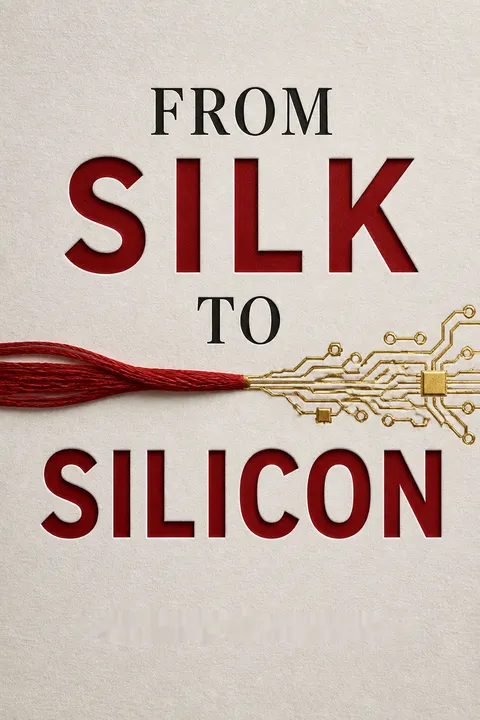
From Silk to Silicon by Jeffrey E. Garten profiles ten historical figures who shaped globalization, from Genghis Khan to Deng Xiaoping. Reviews average 3.87/5 stars, with readers appreciating the accessible biographical approach and fascinating historical insights. Common criticisms include insufficient depth due to brief chapters, failure to adequately address subjects' negative impacts and moral failings, and questionable inclusion of certain figures like Margaret Thatcher. Many found earlier chapters more engaging than later ones. Readers valued learning about lesser-known figures like Jean Monnet and Cyrus Field, though some found the writing dry and the connection to globalization unconvincing.
People Also Read









Glossary
accidental globalists
unintended architects of connectionGarten’s term for leaders whose immediate goals were usually personal, political, or practical, but whose actions expanded connections among societies. They sought things such as wealth, power, trade, or a solution to a crisis, rather than globalization as an abstract ideal. Their long-term effects often exceeded what they themselves intended.
Pax Mongolica
Mongol-era Eurasian stabilityThe period of relative peace and stability across much of Eurasia under Mongol rule, lasting from the early thirteenth century into the mid-fourteenth century. Mongol security, transport routes, postal stations, and common administrative practices supported trade and exchanges of people, goods, and ideas. This stability rested on an empire created through extreme military violence.
Court Jew
Jewish adviser to rulersA Jewish financier or adviser serving a Christian or Muslim ruler, often handling loans, taxes, trade, or military supply. Such advisers could draw on commercial knowledge and family networks spanning regions, but their position depended on the ruler’s favor. They could gain wealth and influence while remaining vulnerable to political shifts, persecution, imprisonment, or expulsion.
supranationalism
authority shared above statesA system in which countries give an independent institution authority to make certain decisions that national governments cannot individually veto. Monnet’s European Coal and Steel Community applied this idea to strategic industries shared by France, Germany, and other European states. It differed from ordinary cooperation, where governments coordinate while retaining final authority for themselves.
Moore's law
forecast of chip progressGordon Moore’s observation that the number of transistors placed on an integrated circuit could continue doubling at regular intervals, often described as roughly eighteen months to two years. It was not a physical law, but a planning framework that helped semiconductor companies anticipate future chip capacity, cost, and production needs.
inflection point
change in competitive rulesGrove’s term for a period when forces such as new technology, competitors, or customer behavior change the rules governing a company or industry. Existing strategies may stop working, sometimes before leaders recognize the shift. Grove argued that organizations need fast information from the market and the willingness to abandon assumptions that once produced success.
Four Modernizations
China's four reform prioritiesDeng Xiaoping’s program to modernize agriculture, industry, the military, and science and technology. It marked a departure from Maoist campaigns centered on ideological mobilization. The program emphasized practical improvements, economic incentives, technical expertise, and learning from abroad as tools for rebuilding China.
hedgehogs
leaders focused on one aimGarten borrows this image for leaders who organize their lives around one overriding objective. Their focus can simplify complex decisions, sustain effort through setbacks, and help them build expertise over time. The metaphor also signals a risk: intense commitment can make a leader resistant to contrary evidence or indifferent to the collateral costs of pursuing the goal.
Download PDF
Download EPUB
.epub digital book format is ideal for reading ebooks on phones, tablets, and e-readers.








