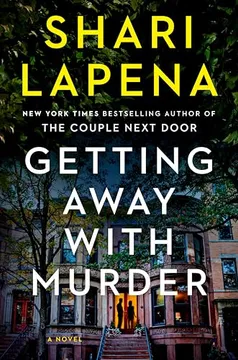


Plot Summary
Prologue
On a storm-tossed sailboat, Jill2 watches her husband,1 Ted,1 wait for his older brother3 Greg3 to turn his back before shoving him overboard. Ted1 sails away instead of rescuing him. Jill2 scans the empty water, then radios the Coast Guard and helps stage a frantic search.
Their account is ready: Greg3 was reckless, the sea was rough, and no one could have saved him. As relief replaces fear, Jill2 understands how quickly trust can become a weapon. The question is no longer whether they have killed Greg.3 It is whether they can escape the consequences.
The opening gives away the murder but withholds its cause, making suspense hinge on motive and aftermath rather than the killer’s identity. Jill’s position is especially revealing: she is both witness and accomplice, watching the man she loves commit an irreversible act while helping construct its public meaning. The boat’s isolation offers the couple a temporary fantasy of control. Their rehearsed account, however, already suggests that the real danger will not be the sea but the story they must keep telling about it.
A Brownstone Built on Debt
Two months before Greg3 disappears, Ted1 rises early in the couple’s Brooklyn Heights brownstone and worries over money. He has spent much of his inheritance on the house and the life he and Jill2 enjoy, then borrowed more and gambled on a supposedly certain investment.
The investment collapses, leaving him owing a loan shark and unable to tell Jill2 how close they are to losing their home. Jill2 notices his sleeplessness but assumes he is merely moody. She believes their marriage, beautiful house, and comfortable routines are secure. Ted’s1 fear is less about poverty than about being exposed as a failure to the wife2 whose admiration he depends on.
The brownstone is not just an asset; it is the couple’s shared proof that their choices have been good. Ted’s concealment protects that proof for a while, but it also converts a financial problem into a test of identity. He would rather risk the house than let Jill see him as diminished. Jill’s confidence, meanwhile, depends on the same arrangement: Ted manages the money, and she receives the life it buys. Their intimacy is real, but comfort has allowed them to mistake dependence for trust.
Greg Refuses the Rescue
At dinner, Greg3 needles Ted1 about the disastrous investment he recommended to his ex-wife,11 Minerva,11 and Jill2 realizes Ted1 has hidden more than he admitted. At home, Ted1 finally reveals the scale of their debt. Jill2 insists they ask Greg3 for a loan rather than mortgage the brownstone, so she joins Ted1 at Greg’s3 luxurious apartment.
Greg3 refuses, treating the request as a lesson his brother1 needs to learn. Back home, Jill’s2 anger shifts toward the man who could save them and chose not to. She suggests that Greg’s3 death would solve their problems; Ted1 makes clear he has already considered it. They decide to act together before Greg3 can marry and change his will.
Greg’s refusal does not create the couple’s greed, but it gives their existing grievances a convenient target. Ted turns humiliation into a fantasy of control, while Jill converts fear of losing her home into moral permission. Their decision is not born from a sudden rupture in their marriage. It grows from the couple’s shared belief that preserving their life matters more than the person standing in its way. Their agreement makes the marriage a pact, not merely a refuge.
Two Stories at the Marina
After Greg3 vanishes, Ted1 and Jill2 give the Coast Guard a carefully aligned account of a fall during dangerous sailing conditions. They say Greg3 was an experienced risk-taker, was not wearing a life jacket, and disappeared too quickly for them to save him. Special Agent Paul Ramirez4 of the Coast Guard Investigative Service reviews the statements and visits them at home.
He finds no obvious contradiction, but when he mentions that Greg’s boat may have had surveillance cameras, Ted1 and Jill2 react with alarm before recovering their composure. Ramirez4 has no proof and no body, yet their brief fear gives him a reason to investigate further. The couple leave the interview believing their story still holds.
The scene turns performance into evidence, though not evidence a court could yet use. Ted and Jill have prepared their account as if consistency alone can make it true; Ramirez understands that people often betray themselves in the moments before they can perform. His suspicion is sharpened by the class divide he feels in their home, but that bias does not erase the perceptiveness of his observation. The interview also establishes a crucial limit: intuition may identify a lie, but without corroboration it cannot compel justice.
The Inheritance Has Teeth
At the lawyers’ meeting, Ted1 learns that Greg3 left a third of his estate to Mount Sinai Hospital and the remainder to him, provided he survives Greg3 by thirty days. Half of Ted’s inheritance will be held in trust until he turns sixty-five. The fortune is still enormous, but far smaller and less accessible than he and Jill2 expected.
Meanwhile, Ramirez4 asks whether Ted1 will inherit and learns from Minerva11 that Ted1 had severe financial problems, lost her money on the failed investment, and asked Greg3 for help shortly before the sailing trip. Minerva11 also confirms the brothers’ hostility. Ramirez4 now has a plausible motive and opportunity, but still no admissible evidence tying Ted1 to Greg’s3 disappearance.
The will gives the murder a concrete reward while complicating the couple’s imagined payoff. Greg’s charitable bequest and the trust are acts of control that continue after his death, limiting Ted’s access to the fortune and denying him the effortless escape he expected. For Ramirez, the new facts make the accident story harder to accept, but motive is not proof. The gap between suspicion and prosecution becomes a central pressure point: the truth can be increasingly clear to individual characters while remaining legally unreachable.
The House Starts Watching
After Greg’s3 memorial, Ted1 receives anonymous messages accusing him and Jill2 of murder. He suspects John Burnley,10 an old Wall Street acquaintance who recently appeared offering an investment scheme. Jill2 worries instead about Lara,5 her closest friend, and Ramirez’s4 continued questions. Their fear becomes tangible when Jill2 spots a pinhole camera concealed in a bookshelf.
Ted1 searches the brownstone with a detector and finds another device in a kitchen light. The couple confront their cleaner, Nadya Sokolov,7 because she has a key and knows the alarm code, but she denies planting anything. They change the locks and security system, yet cannot tell who watched them or what their cameras recorded.
The home that once confirmed the Westcotts’ success becomes a place where every familiar object might conceal another observer. The cameras reverse the couple’s original advantage: they had believed that secrecy belonged to them, but now their private language may be evidence in someone else’s hands. Suspicion spreads through relationships before it becomes a police matter. Jill questions her closest friend; Ted blames an opportunist. Their inability to identify the watcher makes uncertainty itself a form of control.
John Takes the Wrong Blame
Convinced John Burnley10 is behind the cameras, Ted1 meets him and offers four million dollars for the recordings. John10 accepts the premise without having any files, hoping to exploit Ted’s1 fear. In Venice, Ted1 asks him to send proof before payment. John10 cannot produce any, and Jill2 recognizes from his response that he is bluffing.
The mistake leaves the real blackmailer unidentified, while John10 now knows that incriminating footage exists and that Ted1 is desperate to recover it. At the same time, Lara5 and her husband6 Ben6 arrive in Venice, saying they came to support their friends. Jill2 cannot decide whether Lara’s5 concern is genuine or a cover for extortion.
Ted’s error comes from acting before he knows what he knows. He confuses a plausible suspect with a confirmed one, then hands John information that makes the blackmail plot more valuable. Jill’s sharper judgment briefly exposes the difference between evidence and a story that satisfies fear, but it cannot undo the disclosure. Venice, intended as an escape, intensifies the couple’s confinement: familiar friends may be suspects, and even a private holiday becomes another stage on which they must perform innocence.
Ben Dies in the Search
Back in New York, Ted1 secretly asks John10 to identify the person holding the footage. John10 breaks into Lara5 and Ben’s6 home, ties them up, and demands the files he assumes they have. They deny knowing anything about the cameras. John10 searches their devices and safe, taking cash but finding no recordings. As he leaves, Ben6 frees himself and rushes at him.
John10 flips Ben6 over an upstairs railing; Ben6 falls two storeys and dies. Lara5 survives with injuries and tells the Westcotts1 that the intruder wanted camera files. She accuses them of sending him, then demands five million dollars for keeping quiet. Ted1 has created a second crisis while trying to solve the first.
The violence is not a carefully executed extension of Ted’s plan but the consequence of his decision to outsource uncertainty to a man he barely understands. Ben’s death makes the cost of the couple’s secrecy personal to Lara and morally harder to contain. Her demand for money also complicates her position: grief and opportunism coexist, leaving the Westcotts unsure whether she is seeking justice, leverage, or both. Ted’s growing confidence in his own ruthlessness meets a practical limit: he can initiate harm without controlling where it ends.
Nadya Knows the Source
Nadya7 discovers that her son8 Peter8 copied a Westcott1 key and gave it to his associate Konstantin,9 who installed the hidden cameras. Peter8 has watched the live feeds and passed the recordings to Konstantin,9 who intends to blackmail the couple. Nadya7 confronts Konstantin9 and demands a million dollars for herself and another million for Peter8 in exchange for her silence; he agrees.
The Westcotts1 remain unaware of who is behind the surveillance. Months later, Greg’s estate is settled, and the blackmailers demand an initial Bitcoin payment. Ted1 and Jill2 refuse, having learned from a criminal lawyer that recordings made by an outsider without the occupants’ knowledge cannot be used in court.
Nadya’s entry into the conspiracy grows from the ordinary vulnerabilities of work: her key, her stored access codes, and her son’s access to her life. She begins as a cleaner treated as nearly invisible, then recognizes that information can give her leverage over people who have never asked about her needs. Peter’s respect for her rises as she becomes a participant in crime, an unsettling improvement in their relationship. The illegal recordings offer the Westcotts a legal defense, but not a clean escape from exposure or from the harm their choices have caused.
The Westcotts Refuse Payment
After Ted1 and Jill2 ignore the Bitcoin instructions, Konstantin9 abandons the ransom and mails copies of the most damaging recordings to several newspapers and the police. Online reports soon identify the Westcotts1 as a couple caught discussing Greg’s3 murder. Police summon them separately, but their expensive lawyers advise them to say nothing.
Ramirez4 plays Jill2 a recording in which Ted1 admits pushing Greg3 overboard and leaving him to die; the footage then shows them discovering a camera. Lara’s5 recorded accusation connects them to the attempt on Ben’s6 life, but she too refuses to testify. Because the footage was illegally obtained, investigators cannot use it in court, and neither spouse confesses.
The couple’s refusal is a strategic wager: they surrender control of their public image to preserve their wealth and legal freedom. The recordings expose what they said, but their unlawful collection prevents the state from turning exposure into conviction. Ramirez’s vindication is therefore inseparable from frustration. The law protects privacy even when that protection shields the guilty, while the public receives a scandal without a courtroom resolution. Lara’s silence adds another uncertainty, since her grief does not become testimony.
A Fortune Without Peace
The scandal destroys much of the life Jill2 and Ted1 intended to buy with Greg’s fortune. Jill2 loses her gallery job and her place in the art world; friends withdraw, and Nadya7 quits rather than continue cleaning for them. Lara5 gives birth to a daughter but refuses to reconcile with Jill,2 holding Ted1 responsible for Ben’s6 death.
The couple remain wealthy and legally uncharged, but their brownstone no longer feels safe or joyful. Jill2 and Ted1 briefly hope police can trace the blackmailers, but investigators will not pursue a case without evidence. Then Minerva11 calls to deny planting the cameras. The source remains unknown, and a final anonymous message proves someone is still watching.
The resolution separates legal consequence from social consequence. Ted and Jill keep their money and avoid conviction, but the relationships that made their privileged life feel secure have been stripped away. Jill’s losses are especially intimate: she loses work she loved, friendship, and the house’s sense of sanctuary. Ted can treat public opinion as temporary, while Jill continues to feel its weight. The last message refuses closure, showing that their freedom from prosecution has not restored privacy or peace.
Epilogue
After the recordings become public, Lara5 gives birth to a daughter and refuses Jill’s2 attempts at renewed contact. Jill2 loses her gallery job, and Nadya7 quits cleaning for the Westcotts.1 Ted1 briefly considers using the police to trace the blackmail, but they will not help.
Minerva11 later calls to insist she did not plant the cameras and was out of the country when the recordings reached the newspapers. The source remains hidden. Nadya,7 still in possession of a phone with a live camera feed, sends Jill2 a taunt about the couple’s bedroom and watches them search for the device. They have kept their fortune, but not their privacy.
The ending denies the Westcotts the kind of resolution they sought when they killed Greg: a settled future in which money could restore comfort and close the past. They avoid prison, yet the exposure damages Jill’s work and friendships, while the unseen camera keeps their home psychologically occupied. Nadya’s final act mirrors the novel’s central imbalance. The wealthy retain legal protection; the person they once barely noticed gains a private form of power. The result is neither justice nor simple impunity, but an ongoing struggle over who gets to watch, judge, and feel safe.
Analysis
The novel treats wealth as both motive and insulation. Ted1 and Jill2 kill Greg3 because they believe money will preserve their home and the identity they have built around it. Their plan depends on a familiar privilege: the assumption that a convincing performance can substitute for truth. They rehearse grief, curate their public behavior, and expect legal uncertainty to protect them. Yet money cannot control every audience. Ramirez4 reads their discomfort, Lara5 reads Jill’s2 fear, and the cameras record the private confidence that the couple mistake for safety.
The book’s sharpest tension lies between moral knowledge and legal proof. Ramirez4 is convinced the death was murder, but his intuition cannot overcome the lack of admissible evidence. Later, the recordings expose the Westcotts1 yet remain unusable in court because they were obtained illegally. The law’s protection of privacy thus shelters people whose privacy conceals a crime, while public exposure supplies punishment of a different kind. The result resists a simple equation between truth and justice: the facts can be known and still fail to produce a conviction.
The brownstone gives this conflict a physical shape. Jill2 treats its restoration as evidence of taste, security, and good judgment. Once hidden cameras penetrate it, the house becomes a record of their unguarded selves and can no longer perform its original work as sanctuary. Nadya’s7 position complicates the class story. She maintains the Westcotts’1 home while remaining nearly invisible to them, then uses that access to enter their private world. Her participation is neither heroic nor innocent; it grows from economic frustration, maternal ambition, and the power created by information.
Ted’s1 central transformation is not from good man to villain, but from self-doubt to a more dangerous confidence in his ability to manage consequences. Jill2 moves in the opposite direction, discovering that shared guilt binds her to Ted1 without preserving her love or respect for him. Their fortune survives the scandal; their imagined life does not. The ending’s lingering camera makes that distinction permanent. They may possess the house and the money, but someone else still controls what they can feel safe saying inside it.
Characters
Ted Westcott
The anxious heirTed is a forty-year-old investment firm employee whose inherited wealth has never taught him how to manage money or withstand failure. Charming and socially polished, he relies on the appearance of competence, especially in front of Jill2, whose admiration matters deeply to him. His financial choices are driven by shame as much as greed: he hides losses because he fears that honesty would make him less worthy of love. The rivalry with his older brother, Greg3, gives that insecurity a target and a history. Ted is capable of careful planning, but his desire to act decisively often outruns his judgment. His polished manners and private panic make him a study in how privilege can cushion mistakes without curing the fear that caused them.
Jill Westcott
The keeper of appearancesJill is a gallery employee with ambition, a strong eye for art, and a deep attachment to the restored brownstone she helped make a home. She takes pride in choosing well, from her husband1 to her clothes and social circle, and dislikes visible weakness. Her childhood included financial instability after her father’s alcoholism depleted the family’s resources, making security feel like something she must actively defend. Jill loves beauty and comfort, but she is not simply decorative: she is observant, socially skilled, and capable of making hard calculations. Her marriage to Ted1 combines real affection with a shared dependence on wealth and status. When that arrangement is threatened, she must confront the difference between protecting a life and protecting the image of one.
Greg Westcott
The formidable older brotherGreg is Ted’s1 older brother, a wealthy entrepreneur and confident sailor who tends to dominate a room. Successful and accustomed to risk, he enjoys competition and can be generous, but his confidence often tips into condescension. His rivalry with Ted1 predates their adult finances, giving their relationship an old emotional charge beneath its polite surface. Greg’s wealth and family position make him both a source of resentment and a possible escape route for Ted1 and Jill2.
Paul Ramirez
The dogged investigatorRamirez is a young special agent with the Coast Guard Investigative Service, tasked with examining suspected crimes at sea. A former Navy man, he respects procedure and takes danger seriously, qualities that make the Westcotts’1 account feel wrong to him. He is also conscious of class: their inherited comfort contrasts sharply with his modest life in Queens, and that resentment sometimes sharpens his attention into bias. Ramirez trusts instinct but knows instinct cannot substitute for proof. His pursuit of the Westcotts1 tests the distance between believing he knows what happened and being able to establish it in a system that demands admissible evidence.
Lara Donleavy
Jill's watchful friendLara has been Jill’s2 close friend since college and knows the ambitions and insecurities they once shared. Married to Ben6, she is socially perceptive and attentive to shifts in her friends’ behavior. Her comfortable life does not prevent her from feeling uneasy when money alters the balance between people. Lara wants to be loyal, but her instinct to read hidden motives can draw her toward conclusions she cannot verify. Her friendship with Jill2 is built on years of intimacy, yet it is also shaped by competition, wealth, and the fear that one friend’s good fortune may change the terms of the relationship.
Ben Donleavy
Lara's steady husbandBen is Lara’s5 husband, a lawyer who works in mergers and acquisitions. He is more trusting than his wife and tends to assume that other people are basically decent, which makes him slow to accept suspicions about the Westcotts1. His steady affection gives Lara5 a source of comfort, while his practical temperament often reins in her anxiety. He and Lara5 share a secure social life and a close partnership.
Nadya Sokolov
The overlooked cleanerNadya is an immigrant from Russia who supports herself and her adult son by cleaning wealthy clients’ homes. She is hardworking, careful about her reputation, and accustomed to being treated as useful but not especially visible. Her worries about Peter8 coexist with a fierce maternal attachment and disappointment in his choices. Nadya’s practical intelligence is easy for others to underestimate because her work places her on the margins of their lives. She longs for a future beyond exhausting labor, but has learned to measure risk against the need to keep her clients and income. Her perspective exposes the distance between the Westcotts’1 elegant rooms and the people who maintain them.
Peter Sokolov
Nadya's restless sonPeter is Nadya’s7 adult son, physically strong but aimless, with a history of poor effort at school and sporadic work. He resents his mother’s attempts to direct his life and gravitates toward friends who promise easy money and excitement. His dependence on Nadya7 sits uneasily beside his insistence on independence. He is impressionable, yet not incapable of making deliberate choices, and his relationship with his mother reflects how affection can persist alongside frustration and mistrust.
Konstantin
The patient operatorKonstantin is a Russian-speaking gym owner and criminal operator connected to Peter8. He is physically imposing, controlled, and comfortable turning access to other people’s homes into leverage. His patience distinguishes him from more impulsive opportunists: he can wait for the right moment rather than demand an immediate return. He treats Peter8 as useful but readily criticizes his judgment.
John Burnley
The slippery old associateJohn is a former Wall Street colleague of Ted’s1, a persuasive salesman with a history of fraud and prison time. Unlike Ted1, he has had to build his status without family money and carries resentment toward people whose advantages were inherited. He enjoys testing others and recognizes how fear can make a person careless. John is resourceful and opportunistic, but his confidence in his ability to manage risk can be as dangerous as Ted’s1.
Minerva Westcott
Greg's perceptive ex-wifeMinerva is Greg’s3 ex-wife and a former investment client of Ted’s1. She is financially independent and accustomed to standing up for herself, having negotiated a substantial divorce settlement. Her relationship with Greg3 is complicated by affection, resentment, and the experience of living in his shadow. She is observant about the Westcott brothers1 and willing to speak bluntly when she believes someone is hiding the truth.
Robert Carrera
Minerva's quiet partnerRobert is Minerva’s11 partner, whom she brings to Greg’s3 memorial. He works as a design engineer and remains largely quiet around the Westcotts1, making him a difficult presence for them to read.
Alan Siegle
Ted's criminal lawyerAlan Siegle is a high-profile criminal defense attorney whom Ted1 consults about the legal status of secretly recorded conversations. He is direct, experienced, and careful to distinguish reputational damage from evidence that can be used in court.
Plot Devices
The Fortune Seeker
A staged accident at seaGreg’s sailboat provides the setting for the murder and the cover story. Rough water, distance from shore, Greg’s3 habit of sailing without a life jacket, and the absence of other nearby boats make the couple’s account plausible. The boat also carries the story’s central question of evidence: the Westcotts1 believe no one witnessed what happened, while Ramirez4 wonders whether onboard cameras might exist. Its name suggests that the pursuit of wealth is not simply a motive but the force steering the characters toward danger.
Hidden home cameras
Private guilt becomes leverageSmall cameras planted inside the Westcotts’1 brownstone record conversations in which Ted1 and Jill2 discuss the murder. Because they do not know they are being watched, the couple speak more freely at home than they would in public. The recordings give the blackmailers power, but their covert collection also creates a legal weakness: the footage cannot be used in court. The cameras transform the house from a refuge into a surveillance space and make privacy itself the couple’s most valuable lost possession.
Greg's estate
A fortune with conditionsGreg’s will supplies the motive for the murder while complicating the promised reward. A third of the estate goes to Mount Sinai Hospital, and half of Ted’s1 remaining inheritance is placed in a trust until he turns sixty-five. The delay gives the blackmailers time to wait and prevents Ted1 and Jill2 from immediately using the fortune to settle their problems. The estate also draws attention from friends, former associates, lawyers, and investigators, ensuring that Greg’s3 death continues to shape the living long after the sea has taken him.
Anonymous messages
Fear without a visible senderThreatening texts arrive from numbers that cannot be traced easily, first warning the Westcotts1 that their secret is known and later revealing that the sender has evidence. The messages keep the couple reacting before they understand who is targeting them. Ted1 changes his number, but Jill2 continues to receive threats, extending the uncertainty into their phones and travels. Their anonymity encourages false accusations against John10, Lara5, Ramirez4, and Minerva11 before the real surveillance network is exposed.




Download PDF
Download EPUB
.epub digital book format is ideal for reading ebooks on phones, tablets, and e-readers.








