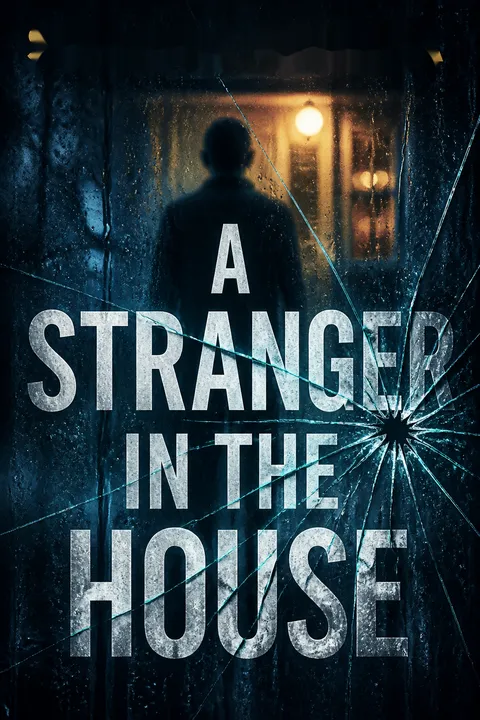


Plot Summary
Prologue
A woman bursts from an abandoned restaurant and drives as if the night itself is pursuing her. She tears through red lights, swerves around crossing cars, and loses control at an intersection. The car jumps the curb and strikes a utility pole. The glimpse gives no name and no explanation, only the terrible speed of an escape that ends in wreckage.
The opening makes flight visible before it makes its cause intelligible. The woman’s reckless driving can look like guilt, terror, or simple panic, and the wreck interrupts any easy judgment. By withholding her identity and the event inside the restaurant, the novel turns the crash into a question rather than an answer. The sequence also establishes a central tension: outward evidence is vivid, but motive remains inaccessible. Readers begin with the same problem facing the investigators and Karen’s husband, Tom. They have consequences in plain sight, yet no trustworthy account of what produced them.
Supper Left Mid-Slice
Tom Krupp returns to his quiet suburban home and finds Karen missing, though she had been preparing dinner. Her purse and phone remain inside, the front door is unlocked, and the tomato on the cutting board is only half sliced. He calls her friends, then contacts emergency services when no one can explain her absence.
Officer Fleming arrives with news of a crash in a dangerous part of the city. Karen’s red Honda has hit a utility pole after running lights and swerving through traffic. Tom cannot reconcile the location or the reckless driving with the careful wife he knows. The car is hers, but the unidentified injured driver may not be. The uncertainty sends him to the hospital.
The domestic scene is built from small violations of routine: an unlocked door, an abandoned meal, a missing phone. These details matter because Tom’s knowledge of Karen depends on habits, not verified history. His first response is not suspicion but an attempt to restore the ordinary explanation, that she ran a brief errand and will return. The crash overturns that expectation while preserving an even more unsettling possibility: perhaps the driver was someone else. The novel begins by making intimate familiarity feel like evidence, then showing how quickly that evidence can fail when a person vanishes from the life their spouse thought he understood.
A Name in the Fog
At Mercy Hospital, Tom identifies Karen by the bloodied clothes and wedding jewellery removed before surgery. Doctors find a serious concussion, a broken nose, and bruises, but no bleeding in her brain. When she wakes, she cannot remember leaving home or driving.
Tom wants an explanation as much as the police do, yet the doctor warns that memory loss can follow head trauma. Karen’s friend Brigid Cruikshank visits, offering familiar company while Tom tries to manage the questions around the accident.
Later, Dr Fulton tells Karen that she repeatedly uttered the name Robert while disoriented. Karen denies knowing anyone by that name and asks the doctor not to mention it to Tom. Her first deliberate concealment appears before she understands what she is hiding.
A Body in the Restaurant
Several days after the crash, three local boys enter the abandoned restaurant where they sometimes gather and find a man shot in the face and chest. They steal his wallet, phone, watch, ring, belt, and shoes, then leave without reporting the body. Detective Rasbach studies the scene and recognizes an execution rather than a simple robbery.
The autopsy places the killing near the night Karen crashed her car. Rasbach checks recent police reports and finds the red Honda’s collision close to the restaurant and within the likely time of death. He brings the case to Officers Fleming and Kirton, learning that Karen was driving fast through the same area and claims to remember nothing. The traffic investigation becomes a homicide inquiry.
Pink Gloves, Red Flags
Rasbach’s team finds pink rubber dishwashing gloves near the restaurant, run over by a car with tyres matching the kind on Karen’s wrecked Honda. When Rasbach and Detective Jennings visit the Krupps, they tell Karen and Tom that a man was shot at close range and that the car ties Karen to the area.
Karen denies recognizing the victim and says the gloves are not hers, though she knows their distinctive pattern and cannot find the household pair. Tom backs her denial, despite knowing it is false.
The detectives leave without an arrest, but Rasbach now suspects the couple are concealing something. Karen hires criminal lawyer Jack Calvin, who tells her not to answer police questions. The evidence turns the crash into a possible escape from a crime scene.
The Call Before Flight
Rasbach finds that Karen received a call on the house phone at 8:17 on the night of the crash, placed from an untraceable burner. Neighbours saw her leave alone moments later, rushing from the house without her purse or phone. A background check on her supposed maiden name, Karen Fairfield, yields almost no record before she arrived in New York.
Meanwhile, Brigid tells Tom that a dark-haired stranger had been searching around the Krupp home and claimed to know Karen from another life. The discovery unsettles Tom, who begins to wonder whether his wife invented her past. He also admits to his brother Dan that he once had a brief affair with Brigid, a secret he has kept from Karen. Private history now threatens to become evidence.
The Restaurant Door
Tom drives Karen to the abandoned restaurant, hoping the location will return her memory. Nothing comes back while they stand inside, but later, at home, the phone ringing triggers a fragment. Karen remembers a man from her former life calling her by another name and directing her to the restaurant. She recalls taking pink gloves and a hidden handgun, then driving there and approaching the back door.
The memory stops at the threshold. Karen has not told Tom what returned, and she still cannot say what happened inside. Her terror is now attached to a specific person and place, though the crucial act remains outside her grasp. The investigation has become personal before she can decide what truth to share.
Georgina’s Confession
When Rasbach asks Karen to come to the station, she begins packing a bag. Tom returns early and catches her preparing to leave, forcing her to explain what she remembers. She says her real name is Georgina Traynor and that Robert Traynor, her former husband, abused and threatened her in Las Vegas. She describes faking her death at the Hoover Dam, taking the identity Karen Fairfield, and building a new life with Tom.
Robert had found her and threatened Tom, she says, so she took a gun and gloves to confront him. She cannot remember the shooting and insists she did not plan to kill him. Tom believes her enough to stay, and they bring the account to Calvin, who warns that the evidence could still lead to a murder charge.
Brigid Saw the Escape
Rasbach identifies the victim as Robert Traynor, and police arrest Karen for his murder. During the investigation, Brigid tells Tom that she followed Karen to the restaurant, heard three shots, then watched her run out wearing pink gloves. Brigid says she entered afterward and found the body. Rather than go to police, she uses the account to pressure Tom into sleeping with her, promising silence in exchange.
Tom gives in while drunk and frightened, then faces Karen at the jail and tells her what Brigid claims to have witnessed. Karen doubts Brigid’s account, but the detail about the gloves is hard to dismiss. The witness who might clarify the crime has instead made herself part of the couple’s crisis.
The Gun in the Garage
After Brigid calls in anonymous tips directing police toward the Krupp property, Rasbach obtains a search warrant. Officers find a handgun hidden in a garage toolbox, and ballistics testing confirms it killed Robert.
Tom insists the weapon was not there when he searched the house after Karen’s crash, so someone must have planted it. Karen adds that Brigid followed her that night and may have taken the gun from the parking lot. She also learns that Tom once had an affair with Brigid and slept with her again after the arrest.
At work, Tom’s firm suspends him without pay because of the murder charge. The gun strengthens the case against Karen while creating a new suspect whose motives now include obsession, jealousy, and possible evidence tampering.
Fingerprints Across the House
Fingerprint technicians find Brigid’s prints throughout the Krupp home, including Karen’s bedroom and personal belongings, and on the restaurant’s back door. Neighbours also place Brigid driving after Karen on the night of the murder.
Karen gives police a new account, claiming Robert was alive when she fled and Brigid took the dropped gun and shot him. Brigid denies planting the weapon, then acknowledges following Karen and says she saw Karen leave after the shots. Each woman accuses the other, while Tom confirms Brigid’s affair and blackmail.
The district attorney concludes that the gun, Brigid’s presence, and her access to the house create reasonable doubt. The murder charge against Karen is dropped, though the investigation cannot establish which woman killed Robert.
A Home Under Watch
Released from jail, Karen returns to Tom and the house on Dogwood Drive. They change the locks, install an alarm, and obtain a restraining order against Brigid. Tom finds work at another accounting firm, while Brigid’s husband Bob leaves after learning how far her fixation on the Krupps had gone.
Karen and Tom promise to stop lying to one another, though the promise rests on the account Karen gave police rather than a settled explanation of Robert’s death. They still live across from Brigid, who watches them from her window and refuses to let go. Their marriage resumes, but ordinary comforts now exist beside security routines and the knowledge that their closest neighbour entered their home repeatedly.
The Truth on the Train
As Karen rides toward New York, her memory is complete and her private account overturns the story she gave Tom and the police. Robert was not the abusive husband she described. She married him for access to the money he laundered through his antiques business, learned the safe combination, and stole more than two million dollars before faking her death.
She had prepared a gun, gloves, and a battered-wife history in case Robert found her. At the restaurant she intended to kill him, but hesitated when he laughed; when he lunged, she fired three times. Her crash and Brigid’s planted gun nearly exposed her, yet the conflicting evidence freed her. Across the street, Brigid knits baby clothes and plots another future with Tom.
Analysis
A Stranger in the House turns the familiar promise of domestic intimacy into an evidentiary problem. Tom believes that shared routines, a well-kept home, and years of affection mean he knows Karen. The crash exposes how little those signs can prove. Karen’s hidden identity is not simply a secret biography; it is a deliberate instrument, shaped to make her difficult to trace and easy to mistake for someone harmless. Brigid creates a darker mirror of the same impulse. She studies the Krupps’ home and habits until observation becomes a fantasy of possession, confusing access with belonging.
The novel’s mystery is sustained by competing accounts rather than a single withheld clue. The gloves, the gun, the fingerprints, and the phone call are all concrete, but their meanings shift as the people connected to them reveal their motives. Rasbach can assemble a persuasive theory, yet the legal system requires more than persuasive suspicion. The dropped charge is therefore not a clean triumph of justice. It is the consequence of evidence compromised by Brigid’s interference and Karen’s ability to construct a defensible story.
The ending sharpens the book’s interest in self-invention. Karen’s account of abuse persuades Tom and helps her escape prosecution, while the final revelation shows that sympathy itself has been recruited into her plan. This does not make Robert’s death emotionally simple: Karen had real reason to fear being found, even though her claimed history was false. The reader must separate her vulnerability from her innocence, and her capacity for love from her capacity for calculation. Tom’s devotion survives because he mistakes trust for knowledge, while Brigid’s longing becomes dangerous because she mistakes attention for love. The house remains the story’s most revealing object: a place each woman enters imagining a different life, and a place where the boundary between private sanctuary and intrusion repeatedly fails.
Review Summary
A Stranger in the House received mixed reviews. Many readers found it entertaining and suspenseful, with unexpected twists. However, some felt the plot was predictable and the characters unlikeable. Critics praised Lapena's writing style and pacing but noted the book relied heavily on common thriller tropes. The amnesia plot device and unrealistic police work were points of contention. Overall, readers who enjoyed fast-paced psychological thrillers found it satisfying, while others felt it lacked depth compared to Lapena's previous work.
People Also Read










Characters
Karen Krupp
The careful self-inventorKaren appears to be a private, orderly woman whose life with Tom is built around carefully maintained routines and a comfortable home. She keeps her past to herself, avoids drawing attention, and seems to prefer control over spontaneity. The crash leaves her unable to account for a night that has abruptly become the centre of her life, while her silence makes her difficult for others to read. Karen’s guardedness is not simple coldness: it reflects a person who treats personal information as something that can be dangerous when placed in the wrong hands. Her relationships with Tom and Brigid expose different sides of that reserve, from marital intimacy to the trust she believes she has found in a neighbour.
Tom Krupp
The loyal, uncertain husbandTom is an accountant who values steadiness, professional competence, and the small rituals of married life. He expects honesty to be the natural currency of intimacy, so his wife’s unexplained behaviour unsettles not only his trust in Karen but his confidence in his own judgment. He wants to protect her, yet fear makes him alternately defensive, suspicious, and eager to believe the explanation that will preserve their marriage. His concealed history with Brigid shows that he too has relied on silence when truth seemed inconvenient. Tom is not a detective by temperament; he responds to crisis emotionally and often too late, discovering that loyalty without clear knowledge can become a form of helplessness.
Brigid Cruikshank
The watchful neighbourBrigid lives across the street from the Krupps and becomes Karen’s closest local friend. She knits, maintains a popular craft blog, and spends long stretches at her picture window observing the neighbourhood. Her unfulfilled hope for a child and growing distance from her husband leave her with a great deal of unsatisfied attention, which she pours into Karen and Tom’s household. Brigid wants intimacy and significance, but she often understands friendship as a claim on another person rather than a relationship between equals. Her warmth can feel genuine, yet her fascination with the Krupps gives that warmth an edge. She is observant, emotionally hungry, and capable of mistaking proximity for belonging.
Detective Rasbach
The patient case-builderRasbach is a homicide detective who builds his case from timelines, physical traces, and carefully tested assumptions. He is composed in interviews and skilled at using silence, questions, and pressure to reveal what witnesses avoid saying. His confidence can make him seem certain before the evidence truly warrants certainty, but he understands that a compelling theory is not the same as proof. Rasbach’s sympathy for people endangered by abusive partners complicates his work without replacing professional skepticism. He wants the case solved, yet his role requires him to separate what he suspects from what a court can establish. That tension makes him both an investigator and a measure of the limits of investigation.
Jack Calvin
The guarded defense lawyerCalvin represents Karen as the police investigation grows from reckless driving into murder. Blunt, practical, and alert to legal exposure, he repeatedly tells his client to stop speaking without counsel and to distinguish what she knows from what she assumes. He investigates her account rather than accepting it as a matter of faith, including travelling to Las Vegas to learn about her earlier life. Calvin’s steadiness gives Karen and Tom a procedural anchor when emotion threatens to take over. He cannot promise an outcome, but he understands how to create room for doubt and how easily a client’s own words can narrow that room.
Robert Traynor
The unseen business connectionRobert is a Las Vegas antiques dealer whose identity and history become central to the homicide investigation. His work is connected to questionable financial dealings, and his appearance in the case forces investigators to look beyond Karen’s suburban life. For much of the story he is known through evidence, recollections, and the reactions he provokes in other people. That distance makes him difficult to assess: each account of him serves a purpose, whether to explain fear, justify a choice, or build a legal defense. Robert’s absence from the present action does not make him passive; the secrets attached to his life continue to shape events.
Dan Krupp
Tom’s candid brotherDan is Tom’s younger brother and one of the few people Tom turns to when the police investigation overwhelms him. He listens without the emotional entanglement that clouds the Krupps’ household and pushes Tom to tell the police the truth about his whereabouts. Dan’s practical directness gives Tom a brief external perspective, even when it cannot resolve the central mystery. Their relationship also reverses their usual pattern of support, as Tom, normally the more dependable sibling, relies on Dan while his marriage and career unravel.
Bob Cruikshank
Brigid’s withdrawn husbandBob owns a growing chain of funeral homes and spends much of his time at work or professional functions. He and Brigid have been strained by infertility and by their different ways of handling grief: he retreats into routine, while she remains emotionally restless. Bob is not closely involved in the murder investigation, but his marriage helps explain the loneliness Brigid carries into her friendship with Karen. His practical steadiness is also limited; he knows how to support grieving clients better than he knows how to reach his own wife.
Officer Fleming
The first responding officerFleming informs Tom about Karen’s crash and initially handles the accident investigation with tact. He recognizes that the circumstances do not fit the account of an ordinary suburban drive, and he asks questions about the Krupps’ marriage without treating suspicion as proof. His early involvement connects the traffic case to Rasbach’s homicide investigation. Fleming’s calm manner contrasts with Kirton’s more cynical assumptions about Karen.
Detective Jennings
Rasbach’s investigative partnerJennings works alongside Rasbach, helping gather records, interview witnesses, and follow up on leads. He is observant and willing to consider alternative explanations, though he sometimes speculates beyond what the evidence can support. His presence gives Rasbach a colleague with whom to test theories rather than simply trust his instincts. Jennings also helps the investigation move from the unidentified body to the competing accounts surrounding the Krupps.
Dr Fulton
Karen’s concussion doctorDr Fulton treats Karen after the collision and explains that her concussion can cause temporary memory loss. He monitors her recovery and offers the medical perspective that keeps the police from easily dismissing her condition as an act. His recollection of Karen repeating a name becomes an early clue that her blank memory may conceal a particular past.
Duncan Mackie
The young pawnbroker’s customerDuncan is a fourteen-year-old who joins two friends in entering the abandoned restaurant after the killing. He takes jewellery from the dead man and later tries to pawn some of it. His actions help the police identify the victim, even though he did not commit the murder. Duncan illustrates how a careless act after a crime can still alter the course of an investigation.
Stacy Howell
A shelter counsellorStacy Howell counsels women at the Open Arms shelter in Las Vegas. She remembers a client who sought help while facing a frightening marriage and gives Calvin information about the support the woman received. Stacy represents a professional effort to help people whose options can be dangerously limited, while acknowledging that legal protections do not always make someone safe.
Plot Devices
Concussion amnesia
A fractured accountKaren’s head injury leaves her unable to recall the drive, the meeting at the restaurant, or the events immediately surrounding the crash. The missing memory serves as a genuine medical consequence and as the central interpretive problem for Tom, the police, and Karen herself. Each person gives the blank a different meaning: Tom hopes it will resolve, Rasbach suspects it may be convenient, and Karen fears what may return. The device delays a complete account while allowing physical evidence and conflicting testimony to accumulate. Its final significance is complicated by the revelation that Karen’s eventual explanation to others remains deliberately false.
The burner-phone call
An untraceable summonsA call reaches the Krupp landline shortly before Karen leaves home, but it comes from a disposable phone that investigators cannot trace. The timing gives Rasbach a clear investigative lead, while the unknown caller leaves the call’s purpose open to competing theories. Karen’s later memory connects it to someone from her former life, but that information does not immediately settle what happened at the restaurant. The phone is an efficient thriller mechanism because it offers precise timing without an identifiable source, turning a small record in a phone log into the hinge between Karen’s domestic present and a hidden past.
Pink rubber gloves
Evidence with two ownersThe distinctive gloves found near the crime scene appear to connect Karen to the restaurant, and tyre impressions suggest her car drove over them. They also help Rasbach infer preparation, since gloves can conceal traces. Yet the gloves do not establish who wore them or who fired the weapon. As the investigation widens, their presence becomes vulnerable to another explanation: someone else may have been at the scene and used the evidence to frame Karen. The gloves therefore shift from a simple incriminating clue into a symbol of the book’s larger problem, the distance between being present, being prepared, and being guilty.
Karen’s assumed identity
A life built from absenceKaren Fairfield’s thin public record makes Rasbach suspect that her biography is constructed. The investigation eventually links that identity to a former life in Las Vegas and explains why Karen has few old connections, little personal history, and a strong instinct for disappearing. The false identity gives Karen a new beginning but also makes ordinary police scrutiny dangerous: any serious inquiry can uncover the person she used to be. It also raises a difficult distinction between reinvention as escape and reinvention as fraud. The device alters the meaning of Karen’s privacy, turning an apparent personality trait into a deliberate means of control.
The planted handgun
A weapon that implicates twicePolice find the murder weapon in the Krupp garage, and ballistics confirm that it killed Robert. The discovery seems to strengthen the case against Karen, but Tom knows the weapon was absent when he searched the house. Fingerprints place Brigid both inside the Krupp home and at the restaurant, making it plausible that she moved the gun. Her actions create evidence against Karen while also placing Brigid under suspicion. The weapon forces the district attorney to confront two viable suspects and a compromised chain of events. It does not solve the murder; it makes a confident prosecution impossible.
FAQ
Synopsis & Basic Details
What is A Stranger in the House about?
- Wife's Mysterious Disappearance: The story begins with Karen Krupp disappearing from her home, leaving behind a seemingly normal life and a bewildered husband, Tom.
- Car Accident and Amnesia: Karen is found after a car accident, suffering from amnesia, unable to recall the events leading up to the crash. This sets the stage for a mystery surrounding her actions.
- Unraveling Secrets: As the story progresses, secrets about Karen's past and the events of that night are slowly revealed, creating a suspenseful narrative.
Why should I read A Stranger in the House?
- Suspenseful Mystery: The novel offers a compelling mystery with twists and turns that keep the reader guessing about Karen's true motives and past.
- Complex Characters: The characters, especially Karen and Brigid, are multi-layered, with hidden motivations and complex relationships that add depth to the story.
- Exploration of Deception: The book delves into themes of deception, identity, and the lengths people go to protect themselves, making it a thought-provoking read.
What is the background of A Stranger in the House?
- Suburban Setting: The story is set in a seemingly idyllic suburban neighborhood, which contrasts sharply with the dark secrets and dangerous events that unfold.
- Psychological Thriller: The novel is a psychological thriller, focusing on the inner turmoil and hidden motivations of its characters, rather than relying on external factors.
- Contemporary Issues: The book touches on contemporary issues such as domestic abuse, identity theft, and the impact of secrets on relationships.
What are the most memorable quotes in A Stranger in the House?
- "She doesn't belong here.": This quote from the prologue foreshadows Karen's hidden past and her feeling of being out of place in her current life.
- "You never know with people.": Officer Fleming's observation highlights the theme of hidden secrets and the deceptive nature of appearances.
- "I love you. But I'm scared.": Tom's confession to Karen encapsulates the emotional turmoil and the breakdown of trust in their relationship.
What writing style, narrative choices, and literary techniques does Shari Lapena use?
- Multiple Perspectives: Lapena employs multiple points of view, shifting between characters to create suspense and reveal different facets of the story.
- Foreshadowing and Red Herrings: The author uses subtle foreshadowing and red herrings to mislead the reader and create a sense of unease and anticipation.
- Fast-Paced Plot: The narrative is fast-paced, with short chapters and cliffhangers that keep the reader engaged and eager to uncover the truth.
Hidden Details & Subtle Connections
What are some minor details that add significant meaning?
- The Unlocked Door: Karen's habit of always locking the door makes the fact that she left it unlocked on the night of the accident a significant detail, suggesting a state of panic or urgency.
- The Pink Rubber Gloves: The mention of pink rubber gloves, seemingly insignificant, becomes a crucial piece of evidence linking Karen to the crime scene.
- The Perfume Stopper: The detail of the perfume stopper being removed from the bottle foreshadows Brigid's intrusion and obsession with Karen's life.
What are some subtle foreshadowing and callbacks?
- Brigid's Window Watching: Brigid's habit of watching the Krupps' house from her window foreshadows her obsessive nature and her eventual involvement in the events.
- Tom's Late Work Hours: Tom's frequent late work hours, initially presented as a normal part of his job, later become a point of suspicion and a source of tension in his relationship with Karen.
- Karen's Tidiness: Karen's meticulous nature and her habit of keeping things in order are subtly highlighted, making the discovery of her untidy drawer a sign that something is amiss.
What are some unexpected character connections?
- Tom and Brigid's Past: The revelation of Tom and Brigid's past affair adds a layer of complexity to their interactions and creates a sense of unease and betrayal.
- Karen and Robert's History: The connection between Karen and Robert, her abusive ex-husband, is a central plot point, revealing the true nature of her past and her reasons for living under a false identity.
- Brigid's Obsession: Brigid's obsession with Tom and her jealousy of Karen create an unexpected and dangerous dynamic, driving much of the conflict in the story.
Who are the most significant supporting characters?
- Brigid Cruikshank: As the neighbor with a hidden obsession, Brigid plays a crucial role in the plot, acting as both a friend and a threat to Karen.
- Detective Rasbach: The relentless detective drives the investigation forward, uncovering the secrets and lies that surround Karen and her past.
- Jack Calvin: Karen's lawyer provides a sense of stability and guidance, helping her navigate the legal complexities of her situation.
Psychological, Emotional, & Relational Analysis
What are some unspoken motivations of the characters?
- Karen's Fear of Exposure: Karen's primary motivation is to protect her new identity and her life with Tom, leading her to conceal her past and make desperate choices.
- Brigid's Desire for Tom: Brigid's actions are driven by her obsessive desire for Tom and her jealousy of Karen, leading her to manipulate and betray those around her.
- Tom's Need for Truth: Tom's unspoken motivation is to understand the truth about his wife and their relationship, even if it means confronting painful realities.
What psychological complexities do the characters exhibit?
- Karen's Trauma and Paranoia: Karen's past trauma and fear of her ex-husband lead to paranoia and a constant state of anxiety, influencing her actions and decisions.
- Brigid's Obsessive Tendencies: Brigid's obsessive nature and her inability to accept rejection drive her to extreme measures, highlighting her psychological instability.
- Tom's Internal Conflict: Tom struggles with conflicting emotions, torn between his love for Karen and his growing distrust of her, showcasing his internal turmoil.
What are the major emotional turning points?
- Tom's Discovery of Karen's Past: The revelation of Karen's false identity and her past marriage is a major emotional turning point for Tom, shattering his trust and forcing him to question everything he thought he knew.
- Karen's Memory Return: Karen's gradual recovery of her memory is an emotional turning point, as she is forced to confront the terrifying events of that night and her own actions.
- Tom's Betrayal: Tom's affair with Brigid, while Karen is in jail, is a major emotional turning point, highlighting the breakdown of trust and the fragility of their relationship.
How do relationship dynamics evolve?
- Karen and Tom's Trust Erosion: The relationship between Karen and Tom evolves from one of love and trust to one of suspicion and uncertainty, as secrets and lies come to light.
- Karen and Brigid's Friendship Breakdown: The friendship between Karen and Brigid deteriorates as Brigid's obsession and betrayal are revealed, highlighting the destructive nature of jealousy and deceit.
- Tom and Brigid's Manipulation: The relationship between Tom and Brigid is characterized by manipulation and control, as Brigid uses her knowledge of their past to exploit Tom's vulnerability.
Interpretation & Debate
Which parts of the story remain ambiguous or open-ended?
- Karen's True Feelings: The extent of Karen's genuine feelings for Tom remains somewhat ambiguous, as her actions are often driven by self-preservation and a desire to protect her new life.
- Brigid's Motives: While Brigid's obsession with Tom is clear, the full extent of her motivations and her capacity for violence remain open to interpretation.
- The Nature of Truth: The novel leaves the reader questioning the nature of truth and the reliability of memory, as different characters offer conflicting accounts of the same events.
What are some debatable, controversial scenes or moments in A Stranger in the House?
- Tom's Affair with Brigid: Tom's decision to sleep with Brigid while Karen is in jail is a controversial moment, raising questions about his loyalty and his moral compass.
- Karen's Actions at the Restaurant: The ambiguity surrounding Karen's actions at the restaurant, whether she intended to kill Robert or acted in self-defense, is a point of debate.
- Brigid's Intentions: The extent of Brigid's culpability in the murder and her true intentions towards Karen and Tom are open to debate, as she presents herself as both a victim and a perpetrator.
A Stranger in the House Ending Explained: How It Ends & What It Means
- Karen's Freedom: The ending sees Karen freed from the murder charge, but she is left to grapple with the consequences of her past and the breakdown of trust in her relationship with Tom.
- Brigid's Downfall: Brigid's actions ultimately lead to her downfall, as her manipulations and lies are exposed, leaving her isolated and alone.
- Uncertain Future: The ending leaves the reader with an uncertain sense of the future for Karen and Tom, as they must navigate the complexities of their relationship and the lingering effects of the secrets and lies that have come between them.
About the Author







Download PDF
Download EPUB
.epub digital book format is ideal for reading ebooks on phones, tablets, and e-readers.








