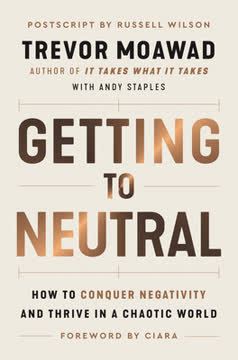
Key Takeaways
1. Embrace Neutral Thinking as Your Default
Positive thinking isn’t the most effective antidote to negativity. Neutral thinking is.
Beyond positive thinking. Traditional positive thinking, while well-intentioned, often fails when faced with harsh realities, leading to deeper despair. Neutral thinking offers a more robust alternative, acknowledging that negativity is detrimental but recognizing that forced positivity can be equally unhelpful, especially when unsupported by facts. It's about finding a middle ground that allows for clear, unbiased assessment.
Focus on facts. Neutral thinking is a method of decision-making that strips away biases and focuses solely on objective facts. It's non-judgmental and non-reactive, allowing for supreme calm and clarity in critical moments. This approach helps avoid the pitfalls of "magical thinking," where one believes things will improve simply by wishing them to be so, a lesson starkly highlighted during the COVID-19 pandemic.
The power of less negative. The core idea is that minimizing negativity is paramount. Research shows that "bad is stronger than good," meaning negative experiences affect us more deeply. By consciously eliminating negative self-talk and external negative inputs, you clear your mental "RAM," allowing your brain to process information more efficiently and prepare for productive action, rather than being dragged down by emotional extremes.
2. Downshift to Neutral in Crisis
What is the next thing I need to do?
Focus on the next. When faced with overwhelming adversity, such as a cancer diagnosis or a global pandemic, the natural instinct is to catastrophize and look at the daunting "big picture." Downshifting to neutral means consciously narrowing your focus to only the immediate, actionable next step. This prevents your imagination from running wild and creating unnecessary anxiety, allowing you to manage the situation one manageable piece at a time.
Strategic information control. In moments of crisis, it's crucial to control the flow of information you receive. Limiting exposure to overwhelming details, long-term prognoses, or speculative "what-ifs" helps maintain a neutral mindset. Instead, actively seek only the information necessary to execute the very next step, as exemplified by the author's approach to his cancer diagnosis, asking his doctor, "What do you need from me to execute?"
Create your normalcy. Adversity often disrupts routines and limits physical or mental activities, which can be deeply unsettling. To stay neutral, it's vital to actively create new routines and find ways to experience normalcy and joy, even if they differ from previous habits. This might involve adapting exercise, maintaining social connections, or finding small, empowering activities that remind you of your capabilities and resilience.
3. Determine Your Values to Guide Your Path
The truth is to find out the individual values that are important to you and live your life in adherence with them.
Values as your foundation. Your values are the core principles you prioritize, consciously or subconsciously, that steer your decisions and ultimately define who you become. They are not inherently right or wrong but serve as your personal baseline. Becoming conscious of these values is critical to breaking cycles of "repetitive actions" and ensuring your life aligns with what truly matters to you.
Aligning goals and behaviors. A common pitfall is having goals that don't align with your true values, leading to frustration and a lack of sustained effort. The "alignment assessment" exercise helps you:
- Identify your top five values.
- List five corresponding goals.
- Compare current behaviors to ideal behaviors.
This process reveals discrepancies, prompting you to either adjust your goals to fit your values or re-evaluate what you genuinely consider important.
Truth over delusion. Values act as anchors, helping you collect facts and avoid self-delusion. If you value fitness but rarely exercise, neutral thinking forces you to confront that truth. This honest self-assessment, like a football team's "Tell the Truth Monday," is essential for making necessary adjustments to your habits and ensuring your actions consistently reflect your deepest convictions, whether in personal life or organizational culture.
4. Build Success Through Consistent Habits
First you form your habits, then they form you.
Habits define you. Your daily habits are the tangible actions that translate your values into reality, determining whether you achieve your goals or fall short. Success isn't accidental; it's launched by values, built by behaviors, and sustained by daily, consistent action. Even seemingly insignificant habits, like making your bed, can create a ripple effect, fostering a sense of accomplishment and encouraging further productive tasks.
The "All The Time" principle. Consistency is paramount. As the author's father's acrostic "HAVE A BALL ALL THE TIME" (misspelled for emphasis) suggests, habits must be executed "all the time," not just occasionally. This unwavering commitment ensures that your behaviors continuously reinforce your desired identity and propel you toward your objectives, turning possibilities into probabilities through sheer repetition.
Aggregate of marginal gains. Top performers, like baseball legend Ichiro Suzuki, demonstrate that consistent, small efforts accumulate into massive improvements over time. Ichiro's meticulous routines—oiling his glove, hitting 500 pitches daily, elaborate stretching—were not about grand gestures but about "trying a bit harder over and over again." This philosophy underscores that "behaviors really have to supersede your feelings," pushing you to act even when motivation wanes.
5. Starve Distractions, Feed Your Focus
What we let in, we compete against.
The attention economy. In the 21st century, we are constantly bombarded by distractions, particularly from the "Negativity Industrial Complex" of media and social platforms. This relentless competition for our attention, predicted by physicist Michael Goldhaber, drains our mental "battery" and prevents deep reflection or meaningful engagement. To maintain focus, we must actively choose what inputs we allow into our minds.
Unplug from negativity. Research consistently shows that consuming excessive negative news or social media significantly increases anxiety and depression. Our brains are wired to prioritize "threat-relevant" information, making negative stimuli stick more profoundly than positive ones. The solution is simple: "Just stop." Consciously disengage from doomscrolling, limit news consumption, and recognize that social media often presents an illusion of perfect lives, fostering insecurity.
Lock On/Lock Out. Effective focus isn't about forcing attention amidst chaos, but about eliminating the chaos first. The "Law of Substitution" states your mind can only sustain one dominant thought at a time. Therefore, to "lock on" to what matters, you must "lock out" everything else. This discipline, whether it's turning off your phone like golfer Will Zalatoris during the Masters or using checklists like Serena Williams during matches, conserves mental energy and ensures your focus is directed where it's most impactful.
6. Prepare Mentally for Every Big Moment
Part of learning to live neutrally is learning to create the appropriate mindset before the big event instead of waiting for the real-world version of being down 14 in the second quarter to get yourself into neutral.
Proactive mental conditioning. Just as athletes prepare physically for competition, we must mentally prepare for our own "big moments," whether a presentation, a job interview, or a personal challenge like surgery. This "pregame" process involves consciously shaping your mindset before stress hits, making it easier to downshift to neutral when adversity inevitably arises. It's about being ready to perform, not just react.
Leverage personal anchors. Effective pregame preparation draws on personal experiences and trusted resources. This could involve:
- Reviewing past successes to build confidence (like Jake Fromm watching his own highlights).
- Seeking advice from those who've navigated similar challenges (Trevor consulting Michael Johnson and Mark Herzlich).
- Using motivational media (Trevor watching Cinderella Man before surgery).
- Engaging in spiritual practices or physical activity to center yourself.
These anchors provide a mental fallback, reminding you of your capabilities and the plan ahead.
Control the controllable. The pregame mindset extends to managing every detail within your influence. This includes physical readiness (nutrition, sleep, exercise), environmental control (like ensuring comfort during a medical procedure), and clear communication to minimize unexpected stressors. By meticulously preparing, you enter the moment with a sense of control and purpose, allowing you to perform optimally even when circumstances are challenging.
7. Assemble Your Personal Dream Team
Do you have an Alex Caruso in your life? Would you even know how to measure whether you did?
The power of collective consciousness. No one navigates life's challenges alone. Just as sports teams and businesses thrive on strong rosters, individuals need a supportive "dream team" to help them carry weight and drive toward common goals. This team isn't just about numbers; it's about having the right people in the right roles, offering complementary skills and unwavering support.
Strategic roster building. When facing significant adversity, like a health crisis, it's crucial to deliberately evaluate your personal team. This involves:
- Identifying who can genuinely help without being burdened.
- Seeking out "Top Guns" in relevant fields (e.g., Lawrence Frank connecting Trevor with Dr. Krems).
- Prioritizing those who speak your "language" and understand your neutral mindset.
- Including individuals who inspire you, share your faith, and offer unconditional love.
This selective approach ensures your energy is conserved for the fight, not for managing others' reactions.
Characteristics of a winning team. Your ideal support system comprises individuals who:
- Are not self-focused; they ask, "How can I help?"
- Are connectors, linking you to vital resources.
- Understand your communication style and can pull you back to neutral.
- Are aspirational figures you admire.
- Share your faith, offering spiritual strength.
- Provide unconditional love and presence.
- Are willing to be "free agents" stepping in when needed.
Regularly assessing your "depth chart" ensures you have the right support system in place before adversity strikes.
8. Lead and Coach Yourself and Others Effectively
Find what people do well, and then encourage them to do more.
Leadership as coaching. Whether managing employees, guiding children, or leading yourself, the most effective approach is that of a coach: someone who accepts responsibility to develop, challenge, and support. This involves identifying strengths, fostering growth, and providing the tools and guidance necessary for individuals to perform at their best, rather than simply dictating tasks.
Adaptability is key. Great coaches and leaders, like Nick Saban, are not rigid; they constantly adapt their philosophies and methods to changing circumstances and the diverse needs of their team members. This means understanding that different generations or personalities require different motivational styles, moving beyond a "one-size-fits-all" approach to meet people where they are and tailor messages for maximum impact.
Forensic self-evaluation. To coach others effectively, you must first coach yourself. This requires honest self-assessment, identifying your own strengths and weaknesses without judgment. When you make mistakes, instead of self-reprimand, approach it neutrally: examine the facts, understand the root cause, and determine the "next right step" for correction. This self-coaching builds resilience and models the behavior you expect from others.
9. Recognize There Is No Finish Line
We’re not meant to be stagnant. We constantly evolve, even after we think we’ve reached the pinnacle of our existence.
Life as "human becoming." The pursuit of specific outcomes, like a championship or a career milestone, can lead to a sense of emptiness once achieved, as experienced by coach Billy Donovan after his first national title. This is because life is a continuous process of "becoming," not a series of static "beings." True fulfillment comes from embracing constant evolution and focusing on the journey itself, rather than fixating on a finite finish line.
Process over outcome. Neutral thinking emphasizes that while goals are important for direction, the primary focus should always be on the process—the daily steps, habits, and efforts. Victories should be celebrated and defeats acknowledged, but neither should define your next moment. Each new challenge, even after significant success, requires a fresh approach, treating it as an entirely new experience rather than a continuation of the past.
Embrace continuous navigation. Just as a mountain climber doesn't stop at the first peak, life presents endless "mountains" to ascend, each requiring different routes and strategies. The mindset of "there is no finish line" encourages resilience, adaptability, and a commitment to ongoing growth. It means understanding that even after overcoming major challenges, new ones will emerge, and your ability to navigate them neutrally will be your greatest asset.
Last updated:
Similar Books