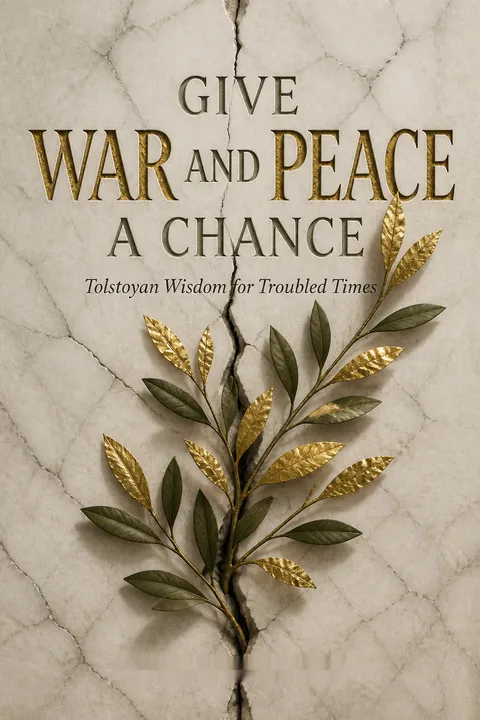


Key Takeaways
Read War and Peace for a way of seeing, not a tidy answer to life.
A novel as encounter. Kaufman presents Tolstoy’s epic as a guide to living amid upheaval, not a manual that settles every moral or political question. Set during the Napoleonic invasion and written amid Russia’s own social reforms, it follows people trying to find meaning while their world changes around them. Its sweeping cast and shifting focus resist neat conclusions because life itself rarely offers them.
Bring your whole attention. Tolstoy believed art should draw readers into an ongoing search. Kaufman’s own decades-long relationship with the novel illustrates the point: its meaning changed as his circumstances did. The book’s value lies less in agreeing with Tolstoy than in noticing more fully how people suffer, change, love, and keep living.
The book makes a persuasive case for fiction as a rehearsal space for ambiguity. Readers can hold conflicting motives in view without immediately reducing a person to a verdict, a useful counterweight to public argument that rewards certainty. Still, a novel’s emotional breadth is not proof that its account of history is accurate. Its strongest contribution is interpretive: it expands what readers can notice and question, rather than replacing evidence or practical judgment.
Make plans, then let reality overrule the map.
The map is not the ground. Before Austerlitz, Austrian general Weyrother presents a detailed battle plan. Fog, confusion, and missed movements make it useless. By contrast, Russian commander Kutuzov reads the changing situation and later accepts that Moscow cannot be defended. His strength is not a hidden master plan, but attention to what is actually possible.
Planning still matters. Tolstoy’s own novel began as a story about a returning Decembrist and changed titles and direction repeatedly before becoming War and Peace. The failed starts fed the finished work. Kaufman’s point is not to abandon preparation, but to stop treating a plan as a promise that reality must keep. Make a direction clear, then revise when events supply better information.
This resembles the distinction between strategy and execution in complex systems: a plan can coordinate attention, while feedback determines the next move. That is especially useful where conditions change faster than forecasts. The caution is that adaptability can become an excuse for drift. A plan still helps define priorities and responsibilities. Tolstoy’s lesson is better understood as disciplined responsiveness, not as a celebration of improvisation for its own sake.
Let imagination make the familiar strange enough to see clearly.
Fresh eyes expose habit. The literary term “making strange” describes Tolstoy’s way of presenting familiar things so readers notice them anew. A grand society party can resemble a machine, with its hostess keeping conversations running smoothly. The comparison reveals how polished manners may hide self-interest and anxiety.
Notice before judging. Pierre enters that party awkwardly, yet his openness lets him see more than the guests who believe they understand every social rule. Natasha’s untrained, spontaneous dancing similarly moves people because it feels connected to the world around her. Kaufman argues that Tolstoy’s unruly form, from French dialogue to philosophical detours, asks readers to loosen their expectations and look closely before sorting experience into familiar categories.
Defamiliarization can interrupt automatic perception, much as changing a camera angle reveals details lost in a familiar view. It is a powerful artistic method because it makes readers experience their assumptions rather than merely hear them criticized. But unfamiliarity is not the same as truth. A strange portrayal can distort, too. The useful practice is to ask what a new perspective makes visible, and what it leaves out.
Treat rupture as an opening, not proof your life is over.
Loss can interrupt autopilot. Nikolai Rostov gambles away 43,000 rubles, an enormous sum for his family, and returns home convinced that everything he values has collapsed. Then he hears his sister Natasha sing. For a moment, the music draws him beyond the shame and panic consuming him and reminds him that life contains more than this disaster.
A crisis is not a cure. Kaufman connects the scene to his own family’s financial loss, after which rediscovering music briefly widened his perspective and helped him reconsider his work. The point is not that suffering is good, or that every loss leads to growth. Rather, an upheaval can expose assumptions that once felt permanent and make room for a new response.
A sudden loss can loosen the stories people tell about security, identity, and control. Art, relationships, and sensory experience may help restore a broader perspective when abstract problem-solving stalls. Yet there is a danger in turning trauma into a required lesson. Many people need material support, time, and care before reflection is possible. The hopeful claim works best as an invitation to remain open, not an obligation to find a gift in pain.
Measure success by what remains after the applause fades.
More is not always better. In Tolstoy’s story about Pahom, a land-hungry peasant claims as much territory as he can walk around in a day. He makes it back to the starting point, then dies from exhaustion. The small plot needed for his grave is all he ultimately uses. Napoleon’s invasion offers a political echo: his army begins with 422,000 soldiers, but only about 10,000 remain when it leaves Russia.
Glory can narrow a life. Prince Andrei initially craves fame, until a battlefield injury makes the vast sky seem more real than his ambitions. Kaufman contrasts this with Captain Tushin, who finds purpose in doing difficult work well. Success becomes more than status when work connects a person to something beyond recognition or accumulation.
The stories challenge the assumption that visible achievement reliably measures a life’s value. Modern status systems often make comparison easy and purpose harder to articulate. A useful question is whether an ambition enlarges a person’s capacities and relationships, or merely raises the next benchmark. Still, ambition is not inherently empty, and financial security matters. The critique lands most clearly against success pursued without examining its costs or its destination.
Keep ideals high, but let experience revise your route.
Good intentions need contact with reality. Pierre joins the Freemasons hoping to improve himself and society. He then tries to ease the burden on peasants on his estates, but his managers mislead him, and some changes increase the peasants’ work rather than reduce it. His generous goal does not equip him to understand the system he is trying to change.
Hope can still matter. When Pierre visits Prince Andrei, his faith in human possibility challenges Andrei’s despair. Their debate does not settle the question, but Andrei begins to reconsider his own choices. Kaufman sees idealism as a direction, not a guarantee: without humility and attention, it can become naïve; without ideals, skepticism can harden into resignation.
The contrast anticipates a familiar problem in reform: interventions can produce unintended consequences when decision-makers lack local knowledge or fail to listen to those affected. Pierre’s intentions deserve respect, but good intentions cannot substitute for accountability. At the same time, Andrei’s skepticism illustrates how accurate criticism can become sterile if it rules out action in advance. The productive balance is aspiration joined to feedback, revision, and responsibility.
Stop chasing happiness long enough to enter the life at hand.
Attention can become joy. During a hunt, Nikolai Rostov is absorbed by the weather, dogs, horses, and the movement of a wolf. Kaufman connects this intense involvement to “flow,” a state of deep engagement in which attention is concentrated on the activity itself. Earlier, music had similarly drawn Nikolai out of despair after his gambling loss.
Happiness is not a permanent address. Tolstoy portrays joy as something that can arrive amid ordinary life, conflict, or effort, rather than as a prize earned after every problem is solved. Nikolai’s hunt is exhilarating, but it also involves killing animals. Kaufman’s point is the intensity of being fully present, not that every activity producing that intensity is morally admirable.
The account usefully separates momentary absorption from a lasting sense of well-being. Deep attention can make experience vivid, but it cannot answer every question about whether an activity is ethical or sustainable. That distinction matters in work, sport, and art: immersion may feel meaningful while serving harmful ends. The passage invites readers to notice what brings them fully into the present, then consider the consequences of that pursuit.
Love people as they are, not as your private ideal.
Care sees beyond appearances. Andrei loves an imagined version of Natasha, then retreats when the complications of real life emerge. Pierre, by contrast, comforts Natasha after her disastrous attempt to elope with Anatole, even though he loves her himself. Later, Andrei encounters Anatole wounded on the battlefield and feels compassion rather than revenge. Seeing another person’s vulnerability changes what seems possible.
Love does not excuse harm. Tolstoy’s own marriage to Sonya was long and deeply troubled, despite his powerful writing about compassion and intimacy. Kaufman uses that contradiction to resist treating the novelist as a model of conduct. Love, in the novel’s strongest moments, means recognizing shared human frailty, not pretending that hurtful behavior is acceptable.
The distinction between loving a person and loving an idealized image is relevant to friendship as much as romance. Curiosity about another person’s experience can soften reflexive blame without erasing accountability. That balance is essential: compassion should not become pressure to tolerate abuse or abandon boundaries. Tolstoy’s own failures strengthen the argument that moral insight in art does not automatically translate into virtue in private life.
Protect family bonds without mistaking endurance for a universal rule.
Family gives people roots. Princess Marya remains with her difficult father and helps raise her nephew, choosing a demanding family life over escape. Later, when war and financial trouble scatter the Rostovs, family members repeatedly rely on one another. Their bonds do not make them perfect, but they provide continuity while the world outside them changes.
Loyalty has limits. Kaufman argues that family can sustain people through hardship, while acknowledging that some relationships are too destructive to repair. Tolstoy’s own home life complicates his praise of family: he could celebrate domestic attachment in fiction while treating Sonya cruelly. The chapter’s strongest lesson is not that everyone must stay, but that family ties deserve thoughtful attention rather than automatic dismissal.
Family can function as a source of practical care, shared memory, and identity, especially when institutions fail. Yet ideals of loyalty can also trap people in dangerous relationships, and no literary celebration should erase that possibility. The useful distinction is between commitment that supports mutual flourishing and endurance demanded by power or guilt. Tolstoy’s contradictions make that distinction necessary, rather than weakening the value of family altogether.
Choose courage in the small moment when instinct says attack.
Heroism is not always a charge. In battle, Nikolai pursues a young French officer but hesitates before striking him hard. Seeing the frightened face of a boy, he recognizes a person rather than an enemy symbol. The military honors he receives do not resolve his discomfort; the pause itself reveals a more complicated idea of courage.
Act where help is needed. Later, Nikolai intervenes when peasants prevent Princess Marya from leaving her estate as French forces approach. He acts without a grand theory of heroism, responding to the immediate danger. Kaufman contrasts this with Moscow’s governor, who incites a crowd to kill a young prisoner to protect his own authority.
These scenes distinguish courage from the performance of courage. A pause can be morally active when it interrupts an automatic response, while decisive action can matter when someone is in immediate danger. The contrast also warns that appeals to public good can disguise personal fear or aggression. Still, spontaneous action is not always wise. Courage needs judgment as well as nerve, especially when power is unequal.
Keep mortality in view so ordinary life regains its weight.
The threat of death sharpens perception. Early in the novel, Nikolai believes he may be killed and suddenly notices the sky, river, and landscape with painful intensity. At Borodino, Andrei realizes how much he loves the earth and air as an explosive shell approaches. These moments show awareness of death making life feel immediate, not abstract.
Awareness is not mastery. Andrei often retreats into ideas about death and eternity instead of connecting with people around him. His sister Marya and Natasha, by contrast, offer simple acts of care that matter to the living. Kaufman argues that mortality can deepen attention, but he does not present grief or dying as tidy spiritual lessons.
Mortality can reorder priorities because it exposes how little time is guaranteed. But constant attention to death can also overwhelm people, and avoidance may be a reasonable coping strategy under severe stress. The practical value lies in occasional, honest reflection rather than forced meditation on loss. Andrei’s story adds an important counterpoint: insight about life is incomplete if it remains detached from the people who need care.
Stay with the search; no single theory contains a whole life.
Wisdom begins in the concrete. Captured during the French occupation, Pierre loses his wealth, freedom, and grand ambitions. A peasant soldier named Platon Karataev offers him food and quiet companionship. Their ordinary exchange helps Pierre recover a sense of connection and inner steadiness. He does not escape suffering; he finds a way to live within it.
Truth needs a wide lens. Tolstoy distrusted explanations that credit history to great leaders alone. War and Peace gives attention to soldiers, families, chance events, and private motives, while its shifting form resists one master explanation. Kaufman’s central claim is that truthful art holds these partial views together. The search matters more than claiming to possess the final answer.
Pierre’s change is grounded in bodily need and human contact, not in a polished theory. That gives the scene force without making captivity desirable or suffering redemptive by definition. The novel’s many perspectives also challenge single-cause accounts of history, though fiction cannot by itself establish what happened. Its achievement is to make complex lives imaginable, encouraging both empathy and intellectual humility.
Analysis
Kaufman’s central argument is that War and Peace offers an attitude toward living, not a portable doctrine. The novel’s people repeatedly discover that plans, identities, and convictions fail when tested against war, illness, money, desire, and death. Yet this instability is not presented as proof that life is meaningless. Meaning appears through attention, compassion, work, family, and the capacity to revise one’s understanding. Kaufman’s chapters make that case through memorable scenes: Nikolai hearing Natasha sing after losing a fortune, Pierre receiving food from a fellow prisoner, and Andrei recognizing his attachment to life as death approaches.
The book’s most productive tension is between agency and circumstance. Tolstoy doubts that individuals control history, but Kaufman’s examples show people making consequential choices inside conditions they did not choose. Nikolai’s hesitation before harming a French officer and his defense of Marya are small acts, not grand victories. This scale of responsibility avoids both heroic self-importance and helpless fatalism. It also leaves an unresolved question: if outcomes depend on forces beyond control, how should people distinguish wise acceptance from preventable passivity?
Kaufman is strongest when he lets contradiction remain visible. Tolstoy wrote beautifully about love and family while causing real suffering at home; Pierre means well but mishandles reform; intense happiness can arise in a hunt whose violence deserves scrutiny. These complications keep the lessons from becoming slogans. Still, the book’s defense of family loyalty and its preference for grounded, intimate life can understate unequal power and the need to leave destructive relationships. Its appeal is not that Tolstoy supplies universal answers, but that his art helps readers see more of the human situation before deciding what to do. In that sense, the novel’s vastness is not a barrier to its wisdom. It is the method: no single character, event, or theory gets to stand for the whole of life.
Review Summary
Give War and Peace a Chance receives mostly positive reviews, with readers praising Kaufman's engaging writing style and insightful analysis of Tolstoy's masterpiece. Many find the book helpful in understanding War and Peace's themes and characters, appreciating Kaufman's personal anecdotes and connections to modern life. Some criticize the inclusion of spoilers and occasional privileged perspective. Overall, readers feel the book makes War and Peace more accessible and inspires them to read or revisit Tolstoy's work.
People Also Read







Glossary
mir
Russian for peace and worldA Russian word that means both peace and world, or cosmos. Kaufman notes that the title War and Peace therefore carries an additional resonance for Russian readers: it can suggest war set against the whole shared world, not merely the absence of fighting. The word helps frame the novel’s movement between battle, domestic life, and society.
making strange
Renewing familiar perceptionA literary technique associated with the Russian Formalists. It presents ordinary objects, behaviors, or institutions in an unfamiliar way so readers notice them afresh. Kaufman uses the term for Tolstoy’s ability to make familiar social life appear newly visible, as when a polished gathering is described as a machine that must be kept running.
flow
Absorbed present-moment engagementA psychological term for intense involvement in an activity, during which attention is concentrated on what is happening and awareness of time or self may recede. Kaufman applies it to Nikolai Rostov’s absorption during a hunt and while listening to music. The state describes vivid engagement, not a guarantee that the activity itself is ethical.
decathexis
Withdrawal from earthly attachmentsA psychological term Kaufman uses for the detachment from ordinary worldly connections that may accompany acceptance of approaching death. He applies it to Andrei’s late state of mind. The term describes a process of withdrawal, but Kaufman cautions that detachment does not automatically amount to wisdom or emotional connection.
svoboda
Freedom from external constraintThe Russian word for freedom. In Kaufman’s account of Tolstoy’s distinction, svoboda refers to the freedom people imagine they possess to control the conditions and direction of their lives. Tolstoy treats that kind of control as limited because circumstances, other people, and history continually shape what happens.
volya
Will expressed in each momentThe Russian word for will. Kaufman explains Tolstoy’s distinction between volya and svoboda by emphasizing that people may not control the circumstances they encounter, but can still choose how to respond. That choice does not make a person master of history; it describes the limited agency available within conditions beyond personal control.
FAQ
What's Give War and Peace a Chance about?
- Exploration of Tolstoy's Wisdom: The book examines the timeless themes in Tolstoy's War and Peace, such as love, family, courage, and happiness, and connects them to contemporary issues.
- Personal Journey: Andrew D. Kaufman shares his personal experiences with Tolstoy's work, illustrating its impact on his life and understanding of human nature.
- Invitation to Engage: Kaufman encourages readers to engage deeply with War and Peace, viewing it as a profound exploration of the human condition rather than just a historical novel.
Why should I read Give War and Peace a Chance?
- Accessible Introduction: The book serves as an approachable guide to War and Peace, breaking down its complex themes and characters for easier understanding.
- Timely Relevance: Kaufman draws parallels between Tolstoy's characters' struggles and contemporary societal issues, making the book relevant for modern readers.
- Encouragement to Reflect: It invites readers to reflect on their own lives and the universal questions posed by Tolstoy, offering a thought-provoking reading experience.
What are the key takeaways of Give War and Peace a Chance?
- Life's Complexity: Kaufman emphasizes embracing life's contradictions and unpredictability, much like the narrative of War and Peace.
- Importance of Connection: The book highlights the significance of human connections and relationships in finding meaning in life.
- Pursuit of Truth: Kaufman reflects on Tolstoy's quest for truth and goodness, encouraging readers to seek their own truths for personal fulfillment.
What are the best quotes from Give War and Peace a Chance and what do they mean?
- “He who is happy is right!”: This quote suggests that true contentment comes from within and is not dictated by external circumstances.
- “To seek, always to seek.”: It reflects Tolstoy's philosophy of continuous exploration and personal growth through curiosity and openness.
- “Once we’re thrown off our habitual paths, we think all is lost; but it’s only here that the new and the good begins.”: This highlights the potential for transformation and new opportunities arising from life's disruptions.
How does Kaufman relate Tolstoy's themes to modern life?
- Contemporary Parallels: Kaufman connects the struggles of Tolstoy's characters with modern anxieties, such as war and societal change.
- Personal Reflection: He shares his own experiences, showing how Tolstoy's insights have influenced his understanding of happiness, love, and family.
- Encouragement to Engage: Kaufman urges readers to explore their own lives and values through Tolstoy's work, finding guidance for contemporary challenges.
What is the significance of the title Give War and Peace a Chance?
- Invitation to Explore: The title invites readers to delve into Tolstoy's masterpiece, encouraging them to look beyond its length and complexity.
- Duality of Themes: It reflects the tension between conflict and harmony in human existence, encouraging readers to consider these themes in their own lives.
- Hopeful Message: By using "give a chance," Kaufman suggests that engaging with Tolstoy's work can lead to personal growth and understanding.
How does Kaufman describe his personal journey with Tolstoy?
- Long-Term Relationship: Kaufman shares that his relationship with Tolstoy spans over twenty-five years, illustrating the profound impact on his life.
- Struggles and Discoveries: He reflects on his own struggles with understanding Tolstoy's work, mirroring the journeys of Tolstoy's characters.
- Transformation Through Engagement: Engaging deeply with Tolstoy's work has transformed Kaufman's perspective on life, love, and happiness.
What role does family play in War and Peace according to Kaufman?
- Central Theme: Family is a recurring theme, with the Rostov family exploring love, loyalty, and sacrifice.
- Emotional Depth: Interactions between family members reveal the complexities of love and conflict, relatable to readers today.
- Legacy and Continuity: Familial connections influence characters' identities and values, providing insight into the novel's broader themes.
How does Kaufman interpret Tolstoy's views on happiness?
- Complex Nature of Happiness: Kaufman explores Tolstoy's nuanced understanding of happiness as a deeper connection to life.
- Moments of Joy: He highlights specific moments in War and Peace where characters experience profound joy, encouraging readers to cherish such moments.
- Pursuit of Meaning: Happiness is closely tied to the pursuit of meaning and truth, leading to a more fulfilling existence.
What insights does Kaufman offer about love in War and Peace?
- Love as a Central Theme: Love is a driving force, shaping characters' actions and motivations.
- Complexity of Relationships: Kaufman discusses the complexities of love, reflecting the intricacies of human relationships.
- Transformative Power of Love: Love has the potential to transform individuals, leading to personal growth and deeper connections.
How does Kaufman connect Tolstoy's life to War and Peace?
- Personal Struggles: Kaufman draws parallels between Tolstoy's life experiences and the characters in War and Peace.
- Philosophical Reflections: Tolstoy's philosophical inquiries about life, death, and morality are woven into the narrative.
- Cultural Context: Kaufman situates Tolstoy within the historical and cultural landscape of 19th-century Russia.
How does Give War and Peace a Chance enhance the reading experience of War and Peace?
- Contextual Understanding: Kaufman's analysis provides valuable context, helping readers navigate the complexities of Tolstoy's narrative.
- Thematic Exploration: By breaking down the novel into thematic chapters, readers can engage with key concepts more easily.
- Personal Connection: Kaufman's reflections create a relatable framework, encouraging readers to reflect on their own lives in relation to the themes.
Download PDF
Download EPUB
.epub digital book format is ideal for reading ebooks on phones, tablets, and e-readers.








