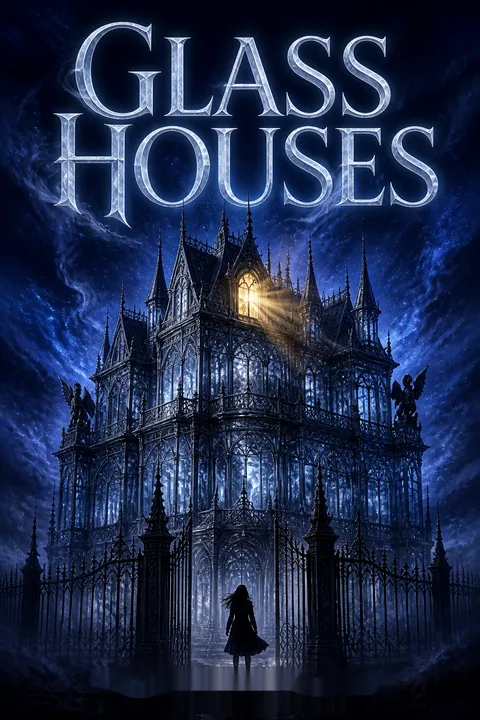


Plot Summary
Laundry Falls Downstairs
Sixteen-year-old Claire Danvers has come to Texas Prairie University early, armed with a perfect academic record and the hope that college will finally reward her for loving books. Instead, after correcting Monica Morrell in front of her admirers, Claire finds her laundry dumped and her clothes ruined. Monica and her friends corner her in Howard Hall; when Claire slaps Monica back, Gina shoves her down the stairs.
Claire wakes bruised, with no safe ally in the dorm and Monica promising further punishment. Too frightened to return to her room, she searches campus listings for somewhere else to live. Her need for shelter begins as a practical escape from bullying, but Morganville has far more dangerous rules than she knows.
The opening makes intellectual competence both Claire’s resource and her social liability. Her correction of Monica is small, almost reflexive, yet it exposes how status operates in the dorm: the group punishes not ignorance, but a lower-ranking girl who publicly proves the queen bee wrong. Claire’s fall turns ordinary humiliation into physical danger, while the bystanders’ reluctance to intervene teaches her that safety cannot be assumed from proximity to other people. Her choice to seek housing is therefore more than a change of address. It is the first time she acts on the possibility that the institution around her will not protect her.
A Room at the Glass House
Claire finds a room listing for a large old house on Lot Street and arrives there battered, broke, and crying on the porch. Eve Rosser, a Goth student who works at Common Grounds, brings her inside, where housemates Shane Collins and Michael Glass offer food and a room to consider. Eve explains that vampires control Morganville and that residents who accept their Protection wear marked bracelets.
Claire thinks she is being teased until Michael refuses to rent to her because she is underage. When she explains that Monica’s attack could become fatal, he relents for one month, charging modest rent and asking her to cook. The Glass House gives Claire a bed and wary new friends, but its welcome is explicitly temporary.
The house offers Claire a form of belonging built from practical care rather than instant intimacy: Eve supplies comfort, Shane feeds her, and Michael sets terms before accepting responsibility. That arrangement contrasts sharply with Howard Hall, where rules and authority failed to shield her. Yet the shelter is conditional, and Claire’s age makes her both vulnerable and a liability to the others. The vampire revelation also recasts Morganville’s social divisions. The bracelets do not simply mark wealth or popularity; they make protection visible as a privilege administered by power. Claire has found a refuge, but not an escape from the system that made her need one.
The Town Takes Inventory
The morning after Claire moves in, a man arrives with a photograph of a missing girl. Shane and Eve hide Claire behind the pantry in a concealed room while the visitor questions them about the house’s occupants. They later explain that he was a police officer working for Morganville’s vampires, not a source of help.
The officer’s inquiry connects Claire’s disappearance to Monica, and Eve reveals that Monica once helped burn Shane’s home, killing his younger sister. Claire still returns to Howard Hall for clothes, where she finds her belongings wrecked and Monica searching for her.
Kim Valdez helps disguise Claire as a musician carrying a cello, letting her slip past a watcher. Outside, Monica’s people abduct her and drag her into a basement, where Claire calls for help despite having no signal.
The hidden room turns a domestic space into evidence of a town organized around surveillance and concealment. Claire’s instinct to treat the police as a neutral authority collapses when the officer uses the language of concern to locate her for the vampires. Monica’s history with Shane deepens the danger: her cruelty is not a passing campus feud but part of a pattern that has already destroyed a family. Kim’s brief assistance offers a fragile counterexample to the dorm’s silence. Claire’s escape depends on a stranger’s practical courage, not on a reliable institution, and even that help cannot prevent her capture.
Fangs at Common Grounds
Monica corners Claire in the basement, hits her, and explains that missing people in Morganville can vanish without anyone asking the right questions. Claire bluffs that her phone has recorded the threat, though the call has no signal, and walks out while Jennifer quietly shields the device from Monica.
Claire makes it through classes and reaches Common Grounds, where Eve works for Oliver, a composed manager with influence among the vampires. There, Brandon, a vampire, uses his gaze to overwhelm Claire and probes for the bracelet she lacks.
Oliver orders him away. Brandon follows Eve and Claire to the Glass House, but Shane kicks him through the fence, and Michael pulls Shane across the threshold before Brandon can enter. Claire now knows the danger is real and that the house’s doorway can stop it.
Claire’s survival in the basement comes from a mixture of nerve and improvisation, but the encounter also exposes the limits of bravado: her phone cannot protect her, and Monica can describe disappearance as an ordinary local procedure. At Common Grounds, the threat changes form. Brandon’s power is not simply physical; he can commandeer Claire’s attention and make resistance difficult. Oliver’s intervention suggests that vampires, too, are constrained by rules and rival authorities. The Glass House’s threshold makes those rules tangible. It offers real defense, but only within its boundary, leaving the residents to negotiate every danger beyond the front door.
Two Bites for Safety
Michael tells Claire that the attack by Brandon left him unable to leave the house, and warns her to avoid vampires after dark. While Shane escorts her to buy clothes, a vampire police officer corners Claire and confirms that the town tracks who lives where.
Claire returns to classes, but Gina throws sulfuric acid onto her back in chemistry lab. Shane catches Gina; Claire is treated at the hospital, while the campus police recast the assault as an accident.
To keep Monica’s allies from attacking Claire again, Shane negotiates with Brandon at Common Grounds and offers him two feeding sessions in exchange for leaving her alone. Michael is furious when he learns the cost. Eve explains that the bargain gives Brandon permission to bite Shane, not kill him, and Claire decides she must find another way to cancel it.
The acid attack makes Morganville’s violence institutional as well as personal. Gina commits an assault in a classroom, yet the police protect the town’s established hierarchy by mislabeling it. Shane responds in the only currency he believes the vampires respect: his own body. His deal is protective, but it also repeats the town’s logic that one person may purchase safety by surrendering someone else to harm. Claire understands that she has become the reason for his risk, and her response marks a shift from enduring danger to studying the machinery that distributes it.
A Book Becomes Leverage
Claire asks Michael and Eve what the vampires value, then fills a notebook with Morganville’s rules: residents pay blood taxes, students disappear from campus, and leaving town erases memories of what happened there.
The vampires have searched for an old leather book marked with a distinctive symbol, but they cannot perceive it clearly or read its contents. Eve recognizes the symbol from a tattoo given to children raised under Protection. Claire reasons that the book could be traded to a higher-ranking vampire to free Shane from Brandon’s deal and protect the students.
Her first scheme is to manufacture a convincing fake, so the household will not be blamed if the deception fails. Michael and Eve warn her that the vampires have searched too long for the book to accept a careless counterfeit.
Claire’s scientific habits become a method of political survival. She does not respond to supernatural power by surrendering her curiosity; she gathers rules, compares incentives, and looks for a point where the hierarchy can be negotiated. Her proposed counterfeit is morally complicated, but it shows how thoroughly Morganville has narrowed the available choices. The group cannot rely on law, escape, or force, so Claire tries to convert information into leverage. The book’s strange invisibility to vampires also reverses the usual hierarchy of knowledge: the powerful can search everywhere and still depend on human perception to find what they want.
A Night Road Ambush
Claire researches book forgery at Common Grounds, where Oliver recognizes that she is trying to make a deal and warns that in Morganville a first mistake can be final. She continues looking for a way to build a convincing prop, then joins Eve for the drive home after dark.
Two vampires block the road and use their influence over Claire’s mind to draw her toward the car door. Eve breaks the compulsion by slapping Claire’s acid burn, forcing her back into painful awareness, then drives through the gap.
At home, they find Miranda, Eve’s unsettled friend, waiting with vampire bite marks on her neck. Miranda says a vision brought her there and points toward a death in the Glass House, leaving Claire to wonder whether the warning concerns Michael or Shane.
The road ambush demonstrates that knowledge about vampires does not make Claire immune to their influence. She understands the threat and still finds her judgment dissolving under their gaze. Eve’s painful intervention is an act of care that refuses the comforting fiction that rescue must be gentle. The sequence also complicates Eve’s connection to the vampire world: Miranda’s bites suggest that proximity can be sought as well as imposed, and Eve’s distress is personal. Miranda’s warning raises dread without offering useful certainty. In a town where people already struggle to know whom to trust, prophecy adds another unstable source of knowledge.
A Ghost at the Table
At Eve’s insistence, Miranda leads the household in a séance and describes a dead man whose spirit remains in the house, then speaks of a person screaming in fire. Shane leaves, angry that Miranda was his sister Alyssa’s friend and did not prevent the blaze that killed her. Claire follows him into a hidden room, where they spend the night talking and growing closer.
The next day she searches the university library for signs of the vampires’ missing floor. She breaks into a locked archive with liquid nitrogen and finds a sorting operation staffed by vampires and Professor Wilson, who has spent years examining books for the symbol. Claire recognizes that the library may hold the very object she has been trying to counterfeit.
Miranda’s séance makes private grief public without resolving it. Her images strike at Shane’s guilt over Alyssa, and his anger is directed less at the supernatural than at the possibility that a friend might have known and failed to act. Claire’s quiet presence allows intimacy without forcing a confession. Her next move, entering the library archive, converts that emotional closeness into action: she risks herself because Shane’s bargain is still in force. The sequence links two forms of hidden knowledge, the painful memory the household avoids and the literal archive the vampires cannot fully interpret.
The Professor’s Hidden Bible
Claire and Professor Wilson search the archive under the watch of two vampires, Angela and John. When Wilson quietly switches a first-edition book into his satchel, the vampires catch him and attack.
Claire sprays them with stolen liquid nitrogen, buying herself and Wilson a chance to escape in the elevator. Wilson suffers a fatal heart attack before they reach the surface, but tells Claire to search his house’s bookshelf. Shane helps her break in and sort through stacks of black-bound volumes.
Inside a hollowed Bible, they find an old handwritten book bearing the sought-after symbol. Claire’s plan to offer a fake is suddenly obsolete. Back at the Glass House, her parents are waiting, having discovered she left the dorm and missed classes.
Wilson’s death gives Claire the object she had hoped to imitate, but the discovery comes through violence and loss rather than a clean victory. His years in the archive reveal how Morganville turns scholarship into coerced labor, while his concealed theft shows that even a compromised academic can make a final choice against the system. Claire’s use of liquid nitrogen is a practical application of her education, not a miraculous change in power. Yet the real book brings a larger danger home just as her parents arrive, placing her in conflict between the obligations of family and the debt she feels to the household that sheltered her.
A Kiss Before Leaving
Claire’s parents insist that she leave Morganville, despite Michael’s explanation that Monica had made the dorm unsafe. Claire argues that she must stay until the people who sheltered her are no longer endangered, but her parents give her two days to withdraw from school and return home. After they leave, Shane embraces her and admits he will miss her.
That night he comes to her room, urges her to stay inside until her departure, and kisses her; Claire answers, and they both stop before the moment goes further. On Monday, Claire returns the liquid-nitrogen canister to the chemistry lab and files withdrawal paperwork. Then she tells Oliver she has the real book and asks him to arrange a trade with the vampires who can overrule Brandon.
The parental visit forces Claire to articulate a new identity: she is still a minor whose parents can legally overrule her, but she no longer understands safety as simply being taken home. Her insistence that the Glass House has risked itself for her expresses gratitude and agency, even as it binds her more tightly to Morganville. Shane’s kiss gives their attachment a brief, unguarded form, then his return to caution restores the difference in their ages and his fear of losing her. Claire’s decision to approach Oliver is a bid to act responsibly, but she trusts a broker whose motives she cannot yet see.
Amelie’s Church Warning
Before Oliver can meet with the household, Monica and her friends seize Claire in a van, beat her, and threaten to burn her alive. Claire escapes after the driver crashes, then breaks into a small church and hides inside.
Amelie, an elegant and powerful vampire, finds her there but refuses to intervene without knowing what Claire can offer. When Monica enters the church, Amelie orders her out, enforcing the sanctuary’s protection. Amelie warns Claire to verify why anyone wants the book before surrendering it.
Claire runs back to the Glass House and tells Shane what happened. He demands to know whether Michael is a vampire; Claire finally explains that Michael disappears at sunrise and returns after dark. Shane struggles to accept that his closest friend is a ghost.
Amelie’s protection is real but transactional. She saves Claire from Monica in the church, then refuses to become a guardian simply because Claire is frightened. That distinction makes her more unsettling than a straightforward rescuer: she acts according to a political order, not ordinary compassion. Her warning shifts Claire’s problem from finding a buyer to judging the buyer’s purpose. Meanwhile, Claire’s disclosure about Michael breaks the household’s pattern of secrecy. Shane’s fear that Michael might be a vampire is also fear of losing the person who has served as his family, so the truth threatens their bond even as it makes cooperation possible.
Oliver Crosses the Threshold
At dusk, Claire calls Michael into view, and he materializes from mist before Shane and Eve. The revelation explains his confinement, but it does not settle the household’s trouble. Oliver arrives, asks to be invited inside, and Michael identifies him as the vampire who killed him while attempting to transform him.
Oliver admits that the Glass House needs a living resident to activate its protections and that Michael once let him enter. When Oliver pressures Eve into inviting him again, Michael attacks and throws him back outside; Eve revokes her invitation before Oliver can return.
The household learns that Oliver is the power behind Brandon, and that he knows Claire has the book. Vampires and human enforcers gather outside, turning the house into a siege.
Michael’s secret explains both his absence and his dependence on the house, but disclosure does not make him simply helpless or powerful. His ability to fight Oliver exists only within the space that preserves him, while Oliver’s psychological influence can make Eve surrender the threshold from inside. The house’s protection therefore depends on human consent as much as supernatural strength. Oliver’s earlier kindness at Common Grounds becomes retrospectively suspect, demonstrating how courtesy can function as camouflage in a system built on bargains. The siege begins not because Claire has acted carelessly alone, but because the town’s rulers have learned that she possesses something they need.
The Book Changes Hands
Oliver’s forces break windows and force their way into the Glass House while Michael fights to keep them back. Upstairs, Miranda holds a knife to Eve’s throat, believing a vampire named Charles can stop her frightening visions; Claire and Eve disarm and confine her.
Michael vanishes as dawn arrives, leaving Shane to defend the house. When Monica’s brother Richard points a gun at Claire, Shane gives him a Bible containing the book’s marked cover, while secretly keeping the pages hidden in a Shakespeare volume. Monica’s group leaves, but sets Claire’s room on fire.
The household puts out the flames. Amelie then enters the hidden room and explains that the pages describe how to create vampires. Shane gives them to her in exchange for Protection, cancellation of his bargain with Brandon, and the group’s continued safety.
The climax gathers the story’s competing forms of coercion inside one house: Oliver’s invasion, Miranda’s delusion, Monica’s threat, and Richard’s gun. Claire and Eve stop Miranda through physical solidarity, while Shane buys the others time by surrendering what appears to be the book. His decoy preserves the actual pages, converting an improvised deception into leverage. Amelie’s bargain then replaces several smaller, predatory contracts with one powerful patron’s Protection. The resolution is protective, but not liberating. Amelie secures control of the dangerous knowledge and binds the household to Morganville, so survival comes at the price of a future they did not choose.
The Cavalry Arrives Wrong
The vampires and police withdraw, and the Glass House begins repairing its broken doors, windows, and furniture. At dinner, Michael returns at sunset, and Shane takes pride in having helped his friends survive.
Then Shane’s father arrives with two biker companions, saying Shane’s plea for help has brought them to Morganville to kill vampires and avenge Alyssa and Shane’s mother. When Michael tries to intervene, a strange force throws him against the wall. Shane’s father calls him one of the vampires and orders a companion to kill him.
The knife falls as Shane begs his father to stop, but his plea changes nothing. The novel ends before the attack’s result is known, replacing the household’s hard-won protection with a new danger from Shane’s own family.
The ending refuses the comfort of a settled victory. Amelie’s Protection has ended the immediate vampire siege, but Shane’s call for help has summoned a different form of violence, one powered by family loyalty and revenge. His father interprets changed circumstances as betrayal and treats Michael as an enemy because the man is not human. The threat is especially cruel because Shane has spent the story trying to prevent old losses from repeating; now his own attempt to secure backup places Michael in danger. The final knife falling without a revealed outcome makes survival newly uncertain and shows that power cannot be made safe merely by changing who holds it.
Analysis
Glass Houses begins with a familiar problem, a gifted teenager bullied by a popular classmate, then steadily reveals that Morganville has built an entire civic order around predation. Claire’s first escape from Howard Hall does not lead to ordinary freedom. It places her among people who know that vampires control the police, the school, the local economy, and the possibility of leaving. The novel’s central tension is therefore not simply human versus supernatural. It is the struggle to make choices inside a system that has made nearly every choice costly.
Claire’s intelligence matters because it is a form of agency that the town has not fully confiscated. She catalogs customs, notices contradictions, applies chemistry, and identifies the book as leverage. Yet knowledge does not make her invulnerable. Vampires can manipulate perception, adults can conceal their motives, and even the people who love her make bargains without knowing their full price. Her growth lies less in becoming physically powerful than in accepting responsibility, asking others to help, and recognizing that courage without information can become another trap.
The Glass House offers a countermodel to Morganville’s contracts. Its residents share food, chores, secrets, and risk, although their care is strained by silence and protectiveness. Shane’s willingness to trade his body for Claire’s safety grows from loyalty and unresolved grief, while Michael’s secrecy reflects the humiliating limits of his condition. Eve’s refusal to accept her family’s Protection shows that safety can carry moral costs. These characters do not escape dependency; they try to make it mutual rather than exploitative.
The ending deliberately withholds a clean victory. Amelie’s Protection ends the immediate siege but binds the household to Morganville, while Shane’s father arrives with a revenge mission that puts Michael in danger. The novel’s sharpest insight is that defeating one predator does not dismantle a predatory structure. Survival requires alliances, but every alliance raises the question of who controls the terms.
Review Summary
Glass Houses receives mixed reviews, with some praising its unique take on vampires and engaging characters, while others criticize the protagonist's poor decision-making and unrealistic plot elements. Many readers enjoy the dynamic between the main characters and the dark atmosphere of Morganville. The cliffhanger ending is controversial, with some finding it exciting and others frustrating. Despite its flaws, many readers find the book entertaining and are eager to continue the series, particularly those who enjoy young adult vampire fiction.
People Also Read



Characters
Claire Danvers
Determined young scholarClaire is an exceptionally bright sixteen-year-old who arrives at Texas Prairie University expecting books and hard work to earn her a place. Her small stature and age make other people mistake her for helpless, while her quick mind can make her appear challenging even when she is simply correcting a fact. She begins isolated and accustomed to being dismissed, but she is observant, stubborn, and increasingly willing to act on what she learns. Her academic habits become practical tools: she studies Morganville’s rules, experiments with materials, and looks for leverage when physical strength is unavailable. Claire wants independence, yet she is also deeply loyal to people who offer genuine care.
Shane Collins
Reckless loyal protectorShane is a tall, athletic young man who hides his seriousness behind jokes, video games, and a loose, seemingly careless manner. He is fiercely attached to Michael, whom he regards as family, and his history with Monica is tied to an older, painful loss. His instinct is to meet danger directly, often before considering the cost to himself. That reflex makes him brave and difficult to restrain, but also leaves him vulnerable to bargains that exploit his loyalty. Claire draws out his gentler attention without erasing his suspicion or his fear of repeating the past. He wants to protect the people he loves, though he rarely knows how to ask for help.
Michael Glass
Housebound musicianMichael is the thoughtful, responsible owner of the Glass House and a gifted musician whose guitar gives the household a steadier rhythm. He acts as Shane’s closest friend and a protective older-brother figure to the people who live with him. Careful about rules and risk, he initially resists taking in Claire, then changes course when he understands the danger she faces. His calmness conceals frustration about what he cannot control, especially when his friends confront threats beyond the house. Michael’s instinct is to care for others through structure, shelter, and practical decisions, even when he has difficulty explaining the emotional history behind them.
Eve Rosser
Gothic-hearted housemateEve is a Goth student with black clothes, dramatic makeup, a hearse-like Cadillac, and an unexpectedly warm manner. She works at Common Grounds and brings Claire into the Glass House when she finds her alone and injured. Though funny and energetic, Eve carries real fear about living without her family’s Protection. Her refusal to conform is not merely a style choice; it reflects a moral boundary she has chosen to hold in a town where safety often requires submission. She is loyal to Michael and Shane, and her concern for others can make her take risks she would rather avoid. Beneath the performance is a perceptive young woman who knows vulnerability firsthand.
Monica Morrell
Campus queen beeMonica is a wealthy, beautiful student who commands a loyal group of followers and treats social status as permission to control other people. Claire’s correction of her public mistake wounds Monica’s pride, and Monica responds with escalating cruelty rather than letting the slight pass. Her confidence depends on an audience: she humiliates, threatens, and recruits others to make her authority look inevitable. Monica also belongs to a powerful Morganville family, giving her social aggression a darker backing than ordinary campus bullying. She is practiced at presenting herself as untouchable, but the intensity of her retaliation suggests how much she fears losing that position.
Oliver
Influential coffeehouse managerOliver manages Common Grounds, employs Eve, and carries himself with the ease of someone accustomed to being obeyed. He presents as a thoughtful, protective adult who notices when others are mistreated, and he has enough influence to intervene in disputes involving vampires. His calm authority makes him reassuring to Claire, who has few adults she can trust in Morganville. Oliver also understands the town’s power structure and the risks of negotiating without proper guidance. His public manner combines patience with an exacting sense of control, leaving others unsure how much of his influence comes from personal kindness and how much from a deeper position in the town.
Amelie
Ancient vampire authorityAmelie is an elegant, composed woman whose age and authority are apparent in the way others yield space to her. Claire first encounters her in a church, where Amelie enforces sanctuary while refusing to offer help without knowing what Claire can provide. She speaks with measured courtesy, but her decisions follow rules of power rather than ordinary compassion. Amelie regards Morganville as a system that must be managed and treats information as a potential threat to its balance. Her restraint makes her difficult to read: she can offer protection without becoming a friend, and her politeness never erases the danger of her position.
Miranda
Troubled visionary friendMiranda is Eve’s unusual, theatrical friend, drawn to tarot cards, dramatic makeup, and the supernatural. She claims to receive visions and believes a vampire named Charles can relieve them. Her warnings about the Glass House and its residents are unsettling, but her insight is tangled with fear and a hunger for relief. Miranda can seem self-absorbed or erratic, yet she is also vulnerable to people who promise to quiet her mind. Her presence tests the household’s instinct to dismiss what it cannot explain and makes Eve’s more private beliefs visible.
Brandon
Predatory young vampireBrandon is a vampire who moves through Morganville with the entitlement of someone used to taking what he wants. He targets Claire because she lacks Protection and responds to resistance with threats, pressure, and calculated bargains. His connection to Monica gives him influence over the campus bullying, while his own place in the vampire hierarchy is lower than his confidence suggests. Brandon is dangerous not only because he can attack physically, but because he understands how fear and agreements can make victims police themselves.
Professor Wilson
Coerced archive scholarProfessor Wilson teaches literature at the university and has spent years examining books in the vampires’ hidden archive. He is mild, distracted, and easy to underestimate, but his long exposure to the archive has given him knowledge that can aid Claire. His choices reveal the compromises required to keep working under Morganville’s rulers, as well as the possibility of resistance within a constrained life. He is both an academic and a man trying to preserve something beyond the vampires’ control.
Shane’s father
Vengeful biker patriarchShane’s father is a scarred, leather-clad biker whose loyalty to family is inseparable from a long campaign for revenge. He comes to Morganville prepared for violence and expects Shane to honor plans made before circumstances changed. His forceful manner leaves little room for negotiation, especially when he believes someone has betrayed the family’s purpose. He represents a form of protection that can become another source of danger.
Richard
Police officer and brotherRichard is Monica’s brother and a police officer who approaches the Glass House with a gun and a wearied sense of duty. Unlike Monica, he seems less invested in tormenting Claire and more concerned with carrying out the task in front of him. His position shows how official authority can be recruited into Morganville’s private conflicts. Richard’s impatience does not make him safe; it makes violence feel routine.
Jennifer
Uneasy followerJennifer is one of Monica’s closest followers and takes part in the group’s intimidation of Claire. She appears increasingly uneasy with Monica’s escalating cruelty, however, and her hesitation creates small openings for Claire to survive. Jennifer is not a dependable ally, but she is not entirely absorbed by the group either. Her wavering shows how complicity can persist even when a person begins to recognize the harm being done.
Gina
Violent Monickettes memberGina is one of Monica’s followers and serves as an eager enforcer of Monica’s authority. She helps attack Claire in the dorm and later escalates the bullying into a dangerous assault in chemistry lab. Gina’s actions make clear that Monica’s power depends on followers willing to do more than laugh along. She is less conflicted than Jennifer and more directly invested in inflicting harm.
Kim Valdez
Cautious cello playerKim is a solitary freshman and musician who helps Claire escape Howard Hall by disguising her with a hood and cello. She insists that the favor remain unofficial, showing that she understands the risks of openly opposing Monica. Her brief assistance is practical and brave, though Claire later damages the trust between them.
Erica
Wary dorm neighborErica lives near Claire in Howard Hall and is the first person to help after Claire falls down the stairs. She gathers Claire’s scattered books and checks whether she needs medical care, but does not openly challenge Monica. Her kindness is sincere, though limited by the fear and social pressure surrounding the dorm.
Les and Katharine Danvers
Protective academic parentsClaire’s parents love their daughter and have supported her academic ambition, but they are wary of sending a sixteen-year-old far from home. Les focuses on rules, practical safety, and the decisions that affect Claire’s future; Katharine worries about her health and emotional readiness. Their concern is genuine, yet their belief that taking Claire home will solve the problem clashes with her hard-won need to make choices for herself.
Plot Devices
Protection bracelets
Visible marks of safetyMorganville residents who accept a vampire patron receive a bracelet marked with a symbol; its appearance indicates whether the Protection is active. The bracelets make an invisible political arrangement visible in classrooms, shops, and streets. Claire’s bare wrist identifies her as unprotected, while the bands worn by popular students help her recognize that social privilege and physical safety are linked. Protection is not free: it requires allegiance, and losing it can affect an entire family. The device turns ordinary clothing into a public declaration of who may expect help and who may be treated as available prey.
The Glass House
Shelter with a boundaryThe old house on Lot Street is a home, a hiding place, and a supernatural defense. Secret rooms and concealed passages help its residents avoid surveillance, while its threshold prevents vampires from entering without permission. The house’s protections depend on conditions the residents do not initially understand, including who lives there and whether an invitation has been given. It cannot make the people inside safe everywhere, and its defenses can be compromised by a resident’s consent. The house therefore functions both as a refuge from Morganville and as a reminder that safety in the town is conditional.
The marked book
Leverage hidden in an archiveMorganville’s vampires search for an old leather book bearing a distinctive symbol, yet the symbol confuses their perception and the text cannot be read by them in the ordinary way. Humans are therefore essential to locating and handling the object, even though vampires control the search. The book moves from an abstract rumor to Claire’s proposed bargaining tool, then becomes the reason several factions pursue the Glass House. Its hidden pages contain knowledge powerful enough to threaten the balance among vampires. The book is both a physical object and a test of who can interpret information the rulers cannot access.
Morganville’s memory veil
A town that erases itselfPeople who travel far enough from Morganville begin to forget the town, first losing its name and then the knowledge of its vampires and customs. This makes escape an unreliable solution: people may survive a departure but lose the reason they left, and those who remember too much risk being hunted. The mechanism explains why residents do not simply expose Morganville to the outside world and why Claire’s parents cannot be treated as an easy route to safety. It converts geography into a form of control, allowing the town to contain its secrets without a visible wall.
Blood debts and bargains
Safety bought through submissionMorganville’s vampires govern through structured exchanges, from residents’ regular blood taxes to individual agreements made with lower-ranking vampires. Shane’s bargain with Brandon demonstrates how protection can be purchased by surrendering one’s own body to danger. Claire’s attempt to trade the book seeks to replace a personal debt with a broader guarantee for the household and the campus. These bargains make power legible, but they are not fair contracts between equals. The vampire who sets the terms controls what counts as payment, what counts as fulfillment, and whether the agreement can be escaped.
FAQ
Confirming Scope & Parameters
Okay, I'm verifying the initial constraints and desired focus. I'm confirming I understand the need to delve deeper than the existing summary, extracting insights on themes, symbolism, and debates within "Glass Houses." The focus will be on the novel, and my responses will integrate relevant SEO keywords naturally, aiming to meet the user's specific structured output and format requests.
<br>
<br>
Finalizing Task Parameters
I've re-checked the guidelines. I am confident that I can execute the task perfectly, adhering to all constraints. I will ensure the answers reveal deeper meaning and incorporate SEO keywords seamlessly. I will now begin generating the Q&A content.
<br>
<br>
Final Checklist & Refinement
Okay, I'm confident I understand the task completely and can generate high-quality responses. I'm double-checking the parameters one last time to ensure I meet all user requirements, focusing on depth, SEO, and the specified format, avoiding any duplication of previous analysis. I'm ready to begin.
Final Task Review & Optimization
I'm thoroughly reviewing my initial approach. I will maintain the structure provided and ensure I include those key insights I noted in my mental sandbox. I'll focus on in-depth scene analysis, character connections, symbolism, literary devices, and cultural context. I'll maintain the expert tone and tailor the answers to the user's requirements.
<br>
<br>
Confirming Task Alignment
I'm reviewing the constraints again, specifically focusing on the Q&A format, the need for new insights, and seamless SEO keyword integration. I will center my analysis on the specified categories, keeping the tone expert and the format precise.
<br>
<br>
Refining Response Parameters
I've re-examined the core requirements. I will focus on new insights and avoid overlap. I will ensure a high degree of depth while including SEO keywords seamlessly within the responses, particularly in character analysis, theme explication, and general plot point overviews.
<br>
<br>
Synopsis & Basic Details
What is Glass Houses about?
- Prodigy seeks refuge: Claire Danvers, a gifted but socially awkward sixteen-year-old, starts college early at Texas Prairie University but quickly becomes the target of vicious bullying by dorm queen bee Monica Morrell and her clique.
- Mysterious house offers sanctuary: After a violent confrontation, Claire flees the dorm and finds unexpected shelter in the Glass House, a large, old mansion inhabited by three enigmatic young adults: Michael, Shane, and Eve.
- Town's dark secret revealed: Claire discovers that Morganville is secretly controlled by vampires, and the Glass House, with its unique inhabitants and protections, is one of the few safe havens in a town where humans are often treated as resources.
- Struggle for survival and belonging: As Claire navigates the dangers of Morganville and the complexities of her new housemates, she becomes entangled in the town's hidden power struggles and the vampires' search for a mysterious book, forcing her to fight not just for her own safety but for that of her newfound friends.
Why should I read Glass Houses?
- Unique blend of genres: The book masterfully combines elements of urban fantasy, mystery, and coming-of-age drama, offering a fresh take on vampire lore set against the backdrop of a seemingly ordinary, yet deeply unsettling, small Texas college town.
- Compelling character dynamics: The core group of housemates – Claire, Michael, Shane, and Eve – are complex, flawed, and fiercely loyal to each other, creating a powerful found-family dynamic that is central to the story's emotional core and provides a strong anchor amidst the supernatural threats.
- Atmospheric and suspenseful setting: Morganville itself is a character, with its eerie quiet, strange inhabitants, and palpable sense of hidden danger, building a constant tension that keeps the reader engaged and invested in the characters' survival.
What is the background of Glass Houses?
- Morganville's hidden control: The town of Morganville, Texas, is secretly governed by an ancient vampire hierarchy, with humans living under a system of "Protection" in exchange for blood taxes and obedience, a fact largely unknown or ignored by the transient college population.
- The Glass House's unique status: The mansion itself is ancient and possesses inherent protections against vampires, particularly when inhabited by humans, making it a rare anomaly and a target of interest for the town's ruling powers.
- Vampire society and rules: The narrative establishes a complex vampire hierarchy with different factions (like Oliver's vs. Amelie's), internal rules (like the inability to enter a home uninvited), and a history tied to the town's founding and the loss of the secret to creating new vampires.
What are the most memorable quotes in Glass Houses?
- "On the day Claire became a member of the Glass House, somebody stole her laundry.": This opening line is instantly memorable, juxtaposing a mundane college frustration with the significant turning point of Claire's life, hinting at the blend of ordinary and extraordinary that defines the story.
- "Morganville's full of vampires.": Eve's blunt declaration shatters Claire's perception of reality and serves as the pivotal moment where the town's supernatural secret is explicitly revealed, changing the stakes entirely.
- "You are going to need it. Unfortunately, mortal life is very fragile, and very short. Yours could be shorter than usual.": Amelie's chilling warning to Claire encapsulates the constant peril faced by humans in Morganville and highlights the precariousness of Claire's situation after she becomes entangled in vampire affairs.
What writing style, narrative choices, and literary techniques does Rachel Caine use?
- First-person limited perspective: The story is told primarily from Claire's point of view, immersing the reader in her experiences, fears, and intellectual processing of the bizarre events, enhancing the sense of discovery and disorientation.
- Building atmosphere through detail: Caine uses vivid descriptions of the town's unsettling normalcy ("streetlights worked only half the time," "people... seemed too happy") and the house's gothic charm to create a pervasive sense of unease and mystery that underpins the supernatural elements.
- Juxtaposition of mundane and supernatural: A key technique is placing everyday college life (laundry, classes, studying, video games) directly alongside extreme supernatural threats (vampire attacks, hidden rooms, ghostly housemates), highlighting the absurdity and terror of Claire's new reality.
Hidden Details & Subtle Connections
What are some minor details that add significant meaning?
- The town's unnatural cleanliness: Claire initially notes Morganville is "clean—no trash, no graffiti, nobody begging," which seems positive but later hints at the vampires' absolute control and suppression of any visible disorder or human vulnerability.
- The library's missing fourth floor: The detail of the library map skipping from the third to the fifth floor, with a locked, windowless door on the fourth, subtly foreshadows its use as a hidden, secure location for the vampires' sensitive operations, specifically the search for the book.
- The symbol on Eve's bracelet: Eve's "expired" Protection bracelet with its red symbol, later revealed to be the "Founder symbol" and also on the book cover, is a recurring visual motif connecting seemingly disparate elements—personal protection, vampire hierarchy, and the sought-after book—under the umbrella of Amelie's ancient power.
What are some subtle foreshadowing and callbacks?
- Shane's immediate, intense reaction to Monica: Shane's face going "blank" and his subsequent conversation with Eve about Monica's connection to his sister's death in a fire subtly foreshadows the depth of his trauma and his personal vendetta against Monica, explaining his fierce protectiveness of Claire later.
- Miranda's vision of Michael's death: Miranda's seemingly nonsensical "vision" during the séance, describing someone dying "right here. Right in this room," directly foreshadows Michael's daily "death" at dawn and his connection to the house, a detail only Claire initially understands.
- The repeated mention of the house's "Protection": The concept of the Glass House having inherent protection, mentioned early by Eve and later by Michael, is a constant callback that culminates in the revelation that Michael's ghostly state and the house's power are intertwined, and that Amelie herself built and controls these protections.
What are some unexpected character connections?
- Oliver's true identity as Michael's attacker: The reveal that Oliver, the seemingly kind coffee shop owner, is the vampire who attacked Michael, leaving him in his ghostly state, is a major twist that recontextualizes all of Oliver's earlier interactions and motivations, turning a potential ally into a primary antagonist.
- Monica's brother being a police officer: The introduction of Richard Morrell, Monica's brother and a police officer, highlights the deep integration of the Morrell family and their vampire connections into the town's human authority structure, showing how the system is rigged against those without Protection.
- Shane's father's connection to vampire hunting: The arrival of Shane's father, leading a group of vampire hunters, is an unexpected connection that reveals Shane's family history is deeply tied to fighting vampires, adding another layer to his character and creating a new, immediate threat to the Glass House residents.
Who are the most significant supporting characters?
- Eve Rosser: More than just comic relief, Eve provides crucial information about Morganville's vampire society, introduces Claire to Oliver and the coffee shop as a potential safe space/information hub, and offers unwavering emotional support and loyalty, becoming Claire's first true friend in town.
- Oliver: As the primary antagonist for much of the book, Oliver's manipulation and pursuit of the book drive a significant portion of the plot, forcing the housemates to confront the reality of the vampire hierarchy and the dangers outside their home.
- Amelie: The ancient founder vampire, Amelie, represents the ultimate power in Morganville. Her enigmatic nature, her connection to the Glass House, and her final bargain fundamentally reshape the characters' lives and the future of their existence in the town.
Psychological, Emotional, & Relational Analysis
What are some unspoken motivations of the characters?
- Shane's protective drive: While explicitly linked to his sister's death, Shane's intense protectiveness of Claire also seems driven by a subconscious need to atone for failing to save Alyssa, projecting his past trauma onto Claire and finding a new purpose in defending her.
- Michael's desire for connection: Trapped and isolated by his condition, Michael's decision to allow Shane, Eve, and later Claire to live in the house is motivated not just by practical needs (groceries, bills) but by a deep-seated loneliness and a yearning for human connection and a semblance of normal life.
- Eve's Goth persona as a shield: Eve's dramatic Goth appearance and cheerful embrace of the macabre ("Yeah, my parents really named me that, go figure. It's like they knew how I'd turn out") function as a psychological defense mechanism, allowing her to confront the terrifying reality of living among vampires with a performative defiance that masks her underlying fear and vulnerability.
What psychological complexities do the characters exhibit?
- Claire's intellectual coping mechanism: Claire processes fear and trauma through intellectualization, immediately trying to understand the "science" behind vampires or analyzing situations logically ("Acid has a low pH; baking soda has a high one...") even in moments of extreme danger, a coping strategy developed from her reliance on intellect over social skills.
- Shane's trauma response: Shane exhibits classic trauma responses, including emotional numbing (his blank reaction to Monica), hyper-vigilance (constantly scanning for threats), and a compulsion to protect others from similar harm, particularly those connected to his past pain.
- Michael's existential struggle: Michael grapples with the psychological burden of his state—being neither fully alive nor dead, trapped, and unable to participate in the world he once knew. His bitterness and occasional withdrawal reflect the profound existential crisis of his condition.
What are the major emotional turning points?
- Claire's breakdown in front of the Glass House: Claire's public sobbing fit outside the mansion marks a crucial emotional turning point, signifying the complete collapse of her carefully constructed facade of competence and independence, making her vulnerable enough to accept help and enter the unknown.
- Shane's confession about Alyssa: Shane's raw, brief explanation of his sister's death and his failure to save her is a powerful emotional turning point, revealing the depth of his pain and the source of his protective intensity, solidifying his bond with Claire through shared vulnerability.
- Michael's physical manifestation at dawn: Witnessing Michael's terrifying, painful transformation into a ghost at sunrise is a shocking emotional turning point for Claire (and later Shane and Eve), forcing them to confront the true, horrific reality of his condition and deepening their commitment to protecting him.
How do relationship dynamics evolve?
- Claire and Shane's bond: Their relationship evolves from reluctant housemates and protector/protected into a deep, mutually supportive bond forged through shared danger and vulnerability, culminating in a tentative romantic connection hinted at by their kiss.
- The housemates as a found family: The initial wary cohabitation of Claire, Michael, Shane, and Eve transforms into a fierce, loyal found family unit. They rely on each other for physical safety, emotional support, and a sense of belonging in a hostile world, demonstrating unwavering solidarity against external threats.
- Claire's relationship with her parents: Claire's relationship with her parents shifts from typical teenage frustration with overbearing concern to a moment of profound assertion of independence and maturity when she insists on staying in Morganville to protect her friends, forcing her parents to confront her growing autonomy.
Interpretation & Debate
Which parts of the story remain ambiguous or open-ended?
- The exact nature of Michael's condition: While described as a "ghost" who becomes incorporeal during the day, the mechanics of Michael's state—how he eats, interacts physically at night, and is tied to the house—remain scientifically unexplained and open to interpretation regarding the blend of magic and science in this world.
- The full extent of Oliver's power and motives: Oliver is established as a powerful vampire leader and Michael's attacker, but his ultimate goals beyond acquiring the book and his specific relationship dynamics within the vampire hierarchy (especially with Amelie) are not fully detailed, leaving room for debate about his true role and potential future actions.
- The mechanism of memory loss outside Morganville: The supernatural phenomenon causing memory loss about the town upon leaving is presented as a fact but its origin, limitations, and whether it's a natural property of the area or an enforced vampire ability are left ambiguous.
What are some debatable, controversial scenes or moments in Glass Houses?
- The severity and graphic nature of the bullying: Monica's actions escalate from typical high school meanness to attempted murder (pushing Claire down stairs, attempting to burn her with acid), which some readers might find excessively violent or unrealistic for a college setting, sparking debate about the portrayal of bullying.
- Shane's decision to trade "sessions" with Brandon: Shane's bargain to allow Brandon to feed on him twice in exchange for Claire's safety is a morally complex and potentially controversial moment, raising questions about the ethics of sacrificing one's physical safety (and potentially life) for another and the power dynamics involved in such a "deal with the devil."
- Amelie's bargain and its implications: Amelie's offer of Protection in exchange for the book, which comes with the condition that the housemates can never leave Morganville, is debatable. Is she a savior or just another form of captor? Does her act of destroying the creation secret justify essentially imprisoning the humans who helped her?
Glass Houses Ending Explained: How It Ends & What It Means
- The immediate resolution: The Glass House residents survive the night's attacks orchestrated by Oliver and Monica. Shane trades the book's contents (the secret to vampire creation) to Amelie, the ancient founder vampire, in exchange for her Protection over the house and its inhabitants, canceling lesser deals like Shane's with Brandon. Amelie leaves, promising safety but also revealing that the housemates are now bound to Morganville and cannot leave without risking death or memory loss.
- Shane's father's arrival: Just as the immediate vampire threat subsides, Shane's father arrives with a group of vampire hunters, intending to wage war on the town's vampires, specifically targeting Michael, whom he perceives as one of them. The book ends on a cliffhanger as Shane's father attacks Michael.
- Meaning and implications: The ending signifies that while the housemates have gained powerful protection from one faction of vampires (Amelie's), they are now trapped in Morganville and face new threats from within the human community (Shane's father) and potentially other vampire factions not fully aligned with Amelie. It highlights the theme that survival in Morganville is never truly secure and that escaping one danger often leads directly into another, setting the stage for future conflicts and exploring the long-term consequences of their choices and alliances.
The Morganville Vampires Series
About the Author
Other books by Rachel Caine



Download PDF
Download EPUB
.epub digital book format is ideal for reading ebooks on phones, tablets, and e-readers.








