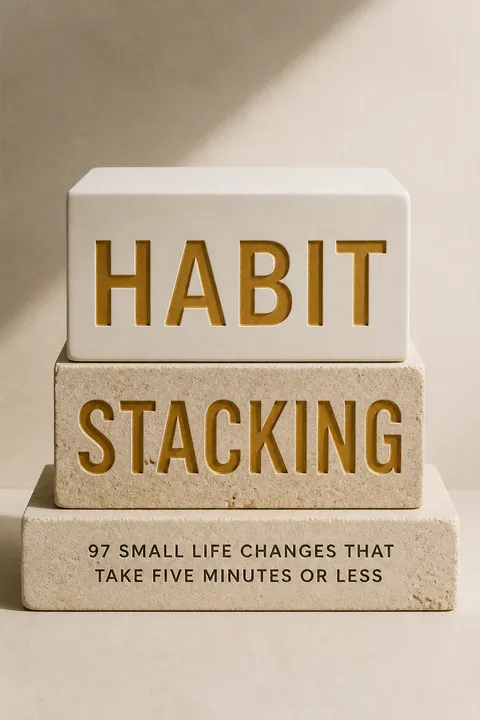


Key Takeaways
Let small actions do the work that dramatic resolutions rarely sustain
Progress is a process. The book’s central claim is that success comes less from a sudden transformation than from repeating modest actions that serve an important goal. A few minutes of focused work, a brief financial check, or a thoughtful message can seem trivial alone. Repeated, these actions shape the direction of a day and, over time, a life.
Care becomes visible. The idea grew from a strained long-distance relationship. Scott’s partner said the distance mattered less than feeling forgotten between visits. He began sending a daily message and making time for a call. The gestures were small, but they answered a real need. The lesson is not that any single routine guarantees success, but that consistent attention can change what another person experiences.
The book makes a persuasive case for valuing actions by their cumulative pattern, not their dramatic appearance. This is especially clear in the relationship story: a small behavior matters because it communicates attention, not because it is an impressive productivity trick. The distinction matters. Repetition can strengthen a useful practice, but it can also entrench a harmful one. The real question is therefore not simply whether an action is small or regular, but what it reinforces and whom it serves.
Attach forgotten good intentions to routines you already perform
Make memory external. Habit stacking means grouping small actions into a routine and attaching that routine to a reliable cue, such as getting up, arriving at work, or finishing a meal. A checklist then guides the sequence. Instead of remembering many separate intentions, a person remembers one routine and follows its prompts.
Use a natural anchor. Scott’s morning sequence moves through familiar locations and actions, beginning in the bathroom, continuing through the kitchen, and ending at his work area. The order reduces wandering and decision-making. A stack might include a health check, a short planning task, and preparation for the day. Its purpose is not to imitate someone else’s routine, but to make personally useful actions easier to recall and complete.
The distinctive strength of this method is its treatment of forgetting as a design problem, rather than a character flaw. A cue and checklist reduce the need to hold every intention in working memory. The sequence also turns one reliable behavior into a prompt for the next. That convenience has a limit: a routine can become cumbersome if every worthwhile action is added to it. A stack works best as a selective reminder system, not a container for an entire ideal life.
Choose habits by their effect on goals, not their virtue
Start with what matters. The book sorts goals into seven areas: career, finances, health, leisure, organization, relationships, and spirituality. Its point is not to optimize every area at once. Readers are asked to identify which outcomes matter now, then select actions that plausibly move them forward. A habit that sounds admirable but has no clear personal purpose does not belong in the stack.
Know the habit’s role. The author distinguishes three types. A keystone habit can support several areas of life, such as exercise. A support habit makes a larger practice easier, such as preparing workout clothes. An elephant habit breaks an intimidating project into short daily efforts, such as sorting paperwork in small portions. A useful stack may combine these roles, but should remain tied to chosen priorities.
This framework helps distinguish a central behavior from the small actions that make it possible. It also guards against collecting habits simply because they are fashionable or socially approved. The seven life areas widen the lens beyond work and fitness, giving leisure and relationships a legitimate place in planning. Still, categories are only prompts, not a universal map. A person’s circumstances may make one area urgent and another irrelevant, so the framework is most useful when treated as a menu rather than a scorecard.
Make the first version so small that bad days still count
Lower the starting cost. The book recommends beginning with a five-minute block and one or two easy actions. Its mini-habit approach sets a deliberately modest minimum, such as doing the first action in a routine or completing only part of the list. The minimum is designed to get a person started, not to define the maximum they may accomplish.
Build before expanding. Scott cites a study reporting that habit formation ranged from 18 to 254 days, with an average of 66. The practical implication is that people differ, so a fixed deadline for automatic behavior is misleading. Repeat a manageable routine until it feels dependable, then add a little more. If the expanded version creates resistance, scale it back rather than treating difficulty as proof of personal failure.
A small minimum protects continuity from the all-or-nothing trap. It gives a routine a version that can survive a crowded day, while leaving room for longer effort when energy and time permit. The distinction between minimum and maximum is essential: an easy baseline should open the door, not become an excuse to avoid meaningful work. The reported formation timeline also supports patience, although an average cannot predict an individual’s progress or guarantee that repetition alone makes every behavior automatic.
Build one short, orderly stack before expanding your system
Design for follow-through. The book advises anchoring a stack to an existing habit or dependable time, keeping most actions brief, and arranging them in a practical order. A routine should be easy to start, with each step clearly defined and a checklist available. The author suggests keeping the whole stack under about thirty minutes, while allowing shorter versions for busy days.
Schedule beyond daily life. Not every useful action belongs in a daily routine. Reviewing bills, planning meals, or checking household safety may make more sense weekly or monthly. The book’s examples treat these as separate, scheduled stacks rather than forgotten chores. Start with one routine, repeat it, and only expand when its basic shape is working. The aim is reliable action, not a maximal checklist.
The advice to sequence actions by location and frequency is more practical than simply telling readers to become disciplined. It recognizes that friction accumulates in small ways: a missing tool, an awkward transition, or an action scheduled at the wrong interval. A stack can therefore be assessed like a process, with points of delay or confusion removed. The time limit is a useful guardrail, not a law. Some meaningful habits need a separate block rather than being compressed to fit a tidy routine.
Engineer around fading attention instead of waiting for motivation
Do not depend on mood. The author argues that motivation is temporary and that decisions and effort can make difficult tasks harder to begin. He describes the radish experiment associated with ego depletion: participants who had to resist tempting food later spent less time working on a puzzle than comparison groups. Scott uses this to recommend scheduling demanding work early and relying on cues, routines, and reduced friction instead of inspiration alone.
Shape the surroundings. Practical examples include closing distracting apps, preparing materials in advance, using a timer, and setting aside a specific place for a routine. External reminders can start a behavior; repeated cues may also become internal prompts. The aim is to make the desired next action easier to notice and begin, rather than expecting willpower to win a fresh contest every day.
The most durable lesson here is environmental: make the preferred action easier to initiate and the distracting alternative less available. That principle does not depend on a person feeling inspired. The book’s account of willpower offers a memorable rationale, but the specific ego-depletion explanation is more contested than the practical advice built on it. The argument is strongest when it focuses on reducing decisions and interruptions, not when it treats self-control as a simple fuel tank that empties predictably.
Track the behavior that reveals whether your plan is working
Make invisible patterns legible. The book recommends tracking activities that are easy to forget or misjudge. Recording expenses can expose recurring purchases; a food journal can make eating patterns visible; time tracking can show whether work hours go to high-priority tasks. The point is not recordkeeping for its own sake, but using evidence to decide what to adjust.
Turn numbers into choices. For work, Scott suggests identifying a few important tasks before opening the day to distractions. For finances, he recommends checking spending and reviewing a budget regularly. For health, he describes logging food and monitoring weight trends rather than reacting to a single reading. These practices connect a goal to observable behavior, giving the person a chance to correct course before a small pattern becomes harder to change.
Measurement can interrupt self-deception. People often remember salient efforts and overlook repeated small expenditures, interruptions, or snacks. A modest record can replace vague impressions with a clearer pattern, which makes adjustment less personal and more practical. Yet a metric is still a proxy. Time logged is not automatically valuable work, and a scale cannot summarize health. The book’s most useful implication is to measure selectively, then ask whether the information changes a decision that matters.
Protect the few priorities that deserve your repeated attention
Choose before the rush. A routine should serve a small number of important goals, not every possible improvement. The book recounts a story in which Warren Buffett advises a pilot to list 25 ambitions, select five, and treat the rest as distractions until the top group receives attention. The story dramatizes the cost of keeping too many goals active at once.
Allow deliberate flexibility. Scott’s own stack includes actions he sometimes skips when they are not important that day. That flexibility matters: consistency means preserving the routine’s purpose, not mechanically completing every item regardless of circumstances. If a habit no longer supports a priority, remove it. If a routine becomes burdensome, reduce it. A stack should protect attention from low-value demands, including demands dressed up as self-improvement.
The priority story offers a sharp corrective to the assumption that every worthwhile ambition deserves simultaneous effort. Scarce attention means that adding a goal has an opportunity cost, even when the goal itself is attractive. The practical challenge is distinguishing a genuine priority from a temporary obsession or an obligation imposed by others. A useful stack makes that choice visible. Its flexibility is equally important, since rigid routines can preserve the appearance of discipline after their original purpose has disappeared.
Treat care as a repeatable practice, not a private feeling
Make attention concrete. The book repeatedly returns to small acts that show people they are remembered: a brief encouraging message, a caring note, a sincere compliment, or a conversation without a phone competing for attention. Scott’s relationship story gives these actions their context: his partner wanted evidence that she remained in his thoughts while they were apart.
Practice listening deliberately. The relationship suggestions also include returning messages, pausing before a difficult response, and giving someone full attention. These are not grand declarations; they are small behaviors that reduce the gap between caring and being experienced as caring. The same principle applies to gratitude: notice a specific contribution and express appreciation to the person who made it. Repeated, these actions can make consideration a visible part of ordinary life.
The book’s relationship advice is strongest when it treats affection as something communicated through attention, not merely felt internally. Specific gestures are valuable because they respond to actual people and situations. A fixed daily quota, however, could turn care into performance if it ignores what another person wants. The deeper practice is attentive responsiveness: notice the other person, then choose an action that fits. A routine can prompt that attention, but it cannot substitute for it.
Schedule restoration and service, not just output and errands
Give life more than tasks. The book includes leisure and spiritual practices alongside career and finance habits. Its suggestions range from reading, trying something new, and planning a near-term enjoyable activity to meditation, gratitude, volunteering, and small acts of kindness. These are not framed as rewards that must always wait until every chore is finished; they are ways to make a life broader than its obligations.
Choose what restores meaning. Spirituality is treated inclusively, with practices that may be religious, reflective, community-oriented, or focused on calm. The author also recommends planning fun in advance because enjoyable experiences are easily crowded out by urgent demands. A short walk, time with family, or a scheduled volunteer activity can therefore belong in the same intentional system as work priorities.
This breadth helps correct a common bias in productivity systems: what can be counted or monetized is treated as more legitimate than rest, connection, and service. Giving these activities a place in the calendar protects them from being perpetually postponed. The caution is that leisure loses some of its restorative character when every moment is managed as another performance target. The most humane use of a stack is not to optimize all experience, but to preserve room for activities that make effort worthwhile.
Analysis
Habit Stacking is a practical self-help book with a personal origin story, a habit-building method, and a large catalog of 127 possible actions. Its central contribution is not the discovery that hydration, planning, or attentive relationships matter. It is the conversion of familiar advice into a memory and scheduling system: choose a goal, select a small supporting behavior, attach it to a dependable cue, and follow a prepared sequence. The long catalog supplies options; the rules for selecting and arranging actions supply the more transferable value.
The method is compelling because it moves the problem from motivation to design. Checklists, environmental cues, and logical sequencing reduce the number of decisions needed at the moment of action. Habit stacking also captures a real distinction between an outcome and its infrastructure. A workout may be the goal, while checking the forecast or setting out clothes removes predictable barriers to completing it.
The book is less persuasive when it implies that all worthwhile actions can be made reliable through repetition or that a single short routine can transform every area of life. Some goals require expertise, resources, social support, or sustained blocks of attention. Moreover, the book’s account of willpower depletion relies on a research explanation that subsequent debate has made less settled than its confident tone suggests. Its practical recommendations often survive that uncertainty because reducing friction remains sensible without the fuel-tank metaphor.
The catalog also mixes useful behavioral prompts with health and financial suggestions that can depend on individual circumstances. Readers should distinguish the general method from specific advice, particularly where medical claims, supplements, investment choices, or numerical rules appear. The strongest adaptation is selective: build one small routine around a genuine priority, observe whether it helps, and revise it. The goal is not to become a perfectly scheduled person. It is to make important actions easier to remember and repeat without allowing the system to become another source of pressure.
Review Summary
Habit Stacking receives mixed reviews. Some readers find it helpful for developing small, positive habits and appreciate its practical approach. Others criticize it as overly simplistic, containing common-sense advice, and unrealistic time estimates for tasks. The book's concept of linking small habits together is praised, but many feel the suggested habits are too basic or obvious. Some readers find value in specific ideas, while others consider it redundant if they're already familiar with habit-building concepts. Overall, opinions vary widely on its usefulness and originality.
People Also Read






Glossary
Habit stacking
Grouped, cued routineA method for combining small, goal-related actions into an ordered routine and attaching that routine to a dependable cue, such as an existing daily behavior or a regular time. A checklist can guide the sequence. The method is intended to reduce forgetting and repeated decision-making, while letting the user adapt the actions to personal priorities.
Keystone habits
Broad-impact habitsHabits that may support several areas of life, rather than serving only one narrow outcome. The book uses exercise as an example, arguing that it can influence food choices, mood, work, and relationships. A keystone habit is a major behavior in the author’s system, although its effects will vary among people.
Support habits
Habits that ease anotherSmall behaviors that make a larger or more important habit easier to complete. Preparing exercise clothes, checking conditions, and recording a workout are examples supporting an exercise routine. They may appear minor on their own, but their purpose is to remove practical barriers that could otherwise interrupt the central behavior.
Elephant habits
Small steps through large tasksShort, repeated actions used to make progress on a large or unpleasant project. Instead of waiting for a long, uninterrupted block, a person spends a few minutes at a time on tasks such as decluttering, sorting paperwork, or studying. The term draws on the idea of approaching an overwhelming whole in manageable portions.
Trigger
Cue to beginA prompt that reminds a person to start a particular action or routine. In the book, triggers can be external, such as an alarm or visible object, or connected to an established behavior or time of day. A reliable trigger should already occur consistently, so a new habit is not asked to cue another unestablished habit.
If-then plan
Cue-linked action planA plan that specifies what action will happen in response to a defined situation or cue. In habit stacking, it links a new behavior to an existing routine or predictable moment. The book uses these plans to make intentions more concrete, reducing the need to decide when to act after the relevant cue appears.
Mini habits
Deliberately tiny commitmentsA way to reduce resistance by setting a very small minimum for a desired behavior. A person might commit to beginning a routine or completing only its first action, while remaining free to do more. The small minimum is meant to make starting possible even when motivation is low or circumstances are difficult.
Pomodoro Technique
Timed work and breaksA time-management method that alternates focused work periods with short breaks. The book describes a common pattern of 25 minutes of work followed by a five-minute break, with a longer break after several cycles. The timer provides a clear boundary around a work session and a planned opportunity to pause.
FAQ
What's "Habit Stacking: 97 Small Life Changes That Take Five Minutes or Less" about?
- Overview of the book: "Habit Stacking" by S.J. Scott is about making small, manageable changes to improve various aspects of life, such as health, wealth, and happiness, by integrating them into daily routines.
- Concept of habit stacking: The book introduces the idea of combining small habits into a routine, making it easier to incorporate them into a busy schedule without feeling overwhelmed.
- Focus on small actions: Each habit takes five minutes or less, emphasizing the power of small actions to create significant, positive changes over time.
- Comprehensive guide: The book provides 127 small actions across different life areas, offering a structured approach to building effective routines.
Why should I read "Habit Stacking: 97 Small Life Changes That Take Five Minutes or Less"?
- Practical advice: The book offers actionable steps that can be easily integrated into daily life, making it suitable for anyone looking to improve their habits without a significant time investment.
- Wide applicability: With habits covering career, finance, health, leisure, organizing, relationships, and spirituality, the book caters to a broad audience with diverse goals.
- Focus on simplicity: By breaking down habits into small, manageable actions, the book makes habit formation accessible and less daunting.
- Proven strategies: The book is based on psychological principles and real-life examples, providing a reliable framework for personal development.
What are the key takeaways of "Habit Stacking: 97 Small Life Changes That Take Five Minutes or Less"?
- Power of small actions: Small, consistent actions can lead to significant improvements in various life areas, demonstrating the compounding effect of habits.
- Importance of routine: Building a routine by stacking habits helps ensure consistency and reduces the cognitive load of remembering individual tasks.
- Goal alignment: Habits should align with personal goals to ensure they are meaningful and contribute to long-term success.
- Flexibility and customization: The book encourages readers to tailor their habit stacks to their unique needs and preferences, allowing for a personalized approach to habit formation.
What is the "habit stacking" method in "Habit Stacking: 97 Small Life Changes That Take Five Minutes or Less"?
- Definition: Habit stacking involves grouping small, related habits into a routine that can be completed in a specific order, making it easier to remember and execute.
- Trigger-based approach: Each stack is anchored to a trigger, such as an existing habit or a specific time of day, to ensure consistency and reduce the likelihood of forgetting.
- Focus on simplicity: The method emphasizes starting with a few simple habits and gradually adding more as the routine becomes ingrained.
- Adaptability: Habit stacking can be applied to various life areas, allowing individuals to create routines that align with their personal goals and priorities.
How do goals relate to habits in "Habit Stacking: 97 Small Life Changes That Take Five Minutes or Less"?
- Goal alignment: Habits should be chosen based on their relevance to personal goals, ensuring that each action contributes to long-term success.
- Seven goal categories: The book categorizes goals into career, finance, health, leisure, organizing, relationships, and spirituality, helping readers identify areas for improvement.
- 12 goal-specific questions: The book provides questions to help readers clarify their goals and identify habits that support them, promoting intentional habit formation.
- Focus on priorities: By aligning habits with goals, readers can prioritize actions that have the most significant impact on their desired outcomes.
What are the three types of habits discussed in "Habit Stacking: 97 Small Life Changes That Take Five Minutes or Less"?
- Keystone habits: These are powerful habits that can trigger positive changes in multiple areas of life, such as exercise or meditation.
- Support habits: These habits help maintain and reinforce keystone habits, ensuring consistency and long-term success.
- Elephant habits: These involve breaking down large, complex tasks into smaller, manageable actions, making it easier to tackle big projects over time.
- Importance of distinction: Understanding the different types of habits helps readers choose the right ones for their situation and build effective routines.
What are the 9 rules for building a habit stacking routine in "Habit Stacking: 97 Small Life Changes That Take Five Minutes or Less"?
- Attach to existing habits: Use an existing habit as a trigger to start the stack, ensuring consistency and reducing the likelihood of forgetting.
- Time management: Each habit should take five minutes or less, and the entire routine should be completed in under thirty minutes.
- Logical progression: Arrange habits in a logical order to minimize wasted time and effort, creating a seamless flow.
- Checklist usage: Use a checklist to manage the process, ensuring that each habit is completed in the correct order.
- Goal alignment: Include habits that relate to personal goals, ensuring that each action contributes to long-term success.
- Frequency: Build daily, weekly, and monthly stacks to address different types of habits and goals.
- Complete actions: Each habit should have a clear starting and stopping point, making it easy to complete and track.
- Simplicity: Choose simple-to-complete activities that don't require much brainpower, ensuring consistency and reducing overwhelm.
- Adaptability: Be open to adjusting the routine as needed, adding or removing habits based on personal preferences and goals.
What are the 13 steps for building a habit stacking routine in "Habit Stacking: 97 Small Life Changes That Take Five Minutes or Less"?
- Start small: Begin with a five-minute block of habits to build consistency and avoid overwhelm.
- Focus on small wins: Choose simple habits that are easy to complete, building momentum and confidence.
- Pick a time and location: Anchor the routine to a specific time and place, ensuring consistency and reducing distractions.
- Create a logical checklist: Organize habits in a logical order, making it easy to follow and complete the routine.
- Be accountable: Use tools like Coach.me or an accountability partner to track progress and maintain motivation.
- Create rewards: Incorporate small rewards to reinforce the habit and celebrate milestones.
- Focus on repetition: Consistency is key, so prioritize completing the routine daily, even if some habits are skipped.
- Avoid breaking the chain: Maintain a streak of completed days to build momentum and reinforce the habit.
- Expect setbacks: Plan for challenges and setbacks, using them as opportunities to learn and adjust the routine.
- Schedule frequency: Determine the frequency of the routine, whether daily, weekly, or monthly, based on personal goals and needs.
- Scale up gradually: Add more habits and increase the routine's duration as it becomes ingrained and manageable.
- Build one routine at a time: Focus on one routine before adding another, ensuring consistency and avoiding overwhelm.
- Adapt and adjust: Be open to modifying the routine as needed, based on personal preferences and changing goals.
What are some example habit stacking routines from "Habit Stacking: 97 Small Life Changes That Take Five Minutes or Less"?
- Morning routine stack: Includes habits like filling a water bottle, preparing a smoothie, and reviewing goals to start the day energized.
- Lunch break stack: Combines habits like mindful walking, progressive relaxation, and reading to recharge during the workday.
- Evening stack: Focuses on winding down with habits like tracking time, planning a morning routine, and following a shutdown routine.
- Productivity stack: Emphasizes habits like creating an interruption-free environment, identifying important tasks, and working in Pomodoro blocks to enhance work efficiency.
- Gym stack: Supports exercise habits with actions like packing gym clothes, tracking workouts, and weighing oneself to maintain consistency.
What are the 6 challenges that might hold someone back from habit stacking, according to "Habit Stacking: 97 Small Life Changes That Take Five Minutes or Less"?
- Lack of motivation: Overcome this by setting mini habits that are easy to start, building momentum and confidence.
- Time constraints: Find time by saying no to certain activities and waking up earlier to complete the routine.
- Distractions: Minimize distractions by creating a dedicated space and using triggers to stay focused on the routine.
- Perceived lack of value: Ensure habits align with personal goals, making them meaningful and worth the time investment.
- Ease of skipping: Use accountability partners or tools to maintain motivation and ensure consistency.
- Life events: Plan for setbacks and forgive yourself for missed days, focusing on restarting the routine as soon as possible.
What are the best quotes from "Habit Stacking: 97 Small Life Changes That Take Five Minutes or Less" and what do they mean?
- "Small, Smart Choices + Consistency + Time = RADICAL DIFFERENCE": This quote emphasizes the power of small actions, repeated consistently over time, to create significant positive changes in life.
- "If you want to change the world, start off by making your bed": This quote highlights the importance of starting the day with a small accomplishment, setting the tone for a productive and successful day.
- "What we think, we become": This quote underscores the power of positive thinking and affirmations in shaping one's mindset and achieving personal goals.
- "The truth is, what you do matters. What you do today matters. What you do every day matters": This quote reinforces the idea that daily actions, no matter how small, have a cumulative effect on long-term success and personal growth.
About the Author
Other books by S.J. Scott



Download PDF
Download EPUB
.epub digital book format is ideal for reading ebooks on phones, tablets, and e-readers.








