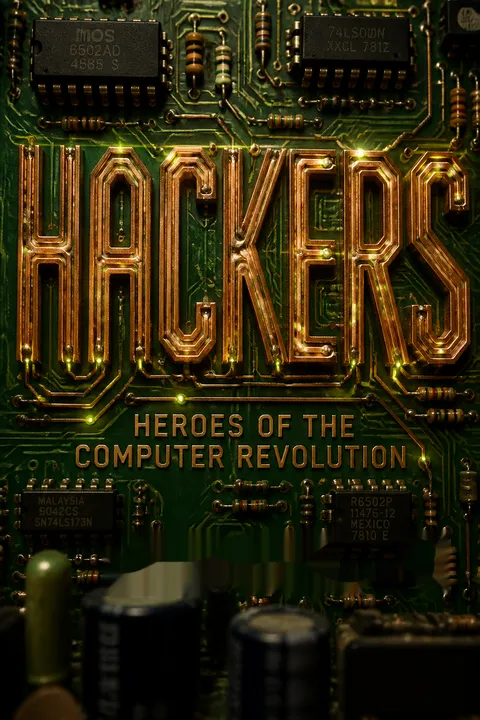


Key Takeaways
Treat machines as systems you can understand, alter, and improve
Curiosity meant contact. In 1958, MIT freshman Peter Samson found computers behind layers of operators, punch cards, and rules. He and fellow members of the Tech Model Railroad Club wanted to get their hands on the machinery and discover how it worked. Their signal-and-power crew already built elaborate electrical systems beneath the train layout, so the computer became a natural next challenge. They explored after hours, sometimes without permission, because watching from a distance could not satisfy their questions.
Learning by opening things. Levy calls this drive the Hands-On Imperative: the conviction that direct access to a system is essential for understanding and improving it. On the interactive TX-0, hackers could test code, see mistakes quickly, and revise their programs on the machine itself. The computer became both a tool and a place to explore.
The chapter’s lasting insight is that understanding often begins with manipulating a system, not merely reading about it. That resembles experiential learning: hypotheses become concrete when a learner can act, observe consequences, and try again. The TX-0 made that loop unusually immediate. Yet the hackers’ unauthorized explorations also raise a boundary question. Access can teach, but a system may serve people who did not consent to experiments. The productive version of hands-on learning therefore needs both room to tinker and a clear account of who bears the risk.
Share working knowledge so each discovery becomes everyone’s starting point
A culture took shape. Levy names the hackers’ shared outlook the Hacker Ethic. It prized broad access to computers and useful knowledge, distrusted bureaucratic control, judged people by their work rather than credentials, and treated programming as a medium for craft and creativity. It also held that computers could improve people’s lives. These beliefs were not a formal constitution. They emerged in practice as hackers left useful programs and tools where others could inspect, use, and improve them.
Build on prior work. Because the TX-0 arrived with little software, each new assembler or debugging tool made the next project easier. The hackers did not want every programmer to start from scratch. Their instinct to share was practical as well as idealistic: common tools saved time, exposed good ideas, and let a community improve the same system together.
This is an early picture of a knowledge commons: a shared resource that grows as participants contribute and reuse its contents. Its power is cumulative. A useful tool lowers the cost of the next experiment, and the next improvement benefits the group. But openness is not automatically fair. Someone still pays for time, equipment, and maintenance, while others may capture the benefits. The ethic is strongest when sharing is paired with a sustainable way to support contributors, rather than treated as proof that their labor has no value.
Let play expose what a new technology can actually do
A game became a demonstration. In 1962, MIT hacker Steve Russell created Spacewar on the PDP-1, a game in which two players piloted ships, fired torpedoes, and tried to avoid a central star’s gravity. Other hackers added features, including an accurate star field, gravitational pull, and a risky escape into hyperspace. They also built joysticks from available parts. The program spread freely to other PDP-1 owners, who could inspect and modify it.
Craft mattered in the code. Hackers admired not only the game’s entertainment value but also the ingenuity of the program. They practiced “program bumming,” the effort to make code shorter or more effective without losing its function. Spacewar showed that a computer could host a responsive, shared world, and that playful experimentation could reveal capacities formal applications might overlook.
Spacewar demonstrates how play can function as a demanding form of research. Players supplied feedback, programmers saw where the simulation failed to feel convincing, and each revision tested a technical idea in a memorable setting. This is close to the logic of a prototype: a working artifact makes possibilities visible before anyone can fully specify them. The qualification is that playful systems can also normalize their assumptions. Spacewar made combat entertaining, and its creators did not need to settle what that meant. Exploration expands capability, but it does not decide how capability should be used.
Put powerful tools within reach, then let users shape them
A computer for a garage. In 1975, the Altair 8800 arrived as a kit for $397. Its 256 bytes of memory and rows of switches made it difficult to use, but thousands of people wanted one. Members of the Homebrew Computer Club helped each other build memory boards, displays, and software. At one meeting, Steve Dompier used interference from his Altair to make a nearby radio play recognizable music, thrilling a room of hardware enthusiasts.
Design invited participation. Steve Wozniak’s Apple I and Apple II carried this experimentation toward a more usable personal computer. Woz packed powerful functions into a compact design, documented how the machine worked, and made expansion possible. The story also marks a shift: Steve Jobs and Wozniak formed a company to sell the machines. Wider access required production and distribution, not just brilliant design.
The Altair’s importance was not that it arrived polished. Its kit form made the user a participant in completing the product, and the club supplied the knowledge that a manufacturer had not yet packaged. This resembles community-based innovation, where people close to a problem modify tools for their own needs. But access depends on more than a low price. Parts, time, technical confidence, and welcoming communities also matter. Homebrew opened a door, though the predominantly male culture around it made clear that a door can be open in principle and still difficult for many people to enter.
Pay creators without turning useful knowledge into a locked vault
Software raised the stakes. When Bill Gates and Paul Allen wrote BASIC for the Altair, hobbyists copied the paper tape and passed it around without payment. Gates objected that programmers could not keep producing software if users treated their work as free. The hackers, meanwhile, believed programs should circulate so others could learn from and improve them. The conflict exposed a problem that earlier MIT programmers had rarely faced: software could now reach a large market and earn substantial money.
A cheaper experiment. Dennis Allison helped start Tiny BASIC, a stripped-down interpreter shared with readers of People’s Computer Company. Tom Pittman later sold a version for five dollars, and customers paid. His experiment suggested that affordable software could earn support without adopting high prices or keeping all technical knowledge secret. The book leaves the tension unresolved: creators need livelihoods, while users benefit from access and the freedom to learn.
The dispute is better understood as a design problem for incentives than as a simple contest between generosity and greed. If creators cannot sustain their work, the commons may shrink; if ownership blocks inspection and adaptation, users lose the learning and improvement that made shared software valuable. Pittman’s low price offers one compromise, not a universal answer. Different projects have different costs and audiences. The enduring question is how to reward creation while preserving meaningful freedoms, such as the ability to study a program, repair it, and share improvements.
Design for novices, because access can unlock unexpected talent
A new author appeared. Roberta Williams had little interest in computers until her husband showed her Adventure, a text game in which players explored an imaginary landscape by typing commands. After solving it, she wanted a more challenging game and devised Mystery House, a detective story with pictures. Ken Williams programmed the game logic, and the couple sold it themselves. It became an early hit in the emerging market for home-computer games.
The audience widened. Levy calls the young programmers who grew up with personal computers the Third Generation, following the institutional mainframe hackers and the hardware hackers who built machines at home. Their access did not require a trip to a university lab. People such as Roberta Williams, who began as a player rather than a programmer, could contribute ideas that technical specialists had not supplied. Games helped draw new users into the computer world.
Roberta’s path illustrates that access can reveal forms of expertise that conventional technical training does not predict. She understood what made an adventure compelling as a player, then turned that experience into design. In human-centered design, this is a reminder that users are not merely recipients of a tool. They can identify needs and possibilities that its builders miss. Still, access alone does not guarantee participation. Time, money, encouragement, and the chance to be taken seriously shape who gets to become a creator.
At scale, protect the makers’ voice as carefully as the product
Growth changed the bargain. Sierra On-Line grew from Ken and Roberta Williams’s home operation into a company selling successful games. John Harris, a young Atari specialist, spent months building a polished version of Frogger. After losing his disks at a software event, he struggled to restart, then rebuilt and improved the game. Its first month brought a royalty check of $36,000. The project showed how a programmer’s personal standards could produce a standout product, but also how delays could unsettle a business.
Professionalism had a cost. As Sierra expanded, it added managers, procedures, marketing, and plans to reduce programmer royalties. Harris objected to the loss of informality and artistic control, then left for another publisher. Ken Williams increasingly favored reliable delivery and product volume over the perfectionism of individual hackers. The company had gained reach, but the people who made its most distinctive work had less say in its direction.
The clash between Harris and Williams is not simply art against commerce. A product that arrives too late can miss its audience, and a growing company must coordinate work that one person once handled alone. Yet standardizing production can quietly transfer power from creators to managers, especially when the creator’s name and judgment disappear from the finished product. The useful question is not whether process is good or bad, but whether it supports creative work or replaces the conditions that made the work exceptional.
Openness needs boundaries when exploration affects other people
Access could cause damage. The MIT hackers’ search for knowledge sometimes crossed into telephone systems and restricted spaces. One night, Stewart Nelson rewired the PDP-1 to add an instruction. The change interfered with a weather program used by Margaret Hamilton, whose work stopped functioning. The incident showed that a technically clever intervention could impose costs on someone who had not agreed to the experiment.
The ideal had blind spots. The AI lab’s permissive computer culture relied on trust and few passwords, but its model did not fit every user or institution. The hackers were mostly men, and their values often dismissed privacy and property as barriers. Their work also depended heavily on Defense Department funding, even as some of them minimized the connection between research and military power. Openness encouraged invention, but the book’s own stories show why consent, inclusion, and accountability matter.
The book’s romantic account of access becomes more persuasive when read alongside its failures. A shared system can invite cooperation, but one user’s freedom can become another user’s outage or exposure. Security engineering treats this as a question of threat models and permissions, not merely trust. The same distinction applies socially: a community can feel open to insiders while remaining exclusionary to others. The hacker impulse to challenge arbitrary barriers is valuable, but barriers that protect people from harm are not all arbitrary.
Preserve hacker freedom through institutions, not nostalgia alone
A community fractured. At MIT, Richard Stallman watched hackers leave as the lab’s LISP-machine project split into commercial companies. Their code, once shared among colleagues, became a business asset. Stallman responded by developing free software and planning GNU, a freely available Unix-like operating system. His effort carried the ethic of shared access beyond the specific community that had first shaped it.
Values need a vehicle. Levy’s story runs from the TX-0 to personal computers, commercial games, and the conflicts over proprietary software. The 2010 afterword notes that free software and open-source communities kept some of the older ideals alive, even as companies adopted hacker practices to build products. The lesson is not that commerce ends hacking, or that the past can be restored. Shared work needs durable rules and institutions if it is to survive growth and conflict.
Stallman’s response highlights a crucial transition: an ethic that once depended on a local culture had to become explicit when that culture dispersed. Institutions can preserve practices that informal trust cannot sustain at scale, though formal rules also introduce trade-offs and disputes over who qualifies as free. The story therefore resists simple nostalgia. The earlier lab was productive, but it was also narrow and dependent on unusual conditions. The practical challenge is to build communities where openness is protected by design, contributors are respected, and participation is genuinely broad.
Analysis
Hackers is a history of computing told through a cultural argument: computers became personal not only because components shrank, but because people insisted on direct access, experimentation, and the right to change what they used. Its narrative moves through three distinct environments. At MIT, access to interactive machines produced a concentrated craft culture. In Northern California, the Altair and Homebrew Club turned that culture into a hardware movement. In the 1980s game business, personal computers invited new authors and customers, while commercial scale altered the meaning of sharing and control.
The book’s greatest strength is connecting technical artifacts to social arrangements. Spacewar is not merely an early game; its freely revised code shows how a community could turn play into collective design. The Apple is not merely a successful product; Wozniak’s open architecture shows how a machine can encourage users to become makers. The disputes over BASIC, copy protection, and royalties reveal that technical design always carries assumptions about ownership and authority.
The narrative is deliberately sympathetic to hackers, sometimes to the point of idealization. Their contempt for rules could lead to broken systems, privacy violations, or exclusion. The mostly male communities described here treated their own access as universal while rarely asking who was missing. Defense funding also complicates the picture of innocent, autonomous exploration. These tensions do not undo the book’s case. They make its central ethic more demanding: openness is a social responsibility, not just the absence of passwords.
The deeper historical claim is that hacker values did not simply defeat business. They changed what successful businesses considered useful: rapid iteration, flexible teams, and technical workers with unusual autonomy. Yet adoption can preserve methods while abandoning ideals. A company may encourage experimentation while restricting users’ ability to inspect or alter its products. The book remains valuable because it shows that the computer revolution was also a struggle over who gets to understand, shape, and benefit from a system.
Review Summary
Hackers receives mostly positive reviews, praised for its insight into early computer history and the hacker culture. Readers appreciate the detailed accounts of pioneering figures and the book's engaging storytelling. Some criticize its length, occasional technical inaccuracies, and dated perspectives on gender in tech. The book is divided into three parts, covering MIT hackers, hardware enthusiasts, and early game developers. Many consider it essential reading for those interested in computer science history, despite its flaws.
People Also Read




Glossary
Hacker Ethic
Open, hands-on computing valuesThe shared outlook Levy identifies among early computer hackers. It favors access to computers and useful information, distrusts unnecessary authority, values demonstrated skill over status, treats programming as a form of craft, and holds that computers can improve life. The ethic developed through practice rather than a formal manifesto, and its ideals became contested as computing entered commercial markets.
Hands-On Imperative
Learn by direct accessThe hacker conviction that important knowledge comes from directly engaging with a system: opening it, testing how it behaves, and making changes. For MIT’s early hackers, reading about computers or submitting programs through operators was insufficient. They wanted to work at the machine itself, where they could observe results, find faults, and improve their understanding.
program bumming
Optimize code for efficiencyA practice among early hackers of reducing the instructions or memory a program required while preserving what it did. Limited computer memory made compactness useful, but the practice also became a test of technical elegance. Hackers compared solutions, searched for unexpected algorithms, and treated a shorter, faster program as evidence of deep understanding.
Community Memory
Public computer message networkA 1970s Bay Area experiment that placed computer terminals in public locations so people could post and find messages based on shared interests. Users added notices about practical needs, local services, and personal ideas. Its organizers hoped that direct access to a decentralized system would help people connect without relying on centralized authorities or gatekeepers.
Incompatible Time-sharing System
Open, hacker-built time-sharing systemThe MIT AI Lab’s time-sharing system, usually called ITS, was built by hackers for an environment that encouraged experimentation. Multiple users could work at once, inspect and improve shared software, and in some cases communicate through one another’s terminals. Its lack of passwords expressed a strong faith in user trust, though that design also exposed the limits of openness.
Tiny BASIC
Compact BASIC for microcomputersA small BASIC interpreter designed to fit the severe memory limits of early personal computers such as the Altair. Dennis Allison proposed a participatory design, and hobbyists contributed implementations, corrections, and programs. Tiny BASIC offered an accessible alternative to expensive commercial software and became a prominent example of programmers sharing useful work while still experimenting with low-cost sales.
Third Generation
Personal-computer-era hackersLevy’s label for young programmers who grew up with personal computers in the late 1970s and early 1980s. Unlike mainframe hackers, they did not need institutional access; unlike hardware hackers, they could begin with machines ready to use. Many learned by modifying games and software, and some became independent game designers whose work reached a commercial audience.
FAQ
What's Hackers: Heroes of the Computer Revolution about?
- Exploration of hacker culture: The book delves into the lives and philosophies of early computer hackers, portraying them as adventurers and visionaries who saw computing as a revolutionary tool.
- Hacker Ethic: Steven Levy introduces the concept of the Hacker Ethic, which emphasizes sharing, openness, and the belief that access to computers should be unlimited.
- Historical context: The narrative spans from the 1950s to the 1970s, highlighting key figures and events that shaped the computer revolution, including the development of influential machines like the TX-0 and PDP-1.
Why should I read Hackers: Heroes of the Computer Revolution?
- Insight into technology's evolution: The book provides a fascinating look at how early hackers contributed to the development of modern computing.
- Understanding hacker mentality: Readers gain insight into the motivations and philosophies of hackers, helping to demystify the often misunderstood hacker culture.
- Cultural significance: Levy's work captures the spirit of innovation and rebellion that characterized the hacker movement, making it a compelling read for those interested in technology and society.
What are the key takeaways of Hackers: Heroes of the Computer Revolution?
- Hacker Ethic principles: The book outlines the Hacker Ethic, which includes beliefs such as "Access to computers—and anything that might teach you something about the way the world works—should be unlimited and total."
- Importance of collaboration: Levy emphasizes the collaborative nature of hacking, where knowledge is shared freely, leading to innovation and improvement of systems.
- Impact on society: The narrative illustrates how hackers have influenced not just technology, but also societal structures, advocating for decentralization and open access to information.
Who are the main figures in Hackers: Heroes of the Computer Revolution?
- Peter Samson: A key hacker who contributed to the development of the PDP-1 and was involved in various projects, including the famous LIFE simulation.
- Richard Greenblatt: Known for his work on AI and chess programming, Greenblatt exemplifies the hacker's dedication to systems and programming.
- Bill Gosper: A mathematician and hacker who became obsessed with the LIFE game, contributing significantly to its development and exploring its implications.
What is the Hacker Ethic as defined in Hackers: Heroes of the Computer Revolution?
- Access to information: The Hacker Ethic posits that "all information should be free," advocating for unrestricted access to knowledge and resources.
- Hands-On Imperative: Hackers believe in the necessity of direct interaction with systems to understand and improve them, emphasizing practical experience over theoretical knowledge.
- Mistrust of authority: The ethic promotes skepticism towards bureaucratic systems, encouraging decentralization and individual empowerment in the pursuit of knowledge.
How did the hacker culture evolve in the 1970s according to Hackers: Heroes of the Computer Revolution?
- Shift to hardware hacking: The 1970s saw a rise in hardware hackers who focused on building and modifying computers, moving away from the purely software-centric approach of earlier hackers.
- Community-driven projects: Initiatives like Community Memory emerged, aiming to bring computers to the public and promote the Hacker Ethic outside of academic and corporate environments.
- Spread of hacker ideals: As hackers migrated to new locations, such as Stanford, they carried their philosophies with them, influencing the development of new hacker cultures across the country.
What challenges did hackers face in Hackers: Heroes of the Computer Revolution?
- Bureaucratic restrictions: Hackers often encountered resistance from institutions that imposed strict rules and regulations, limiting their access to computers and resources.
- Public perception: The negative stereotypes of hackers as socially awkward or malicious individuals created barriers to understanding and acceptance of their contributions to technology.
- Internal conflicts: Tensions arose between hackers and academic or corporate entities, particularly regarding the direction of research and the prioritization of practical applications versus theoretical exploration.
How does Hackers: Heroes of the Computer Revolution relate to modern technology?
- Foundation of open-source movement: The principles of the Hacker Ethic laid the groundwork for the open-source software movement, which advocates for free access to software and collaborative development.
- Influence on tech culture: The book illustrates how the hacker mentality has permeated modern tech culture, promoting innovation, creativity, and a DIY approach to technology.
- Continued relevance of hacking: The challenges and philosophies discussed in the book remain pertinent today, as issues of privacy, access to information, and the role of technology in society continue to evolve.
What role did the Homebrew Computer Club play in the computer revolution?
- Networking Hub: The Homebrew Computer Club acted as a networking hub for hardware hackers, fostering collaboration and the exchange of ideas.
- Launchpad for Innovations: Many successful companies and products, including Apple, emerged from the ideas and innovations shared within the club.
- Community Spirit: The club embodied the spirit of the Hacker Ethic, promoting openness and the sharing of knowledge among its members.
How did the emergence of personal computers change the hacker landscape according to Hackers: Heroes of the Computer Revolution?
- Accessibility of Technology: Personal computers made technology accessible to a broader audience, allowing more people to engage in hacking and programming.
- Shift in Focus: The focus shifted from large, institutional systems to individual creativity and innovation, as more people began to see computers as tools for personal expression.
- Commercialization of Hacking: The rise of personal computers also led to the commercialization of hacking, with many hackers transitioning into successful entrepreneurs in the software industry.
How does Hackers: Heroes of the Computer Revolution address the commercialization of software?
- Shift in values: The book discusses how the rise of commercial interests has led to a departure from the original Hacker Ethic, prioritizing profits over creativity.
- Impact on innovation: It argues that commercialization can stifle innovation by imposing restrictions on how software can be used and shared.
- Examples of conflict: The narrative includes specific instances where hackers faced challenges from corporations, illustrating the ongoing struggle between idealism and profit.
What is the significance of the term "hacker" in Hackers: Heroes of the Computer Revolution?
- Positive connotation: The book emphasizes that "hacker" originally referred to someone who was innovative and skilled in programming, not a criminal or malicious figure.
- Cultural identity: It explores how the hacker identity has evolved over time, becoming associated with creativity, problem-solving, and a spirit of exploration.
- Misunderstanding and stigma: The book addresses the negative stereotypes that have emerged around hackers, particularly in the media, and advocates for a more nuanced understanding of their contributions.
About the Author
Other books by Steven Levy

Download PDF
Download EPUB
.epub digital book format is ideal for reading ebooks on phones, tablets, and e-readers.








