

Key Takeaways
Build the classroom around trust and participation, not post-disruption control
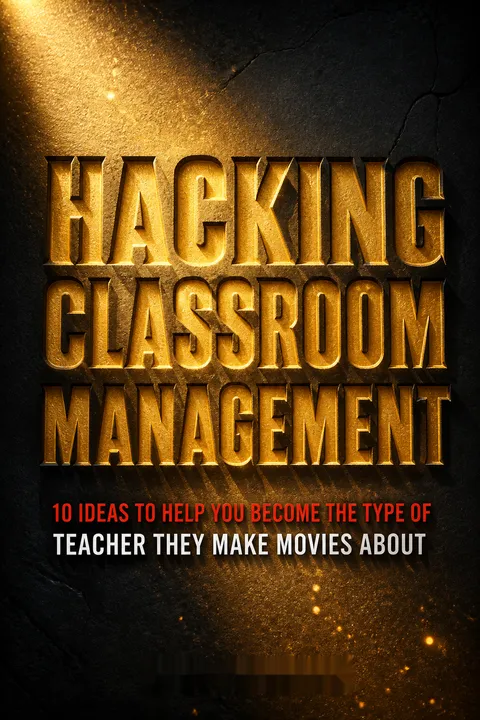
Prevent the fire. Mike Roberts argues that classroom management works best before misbehavior starts. Instead of relying mainly on punishments after disruptions, teachers can build a room where students feel respected, take part in learning, and know what is expected. The book’s movie-teacher image points to a practical distinction: effective teachers know their subject, but also know the people learning it.
Start with small changes. The strategies are designed to fit existing lessons and budgets, not require a curriculum overhaul. Roberts draws on nearly twenty years of teaching, classroom anecdotes, and familiar film teachers to make the case that relationships and routines reinforce one another. The goal is not a perfect, silent room. It is a purposeful community where students have reasons to stay engaged.
The central shift is from managing conduct as an isolated problem to designing the conditions that make productive conduct more likely. This aligns with ecological views of behavior: actions are shaped by relationships, task design, and setting, not simply by individual character. The approach also avoids treating order and warmth as opposites. Still, relational prevention cannot replace clear responses to serious disruption, and teachers need institutional support when student needs exceed what one classroom can address. The useful promise is narrower and stronger: ordinary routines can reduce needless friction while preserving authority.
Give students bounded choices so routines become shared responsibilities
Trade commands for ownership. Roberts calls this approach “classroom management 2.0”: students help shape ordinary procedures while the teacher retains responsibility for the room. Students might choose their seats if they remain productive, signal discreetly when they need to leave, or help define a few positive class agreements rather than face a long list of prohibitions.
Keep limits individual. If a student misuses a privilege, address that student instead of punishing everyone. Roberts also recommends posting the day’s schedule to reduce uncertainty and replacing surprise cold-calling with advance notice or an invitation for additional volunteers. One teacher in the book moved from eleven rules to two broad expectations, then asked students to explain what those expectations meant in practice. The aim is freedom with clear boundaries, not a free-for-all.
Bounded choice connects to self-determination theory, which distinguishes meaningful autonomy from the absence of structure. A student who can influence a routine may experience it as legitimate rather than imposed, making cooperation more durable. The emphasis on individual consequences also reflects procedural fairness: people are more likely to accept rules when they see them applied proportionately. Yet choice is not automatically equitable. A student with mobility, health, or safety needs may require different procedures, and participation in rule-setting should not let confident students dominate quieter peers.
Keep expectations high, but differentiate the route each student takes
Do not let history set the ceiling. Roberts warns that teachers can mistake past grades, accommodations, or family reputation for a student’s future ability. High expectations should remain challenging, but the path toward them may differ by student. He recommends modeling the behaviors requested of students, revisiting expectations throughout the year, and asking for feedback rather than assuming everyone understood the first explanation.
Trust must be visible. Small acts, such as allowing students to complete some work independently or asking them to explain whether an assignment is done, can communicate confidence. The book describes teacher Jaime Escalante, whose students were asked to tackle advanced calculus despite low prior expectations. Eighteen students passed the AP exam, an example Roberts uses to illustrate how ambition and sustained effort can change what a class believes is possible.
The strongest version of high expectations is not “the same demand for everyone,” but ambitious goals paired with different supports. That distinction matters because identical treatment can preserve unequal starting conditions. The chapter’s emphasis on teacher modeling is also powerful: credibility depends on whether adult behavior matches adult demands. At the same time, Escalante’s success story should inspire rather than serve as a universal forecast. Outcomes depend on time, resources, prior learning, and student circumstances. High standards are most defensible when they come with scaffolding and meaningful feedback.
Show up for students beyond class to earn trust inside it
Meet the whole student. A teacher who sees students only during lessons may miss the interests and strengths that make them easier to understand. Roberts recommends attending selected games, performances, dances, or other school activities, then speaking with students about them in class. The point is not to become a student’s friend or attend every event. It is to show professional support for something that matters to the student.
A small appearance counts. Roberts describes chaperoning fifty-seven middle-school dances over eighteen years. He did not enjoy every awkward song or snack, but those shared experiences created conversations and familiarity that a lesson alone could not. Teachers can start by asking what activities students participate in, checking the school calendar, and choosing events that fit their interests and time.
Shared experiences outside formal instruction create what social psychologists call common ground: a relationship gains material beyond evaluation and compliance. This can make later correction feel less like rejection and more like guidance. The book wisely treats attendance as selective rather than limitless, since teachers need boundaries and personal time. Access also varies: evening work, caregiving, disability, and transportation can make events difficult to attend. Schools can broaden the idea by creating daytime showcases or rotating staff presence, so connection does not depend on unpaid availability.
Break up sitting with structured movement tied to the lesson
Move with a purpose. Roberts’s “controlled movement” means students move as part of learning, rather than getting up randomly because they are restless or bored. He uses a ten-minute rule of thumb for direct instruction, then shifts to activities that require students to speak, write, act, or change position. A turn-and-talk can take a minute; students can write answers on the board; musical-chair discussions can regroup them between questions.
Structure keeps motion useful. A walk-and-talk pairs students for a discussion while the class walks a route around the school or nearby area. Clear prompts, short time limits, and planned partner changes keep the activity focused. Roberts also describes gradually adding standing desks, starting with four and expanding after students used them eagerly. These options make movement part of the lesson rather than a break from it.
Movement can support attention by changing the sensory and social demands of a task, and speaking while walking may help some students sustain discussion. The chapter’s practical insight is that noise is not the same as disorder: students can be active and on-topic at once. The ten-minute threshold, however, is a teacher’s rule of thumb, not a universal limit on attention. Movement should be adapted for mobility, sensory, and safety needs. A good test is whether the activity advances the learning goal, not whether it makes the room look energetic.
Borrow students’ media formats to make academic thinking visible
Use familiar forms. Roberts suggests using short videos, tweet-length summaries, and image-based explanations to make academic work more inviting. Students might summarize a lesson in a concise post, add a visual and caption to explain a concept, or use a brief video as a writing prompt. These formats can practice summarizing, collaboration, visual communication, and presentation while still serving the lesson’s learning target.
The platform is optional. Schools that block social media can use paper versions of the same assignments. A fourth-grade teacher in the book tried a tweet-style summary and found that every student wrote, while students familiar with the format helped explain it to classmates. Roberts cautions against letting the novelty swallow the objective: short video clips support the lesson, while longer image-based projects need time limits so an engaging task does not become an endless one.
The educational value is less about any particular app than about translating knowledge into a constrained form. A short post forces selection; an image-caption pair asks students to connect representation and explanation. Those demands make understanding easier to inspect than passive attention does. The book also gets an important equity point right by separating the format from the platform. However, social media familiarity should not be presumed universal, and public posting raises privacy concerns. Paper alternatives and classroom-only sharing preserve the learning task without requiring accounts or exposure.
Let students choose how to reach the learning target
Teach learners, not just material. Personalized learning, as Roberts uses the term, means varying instruction and offering choices while keeping the learning goal clear. A lecture can remain one useful method, but teachers can also use a podcast, video, discussion, or game. Students may choose partners, work alone, or demonstrate learning through writing, art, technology, or a project of their own design.
Offer choice with guardrails. Roberts describes a point-based menu of assessment options, where students select combinations that meet a required total. For a more open-ended assignment, students explain how their project demonstrates the target. Examples included a student learning to unicycle and another building an automatic watering system. Pre-assessments, such as a short knowledge check or a “Know, Wonder, Learned” reflection, help teachers avoid pitching work far above or below students’ current understanding.
Choice can increase ownership when students see a connection between their interests and the intellectual work. The learning target acts as a common destination, while products and routes vary. This resembles universal design for learning, which plans multiple ways for students to engage with and demonstrate knowledge. The danger is mistaking choice for preference alone. A student’s favorite format may not reveal deep understanding, so options need shared criteria and comparable cognitive demands. Self-selected groups also require attention to isolation, power differences, and students who need carefully structured collaboration.
Make assessment a conversation students can learn from
Show the criteria first. Roberts recommends self-assessment, discussion-based self-grading, and peer feedback that students use to assess their own work. For a project, students can review a rubric, identify strengths and gaps, and explain why their work deserves a particular score. For a test, the class can discuss answers together, allowing students to explain their thinking and ask why an answer is incorrect, not merely see a mark on the page.
Keep feedback about the work. In peer review, classmates comment on the substance of a project, such as clarity or organization, rather than assigning grades or proofreading every small error. The teacher still makes the final assessment and can discuss a score that seems far from the evidence. Roberts argues that transparent criteria and reflection reduce confusion, help students learn from mistakes, and make assessment less of a contest between teacher and student.
Assessment becomes more useful when it supplies information for the next attempt, rather than functioning only as a verdict. Explaining a score can reveal misconceptions that a number conceals, while peer comments expose students to alternative approaches. This is closely related to formative assessment, where evidence of learning guides instruction. The process does require practice: students may overrate or underrate their work, and peer feedback can be shallow or unkind without norms. Teacher moderation and explicit criteria are not exceptions to student ownership; they are what make that ownership credible.
Send regular praise home before families hear only about problems
Make good news routine. Roberts recommends beginning the year with a parent email asking for five little-known facts about each child. Teachers can share selected facts anonymously with the class as a guessing activity, building familiarity while making the first family contact positive. During the year, he suggests sending two brief positive emails a day to parents, colleagues, or administrators, copying the student and following up with them directly.
Notice more than grades. Emails can recognize effort, kindness, improvement, or helpfulness, not just high scores. At year’s end, parents can be asked to describe how their child has grown. One parent in the book says regular updates made it easier to support her son and made difficult conversations more collaborative. The practice can be adapted for families without email through a call or written note.
Positive communication changes the information families receive about school: a child is seen as more than a problem to solve or a score to report. It also builds relational credit before conflict, which can make later conversations less adversarial. The tactic is particularly effective when praise names a specific action and its impact, rather than offering vague flattery. Two emails daily may be unrealistic in some settings, and digital access is uneven, so the principle matters more than the quota: make strengths visible consistently and through channels families can use.
Use class openings and endings to make students feel noticed
Treat transitions as teaching time. Roberts realized that waiting for late arrivals and assigning quiet work at the end wasted minutes that could build connection. He now greets students at the door, uses a short warmup, and closes with shout-outs for students’ contributions. Together, the opening and closing routines take about four minutes, which he estimates can approach a tenth of some class periods.
Make the rituals repeatable. Warmups might invite students to share a weekend highlight, reflect on a mistake, name something they appreciate, or write a short poem about the week. At the end, the teacher recognizes several acts of effort or insight and can invite students to recognize peers. The rituals are structured, not free time. They also give teachers a quick read on students’ moods before instruction begins.
Rituals lower the social uncertainty of transitions. A greeting communicates recognition, while a predictable closing gives the class a shared sense of completion. These brief interactions also provide useful informal information about who may need attention that day. The tradeoff is real: four minutes matter in a crowded curriculum, and public praise can embarrass students who prefer privacy. Teachers can offer quieter forms of recognition and rotate who speaks. The principle is not mandatory cheerfulness, but deliberate attention at moments when students otherwise drift in or out unnoticed.
Make learning enjoyable often, not only on special occasions
Fun can support focus. Roberts argues that boredom is a frequent contributor to misbehavior and that enjoyable activity can make students more willing to engage. He favors small, regular pleasures over rare extravaganzas: a review game, a birthday recognition, a funny story, drawing, a short joke, or a brief celebration of a class achievement. Field trips and guest speakers can extend learning beyond the classroom when planning and resources allow.
Keep the learning in view. Fun should reinforce or accompany the academic goal, not replace it. A game can review vocabulary; a drawing can explain a concept; a guest speaker can bring a subject into contact with a real profession. Roberts recalls a teacher whose stories, music, and student sharing made class memorable, and whose students wanted to preserve the welcoming atmosphere. Clear boundaries help keep humor and celebration inclusive and appropriate.
Enjoyment is not merely decoration. Positive emotion can support attention, persistence, and social connection, especially when an activity gives students a reason to participate. The book’s strongest claim is that engagement itself can prevent some management problems, rather than requiring a separate disciplinary intervention. Still, fun is not a cure-all: students can be bored by meaningful work, and entertaining activities can distract from learning if goals are unclear. A useful design question is whether enjoyment draws students deeper into the subject or simply postpones it.
Analysis
Roberts’s most consequential move is to redefine classroom management as the design of relationships, routines, and learning conditions, not simply the enforcement of rules. The ten strategies vary widely, from student-chosen seating to social-media-style assignments, but share a common mechanism: students receive more agency, more evidence that the teacher knows them, and clearer reasons to participate. The book’s movie-teacher frame keeps the argument vivid, while its classroom anecdotes make the recommendations feel usable rather than theoretical.
The strongest practical insight is that behavior and instruction cannot be cleanly separated. A confusing task, a long stretch of passive listening, or an assessment whose criteria are opaque can create the very friction teachers later try to punish. Movement, choice, recognition, and transparent assessment are therefore not add-ons to management. They alter the conditions that shape participation. The repeated emphasis on low-cost adjustments also respects teachers’ limited time and resources, even when some proposals, such as extracurricular attendance or personalized assessment, can demand substantial labor.
The evidence is primarily practitioner experience and illustrative stories, not controlled comparisons. That makes the book a useful source of hypotheses and adaptable practices, not proof that a particular routine works for every age, subject, or community. Its confidence about fun, autonomy, and student trust should be balanced with considerations of accessibility, privacy, safeguarding, and the unequal burdens placed on teachers. Strong implementation means adapting the ideas, preserving clear academic standards, and checking whether students who are less vocal or less socially connected benefit too.
The framework is most valuable when read as an invitation to experiment: change a routine, observe what students do, and revise. That stance is more durable than copying a movie teacher’s charisma. The cinematic ideal can inspire, but effective classrooms are built through ordinary acts repeated consistently: greeting students, explaining expectations, offering useful choices, noticing effort, and responding fairly when a boundary is crossed.
Review Summary
Hacking Classroom Management receives mostly positive reviews, with an average rating of 3.98/5. Readers appreciate its practical tips for building student relationships and improving classroom dynamics. Many find it a quick, insightful read with creative ideas for engagement. Some teachers note its secondary focus but still find value for other grade levels. While not groundbreaking, the book offers useful strategies for both new and experienced educators. Critics mention a lack of novel information or applicability to specific subjects like math.
People Also Read









Glossary
Classroom management 2.0
Student ownership of routinesRoberts’s term for classroom management that gives students a meaningful voice in ordinary procedures while leaving the teacher responsible for the room. Examples include student input on class agreements, flexible seating when students remain productive, and discreet bathroom procedures. The concept replaces rule-heavy control with bounded autonomy, shared responsibility, and individual responses to problems.
controlled movement
Movement serving the lessonA teaching approach in which students move as part of a planned learning activity rather than getting up unpredictably. Examples include discussing a prompt while walking, changing groups between questions, acting out vocabulary, or writing ideas on the board. Clear directions, purposeful tasks, and time limits make movement an instructional routine rather than a distraction.
turn-n-talk
Brief partner discussionA short classroom activity in which students turn toward a partner and discuss a question, idea, or recently taught concept. Roberts uses it to give students time to think aloud, engage with one another, and prepare to contribute to a larger discussion. It also introduces a small amount of movement without requiring substantial preparation or room rearrangement.
self-assessment
Student reflection against criteriaA process in which students judge their own work against stated learning targets or a rubric, then explain the score or judgment they assigned. Roberts uses it to help students identify strengths and areas for improvement and to shift attention from comparison with classmates toward their own learning. The teacher reviews the work and discusses scores that do not match the evidence.
self-grading/discussion-based grading
Reviewing answers through discussionA teacher-guided process, commonly used for tests or assignments with defined answers, in which students mark their own work while discussing answers and reasoning with the class. Students can ask questions and examine why responses are right or wrong. The discussion turns grading into an opportunity to clarify understanding, while the teacher remains responsible for addressing inaccuracies.
peer review to self-assessment
Peer comments inform reflectionA sequence in which students receive content-focused comments from classmates, then use those comments to reflect on and assess their own work. Peers identify strengths and possible improvements rather than assigning grades or editing every detail. Students explain their own judgment, and the teacher reviews the final assessment. The method is intended to make feedback useful without transferring grading authority to peers.
FAQ
1. What is "Hacking Classroom Management" by Mike Roberts about?
- Practical Classroom Management Guide: The book offers 10 actionable "hacks" to help teachers create engaging, well-managed classrooms where students thrive.
- Proactive, Not Reactive: Roberts focuses on proactive strategies to prevent behavioral issues, rather than just reacting to problems after they occur.
- Movie-Inspired Teaching: The book draws inspiration from iconic "movie teachers," blending real-world classroom experience with lessons from popular films.
- Universal Application: The hacks are designed to be adaptable for any grade level, subject, or school environment, making them relevant for all teachers.
2. Why should I read "Hacking Classroom Management" by Mike Roberts?
- Immediate, Actionable Tips: Each chapter includes "What You Can Do Tomorrow" sections, offering quick strategies teachers can implement right away.
- Boosts Teacher and Student Morale: The book aims to help both teachers and students feel like "classroom stars," increasing engagement and satisfaction.
- Focus on Relationships: Roberts emphasizes building strong teacher-student relationships as the foundation for effective classroom management.
- Cost-Effective and Practical: Most hacks require little to no extra expense and can be integrated into existing curricula without major overhauls.
3. What are the key takeaways from "Hacking Classroom Management"?
- Empower Students: Shifting some classroom control to students increases their investment and engagement.
- Set and Model High Expectations: Consistently holding students to high standards, while modeling those standards yourself, leads to better outcomes.
- Personal Connections Matter: Supporting students outside the classroom and personalizing learning builds trust and reduces behavioral issues.
- Fun and Engagement Are Essential: Incorporating fun, movement, and celebration into the classroom environment improves both learning and behavior.
4. How does Mike Roberts define "Classroom Management 2.0" in "Hacking Classroom Management"?
- Student-Centered Approach: Classroom Management 2.0 moves away from strict control and towards giving students autonomy and ownership.
- Positive Framing: Rules and expectations are framed positively, focusing on what students should do rather than what they shouldn't.
- Collaborative Rule-Making: Students are included in creating class agreements and procedures, increasing buy-in and adherence.
- Trust and Respect: Building a foundation of mutual trust and respect is prioritized over rigid enforcement of rules.
5. What are some specific hacks or strategies recommended in "Hacking Classroom Management"?
- Flexible Seating and Bathroom Policies: Allowing students to choose their seats and use nonverbal bathroom signals fosters responsibility.
- No Cold Calling: Instead of putting students on the spot, Roberts suggests prepping quieter students in advance to encourage participation.
- Movement-Based Learning: Incorporating activities like turn-n-talks, walk-n-talks, and standing desks keeps students engaged and reduces disruptions.
- Positive Communication: Regularly sending positive emails to parents and students builds a supportive classroom community.
6. How does "Hacking Classroom Management" suggest teachers set and maintain high expectations?
- Explicitly State Expectations: Clearly articulate behavioral and academic expectations from day one and reinforce them regularly.
- Model Desired Behaviors: Teachers should exemplify punctuality, respect, and preparedness to set the standard for students.
- Differentiate and Personalize: Adjust expectations to challenge each student appropriately, using differentiation and personalized learning.
- Trust Students: Show trust by allowing students to take responsibility, such as with take-home tests or self-assessment.
7. What role does building relationships play in "Hacking Classroom Management" by Mike Roberts?
- Foundation for Management: Strong teacher-student relationships are presented as the cornerstone of effective classroom management.
- Support Beyond the Classroom: Attending students’ extracurricular events and showing interest in their lives builds rapport and trust.
- Personalized Learning: Understanding students as individuals allows for more meaningful, engaging, and effective instruction.
- Positive Reinforcement: Recognizing students’ efforts and achievements, both big and small, strengthens relationships and classroom culture.
8. How does "Hacking Classroom Management" address assessment and grading?
- Student Involvement: The book advocates for self-assessment, self-grading, and peer review to make grading more transparent and meaningful.
- Reflection Over Scores: Emphasis is placed on students reflecting on their own learning and progress, rather than just focusing on grades.
- Discussion-Based Grading: Grading can be a collaborative process, with students discussing answers and learning from mistakes in real time.
- Reducing Stress: These methods aim to reduce anxiety around grades and shift the focus to growth and understanding.
9. What does Mike Roberts say about using fun, games, and celebrations in classroom management?
- Fun as a Management Tool: Incorporating fun activities, games, and celebrations is seen as essential for engagement and reducing misbehavior.
- Frequent, Small Doses: Regular, small moments of fun are more effective than occasional big events.
- Classroom Community: Activities like birthday boards, joke sharing, and class selfies foster a sense of belonging and joy.
- Balance with Learning: Fun should supplement, not replace, academic content, enhancing the overall classroom experience.
10. How does "Hacking Classroom Management" recommend using social media and technology in the classroom?
- Leverage Student Interests: Use platforms like YouTube, Twitter, and Instagram (or their analogs) to make learning relevant and engaging.
- Creative Assignments: Assignments modeled after social media posts (tweets, Instagram summaries) encourage concise, creative expression.
- Adapt to Restrictions: Even if social media is blocked, similar activities can be done with pen and paper.
- Continuous Learning: Teachers are encouraged to learn from students about new platforms and trends, modeling lifelong learning.
11. What are some common concerns or pushbacks addressed in "Hacking Classroom Management," and how does the book respond?
- Loss of Control: Teachers may fear chaos with more student autonomy, but Roberts argues that clear expectations and trust prevent this.
- Time Constraints: While some hacks require extra time, the book contends that the benefits in engagement and behavior outweigh the costs.
- Assessment Skepticism: Concerns about self-assessment accuracy are addressed by emphasizing teacher oversight and clarifying expectations.
- Fun and Professionalism: The book reassures that fun and professionalism are not mutually exclusive; a joyful classroom can still be rigorous and respectful.
12. What are the best quotes from "Hacking Classroom Management" and what do they mean?
- "Control leads to compliance; autonomy leads to engagement." – Emphasizes the shift from strict control to empowering students for deeper involvement.
- "Movie-worthy teachers know their students and teach their content." – Highlights the importance of personal connections over mere content delivery.
- "Never, ever underestimate the importance of having fun." – Reminds teachers that fun is a vital part of a positive, well-managed classroom.
- "Kind words can be short and easy to speak, but their echoes are truly endless." – Stresses the lasting impact of positive communication with students and parents.
- "A desk is a dangerous place from which to view the world." – Encourages movement and active learning as essential classroom practices.
Download PDF
Download EPUB
.epub digital book format is ideal for reading ebooks on phones, tablets, and e-readers.








