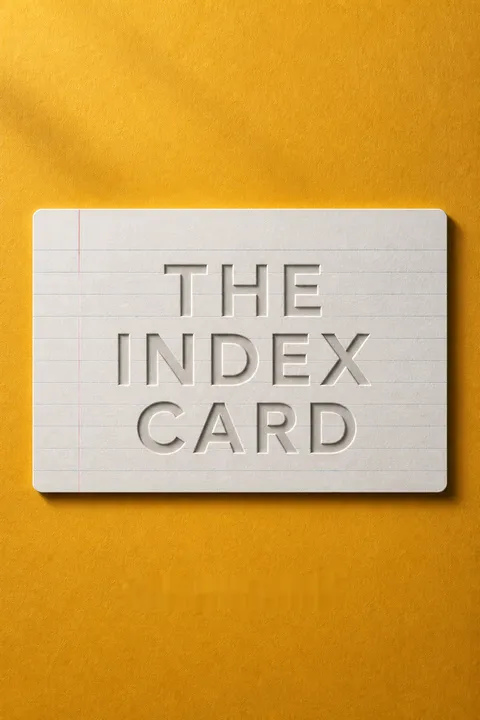


Key Takeaways
Keep the plan small: a few rules beat financial paralysis
Confusion has a cost. Sam inherited money after his father died, but conflicting advice and fear of making a mistake left it sitting in a bank account. Inflation eroded its value while he missed a rising market. Harold Pollack and Helaine Olen argue that ordinary people do not need a secret investment trick or a maze of expert products. They need a short list of dependable decisions they can understand and follow.
The card came from real strain. Harold built his approach while caring for his brother-in-law Vincent, whose needs brought medical bills and a reduced household income. The resulting guidance is practical rather than magical: save, control expensive debt, use tax-advantaged accounts, invest simply, protect against major risks, and ask for advice from someone legally obligated to put the client first.
The book's strongest move is to treat complexity as a practical hazard, not merely an intellectual inconvenience. When choices feel consequential and contradictory, people can freeze, as Sam does. A compact rule set reduces the number of decisions required and makes action more likely. Simplicity, however, is not the same as universal suitability. Income, health, family obligations, and local housing costs vary sharply. The card works best as a decision compass, not a substitute for adapting the route to a household's actual circumstances.
Track three months of spending, then automate savings toward 10 to 20 percent
Make the invisible visible. The authors recommend recording every purchase and bill for three months, long enough to catch irregular costs such as car repairs and medical expenses. Sort spending into meaningful categories, then build a flexible plan that covers essentials, allows some enjoyment, and identifies what can be redirected. They caution against treating a budget as a rigid monthly script because expenses rise and fall.
Start with what works. Saving 10 to 20 percent of gross income is the long-term target, not a pass-or-fail test. Someone starting from zero can begin at 1 percent of take-home pay and increase gradually. Automatic transfers help money arrive in savings before it is spent. The authors also warn that small treats are rarely the main budget problem: housing, transportation, health care, and other large costs matter more.
Tracking creates feedback, a principle shared with behavioral approaches to exercise, nutrition, and project management. People cannot adjust a pattern they cannot see. Automation adds a useful second layer: it makes the preferred action the default instead of a monthly act of willpower. The book also resists the moralizing habit of blaming every shortfall on small indulgences. Still, measurement cannot manufacture surplus when essential costs exceed income. Its value is diagnostic: it can reveal choices, but also expose constraints that require larger changes.
Keep three months of essential expenses accessible before surprises become debt
Build a cash buffer. The authors define an emergency as an immediate, necessary expense, such as a medical problem, a broken heater, or lost income. They recommend setting aside three months of essential living expenses in an accessible savings account. That amount is based on core bills, not three months of take-home pay. The fund buys time when life disrupts the plan and can prevent a sudden repair from becoming high-interest borrowing.
Attack costly debt. Credit card interest averaged around 15 percent in the period discussed, with store cards often higher. Paying down such a balance produces a dependable, tax-free return equal to the interest avoided. List debts, pay at least the required minimum on each, and direct extra money toward the highest-rate balance. Paying smaller debts first may feel motivating, but can cost more in interest.
Liquidity is valuable because it protects against forced choices. An emergency fund is not simply money earning a low return; it is a buffer against borrowing at punishing rates or selling investments at a bad time. The authors' emphasis on high-interest debt is mathematically strong, while their allowance for a small cash reserve recognizes that people need resilience as well as efficient arithmetic. The right balance depends on stability of income and access to support. A household with volatile earnings may need more cash than the suggested starting point.
Claim every employer match and start retirement saving before time runs short
Time does much of the work. The book illustrates compounding with a simplified example: saving $104 monthly from age 25 for 40 years, at a 6 percent annual return, grows to about $200,000. Starting at 45 would require roughly $430 a month to reach the same amount. Returns are uncertain, but delaying leaves fewer years for growth. The authors caution against assuming people can simply work forever, since illness, caregiving, layoffs, and age discrimination can force an earlier exit.
Use the available machinery. Contribute enough to a workplace retirement plan to receive the full employer match. The book cites an estimate that workers who miss part of the match forgo an average of $1,336 a year. Then consider tax-advantaged accounts such as a 401(k), 403(b), or IRA. Avoid withdrawing retirement savings except when genuinely out of options, since taxes, penalties, and lost growth can compound the damage.
Retirement saving combines two powerful design features: a long time horizon and automatic payroll deductions. The match is especially important because it is compensation tied to a specific action, not a speculative market gain. The example also makes delay concrete: the later saver must contribute far more, precisely when other expenses may be heavier. Yet a fixed savings target can sound indifferent to people facing unstable work or urgent debt. The most useful reading is prioritization, not shame: capture available benefits when possible, then increase contributions as circumstances allow.
Stop picking individual stocks; even confident investors can misread the future
A familiar company is not a safe bet. Kodak once dominated film photography, employed many people in Harold's hometown, and belonged to the Dow Jones Industrial Average. New competitors and digital photography changed its fortunes, and the company later went bankrupt. A local pizza franchise also attracted investors who loved its food, but its stock became nearly worthless. Helaine's own dot-com investment in AOL shows how easy it is to be swept up in a market boom.
Confidence is not an edge. The authors cite research showing that individual investors often buy after prices rise, sell after falls, and trade away returns. They estimate that fewer than 1 percent can consistently beat the market. A celebrated investor's success does not make stock-picking advice suitable for everyone: even Warren Buffett urged his heirs toward a low-cost index fund.
These stories expose a category error: knowing a product, or liking a company, is not the same as knowing what its shares are worth. A business can be admired and still be vulnerable to technological change, competition, or a price that already assumes exceptional growth. The chapter's deeper argument is about limits of prediction, not a claim that no investor ever succeeds. A small speculative position may be entertainment for someone who can afford the loss, but it should not be confused with a dependable household plan.
Buy broad index funds cheaply, diversify, and leave them alone
Own the market, not a hunch. An index fund tracks a benchmark, such as a broad stock or bond index, rather than paying a manager to guess which investments will outperform. The authors report that more than 80 percent of domestic stock funds underperformed their benchmark over a five-year period, and fewer than 1 percent of actively managed funds beat their index after expenses in the research they cite.
Fees quietly compound too. The book compares average annual fees of 0.89 percent for managed stock funds with 0.12 percent for equity index funds. On a $5,000 investment growing at 6 percent for 30 years, the fee gap can mean more than $5,000 less. Diversify across stocks and bonds according to the purpose and timing of the money. Funds needed soon belong in safer holdings than retirement savings with decades to grow.
Low-cost indexing turns a difficult forecasting contest into a manageable ownership decision. Diversification reduces dependence on any one company, while lower fees preserve more of the return for the investor. The practical advantage is psychological as well as financial: a portfolio that requires little monitoring offers fewer invitations to panic or chase a hot tip. Indexing does not remove market risk, and a broad fund can fall sharply. Nor does one allocation suit every person. The durable principle is to match risk to time horizon, spread exposure, and scrutinize costs.
Hire advice only when the adviser owes you fiduciary loyalty
A title is not a promise. A fiduciary is an adviser legally required to put the client's interests ahead of personal or firm interests. By contrast, the suitability standard permits recommendations that are considered acceptable even when a cheaper or better option exists. The authors warn that many people assume anyone called a financial adviser must act as a fiduciary, though that label alone does not guarantee it.
Ask about incentives in writing. Commission-based products can reward salespeople for steering clients toward costly investments. The book recommends asking whether the adviser acts as a fiduciary at all times, how the adviser is paid, and whether commissions are involved. Fee-only advice means the client pays the adviser directly, rather than the adviser also earning sales commissions. Check disciplinary records and do not treat a friendly manner, a free meal, or impressive credentials as proof of impartiality.
Financial advice is an agency problem: the client seeks guidance, while the adviser may face incentives that do not align with the client's outcome. The fiduciary question makes that conflict visible and gives consumers a concrete way to test a relationship. It is a more useful screen than charisma or a long list of credentials. Still, fiduciary status cannot guarantee good judgment, low fees, or a suitable plan. The authors appropriately pair the legal standard with due diligence, which keeps trust from becoming blind delegation.
Treat a house as shelter first, not a guaranteed investment
Readiness beats urgency. Harold and Veronica bought a Chicago home in 2003 with help from a second mortgage and a family loan, despite lacking a conventional down payment. More than a decade later, the house was worth about $70,000 less than they had paid. The story counters the belief that property values only rise. Home ownership can build equity, but it is leveraged, expensive, and exposed to local market declines, taxes, repairs, and transaction costs.
Protect the household first. The authors advise controlling debt, keeping an emergency fund separate from the down payment, and saving as close to 20 percent down as possible. They favor a 15- or 30-year fixed-rate mortgage and suggest keeping housing costs within roughly a third of take-home pay when feasible. Buying makes most sense when the household can afford the full costs and expects to stay long enough to offset buying and selling expenses.
A home is both a consumption good and a concentrated investment, a combination that makes simple comparisons with rent misleading. It can provide stability and control over one's living space, yet its risks cluster in one property and one local market. The authors' own loss makes their warning unusually credible. Their numerical rules should be treated as guardrails, not universal laws: housing costs and available options differ by region. The central test is whether the purchase remains workable under ordinary setbacks, not whether a broker predicts rising prices.
Insure against financial ruin, not every broken appliance
Protect the balance sheet. Insurance is meant to absorb losses a household could not comfortably pay itself. The authors recommend term life coverage when others depend on the insured person's income or care, and disability coverage when available through work. For homeowners and renters, they favor understanding exactly what a policy excludes and considering higher deductibles for manageable losses. For auto coverage, liability matters especially because a serious accident can create costs far beyond the value of a vehicle.
Read the fine print. Health coverage is essential, but deductibles, networks, and uncovered services can still leave large bills. Confirm that important doctors and hospitals are in network. The authors advise against complicated, high-commission products such as variable annuities and cash-value life policies when simpler options fit. Their rule of thumb is liability coverage of at least twice net worth, with umbrella coverage considered for people with greater assets or income.
Insurance is a tool for transferring losses that are too large or unpredictable to absorb, not a promise to reimburse every inconvenience. That distinction explains why high deductibles can make sense when a household has cash for small repairs, while catastrophic health, disability, or liability risks deserve serious attention. The chapter also recognizes that a policy's label is less important than its exclusions and claims process. Its recommendations are broad rather than personalized, so coverage limits and policy terms deserve careful comparison before purchase.
Protect Social Security and Medicare as part of your household plan
Personal discipline has limits. The book closes by challenging the idea that every financial outcome is an individual achievement or failure. Harold's family relied on public programs and supports while caring for Vincent, who has an intellectual disability. Without that assistance, their savings could have been overwhelmed. The authors cite research suggesting 96 percent of people have used government financial support at some point, even though many do not recognize benefits such as student loans or tax deductions as public assistance.
Shared protection matters. Social Security is a major source of retirement income, particularly for people with limited savings. The authors argue that Medicare, Medicaid, unemployment insurance, and other supports help households survive risks that private planning cannot fully control. Their final advice is civic as well as personal: acknowledge the public support people use, and speak up for programs that help protect families from illness, job loss, disability, and old age.
This ending corrects a common blind spot in personal finance: a household's security depends partly on institutions beyond its control. Savings and insurance help individuals withstand shocks, while public programs pool risk across a much larger community. That does not make personal planning irrelevant; it clarifies its limits. The argument is strongest when it rejects the false choice between self-reliance and collective support. The book's cited figures are tied to its publication period, but its central point remains analytical: private balance sheets cannot substitute for every form of social insurance.
Analysis
The book's unusual strength is its sequence. It begins with paralysis, not optimization: Sam receives money, encounters a thicket of contradictory advice, and does nothing. The answer is not more expertise but a short set of decisions that reduce the likelihood of avoidable losses. Saving creates liquidity; liquidity limits dependence on expensive credit; retirement accounts and index funds make long-horizon investing more automatic; fiduciary standards address conflicts of interest; insurance and public programs address risks that household discipline cannot eliminate. The rules reinforce one another rather than functioning as isolated tips.
That structure also carries a social argument. The authors reject the notion that financial hardship reliably signals personal irresponsibility. Wage stagnation, rising essential costs, illness, caregiving, and financial industry incentives constrain individual choices. Their practical advice therefore avoids two opposite mistakes: fatalism, which leaves Sam's inheritance idle, and self-blame, which treats structural pressures as failures of character. The book asks readers to act where they have leverage while recognizing where they do not.
Its simplicity has boundaries. The 10 to 20 percent savings target, age-based investment heuristics, insurance rules of thumb, and home-buying thresholds cannot account for every household's income, geography, health, or obligations. The text is also rooted in 2015 and 2016 figures and rules, including retirement account limits and insurance conditions; those specifics should be checked against current regulations before being used. The durable contribution is less a universal spreadsheet than a hierarchy of attention: build resilience, eliminate especially costly mistakes, use low-cost tools, question incentives, and insure against losses that could overwhelm a household. The index card is powerful because it narrows the field of decisions, not because it predicts every circumstance.
Review Summary
The Index Card receives mostly positive reviews for its simple, practical financial advice. Readers appreciate its concise approach, covering essential topics like saving, investing, and insurance. Many find it accessible for beginners and a good refresher for others. The book's emphasis on index funds and fiduciary advisors is praised. Some criticize specific recommendations, like supporting Social Security. Overall, reviewers commend the book for demystifying personal finance and providing actionable steps, though a few note its US-centric focus.
People Also Read






Glossary
The Index Card
A compact financial rule setThe authors' shorthand for a small group of practical personal finance rules intended to replace confusing, conflicting advice. The rules cover saving, high-interest debt, tax-advantaged accounts, simple diversified investing, fiduciary advice, home buying, insurance, and the social safety net. The card is a guide to action, not a guarantee against financial loss.
tunneling
Scarcity narrows financial attentionA term the book draws from the work of Sendhil Mullainathan and Eldar Shafir. Tunneling describes how persistent scarcity directs attention toward urgent problems and makes it harder to consider wider consequences. In financial life, repeated cash-flow crises can encourage short-term borrowing or missed payments, even when those choices create larger costs.
non-latte factor
Large costs dominate small cutsThe authors' counterpoint to advice that small daily purchases are the main obstacle to saving. It emphasizes that large expenses such as housing, transportation, and health care often have a greater effect on a household budget, while being much harder to change quickly. Reviewing minor costs can help, but should not obscure the bigger financial pressures.
fiduciary standard
Legal duty to prioritize clientsA standard requiring a financial adviser to put the client's interests ahead of the adviser's own. The book contrasts it with advice arrangements where recommendations need only meet a suitability threshold and may be affected by commissions or other incentives. The authors recommend asking whether the adviser acts as a fiduciary at all times and how the adviser is compensated.
suitability standard
Advice must be broadly suitableA standard the book contrasts with fiduciary duty. Under the authors' explanation, a recommendation may meet this standard if it is considered appropriate for a client, even if a less expensive or more advantageous option exists. Because compensation can influence recommendations, consumers are urged to ask about conflicts, commissions, and the adviser's legal obligations.
Four Ls
Older limits on consumer creditThe book's shorthand for four features it says helped earlier generations avoid some forms of consumer debt: limited access to credit, layaway plans, help from loved ones, and loan sharks. The contrast is with modern easy credit, which lets people borrow quickly and can make high-interest debt feel like ordinary spending.
index fund
A fund tracking a benchmarkA mutual fund or exchange-traded fund designed to follow a selected market index rather than trying to outperform it through active investment choices. The book recommends broad, diversified index funds with low fees, arguing that they reduce dependence on stock-picking skill and leave more investment returns with the saver.
asset allocation
How investments are dividedThe distribution of a portfolio among categories such as stocks and bonds. The book explains that an allocation should reflect the investor's goals, time horizon, and tolerance for risk. Money needed soon should generally be exposed to less market fluctuation than retirement savings intended to remain invested for decades.
Consumption Contagion
Luxury spending spreads social pressureThe book's name for research by economists Marianne Bertrand and Adair Morse on how spending by wealthier households can influence consumption among people lower on the income ladder. This pressure to keep pace with visible luxury can reduce savings, even when wages are not keeping up with rising costs.
FAQ
What's "The Index Card: Why Personal Finance Doesn't Have to Be Complicated" about?
- Simplifying Personal Finance: The book argues that personal finance can be simplified to a few basic rules that fit on an index card.
- Practical Advice: It provides straightforward, practical advice for managing money, saving, and investing without getting overwhelmed by complexity.
- Authors' Backgrounds: Written by Helaine Olen and Harold Pollack, the book combines Olen's experience in exposing the pitfalls of the financial industry with Pollack's practical solutions.
- Real-Life Stories: The book includes real-life stories and examples to illustrate how following simple financial rules can lead to financial security.
Why should I read "The Index Card"?
- Accessible Financial Guidance: It offers accessible and easy-to-understand financial advice for those who feel overwhelmed by complex financial jargon.
- Empowerment: The book empowers readers to take control of their financial lives with confidence, using simple and effective strategies.
- Avoiding Pitfalls: It helps readers avoid common financial pitfalls and traps set by the financial services industry.
- Proven Strategies: The advice is based on proven strategies that have worked for the authors and many others.
What are the key takeaways of "The Index Card"?
- Simple Rules: The book emphasizes that the best financial advice can be boiled down to a few simple rules that fit on an index card.
- Avoid Complexity: It advises against buying individual stocks and instead recommends low-cost index funds.
- Financial Security: Building an emergency fund and saving for retirement are highlighted as crucial steps for financial security.
- Fiduciary Standard: The importance of working with financial advisors who adhere to the fiduciary standard is stressed.
What are the best quotes from "The Index Card" and what do they mean?
- "The correct advice for most people fits on a three-by-five-inch index card." This quote encapsulates the book's central thesis that personal finance doesn't have to be complicated.
- "Save 10 to 20 percent of your money—or as much as you can." This emphasizes the importance of saving a significant portion of your income for future security.
- "Pay your credit card balance in full every month." This advice is crucial for avoiding high-interest debt and maintaining financial health.
- "Invest in low-cost index funds." This suggests a simple, effective investment strategy that avoids the pitfalls of trying to pick individual stocks.
How does "The Index Card" suggest managing debt?
- Pay in Full: The book advises paying off credit card balances in full every month to avoid high-interest charges.
- Rank Your Debt: It suggests ranking debts by interest rate and focusing on paying off the highest interest rate debts first.
- Avoid Minimum Payments: Paying more than the minimum on credit cards is recommended to reduce debt faster.
- Consider Bankruptcy: If overwhelmed by debt, the book suggests considering bankruptcy as a viable option without shame.
What investment strategies does "The Index Card" recommend?
- Index Funds: The book strongly recommends investing in low-cost index funds rather than individual stocks.
- Diversification: It advises diversifying investments across different asset classes to spread risk.
- Long-Term Focus: The authors advocate for a long-term investment strategy, avoiding the temptation to time the market.
- Avoid High Fees: Keeping investment fees low is emphasized as a way to maximize returns over time.
What does "The Index Card" say about retirement planning?
- Start Early: The book stresses the importance of starting retirement savings early to take advantage of compound interest.
- Maximize Contributions: It advises maximizing contributions to tax-advantaged retirement accounts like 401(k)s and IRAs.
- Employer Match: Never forgo an employer match on retirement contributions, as it's essentially free money.
- Avoid Withdrawals: The book warns against withdrawing from retirement accounts prematurely to avoid penalties and ensure long-term growth.
How does "The Index Card" address the role of financial advisors?
- Fiduciary Standard: The book emphasizes the importance of working with advisors who adhere to the fiduciary standard, putting clients' interests first.
- Avoid Commissions: It warns against advisors who earn commissions, as they may have conflicts of interest.
- Fee-Only Advisors: The authors recommend seeking out fee-only advisors who are paid directly by clients.
- Do Your Homework: Even with a fiduciary, the book advises doing your own research and due diligence.
What does "The Index Card" say about buying a home?
- Financial Readiness: The book advises buying a home only when financially ready, with a stable income and emergency savings.
- 20% Down Payment: It recommends saving for a 20% down payment to avoid private mortgage insurance and reduce monthly payments.
- Fixed-Rate Mortgages: A plain-vanilla fixed-rate mortgage is preferred for its stability and predictability.
- Long-Term Commitment: Homeownership is best viewed as a long-term investment, not a quick profit opportunity.
How does "The Index Card" suggest handling insurance?
- Term Life Insurance: The book recommends term life insurance for its affordability and straightforward coverage.
- High Deductibles: Opting for high deductibles on property insurance can lower premiums and save money.
- Health Insurance: It stresses the importance of having health insurance to protect against catastrophic medical expenses.
- Avoid Unnecessary Insurance: The authors advise against purchasing unnecessary insurance products that offer little value.
What does "The Index Card" say about the social safety net?
- Government Programs: The book acknowledges the importance of government programs like Social Security and Medicare in providing financial security.
- Support the Safety Net: It encourages readers to support and advocate for a strong social safety net to protect against unforeseen financial hardships.
- Admit Reliance: The authors urge readers to recognize and admit their reliance on government programs for financial stability.
- Collective Responsibility: The book highlights the collective responsibility to maintain and strengthen social safety nets for all.
How can "The Index Card" help me simplify my financial life?
- Basic Rules: By following the simple rules outlined on the index card, you can streamline your financial decision-making.
- Avoid Overthinking: The book encourages avoiding overthinking and complexity in financial matters, focusing on what truly matters.
- Empowerment: It empowers readers to take control of their finances with confidence and clarity.
- Focus on Essentials: By focusing on essential financial principles, you can reduce stress and enjoy a more secure financial future.
About the Author
Other books by Helaine Olen

Download PDF
Download EPUB
.epub digital book format is ideal for reading ebooks on phones, tablets, and e-readers.








