

Key Takeaways
Treat personal finance as protection, not a cure for economic insecurity
A novice’s discovery. Helaine Olen began writing the Los Angeles Times Money Makeover column with little financial expertise. She learned that basic concepts were understandable, and that saving, living within one’s means, and avoiding opaque products can help. But when she revisited former subjects years later, some had ignored useful advice, while others followed it and still faced job loss, disability, or investment losses.
The larger promise. The 2008 crash exposed the book’s central argument: financial planning cannot guarantee safety from events beyond an individual’s control. The industry sold personal finance as a way to overcome stagnant incomes and a weaker safety net. It can help people make choices, but it cannot make markets, employment, or health predictable.
What's striking is the distinction between useful guidance and the promise attached to it. A budget can make spending visible; diversification can limit exposure to one asset; neither can insure a household against every shock. The book’s critique is strongest when it asks readers to separate preparation from guarantees. Its argument does not require dismissing personal responsibility. It asks whether responsibility is being used as a substitute for acknowledging risks that individuals cannot manage alone.
Stop blaming lattes for budgets squeezed by housing, health care, and tuition
A catchy culprit. David Bach’s Latte Factor framed small, repeated purchases as the source of financial distress. His example treated roughly $5 a day as about $2,000 a year, then projected large wealth by assuming annual stock returns of 11 percent. The calculation omitted taxes and inflation, and depended on returns that were never assured. At a more modest 3 percent return, another calculation cited in the book produced about $50,000 over thirty years, not millions.
The larger bills. The book argues that fixed costs explain more than coffee habits. Housing, health care, and education consumed about 75 percent of families’ discretionary income in the 2000s, compared with 50 percent in 1973. Meanwhile, median household incomes fell in the 2000s. Small savings can help, but they cannot reliably compensate for rising essential expenses and reduced earnings.
The Latte Factor turns a structural squeeze into a tidy personal flaw. That story is memorable because a daily purchase is visible and controllable, while wage trends and medical bills feel abstract or politically difficult. Yet the example also contains a limited truth: repeated discretionary spending can matter when a household has room to adjust. The useful question is not whether coffee is virtuous or wasteful, but whether the scale of the proposed cut matches the scale of the financial problem.
Check who profits before trusting a financial guru’s certainty
Confidence is the product. Suze Orman’s appeal came partly from turning financial advice into an emotional performance: reassuring one moment, scolding the next. Her basic messages about saving and debt reached millions, but her advice changed over time, and her business also included branded financial products, a prepaid card, and a paid investment newsletter. The newsletter’s recommendations drew criticism from professionals, and Orman ended that association.
Authority has incentives. The same tension appears across the industry. A guru needs to sound certain to attract an audience, even though nobody can consistently know what a particular investment will be worth years from now. Readers should separate a useful general principle from a celebrity’s sales pitch, and ask whether the adviser earns money from the product being recommended.
A charismatic messenger can make difficult information approachable, which is a genuine service. But warmth, humor, and a compelling personal story are not evidence that a product is suitable or that a forecast is reliable. The practical lesson is to assess both the advice and the adviser’s incentives. Skepticism need not become cynicism: it can preserve the parts of advice that are useful while refusing to treat a recognizable face as a substitute for evidence.
A 401 shifts investment risk onto workers, not away
Retirement became individual work. In the early 1980s, 62 percent of workers had access to a traditional pension. By 2007, the same share had access to a 401(k) or similar defined-contribution plan instead. Unlike a pension, a 401(k) leaves workers to decide how much to save and how to invest. The average account balance cited in the book was about $75,000, far below the million dollars many advisers said a comfortable retirement might require.
Small fees compound. A Department of Labor example showed how annual fees of 1.5 percent, rather than 0.5 percent, could reduce a $25,000 account’s projected value after 35 years by 28 percent, even without additional contributions. Target-date funds simplify investment choices, but their losses in 2008 showed that a retirement date on a fund is not a guarantee of returns.
The shift from pensions to individual accounts is not simply a change in investment technology. It is a transfer of responsibility, and therefore of risk, from employers to workers. Automatic enrollment and target-date funds can reduce inertia and confusion, but they cannot make low contributions sufficient or eliminate market losses. The design question is whether a retirement system should depend so heavily on every worker having both spare income and the confidence to make complex decisions.
Ask whether an adviser is legally loyal to you or merely selling
Two standards, different duties. A fiduciary is legally required to act in a client’s best interests. A broker operating under the suitability standard can recommend a product considered adequate for the client, even if a cheaper or better option exists. Many customers mistakenly believe every financial professional has a fiduciary duty. The book describes an audit in which undercover clients received recommendations that could leave them worse off, yet most thought the advice was excellent.
Fear can close the sale. At free investment dinners, attendees heard alarming claims about retirement before being pitched complex variable annuities. These products can carry high costs and penalties for early withdrawal. A regulator review cited by Olen found that more than half of the seminar advertisements it examined were misleading. Before transferring money, ask how the adviser is paid, what alternatives exist, and what it costs to exit.
The distinction between legal standards matters because ordinary language obscures it. Calling someone an adviser does not establish whose interests govern the recommendation. This is a case where better disclosure helps, but disclosure alone may not overcome a fear-driven sales encounter or a product that is hard to compare. A sound evaluation therefore asks not only whether the recommendation is technically permitted, but whether its costs, risks, and incentives are understandable before commitment.
Treat market predictions as sales claims, not dependable retirement plans
The trading record is poor. Research discussed in the book found that most active investors make costly errors, selling winning investments too early and holding losing ones too long. A securities regulators’ report cited by Olen found that 70 percent of short-term traders lost money. The World MoneyShow nevertheless featured speakers promising dramatic returns and near-perfect trades, while charging for courses, software, and investment products.
Long-term returns vary. The book also challenges the idea that stocks always outperform bonds over any long enough period. It notes that returns differed across countries and decades, and that the timing of an investment could substantially change its outcome. Diversification and low costs may reduce avoidable risks, but no historical average guarantees what a particular investor will earn or when money may be needed.
The hunt for a winning forecast is attractive because it promises control in an uncertain system. The book’s evidence suggests that activity can instead increase costs and expose investors to confident but unreliable claims. That does not prove every active strategy must fail, or that every investor should hold the same portfolio. It does place the burden of proof on anyone selling exceptional results: a persuasive story is not the same as a durable record.
Use a home as shelter first; leverage turns appreciation into exposure
Homeownership once forced saving. For many families, paying a mortgage over decades gradually built equity. That benefit depended on treating the home as a long-term residence, not a quick investment. In the 2000s, loose lending and rising prices encouraged buyers to use little or no money down, borrow against home equity, and purchase additional properties.
The downside was real. David Bach promoted no-money-down buying as a route to wealth, including for families already carrying debt. One couple profiled on television bought a California home with no down payment; after prices fell, they became landlords when work forced them to move. Olen contrasts this with Dianne, whose foreclosure ultimately let her pay off other debts and rebuild savings. A house can provide stability, but borrowing against expected appreciation can magnify losses.
A home is both a place to live and a large, illiquid financial asset, and confusing those roles can lead to fragile decisions. The book does not argue that ownership is inherently foolish. It shows that the older model worked best when owners stayed put, made payments, and avoided treating equity as an endless credit line. The more a household depends on rising prices to make a purchase work, the more a market reversal can threaten both its finances and its housing.
Don’t mistake women’s smaller balances for weaker financial judgment
The wealth gap has causes. The book reports that women earned about 77 cents for every dollar earned by men in 2010, lived longer on average, and were more likely to leave paid work for caregiving. These differences compound over a career, helping explain why women’s retirement accounts were smaller. Yet financial companies often framed women as timid, emotional, or uninformed, then used that framing to encourage them to hand control to an adviser.
The advice market can reinforce the bias. Research described by Olen found that financial professionals asked female clients fewer questions about their work and finances, and sometimes treated men as the decision-makers. Other studies found women traded less frequently and, in some samples, performed better than men after costs. Better advice should be clear and low-pressure, not tailored around stereotypes.
The chapter exposes a familiar measurement error: unequal outcomes are treated as evidence of unequal ability. Income, time out of the workforce, caregiving, and the treatment clients receive all shape what someone can save and how much risk they can bear. Gender-specific outreach can make services more welcoming, but it becomes counterproductive when it sells a stereotype. The more defensible standard is to ask each client about actual goals, constraints, and preferences.
Replace financial-literacy theater with clear rules and accountable products
Classes have limited evidence. Schools, banks, and government agencies invested heavily in financial-literacy programs, yet surveys cited by Olen continued to find widespread confusion about budgeting, interest, and investment products. One former advocate, Lew Mandell, found that high-school students’ scores had fallen during a period when financial education was expanding. The problem is not that basic knowledge is worthless, but that a short course cannot prepare someone for every decision years later.
Sponsors have interests. Banks and financial firms often fund educational programs while selling credit cards, loans, or investment products. In schools, branded lessons can build familiarity with a sponsor’s name. Critics argue that clear contracts and consumer protections may do more than teaching customers to decode products designed to be complicated. Education can help, but it cannot substitute for fair terms and accountability.
Financial knowledge is useful when it helps people recognize costs, compare options, and avoid obvious traps. The mistake is treating education as a complete remedy for a market in which products change, incentives conflict, and decisions arrive under pressure. A better test for any program is whether it equips people to act, or merely reassures institutions that consumers have been warned. Literacy and regulation are complements, not competing cures.
Talk about money together, because private shame hides shared risks
Personal habits matter. Financial therapy and coaching help some people identify emotional patterns that interfere with earning, saving, or paying bills. Melissa Cassera, who once felt anxious about charging clients, used a workshop to reconsider her relationship with money and later raised her rates. Group approaches can also offer encouragement and practical support. The book describes a program for low-income families whose participants increased income and reduced debt over two years.
Private pain can conceal public patterns. Olen argues that therapy becomes incomplete when it treats financial distress only as an individual wound. Job loss, medical costs, debt, and falling home values affected many households at once. The Occupy Wall Street movement gave people a public language for recognizing that shared experience. Talking honestly about money can reduce isolation and help people distinguish a personal choice from a systemic constraint.
The book’s closing insight joins psychology to political economy. Shame isolates people, while shared accounts can reveal that a supposedly private failure is patterned across households. Individual coaching can still matter: people need ways to act within the circumstances they face. But solidarity changes the scale of the question from how one person can cope to what institutions should make less punishing. Honest conversation is valuable both as emotional support and as a source of collective diagnosis.
Analysis
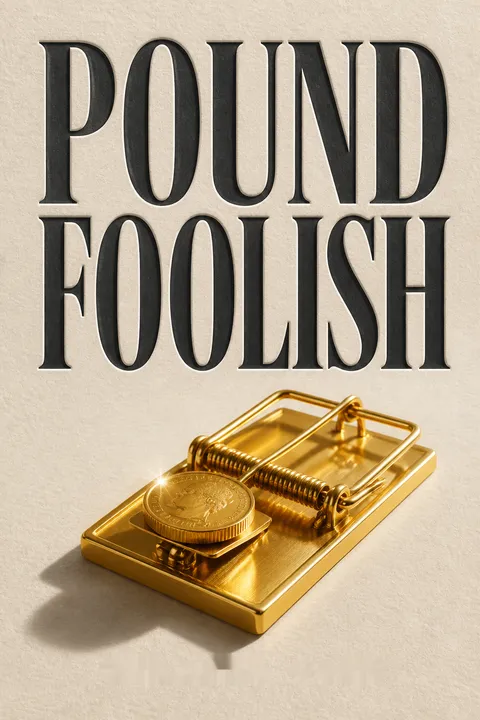
Pound Foolish is a reported critique of the personal-finance industry, but its deeper subject is the boundary between individual agency and structural risk. Olen follows the advice economy through celebrity gurus, retirement products, seminars, real estate, gendered marketing, financial-literacy programs, and therapy. The episodes are linked by one recurring transaction: a complex economic problem is translated into a private challenge, then paired with a product, a course, or a moral lesson that promises control.
The book’s most persuasive move is not to claim that budgets or savings are useless. It distinguishes modest, practical knowledge from the much larger promise that disciplined individuals can reliably invest their way out of stagnating wages, medical shocks, or a collapsing housing market. Its reporting makes incentives visible: commissions, fees, sponsorships, and advertising shape what advice is promoted and whose problems are foregrounded. Stories such as Carol Friery’s lost job and Dianne’s foreclosure give those abstractions a human scale.
There is a productive tension in the argument. By emphasizing the industry’s conflicts and the limits of forecasting, the book risks making readers wary of all professional help or all market participation. Yet the evidence supports a narrower conclusion: advice should be judged by its assumptions, costs, and incentives, rather than by the confidence of the person delivering it. The book’s alternatives, including stronger consumer rules and collective retirement arrangements, are proposals, not settled solutions. Their value lies partly in broadening the debate beyond personal discipline.
The statistics and policy disputes are grounded in the period around 2008 to 2012, so they should be read as historical evidence, not current measurements. The durable contribution is the analytic habit the book teaches: when a financial promise sounds empowering, ask what risks it leaves with the customer, what conditions it assumes, and who earns money if the promise attracts belief.
Review Summary
Pound Foolish exposes flaws in the personal finance industry, critiquing gurus like Suze Orman and Dave Ramsey. Readers appreciate the book's research and insights into financial conflicts of interest, but some find it depressing and lacking concrete solutions. The author argues that individual financial discipline matters less than systemic issues like income inequality and rising costs of essentials. While some reviewers praise the book's eye-opening revelations, others criticize its political leanings and cynicism towards the entire financial industry.
People Also Read






Glossary
Latte Factor
Small spending as forgone savingsA personal-finance idea popularized by David Bach. It argues that frequent small purchases, such as coffee, can add up to substantial sums if the money is saved and invested. Olen challenges the scale of the claim, noting that the wealth projections relied on optimistic returns and left out taxes and inflation.
Debt Snowball
Pay smallest debts firstA debt-repayment method associated with Dave Ramsey. It directs borrowers to pay off their smallest balance first, regardless of interest rate, then apply that payment to the next-smallest balance. The intended benefit is motivational progress. Olen notes that this order can cost more than prioritizing debts with higher interest rates.
fiduciary standard
Duty to act in clients’ interestsA legal obligation requiring an adviser to put a client’s interests first when providing advice. The book contrasts this with the suitability standard that can apply to brokers, under which a recommendation may be legally acceptable without being the best or least costly choice for the client.
suitability standard
Product must be suitableA standard discussed in the book for brokers selling financial products. It requires a recommendation to be suitable for a customer, but does not necessarily require the broker to select the customer’s best available option. Because customers may assume all advisers must act as fiduciaries, the distinction can obscure conflicts and costs.
target-date funds
Funds tied to retirement timingInvestment funds organized around an investor’s expected retirement year. Their mix of stocks and bonds generally shifts toward a more conservative allocation as the target date approaches, a change called a glide path. The book stresses that the date does not guarantee returns, and funds with similar dates can carry different risks and fees.
Guaranteed Retirement Accounts
Proposed pooled retirement accountsTeresa Ghilarducci’s proposed alternative to relying mainly on individual 401(k) accounts. Under her plan, workers and employers would contribute automatically, with a government contribution, and funds would be invested in inflation-protected government bonds promising a minimum return above inflation. The proposal sought to make retirement saving broader and less exposed to individual investing decisions.
financialization
Finance’s expanding role in lifeA term used to describe the growing influence of financial markets and financial services in ordinary economic life. In the book, it includes the expansion of individual investing, self-funded retirement, credit products, and real estate speculation, alongside the growth of businesses that manage, sell, or advise on those financial activities.
financial therapy
Emotional support for money behaviorAn approach combining elements of therapy, coaching, and financial planning to address how emotions and personal histories shape money decisions. Practitioners may help clients examine recurring beliefs or behaviors around earning, spending, and saving. Olen recognizes its potential for individual change while criticizing approaches that ignore broader economic conditions.
About the Author
Other books by Helaine Olen

Download PDF
Download EPUB
.epub digital book format is ideal for reading ebooks on phones, tablets, and e-readers.








