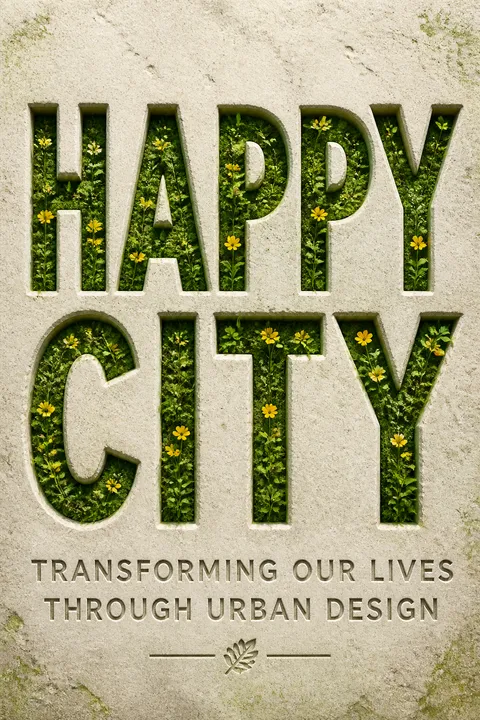


Key Takeaways
Design cities for human dignity, not merely faster economic growth
A different promise. When Enrique Peñalosa became mayor of Bogotá, he rejected promises of rapid riches and made public dignity his test of progress. His government built parks, bike paths, libraries, and a rapid bus network, while restricting private cars. The point was not simply transport efficiency. A person walking or cycling should matter as much as a person in a car.
A citywide experiment. On Bogotá's first car-free day, more than 800,000 vehicles stayed home. Hospital admissions fell by nearly a third, air quality improved, and nobody died in traffic that day. Residents later voted to repeat the experiment. The episode suggests that urban systems can change everyday feelings of safety, possibility, and belonging, even without making everyone wealthier.
The strongest move here is to treat dignity as something built into daily routines, not bestowed through speeches. A clear sidewalk or reliable bus tells residents whose time and safety count. That makes design a form of public ethics: values become visible in the allocation of space. The caution is that a vivid trial day is not proof that every transport restriction improves wellbeing. Its deeper value is experimental. It lets people experience an alternative and judge it with their own bodies, rather than debating urban change only as an abstraction.
Count friendship, purpose, and daily ease alongside income
Money has limits. The book contrasts rising wealth with stalled life satisfaction in several rich countries. Once basic needs are met, extra income tends to deliver less happiness, while people adapt to new comforts and reset their expectations. Aristotle's idea of eudaimonia, human flourishing through purpose and virtuous action, offers a richer standard than momentary pleasure.
Relationships matter greatly. In surveys discussed by the author, having one trusted person to rely on was associated with a life-satisfaction boost comparable to tripling income. Trust in neighbors and strangers mattered too. Psychologist Carol Ryff's account of wellbeing includes positive relationships, autonomy, personal growth, purpose, and the ability to manage one's environment. A city should therefore be judged by how it supports a meaningful life, not just by its output or amenities.
This argument joins two scales that policy often separates: the private experience of a good day and the social conditions that make good days possible. Friendship is not merely a pleasant extra; it can function as practical support during illness, stress, or financial trouble. Yet happiness surveys cannot tell planners exactly which street design caused a better score. Their value lies in widening the questions asked. A rising tax base can coexist with loneliness, long journeys, and lost time, so economic success is an incomplete account of urban success.
Treat long commutes as a social tax, not a private inconvenience
Distance takes more than time. Randy Strausser bought a home in Mountain House, California, but drove for hours each workday to reach jobs in the Bay Area. His evenings were swallowed by traffic, exercise to ease his road-induced tension, and exhaustion. He knew few neighbors and felt little trust in them. His daughter and son also grew up with limited parental time and independence.
Networks stretch apart. The book uses social capital to mean the relationships and everyday contacts that help people trust and support one another. Research it cites connects long commutes with weaker neighborhood ties, less social participation, and friends who live farther apart. One Swedish study found that people commuting more than 45 minutes were 40 percent more likely to divorce. The commute is therefore not an isolated inconvenience: it can reorganize family life and shrink the support network around a household.
The story is powerful because it translates urban geometry into family time, the resource people rarely include in a housing calculation. A cheaper house may carry an invisible charge paid in evenings, friendships, and parental attention. Still, commute length does not determine a family's fate by itself. Work schedules, income, caregiving, and personal preference also matter. The practical insight is to assess housing and transport as one decision. A home is not affordable if reaching work and ordinary needs consumes the time and money that make life there worthwhile.
Recognize sprawl as policy-built, not a neutral market choice
Separation became standard. Industrial cities were dirty, crowded, and unhealthy, so reformers sought fresh air and order. Two influential answers followed: separate homes, work, shopping, and recreation; and use faster roads to escape the city. In the twentieth century, zoning, federal mortgage support, highway spending, and development rules helped make these ideas routine. Exclusionary housing policies also reinforced racial and class separation.
Cars took the street. In the 1920s, auto interests helped redefine streets as places for fast vehicles and framed pedestrians as the problem. The term jaywalking helped shift responsibility for danger onto people crossing streets. Later, highway construction and rules favoring separated land uses made car-dependent development easier to finance and build. The dispersed city, the book's name for this spread-out system, was not simply the sum of individual preferences. It was an outcome of public rules, investment, and institutional habits.
This history complicates the familiar claim that sprawl represents pure consumer choice. Preferences matter, but the menu was shaped by lending rules, zoning, and infrastructure before many households chose a home. That distinction is important because markets respond to what laws permit and public budgets subsidize. The historical account also warns against replacing one rigid ideal with another. Industrial density did produce genuine harms. The task is not to romanticize old cities, but to keep their useful proximity while repairing hazards and widening access.
Distrust imagined upgrades; adaptation makes costly choices look rewarding
The finish line moves. Psychologists and economists describe how people judge their circumstances relative to what they had before and what others possess. The evolutionary happiness function in the book captures this shifting comparison: satisfaction depends partly on expectations and perceived standing, not just on material gains. A larger house can feel thrilling at first, then become ordinary while its mortgage and upkeep remain.
Predictions go wrong. Researchers found that Harvard students overestimated how much their assigned dormitory would shape their happiness. They focused on architecture and status, while relationships and community mattered more in lived experience. Commuters make a related error: one study found a one-hour commute required about 40 percent more income to match the life satisfaction of someone who walked to work. The focusing illusion describes how one vivid feature, such as sunshine or a spacious home, can eclipse quieter but consequential factors.
The useful lesson is not that people are foolish, but that imagination gives visible features too much weight. A house is easy to picture; repeated social contact, daily fatigue, and maintenance are harder to simulate in advance. This is a classic gap between forecast and experience. The argument is strongest when it encourages decisions based on ordinary routines rather than showcase moments. It should not erase real benefits of space, privacy, or a beautiful setting. Instead, it asks whether those benefits persist and what recurring costs accompany them.
Pair density with daily nature and controllable retreat
Green space restores attention. Biophilia is the idea that people have an innate affinity for aspects of nature. Studies described in the book link views of trees and access to green courtyards with lower stress, more social activity, and less aggression. In a Chicago housing complex, leafy courtyards were used as informal gathering places, while bare concrete spaces were often empty. Nature need not mean a distant grand park: small, frequent contact can matter.
Closeness needs choice. Density is not the same as crowding. Residents feel crowded when they cannot control encounters or retreat. A dormitory study found that students in small suites formed more friendships and felt less stressed than students sharing long corridors. Vancouver's slender towers, short podiums, and public view corridors show one way to combine urban density with nature and light. The design goal is not maximum proximity, but a gradual path from private space to shared space.
This section resists the simplistic choice between suburban lawns and tower blocks. It treats nature as part of everyday infrastructure and privacy as a capacity to regulate social contact. That is a more useful design question than asking whether density is inherently good or bad. Green space can support health, but access and quality matter: a token lawn may not provide the restorative variety of a planted garden. Likewise, a shared courtyard can invite connection without guaranteeing it. Good design creates options for engagement and retreat rather than prescribing one social style.
Slow streets and enliven their edges to invite everyday trust
People make places interesting. Jan Gehl studied public life in Copenhagen after a central street was closed to cars. People filled the space, and businesses continued to thrive. His observations suggested that benches facing human activity attracted more use than benches facing flowers. Varied storefronts, doors, windows, and destinations encourage pedestrians to slow down and pause; long blank walls make them hurry past.
Speed changes social life. Donald Appleyard's study of San Francisco streets found fewer neighborhood friendships as car traffic increased. Noise and perceived danger discourage conversation and make people less willing to help strangers. The book's term triangulation describes placing attractions or activities so people have a reason to pause near one another, such as a performer beside a seating area. A lively edge and calmer traffic can turn a route into a place where casual contact becomes possible.
The striking insight is that sociability is partly designed through small invitations: a place to sit, a door to look through, or an activity that gives strangers a shared focus. These details make public life less dependent on extroversion. The connection between traffic and weaker social ties is persuasive, though street character, local income, and resident turnover can also shape relationships. Slowing traffic is not only a safety measure. It changes the sensory conditions under which people meet, making attention and conversation less costly.
Make walking, cycling, and transit genuinely easier than driving
Choice requires usable options. The book calls a more flexible, connected transport system new mobility: a mix of walking, cycling, transit, and shared vehicles that lets people choose a mode for each trip. In Paris, a single transit card reduced the hassle of changing between buses and trains, and ridership increased. Shared bicycles and cars further reduced the need to own a vehicle that sits unused much of the time.
Safety must feel safe. Copenhagen built protected bike routes and adjusted signals so cycling worked for ordinary commuters, not only confident enthusiasts. In Houten, paths for walking and cycling formed the town's central network, while cars took indirect routes around the edge. Children could reach school independently. These examples show why exhorting people to walk or bike is inadequate when destinations are far away, service is unreliable, or traffic feels threatening.
Mobility is best understood as access to opportunity, not simply speed from origin to destination. A reliable bus or a safe cycling route can expand a person's practical freedom even when the trip takes no less time. The emphasis on felt safety is especially important: infrastructure that appears safe to engineers may still repel children, older adults, or cautious riders. At the same time, no single mode suits every body, weather, trip, or neighborhood. Resilient transport depends on a usable mix rather than replacing car dependence with a new monoculture.
Distribute public space and mobility as matters of civic fairness
Space signals whose needs count. In Bogotá, the TransMilenio bus system received dedicated lanes and polished stations, while the city added paths, parks, libraries, and pedestrian promenades in poorer districts. Many residents who did not own cars gained faster, safer movement and access to public amenities. A worker described cutting his journey from as much as two hours to 45 minutes. The interventions made fairness tangible in daily travel, not merely rhetorical.
Benefits can be shared. The book reports that Bogotá's commute times, traffic deaths, and accidents fell during the broader transformation, while optimism rose. Yet improvements can also raise property values and displace renters, as the High Line in New York illustrates. A fair city therefore needs more than attractive public spaces. It must consider who can reach them, who pays for them, and whether existing residents can afford to stay.
Equity is not an optional moral layer added after efficiency. When most people do not drive, allocating most street space to private vehicles is itself a distributional choice. Bogotá's example shows how public investment can improve mobility for people with fewer options while easing conditions for others. The unresolved challenge is displacement: an amenity can benefit a neighborhood and make it less accessible to the people it was meant to serve. Pairing public improvements with affordable housing measures is therefore part of the design problem, not a separate concern.
Repair sprawl by changing codes and letting residents shape place
Rules shape the possible. In Mableton, Georgia, residents imagined a walkable center on land divided by parking lots and fast roads. Existing zoning and street standards made much of that vision illegal. A form-based code, rules focused on the shape and placement of buildings rather than rigidly separating uses, gave developers a route to build a more connected town center. In Lakewood, Colorado, a former mall site was remade with smaller blocks, homes, shops, and public space.
Small acts can start change. Portland residents painted a neighborhood intersection, built shared gathering places, and created a stronger local network. Such projects show that citizens can help change the operating rules of a place. The benefits extend beyond sociability: compact development can reduce household travel costs and municipal infrastructure burdens, while supporting lower emissions. The book's larger claim is that climate action becomes more persuasive when it also makes daily life easier and richer.
The argument links personal wellbeing to institutional design: residents cannot choose a walkable life where codes forbid mixed uses, connected streets, or smaller homes. Community participation matters because it gives local knowledge a role in shaping those rules. Still, codes alone cannot guarantee affordability, good transit, or sustained public investment. Nor can every suburb become a complete village. The practical aim is selective repair: create connected centers, offer real housing choices, and make the benefits available without forcing every resident into the same lifestyle.
Analysis
Happy City treats urban form as a system that distributes not only land and transport, but time, health, contact, status, and risk. Its central achievement is to connect personal experience to political economy without reducing either to the other. A commute becomes family strain; a sidewalk becomes a signal of whose safety matters; a zoning rule becomes a limit on which lives residents can choose. These connections make urban design legible as a determinant of wellbeing rather than a matter of architectural taste.
The narrative is strongest when it moves between lived stories and measurable patterns. Randy's commute gives emotional texture to the broader evidence about social isolation, while Bogotá shows that infrastructure can change the felt meaning of citizenship. The book also avoids an easy equation of density with happiness. Nature, privacy, control, and social scale matter, so the better question is how density is organized and whether residents can choose their degree of contact.
Its evidence requires careful interpretation. Many findings are correlations, and place-based studies cannot always separate design effects from income, culture, or the characteristics of people who select a neighborhood. A celebrated intervention may work under unusual political conditions or produce costs elsewhere. The author acknowledges such complications, especially around affordability and displacement. Those limits do not undo the argument. They clarify that design is influential, not omnipotent.
The enduring contribution is a shift in the burden of proof. Instead of asking whether a city can afford to prioritize pedestrians, parks, and transit, readers are asked to count the hidden costs of car dependence: illness, wasted time, social fragmentation, fragile municipal budgets, and environmental damage. A happy city is not one perfect form. It is a civic process that tests alternatives, measures lived outcomes, and distributes the ability to move, meet, and belong more fairly.
Review Summary
Happy City receives praise for its engaging exploration of urban design's impact on happiness and well-being. Readers appreciate Montgomery's compelling arguments against car-dependent sprawl and his vision for walkable, sustainable cities. The book's mix of research, anecdotes, and real-world examples resonates with many, offering insights into how city planning affects daily life. While some find it repetitive or America-centric, most reviewers consider it thought-provoking and inspiring, lauding its potential to change perspectives on urban living and community engagement.
People Also Read





Glossary
eudaimonia
human flourishingA Greek idea of wellbeing that means more than pleasure or temporary contentment. It describes flourishing through purpose, relationships, the development of one's abilities, and meaningful action. In the book, it guides a broader measure of urban success than income or momentary mood.
social capital
networks of supportThe relationships, trust, and everyday connections that help people cooperate and support one another. Social capital includes close ties with family and friends as well as lighter contact with neighbors and acquaintances. The book links these networks to wellbeing and argues that urban form can either nurture or weaken them.
dispersed city
spread-out urban systemThe book's term for a metropolitan pattern in which homes, workplaces, shops, and services are separated across large areas and linked mainly by roads. This pattern makes many ordinary trips dependent on cars and can increase household costs, travel time, and distance between social contacts.
autopoiesis
self-replicating systemA process by which a system reproduces and expands its own patterns. Montgomery applies the term to dispersed urban development: roads, buildings, professional habits, regulations, and planning codes make it easier to repeat the same form of development, even when it does not suit a particular place.
evolutionary happiness function
shifting satisfaction expectationsA model associated in the book with economists Gary Becker and Luis Rayo. It describes how people judge wellbeing relative to expectations, previous circumstances, and social comparisons rather than by absolute possessions alone. Because expectations adjust, material gains may produce short-lived satisfaction while ongoing costs remain.
focusing illusion
overweighting vivid differencesA judgment error in which one noticeable feature of a choice dominates attention while less vivid influences are overlooked. The book uses imagined weather or house size as examples: people may exaggerate their importance and undercount commute length, pollution, social ties, and other daily conditions.
biophilia
affinity for natureThe idea, named by biologist Edward O. Wilson, that humans have an innate affinity for aspects of the natural world. In the book, research on nature views and green spaces is used to explain how routine contact with plants, trees, and varied landscapes may support attention, calm, health, and social connection.
triangulation
a reason to connectA public-space design technique associated with William H. Whyte. It places an activity or feature, such as a performer, bench, or food stall, where it can give strangers a shared reason to pause and interact. The goal is to turn a pass-through space into a social setting.
form-based code
rules for built formA planning code that guides the shape, placement, and relationship of buildings and streets, rather than relying chiefly on separating land uses. It can permit shops, homes, and workplaces to coexist within a walkable area. The book presents it as one tool for enabling repair of car-dependent development.
Vancouverism
slender towers, lively streetsAn urban design pattern associated with Vancouver's downtown: tall, relatively slender residential towers spaced to preserve views and light, above lower podiums containing shops, homes, or services. The approach aims to combine high residential density with active street edges, public space, and access to nature.
FAQ
What's Happy City about?
- Urban Design and Happiness: Happy City by Charles Montgomery explores how urban design impacts human happiness, arguing that city structures significantly affect residents' well-being.
- Behavior and Environment: The book highlights the relationship between urban environments and individual behaviors, showing how design influences choices like commuting and social interactions.
- Case Studies: It includes case studies from cities like Bogotá, Paris, and Vancouver, illustrating successful urban interventions that promote happiness and well-being.
Why should I read Happy City?
- Relevance to Urban Living: As urbanization rises globally, understanding how city design affects happiness is crucial for anyone living in or moving to urban areas.
- Practical Insights: The book offers actionable insights and strategies for urban planners, policymakers, and citizens to create more livable and joyful cities.
- Engaging Narrative: Charles Montgomery combines storytelling with research, making complex ideas accessible and engaging for a broad audience.
What are the key takeaways of Happy City?
- Design Influences Behavior: Urban design significantly shapes daily behaviors, such as commuting and socializing, impacting overall happiness.
- Importance of Walkability: Walkable neighborhoods promote physical activity and social interaction, enhancing community well-being.
- Community and Connection: The book underscores the value of community spaces and social connections in enhancing well-being.
What are the best quotes from Happy City and what do they mean?
- “A city can be friendly to people or it can be friendly to cars, but it can’t be both.”: This quote emphasizes the need for pedestrian-friendly design over prioritizing automobile traffic.
- “The city itself could be a device for happiness.”: Montgomery suggests that cities can enhance lives if designed with human needs in mind.
- “We need to walk, just as birds need to fly.”: This highlights the fundamental human need for movement and connection, advocating for walkable cities.
How does Happy City define happiness in urban contexts?
- Complex Concept: Happiness is not just a fleeting emotion but a state of well-being influenced by social connections, environment, and personal fulfillment.
- Eudaimonia: The book references Aristotle’s concept of flourishing and achieving one’s potential, linking true happiness to living a meaningful life.
- Collective Experience: Happiness is seen as a collective experience shaped by social interactions and community engagement.
What role does urban design play in happiness according to Happy City?
- Design Shapes Behavior: The physical layout of a city influences how people interact, move, and feel, with well-designed spaces encouraging socialization.
- Public Spaces Matter: Montgomery emphasizes the importance of parks and plazas in fostering connections among residents and enhancing happiness.
- Case Studies of Success: Examples from cities like Bogotá and Copenhagen illustrate how intentional urban design can lead to happier communities.
What specific methods does Happy City suggest for improving urban living?
- Creating Walkable Neighborhoods: Prioritizing walking and cycling makes it easier for residents to access amenities without relying on cars.
- Enhancing Public Spaces: Vibrant public spaces encourage social interaction and community engagement, such as parks and plazas.
- Mixed-Use Developments: Integrating residential, commercial, and recreational spaces fosters community and reduces car reliance.
How does Happy City address the issue of urban sprawl?
- Critique of Sprawl: Urban sprawl negatively impacts health, social connections, and the environment, leading to isolation and car dependency.
- Successful Retrofits: Examples of cities that have transformed sprawl into more walkable, connected communities show that change is possible.
- Policy Change Advocacy: Montgomery calls for policy changes that support sustainable urban development, prioritizing density and mixed-use planning.
How does Happy City relate urban design to public health?
- Design and Health Connection: Urban design influences public health outcomes, such as obesity and mental health, by promoting active lifestyles.
- Health Impact Case Studies: Walkable neighborhoods and access to green spaces lead to better health outcomes for residents.
- Policy Implications: Urban planners should consider public health in design decisions, creating environments that support healthy living.
What challenges does Happy City identify in achieving urban happiness?
- Resistance to Change: Entrenched interests and existing urban systems can resist efforts to redesign cities for happiness.
- Economic Pressures: Economic factors often prioritize profit over well-being, leading to developments that may not serve community interests.
- Cultural Attitudes: Societal preferences for suburban sprawl can hinder the pursuit of happier, more connected urban environments.
How can individuals contribute to the vision of a happy city?
- Advocacy for Better Design: Individuals can push for policies that prioritize walkability and public spaces in their communities.
- Engagement in Local Initiatives: Participating in community planning efforts fosters a sense of agency in shaping the environment.
- Personal Lifestyle Changes: Walking or cycling more often supports the vision of a happier, healthier city.
What examples of successful urban transformations are highlighted in Happy City?
- Bogotá’s Transformation: Mayor Enrique Peñalosa restructured Bogotá to prioritize public transport, cycling, and pedestrian spaces, increasing happiness.
- Copenhagen’s Pedestrianization: Banning cars from certain streets created vibrant public spaces that foster community.
- Seoul’s Cheonggyecheon River: Restoring the river by removing a highway revitalized the area and improved residents' quality of life.
Download PDF
Download EPUB
.epub digital book format is ideal for reading ebooks on phones, tablets, and e-readers.








