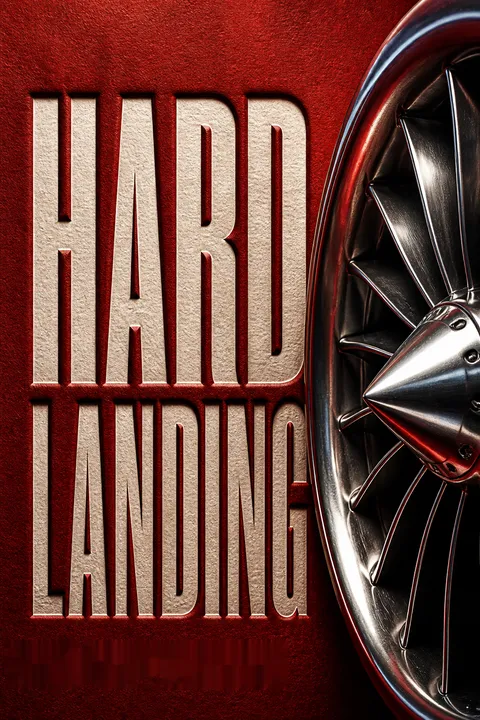


Key Takeaways
Sell the last seat cheaply, but never confuse it with the first.
A seat expires at takeoff. Once an airline has paid for fuel, crew, and aircraft financing, an extra passenger can add revenue at little additional cost. This is the basic economic logic behind selling an otherwise empty seat at a discount. Juan Trippe tested the idea in the 1920s by adding wicker seats to airmail planes flying to Havana. The seats mostly went empty, but the principle endured: fill spare capacity without letting low prices replace revenue the airline could have earned anyway.
The jumbo-jet warning. In the 1970s, airlines ordered enormous planes just as recession and rising oil prices reduced demand. With seats going unused, executives discovered that even a low fare could help cover the cost of a flight already scheduled. But blanket discounts could depress the value of every seat, not just the last few. The crucial distinction is between pricing spare capacity and giving away the whole cabin.
What's striking is how clearly this business exposes the difference between fixed and marginal cost. A bakery may discount bread near closing because the unsold loaf is worth nothing tomorrow; an airline faces the same deadline, but its capacity decisions are far more expensive and consequential. The principle supports targeted discounts, not a license to expand blindly. A low fare can make an empty seat productive, while a low fare across every seat can leave the entire operation unable to cover its costs.
Regulation protected airlines from losses, then trapped them in expensive sameness.
Protection became dependence. In 1938, after airlines feared fare wars would destroy the industry, Congress created a system that controlled routes and prices. The Civil Aeronautics Board often set fares high enough to cover reported costs and provide a modest profit. That protected airlines from failure, but it also weakened incentives to control spending and kept flying beyond many ordinary travelers' budgets. One absurd route hearing generated hundreds of pages of documents, yet commissioners ultimately used a map and colored pencils to add an Iowa town that had barely figured in the case.
Deregulation was already underway. Southwest's intrastate flights, Texas International's discounted fares, and airlines' battles over reservation computers showed that competition was emerging before Congress changed the law in 1978. Senator Edward Kennedy, his aide Stephen Breyer, and lawyer Phil Bakes helped turn airline reform into a political cause. The book presents deregulation less as a simple triumph or mistake than as a vast redistribution of money, access, service, and labor.
This history resembles a recurring problem in public utilities: rules that stabilize a young industry can become barriers once the industry matures. Regulation helped build dependable national aviation, yet cost-based pricing also rewarded the reporting of higher costs. The transition therefore changed more than ticket prices. It shifted bargaining power among passengers, shareholders, workers, and airlines. The book's framing resists easy nostalgia, though the story also shows why deregulation's aggregate gains cannot settle the question of who bore its losses.
Make low fares a system, not a temporary sale.
Southwest built around simplicity. Herb Kelleher and Rollin King sketched a Texas route triangle on a cocktail napkin and set out to challenge established carriers. Southwest began at convenient Dallas Love Field, turned planes around in about ten minutes, and initially used a single aircraft type. When employees agreed to keep four planes flying with a three-plane fleet, they demonstrated how tightly coordinated work could lower costs without adding expensive equipment.
The fare fit the operation. Southwest found new passengers with off-peak prices, including a $10 late-night flight, then used the added revenue to make regular fares more competitive. It avoided the cost of elaborate meals, complex connections, and heavy reliance on travel agents. Its point-to-point routes and frequent departures made short trips convenient, while its playful, employee-centered culture made stripped-down service feel welcoming. Low prices lasted because the company's daily routines were designed to support them.
Southwest is compelling because its advantage came from a linked set of choices rather than a single clever promotion. In operations research, reducing variation can improve throughput: one aircraft type simplifies training and maintenance, while quick turns keep costly equipment productive. The same principle applies to service design. Yet culture alone cannot explain the model; convenient airports, dense short-haul markets, and disciplined growth mattered too. Copying the jokes or the hot pants would not reproduce the economics underneath them.
Reservation screens can steer demand as powerfully as route maps.
The booking channel became a weapon. American's Sabre system began as a solution to a practical problem: reservation books and chalkboards could not keep up with changing seat availability. Once connected to travel agencies, Sabre could instantly search flights and confirm seats. American's data also revealed travel patterns, helping the company decide which routes and fares deserved attention.
Visibility shaped choice. Agents often booked the first option displayed on a screen, so the order of listings could direct business toward the airline that owned the system. American used Sabre's reach to gain bookings beyond its share of available seats. United built Apollo to compete, and both companies fought over agency access and booking fees. Regulators eventually restricted biased displays, but familiarity with a system still influenced choices. The reservation network was not merely office equipment. It was a powerful distribution channel that could redirect demand.
The reservation systems anticipate a modern platform problem: the company that organizes choices can influence which choices users see and select. This power is subtler than owning a route because it shapes decisions across competitors' flights too. Neutral rules matter, but they may not eliminate advantage when agents are trained on one interface and rely on its defaults. The tension is familiar in digital marketplaces: efficiency for the user can coexist with an incentive for the platform owner to favor itself.
Use demand data to discount empty seats without discounting every seat.
Prices could vary by passenger. American's yield management system used booking histories to estimate how many seats on each flight should be reserved for travelers likely to pay more. Vacationers often booked early and stayed longer; business travelers tended to book closer to departure. Advance-purchase rules and minimum stays helped separate these groups without asking passengers directly how much they could afford.
The system changed the fare war. American could advertise a very low price while limiting how many seats were available at that fare. A carrier like People Express, with one simple price and no comparable forecasting tools, could not see how many discounted seats rivals were actually selling. In 1985 American cut some fares dramatically, and the resulting scramble helped push People Express into losses. The method made low fares widely available while protecting higher fares on other seats, though it also made prices harder for travelers to understand.
This is a striking application of information to inventory: a seat is not just a seat if different customers place different values on the same trip. The airline uses booking patterns to infer demand and allocate capacity accordingly. That can widen access without selling every seat below cost. The trade-off is opacity. Customers may see two people paying very different prices for the same service and suspect unfairness, especially when the rules are difficult to compare. Better prediction can improve revenue without automatically improving trust.
Debt-funded growth can make an airline bigger and more fragile.
Scale can strengthen a network. A hub concentrates arriving flights into timed groups, giving passengers many connecting options and helping an airline fill more seats. Bob Crandall expanded American around hubs in Dallas and Chicago, supported by its reservation system and a growing workforce. The approach made American a formidable national competitor.
But growth can outrun integration. Dick Ferris tried to combine United Airlines, hotels, rental cars, and a global reservation system as Allegis. The parts did not deliver the promised whole, and investors pressed for a breakup. Frank Lorenzo built Texas Air through acquisitions and borrowing, then combined Continental, New York Air, People Express, and Frontier in a single rushed operation. Aircraft interiors, schedules, and employee seniority systems clashed. Continental's service deteriorated, while Texas Air accumulated enormous debt. Scale is useful only when the organization can coordinate what it owns.
The contrast is between economies of density and the costs of organizational complexity. A hub can create more connections from a fixed set of cities, but every additional airline, fleet type, labor agreement, and computer system adds coordination demands. Finance can postpone the moment those demands become visible by funding expansion with debt. It cannot remove them. The case also cautions against treating size as a strategy by itself: scale creates potential advantages, not automatic competence.
Treat labor as part of the service system, not a cost line.
Labor conflict changed operations. Eastern chief Frank Borman repeatedly sought concessions through a variable earnings plan, which linked part of employees' pay to company results. Machinists' leader Charlie Bryan resisted, and after Eastern granted the union a large settlement, trust deteriorated further. Later, employees gained shares and board seats, but those concessions did not create genuine shared control. At Continental, management used bankruptcy protection to replace old contracts with far lower pay scales, provoking a long pilots' strike.
A strike can defeat the spreadsheet. In 1985, United's management expected hundreds of trained replacement pilots to keep planes flying during a strike. Only six reported. The airline managed just a small fraction of its usual operation. Labor was not simply an expense to be reduced; employees held skills, knowledge, and the ability to keep a service operating. A cost plan that ignores their response can destroy the very capacity it aims to make cheaper.
The airline is a socio-technical system: aircraft, schedules, software, and human judgment must work together under time pressure. That makes labor relations operational, not merely contractual. A mechanic who knows a fleet or a pilot who understands a route is part of the organization's working memory. Still, the book does not imply every union rule is efficient or every concession impossible. It shows that changes imposed without credible trust can generate costs, disruption, and safety concerns that a wage calculation misses.
Merging route maps is easy; merging airline cultures can break both.
The assets were easier to combine than the people. Pan Am's purchase of National Airlines gave it domestic routes, but employees from the two companies distrusted one another, service and punctuality suffered, and the routes did not connect well with Pan Am's international network. British Airways faced a similar cultural clash when the government combined BOAC and British European Airways. Colin Marshall later rebuilt the airline by improving service, simplifying its identity, and treating each cabin class as a distinct product.
Pan Am's decline had no clean fix. It sold its Pacific routes to United, then struggled with debt, high costs, and weak domestic connections. Lockerbie's terrorist bombing devastated bookings just as a turnaround seemed possible. Delta eventually bought pieces of Pan Am, but withdrew from the larger rescue plan. The storied airline stopped flying in 1991. Acquiring valuable routes did not guarantee a viable airline when integration, finances, and outside shocks all mattered.
A merger joins formal assets on a closing date; it does not instantly align habits, status, communication, or customer promises. Organizational research often describes this as a problem of integration rather than acquisition. Pan Am and National illustrate the cost of assuming that complementary route maps create complementary organizations. British Airways shows that a turnaround can also require a new operating culture and a clearer service proposition. Even excellent execution cannot neutralize every external shock, as Pan Am's bombing demonstrates.
Protect reliability before chasing one more round of cost cuts.
The passenger buys a whole journey. A cheap fare loses its appeal when a bag disappears, a flight is badly delayed, or a reservation cannot be honored. People Express's rapid expansion strained its reservations and airport operations. Continental's rushed consolidation produced widespread delays and lost baggage. The book also recounts Air Florida Flight 90, whose pilots took off in icy conditions after delays and warnings; the plane crashed into the Potomac, killing most aboard. The sequence involved multiple failures, not a single explanation, and shows how aviation leaves little room for error.
Reliability is part of the product. The airline's distinctive promise is not just transportation at a low price, but dependable movement through a complex system. The final argument is that relentless cost-cutting can compromise service, employee commitment, and ultimately safety. Savings that make the experience unpredictable may drive passengers away. Efficiency matters, but it must protect the qualities that make flying worth choosing.
What's valuable here is the insistence that reliability is not decorative service layered on top of transportation. In high-risk industries, safety depends on routines, training, communication, and the willingness to pause when conditions are wrong. Cost pressure can weaken those safeguards indirectly, even without an explicit decision to trade safety for savings. At the same time, one crash cannot prove that deregulation or low fares cause accidents. The stronger lesson is narrower: operational discipline must remain nonnegotiable as an airline pursues efficiency.
Analysis
Hard Landing is a reported business history whose real subject is not simply deregulation, but how a tightly coupled industry absorbs a shock to its governing rules. Airline executives manage an unusual combination of perishable inventory, enormous fixed costs, volatile fuel and financing expenses, labor contracts, safety obligations, and networks whose value grows with density. That combination makes small decisions consequential, while also making success difficult to attribute to any one decision. The book turns this complexity into a cast-driven narrative: Crandall's analytical aggression, Kelleher's culture building, Lorenzo's financial maneuvering, Borman's command style, and Marshall's service revival become distinct answers to the same economic pressures.
Its strongest analytical contribution is showing that competition does not operate in one arena. Prices, routes, labor, reservation systems, airport slots, and corporate ownership are interconnected. A booking screen can shift market share; a labor dispute can immobilize a schedule; an acquisition can add routes while subtracting service quality. The story therefore reads as a study of strategic complementarity: a competitive advantage works only when supporting systems reinforce it. Southwest's simple operation aligned its aircraft, schedules, fares, and employee culture. By contrast, several large-scale combinations acquired assets faster than they could integrate them.
The narrative also complicates the familiar claim that deregulation simply helped consumers. It made flying accessible to many people, while transferring value and risk among passengers, employees, investors, and firms. The book is persuasive about executive agency, but its concentration on a small circle of male leaders can make structural forces appear more personal than they were. Fuel shocks, recessions, airport limits, regulation, and labor law constrained even powerful CEOs. Nor should operational disasters be reduced to allegories about cost cutting. The more precise conclusion is that management choices shape an already unforgiving system, and that financial efficiency, employee cooperation, customer trust, and safety cannot be optimized independently. The airline's lasting advantage lies in coordinating them without mistaking temporary financial leverage for durable organizational capability.
Review Summary
Hard Landing is a comprehensive history of the American airline industry, focusing on the period from deregulation in 1978 through the 1990s. Readers praise Petzinger's engaging storytelling and detailed accounts of industry personalities, corporate strategies, and labor disputes. The book offers insights into airline economics, technological innovations, and the challenges of running an airline. While some find it overly focused on certain individuals or labor issues, most reviewers appreciate the book's depth and its ability to bring the complex world of commercial aviation to life.
People Also Read







Glossary
First Rule of Airline Economics
Value of spare capacityThe principle that once a flight is scheduled and its major costs are committed, selling an additional seat or other payload can add substantial revenue at relatively little extra cost. It explains why airlines discount seats that might otherwise depart empty. The principle does not mean every seat should be sold cheaply, since doing so can replace higher revenue the airline could have earned.
Sabre
American's reservation networkAmerican Airlines' computerized reservation system, developed with IBM and launched in the early 1960s. It allowed agents to check current seat availability and make reservations across a large network of terminals. Sabre also accumulated detailed booking information and became a distribution channel through which American could influence which flights travel agents saw and selected.
yield management
Demand-based seat pricingA system for adjusting how many seats are offered at different prices on each flight. It uses past booking patterns and current reservations to estimate demand, selling some seats cheaply while holding others for passengers likely to pay more. American developed the approach using Sabre data. The goal is to increase total revenue from a fixed, perishable inventory of seats.
b-scale
Lower pay for new hiresA second wage scale under which employees hired after a certain date received substantially less pay than longer-serving coworkers doing comparable work. American used b-scales to reduce average labor costs while expanding its workforce. Existing employees could benefit from growth and promotion opportunities, but the arrangement created unequal pay and shifted bargaining power as newer employees became a larger share of the workforce.
hub-and-spoke
Connections through central airportsA route structure in which flights from many cities arrive at a central airport, or hub, and passengers connect to flights departing for other cities. Coordinated arrival and departure periods let an airline offer many city pairs without flying every route nonstop. The structure can increase network reach and passenger feed, but it also adds complexity, connection delays, and operating costs.
code sharing
Shared flight listingsAn arrangement in which one airline lists a flight under its own designator and flight number even when another airline operates the aircraft. The practice lets partners connect their schedules and sell a broader set of itineraries. It can simplify a passenger's booking, but the customer may need to change airlines or aircraft, so clear disclosure matters.
FAQ
What’s Hard Landing: The Epic Contest for Power and Profits That Plunged the Airlines into Chaos by Thomas Petzinger Jr. about?
- Comprehensive airline industry history: The book chronicles the transformation of the U.S. airline industry from the era of government regulation through deregulation and into the early 1990s, focusing on the chaos, competition, and power struggles that ensued.
- Focus on key players: It profiles influential executives, labor leaders, and airlines, revealing how their ambitions, rivalries, and decisions shaped the industry’s fate.
- Themes of deregulation and upheaval: The narrative explores how deregulation led to intense competition, fare wars, labor conflicts, and the rise and fall of both legacy and low-cost carriers.
- Human drama and business strategy: The book combines vivid storytelling with deep analysis of corporate strategy, labor relations, and the broader economic and social impacts of airline industry changes.
Why should I read Hard Landing by Thomas Petzinger Jr.?
- Engaging, novelistic storytelling: The book reads like a corporate thriller, filled with reconstructed conversations and dramatic boardroom battles, making complex business history accessible and entertaining.
- Insider perspective on business: Readers gain a rare, detailed look at the inner workings of major airlines, including leadership decisions, labor negotiations, and technological innovations.
- Lessons for modern business: The book’s exploration of competition, innovation, and labor relations offers valuable insights for business professionals, students, and anyone interested in how industries adapt to disruption.
- Historical context for aviation: Understanding the events and personalities chronicled in the book provides essential background for today’s airline industry structure and challenges.
What are the key takeaways from Hard Landing by Thomas Petzinger Jr.?
- Deregulation’s double-edged sword: Deregulation was inevitable and led to massive redistribution of wealth, intense competition, and the collapse or transformation of many airlines.
- Human cost of competition: The book highlights the toll on employees, unions, and executives, showing how labor conflicts and cost-cutting shaped the industry’s evolution.
- Technology as a competitive weapon: Computer reservation systems and yield management revolutionized airline marketing and pricing, becoming as important as the planes themselves.
- Industry bifurcation: The market ultimately split between network carriers focused on service and convenience, and low-cost carriers targeting price-sensitive travelers.
Who are the main airline executives and labor leaders featured in Hard Landing by Thomas Petzinger Jr., and what roles did they play?
- Frank Lorenzo: Known for his ruthless cost-cutting and use of bankruptcy to break unions, Lorenzo built an airline empire through aggressive takeovers and labor battles.
- Bob Crandall: The strategic mastermind behind American Airlines, Crandall pioneered yield management, computer reservation system dominance, and innovative pricing strategies.
- Herb Kelleher: Southwest Airlines’ co-founder, Kelleher revolutionized the industry with a low-cost, employee-centric model and a unique, fun corporate culture.
- Stephen Wolf and Sir Colin Marshall: Wolf led United’s global expansion and labor battles, while Marshall transformed British Airways through privatization, service innovation, and international alliances.
- Union leaders like Charlie Bryan and Rick Dubinsky: These figures led fierce resistance against management’s cost-cutting, strikes, and employee ownership efforts, shaping the labor-management dynamic.
How did deregulation reshape the U.S. airline industry according to Hard Landing by Thomas Petzinger Jr.?
- Unleashed competition and chaos: Deregulation removed government controls over routes and fares, leading to fare wars, new entrants, and the collapse of inefficient carriers.
- Redistribution of wealth: Rather than creating new wealth, deregulation shifted trillions of dollars among airlines, employees, and consumers, creating winners and losers.
- Rise of low-cost carriers: Deregulation enabled the emergence of airlines like Southwest and People Express, which challenged legacy carriers with innovative business models.
- Labor and management upheaval: The new environment forced airlines to confront high labor costs, sparking strikes, wage concessions, and the introduction of two-tier wage systems.
What role did labor relations and unions play in the airline industry’s turmoil as described in Hard Landing by Thomas Petzinger Jr.?
- Labor as a critical cost: With labor accounting for up to 40% of expenses, controlling wages became central to airline survival post-deregulation.
- Strikes and resistance: Unions fiercely opposed wage cuts and two-tier pay scales, leading to high-profile strikes at United, Eastern, and Continental.
- Management’s aggressive tactics: Executives used bankruptcy, strikebreakers, and legal maneuvers to impose cost reductions, often fracturing union solidarity.
- Employee ownership attempts: Efforts like United’s ESOP plan highlighted the challenges of aligning labor and management interests in a volatile industry.
How did technology, especially computer reservation systems and yield management, impact the airline industry in Hard Landing by Thomas Petzinger Jr.?
- Reservation systems as power tools: Systems like Sabre (American), Apollo (United), and System One (Eastern) allowed airlines to control travel agent bookings and market share.
- Screen science and manipulation: Airlines programmed their systems to favor their own flights, sometimes corrupting algorithms to disadvantage competitors, prompting regulatory scrutiny.
- Yield management innovation: Bob Crandall’s development of yield management enabled airlines to maximize revenue by dynamically pricing seats based on demand and booking patterns.
- Revenue and competition: These technologies became lucrative revenue streams and critical competitive weapons, shaping the industry’s marketing and pricing strategies.
What were the major mergers, acquisitions, and bankruptcies in the airline industry as detailed in Hard Landing by Thomas Petzinger Jr.?
- Wave of consolidation: The 1980s and early 1990s saw a flurry of mergers, including Texas Air’s acquisition of Continental, Eastern, People Express, and Frontier.
- Operational chaos: Merging airlines with different fleets, cultures, and labor contracts led to service breakdowns, scheduling nightmares, and employee dissatisfaction.
- Bankruptcy as a strategy: Executives like Frank Lorenzo used Chapter 11 bankruptcy to void labor contracts and restructure costs, setting industry precedents.
- Market concentration: By the end of the period, a handful of large carriers dominated U.S. air travel, stabilizing finances but reducing competition.
How did low-cost carriers like Southwest Airlines disrupt the industry, according to Hard Landing by Thomas Petzinger Jr.?
- Innovative business model: Southwest pioneered point-to-point routes, a single aircraft type, quick turnarounds, and simple, low fares, avoiding the complexity of hub-and-spoke systems.
- Unique corporate culture: Herb Kelleher fostered an employee-centric, fun, and loyal workforce, emphasizing customer service and operational efficiency.
- Competitive pressure: Southwest’s entry into new markets forced legacy carriers to cut fares and rethink strategies, leading to the “Southwest effect” of lower prices and increased competition.
- Inspiration for imitators: Southwest’s success inspired a new generation of low-cost startups, fundamentally transforming the industry’s structure.
What were the most significant labor-management conflicts and strikes described in Hard Landing by Thomas Petzinger Jr.?
- United’s 1985 pilot strike: Pilots resisted management’s push for two-tier wages, leading to a crippling strike that damaged United’s finances and morale.
- Continental’s bankruptcy and strikebreaking: Frank Lorenzo’s use of bankruptcy to impose wage cuts and hire strikebreakers set a controversial industry precedent.
- American’s 1993 flight attendants’ strike: This high-profile conflict highlighted the ongoing tension between cost control and employee rights.
- Impact on safety and morale: Prolonged disputes led to absenteeism, stress, and concerns about operational safety, affecting both employees and passengers.
How did international aviation politics and treaties, such as Bermuda II, affect U.S. airlines in Hard Landing by Thomas Petzinger Jr.?
- Heathrow access restrictions: The Bermuda II treaty limited U.S. carrier access to London Heathrow, granting slots only to Pan Am, TWA, or their “corporate successors.”
- Diplomatic negotiations: U.S. and British governments engaged in protracted talks over slot allocations, code-sharing, and corporate succession, affecting mergers and market entry.
- British Airways’ dominance: Sir Colin Marshall leveraged British Airways’ control of Heathrow slots and government support to maintain a competitive edge and block rivals.
- Impact on Pan Am and TWA: These restrictions contributed to Pan Am’s bankruptcy and complicated TWA’s restructuring, illustrating the intersection of diplomacy and commercial interests.
What are the best quotes from Hard Landing by Thomas Petzinger Jr. and what do they mean?
- “This is a nasty, rotten business.” —Robert Crandall: Captures the brutal, high-stakes, and unforgiving nature of the airline industry, where competition is relentless and margins are thin.
- “Be ruthless. Be driven. Don’t let anything get in your way.” —Bob Crandall: Reflects the aggressive, survivalist mindset required of airline executives during the deregulation era.
- “A wink, a single gesture, is enough to topple you from the tightrope.” —Antoine de Saint-Exupéry: Symbolizes the precarious balance airlines must maintain between safety, efficiency, and profitability.
- “The game we are playing is closest to the old game of Christians and lions.” —Bob Crandall: Vividly illustrates the existential, winner-take-all competition that defined the post-deregulation airline industry.
Download PDF
Download EPUB
.epub digital book format is ideal for reading ebooks on phones, tablets, and e-readers.








