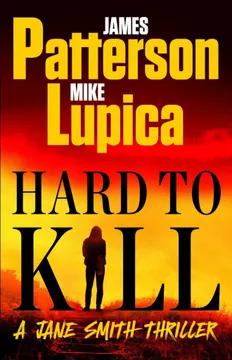


Plot Summary
The Second Triple Homicide
After helping investigator Jimmy Cunniff win Rob Jacobson’s acquittal for the Gates family murders, lawyer Jane Smith watches Jacobson surrender in Nassau County for another triple homicide, this time the Carson family.
He insists he has been framed, but his fear is new, and his plea for Jane to contact him lodges in her mind. On the courthouse steps, Jane spots Nick Morelli, a witness presumed drowned after testifying against Jacobson. Morelli gestures as if firing a gun, then vanishes. Jimmy doubts what Jane saw, but she cannot dismiss it.
At her doctor’s office, Jane learns that her stage-four head and neck cancer has not improved after two rounds of chemotherapy. The case pulls her back toward the work that makes her feel most alive, just as her life becomes less certain.
The opening binds two kinds of uncertainty together. Jane cannot know whether Jacobson is innocent, just as neither she nor her doctors can yet predict how her cancer will behave. Her professional instinct is to investigate, while her personal instinct is to conceal vulnerability, even from Jimmy. Morelli’s possible return makes the legal past feel physically present, not safely concluded by a verdict. Jane’s attraction to the case is therefore more than ambition: courtroom work offers agency at the moment her body and future feel increasingly beyond her control.
A Message from the Dead
On the drive home, Jane admits to Jimmy that standing outside the courthouse made her feel like her old self again. Then an anonymous text arrives, signed with the name of Joe Champi, the fixer Jane killed after he tried to murder her.
A second message reaches Jimmy, confirming that the sender knows intimate details about their case. Jane suspects Jacobson may be behind the threats, but he is jailed and has not yet asked her to return as his lawyer.
When he does call, she visits him and hears his familiar confidence beneath the claim that he has been framed again. Jimmy warns her not to take the case. Jane does anyway, while arranging to travel to a Swiss cancer clinic for more treatment. She asks Jacobson to keep her decision quiet until she returns.
Jane’s decision is a collision between two forms of risk. Accepting Jacobson’s case may expose her and her closest people to the violence already circling him, while refusing it would mean surrendering a source of purpose she still trusts. The dead man’s name used in the text also unsettles the boundary between evidence and intimidation: the message is designed to make Jane doubt what can be known. Her choice is not simple denial of illness. It is an attempt to keep authorship over the remaining shape of her life.
The Missing Boy at the Party
While Jane travels to Switzerland, Jimmy asks Detective Craig Jackson to reopen the 1980s shooting at Jacobson’s childhood home, where Jacobson’s father and teenager Carey Watson died. Jackson discovers that Edmund McKenzie, a wealthy classmate who dated Carey, had been present but was erased from the original account.
Years later, McKenzie accused Jacobson of framing him for a rape, and the evidence against McKenzie disappeared. Jimmy confronts him at the Carlyle, where McKenzie confirms the old grievance and warns that powerful people stand behind him.
On the drive home, two intruders drug and bind Jimmy in his own bedroom. They demand that he and Jane stop investigating McKenzie, then threaten Jane’s life if Jimmy fails to control her. Jimmy hides the assault from Jane while she undergoes treatment.
The erased witness introduces a recurring mechanism of the novel: wealth does not merely buy comfort, it edits the public record. McKenzie’s history parallels Jacobson’s, making their feud difficult to separate from the larger pattern of missing evidence and protected sons. Jimmy’s assault raises the cost of his investigation, but his decision to conceal it from Jane also reveals his protective impulse turning into control. He wants to shield her from fear, yet withholding information reproduces the very loss of agency he fears her illness already imposes.
Jane Returns to Court
At the Meier Clinic, Jane endures experimental immunotherapy and chemotherapy, then receives cautious news that her tumor has shrunk slightly. She meets Fiona Mills, a British patient whose illness is more advanced, and their long walks prompt Jane to think about the time she spends working and the truths she withholds from Ben.
Ten days later, Jane returns to Long Island and announces she will defend Jacobson again. Ben drives her from the airport to his bail hearing, where she argues that Jacobson should not remain jailed before trial.
Judge Alicia Kane sets bail at five million dollars with strict monitoring conditions. Jacobson can pay it. Afterward, he tells Jane that he and her sister Brigid have resumed their relationship. Jane is unsettled by Brigid’s choice but asks Jacobson not to hurt her.
The clinic gives Jane neither a cure nor a reprieve, only a small measurable change that she can convert into hope. Fiona’s presence sharpens the distinction between living longer and using time deliberately, while Jane’s return to court shows how tightly those aims remain entwined for her. Her exchange with Brigid’s news is revealing: Jane can defend Jacobson with professional discipline, but cannot easily accept her sister’s emotional risk with him. The case is not only a legal problem. It is woven into the family’s history of love, illness, and unequal trust.
Two Elises, Two Bullets
At a library fundraiser, Elise Parsons, an older socialite, publicly insults Jane for defending Jacobson. Elise’s daughter, Ellie, intervenes, and Jane answers with a pointed remark about Elise’s marriage to an older man. Elise slaps Jane in front of the room.
Days later, Elise and Ellie are found shot in their home. Jacobson is under house arrest, but Jane’s recent clash makes her an obvious target for questioning. State investigator Danny Esposito focuses on the argument, while Jimmy begins tracing the victims’ connections.
Their deaths deepen the sense that Jacobson’s social circle is becoming a crime scene. Jane has no proof that her confrontation is related, but the timing leaves her exposed to suspicion and forces Jimmy to investigate another pair of women whose lives intersected with Jacobson’s.
The fundraiser turns reputation into evidence. Jane’s public anger is real, but its visibility makes it easy for investigators and bystanders to mistake conflict for motive. The murders also strip away the protective distance that wealth and social performance usually provide: the Parsons women’s elegant world cannot keep violence outside the gates. By making Jane’s sharpness public, the scene complicates her familiar courtroom advantage. Wit can control a room, but in a murder investigation it can also become a record others use against her.
Claire’s Blue Bentley
Jimmy searches neighborhood security footage and finds Claire Jacobson’s blue Bentley circling the Parsons home before the murders. Jane confronts Claire, expecting denial, but Claire admits she was checking whether Rob had resumed an affair with Elise or Ellie.
Though angry and humiliated, Claire still believes Rob is not a killer. She then reveals that someone fired at him during a nighttime walk on Indian Wells Beach. Rob survived by falling into the sand and running through the dunes.
Jane’s sister Brigid arrives with worse news: her lymphoma has returned, and she must go back to Switzerland. Jane tries to comfort her, then retreats to the beach with her dog, Rip. The case now threatens two sisters already confronting cancer, while an unknown shooter has added Jacobson to the list of targets.
Claire’s admission changes her from a cold adversary into someone recognizable to Jane: a person still attached to a partner who has repeatedly hurt her. That recognition does not solve the murders, but it lets Jane see how love can persist without trust. Brigid’s relapse then makes the danger feel intimate rather than abstract. Jane is accustomed to turning emotion into work; now her sister’s illness resists that conversion. The beach remains her place for confronting fear directly, but the shooter’s presence means even familiar refuge has begun to share space with the case.
The Three Teenage Thieves
A state investigator tells Jimmy that the late Carl Parsons gambled with bookmaker Artie Shore, whose name also appeared in the Carson investigation. Jimmy follows that lead to Dave Wolk, a former teenage burglar who admits that Nick Morelli once led a crew that robbed wealthy Hamptons homes.
Rob Jacobson’s estranged son, Eric, was the third member. Wolk says Eric hated his father and once talked about killing him. The revelation makes Morelli’s supposed drowning newly suspect and connects the old Watson case to the present murders.
Jimmy follows Wolk after their meeting, hoping to learn where he is staying. In the dunes, a woman shoots at Jimmy while Wolk drives his car directly at him. Jimmy escapes with cracked ribs and cuts, but his attacker gets away.
The teenage burglary crew gives the sprawling case a human scale: the present conspiracy may have grown from friendships, resentments, and acts of impunity formed long before the murders. Eric’s hatred of his father is significant, but it is not proof of murder; the novel keeps motive distinct from evidence. Jimmy’s near-fatal pursuit also shows the cost of working by instinct when formal authority cannot be trusted. He survives because experience makes him cautious, yet he remains vulnerable to the same loyalty that keeps him chasing unanswered questions.
Martin Comes Back
Jane arrives home after meeting Wolk and finds her former husband, chef Martin Elian, with Ben. Martin says he met Edmund McKenzie and bookmaker Bobby Salvatore at a dinner party hosted by real-estate developer Allen Reese. Salvatore described himself as a man who handles problems.
The gathering makes Jane suspect that her old marriage has crossed into the same network surrounding Jacobson. Jimmy, meanwhile, has followed Wolk to a house in Montauk and seen a small woman meet him there, strengthening his suspicion that she is the shooter.
He pursues Wolk again and is attacked. Jane finds him injured and takes him to Ben, who treats his broken ribs. The case has now invaded Jane’s intimate life, while Jimmy’s investigation has brought its violence directly to her closest friend.
Martin’s return works as more than romantic disruption. His restaurant debt gives Jane a personal route into the financial relationships linking wealthy hosts, bookmakers, and fixers. The emotional past becomes investigative evidence, but it also tests Jane’s ability to distinguish what she remembers from what she can establish. Meanwhile, Jimmy’s injury makes the partnership’s usual division of labor untenable: Jane cannot simply remain the lawyer while he absorbs danger outside court. Their friendship is both a source of resilience and a channel through which violence reaches her.
The Son in the Dark
After Jimmy recovers, Eric Jacobson breaks into Jane’s house at night, disables the alarm, and holds her at gunpoint. He tells her that his father admitted killing the Carsons and insists Jane must stop defending him.
Eric also claims Rob killed his own father and Carey Watson, though Jane cannot verify the story. He escapes when the alarm summons police. Jane asks Judge Kane to move the trial forward, citing Brigid’s health while concealing her own cancer.
She also confronts Allen Reese, who benefitted from Jacobson’s business collapse and has connections to Salvatore. Reese warns Jane to stop probing. The threats do not make her certain of Jacobson’s guilt; they make her more determined to find out before the case and her health overtake her.
Eric’s nighttime visit offers the most direct accusation yet, but it arrives from a source with his own grievances and a history of crime. Jane must treat the claim as both potentially crucial and potentially manipulative. Her decision to accelerate the trial exposes another contradiction: she invokes Brigid’s illness to protect her own privacy, even as she asks the court to speed a case she may not be physically able to finish. Reese’s threat confirms that the legal case sits inside a wider economy of influence, where the people who profit can shape what becomes knowable.
A Poolside Rescue
An intruder attacks Ben at his veterinary office, fractures his skull, and steals pain medication. Jane blames the threats surrounding her case and tries to end their relationship to protect him, but Ben refuses to let her make that decision for him.
That night, Claire calls Jane from her house because someone may be inside. Jane arrives, finds the home empty, and sees a man running from the pool. Claire is submerged, barely breathing. Jane dives in, drags her out, and performs CPR until Claire revives.
Claire then refuses to identify her attacker, even after Jane asks whether she recognized him. Rob later tells Jane that their son Eric had threatened Claire for access to a hidden safe. The rescue saves Claire, but her silence leaves Jane with a likely suspect and no willing witness.
Jane’s rescue of Claire is a practical reversal of their earlier hostility. She acts without waiting to decide whether Claire deserves her help, and her CPR training turns preparation into a life-saving skill. Claire’s refusal to name her attacker preserves a deeper ambiguity: family loyalty may be shielding Eric, or Claire may be protecting herself from consequences she cannot bear. Ben’s injury triggers Jane’s impulse to remove herself from his life, but his refusal exposes the paternalism inside that impulse. Protection can become another way of deciding for the people one loves.
The Boss at the Horse Show
At the Hampton Classic, Jacobson tells Jane he is falling in love with her, and she rejects the idea. She then meets Bobby Salvatore, the bookmaker tied to both the Carsons and the Parsons. Salvatore speaks of a larger figure, Sonny Blum, and warns Jane that she misunderstands his place in the chain of power.
Jane later sees Edmund McKenzie and Eric together at the Bell and Anchor, then faints from dehydration and exhaustion. As threats persist, she tells Jimmy she may abandon Jacobson’s case. Jimmy urges her to wait before deciding.
Jane reverses course at the courthouse and stays on, while Brigid returns to Meier for treatment. A party at Reese’s estate ends with news that Salvatore’s boat has exploded offshore, apparently killing him and another passenger. No bodies are recovered.
Salvatore’s warning undermines the convenient theory that every road ends with him. His reference to a superior power reframes the investigation as a hierarchy, not a single criminal’s design. Jane’s collapse makes the body’s limits impossible to treat as metaphor: her commitment to the case can no longer be separated from hydration, sleep, and treatment. Her decision to remain is therefore neither uncomplicated courage nor simple recklessness. It is a choice made under pressure, with Jimmy’s loyalty and Brigid’s illness pulling her in opposite directions.
Brigid Under the Gun
After a warning is left in Jane’s car, Jane learns that Nick Morelli is meeting with Eric at McKenzie’s Southampton home. Before she can confront them, Morelli enters Brigid’s house with a pistol and demands that Jane stop investigating.
He says an unnamed boss owes their father a favor, which has so far kept the sisters alive. Jane does not accept the threat as a reason to surrender. Later, she finds Morelli and Eric together on McKenzie’s patio, draws her gun, and questions them about the favor and the larger operation.
When Eric reaches for his drink, Jane shoots the glass from his hand. She warns both men to stay away from Brigid, Jimmy, and Ben, then leaves without killing them. The encounter forces the investigation into open confrontation.
The threat against Brigid turns a detective’s pursuit into a moral crisis with an immediate human cost. Jane cannot pretend that her choices affect only herself, yet Morelli’s coercion is designed to make responsibility feel like guilt. Her patio confrontation is a deliberate recalibration: she uses force to establish limits, but does not confuse intimidation with justice or execute the men in front of her. The favor owed to her father introduces an unresolved family history, suggesting Jane may be caught in consequences older than her own case.
The Walking Dunes Ambush
Edmund McKenzie calls Jimmy for help, claiming someone is hunting him in Montauk’s Walking Dunes. Jane and Jimmy arrive armed, but Anthony Licata appears with his associate Mei and orders them to surrender their guns.
Licata admits he was never aboard the boat that supposedly killed him; he left Bobby Salvatore’s hat behind as cover. Before he can explain who killed the families, gunfire erupts from a second dune. Mei is hit and disappears, while an unknown shooter drives Licata into the open.
Jane tries to arrest him, but a spell of chemo-induced dizziness makes her drop her aim. Licata fires and misses. Jane recovers, takes cover, and shoots him twice in the chest. As he dies, he claims to have proof against someone, but cannot finish the name.
The dunes strip away the false certainty created by the boat explosion: apparent death was another instrument of concealment. Jane’s dizziness makes her physical vulnerability part of the climax rather than a background condition, but it does not erase her competence. She regains control through movement and training. Licata’s unfinished attempt to trade evidence keeps the central murder question unresolved, while the unknown shooter and Mei’s disappearance widen the danger beyond the man Jane has stopped. The scene delivers a victory, but not the explanatory closure that victory usually promises.
The Lieu in the Phone
At the dunes, Jimmy hears Licata’s dying word as a reference to Lieutenant Paul Harrington, the retired detective who once supervised the original Watson investigation. Licata’s phone then rings, and Jimmy later uses it to test his suspicion.
He calls Harrington while imitating Licata, and Harrington asks whether the job is done and whether Jane and Jimmy are dead. Jimmy and Jane had heard enough to recognize the call as evidence. Investigators also find recordings on Licata’s laptop that document years of conversations with Harrington.
State investigator Danny Esposito arrives with a warrant and arrests the former lieutenant. The discovery reveals that the supposedly upright detective had been directing the fixers, but it does not establish who ordered the Carson and Parsons murders or identify the shooter in the dunes.
Harrington’s exposure makes institutional corruption more consequential than any single fixer’s violence. The former lieutenant had the authority and credibility to shape an investigation from inside the system, so his betrayal contaminates not only the original case but the process by which truth was supposed to be established. Jimmy’s use of the phone is a risky improvisation, yet it produces corroboration rather than relying on instinct alone. The arrest answers who was directing Licata, while leaving the ultimate source of the conspiracy and several murders open.
The Hummingbird Returns
The night before jury selection, Jane and Jimmy acknowledge that they still do not know who fired at them in the dunes, where Mei went, or who murdered the Carson family if Jacobson did not. They also cannot be sure how far Sonny Blum’s influence reaches. Jane nevertheless prepares to return to court, where she must defend Jacobson while continuing chemotherapy and protecting the people closest to her.
At home, she looks through the kitchen window and sees a hummingbird at the feeder she had cleaned and rehung after months of neglect. The bird does not solve the case or promise a cure. It marks a small return of attention and care. Jane leaves for court with the investigation unresolved but her purpose restored.
The ending deliberately withholds the two kinds of closure thrillers often promise: a complete account of every crime and certainty about the protagonist’s survival. Instead, the hummingbird answers a smaller question. Jane had begun to associate the feeder with her mother’s death and her own decline, then chose to clean and refill it. The bird’s return rewards an act of care without turning hope into proof. Her renewed courtroom purpose is similarly modest and active: she cannot control the verdict or her prognosis, but she can still choose to show up.
Analysis
Hard to Kill makes the defense of Rob Jacobson inseparable from Jane Smith’s struggle to determine what she owes her work, her friends, and herself. Jane’s professional certainty is built around adversarial doubt: she must defend a client without knowing whether he is innocent. That discipline becomes ethically difficult as her own experience gives her reasons to suspect him, while each new threat makes abandoning the case seem both prudent and dangerous.
The novel’s criminal network operates through protection more than spectacular power. Wealthy fathers, bookmakers, fixers, and police officers repeatedly intervene to contain the consequences of young men’s conduct. The recurring erasure of witnesses and evidence shows how privilege works at the level of records and procedure. Corruption is not simply a bad individual inside the system. It is a chain of people who make each other’s actions seem ordinary, until violence becomes the final method of preservation.
Jane’s cancer complicates the familiar thriller fantasy that courage can conquer physical limits. Her determination helps her survive danger, but it also tempts her to treat exhaustion as a moral failure. The people closest to her challenge that equation: Ben insists on choosing risk for himself, Brigid asks Jane to protect the family, and Jimmy refuses to release the murder of his partner. Their conflicts show that love is not only loyalty. It is also the painful recognition that another person’s choices cannot be fully controlled.
The hummingbird feeder offers the book’s clearest image of hope, but not a promise of recovery. Jane cleans and refills it because care is still possible even when outcomes are not. Similarly, the arrest of Harrington answers one question while leaving the family murders, the unknown shooter, and the larger command structure unresolved. The ending values continued attention over total mastery: Jane enters court ready to work, aware that neither the case nor her future has been settled.
Review Summary
Reviews for Hard to Kill are mixed, averaging 3.94/5. Fans praise Jane "Effing" Smith as a compelling, tough-as-nails protagonist battling cancer while defending a repeat murder suspect. Readers consistently enjoy her dynamic with investigator Jimmy Cunniff and appreciate the fast-paced, short-chapter format. Common criticisms include an overwhelming number of characters, a convoluted plot, heavy reliance on knowledge of the first book, and an unsatisfying ending that leaves too many questions unresolved. Some readers were also put off by excessive profanity.
Characters
Jane Smith
The cancer-struck defense lawyerJane is a sharp, physically brave New York defense attorney whose courtroom confidence has been built through preparation, instinct, and an appetite for difficult cases. She is also facing advanced cancer, a fact she keeps close even from people she loves. Her humor and combativeness help her resist being reduced to a patient, but they can also keep others from seeing how frightened she is. Jane values loyalty and professional mastery, and she is drawn to cases where the truth is unstable and the stakes are public. Her relationships with Jimmy, Ben, and her sister Brigid expose different sides of her: the equal partner, the guarded lover, and the protective younger sister.
Jimmy Cunniff
Jane’s relentless investigatorJimmy is Jane’s best friend, investigator, and former NYPD detective. He is loyal in the practical sense: he waits, drives, asks the next question, and places himself between danger and the people he loves. A former boxer and bar owner, he often trusts street knowledge over procedure, though his policing instincts remain sharp. Jimmy’s devotion to Jane is familial rather than romantic, and he can be protective to the point of withholding information from her. His past partnership with Mickey Dunne gives him an unresolved sense of duty toward the dead, while his bond with Jane gives him a reason to keep moving through danger.
Rob Jacobson
The charming murder defendantRob is a wealthy, socially skilled man accused of multiple triple homicides. He knows how to use charm, humor, and flirtation to control a room, especially when he feels cornered. His history with women, including mothers and daughters, has damaged his relationships and shaped the suspicions surrounding him. Rob insists on his innocence, but his talent for lying makes it difficult for Jane and Jimmy to know when he is being candid. He is connected to both families at the center of the cases and to a privileged social world where money and influence can make consequences disappear. His need for Jane’s defense is as personal as it is strategic.
Ben Kalinsky
Jane’s steadfast veterinarianBen is a veterinarian, a thoughtful cook, and Jane’s partner. His gentleness contrasts with Jane’s sharpness, but it is not passivity: he listens, notices what she avoids saying, and offers care without demanding that she perform strength for him. Ben understands that Jane’s work matters to her, even when he fears what it costs. He is patient with her secrecy and direct when her choices put him or herself in danger. Their relationship asks Jane to practice a form of intimacy she has struggled to sustain: sharing the vulnerable facts of her past and present rather than relying on wit or professional competence.
Brigid Smith
Jane’s fragile, fierce sisterBrigid is Jane’s older sister, a former lover and longtime friend of Rob Jacobson, and a woman confronting recurrent lymphoma. As teenagers, she struggled to remain present while their mother was dying, leaving Jane to become the family caregiver. Brigid’s gentleness can be mistaken for weakness, but she has clear boundaries and a strong sense of what she can endure. Her enduring attachment to Rob complicates Jane’s judgment, while her illness echoes the family’s history of cancer. Brigid wants Jane to protect herself and focus on her own life, though she understands the force of Jane’s commitment to work.
Edmund McKenzie
The privileged old rivalEdmund is Rob Jacobson’s former schoolmate, a wealthy man with a history of excess, resentment, and allegations that were quietly suppressed. He claims Rob framed him for rape and has carried that grievance for years. Edmund moves easily among elite social circles and is accustomed to having other people clean up after him. His public disappearance and private connections make him difficult to place: he may be a target, a threat, or both. His relationship with his father and with Rob is shaped by rivalry and entitlement.
Nick Morelli
The vanished star witnessNick is a former witness against Rob and the nephew of bookmaker Bobby Salvatore. His fishing boat was once found without him, leading others to presume he had drowned. In his younger years, he led a crew that burglarized wealthy homes, and he is known for dangerous confidence. Nick’s shifting visibility makes him a source of uncertainty: each reappearance raises questions about what he knows, whom he serves, and why he stayed away.
Anthony Licata
The fixer with a badge pastLicata is a former police officer who became a private fixer for wealthy and criminal clients. He and Joe Champi built a business around silencing problems and protecting powerful families. Licata is patient, secretive, and comfortable using threats when persuasion fails. His old police experience makes him especially dangerous because he understands how investigations are built and how their weaknesses can be exploited. He operates with a small circle of associates and expects others to mistake his discretion for invisibility.
Bobby Salvatore
The bookmaker with reachSalvatore is a bookmaker with ties to the Carson and Parsons families, as well as to Nick Morelli. Broadly connected and practiced at reading people, he presents himself as an influential but not necessarily ultimate power. His calm manner and polished public presence disguise the violence and financial leverage surrounding his business. He understands that power is layered, and that even a man who gives orders may answer to someone else.
Thomas McKenzie
The hedge-fund patriarchThomas is Edmund McKenzie’s wealthy father and a hedge-fund executive who has worked to keep his family’s scandals from public view. He is composed, status-conscious, and skilled at treating personal crises as reputational problems to be managed. His connection to private fixers reflects a world where influence can purchase silence, but he is not eager to discuss the costs of that arrangement. His relationship with Edmund is marked by frustration and attempts to contain his son’s behavior.
Paul Harrington
The retired detective commanderHarrington is a former NYPD commander who supervised the investigation into the deaths of Jacobson’s father and Carey Watson. He is respected by detectives who remember him as a capable, forceful leader. Retirement has brought him to the East End, where he tends a garden and lives with the habits of a man who spent his life inside the police culture. His professional reputation shapes how others judge the old case and how readily they trust his account.
Claire Jacobson
Rob’s estranged, devoted wifeClaire is Rob’s wife, though their marriage is strained by his serial infidelity and the humiliations of his public life. She can be sharp and socially formidable, but beneath that armor is a woman who still loves a man she no longer fully recognizes. Her suspicion of Rob’s affairs makes her act in ways she later regrets. Claire’s relationship with Jane begins in hostility, yet both women understand what it means to remain emotionally attached to someone who repeatedly disappoints them.
Eric Jacobson
Rob’s resentful, drifting sonEric is Rob and Claire’s adult son, whose strained relationship with his father has been shaped by criticism, neglect, and a sense of being dismissed as a failure. He once took part in burglaries with Nick Morelli and Dave Wolk. Eric is clever with alarms and comfortable entering spaces where he does not belong, but his intelligence is paired with impulsiveness and resentment. His connection to Rob makes him both a possible source of truth and a person with strong reasons to distort it.
Danny Esposito
The swaggering state investigatorEsposito is a New York State Police homicide investigator assigned to the Parsons murders. He is vain, flirtatious, and fond of a carefully constructed cool-cop persona, which initially irritates Jane and Jimmy. Beneath the performance, he is persistent and willing to share useful information when their investigations overlap. His working relationship with Jimmy grows from mutual suspicion into practical cooperation.
Samantha Wylie
Jane’s doctor and oldest friendSam is Jane’s internist and friend since junior high school. She knows Jane’s humor well enough to recognize when it is concealing fear, and she can be both clinically direct and emotionally unguarded. Treating a close friend tests her professional composure, particularly when Jane’s illness does not respond as quickly as she hopes. Sam’s care includes insisting on rest, food, and honesty, even when Jane would rather focus on the case.
Fiona Mills
The fellow patient abroadFiona is a British patient Jane meets at the Meier Clinic. She is a mother of two teenagers and is nearing the end of what the clinic can offer her. Fiona’s warmth and candid questions make Jane consider whether she is giving enough attention to love and time beyond work.
Martin Elian
Jane’s charismatic ex-husbandMartin is Jane’s second former husband, a French-born chef whose charm and ambition once swept her into a fast marriage. Their relationship ended after his affair and the loss of their child, leaving Jane with grief she rarely discusses. Martin remains talented and self-assured, but his current financial choices connect him to people Jane is investigating. His return forces her to distinguish old affection from present trust.
Dave Wolk
The reformed beach burglarDave is a young surfer and former burglar who once worked with Nick Morelli and Eric Jacobson. His laid-back manner and self-deprecating humor mask a history of thrill-seeking and betrayal by his former partners. He has spent time in juvenile detention and describes himself as reformed, though his continued association with dangerous people makes that claim uncertain.
Craig Jackson
Jimmy’s NYPD allyCraig is Jimmy’s trusted friend inside the NYPD and a capable detective who helps reopen old records. He knows how to locate people through both official channels and informal contacts. Craig supports Jimmy out of friendship, not obligation, and shares his impatience with cases that have been closed without resolving their central questions.
Geraldine Nason
The neighbor with camerasGeraldine is an elderly North Haven resident who uses an extensive home security system to watch her property. Her recordings provide Jimmy with an important view of the Parsons neighborhood. She is alert, independent, and amused by the idea that the Hamptons might be immune to ordinary crime.
Kevin Ahearn
The prosecutor facing JaneAhearn is the prosecutor assigned to Jacobson’s case. He is a polished courtroom advocate who understands how to frame a defendant’s history for a judge or jury. He and Jane are professional rivals, but he respects her skill and can recognize when their interests align on practical questions such as moving the trial date.
Mickey Dunne
Jimmy’s murdered former partnerMickey was Jimmy’s longtime NYPD partner, killed after investigating Rob Jacobson’s past. His absence continues to shape Jimmy’s sense of duty and his refusal to leave loose ends alone. Mickey’s investigative habits and remembered advice remain part of Jimmy’s inner working method.
Joe Champi
Jacobson’s former fixerChampi was a former NYPD officer and longtime fixer for the Jacobson family. He protected Rob and his father by manipulating information and intervening when their conduct threatened exposure. Jane killed him after he attempted to kill her, but his influence continues through the threats and unanswered questions he left behind.
Mei
Licata’s armed associateMei is a quiet, capable woman who works alongside Licata and is prepared to use a gun. Her reserve makes her difficult for Jane and Jimmy to read. She appears to occupy a role once held by an earlier associate, but her exact loyalties remain uncertain.
Plot Devices
The Hummingbird Feeder
A measure of renewed careJane’s mother taught her to mix sugar water and maintain a hummingbird feeder. The feeder carries family memory, particularly Jane’s memories of caring for her mother during cancer. As Jane’s own illness worsens, she neglects it and eventually stores it away. Cleaning and rehanging it becomes a small, deliberate act of care, and a bird’s return closes the novel on renewed attention rather than certainty about Jane’s health or the case.
The Old Watson Case
A buried origin for the conspiracyThe deaths of Rob Jacobson’s father and Carey Watson were ruled a murder-suicide when Rob was young. Jimmy reopens the file after discovering that Edmund McKenzie had been present and then removed from the account. The case links wealthy families, police investigators, and private fixers, while the unexplained circumstances continue to shape suspicions about Rob and the later killings. Its unresolved details make it the buried foundation of the present investigation.
Burner Phones and Recordings
Threats become traceable evidenceAnonymous burner phones let the conspirators threaten Jane and Jimmy while concealing their locations. Licata’s phone later becomes evidence when Jimmy uses it to call Harrington and confirm his involvement. Recordings saved on Licata’s laptop provide another link between the fixer and the retired detective. The devices first make communication feel impossible to trace, then turn the conspirators’ confidence in secrecy against them.
The Boat Explosion
A staged death misdirects pursuitWhen Bobby Salvatore’s boat explodes off Montauk, witnesses and investigators assume that Salvatore and his companion are dead. The missing bodies leave room for doubt, but the apparent deaths temporarily obscure the network’s continuing activity. Later, Licata reveals that he was never aboard and used Salvatore’s boat as cover. The explosion demonstrates how a presumed death can function as an investigative blind spot rather than a conclusion.
Jane’s Cancer Treatment
A bodily deadline for the caseJane’s stage-four cancer and successive treatment regimens shape the pace of her decisions. The Swiss clinic briefly improves her markers, but later chemotherapy causes fatigue, dizziness, and a collapse. Her illness makes the accelerated trial schedule a matter of personal survival as well as legal strategy. It also challenges her habit of treating physical limits as obstacles that can be overcome by willpower alone.
About the Author
Other books by James Patterson





Download PDF
Download EPUB
.epub digital book format is ideal for reading ebooks on phones, tablets, and e-readers.








