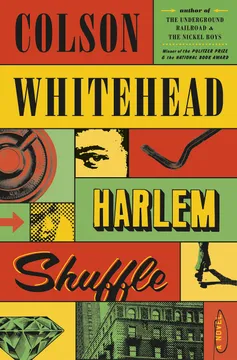


Plot Summary
The Theresa Becomes a Target
In 1959, Ray Carney runs a Harlem furniture store, selling polished new sofas alongside carefully chosen secondhand goods. He keeps his books straight and his criminal dealings small, mostly passing along the occasional watch or television brought by his cousin Freddie.
Their closeness began in childhood, when they shared a home and Freddie supplied the schemes; Carney learned to look after them both. Now Freddie introduces a much larger proposition: a robbery of the Hotel Theresa, Harlem’s celebrated gathering place, planned by the flashy Miami Joe.
Carney refuses, knowing that his store and family could be exposed. Freddie has already given the crew Carney’s name, however, and their assumption that he will fence the proceeds draws the cautious businessman toward a job he never agreed to join.
Carney’s respectability is neither a simple disguise nor a complete truth. His carefully kept accounts and quality furniture represent real labor, while his small-scale fencing lets him pretend that criminal goods merely pass through his hands. Freddie exploits that carefully maintained distinction because he knows Carney’s affection is stronger than his caution. The Hotel Theresa sharpens the risk: it is not just a rich target but a Harlem institution, so the robbery threatens communal pride as well as Carney’s livelihood. The opening’s tension comes from a man who has built a life by controlling the terms of exchange discovering that family can commit him to a deal before he agrees.
Twenty Minutes at the Theresa
Miami Joe assembles Freddie, the experienced safecracker Arthur, and the taciturn Pepper for a pre-dawn raid. A stolen bellhop uniform, a guest reservation, and a Howdy Doody mask help the men take control of the Hotel Theresa’s lobby.
They herd staff and guests into the manager’s office while Arthur smashes open safe-deposit boxes. The plan allows twenty minutes, but Miami Joe presses on after the deadline, gambling that the noise will not bring help. The crew escapes with two valises of jewelry and cash, and the captives survive.
Their haul includes Lucinda Cole’s ruby necklace, purchased for her by the Harlem gangster Chink Montague. Carney is not present, but Freddie’s decision to attach his name to the operation has already made him part of its consequences.
The robbery turns the hotel’s polished routines into vulnerabilities: a uniform grants access, a reservation opens the door, and a familiar lobby becomes a place of captivity. Miami Joe’s discipline is real, but so is his appetite for danger; extending the job beyond its limit reveals that control is partly theatrical. Freddie’s role is more fragile. He is not a practiced gunman, yet he stays because belonging to the crew matters more to him than his fear. The hotel’s prestige also gives the stolen necklace a meaning beyond price. Its route from Chink to Lucinda to the safe makes the loot a knot of intimacy, status, and power that will pull Harlem’s competing worlds together.
A Safecracker Does Not Return
The robbery makes the papers, and Chink Montague’s men visit Carney’s store seeking Lucinda’s ruby necklace. They do not know he was supposed to fence the haul, but their warning makes his hidden sideline newly dangerous.
Freddie then appears and admits the crew still expects Carney to handle the loot. Before they can divide it, Arthur is found shot in his room. Pepper suspects Miami Joe has stolen the proceeds and killed the safecracker, while Carney worries that Chink’s men will reach him or Freddie first.
Pepper takes Carney on a rough tour of Harlem’s back rooms and hangouts, looking for the missing crew leader. They find a drugged former associate who points them toward Miami Joe’s lodging, but the room is empty. The hunt leaves Carney with no safe way to stand aside.
The consequences arrive through ordinary business channels: men enter Carney’s showroom, inspect the furniture, and turn a commercial space into a warning. This is how the novel makes criminal power feel pervasive without making it omnipotent. Chink’s men have a specific demand, but their visit also exposes Carney’s mistaken faith in anonymity. Pepper’s search offers a harsher kind of knowledge. The abandoned bar and its ruined garden show how places that once held social life can be repurposed by addiction and neglect. Carney recognizes people and rooms from earlier years, but recognition gives him no command over their present state. His obligation to Freddie now requires him to move through a city where familiarity and safety have come apart.
Blood on the Showroom Floor
Miami Joe finds Carney at the furniture store and holds him at gunpoint, explaining that he killed Arthur to avoid sharing the take and plans to eliminate the surviving crew. He orders Carney to summon Pepper, intending to kill him next, while Carney tries to keep his family out of the threat.
Pepper has anticipated the danger and waits in the basement. When Joe’s attention shifts, Pepper shoots him. Carney then cleans the office and uses his father’s truck to leave the body in Mount Morris Park, carrying out a task he never imagined would become his own.
A month later Pepper sends Carney Lucinda’s necklace, which Carney holds for a year before selling through a new contact. The money helps build his family’s apartment fund, and his crooked sideline quietly grows.
Carney crosses a boundary less through the gunfight than through what follows it. Pepper supplies the violence, but Carney chooses to clean the blood and dispose of the body, using the practical habits that once made him a successful shopkeeper. His father’s truck turns inheritance into an instrument: the vehicle carries both the resources and the criminal history that Carney has tried to outgrow. The necklace’s delayed sale extends the same contradiction. It finances a respectable domestic dream, yet its value comes from a robbery and a murder. Carney’s maxim about not being crooked is increasingly a self-protective story. He is not simply corrupted from outside; he is making decisions that let the respectable and criminal parts of his life support each other.
Five Hundred Buys Nothing
By 1961, Carney’s furniture business has expanded, and he is trying to gain influence among Harlem’s established professionals. His friend, lawyer Terrance Pierce, encourages him to join the Dumas Club, where bankers, judges, and business owners make decisions that shape the neighborhood.
At the club’s mixer, banker Wilfred Duke hints that a payment will improve Carney’s chances of admission. Carney gives him five hundred dollars, expecting the agreed advantage. Instead, the club rejects him, and Duke refuses to return the money.
Carney’s father-in-law, Leland Jones, offers no meaningful defense; the humiliation cuts deeper because Carney had hoped to enter the room as an equal. He decides that Duke’s public standing and private conduct will become the materials for his answer.
The Dumas episode makes respectability another marketplace, complete with admission fees, gatekeepers, and fraudulent promises. Carney understands bargaining, but he misreads the terms because he wants more than access: he wants proof that his work can overcome the class and color boundaries that have marked him as an outsider. Duke’s rejection transforms that hope into a more focused anger. The injury is personal, yet it occurs inside an institution that claims to serve Harlem’s collective advancement. That contradiction matters. Carney is not merely excluded by white power; he is exploited by a successful Black banker who can reproduce exclusion for his own benefit. The episode unsettles Carney’s belief that shared race or shared ambition guarantees solidarity.
The Banker Has a Weakness
Carney begins building a new fencing operation with jeweler Harvey Moskowitz, who teaches him how to assess precious stones and gives him better terms than his former contact. The expertise increases his earnings and his confidence.
He also hires Pepper to watch Duke and discovers the banker’s regular visits to Miss Laura, a sex worker who knows how Duke treats women and how little he cares about her safety. Carney offers her money to help disgrace him, but she insists the pimp who controls her, Cheap Brucie, must first be removed.
Carney turns to Detective Munson, who already collects a weekly envelope from him. He offers information on Freddie’s acquaintance Biz Dixon in exchange for a police action against Brucie, beginning a chain of deals that entangles the revenge plot with Harlem’s criminal economy.
Carney’s retaliation depends on skills he has developed in both of his lives. He studies jewels with Moskowitz as carefully as he studies customers in the showroom, while his knowledge of bribery lets him approach Munson with a trade rather than a moral appeal. Miss Laura refuses to be a mere instrument in the plan. Her condition makes her own survival central, forcing Carney to recognize a cost he might otherwise have treated as collateral. The episode also complicates the idea of law as a counterweight to crime. Munson is not outside the envelope system; he is one of its recipients. Carney’s scheme works by navigating that system, not escaping it.
A Bust for a Blackmail
Carney gives Munson information on Biz Dixon’s heroin operation, and the detective passes it to narcotics officers seeking a prominent arrest. Dixon’s crew is raided, producing headlines and photographs for officials eager to show progress against drugs.
In return, Munson arranges the arrest of Cheap Brucie, giving Miss Laura the chance to act before her pimp can reach her. Carney recruits Zippo, a photographer who once hoped to document Harlem but now earns money taking compromising pictures.
When Duke arrives at Miss Laura’s apartment, she drugs him and directs the staged scenes while Zippo photographs him in a series of degrading poses. Carney had imagined a limited scandal, but Miss Laura shapes the session into a fuller exposure of Duke’s appetite and vanity. The photographs give her, Zippo, and Carney leverage over the banker.
The exchange of a drug bust for a pimp’s arrest reveals that apparently separate forms of coercion can be converted into one another. Munson’s action may produce a public victory, but Carney’s private motive and the detective’s professional calculations are both present. Miss Laura’s insistence on directing the photographs is equally important. She refuses the role of passive evidence and makes the scene answer to her knowledge of Duke. Zippo’s camera provides distance from the act while also fixing it into an object that can travel. This is not truth in a neutral sense: the images are arranged. Yet their theatrical construction makes a concealed social truth visible, exposing the gap between Duke’s public authority and his private entitlement.
Duke's Scandalous Disappearance
The Harlem Gazette publishes Zippo’s photographs, and reports of Duke’s abuse of borrowers give the images a larger indictment than sexual scandal alone. Duke disappears soon afterward.
Investigators then discover that he has taken most of the two million dollars raised to start Liberty National Bank, leaving investors and club associates facing financial ruin. Miss Laura leaves town with the payment Carney promised her, while Cheap Brucie remains occupied with renewed police attention.
Carney feels unsettled by the degradation involved, but the damage to Duke’s power and the losses among his allies satisfy his desire for payback. Over time, Duke’s betrayal weakens the Dumas Club’s old guard. Pierce becomes vice president, Carney receives a fresh invitation, and this time he joins without paying a bribe.
Carney’s revenge exceeds its intended scale. He wants Duke humiliated for taking his money, but the banker’s disappearance exposes a broader pattern of exploitation and brings down people who had trusted him. This does not make Carney’s methods clean; staged photographs, bribed police, and a vulnerable woman’s risk remain part of the result. The ending of this episode offers no simple moral accounting. Carney gains entry to the club after its authority has been weakened, a victory that confirms both his persistence and his growing accommodation to the institutions he once despised. His ambition does not erase the injury. It learns to operate inside the machinery that produced it.
A Briefcase Through the Riot
In 1964, Carney and Elizabeth have moved their children to Riverside Drive, while his store continues to prosper. After a white police lieutenant kills fifteen-year-old James Powell, Harlem erupts in protest and disorder.
During the turmoil, Freddie arrives at Carney’s store with a locked briefcase and asks him to hide it. His partner is Linus Van Wyck, a wealthy heir Carney has met only briefly. Freddie later explains that he and Linus broke into Linus’s family apartment on Park Avenue, intending to take valuables from the wall safe.
Linus’s father caught them, and the pair fled before the robbery was complete. They hid the briefcase uptown, then Linus overdosed in an SRO. With Freddie missing and the briefcase tied to a powerful family, Carney has inherited another crisis through his cousin.
The riot and the robbery occupy different moral scales but share the same city. Powell’s killing provokes public anger at state violence, while Freddie and Linus use the police’s distraction to pursue a private score. Carney does not treat these events as equivalent, even as the unrest creates an opening for the theft. The friendship between Freddie and Linus also reverses familiar expectations: a Park Avenue heir seeks refuge with a Harlem hustler, and their shared vulnerability forms a bond neither family nor class can easily explain. Carney’s choice to hide the briefcase continues his pattern of protecting Freddie, but the stakes are now larger than a cousin’s foolish scheme. The object carries wealth, evidence, and danger into his carefully ordered home life.
The Emerald Draws Blood
Carney eventually opens the briefcase and finds an enormous emerald necklace alongside Linus’s personal papers and documents connected to the Van Wyck family. He keeps the discovery secret, but the family’s representatives begin looking for both the jewelry and the missing papers.
Police detectives question Carney about Linus’s death, and his aunt Millie’s home is ransacked by searchers who leave no doubt that they want something specific. Carney brings the necklace to Moskowitz, hoping the jeweler can turn it into money for Freddie’s escape.
Moskowitz refuses to handle a stone this dangerous. On the street, Van Wyck lawyer Ed Bench and an armed guard take the necklace from Carney and demand the rest of Linus’s property. Carney escapes into the crowd, but the threat now reaches his store and family.
The briefcase changes meaning as Carney learns what it contains. At first it is a favor to Freddie; then it becomes a possible source of money, evidence, and leverage. The necklace’s size makes it impossible to treat as ordinary stolen merchandise, and Moskowitz’s refusal exposes the limits of Carney’s carefully built network. The Van Wyck representatives bring a different kind of criminal force: polished lawyers and hired muscle, backed by wealth that can operate openly. The search of Millie’s home shows that this pressure does not remain abstract. Carney’s kinship obligations draw innocent family spaces into the conflict, making his instinct to protect Freddie inseparable from the risk he has created for everyone around him.
The Safe Is Not Safe
After Carney escapes with the necklace removed from his possession, two armed men posing as utility workers break into his closed store. Pepper, watching the premises, fights them with a baseball bat and hunting knife, then drives them away at gunpoint.
The intruders had brought equipment to force open Carney’s safe, where he has hidden the briefcase. Carney finds that its papers include property plans and a power-of-attorney document, but he cannot yet tell which item the Van Wycks want most.
Ed Bench contacts him with an exchange: the remaining property for Freddie, whom the family’s men have seized. Carney brings Pepper into the plan and prepares to meet them at an unfinished Van Wyck building. His choice is no longer whether to help his cousin, but how much danger he will accept to bring him back.
The break-in collapses the boundary between Carney’s legitimate store and the criminal refuge it has become. Its furnishings and safe no longer merely support a business; they shelter evidence that has made the business a target. Pepper’s violence protects Carney, but it also makes clear that the protection is temporary and personal, not institutional. The power-of-attorney document hints that the dispute concerns more than the necklace, yet the family’s precise motive remains uncertain. That uncertainty is part of the pressure: Carney must act without knowing whether the papers expose fraud, control of property, or a deeper family conflict. His decision to exchange them for Freddie expresses loyalty, but also accepts the terms set by men with vastly greater resources.
Park Avenue Collects Its Price
At the unfinished Park Avenue building, Bench confirms that Freddie is being held and orders Carney to surrender the briefcase. The exchange reveals its cost: Freddie has been badly beaten by the Van Wyck men after laughing during Linus’s confrontation with his father. Pepper draws his gun when the two armed guards threaten them.
He shoots both men, and Carney takes their weapons as the three flee the building. They find Freddie alive in the bed of Carney’s truck and rush him to Harlem Hospital. Pepper, wounded himself, refuses to go inside. Carney stays with Freddie as hospital staff take him in. Freddie is conscious long enough to acknowledge that his recklessness has dragged Carney into danger once again.
The climax forces Carney to choose between property and kin, but the exchange is not a clean rescue. He surrenders the documents, Pepper kills the guards, and Freddie returns so badly injured that survival remains uncertain. The unfinished tower is an apt setting because it embodies wealth still under construction, while the men who build and protect that wealth treat Freddie’s body as disposable. Pepper’s intervention is neither heroic innocence nor mere hired force; it is a decision rooted in loyalty to Carney and an older code of personal obligation. Carney’s role has changed from broker to participant. He cannot keep the violence at arm’s length by recording it in ledgers or assigning it a price.
The City Keeps Building
Freddie remains in a coma for two months and dies in Harlem Hospital. His father returns for the funeral, then leaves again. Carney continues paying Munson and Chink’s men, while the investigation into Linus’s death is closed and the Van Wyck conflict appears to subside.
The loss does not stop the ordinary demands of work or family, though grief keeps returning to interrupt them. A year and a half later, Carney has secured a Bella Fontaine dealership after years of trying.
He visits the downtown site where the Van Wycks are building a major office tower on land Linus once owned, and sees that Radio Row, including Aronowitz’s old shop, has been demolished for the World Trade Center project. Carney remains ambitious, still imagining where his family might live next, but he carries Freddie’s absence into every new beginning.
The novel resolves its immediate danger without offering a moral reset. The payments resume, the store stays open, and the city replaces demolished blocks with new towers. Such continuity can look like recovery, but Carney’s grief contradicts the idea that ordinary life simply absorbs its losses. The vanished Radio Row and the rising Van Wyck project place his private history inside a larger cycle of urban transformation, where whole communities and individual lives can be displaced by someone else’s plans. Carney’s dealership and continued ambition are genuine achievements, not consolation prizes. Yet his success no longer proves that hard work can keep danger outside the door. He has learned that every new structure rests on old losses, some visible and some carried only by the people who remember.
Analysis
Harlem Shuffle follows Ray Carney’s effort to build a legitimate life without surrendering the criminal knowledge inherited from his father and sharpened by Harlem’s informal economy. The novel’s central tension is not simply whether Carney will become a crook. He already participates in crooked systems, while also running a real store, loving his family, and taking pride in work done well. The sharper question is how long he can treat these parts as separate accounts.
The book links small exchanges to large structures. A stolen television, a weekly envelope, a club bribe, and a real-estate development all move value through systems that reward access and conceal who pays. Duke’s theft shows that respectable institutions can imitate the predation attributed to street criminals. The Van Wyck family extends that argument into real estate: its authority is backed by wealth, legal machinery, and the power to reshape the city. Against this, Carney’s store offers a modest claim to permanence, though even his business relies on goods whose histories are compromised.
Family makes the moral arithmetic intimate. Carney keeps protecting Freddie because their childhood bond survives every adult disappointment. That loyalty is loving, but it also repeatedly exposes Carney’s wife, children, and employees to danger. Elizabeth’s work at Black Star provides a contrasting model of practical care: she maps safer routes through a hostile country so others can travel. Her labor recognizes that survival requires shared knowledge, not merely individual ingenuity.
The city changes faster than Carney can account for it. The hotel loses its old glamour, Harlem is damaged by protest and police violence, and Radio Row disappears beneath a redevelopment project. Carney continues to sell furniture and pursue a better home, but he can no longer confuse advancement with escape. His success is real, yet it rests beside grief, complicity, and a city that keeps turning human histories into new construction sites.
Review Summary
Harlem Shuffle receives mixed reviews, with praise for its vivid portrayal of 1960s Harlem and complex characters, particularly Ray Carney. Critics appreciate Whitehead's shift to a lighter, crime-oriented narrative after his previous intense works. Some readers found the pacing slow and characters hard to connect with, while others enjoyed the atmospheric prose and historical details. The book is generally seen as a well-crafted, if different, addition to Whitehead's oeuvre, blending crime, family drama, and social commentary.
People Also Read










Characters
Ray Carney
The careful Harlem dealerCarney owns a furniture store on 125th Street and takes pride in its merchandise, accounts, and place in the neighborhood. He wants a secure home for his wife, Elizabeth, and their children, and he measures progress in concrete terms: a larger apartment, a stronger business, a name customers trust. His father’s criminal past has taught him to be wary of crookedness, but also given him access to its habits and networks. Carney’s skill at keeping separate versions of himself is both a survival strategy and a source of self-deception. He is observant, disciplined, and deeply loyal to Freddie, even when that loyalty repeatedly turns his careful plans into dangerous obligations.
Freddie
Carney's reckless cousinFreddie is Carney’s cousin and childhood companion, a charming improviser whose schemes often outrun his judgment. He has a gift for finding people, openings, and excitement, but little patience for the consequences that follow. His mother, Aunt Millie, still worries over his absences, while Carney habitually covers for him. Beneath the comic confidence is a man uncertain what to do with his life and drawn to friendships that promise escape from that uncertainty. Freddie’s affection for Carney is genuine, though it rarely prevents him from putting his cousin in difficult positions. Their shared history gives their bond the force of family and the complications of a habit neither has learned to break.
Elizabeth Carney
Carney's clear-eyed partnerElizabeth is Carney’s wife, mother to May and John, and a travel professional at Black Star, a service helping Black Americans plan safer journeys. Raised by Alma and Leland Jones among Harlem’s professional class, she chose a marriage and career her parents did not envision for her. She is practical, perceptive, and unwilling to mistake respectability for justice. Her work gives her a daily understanding of how racism shapes seemingly ordinary choices, from routes to hotels. Elizabeth supports Carney’s ambitions but can see when his ideas risk turning into evasions. Her affection is direct, her humor sharp, and her independence essential to the family’s life beyond Carney’s store.
Pepper
The unsentimental fixerPepper is a veteran criminal with a formidable physical presence and a survivalist’s view of the world. He trusts preparation, direct action, and a small circle of people more than institutions or promises. His wartime experience and years among crooks have made him difficult to surprise and harder to impress. He knew Carney’s father and recognizes something of that man in the son, though Carney’s businesslike restraint sets him apart. Pepper’s bluntness can sound like indifference, but he acts on obligations that others might only discuss. He dislikes being used carelessly and expects those who hire him to understand the risks they create.
Linus Van Wyck
The wayward heirLinus belongs to a powerful New York real-estate family but feels alienated from the future his father has arranged for him. Educated and intelligent, he has struggled with addiction and with a family that treats his difference as a problem to be managed. His friendship with Freddie offers a less judgmental kind of companionship, even as both men share an appetite for escape. Linus can be imaginative and affectionate, but his privilege does not make him emotionally secure or immune to the consequences of his choices. The distance between his family’s public authority and his private vulnerability shapes the danger surrounding him.
Miss Laura
The strategist in the shadowsMiss Laura is a sex worker who knows how men such as Wilfred Duke use power and how women are made to bear its costs. She is guarded, sharp in negotiation, and unwilling to accept a role chosen for her by Carney. Her history in Harlem’s nightlife gives her a perspective different from his, and she insists that her own safety must be part of any arrangement. She can read a performance because she has spent years managing the difference between the self she shows and the self she protects.
Wilfred Duke
The polished power brokerDuke is a prominent banker and Dumas Club leader who presents himself as a builder of Black Harlem’s economic future. He knows how to turn access, influence, and selective generosity into authority. His ambition is matched by a practiced ability to treat other people’s needs as bargaining opportunities. He represents a kind of power that does not need to appear violent to be coercive, because money and reputation can shape lives from behind an office desk.
Chink Montague
Harlem's feared racketeerMontague is a Harlem gangster whose influence reaches through numbers operations, protection payments, and personal connections. He learned to rule through intimidation but also understands the usefulness of public generosity and carefully maintained alliances. His interest in recovering Lucinda Cole’s necklace makes Carney’s small sideline visible to a more dangerous world. Montague expects loyalty and competence from people operating in his territory, even when his own business depends on threats and coercion.
Detective Munson
The envelope-collecting copMunson is a police detective who collects regular payments from Carney and treats corruption as part of the city’s operating routine. He is sociable, self-interested, and alert to the different alliances competing for influence. His dealings with Carney mix enforcement, favors, and personal calculation. Munson’s role reveals how the police can serve both official campaigns and private arrangements without resolving the underlying disorder.
Harvey Moskowitz
The jeweler who teachesMoskowitz is a Forty-Seventh Street jeweler who appraises stolen gems and teaches Carney how to recognize quality. He is reserved, exacting, and more honest with Carney than the earlier broker who kept him dependent. Their relationship gives Carney professional knowledge and a more profitable place in the fencing network. Moskowitz’s caution also reflects the limits of expertise: knowing what a jewel is worth does not make every jewel safe to handle.
Zippo
The camera-wielding opportunistZippo is a photographer who drifts between legitimate work, boudoir pictures, and small-time schemes. He once imagined documenting Harlem’s people and streets, but his unstable judgment and bad luck have redirected his career. He is eccentric and self-mythologizing, yet he possesses a practical eye for the strange scenes others avoid. Carney hires him because his camera can turn a private encounter into public leverage.
Terrance Pierce
The lawyer at the doorPierce is a prominent civil-rights lawyer who befriends Carney through a small-business association. He is ambitious, articulate, and alert to the institutional doors that must be forced open for Black professionals. His support helps bring Carney toward the Dumas Club, though he does not shield him from every humiliation there. Pierce understands that access matters, while remaining aware that entry into an institution is not the same as changing its nature.
Leland Jones
Elizabeth's status-conscious fatherLeland is Elizabeth’s father, a successful Harlem accountant whose clients include leading professionals and businesses. He is proud of his social position and adept at tax maneuvers, but his respectability often comes with condescension toward Carney. He wants his daughter to inhabit the world he worked to secure for her, and struggles to accept her different choices. His own financial and club connections place him near the institutions Carney hopes to enter.
Alma Jones
The exacting mother-in-lawAlma is Elizabeth’s mother, raised in a family that prizes education, lineage, and social standing. She worries that Elizabeth has settled for less than she deserves and voices that judgment through persistent advice about housing, work, and Carney. Her protectiveness is real, but it often arrives as control. The tension between Alma and Carney reflects competing ideas of security: inherited respectability on one side, and a life built through difficult work on the other.
Aunt Millie
The family's steady shelterMillie is Carney’s aunt and Freddie’s mother, a nurse who helped care for the boys after Carney lost his mother. She offers food, routine, and fierce affection, but her worry over Freddie cannot keep him from his schemes. Millie remembers the boys as children even when they have grown into men whose choices carry serious consequences. Her home holds some of Carney’s warmest memories of family.
Rusty
Carney's dependable salesmanRusty is Carney’s employee, a transplant from Georgia who develops a genial sales manner despite his lack of polish. He is dependable, loyal, and increasingly confident as Carney entrusts him with more responsibility. His experience of racist violence in the South informs his distrust of law enforcement. Rusty represents the ordinary labor that keeps Carney’s legitimate business running while its owner is pulled into other affairs.
Miami Joe
The flashy heist plannerMiami Joe is a stylish, calculating robber who plans the Hotel Theresa job and recruits Freddie. He enjoys the power of a successful score and treats violence as a tool rather than a moral boundary. His contempt for Harlem’s established social order helps turn the hotel robbery into a personal provocation as well as a financial crime.
Arthur
The veteran safecrackerArthur is a skilled safecracker with a scholarly manner and a long record of prison terms. He is careful about the details of a job and dreams of a quieter life beyond the city’s criminal circuits. His experience gives the Hotel Theresa crew technical competence, though his plans depend on the judgment of his partners.
May Carney
Carney's watchful daughterMay is Carney and Elizabeth’s perceptive young daughter. Her stubborn independence and attentive gaze make her a lively presence in the family’s home. She offers Carney a daily reminder of the life he is trying to protect, even when she cannot understand the dangers surrounding his work.
John Carney
The youngest CarneyJohn is Carney and Elizabeth’s young son, still small enough to turn ordinary family moments into games. His presence makes Carney’s idea of success concrete: a home where his children can grow without inheriting every hardship of his own childhood.
Plot Devices
Carney's Furniture Store
A respectable criminal hingeThe store is Carney’s genuine business and the public face that makes his private dealings possible. Its showroom provides plausible cover for stolen televisions, furniture, and jewelry, while its office becomes a meeting place for criminals and, at times, a refuge. Carney’s skill at selling and accounting sustains both operations, but the two sides are never fully separate. As danger closes in, the store’s doors, safe, and display floor become part of the action rather than neutral background. The business embodies Carney’s belief that he can manage the flow of goods without being defined by their origins.
The Envelopes
The city's currency of accessBribes and protection payments travel through Harlem as recurring envelopes passed among business owners, police, and criminal authorities. Carney pays Munson and Chink’s organization, while Duke treats a payment for Dumas Club admission as a private bargain. The device connects apparently separate institutions by showing that each relies on informal exchange as well as official rules. Envelopes can buy time, access, or a favor, but they do not guarantee justice or loyalty. Their circulation helps Carney navigate the city and exposes the price of pretending that corruption belongs only to the underworld.
Dorvay
A private hour for schemesCarney’s term for the wakeful interval between two sleeps becomes a space for plotting beyond the demands of his daytime life. As a student, he used those hours to study and plan his business future. After Duke cheats him, the same nighttime rhythm returns as Carney researches the banker and develops a revenge operation. The device makes his double life temporal as well as moral: he works in the store by day and arranges crooked business during the hours when much of the city sleeps. Its eventual fading marks a shift in how he understands the division between his selves.
The Van Wyck Briefcase
A small case, vast leverageFreddie leaves a locked briefcase with Carney after a robbery involving Linus Van Wyck. Its contents include a spectacular emerald necklace, personal papers, and documents whose importance is not immediately clear. The case draws the Van Wyck family’s representatives, police, and hired men toward Carney’s store and threatens his family’s safety. It also forces Carney to decide whether loyalty to Freddie outweighs the risks of holding stolen property. The briefcase works as a portable center of uncertainty: until its contents are understood, every character must act on incomplete knowledge.
Zippo's Photographs
Private conduct made publicCarney hires Zippo to photograph Wilfred Duke in compromising staged scenes with Miss Laura. The pictures turn an encounter that Duke expects to control into a public threat to his reputation. When the Harlem Gazette publishes them, the images gain force from accompanying accounts of Duke’s treatment of borrowers. The camera does not provide neutral evidence; Miss Laura directs the scenes, and the photographs are deliberately composed. Their value comes from making Duke’s private entitlement visible to people whose lives his public decisions have already affected.
About the Author
Other books by Colson Whitehead


Download PDF
Download EPUB
.epub digital book format is ideal for reading ebooks on phones, tablets, and e-readers.








